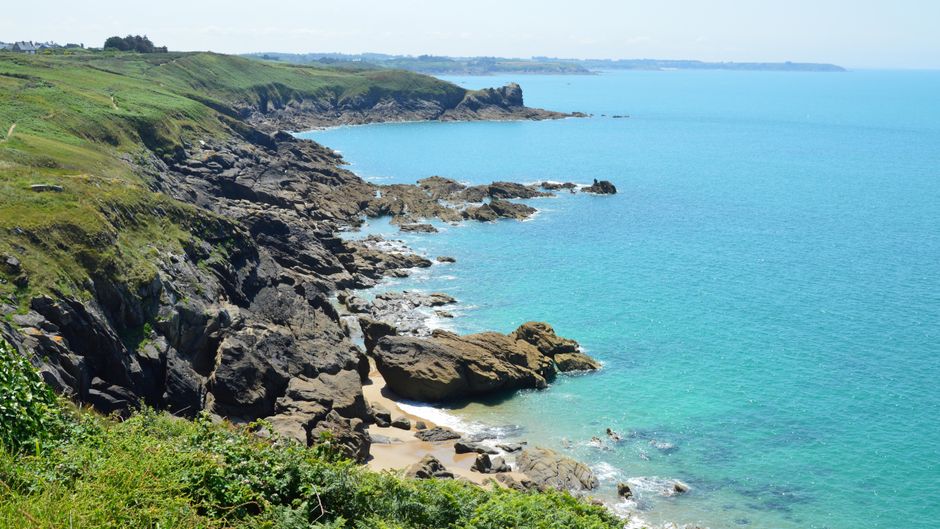
Brittany (Bretagne) is France’s wild Atlantic corner: a granite peninsula of rocky headlands, sandy coves, lighthouses and islands, washed by some of the biggest tides in Europe. It has its own Celtic language and music, standing stones older than the pyramids, half-timbered towns and a cuisine of crêpes, cider, oysters and salted butter. Come to walk the coastal path, explore walled Saint-Malo and the pink rocks of the north coast, wander among the menhirs of Carnac and take a ferry to an island. Allow a week to see one or two parts well; two weeks for a full loop.
Right now in Brittany (Rennes)
- Wed 14–18°C 57–65°F 2 mm Light showers
- Thu 11–16°C 51–61°F Partly cloudy
- Fri 10–17°C 50–63°F Cloudy
Weather: MET Norway (CC BY 4.0) · Rates: ECB
Top tours in Brittany
See all tours for Brittany →
From local operators, with prices and reviews; you check availability and book on Viator, our partner. We may earn a commission at no extra cost to you. How we earn money
Brittany at a glance
- Best months: May, June and September, with long days and fewer crowds; July and August for festivals and warmest sea, though average highs in Rennes only reach about 25 °C (Météo-France normals 1991–2020).
- Days needed: 5–7 for the north coast or the south (Morbihan); 10–14 for a loop including Finistère.
- Getting there: TGV trains from Paris-Montparnasse reach Rennes in about 1 hour 30 minutes on the fastest services and Brest or Quimper in about 3½–4 hours; ferries arrive from Britain and Ireland at Saint-Malo and Roscoff.
- Getting around: a car is easiest for the coast; BreizhGo regional trains, coaches and boats link the towns and islands.
- Budget level: mid-range, cheaper than the Riviera; seaside prices peak in July and August. See our France guide for money, entry rules and daily costs.
Brittany’s areas and who each one suits
Today’s Brittany region has four departments: Ille-et-Vilaine (Rennes, Saint-Malo), Côtes-d’Armor (the north coast), Finistère (the far west) and Morbihan (the south coast). Historic Brittany also included Nantes, the old seat of the Dukes of Brittany, which now belongs to the Pays de la Loire region. This guide covers the four departments.
- Saint-Malo, Dinan and the Emerald Coast: the walled corsair city of Saint-Malo, medieval Dinan above the Rance river, Belle Époque Dinard and the cliffs of Cap Fréhel. Close to Mont-Saint-Michel and good for a first visit.
- The Pink Granite Coast: around Perros-Guirec and Ploumanac’h, giant rose-coloured boulders shaped by the sea, with the island of Bréhat nearby. Best for walkers and families.
- Finistère: “the end of the earth”: the Crozon peninsula, the Pointe du Raz, the islands of Ouessant and Sein, Brest, Quimper and the village of Locronan. Wild, windswept and the most Breton in feel.
- Morbihan: the Carnac stones, the island-dotted Gulf of Morbihan, the walled town of Vannes, the Quiberon peninsula and Belle-Île. The sunniest and busiest part in summer.
- Rennes: the lively capital, with half-timbered streets, the Parliament of Brittany and a big Saturday market. The rail hub and a good start or finish.
- The islands: Bréhat, Batz, Ouessant, Molène, Sein, Groix, Belle-Île, Houat and Hoëdic, each with its own character, reached by ferry.
Top things to see in Brittany
Most of Brittany’s best sights are outdoors and free: coastal paths, beaches, villages and viewpoints. Prices are as of October 2026.
Saint-Malo and the Grand Bé
Saint-Malo’s old town, the intra-muros, was rebuilt in granite after the Second World War inside its 17th-century ramparts. Walk the full circuit of the walls for views over beaches, forts and islands. At low tide you can walk across the sand from Bon-Secours beach to the Grand Bé, a small island with the tomb of the writer Chateaubriand. Do it only in the window around low tide shown on the signs at the beach and in the official tide tables, start back in good time, and never try to cross once the sea reaches the causeway: if you are cut off, stay on the island and call 112. Each year people are caught by the rising tide here.
Dinan and Mont-Saint-Michel
Dinan, about 30 km south of Saint-Malo, is one of the best-preserved medieval towns in Brittany, with ramparts, timber-framed houses and the steep Rue du Jerzual running down to a little port on the Rance. To the east, Mont-Saint-Michel rises from its bay just across the Couesnon river in Normandy; it is an easy day trip from Saint-Malo and pairs well with our Normandy guide.
The Pink Granite Coast
Between Perros-Guirec and Trégastel, the old customs officers’ path (sentier des douaniers) winds for a few kilometres among pink granite boulders shaped like animals and faces, past the Ploumanac’h lighthouse. It is easy, free and best at sunset. Nearby, the flower-filled, car-free island of Bréhat is a 10-minute boat ride from the Pointe de l’Arcouest, near Paimpol.
Finistère: Crozon, the Pointe du Raz, Quimper and Locronan
The Crozon peninsula has cliffs, coves and turquoise water that would not look out of place in the Mediterranean, on a much colder sea. The Pointe du Raz, a protected Grand Site de France, is a dramatic rocky spur facing the Île de Sein and its lighthouses; park at the visitor centre and walk out. Quimper has a Gothic cathedral, half-timbered streets and hand-painted faience, and Locronan is a perfectly preserved granite village of weavers’ houses around a church square.
The Carnac stones
Around Carnac, about 3,000 standing stones (menhirs) run in long rows across the countryside, raised more than 6,000 years ago, along with dolmens and burial mounds. The megaliths of Carnac and the shores of Morbihan were added to UNESCO’s World Heritage list in 2025. The main alignments of Ménec and Kermario are fenced to protect them. From April to September you can only go inside on a guided tour run by the Centre des monuments nationaux (€13 for adults as of October 2026); from October to March you can walk freely inside, except in areas closed for conservation. You can see the stones from the paths around the fences at any time. Start at the Maison des Mégalithes, the free visitor centre opposite the Ménec alignment, open all year, where tours are booked. In July and August, Carnac’s summer shuttle buses cost €1 a trip.
The Gulf of Morbihan, Vannes and Quiberon
The Gulf of Morbihan is an inland sea scattered with dozens of islands; boat trips leave from Vannes, Port-Navalo and Locmariaquer, and the Île aux Moines and Île d’Arz are easy to visit. Vannes has ramparts with flower gardens, old wash-houses and a lively old town. The Quiberon peninsula has a sheltered eastern shore for swimming and the wild Côte Sauvage on the west, where swimming is dangerous and forbidden in many places.
Rennes
Brittany’s capital is a student city with crooked half-timbered houses around the Place Sainte-Anne, the grand 17th-century Parliament of Brittany and the Thabor gardens. The Saturday-morning Marché des Lices is one of the biggest markets in France. It is a good first night after the train from Paris.
Tides and the GR34 coastal path
Brittany’s tides shape every visit. Around Saint-Malo and the bay of Mont-Saint-Michel, the difference between high and low water can exceed 12 metres on the biggest tides, among the largest in Europe, and the sea can retreat several kilometres. The biggest tides (coefficients above 100) come around the full and new moons, especially near the spring and autumn equinoxes. Beaches, harbours and island crossings change completely between high and low water, so check the tide times every day: local tourist offices hand out tide tables, and the French Navy’s hydrographic office (SHOM) publishes official predictions. If you go shellfish gathering or walking on the sand, keep an eye on the incoming tide, which can move fast and surround sandbanks.
The GR34, the old customs officers’ path, follows almost the entire Breton coast for some 2,000 km, from Mont-Saint-Michel to the Loire estuary. You don’t need to walk it all: some of the finest day sections are Cap Fréhel to Fort La Latte, the Pink Granite Coast around Ploumanac’h, the Crozon peninsula and the Pointe du Raz. It is well waymarked with red and white stripes. Wear proper shoes, carry water and a windproof layer, and keep back from cliff edges. See our hiking guide.
Food and festivals
Crêpes, cider and oysters
Brittany’s signature meal is a savoury buckwheat galette, classically with ham, egg and cheese (the complète), followed by a sweet wheat crêpe with salted-butter caramel, all washed down with a bowl of dry farmhouse cider. Every town has a crêperie, and lunch at one is among the cheapest good meals in France. Try oysters at Cancale, near Saint-Malo, where stalls sell them by the dozen on the harbour; kouign-amann, a rich buttery cake from Douarnenez; far breton, a prune flan; and fresh seafood platters in the fishing ports.
Festivals
Brittany has a busy summer of music festivals and village festoù-noz, night dances to traditional bands that anyone can join. The Festival Interceltique de Lorient gathers musicians and dancers from Celtic countries and regions for ten days; its 56th edition runs from 30 July to 8 August 2027, on the theme of the women of the Celtic nations. Les Vieilles Charrues in Carhaix, one of France’s largest rock and pop festivals, is announced for 15 to 18 July 2027. Book accommodation early for both.
Other things to do in Brittany
Island hopping
Ferries run all year to the main islands, with more crossings in summer. Penn ar Bed serves Ouessant and Molène from Brest and Le Conquet, and Sein from Audierne; Compagnie Océane runs from Quiberon to Belle-Île, Houat and Hoëdic and from Lorient to Groix; the Vedettes de Bréhat cross to Bréhat. Many routes are part of the regional BreizhGo network. Book ahead in July and August, especially if you want to take a car to Belle-Île, and check the timetables, which follow the tides and the weather. See our boat trips guide.
Beaches, surfing and sailing
Brittany has hundreds of beaches, from family coves on the north coast to long Atlantic strands in Finistère. The sea is cool, around 17–19 °C in August. Surfers head for the Baie d’Audierne, the Crozon peninsula and the Quiberon area; sailing schools are everywhere. See our beaches and surfing guides.
Cycling
Long-distance cycle routes cross Brittany, including the towpath of the Nantes–Brest canal and old railway lines turned into greenways; they are flat, quiet and well signposted. See our cycling guide.
Nearby destinations
- Saint-Malo102 km
- Mont-Saint-Michel131 km
- Nantes139 km
- Normandy226 km
- Île de Ré233 km
- Loire Valley246 km
- La Rochelle248 km
- Cornwall291 km
Getting there and getting around
Arriving
By train: since the high-speed line opened in 2017, TGVs from Paris-Montparnasse reach Rennes in about 1 hour 30 minutes on the fastest services (closer to 2 hours with stops), and continue to Saint-Malo, Saint-Brieuc, Brest, Vannes and Quimper; Brest and Quimper are about 3½–4 hours from Paris. Direct trains also run from Lille, Lyon and Strasbourg. By air: Rennes, Brest, Lorient, Quimper and Dinard have airports, with flights from Paris, other French cities and some European routes. By sea: ferries sail from Portsmouth to Saint-Malo and from Plymouth and Ireland to Roscoff.
Car, trains and BreizhGo
A car is the most practical way to explore the coast and countryside, and Brittany’s main roads are toll-free dual carriageways. Without a car, use BreizhGo, the regional network of TER trains, coaches and boats. Since 1 July 2026 a single coach ticket on more than 80 BreizhGo lines costs €3 (it was €2.50 before), and children under 12 travel free. Trains link Rennes, Saint-Malo, Brest, Quimper, Vannes, Lorient and Saint-Brieuc; coaches fill the gaps to smaller coastal towns, but are less frequent on Sundays.
Rennes low-emission zone
Rennes has a low-emission zone (ZFE) inside its ring road (rocade), with the Boulevard des Alliés as the eastern limit; the ring road itself is not included. Since 1 January 2025 every motor vehicle driving inside it, including foreign cars, needs a Crit’Air sticker; from 1 January 2027 Crit’Air 5 vehicles will also be banned. Order the sticker only from certificat-air.gouv.fr, or use the park-and-ride car parks on the edge of the zone and take the metro.
When to go and how long to stay
Brittany has a mild oceanic climate: rarely very hot or very cold, with changeable skies and rain that comes in showers rather than all-day downpours. Inland Rennes gets about 690 mm of rain a year, while the far west is much wetter: Brest-Guipavas averages about 1,230 mm and rain on 160 days a year, with summer highs around 21 °C. The table uses Météo-France’s official 1991–2020 normals for the Rennes-Saint-Jacques station (rainy day = at least 1 mm of rain); the coast is cooler in summer and milder in winter.
| Season | Average high / low | Rainy days per month | What it’s like | Good for |
|---|---|---|---|---|
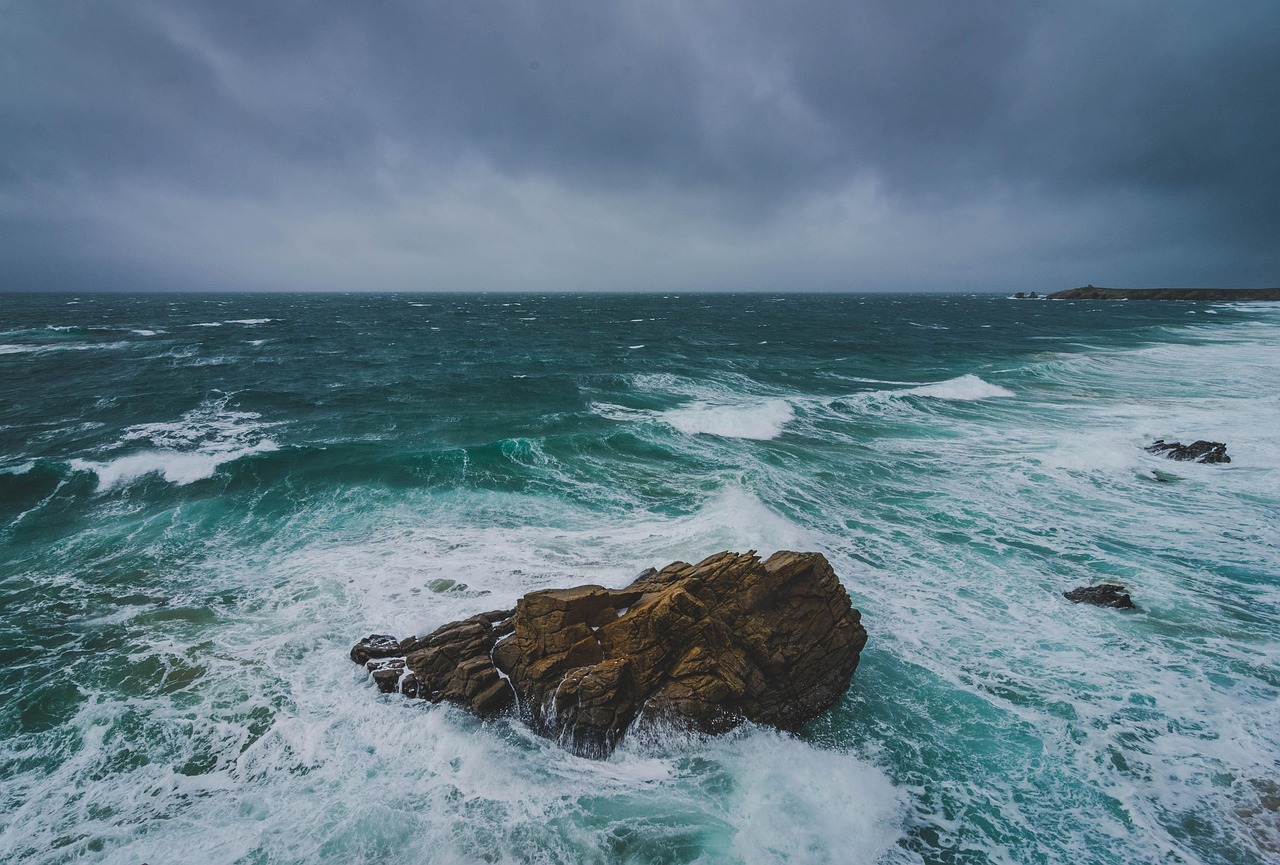
| Winter (Dec–Feb) | 9–10 °C / 3–4 °C | 10–12 | Mild, wet and windy; storms on the coast | Storm-watching, Rennes, cosy crêperies |
| Spring (Mar–May) | 13–19 °C / 5–9 °C | 9–10 | Fresh and green, gorse in flower | Coastal walks, quiet islands, big equinox tides |
| Summer (Jun–Aug) | 23–25 °C / 12–14 °C | 7 | Pleasant, long days, cool sea | Beaches, islands, festivals, sailing |
| Autumn (Sep–Nov) | 22 °C falling to 13 °C / 11 °C falling to 6 °C | 8 in September, 11–13 in October–November | Warm early September, wetter later | Walking, seafood, big tides |
5 days in Brittany
Two nights in Saint-Malo (the ramparts, the Grand Bé at low tide, Cancale and a day at Mont-Saint-Michel), one in Dinan, and two on the Pink Granite Coast with a boat to Bréhat.
7 days in Brittany
Or focus on the south: a night in Rennes, then Vannes and the Gulf of Morbihan, the Carnac stones, Quiberon and two nights on Belle-Île.
10 days or more
Loop the whole peninsula: Saint-Malo and Dinan, the Pink Granite Coast, the Crozon peninsula and the Pointe du Raz, Locronan and Quimper, then Carnac and the Gulf of Morbihan, finishing in Rennes. Add Ouessant if the sea is calm.
Where to stay in Brittany
- Without a car: Rennes, Saint-Malo, Vannes or Quimper, with train stations and coach links.
- History and sea: Saint-Malo’s walled town or Dinan’s old streets.
- Beaches and walking: Perros-Guirec, the Crozon peninsula or the Quiberon area.
- Island time: Belle-Île, Groix or Ouessant for two or more nights.
- Self-catering: stone cottages (gîtes) in the countryside are good value outside July and August.
A tourist tax (taxe de séjour) is added per person per night, set by each town or intercommunality and star rating; under-18s are exempt, and the Breton departments add a 10% surcharge. For example, the French tax administration’s data show €1.35 per adult per night for a 3-star hotel in Saint-Malo.
Practical tips for Brittany
- Check the tides every day: for beaches, tidal islands and harbour boat times.
- Swim where it is supervised: currents are strong on Atlantic beaches; look for lifeguard flags in summer.
- Book islands and festivals early: ferries with cars and festival-week rooms sell out.
- Expect changeable weather: sun and showers can come in the same hour, so carry a rain jacket.
- Learn a few words of Breton: demat (hello) and trugarez (thank you); road signs are bilingual.
- Emergencies: call 112; for sea rescue, call 196 or use VHF channel 16.
What to pack for Brittany
Layers are the key: a waterproof, windproof jacket in every season, a fleece or sweater for evenings and boat trips, and walking shoes with good grip for the coastal path. In summer add swimwear, sunscreen and a hat, as the sea breeze hides strong sun. Sandals or water shoes help on rocky beaches, and a small backpack and refillable bottle are useful for day hikes.
Brittany travel FAQ
How many days do you need in Brittany?
Five to seven days for one area, such as Saint-Malo and the north coast or the Morbihan with Carnac. Ten to fourteen days for a loop of the whole peninsula, including Finistère.
What is the best time to visit Brittany?
May, June and September for mild weather, long days and fewer crowds. July and August are warmest, with average highs of about 25 °C in Rennes, and bring the festivals and the busiest beaches.
Can you walk among the Carnac stones?
From October to March you can walk freely inside the main Ménec and Kermario alignments. From April to September you can only enter on a guided tour (€13 for adults as of October 2026), booked at the Maison des Mégalithes, but you can see the stones from the surrounding paths at any time.
Is Mont-Saint-Michel in Brittany?
No, it is in Normandy, just east of the Couesnon river that marks the border. It is about an hour from Saint-Malo, so it combines easily with a Brittany trip.
Can you walk to the Grand Bé in Saint-Malo?
Yes, across the sand from Bon-Secours beach, but only in the window around low tide shown on the signs and in the official tide tables. Never cross once the sea reaches the causeway; if cut off, stay on the island and call 112.
How long is the train from Paris to Brittany?
About 1 hour 30 minutes from Paris-Montparnasse to Rennes on the fastest TGVs, and about 3½–4 hours to Brest or Quimper. Saint-Malo and Vannes are in between.
When is the Festival Interceltique de Lorient in 2027?
From 30 July to 8 August 2027, its 56th edition, on the theme of the women of the Celtic nations. Book accommodation in or around Lorient early.
Do I need a car in Brittany?
It helps a lot for the coast and villages. Without one, base yourself in Rennes, Saint-Malo, Vannes or Quimper and use BreizhGo trains and coaches; a single coach ticket costs €3 on most lines since July 2026.
Do I need a Crit’Air sticker in Rennes?
Yes, to drive inside the ring road: since 1 January 2025 all vehicles in Rennes’ low-emission zone need a sticker, and Crit’Air 5 vehicles will be banned from 1 January 2027. The ring road itself is outside the zone.
How do I get to Belle-Île?
By Compagnie Océane ferry from Quiberon, with crossings all year and more in summer. Book ahead in July and August, particularly with a car; bikes are a good way to explore the island.
What food should I try in Brittany?
A buckwheat galette and a crêpe with salted-butter caramel, dry cider, oysters from Cancale, kouign-amann cake and far breton. Seafood platters in the fishing ports are a treat.
Sources and last review
Researched and last reviewed on 4 October 2026. Climate: Météo-France 1991–2020 normals for Rennes-Saint-Jacques and Brest-Guipavas; Carnac access rules: the Centre des monuments nationaux and the Carnac tourist office; festival dates: the Festival Interceltique de Lorient (Vieilles Charrues 2027 dates from press reports); train times: the Brittany regional tourist board; coach fares: the BreizhGo fare change announced for 1 July 2026; Rennes low-emission zone: Rennes Métropole; tourist tax: French tax administration (DGFiP) data. Prices, hours and timetables change, so check the official links before you go. For entry rules, money and general safety, see our France travel guide.
Plan your trip
Partner links: TravelerCenter may earn a commission if you book, at no extra cost to you.
🇫🇷 Useful French phrases for Brittany
All 38 French phrases: restaurant, hotel, emergencies, romance (printable) →