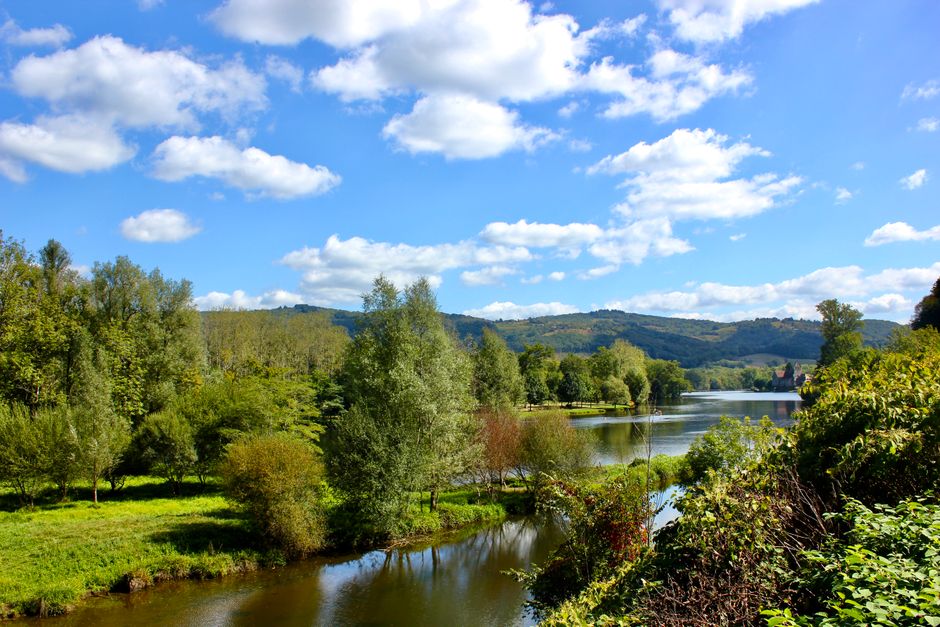
The Dordogne, known in France by its old name of Périgord, is a green land of river valleys, golden-stone villages and clifftop castles, in south-west France between Bordeaux and the Massif Central. It holds some of the world’s finest prehistoric cave art, including the replica of Lascaux and the real painted cave of Font-de-Gaume, and is one of France’s great food regions, famous for foie gras, walnuts and black truffles. Come to canoe past castles on the Dordogne river, wander medieval Sarlat on market day, and see the art of Cro-Magnon people in the Vézère valley. Allow five days for the highlights, a week or more to go slowly.
Right now in Dordogne (Sarlat-la-Canéda)
- Wed 15–21°C 60–69°F 25 mm Rain
- Thu 12–16°C 54–62°F 1 mm Partly cloudy
- Fri 6–16°C 43–61°F Cloudy
Weather: MET Norway (CC BY 4.0) · Rates: ECB
Top tours in Dordogne
See all tours for Dordogne →
From local operators, with prices and reviews; you check availability and book on Viator, our partner. We may earn a commission at no extra cost to you. How we earn money
Dordogne (Périgord) at a glance
- Best months: May, June and September, with warm days and quieter roads; July and August are hot (average highs around 28 °C at Bergerac, Météo-France normals 1991–2020) and very busy.
- Days needed: 4–5 for Sarlat, the Vézère caves and the river castles; 7–10 to add Périgueux, Brantôme and the Bergerac vineyards.
- Getting there: Bergerac airport has flights from the UK and northern Europe; Bordeaux airport and trains are about 1½–2½ hours away; regional trains reach Périgueux, Bergerac and Sarlat.
- Getting around: you really need a car; buses are rare in the countryside.
- Budget level: mid-range; gîtes and campsites are good value, and summer prices peak in Sarlat and the Dordogne valley. See our France guide for money, entry rules and daily costs.
The four Périgords and who each one suits
The Dordogne department matches the old province of Périgord, and locals divide it by colour into four parts.
- Périgord Noir (black), around Sarlat: named after its dark oak woods. Medieval Sarlat, the Vézère valley caves with Lascaux and Les Eyzies, and the castles along the Dordogne river at Beynac, Castelnaud and La Roque-Gageac. The busiest and most beautiful part; best for a first visit.
- Périgord Blanc (white), around Périgueux: named after its pale limestone. The capital Périgueux has a domed cathedral, Roman remains and a big market. Good for city comforts and good train links.
- Périgord Vert (green), in the north: rolling, wooded and quiet, with Brantôme, nicknamed the “Venice of Périgord”, whose abbey sits on a loop of the Dronne river. Best for slow travel and nature.
- Périgord Pourpre (purple), around Bergerac: named after its wine. Bergerac’s old port and the sweet wines of Monbazillac. Best for wine lovers and those flying into Bergerac.
Top things to see in the Dordogne
Prices and hours below are as of October 2026 and come from each site’s official page. Book caves ahead, especially in summer.
Lascaux IV
The original Lascaux cave, painted about 20,000 years ago with bulls, horses and deer, was closed to the public in 1963 to save the paintings. At Montignac, Lascaux IV, opened in 2016, is a full-size, painstakingly accurate replica of the whole cave, followed by galleries that explain the art. The 2026 prices are €23 for adults (13 and over), €15 for children aged 5–12, and free for under-5s; a combined ticket with Lascaux II, the older partial replica, costs €29. From 22 August to 1 November 2026 it is open from 9:00 to 19:00, and from 2 November 2026 to 3 January 2027 from 10:00 to 18:00; it reopens on 7 February 2027. Last admission is two hours before closing. Book a timed ticket on the official ticketing site and arrive 20 minutes early.
Font-de-Gaume and the Les Eyzies caves
In the village of Les Eyzies, Font-de-Gaume is one of the last caves in the world with prehistoric polychrome paintings still open to the public: you see the real bison and horses, not a copy. To protect them, the number of visitors each day is very limited, and visits are guided only and must be booked in advance online through the Centre des monuments nationaux. As of October 2026, entry costs €13; it is free for under-18s and for EU citizens and residents aged 18–25. The ticket office is closed on Saturdays, and from 16 September to 14 May it opens from 9:30 to 12:30 and 14:00 to 17:30. Book as early as you can, as tickets sell out. The nearby Grotte des Combarelles, with fine engravings, works the same way. The Abri de Cro-Magnon is currently closed for renovation.
Musée national de Préhistoire
Built into the cliff above Les Eyzies, France’s national prehistory museum holds tools, carvings and skeletons from the Vézère valley’s shelters and caves, and gives the best overview before or after a cave visit. From October to May it opens from 9:30 to 12:30 and 14:00 to 17:30, closed on Tuesdays; in June and September from 9:30 to 18:00, closed on Tuesdays; and in July and August daily from 9:30 to 18:30. A combined ticket with Font-de-Gaume or Combarelles costs €19.50–21.50 depending on the date.
Sarlat
Sarlat-la-Canéda is one of the best-preserved medieval towns in France, a maze of golden-stone mansions, lanes and squares that glows at dusk. The covered market fills the old church of Sainte-Marie, with a panoramic lift in its bell tower. The open-air market takes over the old town on Wednesday mornings and all day Saturday, and in winter there are truffle and foie gras markets on Saturday mornings.
Castles of the Dordogne valley
South of Sarlat, the Dordogne river winds past a string of castles that faced each other during the Hundred Years’ War. Beynac sits on a cliff high above its village. Across the river, the Château de Castelnaud houses a museum of medieval warfare, with trebuchet demonstrations in season; it is open every day of the year, and the 2026 price is €13.60 for adults, €6.80 for 10–17-year-olds and free for under-10s. Between them, La Roque-Gageac’s houses huddle under an overhanging cliff, and the hilltop bastide of Domme has one of the finest views of the valley.
Jardins de Marqueyssac
Hanging gardens on a rocky spur above the river, with thousands of hand-clipped box bushes, shady walks and a belvedere high above La Roque-Gageac. They are open every day of the year. From 7 February to 11 November 2026, entry is €12.90 for adults and €6.50 for 10–17-year-olds (free under 10), dropping to €10.90 and €5.50 from 12 November; until 11 November they open from 10:00 to 18:00. A combined ticket with Castelnaud costs €24.50 for adults. On Thursday evenings in July and August, the gardens are lit by candles (booking required).
Périgueux, Brantôme and Bergerac
Périgueux’s Saint-Front cathedral, with its white domes, is part of the UNESCO-listed pilgrim routes to Santiago de Compostela, and the Vesunna museum shows the remains of the Roman town. Brantôme’s abbey, caves and riverside gardens make a lovely half day. Bergerac has a pretty old quarter by the river and a statue of Cyrano; just south, the château of Monbazillac overlooks the vineyards of its golden sweet wine.
Canoeing the Dordogne and the Vézère
Paddling down the Dordogne past the castles is the classic summer day out. Hire companies at Cénac, Vitrac, La Roque-Gageac and Beynac rent canoes and kayaks for trips of a few hours to a full day, and drive you upstream by minibus so that you float back. The river is calm and suitable for families in summer, but everyone must be able to swim and wear the life jacket provided. Most hire bases open from late spring to September, some into October; the river can be high and fast after rain, when trips are cancelled. On the Vézère, quieter trips pass cliffs and prehistoric shelters near Les Eyzies. Traditional flat-bottomed boats called gabarres also run short trips from La Roque-Gageac and Beynac in season. See our boat trips guide.
Food and wine of Périgord
Périgord cooking is built on duck and goose: foie gras, confit, magret (duck breast) and potatoes fried in duck fat (pommes sarladaises). Walnuts, protected as Noix du Périgord, go into cakes, oil and liqueur. The black Périgord truffle is the winter treasure, sold at markets from December to February. Cep mushrooms, strawberries and chestnuts follow the seasons. The Bergerac vineyards make red, white and rosé wines, and Monbazillac its golden sweet wine, traditionally served with foie gras. Many farms (look for “Bienvenue à la ferme” signs) sell their own produce and offer tastings; see our wine tasting guide.
Other things to do in the Dordogne
Villages
The Dordogne has more “Most Beautiful Villages of France” than almost any other department. Besides La Roque-Gageac, Beynac and Domme, visit Saint-Léon-sur-Vézère, Limeuil at the meeting of two rivers, Monpazier, a perfect 13th-century bastide with arcaded square, and Saint-Jean-de-Côle in the north.
Walking and cycling
Waymarked footpaths link villages, castles and viewpoints, and a greenway on an old railway line runs between Sarlat and the Dordogne valley. See our hiking and cycling guides.
Rocamadour and the Lot
Just over the border in the Lot department, about an hour from Sarlat, the pilgrimage village of Rocamadour clings to a cliff face, and the Gouffre de Padirac lets you take a boat on an underground river. Both make a good day trip.
Nearby destinations
- Bordeaux109 km
- Arcachon Bay156 km
- La Rochelle181 km
- Toulouse185 km
- Île de Ré201 km
- Loire Valley232 km
- Lourdes240 km
- Carcassonne255 km
Getting there and getting around
Arriving
By air: Bergerac Dordogne Périgord airport has flights mainly from the UK, Belgium and the Netherlands, many of them seasonal. There is no regular public bus to the airport, so arrange a hire car or taxi. Bordeaux-Mérignac, with many more flights, is about 1½ hours’ drive from Bergerac and 2½ hours from Sarlat; see our Bordeaux guide for the airport and the city. By train: from Bordeaux Saint-Jean, regional TER trains run to Bergerac in about 1½ hours and on to Sarlat in about 2½–3 hours, and to Périgueux in about 1½ hours. From Paris, take a TGV to Bordeaux and change, or an Intercités train to Brive or Souillac and continue by car. By car, the A89 motorway links Bordeaux, Périgueux and Brive.
Car or public transport?
A car is almost essential: the caves, castles and villages are spread out, and country buses run mostly for schoolchildren. Roads are narrow and winding, so allow more time than the map suggests, and expect queues for car parks at Beynac, La Roque-Gageac and Sarlat in summer; arrive before 10:00. None of the Dordogne’s towns has a low-emission zone as of October 2026, so no Crit’Air sticker is needed here. Without a car, base yourself in Sarlat, Périgueux or Bergerac and use trains, taxis, bikes and guided minibus tours.
When to go and how long to stay
Weather for your datesSunrise and sunset
The Dordogne has a mild climate with Atlantic influence: warm to hot summers, with about 29 days a year above 30 °C at Bergerac, and cool, damp winters with frosty mornings. The table uses Météo-France’s official 1991–2020 normals for the Bergerac station (rainy day = at least 1 mm of rain); Sarlat, higher and further east, is a little cooler.
| Season | Average high / low | Rainy days per month | What it’s like | Good for |
|---|---|---|---|---|
| Winter (Dec–Feb) | 10–12 °C / 1–2 °C | 9–11 | Cool, damp, frosty mornings; some sights closed | Truffle markets, quiet villages, food |
| Spring (Mar–May) | 16–22 °C / 4–10 °C | 10–11 | Fresh and green, showers | Walking, caves without queues, cycling |
| Summer (Jun–Aug) | 26–28 °C / 13–15 °C | 7–8 | Hot and sunny, thunderstorms, crowded | Canoeing, swimming, night markets |
| Autumn (Sep–Nov) | 24 °C falling to 14 °C / 11 °C falling to 5 °C | 8–11 | Warm September, golden woods, mists | Grape harvest, walnuts, ceps, castles |
Bergerac gets about 790 mm of rain a year, spread fairly evenly. August is the warmest month, with an average high of about 28 °C. Many restaurants, campsites and canoe bases close from November to Easter.
5 days in the Dordogne
Base yourself near Sarlat. Day 1, Sarlat and its market. Day 2, Lascaux IV and the Vézère valley villages. Day 3, Les Eyzies: Font-de-Gaume (booked ahead) and the prehistory museum. Day 4, a canoe trip past Beynac and Castelnaud, then Marqueyssac. Day 5, Domme, La Roque-Gageac and a farm lunch.
7 days in the Dordogne
Add Rocamadour and the Gouffre de Padirac, and a day in Bergerac with a tasting at Monbazillac.
10 days or more
Move north for Périgueux and Brantôme in the Périgord Vert, then finish with two or three nights in Bordeaux and the Saint-Émilion vineyards.
Where to stay in the Dordogne
- Sarlat: the most central base for the caves, castles and river; lively but busy in summer.
- Dordogne valley villages: Beynac, Domme or Vitrac for river views and canoeing.
- Vézère valley: Les Eyzies, Montignac or Saint-Léon for early starts at the caves.
- Périgueux or Bergerac: towns with trains, for travellers without a car.
- Gîtes and campsites: stone cottages with pools and riverside campsites are the Dordogne’s speciality; book early for July and August.
A tourist tax (taxe de séjour) is added per person per night, set by each intercommunality and star rating; under-18s are exempt. For example, around Sarlat the French tax administration’s data show €1.76 per adult per night in a 3-star hotel and €2.75 in a 4-star, including the departmental surcharge.
Practical tips for the Dordogne
- Book caves ahead: Font-de-Gaume has very few places each day, and Lascaux IV time slots sell out in summer.
- Start early: visit villages and castles before 10:00 in summer for parking and cooler air.
- Bring a layer to the caves: they stay at about 12–14 °C all year.
- Plan meals: village restaurants serve lunch from about 12:00 to 13:30 and close early in the evening outside summer.
- River safety: wear a life jacket when canoeing and don’t swim near weirs or after heavy rain.
- Emergencies: call 112.
What to pack for the Dordogne
In summer, light clothes, a sun hat, sunscreen, swimwear and water shoes or old trainers for canoeing, plus a dry bag for your phone. A fleece or light jacket is useful for the cool caves at any time of year. Bring comfortable shoes for steep cobbled villages, a rain jacket for spring and autumn showers, and a cool bag for market shopping.
Dordogne travel FAQ
Is the Dordogne the same as Périgord?
Almost. Périgord is the old province and natural region; the Dordogne department, created in 1790, covers nearly the same area. Locals still speak of the four Périgords: Noir, Blanc, Vert and Pourpre.
How much does Lascaux IV cost?
In 2026, €23 for adults (13 and over), €15 for children aged 5–12 and free for under-5s; Lascaux IV plus Lascaux II costs €29. Book a timed ticket online, as of October 2026.
Can you still see the real Lascaux cave?
No. The original cave has been closed to the public since 1963 to protect the paintings. Lascaux IV at Montignac is a full-size replica; to see real prehistoric paintings, book a guided visit to Font-de-Gaume at Les Eyzies.
How do I book Font-de-Gaume?
Online, in advance, through the Centre des monuments nationaux’ official ticketing for the Les Eyzies sites. Visits are guided, places are very limited and the cave is closed on Saturdays; entry is €13 (free for under-18s and EU citizens and residents aged 18–25), as of October 2026.
How many days do you need in the Dordogne?
Four or five days for Sarlat, the Vézère caves and the river castles; a week or more to add Rocamadour, Bergerac and the Périgord Vert at a relaxed pace.
Do I need a car in the Dordogne?
Yes, for most trips. Trains reach Périgueux, Bergerac and Sarlat, but buses to the caves, castles and villages are rare. Without a car, stay in Sarlat and use taxis, bikes or minibus tours.
When can you canoe on the Dordogne?
Most hire bases open from late spring to September, some into October, depending on the river level. July and August are busiest; June and September are calmer and still warm.
What day is the Sarlat market?
The big open-air market fills the old town on Wednesday mornings and all day Saturday. In winter, truffle and foie gras markets are held on Saturday mornings, and the covered market in the old church of Sainte-Marie opens most days.
How much are Castelnaud and Marqueyssac?
As of October 2026, Castelnaud castle costs €13.60 for adults and Marqueyssac gardens €12.90 (until 11 November 2026, then €10.90); a combined ticket is €24.50. Under-10s are free at both.
How do I get from Bordeaux to the Dordogne?
By car, about 1½ hours to Bergerac and 2½ hours to Sarlat. By regional train from Bordeaux Saint-Jean, about 1½ hours to Bergerac or Périgueux and about 2½–3 hours to Sarlat.
When is truffle season in Périgord?
The black Périgord truffle is harvested in winter, roughly December to February, when truffle markets are held in Sarlat on Saturday mornings and in other towns. Sarlat also holds a truffle festival in January.
Plan your trip
Partner links: TravelerCenter may earn a commission if you book, at no extra cost to you.
🇫🇷 Useful French phrases for Dordogne
All 38 French phrases: restaurant, hotel, emergencies, romance (printable) →
Sources · last reviewed 4 October 2026
Researched and last reviewed on 4 October 2026. Climate: Météo-France 1991–2020 normals for Bergerac; Lascaux IV prices and hours: the official Lascaux site; Font-de-Gaume, Combarelles and booking rules: the Centre des monuments nationaux’ Les Eyzies sites; museum hours: the Musée national de Préhistoire; Castelnaud and Marqueyssac: their official sites; Sarlat markets: the Sarlat tourist office; tourist tax: French tax administration (DGFiP) data. Train and driving times and the canoe season are approximate and flagged for checking. Prices, hours and timetables change, so check the official links before you go. For entry rules, money and general safety, see our France travel guide.
Place data: Wikidata (CC0)