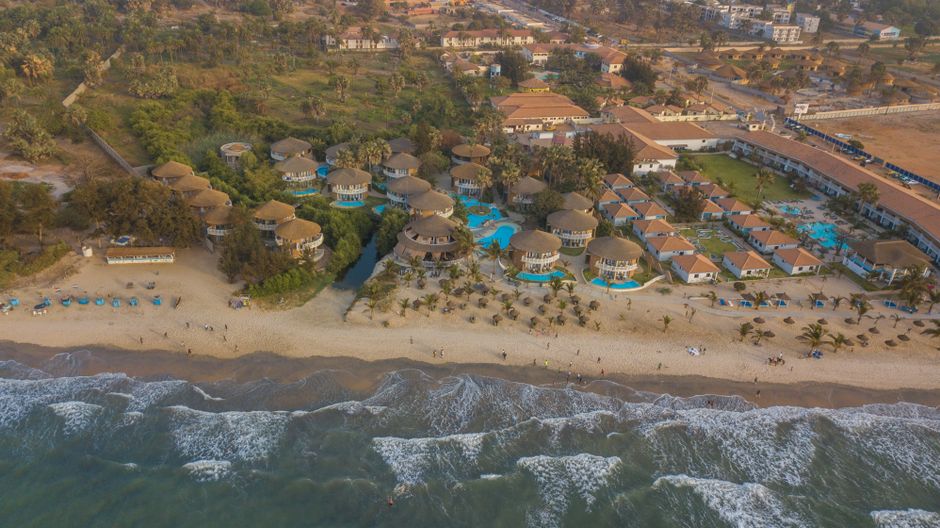
Kololi is the heart of The Gambia’s resort coast, and for most visitors it’s where a holiday on the “Smiling Coast” begins and ends. Its long, sandy Atlantic beach is lined with palm trees and hotels, and inland from the shore, the Senegambia strip packs restaurants, bars, nightclubs, craft stalls, supermarkets and tour desks into a few lively blocks, making it the busiest evening spot in the country. Yet Kololi also has a quieter side: next door, the coastal forest of Bijilo Forest Park is full of monkeys, and birdwatchers find kingfishers, bee-eaters and rollers in hotel gardens and along nearby Kotu Creek. From November to May, the weather is almost guaranteed to be sunny, warm and dry, which is why winter charter flights from Europe land just 20 minutes away. Kololi is also the most convenient base for day trips: the capital, Banjul, the sacred crocodile pool at Kachikally, the forest trails of Abuko, the fishing beach at Tanji, mangrove boat trips, and river excursions to the UNESCO-listed Kunta Kinteh Island are all within easy reach. It’s an easy, friendly introduction to West Africa, with English widely spoken and hotels for every budget.
Right now in Kololi
- Wed 26–31°C 78–88°F 4 mm Rain
- Thu 25–29°C 77–84°F 5 mm Light rain
- Fri 26–28°C 78–83°F 11 mm Rain
Weather: MET Norway (CC BY 4.0) · Sea temperature: NOAA CoastWatch
Top tours in Kololi
See all tours for Kololi →
From local operators, with prices and reviews; you check availability and book on Viator, our partner. We may earn a commission at no extra cost to you. How we earn money
Kololi at a glance
- Best for: beach holidays, winter sun, birdwatching, nightlife on the Senegambia strip and easy day trips.
- How long: 7 nights for a classic beach holiday; 4–5 nights as part of a wider trip.
- Best time: November to May for dry, sunny weather; December to February is the most comfortable.
- Getting there: fly into Banjul International Airport (BJL), about 15–20 km (9–12 miles) away.
- Getting around: green tourist taxis, yellow town taxis, minibuses and organized excursions.
- Good to know: the airport security fee of US$20 is charged on arrival and departure, and many nationalities need no visa, but US and French citizens do.
- Before you go: visas, money and general safety are in our Gambia travel guide.
Kololi areas and who each one suits
Kololi is part of the Tourism Development Area, the strip of coast where most hotels are allowed. It runs into Kotu to the north and Bijilo to the south, and the town of Serrekunda lies a few kilometers inland.
The Senegambia strip
The few blocks around the road leading down to the Senegambia Hotel are known as the Senegambia strip, the liveliest part of the resort coast. Restaurants serve Gambian, African, European and Asian food, bars and clubs stay open late, there’s live music most nights, and the craft market and supermarkets are on hand. Hotels here range from big beachfront resorts to small apartment blocks. It suits travelers who want restaurants and nightlife on the doorstep.
Kololi beach
South of the strip, Kololi’s beach hotels sit right on the sand, with gardens, pools and beach bars. The beach is long, wide and good for walks at sunset, and quieter the farther you walk from the strip. This area suits couples and families wanting a classic beach holiday.
Kotu
North of Kololi, Kotu has its own beach, several mid-range hotels and Kotu Creek, a tidal creek with mangroves and rice fields that’s one of the best birdwatching spots on the coast, especially at the bridge and the sewage ponds (better than they sound for birds). Kotu is calmer than Kololi, and still a short walk or taxi from the strip.
Bijilo and Kerr Serign
South of Kololi, Bijilo has newer resort hotels and apartments next to the Bijilo Forest Park and long empty stretches of beach. Kerr Serign, inland, has guesthouses and villas. These suit travelers who want quieter surroundings within a short taxi ride of the strip.
Where to stay in Kololi
- Senegambia strip: walk to restaurants, bars and nightlife; big resorts and apartments.
- Kololi beachfront: direct beach access, pools and gardens; good for families.
- Kotu: quieter mid-range hotels, birdwatching at Kotu Creek and an easy walk to the beach.
- Bijilo: newer resorts and apartments next to the forest park and quiet beaches.
- Kerr Serign and Brufut: guesthouses, villas and eco-lodges for a peaceful stay with a car or taxi.
Top things to see in and around Kololi
Kololi beach
Kololi’s wide, golden beach stretches for kilometers along the Atlantic, backed by palms and hotel gardens. It’s ideal for long walks, sunsets and beach bars, and the water is warm from about October to December. The Atlantic can have strong waves and currents, so swim near your hotel where others swim, follow any flags, and don’t swim alone. See our beaches guide.
Bijilo Forest Park
Just south of the strip, Bijilo Forest Park, often called the Monkey Park, protects a strip of coastal forest with loop trails where green vervet monkeys, red colobus monkeys and many birds are easy to see, often within a few feet. There’s a small entrance fee, and guides are available. Don’t feed the monkeys, as it harms them and can make them aggressive. Go in the morning or late afternoon, when it’s cooler.
Kotu Creek
Kotu Creek and the nearby ponds and rice fields are one of the best places on the coast for birdwatching, with kingfishers, herons, egrets, sandpipers, bee-eaters and rollers. Local bird guides wait at the Kotu bridge in the mornings; agree the price before setting off.
The Senegambia craft market
Near the Senegambia strip, the craft market has stalls selling batik and tie-dye cloth, wood carvings, masks, drums, baskets and jewelry. Bargain patiently and with a smile, and look at several stalls before buying.
Kachikally Crocodile Pool
In nearby Bakau, about 20 minutes by taxi, the sacred Kachikally Crocodile Pool is home to dozens of Nile crocodiles, which local people believe bring fertility and good luck. The crocodiles are well fed and usually docile, and visitors can see them up close under the guidance of attendants; there’s a small museum and a nature trail. Follow the staff’s instructions carefully.
Serrekunda market
A short taxi ride inland, Serrekunda market is the country’s busiest, a maze of stalls selling fabric, spices, fruit, fish, hardware and everything else. Go with a guide or a friend from your hotel, keep valuables secure, and enjoy the colors and noise.
Other things to do in Kololi
Kololi with children
The beach, hotel pools, the monkeys at Bijilo, the crocodiles at Kachikally and boat trips through the mangroves make The Gambia a good family destination. Many resorts have kids’ clubs and family rooms. Take care with sun and heat, use insect repellent, and talk to a doctor about malaria prevention for children well before you travel.
Birdwatching
Kololi is a great base for birdwatchers, with hundreds of species within an hour’s drive. Hire a local bird guide for half-day trips to Kotu Creek, Abuko, Brufut Woods, Tanji and the south coast. The best time is November to April, when migrants from Europe join the resident species.
Boat trips and fishing
Half-day and full-day boat trips leave from Denton Bridge near Banjul and Lamin Lodge to explore the mangrove creeks, with birdwatching, oyster collecting and lunch on board. Sportfishing boats go out for barracuda, ladyfish and other species. See our boat trips guide.
Food and drink
The Senegambia strip has a wide choice of restaurants, from Gambian and Senegalese food to Italian, Lebanese, Indian and British pubs. Try domoda (peanut stew), benachin (spiced one-pot rice), chicken or fish yassa, grilled ladyfish or barracuda, and fresh oysters from the mangroves. Drink wonjo (hibiscus juice), baobab juice, ginger juice or local JulBrew beer. Local restaurants just off the main road are much cheaper than the hotel restaurants, and street stalls sell grilled afra meat and fresh fruit.
Nightlife
After dark, the Senegambia strip comes alive with bars, live kora and reggae music, dance clubs and casino lounges. Nightlife continues late on weekends, especially in the peak season from December to April.
Shopping
Besides the craft market, shop for fabric at Serrekunda market and have clothes made by a tailor, buy groundnuts and spices from local vendors, and pick up batiks from the workshops of Serrekunda.
Day trips from Kololi
Banjul
The capital, about 30–40 minutes by taxi, has Arch 22, with its viewing gallery and small museum, the National Museum, the busy Albert Market and the King Fahad Mosque. A half-day is enough for most visitors.
Abuko Nature Reserve and Lamin
About 30 minutes inland, Abuko Nature Reserve has shaded forest trails around a pool, with monkeys, monitor lizards, crocodiles and many birds. Combine it with lunch at Lamin Lodge, a rustic wooden restaurant on a mangrove creek.
Tanji and the south coast
About 20–30 minutes south, the fishing village of Tanji is liveliest in the late afternoon, when brightly painted pirogues land the catch and fish are smoked on the beach. The nearby Tanji Bird Reserve, the beaches of Sanyang and Gunjur, and the village of Kartong make a good full-day trip. See our cycling guide for exploring the quiet lanes by bike.
Makasutu Culture Forest
Near Brikama, about 45 minutes away, Makasutu Culture Forest offers guided forest walks, canoe trips through the mangroves, cultural performances and lunch in a protected forest.
Kunta Kinteh Island and Juffureh
A full-day excursion by boat or by road via the Banjul–Barra ferry visits the UNESCO-listed Kunta Kinteh Island, with its ruined fort, and the nearby villages of Juffureh and Albreda, linked to the history of the slave trade and to the story of *Roots*. Book through an established operator.
Upriver
For the chimpanzees of the River Gambia National Park and the Wassu Stone Circles, plan at least two or three nights in Janjanbureh, about 270 km (170 miles) upriver. See our Gambia travel guide.
Nearby destinations
- Dakar156 km
Getting there and getting around
By air
Banjul International Airport (BJL) at Yundum is about 15–20 km (9–12 miles) from Kololi, or 20–30 minutes by road. Winter charter and scheduled flights arrive from the UK, the Netherlands, Belgium, Spain and Scandinavia, many connecting through Brussels, Amsterdam or Casablanca, and there are regional flights to Dakar. All passengers pay a security fee of US$20 (D1,000) on arrival and again on departure, in cash; check whether your package includes it. Package travelers are met by transfer buses, and green tourist taxis wait outside arrivals.
Getting around Kololi
- Green tourist taxis: licensed to serve visitors, they wait outside hotels and charge set rates for common trips; confirm the fare before setting off.
- Yellow town taxis: cheaper and often shared, they run along the main roads; agree the price first.
- Gele-gele minibuses: very cheap minibuses along the main roads to Serrekunda, Banjul and Brikama; crowded but fun.
- On foot: the strip, the beach and Bijilo are easy to walk between in the daytime; take a taxi at night.
- Car with a driver: the easiest way to explore farther afield; ask your hotel to arrange one.
When to go and how long to stay
Kololi has a tropical climate with a long dry season. From November to May, it’s sunny, with almost no rain, highs of 31–34 °C (88–93 °F) and sea breezes; nights from December to February can be pleasantly fresh, around 18–20 °C (64–68 °F). The dry, dusty harmattan wind can bring haze between December and February. The rainy season runs from about June to October, with heavy storms and high humidity, especially in August, when roads can flood; some hotels close, and those that stay open offer lower prices and lush green landscapes. The table uses the 1991–2020 climate normals for the Banjul station of The Gambia’s national meteorological service, about 13 km (8 miles) from Kololi, as published by the World Meteorological Organization (WMO): average daily highs and lows, total precipitation, and days with at least 1 mm of rain.
| Month | Average high / low | Rain (days with 1 mm or more) | What to expect |
|---|---|---|---|
| January | 32 °C (90 °F) / 18 °C (65 °F) | 1 mm (under 0.1 in), 0 days | Sunny and dry; cool nights |
| February | 33 °C (92 °F) / 19 °C (66 °F) | 1 mm (under 0.1 in), 0 days | Dry; harmattan haze possible |
| March | 33 °C (91 °F) / 20 °C (68 °F) | under 1 mm, 0 days | Dry and warm; birding |
| April | 32 °C (89 °F) / 20 °C (69 °F) | under 1 mm, 0 days | Dry; Easter holidays |
| May | 32 °C (89 °F) / 21 °C (70 °F) | 2 mm (0.1 in), 0 days | Dry; humidity rising |
| June | 32 °C (90 °F) / 23 °C (73 °F) | 45 mm (1.8 in), 3 days | First rains |
| July | 32 °C (89 °F) / 24 °C (75 °F) | 175 mm (6.9 in), 11 days | Rainy and humid |
| August | 32 °C (89 °F) / 24 °C (75 °F) | 304 mm (12.0 in), 16 days | Wettest month |
| September | 32 °C (90 °F) / 24 °C (75 °F) | 244 mm (9.6 in), 14 days | Rainy; green landscapes |
| October | 34 °C (92 °F) / 24 °C (75 °F) | 66 mm (2.6 in), 4 days | Rains ending; warm sea |
| November | 34 °C (93 °F) / 23 °C (73 °F) | 1 mm (0.1 in), 0 days | Dry; season begins |
| December | 33 °C (92 °F) / 20 °C (68 °F) | under 1 mm, 0 days | Sunny; festive season |
Banjul receives about 840 mm (33 in) of rain a year, nearly all from June to October.
Events worth planning around
- Christmas and New Year: the busiest weeks, with parties along the strip; book early.
- Independence Day (February 18): celebrations and parades in Banjul.
- Tobaski and Koriteh: the Muslim festivals, when families celebrate and many businesses close for a day or two.
- Peak birding season (November to April): guides are in high demand, so book ahead.
How long to stay: 4, 7 and 10 days
- 4 days: the beach, Bijilo Forest Park, Kotu Creek, Kachikally and an evening on the strip.
- 7 days: add Banjul, Abuko and Lamin Lodge, Tanji and the south coast, and a mangrove boat trip.
- 10 days: add Kunta Kinteh Island and Juffureh, Makasutu, and two or three nights upriver or on the south coast.
Typical costs in Kololi
Prices are approximate, for October 2026, converted at about D72.3 to the US dollar (Central Bank of The Gambia).
| Item | Typical cost |
|---|---|
| Airport security fee, arrival and departure, each | US$20 (D1,000) |
| Tourist taxi, airport to Kololi | about D1,000–1,800 (about US$14–25) |
| Tourist taxi, Kololi to Bakau | about D500–900 (about US$7–12) |
| Bijilo Forest Park entrance | about D100–300 (about US$1.40–4) |
| Domoda or benachin at a local restaurant | D200–450 (about US$2.75–6.20) |
| Dinner on the Senegambia strip | D800–1,800 (about US$11–25) |
| Half-day bird-guide trip | about D1,500–3,500 (about US$21–48) |
| Mid-range hotel double, per night | D4,500–9,500 (about US$62–131) |
Safety in Kololi
Kololi is relaxed and generally safe, but petty theft happens in resort areas, especially at night and on isolated stretches of beach. Don’t take valuables or large amounts of cash to the beach, use the hotel safe, and keep a copy of your passport and entry stamp separately. You’ll be approached by young men known as bumsters, offering friendship, tours or help; most are harmless, and a polite, firm “no, thank you” is enough. Book tours and guides through your hotel or established operators, and don’t accept offers of informal trips into Senegal. After dark, take a taxi rather than walking on unlit roads. The Atlantic here can have strong waves and currents, so swim near your hotel where others swim, follow any flags and local advice, and never swim alone or after drinking. Malaria is present, so use repellent, cover up at dusk and take any preventive medicine prescribed. The sun is strong, so drink plenty of water. There’s no single national emergency number that works reliably, so ask your hotel for the local police, tourist police and medical numbers when you arrive.
Practical tips for Kololi
- Carry cash: The Gambia is mainly cash-based; ATMs are around the Senegambia area, but bring euros, pounds or dollars as backup.
- Keep US$20 for the airport: the security fee is due again when you leave.
- Agree taxi fares first: tourist taxis have set rates, but confirm before you go.
- Book bird guides ahead: in the peak season from November to February.
- Respect the monkeys: don’t feed them at Bijilo or in hotel gardens.
What to pack for Kololi
Light, breathable clothes, a light sweater for cool evenings from December to February, clothes that cover shoulders and knees for Banjul and villages, swimwear, a sun hat, sunglasses and high-factor sunscreen, insect repellent with DEET or picaridin, any antimalarials, binoculars, sandals and comfortable walking shoes, a light rain jacket from June to October, cash for the airport fee, and a UK-style type G plug adapter. See our travel adapters and rain jackets guides.
Kololi travel FAQ
Where is Kololi?
On The Gambia’s Atlantic coast, in the Tourism Development Area about 15 km (9 miles) southwest of Banjul and 15–20 km (9–12 miles) from the airport.
What is the Senegambia strip?
The lively area of restaurants, bars, clubs, craft stalls and hotels around the Senegambia Hotel in Kololi, the center of the resort coast’s nightlife.
Is Kololi beach good for swimming?
The beach is beautiful, but the Atlantic can have strong waves and currents. Swim near your hotel where others swim, follow any flags and local advice, and never swim alone.
What is the best time to visit Kololi?
November to May, the dry season, with December to February the most comfortable. August is the wettest month.
Do I need a visa to visit The Gambia?
Citizens of ECOWAS countries and of countries with visa exemption agreements, such as the UK, Germany, the Netherlands and Spain, don’t; US and French citizens need a visa, available on arrival or from embassies. See our Gambia travel guide.
How far is Kololi from the airport?
About 15–20 km (9–12 miles), 20–30 minutes by taxi or transfer.
Can I see monkeys in Kololi?
Yes, at Bijilo Forest Park next to the resorts, where green vervet and red colobus monkeys are easy to see. Please don’t feed them.
Is Kololi good for birdwatching?
Yes. Kotu Creek, Bijilo and the hotel gardens are excellent, and Abuko, Brufut Woods and Tanji are a short drive away.
What are bumsters?
Young men who approach tourists offering friendship, tours or help. A polite, firm “no, thank you” is usually enough; book guides through your hotel.
What day trips can I take from Kololi?
Banjul, Kachikally, Abuko and Lamin Lodge, Tanji and the south coast, Makasutu, mangrove boat trips and Kunta Kinteh Island.
Sources and last review
Researched and last reviewed on 5 October 2026. Visa categories and the airport security fee: the Gambia Immigration Department; fee payment details, bumsters, petty theft, isolated beaches, cash economy and emergency numbers: the UK government’s factual entry and safety pages, used for practical facts only; malaria and yellow fever: the US CDC; Kunta Kinteh Island: the UNESCO World Heritage Center; the exchange rate: the Central Bank of The Gambia; climate normals: The Gambia’s national meteorological service via the World Meteorological Organization’s 1991–2020 normals (Banjul station). Attractions, distances, transport, events and typical prices are general references or estimates, flagged for checking. Prices and rules change, so check locally before you go. For visas, money and general safety, see our Gambia travel guide.
Plan your trip
Partner links: TravelerCenter may earn a commission if you book, at no extra cost to you.