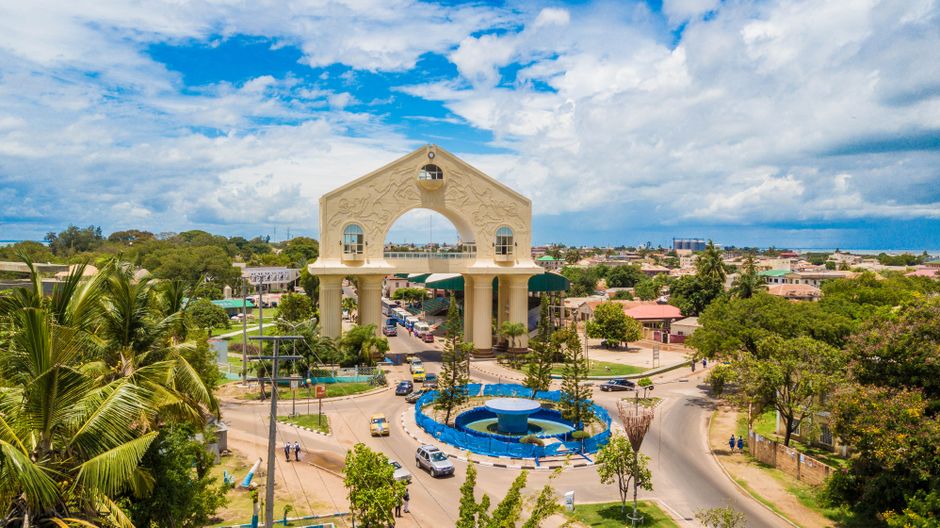
The Gambia, mainland Africa’s smallest country, is a narrow ribbon of land along the great Gambia River, almost entirely surrounded by Senegal except for a short stretch of Atlantic coast. Known as the “Smiling Coast of Africa” for the warmth of its people, it has long been one of West Africa’s most popular winter-sun destinations, with direct flights from Europe, English as the official language and a relaxed pace of life. Most visitors stay in the resorts of the Tourism Development Area, a string of beaches and hotels from Bakau through Kotu and Kololi to Bijilo, where the lively Senegambia strip has restaurants, bars and nightlife. But the country is also a superb destination for birdwatching, with hundreds of species in a small area, and for gentle adventures upriver: boat trips through the mangroves, the chimpanzees of the River Gambia National Park, the UNESCO-listed Kunta Kinteh Island, linked to the history of the slave trade and the story of *Roots*, and the ancient Wassu Stone Circles. Add the bustling capital, Banjul, the crocodile pool at Kachikally, the fishing village of Tanji and quiet southern beaches, and The Gambia makes an easy, friendly introduction to West Africa. Many European nationalities, including British, German, Dutch, Belgian, Spanish, Italian and Scandinavian travelers, can enter without a visa, while others, including US and French citizens, need one.
Right now in The Gambia
- Wed 25–31°C 77–88°F 6 mm Rain
- Thu 25–29°C 77–84°F 8 mm Heavy rain
- Fri 25–28°C 77–83°F 9 mm Rain
Weather: MET Norway (CC BY 4.0)
Multi-day tours of The Gambia
Multi-day tours from local operators. You check dates and book on Viator, our partner; we may earn a commission at no extra cost to you. How we earn money
The Gambia at a glance
The Gambia covers just 11,300 km² (4,400 square miles), about the size of Jamaica or a little smaller than Connecticut. It stretches about 400 km (250 miles) inland along both banks of the Gambia River, but is rarely more than 50 km (30 miles) wide, and is bordered on three sides by Senegal. The coast faces the Atlantic for about 80 km (50 miles). The country has about 2.5 million people, most of them living in the urban area around Banjul, the capital on St. Mary’s Island at the river mouth, and Serrekunda, the largest town, in the Kanifing municipality next to the resorts.
The official language is English, used in government, schools and tourism. Mandinka, Wolof, Fula, Jola and Serahule are widely spoken; “abaraka” (thank you, in Mandinka) and “jërëjëf” (in Wolof) are appreciated. More than 90% of Gambians are Muslim, with a Christian minority. The Gambia is on Greenwich Mean Time (UTC+0) all year, with no daylight saving time, so it’s on London time in winter. Electricity is 230 V, with British-style three-pin sockets.
A short history
The Gambia River was a trade route for centuries, part of the Mali Empire and later of Mandinka and Wolof kingdoms. Portuguese navigators reached it in the 15th century, and in the 17th century European powers fought over the small island in the river now called Kunta Kinteh Island, a center of the trade in gold, ivory and enslaved Africans. Britain controlled the territory from the 19th century, with borders drawn along the river. The Gambia became independent on February 18, 1965, and a republic in 1970. Tourism began with Scandinavian charter flights in the 1960s and grew into a major part of the economy, alongside groundnuts (peanuts) and fishing.
The Gambia’s regions for travelers
- The coast and the Tourism Development Area: Bakau, Fajara, Kotu, Kololi and the Senegambia strip, Kerr Serign, Bijilo and Brufut.
- Banjul: the capital, with Arch 22, the National Museum and Albert Market.
- The south coast: Tanji, Sanyang, Gunjur and Kartong, with quieter beaches and eco-lodges.
- The lower river: Lamin, Makasutu, the Bintang Bolong creek, Kunta Kinteh Island and Juffureh.
- Upriver: Janjanbureh, the River Gambia National Park, the Wassu Stone Circles and Basse.
Where to go: beaches, birds and the river
Most visitors spend their holiday on the coast and take day trips inland. Independent travelers can head upriver for a few nights in Janjanbureh to see the chimpanzee islands and the stone circles. See our guide to:
- Kololi: the heart of the resort coast, with the Senegambia strip, beaches, Bijilo Forest Park and easy trips to Banjul, Kachikally and Tanji.
Banjul
Banjul, one of Africa’s smallest capitals, sits on an island at the mouth of the Gambia River. See Arch 22, a 35 m (115 ft) monumental gateway built in the 1990s at the entrance to the city, with a viewing gallery and a small museum; the National Museum, covering the country’s history and culture; the colorful, chaotic Albert Market; and the large King Fahad Mosque. Banjul is busy by day and quiet at night, and most visitors see it on a half-day trip.
Bakau and Kachikally
In Bakau, the Kachikally Crocodile Pool is a sacred pool where dozens of Nile crocodiles live; local people visit for blessings, and visitors can see them up close, with a small museum on site. Bakau also has a busy fish market, a botanical garden and cliffs overlooking the ocean.
Abuko Nature Reserve
About 20 km (12 miles) inland, Abuko Nature Reserve is a small but rich patch of gallery forest around a pool, with monkeys, monitor lizards, crocodiles and many birds, easily seen from shady trails and hides. It’s one of the best introductions to Gambian wildlife.
Tanji and the south coast
South of the resorts, Tanji is a busy fishing village where colorful pirogues land the catch on the beach in the late afternoon and fish are smoked in huts along the shore; nearby, the Tanji Bird Reserve protects lagoons, dunes and offshore islands. Farther south, Sanyang, Gunjur and Kartong have long, quiet beaches, eco-lodges and good birdwatching.
Makasutu and the lower river
Near Brikama, Makasutu Culture Forest offers guided walks, mangrove canoe trips and cultural performances in a protected forest. River excursions from Lamin Lodge and Denton Bridge explore the mangrove creeks, with oysters, birds and fishing communities, and the Bintang Bolong creek has lodges for a night on the water.
Bijilo Forest Park and Brufut Woods
Next to the resorts at Kololi, Bijilo Forest Park (often called the Monkey Park) has shady trails through coastal forest where green vervet and red colobus monkeys are easy to see; visitors are asked not to feed them. A little farther south, Brufut Woods is a community-protected forest famous among birdwatchers for owls, nightjars and other forest species, best visited early with a local guide.
Fajara and Cape Point
Between Bakau and Kotu, Fajara is a leafy residential area with a golf course, a cliff-top path and small guesthouses, while Cape Point at the northern end of the resort coast has a sheltered beach facing the river mouth, calmer than the open Atlantic, and a few resort hotels. Both are quieter alternatives to the Senegambia strip.
Kunta Kinteh Island and Juffureh
On the north bank of the river, about 30 km (19 miles) upstream from Banjul, Kunta Kinteh Island (formerly James Island) holds the ruins of a fort used in the slave trade. With the nearby villages of Albreda and Juffureh, the colonial buildings along the river and other forts, it’s part of the UNESCO World Heritage Site “Kunta Kinteh Island and Related Sites,” inscribed in 2003. Juffureh is known as the home village of Kunta Kinte, the ancestor described by Alex Haley in *Roots*, and has a museum about the slave trade. Day trips go by boat from the coast or by road via the Banjul–Barra ferry.
Janjanbureh and the River Gambia National Park
About 270 km (170 miles) upriver, the island town of Janjanbureh (formerly Georgetown) has colonial buildings, lodges and a relaxed river life. Nearby, the River Gambia National Park protects the Baboon Islands, where a long-running project has returned chimpanzees to the wild; boats circle the islands to watch them, but landing isn’t allowed. Hippos, crocodiles and many birds are often seen along the way.
The Wassu Stone Circles
North of Janjanbureh, the Wassu Stone Circles are groups of carved laterite pillars erected more than a thousand years ago as burial monuments, with a small museum. With other sites in The Gambia and Senegal, they form the UNESCO World Heritage Site “Stone Circles of Senegambia,” inscribed in 2006.
Birdwatching in The Gambia
The Gambia is one of the most accessible birding destinations in Africa: hundreds of species have been recorded in this small country, and many can be seen within a short drive of the resorts. Expect colorful kingfishers, bee-eaters, rollers, sunbirds, turacos, hornbills and herons around Kotu Creek and the hotel gardens, raptors and waders at Tanji and the south coast, forest species at Abuko and Brufut Woods, and, upriver, Egyptian plovers, carmine bee-eaters and other savanna birds. The best season is November to April, when European migrants join resident species and the dry weather makes travel easy. Local bird guides, many trained through community programs, know where to find specialties and can be booked through hotels and lodges; agree the price and itinerary first.
Kiang West National Park
On the south bank about 100 km (60 miles) inland, Kiang West National Park protects dry woodland, mangroves and creeks, with baboons, warthogs, bushbuck, monkeys and many birds of prey, and occasional sightings of manatees and dolphins in the river. Facilities are basic, so it’s best visited with a guide on the way upriver.
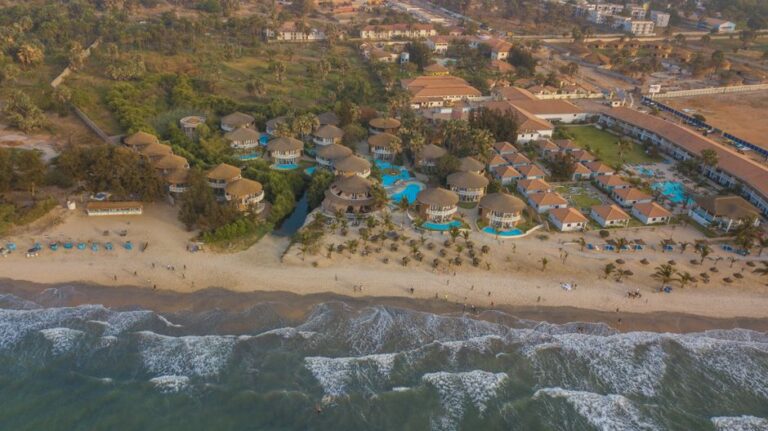
Kololi Travel Guide
Plan a trip to Kololi, The Gambia: the Senegambia strip, Kololi and Kotu beaches, Bijilo Forest Park's monkeys, Kotu Creek birding, Kachikally, where to…
Best time to visit The Gambia
The Gambia has two clear seasons. The dry season, from about November to May, is the main tourist season: it’s sunny, with almost no rain, low humidity and highs around 31–34 °C (88–93 °F) on the coast, cooled by sea breezes, while nights from December to February can be pleasantly fresh. Inland it’s much hotter, with highs above 40 °C (104 °F) in April and May. From about December to February, the harmattan wind can bring dusty haze. The rainy season runs from about June to October, with the heaviest rain in August, when storms, high humidity and localized flooding are common, some roads become difficult and some hotels close; but the countryside turns green, prices drop, and it’s a good time for birdwatchers interested in breeding species. The table shows rounded average daily highs and lows and annual rainfall from the Department of Water Resources (the national meteorological service), as published by the World Meteorological Organization (WMO) in its 1991–2020 climate normals.
| Region (station) | January high / low | August high / low | Rain a year |
|---|---|---|---|
| The coast and Banjul (Banjul) | 32 °C (90 °F) / 18 °C (65 °F) | 32 °C (89 °F) / 24 °C (75 °F) | about 840 mm (33 in) |
| Upriver (Janjanbureh) | 35 °C (95 °F) / 15 °C (58 °F) | 32 °C (90 °F) / 24 °C (74 °F) | about 820 mm (32 in) |
| The far east (Basse) | 35 °C (96 °F) / 15 °C (58 °F) | 32 °C (90 °F) / 23 °C (74 °F) | about 900 mm (36 in) |
The Gambia month by month
| Month | Weather | Highlights | Crowds and prices |
|---|---|---|---|
| January | Dry and sunny; cool nights | Peak birding season | High season |
| February | Dry; harmattan haze possible | Independence Day (February 18); birding | High season |
| March | Dry and warm | Good for upriver trips | High |
| April | Dry; very hot inland | Easter holidays | Busy at Easter |
| May | Dry and hot; humidity rising | Last weeks of the season | Shoulder season |
| June | First rains | Green season begins | Low season |
| July | Rainy and humid | Lush landscapes | Low season; some hotels close |
| August | Wettest month | Breeding birds; fewer visitors | Lowest prices |
| September | Rainy | Green river scenery | Low season |
| October | Rains ending | Season begins late in the month | Rising |
| November | Dry season begins | Migrant birds arrive; charter season starts | Busy |
| December | Dry, sunny and pleasant | Festive season on the coast | Very busy over Christmas |
Festivals and public holidays
Major celebrations follow the Islamic calendar, especially Tobaski (Eid al-Adha) and Koriteh (Eid al-Fitr), when families gather and many businesses close. Other events include Independence Day (February 18), music and cultural festivals on the coast in the dry season, and occasional heritage festivals in Juffureh and Albreda. National holidays also include New Year’s Day, Good Friday and Easter Monday, Labor Day (May 1), Assumption Day (August 15), Christmas and the Prophet’s Birthday.
How long to stay: sample itineraries
- 1 week: a beach week in Kololi or Kotu with day trips to Banjul, Abuko, Kachikally and Tanji.
- 10 days: add a river excursion to Kunta Kinteh Island and Juffureh, a day at Makasutu and a few nights on the quiet south coast.
- 2 weeks: add two or three nights upriver in Janjanbureh, with the River Gambia National Park and the Wassu Stone Circles.
- Birding trip: Abuko, Tanji, Brufut Woods, Kotu Creek, the south coast and an upriver tour with a specialist guide.
- Combine with Senegal: the Sine-Saloum Delta and the Casamance are close by road; see our Senegal travel guide.
Entry, money and costs
Visas (last reviewed October 2026)
The Gambia Immigration Department lists several groups. Citizens of ECOWAS countries don’t need a visa. Citizens of countries with a visa exemption agreement, which include the United Kingdom, Germany, the Netherlands, Belgium, Spain, Italy, Sweden, Finland, Iceland, Luxembourg, Poland, the Czech Republic, Canada, Australia and a few others, can also enter without a visa. Citizens of some countries, including the United States, France, Portugal, Austria, Switzerland, Greece and Brazil, need a visa only, which can be obtained from Gambian embassies or, according to the department, on arrival at official ports of entry. Citizens of many other countries need both a visa and an entry clearance approved in advance, which a host presents to immigration. The department notes that these statuses can change, so check before you travel. According to the UK government, British visitors receive an entry stamp for 28 days, which can be extended twice by 28 days at the Immigration Office in Banjul or the tourist police stations in the resort area; your passport must be valid for the length of your stay.
The airport security fee
All passengers pay a security fee of US$20 (D1,000) when arriving at and departing from Banjul International Airport, according to the Gambia Immigration Department, with exemptions for diplomats and children aged 2 and under; the UK government says transit passengers are also exempt, and that the fee can be paid in dollars, euros, pounds or dalasi at kiosks in the terminal. Card machines are often out of service, so carry cash. Some package holidays include it, so check with your tour operator.
Health requirements
The Gambia asks for a yellow fever vaccination certificate from travelers aged 9 months and over arriving from a country with yellow fever risk, including after airport transits of more than 12 hours, according to the US CDC, which also recommends the vaccine for all travelers aged 9 months and over. Malaria is present throughout the country, and the CDC recommends preventive medicine.
Money
The currency is the dalasi (GMD, written D). On October 5, 2026, the Central Bank of The Gambia’s valuation rate was about D72.3 to the US dollar and D85.3 to the euro. The Gambia is mainly a cash economy: ATMs are found in the resort area around Senegambia and in Serrekunda and Banjul, but they’re scarce and unreliable elsewhere, and only some hotels and restaurants accept cards (mostly Visa). Bring euros, pounds or dollars in clean notes and change them at banks or licensed bureaus, and carry enough cash for upriver trips.
Tipping
Wages are low, and tips are appreciated: about 10% in restaurants, and small tips for guides, drivers, boat crews and hotel staff.
What a trip costs
Prices are approximate, for October 2026, converted at about D72.3 to the US dollar (Central Bank of The Gambia).
| Item | Typical cost |
|---|---|
| Airport security fee, arrival and departure, each | US$20 (D1,000) |
| Domoda or benachin at a local restaurant | D200–450 (about US$2.75–6.20) |
| Mid-range restaurant dinner | D800–1,800 (about US$11–25) |
| Local beer in a bar | D100–250 (about US$1.40–3.50) |
| Tourist taxi, Kololi to Banjul | about D800–1,500 (about US$11–21) |
| Full-day river trip with lunch | about D2,500–5,000 (about US$35–69) |
| Mid-range hotel double, per night | D4,500–9,500 (about US$62–131) |
A mid-range beach holiday costs about US$80–150 per person per day, excluding flights; many visitors book packages, which can be good value in the dry season.
Getting there and getting around
By air
Banjul International Airport (BJL) is at Yundum, about 25 km (16 miles) from Banjul and 15–20 km (9–12 miles) from the resorts. Winter charter and scheduled flights come from the UK, the Netherlands, Belgium, Spain and Scandinavia, many via Brussels, Amsterdam or Casablanca, and there are regional flights to Dakar and other West African cities. Most package travelers are met by a transfer; otherwise take an official tourist taxi.
Taxis and minibuses
Two kinds of taxis operate. Green tourist taxis, licensed to serve visitors, wait outside hotels and charge set rates for common trips. Yellow town taxis are cheaper and often shared, picking up passengers along fixed routes; agree the fare first. Gele-gele minibuses run along the main roads between Banjul, Serrekunda, Brikama and the coast. For upriver trips, hire a car with a driver or join a tour; some roads are paved but potholed.
The river and the ferries
The Banjul–Barra ferry crosses the river mouth to the north bank; it’s often crowded and overloaded, safety equipment is limited, and it sometimes runs aground on sandbanks, so get out of your vehicle quickly after parking. The Senegambia Bridge at Farafenni, farther upriver, is an alternative crossing. Tourist boats run river excursions from the coast to Kunta Kinteh Island and up the creeks.
Upriver by boat or road
Traveling upriver is part of the adventure. Paved roads run along the south bank to Janjanbureh and Basse, a drive of five to seven hours with stops, while organized river cruises of one to several nights sail upstream from the coast on traditional boats, stopping at villages, the chimpanzee islands and the stone circles. Accommodation upriver is mostly simple lodges and camps, and electricity and mobile signal can be limited, so bring cash, a flashlight and a power bank.
Driving
The Gambia drives on the right. Roads are often badly potholed, lighting is poor at night, and driving standards are erratic, especially at dusk, so most visitors use drivers. Police checkpoints are common; carry your passport or a printed copy and keep calm.
Culture, food and everyday etiquette
Food and drink
Gambian food is tasty and filling. Try domoda, a rich peanut stew with meat or fish served over rice; benachin (one-pot rice, the local jollof); yassa, chicken or fish in onion and lemon sauce; superkanja, an okra and palm oil stew; and afra, grilled meat from roadside stalls. Seafood is excellent: grilled ladyfish, barracuda, prawns and oysters from the mangroves. Drinks include wonjo (hibiscus), baobab juice and ginger juice, the local JulBrew beer, and attaya, strong sweet green tea served in three rounds.
Bumsters and guides
On beaches and in the resorts, you’ll meet young men known locally as bumsters, who offer to be your friend, guide or boat captain. Most are simply looking for work; a polite but firm “no, thank you” is enough. Use guides licensed through your hotel, the tourist information points or established tour operators, and be wary of offers to take you across the border into Senegal informally.
Music, wrestling and crafts
The kora, a 21-string harp-lute played by griots (hereditary musicians and storytellers), is central to Mandinka culture, and you can hear it at cultural shows and in some restaurants. Traditional wrestling draws big crowds in the dry season, and drumming and dance groups perform at hotels and festivals. For crafts, the markets in Serrekunda, Bakau and Banjul’s Albert Market sell batik and tie-dye cloth, wood carvings, baskets, silver jewelry and colorful fabric that tailors can make into clothes in a day or two; the craft markets near the resorts are convenient, but bargain patiently.
Community tourism
Many lodges on the south coast and upriver are run with or by local communities, and some villages welcome visitors through organized programs. Book guides and village visits through recognized associations or your lodge, ask before entering compounds or photographing people, and buy crafts directly from makers. Don’t hand out sweets, money or pens to children; if you want to help, support a registered school or community project instead.
Etiquette
- Greetings: greet people warmly and take time to ask how they are before getting to business.
- Dress: beachwear is fine at the beach and pool; cover shoulders and knees in towns, markets and villages.
- Right hand: eat, give and receive with your right hand.
- Photos: ask before photographing people, and don’t photograph military or government buildings.
- Ramadan: be discreet about eating and drinking in public during daylight.
- ID: carry ID; the police usually accept a printed copy of your passport.
Safety, health and connectivity
The Gambia is generally relaxed and friendly, and most visits are trouble-free. The main issues are practical: malaria, the heat, the sea, roads and petty theft.
- Malaria: present throughout the country, especially in and after the rainy season; take preventive medicine as advised, use repellent and sleep under nets.
- Yellow fever: carry your certificate if arriving from a risk country, and consider the vaccine, which the CDC recommends.
- Heat and harmattan: drink plenty of water, especially upriver in April and May, and expect dusty air from December to February.
- Sea currents: the Atlantic beaches can have strong waves and currents; swim near your hotel where others swim, follow any flags and local advice, and don’t swim alone.
- Petty theft: take care in cities and resort areas, especially at night and on isolated beaches. Don’t take valuables to the beach, use the hotel safe, and keep a copy of your passport and entry stamp separately.
- Road safety: avoid driving at night, use roadworthy vehicles and drivers, and take care at dusk.
- Ferries: the Banjul–Barra ferry is often overloaded; consider the bridge at Farafenni instead.
- Rainy season: heavy rain from June to October can flood roads and cut off routes, so allow extra time.
- Emergencies: call 117 for the police, 116 for an ambulance and 118 for the fire service. Response can be slow outside the coast, so also ask your hotel for the nearest police, tourist police and clinic numbers when you arrive.
Connectivity: buy a prepaid SIM card from Africell, Qcell or Gamcel with your passport, or use an eSIM; coverage is good on the coast but patchier upriver.
Things to do: birds, beaches, river trips and culture
- Birdwatching: Abuko, Kotu Creek, Tanji, Brufut Woods and upriver wetlands, with hundreds of species.
- Beaches: Kololi, Kotu, Cape Point, Sanyang and Kartong. See our beaches guide.
- Boat trips: mangrove creeks from Lamin and Denton Bridge, Kunta Kinteh Island, and chimpanzee-spotting cruises upriver. See our boat trips guide.
- Culture and history: Banjul’s museums, Juffureh, the Wassu Stone Circles and Kachikally. See our city sightseeing guide.
- Walking and cycling: forest trails at Abuko and Makasutu and quiet lanes on the south coast. See our cycling guide.
- Fishing: sportfishing off the coast and in the river mouth.
What to pack for The Gambia
Light, breathable clothes, a light sweater for cool evenings from December to February, clothes that cover shoulders and knees for towns and villages, swimwear, a sun hat, sunglasses and high-factor sunscreen, insect repellent with DEET or picaridin, any antimalarials, binoculars for birdwatching, comfortable walking shoes and sandals, a light rain jacket from June to October, cash in euros, pounds or dollars, and a UK-style type G plug adapter. See our rain jackets, hiking shoes and travel adapters guides.
The Gambia travel FAQ
Do I need a visa for The Gambia?
Citizens of ECOWAS countries and of countries with visa exemption agreements, including the UK, Germany, the Netherlands, Belgium, Spain, Italy, Sweden and Canada, don’t. Others, including US and French citizens, need a visa, available from Gambian embassies or on arrival, according to the Gambia Immigration Department.
How long can I stay in The Gambia without a visa?
According to the UK government, British visitors get a 28-day entry stamp, which can be extended twice by 28 days at the Immigration Office in Banjul or tourist police stations.
Is there an airport tax in The Gambia?
Yes. A security fee of US$20 (D1,000) is charged on arrival and on departure at Banjul International Airport; young children and diplomats are exempt.
Why is The Gambia called the Smiling Coast?
For the friendliness and humor of its people, which visitors notice from the moment they arrive.
What is the best time to visit The Gambia?
November to May, the dry season, for sunshine and birdwatching; December to February is the most comfortable. August is the wettest month.
Do I need a yellow fever vaccination for The Gambia?
A certificate is required if you arrive from a country with yellow fever risk, and the CDC recommends the vaccine for all travelers aged 9 months and over.
Is there malaria in The Gambia?
Yes, throughout the country and all year, with the highest risk in the rainy season. The CDC recommends preventive medicine.
What currency is used in The Gambia?
The dalasi (GMD), about D72.3 to the US dollar in October 2026. The country is mainly cash-based, so bring foreign currency to exchange.
Can I use cards in The Gambia?
Some hotels and restaurants accept Visa cards, and there are ATMs in the resort area, but cash is essential, especially outside the coast.
What is Kunta Kinteh Island?
A small island in the Gambia River with the ruins of a fort used in the slave trade, part of a UNESCO World Heritage Site with the nearby villages of Juffureh and Albreda.
Where can I see chimpanzees in The Gambia?
In the River Gambia National Park near Janjanbureh, where boats circle the Baboon Islands; landing isn’t allowed.
Is The Gambia safe for tourists?
Most visits are trouble-free. Take normal precautions against petty theft, decline bumsters politely, use licensed guides and taxis, and protect yourself against malaria.
How many days do I need in The Gambia?
A week for a beach holiday with day trips; 10 days to two weeks to add the south coast and a trip upriver.
Sources and last review
Researched and last reviewed on 5 October 2026. Visa categories, visa on arrival and the airport security fee: the Gambia Immigration Department; Kunta Kinteh Island and the Stone Circles of Senegambia: the UNESCO World Heritage Center; yellow fever and malaria: the US CDC; the 28-day entry stamp and extensions, passport validity, fee payment methods, bumsters, petty theft, cash economy, ATMs, roads, the Banjul–Barra ferry, rainy season and emergency numbers: the UK government’s factual entry and safety pages, used for practical facts only; the exchange rate: the Central Bank of The Gambia; climate averages: The Gambia’s Department of Water Resources via the World Meteorological Organization’s 1991–2020 normals; the tourism season: the Ministry of Tourism and Culture. Area, population, history, attractions, distances, festivals, holidays, transport, food and typical prices are general references or estimates, flagged for checking. Rules and prices change, so check the official sites before you go.
Plan your trip
Partner links: TravelerCenter may earn a commission if you book, at no extra cost to you.