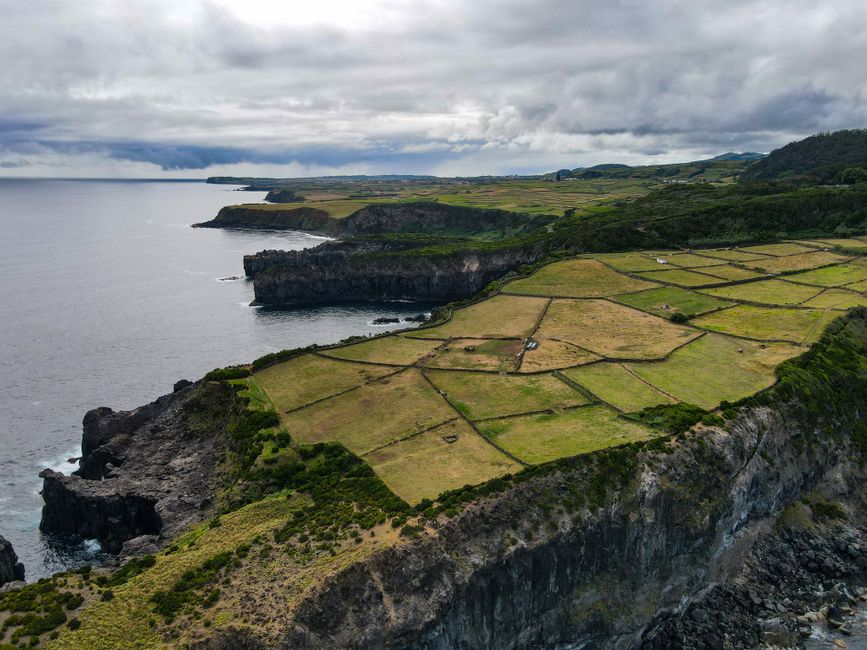
The Azores are nine green volcanic islands in the middle of the Atlantic, an autonomous region of Portugal about two and a half hours’ flight from Lisbon. People come to watch whales, hike crater rims above blue and green lakes, soak in iron-rich hot springs and climb Mount Pico, Portugal’s highest peak. Start with São Miguel, add one or two more islands, and give it at least a week.
Right now in Azores (Ponta Delgada)
- Wed18–22°C64–71°FMostly clear
- Thu17–21°C63–69°FMostly clear
- Fri17–21°C63–69°FPartly cloudy
Top tours in Azores
See all tours for Azores →
From local operators, with prices and reviews; you check availability and book on Viator, our partner. We may earn a commission at no extra cost to you. How we earn money
The Azores at a glance
- Best for: whale and dolphin watching, hiking, crater lakes, hot springs, volcanic landscapes, slow island life and seafood.
- How long: 5 days for São Miguel, 7–10 days for two or three islands, 14 days to island-hop properly.
- Best time: May to September for the driest, warmest weather; April and May for the big migrating whales.
- Weather: mild all year (Ponta Delgada averages 17–18 °C highs in winter and 24–26 °C in July and August) but changeable, with rain possible any month.
- Getting in: fly to Ponta Delgada (São Miguel) or Terceira from Lisbon or Porto; every island has an airport.
- Time zone: one hour behind Lisbon (UTC-1, UTC+0 in summer).
- Before you go: entry rules, money and general safety are on our Portugal travel guide.
The nine islands and who each one suits
The islands lie in three groups strung across about 600 km of ocean. About 245,000 people live on them (end of 2025, regional statistics office SREA), more than half on São Miguel. Each island has its own character, so choosing which ones to visit is the biggest decision of your trip.
Eastern group: São Miguel and Santa Maria
São Miguel, the “green island”, is the biggest, busiest and easiest to reach. It has the twin lakes of Sete Cidades, Lagoa do Fogo, the steaming Furnas valley and its hot pools, one of Europe’s oldest tea plantations, whale watching from Ponta Delgada and the most places to stay and eat. It suits first-timers, families and anyone with only five days. Santa Maria, a short flight south, is geologically the oldest island and known for drier, sunnier weather, with golden-sand beaches such as Praia Formosa, vineyard terraces above São Lourenço bay and a quiet village feel. Go there for beach days and a slower pace.
Central group: Terceira, Faial, Pico, São Jorge and Graciosa
Terceira is the festive island: its capital, Angra do Heroísmo, is a UNESCO World Heritage town of pastel churches and grid streets, and you can walk down inside an extinct volcanic vent at Algar do Carvão and swim in the lava pools at Biscoitos. Faial, the “blue island”, has the sailors’ marina at Horta, a huge green caldera and the Capelinhos volcano that rose from the sea in 1957–58. Across a short ferry ride, Pico is the adventure island: climb Mount Pico (2,351 m), walk through UNESCO-listed vineyards walled in black lava, and go whale watching from Lajes or Madalena. São Jorge is a long, narrow ridge with cliffs dropping to fajãs, flat strips of land at sea level, and famous for its cheese. Graciosa is the smallest and flattest of the group, with windmills, vineyards and the Furna do Enxofre cave in its caldera. Faial, Pico and São Jorge are known as “the triangle” and are easy to combine by boat.
Western group: Flores and Corvo
Flores is the wildest and wettest island: waterfalls pour off cliffs at Rocha dos Bordões and Poço da Ribeira do Ferreiro, lakes fill old craters, and the west coast at Fajã Grande feels like the end of Europe. Corvo, the tiniest, has one village of about 400 people and a single great crater, the Caldeirão, and is a magnet for birdwatchers in autumn. Both suit hikers and travellers with time to spare, because weather often delays flights and boats out here.
How to combine the islands
- First visit, one week: São Miguel plus either Terceira or Pico.
- Hikers and whale lovers: the triangle (Pico, Faial, São Jorge), linked by ferry, plus a few days on São Miguel.
- Beach and quiet: São Miguel with Santa Maria.
- Remote nature: Flores with a day trip to Corvo, reached via a flight from Ponta Delgada, Terceira or Horta.
Top things to see in the Azores
Prices below were checked on the official sites in October 2026. They change, so check before you go.
- Sete Cidades (São Miguel): the classic Azores view, a vast crater holding a blue lake and a green lake side by side. See it from the Vista do Rei viewpoint, walk part of the crater rim, or drive down to the village by the lakes. Go early: cloud often fills the crater by midday.
- Lagoa do Fogo (São Miguel): a wild crater lake with white-sand shores inside a nature reserve. In summer the access road is closed to visitors’ cars and a hop-on, hop-off shuttle runs instead (see below).
- Furnas valley (São Miguel): a village in a crater full of bubbling springs and fumaroles. On the shore of Lagoa das Furnas, the council’s cooking area is where the famous cozido stew is buried to cook; entry to this part of the lakeside costs €3 per person for non-residents (free under 12), and parking is free (as of October 2026).
- Gorreana tea plantation (São Miguel): rows of tea bushes running down to the sea at Maia. Visits and tastings at the factory are free with no booking needed, and you can wander the fields.
- Angra do Heroísmo (Terceira): a UNESCO World Heritage Site since 1983, with a harbour, fort and grand churches; climb Monte Brasil for the view.
- Pico vineyards: the UNESCO-listed Landscape of the Pico Island Vineyard Culture (2004), thousands of tiny plots enclosed by black stone walls near Madalena and Criação Velha.
- Capelinhos (Faial): a moonscape of ash and a half-buried lighthouse left by the 1957–58 eruption, with an underground interpretation centre.
- Fajãs of São Jorge: hike down to Fajã da Caldeira de Santo Cristo, a lagoon village known for clams and surfing.
- Rocha dos Bordões and Fajã Grande (Flores): basalt columns and waterfalls everywhere you look.
Protected areas
- Algar do Carvão
- Mount Pico
- Landscape of the Pico Island Vineyard Culture
Peaks and mountains
- Capelinhos
- Cabeço Gordo
- Pico da Vara
Other sights
Nature
Viewpoints
Things to do in the Azores
Whale and dolphin watching
The Azores are one of the best places in the world to see whales, and trips run from Ponta Delgada and Vila Franca do Campo on São Miguel, from Lajes and Madalena on Pico, from Horta on Faial and from Terceira. More than 20 species of whales and dolphins are seen here. Sperm whales live around the islands all year and are seen most often in summer. Spring (roughly April to June, peaking in late April and early May) brings migrating blue, fin and sei whales. Common, bottlenose, Risso’s and spotted dolphins are frequent, and summer is calmest at sea. Trips last about three hours, guided by lookouts on the cliffs who spot the blows.
Whale watching is regulated by regional law, and only licensed operators may take visitors out. Boats approach slowly from behind, stay at least 50 metres from the animals and limit how many boats sit with one group and for how long. Swimming with whales is forbidden; swimming with some dolphin species is allowed only on licensed trips, with snorkel gear, never scuba.
Hiking
Every island has official walking trails classified by the regional government and listed, with maps and difficulty, on Visit Azores’ trail site (trails.visitazores.com). Short routes are marked PR or PRC (circular), and seven long-distance “Grande Rota” routes cross Santa Maria, Terceira, Graciosa, São Jorge (two), Faial and Flores. Walking the official trails is free; the exception is Mount Pico (below). Trails close after storms and landslides: in October 2026 the official alerts page listed a dozen trails as temporarily closed (including stage 2 of the Flores long route). Check the alerts page the day before.
Favourites include the Sete Cidades crater rim and the walk down from Vista do Rei, the descent to Lagoa do Fogo, the Salto do Prego waterfall from Faial da Terra on São Miguel, the Faial caldera loop, the fajã trails of São Jorge and the coastal path to Fajã Grande on Flores. Poles on the official network carry numbers every 500 m: if you ever need rescue, call 112 and give the number of the last pole you passed. Stream and lake water is not safe to drink, so carry enough.
Climbing Mount Pico
Mount Pico (2,351 m) is the highest point in Portugal and a nature reserve. The climb follows one marked trail (PRC4 PIC) from Casa da Montanha, the mountain house at about 1,200 m, and every climber must register there and carry a GPS tracker. Book a slot on the official Pico Mountain website (montanhapico.azores.gov.pt): numbers are capped at 320 climbers a day and 160 at once, with only 30 at a time allowed on the summit cone, Piquinho. As of October 2026 the fee is €15 to the crater and €25 including Piquinho, with cheaper and overnight options; climbing with a certified guide is also possible. Children aged 5 to 16 may climb only with a parent or legal guardian. Most people take seven to eight hours up and down on steep, loose volcanic rock. Start early, check the forecast and turn back if cloud or wind sets in: the mountain can be closed in bad weather.
Hot springs
São Miguel’s warm, iron-rich pools are the perfect end to a rainy day. Wear an old, dark swimsuit: the orange water stains. As of October 2026:
- Terra Nostra Park, Furnas: a large thermal pool and jacuzzis in a historic botanical garden. Adults (18–64) pay €17; ages 6–17 and over-65s €14.50; open 10:30–16:30, last entry 30 minutes before closing. Book online, where dates open 15 days ahead.
- Poça da Dona Beija, Furnas: small hot pools under ferns, open into the evening. Adults pay €12 until 17:30 and €16 from 18:00; tickets are online only, visits are limited to 90 minutes, last entry is 21:30 and lockers cost €2.
- Caldeira Velha, near Ribeira Grande: a warm waterfall pool in the forest run by the Azores Natural Parks. A full ticket with bathing is €10 for adults (15–64); a visit without bathing is €3. Book online ahead.
- Ponta da Ferraria: a rocky inlet near Sete Cidades where a hot spring warms the sea; swim only at low tide in calm water.
Crater lakes
Beyond Sete Cidades, Fogo and Furnas, São Miguel hides smaller lakes such as Santiago, Canário and Congro. On other islands, look for the caldera of Faial, the lakes of central Flores (Lagoa Funda and Lagoa Comprida) and Corvo’s Caldeirão. From 1 August to 30 September 2026 visitors reached Lagoa do Fogo only by shuttle (€5 for non-residents over 6, free for residents), running daily from 9:00 between Caldeira Velha and Lagoa with stops at the viewpoints; the road was closed to private cars. Shuttle dates have varied from year to year, so check before a summer visit.
Swimming, diving and canyoning
Most islands have few sandy beaches but plenty of natural pools and harbour swimming spots in black lava: Biscoitos on Terceira, the Mosteiros and Caloura coast on São Miguel, and pools around Pico. Santa Maria and the Vila Franca islet on São Miguel are best for sand and calm water. Summer is the season for diving, when the sea is warmest and clearest; from about July to September, dive boats from Pico and Faial run full-day trips to the Princess Alice Bank, an offshore seamount where large groups of mobula rays gather. Canyoning (abseiling and jumping down waterfall gorges) is popular on São Miguel, São Jorge and Flores; always go with a licensed company.
Food: cozido, cheese and pineapples
Cozido das Furnas is a stew of beef, pork, chicken, sausages, cabbage, potatoes and other vegetables, sealed in a pot and buried in the hot ground beside Lagoa das Furnas. The council runs 56 cooking holes there, with temperatures of about 64–96 °C; pots go in from 6:00 and cook for six to seven hours, and restaurants collect theirs from about 11:00 to 13:00. Come to watch the pots being lifted, then eat it for lunch in a Furnas restaurant. Elsewhere, try São Jorge cheese, sweet Azorean pineapples grown in glasshouses near Ponta Delgada, limpets grilled with garlic, and Pico wine.
Activities and best months
- Beaches and swimmingJunJulAugSepAreal de Santa Bárbara, almost 1 km long on São Miguel's north coast, is the island's most sought-after beach in summer.
- Boat tripsJanFebMarAprMayJunJulAugSepOctNovDecWhale and dolphin watching all year (more than 24 cetacean species); sperm whales and spotted dolphins more frequent in summer, blue whales in late winter and spring. From Pico the season is April to October.
- HikingOfficial (homologated) walking trails on every island, graded easy, medium and hard, along the coast and through the mountains.
- SurfingJanFebMarAprMayJunJulAugSepOctNovDecSurf all year at more than 25 spots; Areal de Santa Bárbara (São Miguel) has hosted international competitions since 2010.
Getting there and getting around
Flying in
The main gateway is Ponta Delgada (PDL) on São Miguel, followed by Lajes (TER) on Terceira; Horta, Pico and Santa Maria also take some mainland flights. Lisbon to Ponta Delgada takes about two and a half hours, with flights from Porto too, operated by Azores Airlines (SATA) and TAP. Ryanair stopped flying to the Azores on 29 March 2026, so fares from the mainland depend more on the two Portuguese airlines. Azores Airlines’ summer 2026 schedule also had direct flights from Boston, New York, Toronto and Montreal, year-round flights from Paris and Barcelona and seasonal flights from Frankfurt, and other European airlines add seasonal routes.
Between islands: flights
Every island has an airport, and SATA Air Açores connects them with turboprops. For summer 2026 it planned around 572 inter-island flights a week on 16 routes. Most hops are under an hour, and Flores to Corvo is a short hop. Book early for July and August, keep your luggage light, and build in a spare day before your flight home: wind and fog can delay or cancel flights, especially to Flores, Corvo and Pico.
Between islands: ferries
Atlânticoline runs passenger ferries in the central and western groups only; there is no passenger ferry from São Miguel or Santa Maria. All year, the Linha Azul crosses between Horta (Faial) and Madalena (Pico) in about half an hour, the Linha Verde links Pico, Faial and São Jorge, and the Linha Rosa links Flores and Corvo. In summer 2026 (June to September) three seasonal lines added São Jorge to Pico direct, Graciosa and Terceira. From October 2026 the winter timetable cut the Faial–Pico line to four return trips a day and the triangle line to one or two a day. Book on atlanticoline.pt; tickets are fully refundable up to five days before travel.
Cars, buses and taxis
A rental car is the easiest way to explore any island, and essential for viewpoints and trailheads. Book well ahead for summer, especially on the smaller islands where few cars are available. Roads are good but narrow and winding, with cows, fog and slow tractors; drive on the right. Buses on São Miguel link Ponta Delgada with Furnas, Sete Cidades and Ribeira Grande, but most rural routes run only a few times a day and less at weekends, so they suit day trips rather than touring. Ponta Delgada also has small city minibuses. On the other islands buses are sparse; use taxis, tours or a car.
When to go and how long to stay
The Azores never get very hot or cold, but they are humid, windy and famous for “four seasons in a day”: sun, a squall, fog and sun again within hours, and very different weather on each side of an island. The table uses IPMA’s 1991–2020 climate normals for Ponta Delgada (average daily high and low, days with at least 1 mm of rain). Horta and Angra do Heroísmo are within about a degree of these figures and a little wetter; Flores is much wetter, with about 160 rainy days a year.
| Season | Ponta Delgada high / low | Rainy days a month | What it’s like | Good for |
|---|---|---|---|---|
| Winter (Dec–Feb) | 17–18 °C / 12–13 °C | 11–15 | Mild but wettest and windiest; rough seas, more flight delays | Hot springs, quiet trails, low prices |
| Spring (Mar–May) | 18–20 °C / 13–15 °C | 9–12 | Fresh and green, showers easing by May | Blue and fin whales, hiking, flowers |
| Summer (Jun–Aug) | 22–26 °C / 17–20 °C | 5–7 | Warmest, driest and busiest; hydrangeas in bloom | Swimming, diving, island hopping, Mount Pico, festivals |
| Autumn (Sep–Nov) | 20–25 °C / 15–19 °C | 9–14 | Warm sea in September, rain returning from October | Swimming, whale watching, birdwatching on Corvo and Flores |
August is the peak month: the region recorded its highest monthly total of guest nights in August 2025, and the 1.4 million guests of 2025 were a fourth record year in a row (SREA). Book flights, cars and the Pico climb early for July and August, or go in June or September for similar weather with fewer people. December is the wettest month in Ponta Delgada (about 153 mm, 15 rainy days); July the driest (about 26 mm).
How long to stay: 5-, 7-, 10- and 14-day plans
5 days, São Miguel: Day 1, Ponta Delgada and a whale-watching trip. Day 2, Sete Cidades, the crater rim walk and Ponta da Ferraria. Day 3, Furnas: cozido lunch, Terra Nostra and Poça da Dona Beija. Day 4, Lagoa do Fogo, Caldeira Velha and Gorreana tea. Day 5, Nordeste viewpoints or the Salto do Prego waterfall walk.
7 days: the 5-day plan in four days, then fly to Pico for three nights: whale watching from Lajes, the vineyards, and Mount Pico on the clearest day.
10 days: São Miguel (4 nights), Faial (2 nights: Horta marina, caldera, Capelinhos) and Pico (3 nights), linked by the half-hour ferry, plus a buffer day.
14 days: São Miguel (4), Terceira (3), then the triangle: São Jorge (2), Pico (3) and Faial (2). Swap Terceira for Flores and Corvo if you love wild hiking. Keep one free day in every plan for weather.
Weather month by month
Where to stay in the Azores
- Ponta Delgada (São Miguel): the most choice, restaurants and whale-watching departures; central for day trips across the island.
- Furnas (São Miguel): stay a night to soak in the hot pools after the day-trippers leave.
- North coast of São Miguel (Ribeira Grande, Maia): surf beaches, tea fields and quieter rural stays.
- Angra do Heroísmo (Terceira): historic town-centre guesthouses within walking distance of everything.
- Horta (Faial): marina views and the main ferry port for Pico and São Jorge.
- Madalena or Lajes do Pico (Pico): Madalena for ferries and vineyards, Lajes for whale watching; restored stone houses among the vines are a Pico speciality.
- Velas (São Jorge), Santa Cruz (Flores), Vila do Porto (Santa Maria): small, friendly bases; book early because there are few beds.
The six municipalities of São Miguel, including Ponta Delgada, charge a municipal tourist tax of €2 per person per night from age 13, for up to 3 nights, collected by your accommodation (as of October 2026). The other islands did not charge one.
Practical tips
- Check the webcams before driving up. Crater viewpoints are often in fog while the coast is sunny. Look at a live webcam or a local weather app, go early in the morning, and come back later if it is cloudy.
- Plan by weather, not by day. Keep a flexible list: hikes and viewpoints when it is clear, hot springs, museums and tea plantations when it rains.
- Leave a buffer day before international flights; inter-island flights and ferries are cancelled in storms.
- Drive carefully. Expect cows on rural roads, narrow village streets and sudden fog in the hills; never stop on blind bends for photos.
- Cards are widely accepted, but carry some cash for small cafés, village shops, parking and the smaller islands.
- Respect the sea. Swim at lifeguarded pools and beaches in summer and keep off the rocks when waves are big.
- Stay on marked trails, close gates behind you, and clean seeds off your boots between islands to avoid spreading invasive plants.
What to pack for the Azores
- A good waterproof jacket, in every season, plus a warm fleece for crater rims and boat trips.
- Hiking shoes or boots with grip for muddy trails and loose volcanic rock; proper boots for Mount Pico.
- An old, dark swimsuit for iron-rich hot springs, plus a quick-dry towel and flip-flops.
- Water shoes for lava-rock pools and pebbly beaches.
- Seasickness tablets for whale watching and ferries.
- Sun cream, sunglasses and a hat: the sun is strong even on cloudy days.
- Head torch, gloves and a warm hat if you plan a night or early start on Mount Pico.
- A dry bag and binoculars for boat trips and birdwatching.
What to pack
- Day packs and anti-theft bagsCarries water, towel and sunscreen down the long stairways to Algarve coves.
- Dry bags and phone pouchesProtects phones and cameras from sand and spray on beaches reached by ferry or steep paths.
- Fleeces and warm layersIt is cooler at sea than on land, especially on morning whale-watching trips.
- HeadlampsLevada routes such as PR1 and PR9 pass through long, dark, wet tunnels.
- Hiking shoes and bootsMadeira's levadas and the Azores' crater rims are wet, rocky and slippery, so grippy shoes matter more than anywhere else in Portugal.
- Quick-dry beach towelsA sand-shedding quick-dry towel packs small for beach days and lido visits.
- Rain jacketsA windproof, waterproof shell keeps you warm on open boats, where wind and spray cool you quickly.
- Reef-friendly sunscreenSummer UV is strong on Portuguese beaches and there is little shade below the cliffs.
- Surf accessories (boots, leashes, wax)Neoprene boots keep feet warm in winter and protect them on rock and reef breaks.
- Trekking polesLong stone staircases and steep descents on Madeira's peaks and the Azores' crater rims are easier on the knees with poles.
- Water bottles and hydration packsAlgarve and Alentejo trails are hot and exposed with few refill points.
- Water shoesRocky coves, lava pools and weever fish in shallow sand make water shoes useful.
- WetsuitsOn the west and north coasts the sea stays around 16–18 °C even in summer, so a thin suit helps for long swims.
Azores travel FAQ
Which Azores island is best to visit first?
São Miguel. It has the most flights, places to stay and famous sights: Sete Cidades, Lagoa do Fogo, Furnas and the hot springs. Add Pico or Terceira if you have a week.
When is the best time for whale watching in the Azores?
April and May for the big migrating blue, fin and sei whales; sperm whales and dolphins can be seen all year, with the calmest seas from June to September.
Can you swim with dolphins in the Azores?
Yes, but only on licensed trips, with snorkel gear and with certain dolphin species. Swimming with whales is not allowed under Azorean law.
Do you have to pay to hike in the Azores?
No, the official trails are free. Mount Pico is the exception: as of October 2026 it costs €15 to the crater or €25 including the summit cone, with registration at Casa da Montanha.
Do I need to book the Mount Pico climb?
Yes. Climbs are capped at 320 people a day, so book a time on the official Pico Mountain site, then register and collect your GPS tracker at Casa da Montanha before you start.
Can I drive to Lagoa do Fogo?
Outside summer, yes. In 2026 the road was closed to visitors’ cars from 1 August to 30 September, and a €5 hop-on, hop-off shuttle ran from Caldeira Velha and Lagoa instead.
Do I need to book the hot springs in Furnas?
For Poça da Dona Beija, yes: tickets are sold online only. Terra Nostra and Caldeira Velha are best booked online too, especially in summer.
Is there a ferry from São Miguel to the other islands?
No passenger ferry ran from São Miguel as of October 2026. Fly with SATA Air Açores; ferries run only in the central group and between Flores and Corvo.
Do I need a car in the Azores?
Almost certainly. Buses run only a few times a day outside Ponta Delgada, and most viewpoints and trailheads have no public transport. Taxis and tours are the alternative.
How many days do you need in the Azores?
Five days for São Miguel alone, a week for two islands, and 10 to 14 days to add the triangle (Pico, Faial and São Jorge) or Flores, with a spare day for weather.
Is there a tourist tax in the Azores?
Only on São Miguel, as of October 2026: €2 per person per night from age 13, for up to 3 nights. There is no region-wide tax.
Plan your trip
Partner links: TravelerCenter may earn a commission if you book, at no extra cost to you.
🇵🇹 Useful Portuguese phrases for Azores
All 38 Portuguese phrases: restaurant, hotel, emergencies, romance (printable) →
Traveler centers in Azores
Tourist information offices, visitor centers and travel agencies in Azores, from OpenStreetMap.
- Travel agency
Picos de Aventura
- Travel agency
TOP Atlântico
- Tourist information office
Tourism Office
- Visitor center
Centro de Interpretação de Aves Selvagens do Corvo
- Tourist information office
Posto de Turismo
- Tourist information office
Posto de Turismo da Vila de Nordeste
Sources · last reviewed 3 October 2026
Researched and last reviewed on 3 October 2026. Climate: IPMA 1991–2020 normals for Ponta Delgada, Horta, Angra do Heroísmo and Flores; population and visitor numbers: the Azores Regional Statistics Service (SREA); trails and closures: Visit Azores’ official trails site; Mount Pico rules: Portaria 64/2023 and the Pico Mountain website; Lagoa das Furnas and cozido: Povoação council; hot springs: Terra Nostra Park, Poça da Dona Beija and Azores Natural Parks; flights: SATA; ferries: Atlânticoline; Lagoa do Fogo shuttle: the shuttle operator and regional news. Prices, timetables and trail status change often, so check the official links before you travel. For entry rules, money and general safety, see our Portugal travel guide.
Also: visitportugal.com · visitazores.com · trails.visitazores.com · surf.visitazores.com · IPMA normals 1991–2020, Ponta Delgada / Observatório (climate)
Data: Weather: MET Norway (CC BY 4.0) · Sea temperature: NOAA CoastWatch · Rates: ECB · Costs: World Bank ICP and price levels · © OpenStreetMap contributors (ODBL) · Wikidata (CC0)