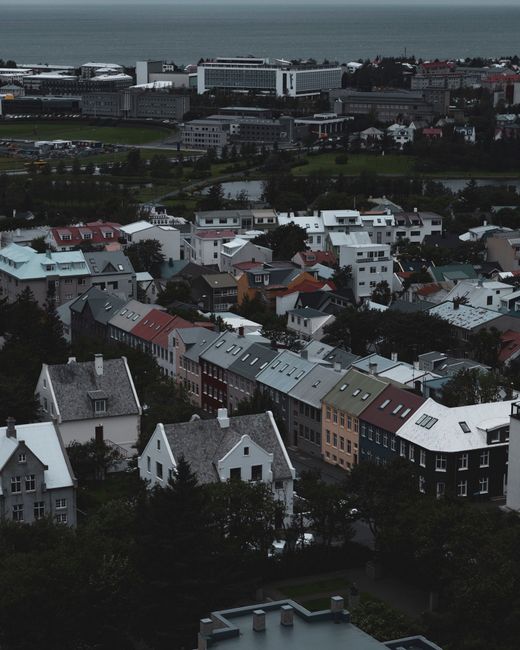
Reykjavík is the world’s northernmost capital and the smallest you are likely to visit: about 140,000 people live in the city itself, on a low peninsula between the sea and the mountain of Esja. Brightly painted houses of wood and corrugated iron climb the hill to Hallgrímskirkja, the concrete church whose tower is the city’s landmark, and the glass walls of Harpa concert hall shine on the harbour. Come for the geothermal swimming pools and lagoons, the museums, music and food, whale and puffin boats, and the Northern Lights on clear winter nights. Reykjavík is also the base for most day trips in Iceland, from the Golden Circle and the south coast to Snæfellsnes. Give it two or three days for the city, and add day trips from there.
Right now in Reykjavík
- Wed 5–7°C 40–45°F 1 mm Cloudy
- Thu 6–8°C 42–47°F 8 mm Rain
- Fri 6–8°C 42–46°F 2 mm Partly cloudy
Weather: MET Norway (CC BY 4.0) · Sea temperature: NOAA CoastWatch · Air quality: OpenAQ · Rates: ECB
Top tours in Reykjavík
See all tours for Reykjavík →
From local operators, with prices and reviews; you check availability and book on Viator, our partner. We may earn a commission at no extra cost to you. How we earn money
Reykjavík at a glance
- Best for: geothermal pools and lagoons, a walkable small capital, museums and design, live music, seafood, whale watching, Northern Lights tours and day trips into Iceland’s nature.
- How long: 2 days for the city sights and a pool; 3–5 days as a base with day trips to the Golden Circle, the south coast, Reykjanes or Snæfellsnes.
- Best time: June to August for long light evenings, puffins and outdoor life; September to March for the Northern Lights, Christmas and New Year, and the Winter Lights Festival in February.
- Getting in: Keflavík International Airport is about 50 km and 45 minutes away by the Flybus (ISK 3,999 one way as of October 2026), timed for every flight, or by Strætó bus 55 (ISK 2,400).
- Getting around: walk in the centre; use Strætó’s yellow city buses (ISK 690 a ride as of October 2026, tap a bank card or use the Klappið app) for the pools, Perlan and the suburbs.
- Budget: expensive, especially for eating out and drinking. Save with supermarket food, the famous hot dogs, soup lunches, free sights such as Harpa and the harbour, and the public pools at ISK 1,500.
Reykjavík, area by area
The city centre (miðborg, postcode 101) is compact: you can walk from the Old Harbour to Hallgrímskirkja in 15 minutes. Most visitors stay here or within a short bus ride.
- Laugavegur and Skólavörðustígur: the main shopping and nightlife streets. Laugavegur runs east from the centre, lined with shops, bars and restaurants; Skólavörðustígur leads up to Hallgrímskirkja, its pavement painted in rainbow colours.
- Old town and Tjörnin: the oldest streets around Austurvöllur square, with the Parliament (Alþingi) and the cathedral, and the City Hall on the edge of Tjörnin pond, where locals feed the ducks and swans. The Settlement Exhibition lies underneath Aðalstræti.
- The Old Harbour and Grandi: whale-watching and puffin boats, fish restaurants in converted harbour sheds, the Maritime Museum, and in the old fishing district of Grandi, the Marshall House art centre, the Whales of Iceland exhibition, FlyOver Iceland and Aurora Reykjavík.
- Vesturbær and Seltjarnarnes: quiet residential streets west of the centre, with the Vesturbæjarlaug pool and, at the tip of the peninsula, Grótta lighthouse, a popular place to watch sunsets and the Northern Lights.
- Öskjuhlíð and Nauthólsvík: the wooded hill with Perlan, the glass-domed museum on top of the city’s hot-water tanks, and below it the Nauthólsvík geothermal beach.
- Laugardalur: the “hot spring valley” east of the centre, with the city’s largest pool, the botanic garden, the family park and zoo, and the national football stadium.
- Neighbouring towns: Kópavogur (home of Sky Lagoon), Garðabær and Hafnarfjörður to the south, and Mosfellsbær to the north-east, are part of the capital region and linked by Strætó buses.
Top things to see in Reykjavík
Hallgrímskirkja
Iceland’s largest church was designed by Guðjón Samúelsson to echo the basalt columns of Icelandic waterfalls, and took over 40 years to build, from 1945 to 1986. Inside it is plain and bright, with a huge organ. A lift takes you up the 74.5 m tower for the best view over the city’s coloured roofs to the sea and the mountains. As of October 2026, the tower costs ISK 1,500 for adults, ISK 1,000 for seniors (67+) and students, and ISK 200 for children aged 7–16; tickets are sold in the church shop and can’t be booked ahead. From 1 September to 31 May the church opens daily from 10:00 to 17:00 and the tower until 16:45 (in summer, 9:00 to 20:00). Visits are restricted during services, weddings, funerals and concerts. The statue of Leifur Eiríksson outside was a gift from the United States in 1930.
Harpa and the waterfront
Harpa, the concert hall and conference centre on the harbour, opened in 2011. Its facade of glass bricks, designed with the artist Ólafur Elíasson, glitters in the low sun and lights up at night. It is free to walk in, and it is home to the Iceland Symphony Orchestra and the Icelandic Opera. From Harpa, walk east along the seafront path to the Sun Voyager (Sólfar), a steel sculpture of a Viking-style ship by Jón Gunnar Árnason, with Esja across the bay. West of Harpa is the Old Harbour.
The National Museum and the Settlement Exhibition
The National Museum of Iceland tells the country’s story from the first settlers in the 9th century to today, with Viking-age finds, the carved Valþjófsstaður church door and everyday objects. As of October 2026, it opens daily from 10:00 to 17:00, and tickets cost ISK 3,300 for adults and ISK 1,600 for students and seniors; under-18s are free. In the centre, the Settlement Exhibition (Reykjavík 871±2), part of Reykjavík City Museum, is built around the remains of a 10th-century longhouse found under Aðalstræti, with a wall fragment dated to before 871. Nearby, the Saga Museum shows scenes from the sagas with lifelike figures.
Perlan
Perlan (The Pearl) sits on Öskjuhlíð hill, a glass dome on top of the city’s hot-water tanks. It houses the “Wonders of Iceland” nature exhibitions, with a walk-through artificial ice cave, displays on volcanoes, glaciers and the sea, and a planetarium Northern Lights show, plus a 360° viewing deck, a café and a restaurant. As of October 2026, the exhibitions open from 9:00 to 21:00; check prices on Perlan’s website. Strætó buses stop at the foot of the hill, or walk up through the woods.
The Old Harbour, whale watching and puffins
Whale-watching boats leave the Old Harbour all year, heading into Faxaflói bay to look for minke whales, humpbacks, white-beaked dolphins and harbour porpoises. Sightings are not guaranteed, and many operators offer a free second trip if you see nothing. Trips last about three hours and can be cold and rough, so dress warmly. From about May to mid-August, short puffin boats circle the islands of Akurey and Lundey, where thousands of Atlantic puffins nest. Along the harbour, the Maritime Museum, the fish restaurants and the Grandi food hall are good for an afternoon.
Reykjavík Art Museum and the galleries
Reykjavík Art Museum has three buildings: Hafnarhús by the harbour (contemporary art and the pop artist Erró), Kjarvalsstaðir by Klambratún park (Iceland’s best-loved landscape painter, Jóhannes Kjarval) and Ásmundarsafn (the sculptor Ásmundur Sveinsson). As of October 2026, one ticket for ISK 2,550 (students ISK 1,550, under-18s free) covers all three for 24 hours. The National Gallery of Iceland by Tjörnin and the Marshall House in Grandi complete a good art day, and street art covers walls all over the centre.
Swimming pools and Sky Lagoon
Reykjavík’s public pools are heated by geothermal water and open from early morning to evening every day, rain, snow or shine. Each has outdoor hot tubs at different temperatures, and most have a cold tub, steam bath and lanes for swimming. Sundhöllin, the 1937 pool in the centre with a newer outdoor area, Vesturbæjarlaug in the west and the big Laugardalslaug are favourites. As of October 2026, entry costs ISK 1,500 for adults (since a new fee schedule on 5 May 2026), ISK 400 for children aged 10–17 and nothing for younger children with an adult. Remember to shower without your swimsuit before getting in.
Sky Lagoon, at the end of the Kársnes peninsula in Kópavogur, about 15 minutes by car from the centre, is an infinity-edge lagoon looking out over the sea, with a seven-step “ritual” of cold plunge, sauna, cold mist and body scrub. As of October 2026, the Saman pass costs from ISK 14,990 for adults and the Sér pass, with private changing rooms, from ISK 17,990. Prices change with the time slot, so book online.
Northern Lights in the city
From September to April, on clear, dark nights, the aurora can appear right over Reykjavík. City lights wash out weak displays, so head to Grótta lighthouse, the seafront by the Sun Voyager, Öskjuhlíð hill or Klambratún park. Check the Icelandic Met Office’s aurora forecast on vedur.is for cloud cover and activity, look between about 22:00 and 02:00, and join a minibus or boat tour for darker skies outside town. On rare nights of strong activity, the city has switched off street lights in some districts.
Museums
- National Museum of Iceland
- Reykjavík Art Museum
- Settlement Exhibition (Reykjavík 871±2)
Other sights
- Harpa Concert Hall
Monuments
- Sun Voyager (Sólfar)
Churches and cathedrals
- Hallgrímskirkja
Viewpoints
- Perlan
More experiences in Reykjavík
- Sightseeing walks: join a free walking tour, or follow Laugavegur, Skólavörðustígur, Austurvöllur, Tjörnin and the harbour on your own. The centre is small enough to cover in half a day.
- Food: try a hot dog at Bæjarins Beztu Pylsur by the harbour, lamb soup, fresh fish of the day, plokkfiskur (fish stew), skyr and cinnamon buns. Food halls in Grandi and the centre are good value by Icelandic standards.
- Exhibitions: FlyOver Iceland (a flight-ride film), Whales of Iceland (life-size models), Aurora Reykjavík (the Northern Lights), the Icelandic Phallological Museum and the Saga Museum.
- Boat trips: whale watching, puffin trips in summer, sea angling, and the short ferry to Viðey island from Skarfabakki, with walking trails, Yoko Ono’s Imagine Peace Tower and a Richard Serra sculpture.
- Cycling and walking: a seafront path runs round much of the city, and e-bike tours and rental bikes are easy ways to see it. Climb Esja, the city’s mountain, for a half-day hike (about 6–7 km return to Steinn, steep and rocky).
- Nightlife and music: bars and clubs on and around Laugavegur stay busy until late on Fridays and Saturdays; live music is everywhere, and Harpa hosts concerts most weeks.
Activities and best months
- Boat tripsMayJunJulAugSepWhale-watching boats sail straight from the Old Harbour, a walk from downtown hotels, into Faxaflói Bay: minke whales and humpbacks are most common, with dolphins and porpoises; tours last 2.5-3.5 hours. Whales can be seen all year, but the peak season is May to September, when the success rate is around 90% (no guarantee; operators usually offer free rebooking). Puffins nest on the nearby islands from May to August and are often included on tours. · source
- City sightseeingHallgrímskirkja, the city's landmark church, opens daily 10:00-17:00 from 1 September to 31 May (tower lift to 16:45) and 9:00-20:00 in summer (tower to 19:45); the tower costs ISK 1,500 for adults, ISK 1,000 for seniors and students and ISK 200 for children 7-16, sold on the day only. The Reykjavík City Card (ISK 6,100 for 24 hours, 8,500 for 48, 10,500 for 72) covers 17 museums and attractions, 8 public swimming pools, unlimited city buses and a ferry ride, with free museum entry for under-18s with an adult card. · source
- WaterReykjavík's geothermal public pools cost ISK 1,500 for an adult single entry (fee schedule from 5 May 2026), ISK 400 for ages 10-17 and nothing for children under 10 with a guardian; eight pools are included in the Reykjavík City Card. · source
Festivals and seasons in Reykjavík
Iceland Airwaves, Christmas and New Year 2026
Iceland Airwaves, the city’s big music festival, takes over venues across Reykjavík from 4 to 8 November 2026, with Icelandic and international bands in clubs, Harpa and even Hallgrímskirkja. In December, Laugavegur fills with lights, the Yule Lads arrive one a night from 12 to 24 December, and the main celebration is on Christmas Eve, when shops close in the afternoon. New Year’s Eve is famous: neighbourhood bonfires (brennur) in the evening, a satirical TV show that empties the streets, and then a vast, chaotic firework display at midnight that is best seen from Hallgrímskirkja’s hill or Perlan. Bonfires return on 6 January for the end of Christmas.
Winter Lights, summer and Culture Night
The Winter Lights Festival (Vetrarhátíð) runs from 4 to 7 February 2027 in all six municipalities of the capital area, with free light art, Museum Night and Pool Night, when museums and pools stay open late with events. Summer brings National Day on 17 June, Reykjavík Pride in August, and Culture Night (Menningarnótt) with the Reykjavík Marathon in late August, ending with fireworks over the harbour. In June and July it never gets dark: the sun sets just after midnight and rises before 03:00.
Day trips from Reykjavík
- The Golden Circle: Þingvellir National Park (45 minutes away), the Geysir geothermal area and Gullfoss waterfall, with Kerið crater and a geothermal bath on the way back. The classic day trip, by tour bus or hire car.
- The south coast: Seljalandsfoss, Skógafoss, Sólheimajökull glacier and Reynisfjara black beach near Vík, about 2.5 hours each way. A long day; better with a night on the coast. Stay far back from the waves at Reynisfjara.
- Reykjanes Peninsula and the Blue Lagoon: lava fields, the Gunnuhver and Seltún geothermal areas, the cliffs at Reykjanesviti lighthouse and the “Bridge between Continents”. The Blue Lagoon is about 50 minutes away; combine it with your airport transfer. Check the Met Office and safetravel.is for volcanic activity first (see below).
- Snæfellsnes: Kirkjufell, Arnarstapi and Snæfellsjökull National Park, about 2.5 hours each way. Possible in a long day; two days is more relaxed.
- Borgarfjörður and Hvalfjörður: the lava-fed Hraunfossar waterfalls, Europe’s most powerful hot spring at Deildartunguhver, the Krauma baths, the Víðgelmir lava cave and, in summer, the hike to Glymur waterfall.
- Hveragerði and Reykjadalur: 40 minutes south-east, a 3 km walk each way leads to a warm river where you can bathe. Paths are muddy and closed at times to protect them.
- Further afield: Jökulsárlón and Skaftafell in Vatnajökull National Park are about 5 hours away; day tours go there in summer, but an overnight trip is much better. In summer, highland buses reach Landmannalaugar.
Nearby destinations
- Golden Circle59 km
- Snæfellsnes97 km
- Vatnajökull National Park241 km
Reykjanes volcano update (last reviewed October 2026)
Since late 2023 the Sundhnúkur crater row near Grindavík, about 50 km from Reykjavík, has erupted nine times, most recently from 16 July to 5 August 2025. As of late September 2026, the Icelandic Met Office says magma is still building up under Svartsengi (about 29 million cubic metres since July 2025), and another eruption may start at short notice. Its hazard assessment of 30 September 2026 rates Grindavík as “considerable” hazard and Svartsengi, home of the Blue Lagoon, as “moderate”. Reykjavík itself is not at risk, and Keflavík Airport has stayed open throughout. The Blue Lagoon is open as of October 2026 but closes during eruptions, so book a flexible ticket and check vedur.is, almannavarnir.is and safetravel.is on the day.
Getting to Reykjavík
International flights land at Keflavík International Airport (KEF), about 50 km south-west of the city on the Reykjanes Peninsula. Your options into town, as of October 2026:
- Flybus: departures are timed with every international flight, day and night. The bus takes about 45 minutes to the BSÍ bus terminal and costs ISK 3,999 one way for adults (ISK 1,999 for ages 6–15, free under 6). Flybus to Hotel, with a minibus transfer from BSÍ to central hotels and bus stops, costs ISK 5,299. It also stops in Hafnarfjörður, Garðabær and Kópavogur. Book online or at the desk in the arrivals hall.
- Strætó bus 55: the public bus between the airport and the capital area costs ISK 2,400 to Reykjavík (ISK 1,800 to Hafnarfjörður), with free travel for children under 12. It runs every day but much less often than the Flybus, and some trips end at Fjörður in Hafnarfjörður rather than BSÍ, so check the timetable. Pay by card on board. City day passes and the City Card are not valid on it.
- Hire car or taxi: car hire desks are at the airport; the drive takes 40–45 minutes on Route 41. Taxis are expensive, often ISK 20,000 or more.
Domestic flights to Akureyri, Egilsstaðir and Ísafjörður use Reykjavík City Airport, just south of the centre. Long-distance Strætó buses leave from Mjódd in the east of the city.
Getting around Reykjavík and the City Card
The centre is best on foot. For anything further, Strætó’s yellow buses cover the capital region. As of October 2026, a single adult ride costs ISK 690, paid by tapping a contactless bank card on board, with a Klapp card or in the Klappið app; children aged 11 and under ride free. With fare capping, you never pay for more than three adult rides a day or nine a week. Buses are less frequent in the evening and on Sundays, and the main hubs are Hlemmur, Lækjartorg and Mjódd. Electric scooters and bikes from rental apps are everywhere in summer, and taxis are expensive. Driving in the centre is easy but parking is paid by app or machine.
The Reykjavík City Card includes unlimited city buses (not route 55 to the airport), the Viðey ferry, entry to 17 museums and attractions and eight geothermal pools. As of October 2026 it costs ISK 6,100 for 24 hours, ISK 8,500 for 48 hours and ISK 10,500 for 72 hours, and children under 18 get free museum entry with an adult card. It pays off if you visit two or three museums and a pool on the same day; at ISK 1,500 a pool visit and ISK 690 a bus ride, check your plan before buying.
When to go and how long to stay
Reykjavík has a cool, windy and changeable oceanic climate. Winters are mild for the latitude, hovering around freezing, and summers are cool. The table uses the Icelandic Met Office’s official 1991–2020 climate normals for the Reykjavík station, as submitted to the World Meteorological Organization.
| Season | Average high | Average low | Rain or snow per month | Wet days per month | What it’s like |
|---|---|---|---|---|---|
| Winter (Dec–Feb) | 3 °C | −2 °C | 87–95 mm | 15 | Four to six hours of daylight, wind, sleet and snow; Northern Lights, Christmas and New Year |
| Spring (Mar–May) | 4 °C rising to 10 °C | −1 °C rising to 4 °C | 81 falling to 53 mm | 11–14 | Days lengthen fast; snow on Esja; puffins return in May |
| Summer (Jun–Aug) | 13–15 °C | 7–9 °C | 43–65 mm | 9–12 | The driest season and no real darkness; busiest and most expensive |
| Autumn (Sep–Nov) | 11 °C falling to 5 °C | 6 °C falling to 0 °C | 80–87 mm | 13–15 | Autumn storms, first Northern Lights, Iceland Airwaves in November |
Reykjavík gets about 880 mm of rain and snow a year, on about 155 days. July is the warmest month, with an average high of 14.9 °C, and January lows average −1.7 °C. Daylight swings from about 21 hours around 21 June to about four hours around 21 December. Wind is the big factor: a 3 °C day with a strong wind feels well below freezing.
Reykjavík in 2 days
Day 1: Hallgrímskirkja and its tower, Skólavörðustígur and Laugavegur, the National Museum or the Settlement Exhibition, Tjörnin and City Hall, then the harbour at sunset and dinner. Day 2: the waterfront from the Sun Voyager to Harpa, a whale-watching or (in summer) puffin trip from the Old Harbour, Grandi and the Marshall House, and an evening at a public pool or Sky Lagoon. In winter, finish with a Northern Lights tour.
Reykjavík in 5 days
Spend two days in the city as above, then use Reykjavík as a base: one day for the Golden Circle, one for the south coast as far as Reynisfjara and Vík, and one for Snæfellsnes or Reykjanes. On the way back to the airport, stop at the Blue Lagoon if it is open, booked for a flexible time.
Weather month by month
Averages from IMO normals 1991–2020, Reykjavík · Last reviewed 4 Oct 2026
Where to stay in Reykjavík
- Centre (101): walk to everything, with the most hotels, guesthouses and apartments around Laugavegur, the harbour and the old town. Rooms facing Laugavegur can be noisy on weekend nights.
- Around Hlemmur and Hallgrímskirkja: slightly cheaper, still central, and close to bus hubs and the Flybus hotel drop-offs.
- Grandi and the harbour: newer hotels and apartments near the restaurants of the old fishing district.
- Laugardalur and the suburbs: hostels, the city campsite and cheaper rooms, a short bus ride from the centre, with easy parking if you have a car.
Hotels and guesthouses add the national accommodation tax of ISK 800 per room per night (ISK 400 per pitch at campsites), often at check-in. Summer and the Christmas and New Year period sell out early, so book ahead.
Practical tips for Reykjavík
- Pay by card: cards and phones work everywhere; you can skip cash entirely. Tipping is not expected.
- Buy alcohol at the airport: the duty-free shop in the arrivals hall is much cheaper than Vínbúðin, the state alcohol shops, or bars. You must be 20 to buy alcohol. Happy hours help in town.
- Drink tap water: it is excellent and free. Hot tap water smells of sulphur but is safe.
- Pool etiquette: shower naked with soap before swimming; leave shoes outside the changing room.
- Check the weather and alerts: vedur.is for the forecast and aurora, umferdin.is for roads before day trips, and safetravel.is for warnings and volcanic activity. In an emergency, call 112.
- Time zone: Reykjavík is on UTC+0 all year, so in summer it is one hour behind London and two behind Paris.
What to pack for Reykjavík
Bring a windproof, waterproof rain jacket in every season, warm layers such as a fleece or wool jumper, a hat and gloves (even in summer for boat trips), comfortable waterproof shoes and a swimsuit for the pools. In winter, add a warm insulated coat, thermal base layers, warm boots and slip-on ice grips: pavements in the centre are heated in places, but side streets get icy. For day trips, pack sturdy hiking shoes, and in summer an eye mask for the light nights. Iceland uses type C and F plugs; see our travel adapters guide.
What to pack
- City walking shoesLisbon and Porto are steep, with polished limestone cobbles that get slippery, so grippy soles matter.
- Day packs and anti-theft bagsA small zipped or anti-theft bag makes crowded trams and viewpoints less stressful.
- Dry bags and phone pouchesSpray soaks phones and cameras on open boats to the Algarve caves and on whale-watching trips.
- Fleeces and warm layersIt is cooler at sea than on land, especially on morning whale-watching trips.
- Rain jacketsA windproof, waterproof shell keeps you warm on open boats, where wind and spray cool you quickly.
- Reef-friendly sunscreenSun reflects off the water on cruises and cave tours.
- Travel adapters and convertersPortugal uses Type C and F sockets at 230 V, so most visitors from outside Europe need an adapter.
- Water shoesKayak and small-boat trips to the Algarve grottoes land on rock and wet sand.
Reykjavík travel FAQ
How do I get from Keflavík Airport to Reykjavík?
The Flybus meets every international flight and takes about 45 minutes to the BSÍ terminal for ISK 3,999 one way, or ISK 5,299 with a hotel transfer, as of October 2026. Strætó bus 55 is cheaper at ISK 2,400 but runs less often. A taxi costs far more.
How much does it cost to go up Hallgrímskirkja?
As of October 2026, ISK 1,500 for adults, ISK 1,000 for seniors and students and ISK 200 for children aged 7–16, bought in the church shop (no advance booking). From September to May the tower opens 10:00–16:45, in summer 9:00–19:45, except during services and events.
How much is a bus ticket in Reykjavík?
ISK 690 for an adult single ride as of October 2026, paid by contactless card on board or in the Klappið app. Children 11 and under travel free, and fare capping means adults pay for at most three rides a day.
Is the Reykjavík City Card worth it?
It can be, if you plan a busy museum day. As of October 2026 it costs ISK 6,100 for 24 hours, ISK 8,500 for 48 hours and ISK 10,500 for 72 hours, and covers city buses, 17 museums and attractions, eight pools and the Viðey ferry. It does not cover the airport bus, lagoons or tours.
Is the Blue Lagoon open, and is it worth it?
As of October 2026 it is open daily, from ISK 11,990 for the Comfort package, with prices varying by time slot. It sits in the volcanic area at Svartsengi and closes during eruptions, so book flexibly and check on the day. It is easiest on the way to or from the airport. Sky Lagoon (from ISK 14,990) and the city’s public pools (ISK 1,500) are alternatives closer to town.
Can you see the Northern Lights from Reykjavík?
Yes, on clear, dark nights from September to April when activity is good. Go to Grótta lighthouse, the seafront or Öskjuhlíð to escape the city lights, check the aurora forecast on vedur.is, and look between about 22:00 and 02:00. Tours drive further out to darker skies.
Is Reykjavík affected by the volcanic eruptions?
Not directly. The eruptions have been on the Sundhnúkur crater row near Grindavík, about 50 km away. The last one ended on 5 August 2025, and as of late September 2026 the Met Office expects another eruption there eventually. Keflavík Airport has stayed open. Volcanic gas can occasionally drift towards the capital in certain winds, and the Environment Agency publishes air-quality warnings.
When is Iceland Airwaves 2026?
From 4 to 8 November 2026, in venues across Reykjavík. The next Winter Lights Festival is from 4 to 7 February 2027.
How many days do you need in Reykjavík?
Two days covers the city’s main sights, a pool and a boat trip. Stay four or five days if you want to use it as a base for the Golden Circle, the south coast, Snæfellsnes and Reykjanes.
When is the best time to visit Reykjavík?
June to August for long, light days, puffins and outdoor life; September to March for the Northern Lights, Iceland Airwaves, Christmas and New Year’s Eve fireworks, and February for the Winter Lights Festival. Expect wind and rain at any time.
Sources
- © OpenStreetMap contributors · ODbL · fetched 4 Oct 2026
- Wikidata · CC0 · fetched 4 Oct 2026
Sources and last review
Researched and last reviewed on 4 October 2026. Population from Statistics Iceland; Hallgrímskirkja hours and prices from the church; the National Museum and Reykjavík Art Museum from the museums; pools from the City of Reykjavík; the City Card from Visit Reykjavík; Perlan opening hours from Perlan; Flybus and Strætó fares from the operators; the Winter Lights Festival from the City of Reykjavík and Iceland Airwaves from the festival; volcanic activity from the Icelandic Met Office; climate from the Met Office’s 1991–2020 normals for Reykjavík (WMO collection). Blue Lagoon and Sky Lagoon prices, the art museum price and the Met Office’s late-September update were read from search results of the official sites. Whale and puffin seasons, taxi fares, daylight times, Esja and Reykjadalur distances and some exhibition details are general or secondary and flagged for checking. Prices change, so check the official links before you go.
Plan your trip
Partner links: TravelerCenter may earn a commission if you book, at no extra cost to you.
🇮🇸 Useful Icelandic phrases for Reykjavík
All 38 Icelandic phrases: restaurant, hotel, emergencies, romance (printable) →