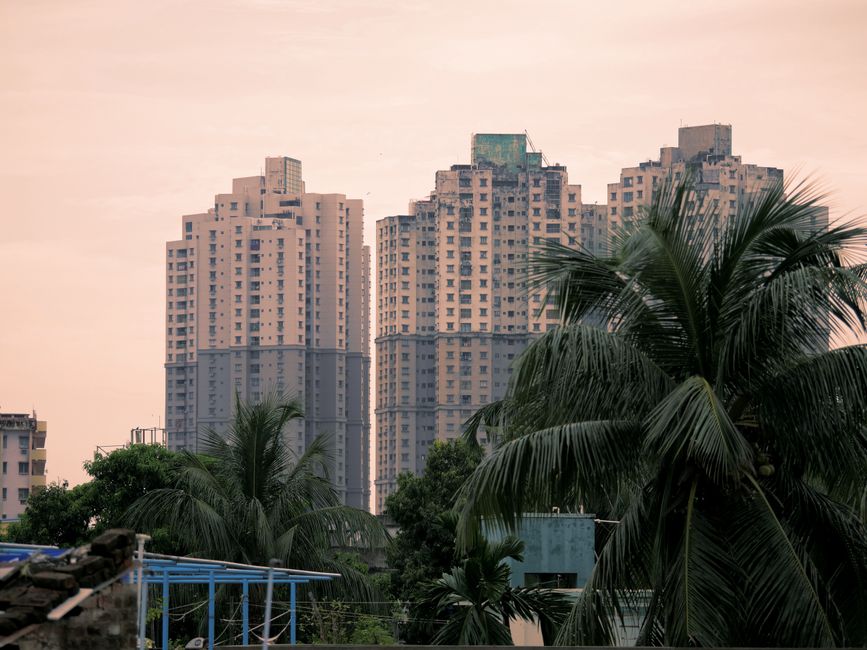
Kolkata, the capital of West Bengal and India’s cultural capital, is a city of crumbling mansions, grand colonial buildings, book-lined lanes, clay-idol workshops and some of the best street food in the country. Founded by the British on the eastern bank of the Hooghly River around the villages of Kalikata, Sutanuti and Govindapur, Calcutta became the capital of British India in 1772 and stayed so until 1911, and it was the center of the Bengal Renaissance, of Rabindranath Tagore and of the independence movement. The name was changed to Kolkata in 2001. Today about 4.5 million people live in the city proper and around 14 million in the metropolitan area, yet it moves at its own pace: yellow taxis, trams, ferries across the river and long conversations over tea in clay cups. Most visitors spend two to four days here, seeing the Victoria Memorial, Howrah Bridge, the Indian Museum and the old neighborhoods of North Kolkata, before heading to Darjeeling, the Sundarbans or onward to Southeast Asia. October to March is the best time to visit, and the city is at its most extraordinary during Durga Puja in autumn.
Right now in Kolkata
- Wed 26–33°C 78–91°F 2 mm Showers
- Thu 25–32°C 76–89°F 4 mm Showers
- Fri 24–28°C 74–82°F 1 mm Rain
Weather: MET Norway (CC BY 4.0)
Top tours in Kolkata
See all tours for Kolkata →
From local operators, with prices and reviews; you check availability and book on Viator, our partner. We may earn a commission at no extra cost to you. How we earn money
Kolkata at a glance
- Best for: colonial architecture, museums, Bengali food and sweets, Durga Puja, literature, music and film, river life, and a gateway to Darjeeling and the Sundarbans.
- How long: 2 to 3 days for the city; 4 or 5 with a trip to the Sundarbans or Shantiniketan.
- Best time: October to March, when it is warm and dry; Durga Puja falls in September or October.
- Getting there: Netaji Subhas Chandra Bose International Airport (CCU), about 15 km (9 miles) northeast of the center, is a designated e-Visa entry airport; trains arrive at Howrah and Sealdah.
- Getting around: India’s oldest metro, yellow taxis and app cabs, ferries on the Hooghly, and a few heritage tram lines.
- Good to know: the Victoria Memorial’s museum galleries are closed on Mondays, and the monsoon from June to September brings heavy rain and waterlogged streets.
- Before you go: the e-Visa, the online e-Arrival card, money, trains and general safety are in our India travel guide.
Kolkata’s areas and where to stay
Kolkata runs north to south along the Hooghly, with Howrah, its twin city, on the west bank. The colonial core lies around the Maidan, a huge open park in the middle of the city; the old Bengali neighborhoods are to the north, and newer residential districts and the planned towns of Salt Lake and New Town are to the south and east.
Park Street, Chowringhee and Sudder Street
Around the eastern edge of the Maidan, Chowringhee (Jawaharlal Nehru Road) and Park Street are the city’s traditional entertainment and dining district, with old restaurants, bakeries, bars and live-music venues. Sudder Street, next to the Indian Museum and New Market, has been Kolkata’s backpacker street for decades, with budget guesthouses and cafés. It is central, walkable and close to the metro.
BBD Bagh and Dalhousie
The old administrative heart of British Calcutta, around the square of BBD Bagh, is full of grand buildings: the red-brick Writers’ Building, the General Post Office, St. John’s Church and the colonnaded Metcalfe Hall. It is busy with offices by day and quiet at night, and a short walk from the river ghats and Howrah Bridge.
North Kolkata
The neighborhoods north of College Street are the soul of old Bengali Calcutta: Jorasanko, where Tagore was born; Shobhabazar and Shyambazar, with rajbaris (old mansions); Kumartuli, the potters’ quarter; and College Street, with its secondhand bookstalls and the Indian Coffee House, founded in 1876. There are few hotels here, but it is the best area to explore on foot.
South Kolkata
Ballygunge, Gariahat and Kalighat are residential and lively, with markets, Bengali restaurants, the Kalighat temple and many of the best Durga Puja pandals. Mid-range hotels and homestays here are quieter than the center and well served by the metro.
Salt Lake and New Town
East of the center, Salt Lake (Bidhannagar) and New Town (Rajarhat) are planned modern districts with business hotels, malls, the Eco Park and easy access to the airport. Good for early flights, but far from the old city.
Top things to see in Kolkata
Victoria Memorial
Kolkata’s most famous landmark is a huge white marble hall conceived by Lord Curzon as a memorial to Queen Victoria and built between 1906 and 1921, in an Italian Renaissance style blended with Indian elements. Set in 64 acres of gardens with ponds and statues at the southern end of the Maidan, it is now a museum and art gallery of the 18th to 20th centuries, with 25 galleries: the Royal Gallery with portraits of Victoria and Albert, the world’s largest collection of works by Thomas and William Daniell, rare documents, arms and armor, and the Kolkata Gallery with its life-sized model of 19th-century Chitpur Road. According to the Victoria Memorial Hall, the museum galleries are open 10 a.m. to 6 p.m. and closed on Mondays and on national holidays such as Republic Day, Holi, Independence Day, Gandhi’s Birthday, Dussehra (Vijayadashami) and Christmas. Gallery tickets cost ₹500 for foreign nationals, ₹100 for SAARC nationals and ₹50 for Indians; the gardens are open daily from 6 a.m. to 6 p.m. for ₹30, and the garden ticket does not include the museum. Tickets are sold online and at the north and south gate counters, which close half an hour before closing time. Bags, food, liquids, drones and flash photography are not allowed inside.
Howrah Bridge and the river
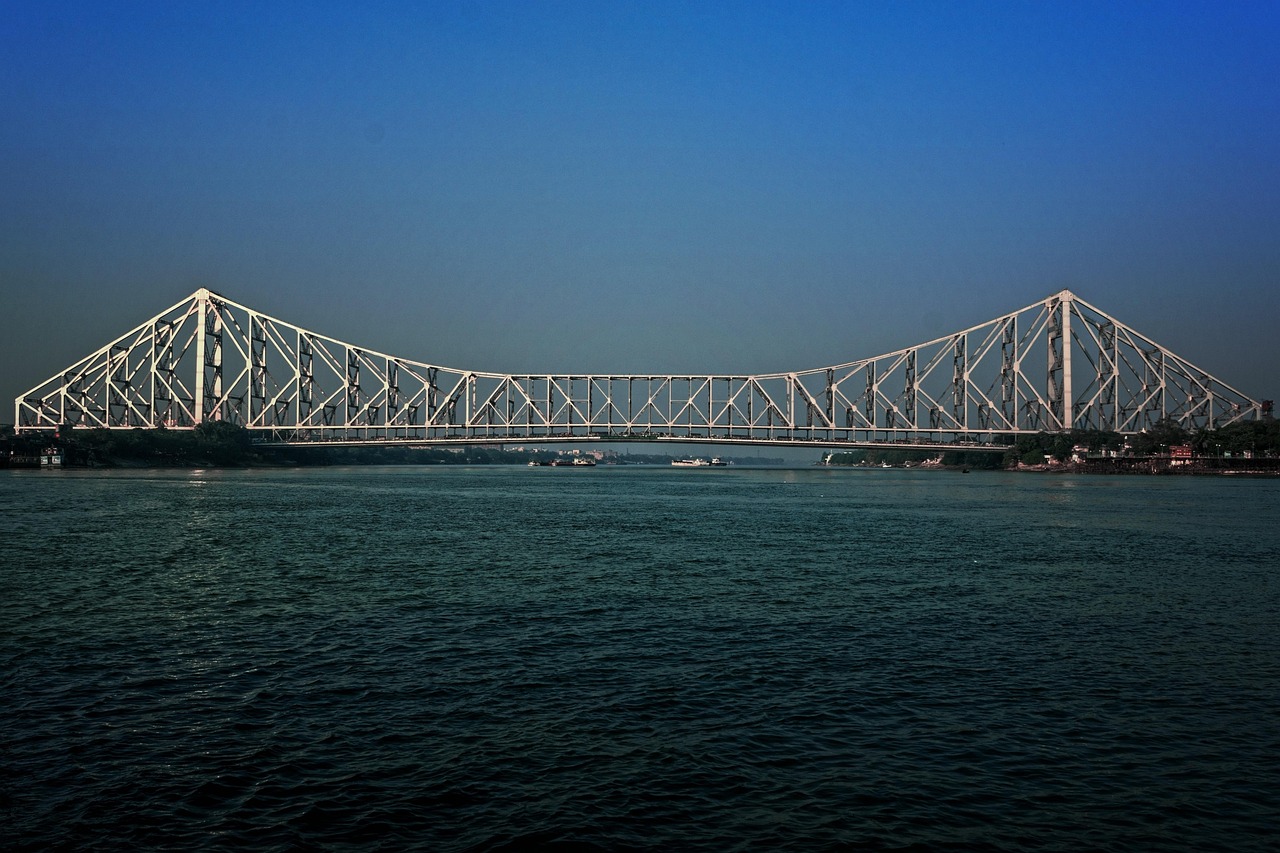
Opened on 3 February 1943, Howrah Bridge (Rabindra Setu) is a vast steel cantilever bridge built with rivets instead of nuts and bolts, and one of the busiest bridges in the world. Walk across it early in the morning, when the flower market at Mallik Ghat, just below the eastern end, is piled with marigolds. Better still, take a public ferry across the Hooghly between the ghats for views of the bridge and the riverside, or a sunset cruise from Millennium Park.
Indian Museum
Established in 1814, the Indian Museum on Chowringhee is the oldest museum in India. Its galleries hold Buddhist sculptures from Bharhut and Gandhara, Egyptian mummies, fossils and a dinosaur egg, coins, textiles and miniature paintings. Pick a few galleries rather than trying to see everything.
North Kolkata: Kumartuli, Jorasanko and College Street
In Kumartuli, artisans shape straw and clay into the giant images of the goddess Durga and other deities used in festivals; the workshops are busiest from July to September. Nearby, Jorasanko Thakur Bari, the ancestral home of Rabindranath Tagore, is a museum of his life and works. College Street is lined with bookstalls around Presidency University and Calcutta University, and the high-ceilinged Indian Coffee House has hosted writers, students and political debates since 1876. A guided heritage walk is the best way to understand the old lanes and mansions.
Dakshineswar and Belur Math
North of the city on the Hooghly, the Dakshineswar Kali Temple, with its nine spires, is associated with the 19th-century mystic Ramakrishna. Across the river, Belur Math, the headquarters of the Ramakrishna Mission founded by Swami Vivekananda, has a striking main temple combining Hindu, Islamic, Buddhist and Christian architectural elements. A ferry links the two.
Kalighat and the temples of South Kolkata
The Kalighat Temple, dedicated to the goddess Kali, is one of the most important Shakti shrines in India and gave the city its name, according to one tradition. It is crowded and intense, and touts offer “fast-track” entry; politely decline or agree on a donation in advance.
More classic sights
- St. Paul’s Cathedral: a 19th-century Gothic Revival cathedral beside the Victoria Memorial.
- South Park Street Cemetery: an atmospheric 18th-century British cemetery with grand tombs.
- Marble Palace: a 19th-century mansion stuffed with European statues and paintings in North Kolkata.
- Mother House: the headquarters of the Missionaries of Charity and the tomb of Mother Teresa.
- Metcalfe Hall: a colonnaded 19th-century building near the river with heritage exhibits; on the ASI’s booking site, foreigners pay ₹250 and Indians ₹20.
Other things to do in Kolkata
Food and drink
Bengalis love to eat, and Kolkata is a feast. Street-food favorites include phuchka (crisp shells filled with spiced potato and tamarind water), jhalmuri (puffed rice with mustard oil, onion and chili), kathi rolls (kebabs wrapped in flaky paratha, invented in the city), ghugni and telebhaja fritters. Kolkata biryani comes with a potato and a boiled egg. At Bengali restaurants, try macher jhol (fish curry), shorshe ilish (hilsa in mustard), chingri malai curry (prawns in coconut milk) and kosha mangsho (slow-cooked mutton). Finish with rosogolla, sandesh and mishti doi (sweet yogurt) from a traditional sweet shop. Kolkata also has its own Indian-Chinese food, born in the old Chinatown of Tangra, and historic bakeries and tearooms on Park Street. Eat at busy stalls and drink bottled or filtered water.
Durga Puja and festivals
Durga Puja, listed by UNESCO as an intangible cultural heritage, is Kolkata’s biggest festival: for five days in September or October, the city builds thousands of pandals (temporary shrines), some of them elaborate works of art, and stays up all night visiting them. The final day ends with immersions of the images in the river. Kali Puja and Diwali follow a few weeks later, and the Kolkata Book Fair and the Kolkata International Film Festival are major events in winter. Christmas on Park Street is famous for its lights.
Culture and shopping
Catch a Rabindra Sangeet (Tagore song) recital, Bengali theater or a classical concert; the Academy of Fine Arts and Nandan near the Maidan host exhibitions and film screenings. New Market (Hogg Market) is a sprawling Victorian bazaar, and Gariahat is good for Bengali saris, terracotta and handicrafts. See our city sightseeing and boat trips guides for more ideas.
Day trips from Kolkata
- Sundarbans: the world’s largest mangrove forest, a UNESCO site and tiger reserve where the Ganges meets the sea, about 100 km (62 miles) southeast to the boat jetties; most visitors take a 2-day boat trip with an operator who arranges the forest permits.
- Chandannagar: a former French settlement on the Hooghly with a riverside promenade and colonial buildings, about 40 km (25 miles) north.
- Bishnupur: a town of 17th-century terracotta temples, about 150 km (93 miles) west; on the ASI’s booking site, foreigners pay ₹250. Best as an overnight trip.
- Shantiniketan: the university town founded by Tagore, a UNESCO site, about 160 km (100 miles) north, around 3 hours by train.
- Darjeeling: an overnight train to New Jalpaiguri or a flight to Bagdogra, then a drive up to the tea hills. See our Darjeeling travel guide.
Nearby destinations
- Dhaka244 km
Getting there and getting around
By air
Netaji Subhas Chandra Bose International Airport (CCU), at Dum Dum, has flights to Bangkok, Singapore, Dhaka, Kathmandu, Paro, the Gulf and most Indian cities, including Port Blair in the Andaman Islands. It is on the Bureau of Immigration’s list of designated e-Visa entry airports. The trip to the center takes 45 minutes to over an hour by taxi; the metro serves the airport too.
By train
Howrah, on the west bank, is one of India’s busiest stations and the terminus for trains to Delhi, Mumbai, Chennai and Puri; Sealdah serves North Bengal, including trains toward Darjeeling. According to Indian Railways, Kolkata is one of the stations with an International Tourist Bureau, where foreign visitors can get help booking tickets.
By road
Buses run to Odisha, Bihar and North Bengal, and to the border crossing with Bangladesh at Petrapole. Within the region, a car and driver is the easiest way to reach Chandannagar or the Sundarbans jetties.
Around the city
Kolkata’s metro was the first in India: according to Kolkata Metro Rail Corporation, its first stretch, between Esplanade and Bhowanipur, opened on 24 October 1984. The main north–south line runs from Dakshineswar to New Garia, and the East–West line, which links Howrah and Sealdah stations, passes under the Hooghly River, the first underwater metro crossing in India. Yellow Ambassador taxis and app cabs are plentiful; insist on the meter or use an app. Ferries cross the Hooghly between the ghats for a few rupees, and a small number of heritage trams still run. Walking is the best way to see North Kolkata and BBD Bagh, but traffic is heavy.
When to go and how long to stay
Kolkata has a hot, humid tropical climate. October to March is the best time, with highs of 26 to 32 °C (78 to 90 °F) and cool mornings in December and January, when lows fall to about 14 °C (58 °F). April and May are very hot and humid, with highs around 35 °C (96 °F) and occasional violent thunderstorms (nor’westers). The monsoon, from June to September, brings heavy rain, with more than 370 mm (15 in) in July and August, flooding streets for hours after downpours. The table shows 1991–2020 normals for the Kolkata (Alipore) station from the India Meteorological Department (IMD), as published by the World Meteorological Organization (WMO); rainy days are days with at least 2.5 mm of rain.
| Month | Average high / low | Rain (rainy days) | What to expect |
|---|---|---|---|
| January | 26 °C (78 °F) / 14 °C (58 °F) | 15 mm (0.6 in), 1 day | Cool, dry; book fair season |
| February | 29 °C (85 °F) / 18 °C (65 °F) | 25 mm (1.0 in), 2 days | Pleasant; Saraswati Puja |
| March | 34 °C (93 °F) / 23 °C (73 °F) | 37 mm (1.4 in), 2 days | Warming up; Holi (Dol Jatra) |
| April | 35 °C (96 °F) / 26 °C (78 °F) | 55 mm (2.2 in), 3 days | Hot and humid; Bengali New Year |
| May | 36 °C (96 °F) / 27 °C (80 °F) | 118 mm (4.7 in), 6 days | Hottest; storms and cyclone risk |
| June | 34 °C (93 °F) / 27 °C (81 °F) | 277 mm (10.9 in), 13 days | Monsoon arrives |
| July | 32 °C (90 °F) / 27 °C (80 °F) | 372 mm (14.6 in), 18 days | Wettest; waterlogging |
| August | 32 °C (90 °F) / 27 °C (80 °F) | 372 mm (14.6 in), 17 days | Heavy rain; idol workshops busy |
| September | 33 °C (91 °F) / 26 °C (79 °F) | 325 mm (12.8 in), 14 days | Rain; Durga Puja in some years |
| October | 32 °C (90 °F) / 24 °C (76 °F) | 180 mm (7.1 in), 7 days | Durga Puja; cyclone risk |
| November | 30 °C (86 °F) / 20 °C (68 °F) | 33 mm (1.3 in), 1 day | Dry and pleasant; Kali Puja |
| December | 27 °C (80 °F) / 16 °C (60 °F) | 6 mm (0.2 in), under 1 day | Cool, clear; Christmas on Park Street |
The city gets about 1,810 mm (71 in) of rain a year, most of it from June to September.
Two days in Kolkata
Day one: the Victoria Memorial when it opens at 10 a.m. (any day but Monday), St. Paul’s Cathedral, a walk across the Maidan to Park Street for lunch, and the Indian Museum; finish with a sunset ferry on the Hooghly. Day two: Mallik Ghat flower market and Howrah Bridge at dawn, BBD Bagh’s colonial buildings, then North Kolkata: Kumartuli, Jorasanko Thakur Bari, College Street and coffee at the Indian Coffee House.
Four days with the river and beyond
Add a morning at Dakshineswar and Belur Math by ferry, an afternoon in South Kolkata at Kalighat and Gariahat, and a 2-day boat trip into the Sundarbans.
Where to stay in Kolkata
- Park Street and Chowringhee: the classic central choice, with heritage and mid-range hotels and restaurants.
- Sudder Street: budget guesthouses next to the Indian Museum and New Market.
- Ballygunge and South Kolkata: quieter mid-range hotels and homestays close to the metro.
- Salt Lake and New Town: modern business hotels near the airport.
- Heritage stays: a few restored mansions and colonial-era hotels around BBD Bagh and the Maidan.
During Durga Puja and Christmas, hotels fill quickly and roads are jammed, so book early and stay near a metro station.
What a trip to Kolkata costs
Prices are approximate, for October 2026, converted at about 96 rupees (₹) to the US dollar. Victoria Memorial prices are those listed by the Victoria Memorial Hall; ASI prices are online prices for foreigners.
| Item | Typical cost |
|---|---|
| Victoria Memorial museum galleries, foreign nationals | ₹500 (about US$5.20) |
| Victoria Memorial gardens only | ₹30 (about US$0.30) |
| Metcalfe Hall or Bishnupur temples, foreigners online | ₹250 (about US$2.60) |
| Metro ride | ₹5–50 (about US$0.05–0.50) |
| Phuchka, jhalmuri or a kathi roll | ₹40–200 (about US$0.40–2) |
| Bengali fish thali in a restaurant | ₹350–900 (about US$3.60–9.40) |
| Box of sweets from a famous sweet shop | ₹200–500 (about US$2–5.20) |
| 2-day Sundarbans boat trip, per person | ₹6,000–15,000 (about US$63–156) |
| Mid-range hotel double, per night | ₹3,500–8,500 (about US$36–89) |
Practical tips for Kolkata
- Mind Mondays: the Victoria Memorial’s galleries close on Mondays, as do some other museums.
- Use the ferries: they are cheap, fast and the best way to see the riverfront.
- Walk with a guide: heritage walks in North Kolkata and BBD Bagh bring the old city to life.
- Plan around Durga Puja: it is unforgettable, but traffic stops and crowds are huge, especially in the evenings.
- Carry small notes: for street food, ferries and taxis; cards and UPI work in hotels and bigger shops.
Safety
Kolkata is generally a safe and friendly city for visitors, with less hassle than many Indian tourist hubs. Monsoon and cyclones: heavy rain from June to September causes waterlogging and traffic chaos, and cyclones from the Bay of Bengal can strike in May and from October to November, bringing strong winds, flooding and canceled flights; follow IMD warnings and local instructions. Heat: April and May are hot and very humid; drink plenty of water and avoid the midday sun. Crowds: at Durga Puja, Kalighat and stations, keep valuables close and agree on a meeting point. Traffic is heavy and drivers rarely stop for pedestrians; cross carefully. Touts operate at Kalighat and around Sudder Street; decline unsolicited guiding. Food and water: eat at busy stalls and drink bottled or filtered water. Women travelers generally find Kolkata comfortable; dress modestly and use app cabs at night. In an emergency, call 112.
What to pack for Kolkata
Light, loose cotton clothes that cover shoulders and knees, comfortable walking shoes for the old neighborhoods, a sun hat and sunscreen, a compact umbrella or rain jacket for the monsoon, and a light sweater for cool December mornings. India uses 230 V, with round-pin plugs of types C, D and M. See our rain jackets and travel adapters guides.
Kolkata travel FAQ
How many days do I need in Kolkata?
Two to three days covers the Victoria Memorial, Howrah Bridge, the Indian Museum and North Kolkata. Add two days for the Sundarbans.
How much is the Victoria Memorial ticket?
According to the Victoria Memorial Hall, the museum galleries cost ₹500 for foreign nationals, ₹100 for SAARC nationals and ₹50 for Indians. The gardens cost ₹30 and do not include the museum.
What are the Victoria Memorial’s opening hours?
The museum galleries are open 10 a.m. to 6 p.m. and closed on Mondays and national holidays; the gardens are open every day from 6 a.m. to 6 p.m.
What is the best time to visit Kolkata?
October to March, when it is dry and warm. Durga Puja, in September or October, is spectacular but very crowded.
Does Kolkata airport accept the e-Visa?
Yes. Kolkata is one of the designated e-Visa entry airports listed by the Bureau of Immigration.
Is Kolkata’s metro useful for visitors?
Yes. India’s first metro covers the north–south axis from Dakshineswar to New Garia, and the East–West line runs under the Hooghly to Howrah station.
What food should I try in Kolkata?
Phuchka, kathi rolls, Kolkata biryani, fish in mustard sauce, kosha mangsho, and sweets such as rosogolla, sandesh and mishti doi.
How do I visit the Sundarbans from Kolkata?
Most visitors book a 1- or 2-night boat trip with an operator who arranges transport to the jetties and the forest permits.
When is Durga Puja?
It follows the Hindu lunar calendar and falls in September or October; the main days are around Navaratri and end on Vijayadashami.
Is Kolkata safe for tourists?
Yes. Take normal care in crowds and traffic, and watch the weather during the monsoon and cyclone seasons.
Sources and last review
Researched and last reviewed on 5 October 2026. Victoria Memorial prices, hours, closing days and rules: the Victoria Memorial Hall; the city’s history, area and population, and the history of the metro, including the first stretch in 1984 and the East–West line under the Hooghly: Kolkata Metro Rail Corporation; Howrah Bridge, the Indian Museum, the Victoria Memorial’s galleries and grounds, the Indian Coffee House, Kumartuli and Jorasanko: Incredible India (Ministry of Tourism); Metcalfe Hall and Bishnupur fees: the Archaeological Survey of India’s e-ticket booking site; the International Tourist Bureau at Kolkata: Indian Railways; the list of designated e-Visa airports: the Bureau of Immigration; climate normals for the Kolkata (Alipore) station: the India Meteorological Department, via the World Meteorological Organization (1991–2020 normals archived by NOAA’s National Centers for Environmental Information); the exchange rate: the Reserve Bank of India (FBIL reference rate). West Bengal Tourism’s and Metro Railway Kolkata’s websites could not be reached, so festival dates, metro routes, distances, Sundarbans trips and typical prices are general references or estimates, flagged for checking. Prices and hours change, so check locally before you go. For the e-Visa, money and trains, see our India travel guide.
Plan your trip
Partner links: TravelerCenter may earn a commission if you book, at no extra cost to you.
🇮🇳 Useful Hindi phrases for Kolkata
All 38 Hindi phrases: restaurant, hotel, emergencies, romance (printable) →