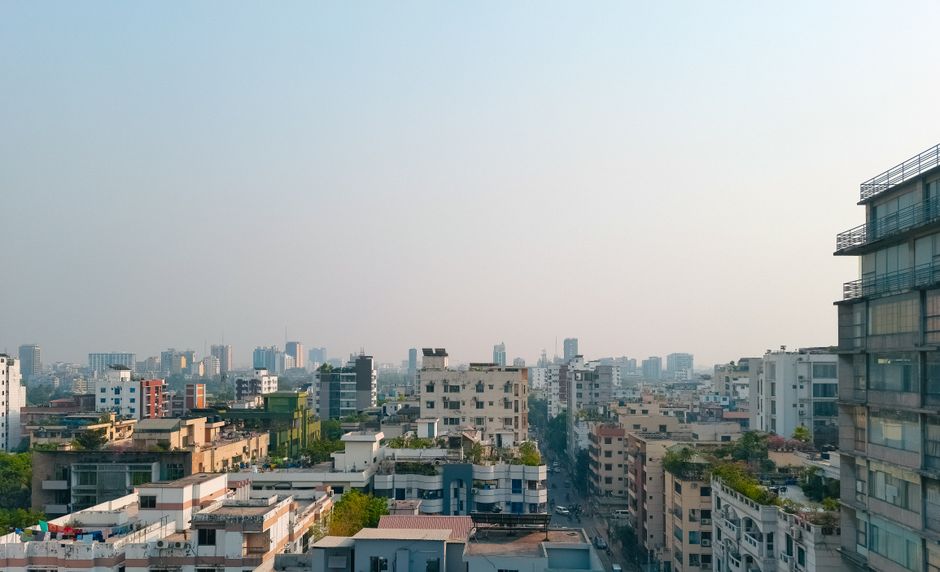
Dhaka, the capital of Bangladesh, is one of the world’s largest and most crowded cities, a metropolis of more than 20 million people on the banks of the Buriganga River that overwhelms first-time visitors with its traffic, noise and energy, and rewards them with history, street life and some of the warmest hospitality anywhere. Its old heart, Old Dhaka, founded long before the Mughals made it the capital of Bengal in 1610, is a labyrinth of bazaars, mosques, Hindu lanes and crumbling mansions, with the unfinished Mughal Lalbagh Fort, the pink Ahsan Manzil palace of the Nawabs and the chaotic river port of Sadarghat, where wooden boats ferry thousands across the river. The modern city to the north has the Liberation War Museum, the National Museum and one of the masterpieces of 20th-century architecture, Louis Kahn’s National Parliament House, while Gulshan and Banani hold embassies, hotels and restaurants. Dhaka is famous for its cycle rickshaws, hundreds of thousands of them painted with colorful art, and for its food, from kacchi biryani to street fuchka. Traffic jams are legendary, though the new Metro Rail now speeds across part of the city. The best months are November to February, when it is dry and mild, though often hazy.
Right now in Dhaka
- Wed 25–33°C 78–92°F 2 mm Showers
- Thu 25–31°C 78–89°F 2 mm Showers
- Fri 23–28°C 73–83°F 14 mm Showers
Weather: MET Norway (CC BY 4.0)
Top tours in Dhaka
See all tours for Dhaka →
From local operators, with prices and reviews; you check availability and book on Viator, our partner. We may earn a commission at no extra cost to you. How we earn money
Dhaka at a glance
- Best for: Mughal and colonial heritage, river life, markets, rickshaw rides, museums, modern architecture and food.
- How long: 2–3 days.
- Best time: November to February, dry and mild; March to May is hot, and June to September is the monsoon.
- Getting there: Hazrat Shahjalal International Airport is about 15–20 km (9–12 miles) north of the center, 30–90 minutes by car depending on traffic.
- Getting around: by Metro Rail, ride-hailing apps, CNG auto-rickshaws and cycle rickshaws.
- Good to know: traffic is extreme, so plan sightseeing by area and avoid rush hours.
- Before you go: the visa, money and general safety are in our Bangladesh travel guide.
Dhaka’s areas and where to stay
The city stretches north from the Buriganga River. Old Dhaka lies along the river in the south; the colonial and government district of Ramna and Shahbag is in the center; and the newer residential areas of Dhanmondi, Gulshan, Banani, Baridhara and Uttara extend north toward the airport.
Old Dhaka
The densely packed old city between the river and Nawabpur Road has Lalbagh Fort, Ahsan Manzil, Sadarghat, the Star Mosque, the Armenian Church and the Hindu lanes of Shankhari Bazar. It is the most fascinating part of town to explore but has only basic hotels.
Motijheel, Ramna and Shahbag
The center holds the commercial district of Motijheel, the Baitul Mukarram national mosque, Ramna Park, Dhaka University with Curzon Hall, the Shaheed Minar and the National Museum at Shahbag. A few older hotels stand here.
Dhanmondi
Dhanmondi, around its lake, is a leafy residential area with cafés, restaurants, galleries and the Bangabandhu Memorial Museum, with mid-range hotels and guesthouses.
Gulshan, Banani and Baridhara
The northern districts of Gulshan, Banani and Baridhara, around lakes, are home to embassies, international hotels, serviced apartments, malls, cafés and the city’s best international restaurants. Security is good, and most foreign visitors stay here.
Where to stay in Dhaka
- Gulshan and Banani: international and boutique hotels and serviced apartments, the most comfortable base.
- Near the airport and Uttara: business hotels for short stays and early flights.
- Dhanmondi: mid-range hotels and guesthouses closer to the center.
- Motijheel and Paltan: older, cheaper hotels near Old Dhaka.
Traffic between the north and Old Dhaka can take an hour or more, so plan full days in each area.
Top things to see in Dhaka
Lalbagh Fort
Begun in 1678 by the Mughal prince Muhammad Azam, son of the emperor Aurangzeb, and left unfinished, Lalbagh Fort is a walled complex of gardens, gateways and three main buildings: the three-domed Lalbagh Mosque, the Tomb of Pari Bibi, daughter of the governor Shaista Khan, faced with marble and colorful tiles, and the Diwan-i-Aam, an audience hall and bathhouse that now houses a small museum. It is closed on Sundays and on Monday mornings.
Ahsan Manzil
The pink, domed Ahsan Manzil, completed in 1872 for the Nawabs of Dhaka, stands on the riverbank in Old Dhaka. Restored as a museum, its rooms recreate the opulent life of the Nawab family, with furniture, portraits and a grand staircase, and it played a role in the founding of the All-India Muslim League in 1906. It is closed on Thursdays.
Sadarghat and the Buriganga River
Sadarghat, the city’s main river port, is one of the most extraordinary sights in Bangladesh: hundreds of wooden nouka rowboats ferry passengers across the Buriganga, while multi-deck launches leave for the south. Hire a boatman for an hour on the river, and watch the loading of cargo, the shipyards and the floating life of the port.
Star Mosque and the old city
The Star Mosque (Tara Masjid), built in the early 18th century and redecorated in the 20th century with blue stars and mosaic made of broken Japanese and English china, is one of Old Dhaka’s gems. Nearby, explore the Armenian Church of the Holy Resurrection (1781), a reminder of the city’s former Armenian merchants; the Hindu lanes of Shankhari Bazar, where conch-shell carvers work; and the Shia shrine of Hussaini Dalan. A guided walk is the best way to find your way through the lanes.
Liberation War Museum
The Liberation War Museum in Agargaon tells the story of the 1971 war of independence through photographs, personal objects, documents and testimonies, from the Language Movement of 1952 to Victory Day. It is moving and essential for understanding the country.
National Parliament House
The Jatiya Sangsad Bhaban, designed by the American architect Louis Kahn and completed in 1982, is a monumental complex of concrete and marble geometric forms set in an artificial lake, considered one of the great buildings of the 20th century. It can be admired from the surrounding gardens and roads; guided tours of the interior require permission.
More classic sights
- National Museum: at Shahbag, with sculpture, textiles, arts and natural history of Bengal.
- Dhakeshwari Temple: the national Hindu temple, said to date from the 12th century, busy during Durga Puja.
- Baitul Mukarram: the national mosque, designed to resemble the Kaaba, surrounded by markets.
- Curzon Hall and the Shaheed Minar: a red-brick colonial building at Dhaka University and the monument to the martyrs of the 1952 Language Movement.
- Hatirjheel: a lakeside development with walking paths, water taxis and evening lights.
- New Market: a sprawling market for clothes, fabric and household goods.
Other things to do in Dhaka
Food and drink
Dhaka is a great food city. In Old Dhaka, try kacchi biryani, mutton and rice slow-cooked in a sealed pot, at long-established restaurants, plus morog polao, bakarkhani flatbread and borhani, a spicy yogurt drink. At street stalls, look for fuchka and chotpoti, and in winter, pitha rice cakes. Finish with mishti doi and Bengali sweets. During Ramadan, the iftar market at Chawkbazar in Old Dhaka is famous. Gulshan and Banani have cafés and restaurants of every cuisine. Alcohol is served only in a few licensed bars and international hotels.
Shopping and crafts
Look for jamdani saris, nakshi kantha embroidered quilts, handloom textiles, leather goods, rickshaw art, terracotta and jute products at fair-trade shops such as Aarong, at New Market and in the bazaars of Old Dhaka.
Rickshaw rides and walking tours
A cycle rickshaw ride through Old Dhaka is the classic experience; agree on the fare first. Local heritage walking and rickshaw tours, with guides who know the lanes, make the old city much easier to understand. See our city sightseeing guide.
River trips
Beyond the short crossings at Sadarghat, you can take an overnight launch south to Barishal, leaving in the evening and arriving at dawn, an unforgettable trip; book a private cabin. See our boat trips guide.
Day trips from Dhaka
- Sonargaon and Panam City: the medieval capital of Bengal, about 27 km (17 miles) southeast, with a street of crumbling 19th-century merchants’ mansions at Panam and a folk art museum; 1–2 hours by car.
- National Martyrs’ Memorial (Savar): a striking monument to those who died in the 1971 war, about 35 km (22 miles) northwest.
- Dhamrai: a town of brass casters and a wooden chariot festival, near Savar.
- Mainamati: the ruins of Buddhist monasteries near Comilla, about 2–3 hours southeast.
- The Sundarbans: too far for a day trip, but reached via Khulna or Mongla across the Padma Bridge, for a two- to four-day boat tour.
- Cox’s Bazar: about an hour by air. See our Cox’s Bazar guide.
Nearby destinations
- Kolkata244 km
- Cox's Bazar291 km
Getting there and getting around
By air
Hazrat Shahjalal International Airport (DAC), about 15–20 km (9–12 miles) north of the center, has flights from the Gulf hubs, Istanbul, London, Kolkata, Delhi, Kathmandu, Bangkok, Singapore, Kuala Lumpur and Chinese cities, and domestic flights to Chittagong, Cox’s Bazar, Sylhet and other cities. See our Kolkata, Delhi, Kathmandu, Bangkok, Singapore and Kuala Lumpur guides. A new third terminal has been built. Arrange a hotel transfer or use a ride-hailing app; avoid touts offering to carry bags or find taxis. Allow plenty of time for traffic when leaving.
By train and bus
Trains leave Kamalapur and the airport station for Chittagong, Cox’s Bazar, Sylhet, Rajshahi and Khulna; book online through Bangladesh Railway. Long-distance buses leave from several terminals; the Padma Bridge, opened in 2022, links Dhaka with the southwest by road and rail.
By river
Launches to Barishal and the south leave from Sadarghat in the evening.
Around the city
The Dhaka Metro Rail (MRT Line 6), opened in stages from December 2022, runs from Uttara in the north via Agargaon, Farmgate and Shahbag to Motijheel, avoiding the traffic; buy single-journey tickets or a rechargeable card at stations. Ride-hailing apps such as Uber and Pathao work well for cars, though drivers often prefer cash. CNGs (green auto-rickshaws) and cycle rickshaws are everywhere; agree on the fare before setting off. Walking is fine in Old Dhaka and around Gulshan, but crossing busy roads needs care.
When to go and how long to stay
Dhaka is warm all year. The cool, dry season, from November to February, is the best time, with sunny days of 25–30 °C (76–85 °F) and cool nights around 13–15 °C (56–59 °F), though fog and smog often blanket the city in December and January. March to May is hot and humid, with highs of 32–34 °C (90–93 °F) and violent thunderstorms. The monsoon, from June to September, brings heavy rain on most days, waterlogged streets and worse traffic. The table uses the 1991–2020 climate normals for Dhaka from the Bangladesh Meteorological Department, as submitted to the World Meteorological Organization (WMO): average daily highs and lows, total rain, and days with at least 1 mm of rain.
| Month | Average high / low | Rain (days with 1 mm or more) | What to expect |
|---|---|---|---|
| January | 25 °C (76 °F) / 13 °C (56 °F) | 7 mm (0.3 in), 1 day | Cool; fog and smog |
| February | 28 °C (83 °F) / 17 °C (62 °F) | 21 mm (0.8 in), 2 days | Dry and pleasant; Ekushey on February 21 and the book fair |
| March | 32 °C (90 °F) / 21 °C (70 °F) | 48 mm (1.9 in), 4 days | Hot; Independence Day on March 26 |
| April | 34 °C (93 °F) / 24 °C (75 °F) | 128 mm (5.0 in), 8 days | The hottest month; Pohela Boishakh on April 14 |
| May | 34 °C (92 °F) / 25 °C (77 °F) | 272 mm (10.7 in), 14 days | Storms; monsoon approaching |
| June | 33 °C (91 °F) / 26 °C (79 °F) | 317 mm (12.5 in), 17 days | Monsoon |
| July | 32 °C (90 °F) / 26 °C (80 °F) | 391 mm (15.4 in), 21 days | The wettest month; flooded streets |
| August | 32 °C (90 °F) / 27 °C (80 °F) | 315 mm (12.4 in), 21 days | Very wet |
| September | 32 °C (90 °F) / 26 °C (79 °F) | 285 mm (11.2 in), 17 days | Wet; Durga Puja (September or October) |
| October | 32 °C (89 °F) / 24 °C (75 °F) | 174 mm (6.9 in), 10 days | Rains ending |
| November | 30 °C (85 °F) / 20 °C (67 °F) | 21 mm (0.8 in), 2 days | Dry and pleasant |
| December | 26 °C (79 °F) / 15 °C (59 °F) | 11 mm (0.4 in), 1 day | Cool and dry; Victory Day on December 16 |
Dhaka receives about 1,990 mm (78 in) of rain a year, mostly from May to October.
One day in Dhaka
An early start in Old Dhaka: Lalbagh Fort, the Star Mosque and the Armenian Church, a rickshaw through the bazaars to Ahsan Manzil, and a boat on the river at Sadarghat; kacchi biryani for lunch; then the Liberation War Museum and an evening view of the Parliament House.
Two or three days
Add the National Museum, Dhakeshwari Temple and Shankhari Bazar, shopping for crafts, and a day trip to Sonargaon and Panam City, or an overnight launch to Barishal.
What a trip to Dhaka costs
Prices are approximate, for October 2026, converted at about 123 taka to the US dollar.
| Item | Typical cost |
|---|---|
| Lalbagh Fort entry for foreigners | about 500 BDT (about US$4) |
| Ahsan Manzil entry for foreigners | about 500 BDT (about US$4) |
| Liberation War Museum entry | about 500 BDT (about US$4) for foreigners |
| Kacchi biryani in Old Dhaka | 300–600 BDT (about US$2.45–4.90) |
| Dinner at a restaurant in Gulshan | 1,500–3,500 BDT (about US$12–28) per person |
| Metro Rail ride | 20–100 BDT (about US$0.15–0.80) |
| Ride-hailing car from the airport to Gulshan | 500–1,000 BDT (about US$4–8) |
| Boat ride on the Buriganga, one hour | 300–800 BDT (about US$2.45–6.50) |
| Mid-range hotel double, per night | 7,000–15,000 BDT (about US$57–122) |
Practical tips for Dhaka
- Plan by area: cross-town traffic can take hours, so spend whole days in Old Dhaka or the north.
- Start early: Old Dhaka is cooler and calmer before 10 a.m.
- Agree on fares: before every rickshaw and CNG ride.
- Check closing days: Lalbagh Fort closes on Sundays and Ahsan Manzil on Thursdays.
- Carry small notes: for rickshaws, boatmen and street food.
- Wear a mask in winter: air pollution is severe from November to March.
Safety
Dhaka is generally welcoming, but take care. Political demonstrations and hartals (strikes) can turn violent and block roads; stay away from them and follow local news. Violent crime and robbery have increased since 2024, often by thieves on motorbikes or in CNGs, and passengers in rickshaws, taxis and buses can be targeted, particularly at night; keep valuables out of sight, avoid traveling alone after dark, and use ride-hailing cars or hotel transport, checking the registration and driver before getting in. Women frequently face harassment in crowded places; dress conservatively and avoid isolated areas. At the airport, beware of touts, overcharging and passport theft. Traffic is the biggest everyday danger, so cross roads with care; cycle rickshaws offer little protection in accidents. In the monsoon, streets flood, and dengue peaks during and after the rains. Air pollution is among the worst in the world in winter. Dhaka lies in a moderate earthquake zone. In an emergency, call 999.
What to pack for Dhaka
Light, modest clothes that cover shoulders and legs, a scarf for mosques (essential for women), comfortable shoes that slip off easily, a hat and sunscreen, an umbrella from May to October, a face mask for winter pollution, insect repellent against dengue, and an adapter for round two-pin or British-style plugs. See our rain jackets and travel adapters guides.
Dhaka travel FAQ
Is Dhaka worth visiting?
Yes, for two or three days: Old Dhaka’s monuments and river life, the Liberation War Museum, the Parliament House and the food make it one of Asia’s most intense city experiences.
How many days do I need in Dhaka?
Two days for the main sights, three with a day trip to Sonargaon.
What is the best time to visit Dhaka?
November to February, when it is dry and mild. July is the wettest month, and April the hottest.
How do I get from Dhaka airport to the city?
By ride-hailing app, hotel transfer or prepaid taxi, in 30–90 minutes depending on traffic; Gulshan and Banani are closest.
Is there a metro in Dhaka?
Yes. The Metro Rail (MRT Line 6) runs from Uttara via Agargaon and Shahbag to Motijheel.
Can I visit the National Parliament House?
You can admire it from the gardens and roads around it; interior visits need permission.
What is Sadarghat?
Dhaka’s main river port on the Buriganga, where wooden rowboats ferry passengers across the river and launches leave for the south.
Is Dhaka safe for tourists?
Most visits are trouble-free, but avoid demonstrations, watch for street crime and harassment, travel by ride-hailing or hotel cars at night and follow local news.
What should I eat in Dhaka?
Kacchi biryani, morog polao, fuchka, bhorta, hilsa fish, pitha in winter and mishti doi.
How do I get from Dhaka to the Sundarbans?
By road or rail across the Padma Bridge to Khulna or Mongla, then on a licensed boat tour of two to four days.
Sources and last review
Researched and last reviewed on 5 October 2026. Climate normals: the Bangladesh Meteorological Department via the World Meteorological Organization’s 1991–2020 normals; exchange rate: Bangladesh Bank. Demonstrations and hartals, crime since 2024, transport risks, airport touts and theft, women’s safety, earthquakes and ride-hailing safety: the UK government’s factual safety pages. Monument dates and history, opening days, the Metro Rail, the Padma Bridge, the third terminal, the city’s population, distances, journey times, entry fees, emergency numbers and typical prices are general references or estimates, flagged for checking. Prices and rules change, so check locally before you go. For the visa, money and general safety, see our Bangladesh travel guide.
Plan your trip
Partner links: TravelerCenter may earn a commission if you book, at no extra cost to you.
🇧🇩 Useful Bengali phrases for Dhaka
All 38 Bengali phrases: restaurant, hotel, emergencies, romance (printable) →