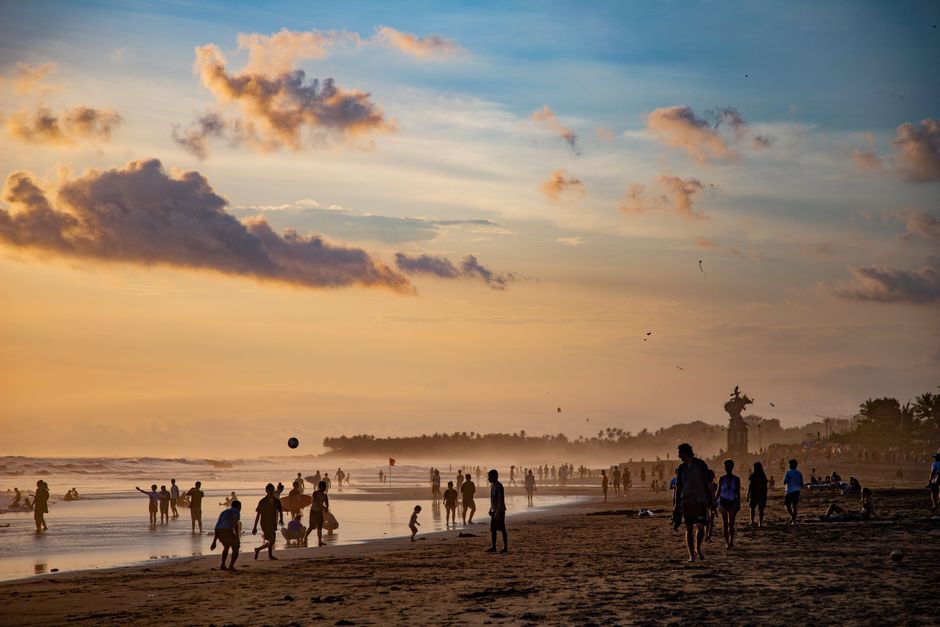
Canggu, on Bali’s southwest coast about 10 km (6 miles) north of Seminyak, has grown in little more than a decade from a quiet village of rice fields and surf breaks into one of the island’s busiest destinations, especially for surfers, digital nomads and long-stay visitors. Officially a village (desa) in North Kuta district, “Canggu” now describes a wider area stretching from Berawa through Batu Bolong and Echo Beach to Pererenan, with black-sand beaches, consistent waves, beach clubs, cafés, gyms, coworking spaces and villas tucked between the remaining paddy fields. Tanah Lot, Bali’s famous sea temple, is a short drive up the coast. Canggu is lively and social, though its narrow lanes are often jammed with scooters. The dry season, from about April to October, brings the best surf and sunshine; from November to March, afternoon storms are common and the sea can bring debris onto the beaches.
Right now in Canggu
- Thu25–27°C76–80°F1 mm rain
- Fri24–27°C76–80°FMostly clear
- Sat25–28°C76–82°FMostly clear
Top tours in Canggu
See all tours for Canggu →
From local operators, with prices and reviews; you check availability and book on Viator, our partner. We may earn a commission at no extra cost to you. How we earn money
Canggu at a glance
- Best for: surfing for all levels, cafés and restaurants, beach clubs and sunsets, yoga and fitness, remote work and longer stays.
- How long: 2–4 days for a taste; many visitors stay weeks or months.
- Best time: April to October, the dry season, with highs of about 29–31 °C (85–88 °F).
- Getting there: about 45–90 minutes by car from Ngurah Rai International Airport (DPS), depending on traffic.
- Getting around: scooters for experienced riders, Grab and Gojek where allowed, and walking along the beach.
- Good to know: rip currents are strong; surf and swim only where conditions suit your level.
- Before you go: the Bali Tourism Levy and temple etiquette are in our Bali travel guide; visas, the arrival card, money and general safety are in our Indonesia travel guide; see also our Kuta guide.
Canggu’s areas and where to stay
Until the early 2000s, Canggu was mainly farmland and fishing hamlets, known to surfers for its uncrowded waves. Villas, cafés and coworking spaces followed, and the area now draws long-stay visitors from around the world, while local families still farm, fish and run the temples. Canggu has no single center. The area is a patchwork of neighborhoods linked by a few narrow roads and the Shortcut, Canggu’s infamous one-lane link between Berawa and Batu Bolong. Pick a base close to the beach or café street you’ll use most, and you’ll spend less time in traffic.
Berawa
The southern end, closest to Seminyak, with big beach clubs, gyms, international schools, family villas and a wide beach. Smart and busy.
Batu Bolong
The heart of Canggu, around Batu Bolong beach and its temple, with surf schools, the densest choice of cafés, bars and shops along Jalan Batu Bolong, and nightlife. Convenient but crowded.
Echo Beach (Batu Mejan)
A surf beach with stronger waves, sunset bars and seafood grills, popular with experienced surfers.
Pererenan
Northwest of Echo Beach across the river, quieter and greener, with villas, rice fields, boutique cafés and its own beach; increasingly popular with families and long-stayers.
Seseh and Cemagi
Further up the coast toward Tanah Lot, with black-sand beaches, temples, a few resorts and a much calmer, rural feel.
Top things to see in Canggu
Batu Bolong Beach
Canggu’s main beach has a mellow, sandy-bottomed wave ideal for learners and longboarders, with surf schools and board rentals on the sand. The small temple of Pura Batu Bolong stands on the rocks at the north end; visitors stay outside the shrine. At sunset, the beach fills with surfers, dogs and people watching from beanbags.
Echo Beach
A rocky reef break with faster, more powerful waves for intermediate and advanced surfers, and a lineup that can be crowded. Restaurants along the beach serve grilled seafood at sunset.
Tanah Lot
About 20–30 minutes north, Bali’s iconic temple stands on a rock in the surf. At low tide, you can walk to the base and receive holy water from priests at a spring; the temple itself is for worshippers. Arrive early or stay for sunset, when it is busiest.
Rice fields and the Canggu countryside
Despite rapid building, rice paddies still separate the neighborhoods, worked by subak irrigation cooperatives; early morning walks or bike rides along the field paths show a quieter side of Canggu.
Pererenan and Seseh beaches
Wide black-sand beaches with fewer people, temples on the shore and good sunset views; the waves are powerful and best for experienced surfers.
More classic sights
- Pura Petitenget: a seaside temple in Seminyak, often hosting ceremonies.
- Love Anchor Canggu: a weekend bazaar of crafts and street food in Batu Bolong.
- Berawa beach clubs: pools and sunset sessions on the sand.
- Taman Ayun: the royal temple of Mengwi with its moat, about 30 minutes inland and part of Bali’s UNESCO-listed subak landscape.
- Seminyak: boutiques, restaurants and Double Six beach to the south.
Other things to do in Canggu
Surfing
Canggu has waves for every level within a few kilometers: Batu Bolong for beginners and longboarders, Berawa and Old Man’s for intermediates, and Echo Beach and Pererenan for experienced surfers. The best season is the dry season, when offshore winds blow on the west coast in the mornings. Surf schools offer lessons and multi-day camps; choose one with qualified instructors, soft boards for beginners and small groups. In the rainy season, onshore westerly winds often make the west coast messy, and many local surfers head to the east coast instead. Mornings are usually the best time to paddle out, before the wind picks up and the lineups get crowded, and checking the tide matters on the reef breaks. See our surfing guide.
Food and drink
Canggu’s café culture is famous: specialty coffee, smoothie bowls, plant-based kitchens, bakeries and brunch spots line every street, alongside excellent warungs serving nasi campur, babi guling and sate. In the evening, try seafood grills at Echo Beach, international restaurants in Berawa and Pererenan, and night markets with Indonesian street food. Drink only sealed, labeled alcohol in reputable places.
Yoga, fitness and wellness
Canggu has dozens of yoga studios, gyms, martial-arts and pilates studios, ice baths and saunas, plus spas offering Balinese massage.
Remote work
Coworking spaces with fast internet, meeting rooms and community events cater to remote workers. Work only within the rules of your visa: Indonesian tourist visas and the visa on arrival do not permit working for Indonesian companies or selling goods or services locally, and Bali’s government stresses that working or doing business without a proper permit is prohibited. Long-stay visitors should check the immigration department’s remote-worker visa options at evisa.imigrasi.go.id.
Festivals and village life
Behind the cafés, Canggu’s villages keep their Balinese Hindu traditions. Each banjar (neighborhood association) has its meeting hall and temples, and ceremonies, processions to the sea and temple anniversaries happen throughout the year. During Galungan and Kuningan, every 210 days, tall bamboo penjor arch over the roads, and on the eve of Nyepi, usually in March, young men parade giant ogoh-ogoh effigies through the streets before the island falls silent for 24 hours. Visitors are welcome to watch from the roadside; dress modestly and don’t block processions.
Beach cleanups and sustainability
In the rainy season, monsoon winds and currents wash plastic onto Bali’s west-facing beaches, and Canggu’s community groups, businesses and villages organize regular beach cleanups that visitors can join. Carry a refillable water bottle, refuse plastic bags and straws, and choose businesses that manage their waste responsibly.
Nightlife
Beach clubs, bars and late-night venues cluster in Batu Bolong and Berawa. Some neighborhoods have had complaints about noise; respect closing times and residents.
Day trips from Canggu
- Tanah Lot: the sea temple, 20–30 minutes north; go at sunrise or sunset.
- Ubud: the Monkey Forest, rice terraces and temples, about 1–1.5 hours inland. See our Ubud guide.
- Jatiluwih and Bedugul: UNESCO-listed rice terraces and the lakeside temple of Ulun Danu Beratan, about 1.5–2 hours north.
- Uluwatu: clifftop temple, kecak dance and surf beaches, about an hour south.
- Nusa Penida: by fast boat from Sanur, about 45 minutes’ drive from Canggu. See our Nusa Penida guide.
Nearby destinations
- Kuta10 km
- Sanur14 km
- Ubud20 km
- Bali33 km
- Nusa Penida44 km
- Gili Islands106 km
- Lombok129 km
- Bromo Tengger Semeru National Park250 km
Getting there and getting around
From the airport
From Ngurah Rai International Airport, Canggu is about 18–25 km (11–16 miles) away, 45 minutes in light traffic and 90 minutes or more at busy times. Take an official airport taxi, a pre-booked transfer or Grab or Gojek from the designated pickup area.
Around Canggu
Canggu’s roads are narrow, with few sidewalks, and traffic jams are common, especially at the Shortcut and on the roads to Seminyak and Tanah Lot. Most residents use scooters, but accidents are frequent: ride only if you hold a motorcycle license and an International Driving Permit, always wear a helmet, and don’t ride after drinking. Police checks of foreign riders are regular. Grab and Gojek offer motorbike and car rides, though some village areas restrict app pickups. Walking along the beach between Batu Bolong, Echo Beach and Berawa at low tide is often quicker than the road.
Boats and onward travel
For the Nusa islands, fast boats leave from Sanur; for the Gilis and Lombok, from Padang Bai, Serangan or Sanur, often with pickups in Canggu. For Java, flights from the airport are the easiest option.
When to go and how long to stay
Canggu shares the climate of Bali’s southwest coast: hot and humid, with a dry season from about April to October and a rainy season from November to March. BMKG’s published WMO normals for Bali do not include temperature or rainfall, so the table combines two official datasets: average daily highs and lows are 1991–2020 averages of BMKG’s observations at Ngurah Rai Airport, about 20 km (12 miles) south, compiled from NOAA’s global daily records, and rainfall and rain days are BMKG’s long-term normals for Denpasar (1961–1990), as published by the World Meteorological Organization.
| Month | Average high / low | Rain (rain days) | What to expect |
|---|---|---|---|
| January | 31 °C (88 °F) / 25 °C (77 °F) | 345 mm (13.6 in), 27 days | Wettest month; onshore winds; debris on beaches |
| February | 31 °C (88 °F) / 25 °C (76 °F) | 274 mm (10.8 in), 22 days | Wet; quieter streets |
| March | 31 °C (88 °F) / 25 °C (77 °F) | 234 mm (9.2 in), 20 days | Rain easing; Nyepi usually falls this month |
| April | 31 °C (88 °F) / 25 °C (77 °F) | 88 mm (3.5 in), 9 days | Dry season begins; good surf |
| May | 31 °C (87 °F) / 24 °C (76 °F) | 93 mm (3.7 in), 8 days | Offshore mornings; great month |
| June | 30 °C (86 °F) / 24 °C (75 °F) | 53 mm (2.1 in), 6 days | Dry; bigger swells |
| July | 29 °C (85 °F) / 24 °C (75 °F) | 55 mm (2.2 in), 4 days | Peak surf and tourist season |
| August | 29 °C (85 °F) / 24 °C (74 °F) | 25 mm (1.0 in), 4 days | Driest and busiest month |
| September | 30 °C (86 °F) / 24 °C (74 °F) | 47 mm (1.9 in), 8 days | Dry; consistent waves; fewer crowds |
| October | 31 °C (88 °F) / 24 °C (76 °F) | 63 mm (2.5 in), 12 days | Hotter; first storms |
| November | 32 °C (89 °F) / 25 °C (77 °F) | 179 mm (7.0 in), 16 days | Rains begin; low season |
| December | 31 °C (88 °F) / 25 °C (77 °F) | 276 mm (10.9 in), 22 days | Wet; busy over the holidays |
BMKG’s outlook for the 2026–27 rainy season expected a very strong El Niño to delay the start of the rains on Bali to November or December 2026 and to make the season shorter than normal. Sea temperatures stay around 27–29 °C (81–84 °F), and surfers rarely need more than a rash guard.
3 days in Canggu
Day one, a morning surf lesson at Batu Bolong, brunch and an afternoon at a beach club in Berawa, then sunset at Echo Beach. Day two, an early ride through the rice fields, Tanah Lot at sunset and dinner in Pererenan. Day three, yoga, a massage and the weekend market, or a day trip to Ubud.
A week or longer
Add surf sessions further afield at Uluwatu, a day trip to Jatiluwih and Bedugul, and a boat trip to Nusa Penida from Sanur.
Where to stay in Canggu
- Batu Bolong: guesthouses, hostels and boutique hotels close to cafés, nightlife and the learner waves.
- Berawa: villas and resorts near the beach clubs.
- Echo Beach: surf camps and sunset views.
- Pererenan: quieter villas and boutique hotels among the rice fields.
- Seseh and Cemagi: peaceful beach resorts further north.
Monthly rentals are common, but always use licensed accommodation; Bali’s government has cracked down on unlicensed villas. Expect higher prices from July to August and at Christmas and New Year.
What a trip to Canggu costs
Prices are approximate, for October 2026, converted at about 17,900 rupiah to the US dollar.
| Item | Typical cost |
|---|---|
| Bali Tourism Levy, per person, once per visit | 150,000 rupiah (about US$8.40) |
| Group surf lesson, 2 hours, with board | 300,000–500,000 rupiah (about US$17–28) |
| Surfboard rental, per day | 50,000–150,000 rupiah (about US$2.80–8.40) |
| Scooter rental, per day / per month | 70,000–120,000 / 1,200,000–2,000,000 rupiah (about US$4–7 / US$67–112) |
| Flat white or smoothie bowl in a café | 35,000–90,000 rupiah (about US$2–5) |
| Nasi campur at a warung | 25,000–45,000 rupiah (about US$1.40–2.50) |
| Yoga class, drop-in | 120,000–200,000 rupiah (about US$6.70–11) |
| Coworking day pass | 150,000–300,000 rupiah (about US$8.40–17) |
| Guesthouse double, per night | 350,000–700,000 rupiah (about US$20–39) |
| Private pool villa, per night | 1,500,000 rupiah and up (about US$84 and up) |
Practical tips for Canggu
- Pick your base carefully: traffic makes short distances slow.
- Surf etiquette: learners stay on the inside; don’t drop in on other surfers.
- Flags: swim only between the red-and-yellow flags.
- Respect temples and ceremonies: wait for processions to pass, and wear a sarong and sash at temples.
- Noise and neighbors: Canggu is still a village; keep music down late at night.
- Visa rules: don’t work for local clients on a tourist visa.
Safety
Canggu is lively and generally safe, but the sea and the roads demand respect. Rip currents run along the beaches, especially at Echo Beach, Pererenan and around river mouths; swim only between the flags where lifeguards are on duty, and surf only where the waves suit your level. Reefs at Echo Beach and Pererenan are shallow at low tide. Scooters cause most serious injuries to visitors; wear a helmet, ride defensively, and never drink and ride. Methanol poisoning from illicit arak is a risk, so drink only sealed, labeled bottles. “Bali belly” is common; drink bottled or filtered water. Bag snatches from passing motorbikes happen at night. Stray dogs can carry rabies, so don’t approach them, and seek treatment immediately after a bite or scratch. In an emergency, call 112.
What to pack for Canggu
Swimwear, a rash guard, reef booties for reef breaks, reef-safe sunscreen, a hat and sunglasses, light clothes, a sarong for temples, a phone holder or waterproof pouch for scooter navigation, insect repellent and a light rain jacket from November to March. Indonesia uses 230 V and round two-pin plugs.
Canggu travel FAQ
Is Canggu good for beginner surfers?
Yes. Batu Bolong’s mellow beach break is ideal for learners and longboarders, with many surf schools; Echo Beach and Pererenan are for experienced surfers.
How far is Canggu from Bali airport?
About 18–25 km (11–16 miles), or 45–90 minutes by car depending on traffic.
Is Canggu or Seminyak better?
Canggu is more laid-back and surf-focused, with cafés and rice fields; Seminyak is more polished, with boutiques, fine dining and calmer streets for walking.
Can I work remotely in Canggu on a tourist visa?
Tourist visas and the visa on arrival don’t allow working for Indonesian clients or selling services locally. Check the official remote-worker visa options on evisa.imigrasi.go.id.
When is the best time to visit Canggu?
April to October, the dry season, with offshore winds and consistent surf; May, June and September are less crowded.
When is the rainy season in Canggu?
Usually from November to March. BMKG expected the 2026–27 rains to begin late and be shorter than normal because of El Niño.
Is it safe to swim in Canggu?
Only between the red-and-yellow flags where lifeguards are on duty; rip currents are strong along this coast.
Do I need a scooter in Canggu?
Not necessarily. Grab and Gojek, drivers and walking work for most trips; rent a scooter only if you are licensed and experienced.
How far is Tanah Lot from Canggu?
About 20–30 minutes by car or scooter, along the coast to the north.
Do I need to pay the Bali tourist levy in Canggu?
Yes. All foreign tourists entering Bali pay the 150,000-rupiah levy once per visit, online at lovebali.baliprov.go.id or in the Love Bali app.
Plan your trip
Partner links: TravelerCenter may earn a commission if you book, at no extra cost to you.
🇮🇩 Useful Indonesian phrases for Canggu
All 38 Indonesian phrases: restaurant, hotel, emergencies, romance (printable) →
Sources · last reviewed 4 October 2026
Researched and last reviewed on 4 October 2026. The Bali Tourism Levy: the Bali provincial government’s Love Bali website; guidelines for foreign tourists, including the ban on working without a permit: Bali Governor Circular Letter 7 of 2025; visa conditions: the Directorate General of Immigration’s e-Visa website; the subak World Heritage site: UNESCO; the 2026–27 rainy season outlook: BMKG; temperatures: BMKG observations at Ngurah Rai Airport via NOAA GHCN-Daily (1991–2020 averages); rainfall normals: BMKG for Denpasar via the WMO World Weather Information Service (1961–1990); exchange rate: Bank Indonesia. Distances, surf spots, journey times, the market schedule, enforcement against unlicensed villas and typical prices are general references or estimates, flagged for checking. Prices and rules change, so check before you go. For entry rules, money and general safety, see our Indonesia travel guide.
Data: Weather: MET Norway (CC BY 4.0) · Sea temperature: NOAA CoastWatch · Air quality: OpenAQ · Rates: ECB · Costs: World Bank ICP and price levels · Wikidata (CC0)