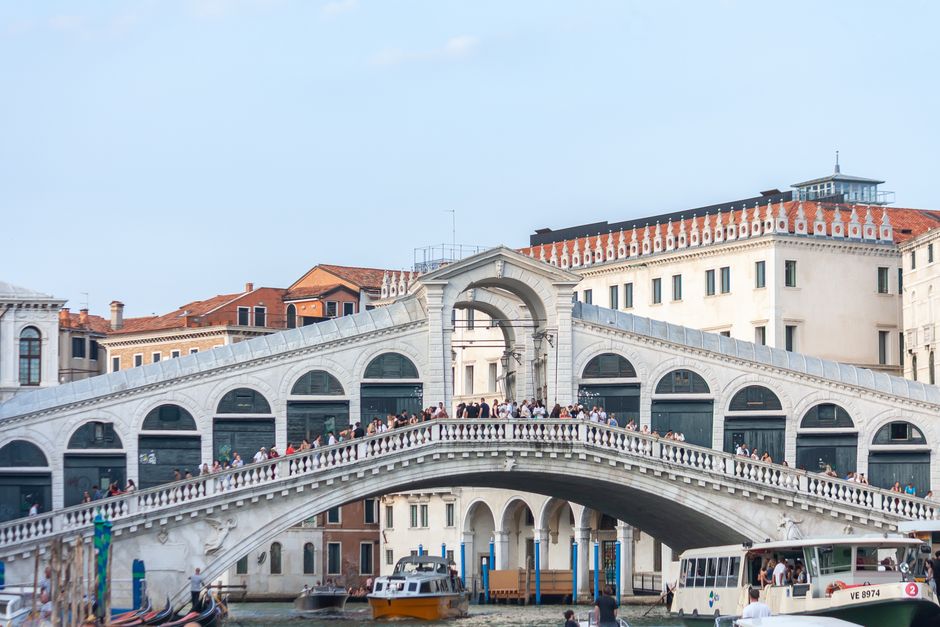
Short answer: The Veneto, in north-eastern Italy, is where most visitors meet Italy for the first time, and it is the country’s most-visited region. It runs from the lagoon and beaches of the Adriatic to the peaks of the Dolomites. Start with Venice, then take the train to Verona and Padua, and add Vicenza, the Prosecco Hills, the eastern shore of Lake Garda or the Dolomites around Cortina d’Ampezzo. One week covers the cities; ten days to two weeks lets you add the lake or the mountains.
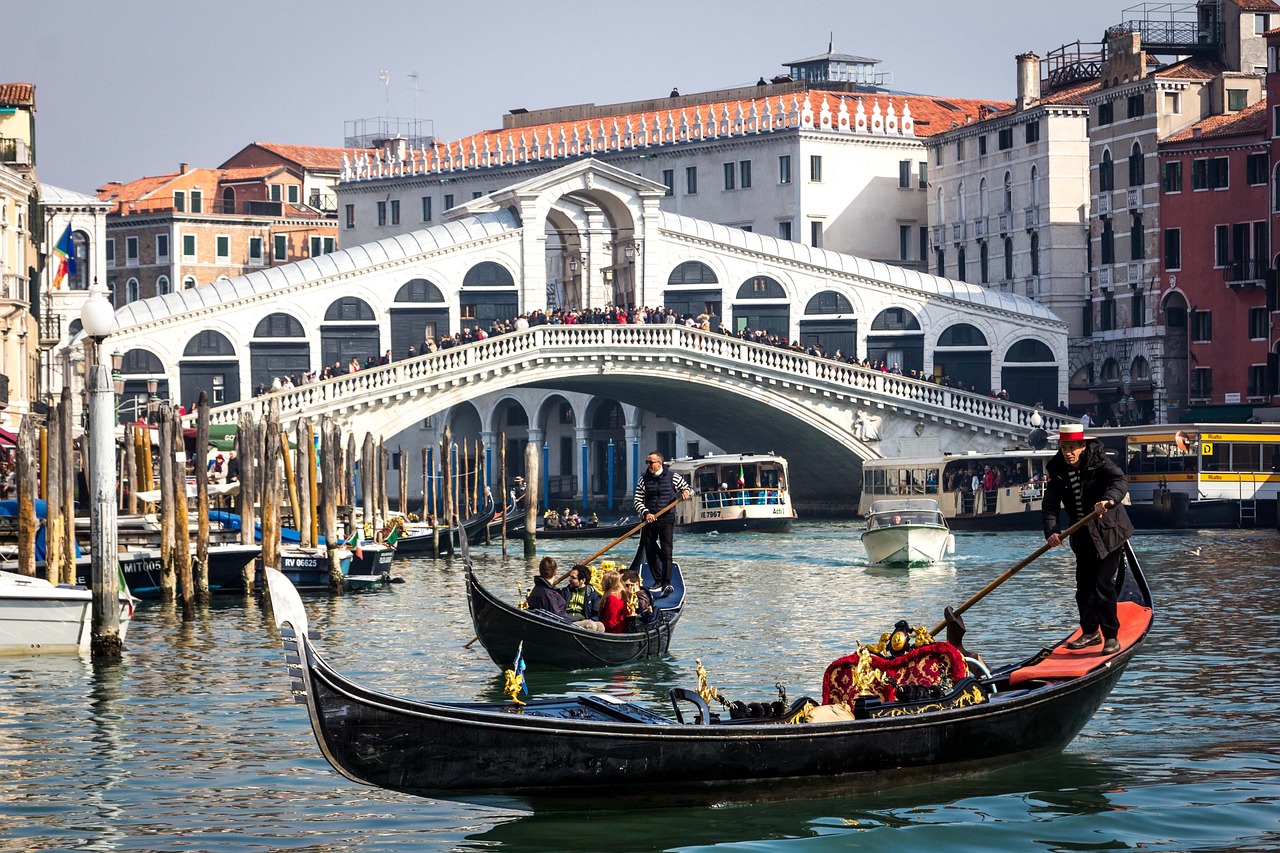
No other Italian region hosts as many overnight stays. According to ISTAT, Italy’s national statistics institute, hotels, campsites and other accommodation in the Veneto recorded about 73.5 million nights in 2024, close to 16% of the national total, and the region’s own statistics office reports a new record of 22.3 million arrivals and 74.2 million nights in 2025. Venice alone accounted for 13.3 million nights in 2024, the third-highest of any Italian city after Rome and Milan. The region has seven provinces, Venice, Verona, Padua, Vicenza, Treviso, Belluno and Rovigo, and for a thousand years most of it belonged to the Republic of Venice, whose winged lion of St. Mark still watches over town squares from the lagoon to Lake Garda. For entry rules, money, tipping and trains across the country, see our Italy travel guide.
Where to go in the Veneto
The Veneto is easy to travel without a car: the main railway line from Milan runs through Verona, Vicenza and Padua to Venice, and most of the region’s highlights are a short train or bus ride from one of those four cities. A good first trip uses two bases, Venice in the east and Verona in the west, with day trips in between.
Venice and the lagoon
Venice is unlike anywhere else: a city of canals, bridges and palaces built on more than a hundred islands, with no cars at all. The big sights cluster around St. Mark’s Square, where the golden mosaics of St. Mark’s Basilica sit beside the Gothic Doge’s Palace, seat of the old Venetian Republic. Beyond them, the best of Venice is wandering: the Rialto market in the morning, quiet squares in Cannaregio and Castello, and the galleries of Dorsoduro. Out in the lagoon, Murano is known for glass, Burano for its brightly painted houses and lace, and Torcello for its ancient cathedral, while the Lido has the beaches. Our Venice travel guide has neighborhoods, vaporetto passes and the access fee in detail.
Verona
Verona, on a loop of the river Adige, is the Veneto’s second great city and an easy one to love: a Roman amphitheater, the Arena, still used for opera on summer nights; the market square of Piazza delle Erbe; Castelvecchio and its bridge; and the balcony courtyard of Juliet’s House, made famous by Shakespeare. The VeronaCard, sold by the city, costs €33 for 24 hours or €38 for 48 hours and covers the main monuments and city buses. Verona is also the gateway to Lake Garda and to the Valpolicella and Soave wine areas. See our Verona travel guide.
Padua
Just half an hour from Venice by train, Padua is a lively university city with one of the great treasures of European art: Giotto’s frescoes in the Scrovegni Chapel, part of the UNESCO World Heritage Site of Padua’s 14th-century fresco cycles. It also has the huge Basilica of St. Anthony, a major place of pilgrimage, the Prato della Valle, one of the largest squares in Europe, and the world’s oldest university botanical garden, also on the UNESCO list. Visits to the Scrovegni Chapel must be booked in advance on the official site, in small timed groups. Our Padua travel guide has the details.
Vicenza and the Palladian villas
Vicenza is the city of Andrea Palladio, the 16th-century architect whose temple-fronted buildings were copied from England to Virginia. His Basilica Palladiana dominates the main square, and his Teatro Olimpico, with its painted wooden street scenes, is one of the oldest surviving indoor theaters in the world. The city and the Palladian villas scattered across the Veneto countryside are a UNESCO World Heritage Site; La Rotonda on the edge of Vicenza is the most famous. Along the Brenta Canal between Padua and Venice, more Venetian villas, such as Villa Pisani at Stra and Palladio’s Villa Foscari, can be seen by car, bike or river boat.
Treviso and the Prosecco Hills
Treviso is a relaxed, canal-lined small city that many visitors pass through only because of its airport. North of it, the steep, vine-covered Prosecco Hills of Conegliano and Valdobbiadene were added to the UNESCO World Heritage List in 2019, and the Veneto’s statistics office reports a growing number of visitors there. Follow the wine road between the two towns, stop at family wineries for a tasting, and climb to the Cartizze hill for the view. Nearby are the hill town of Asolo, Bassano del Grappa with its covered wooden bridge and grappa distilleries, and Castelfranco Veneto, birthplace of the painter Giorgione.
The Dolomites and Cortina d’Ampezzo
The northern province of Belluno lies in the Dolomites, the pale, jagged mountains that are a UNESCO World Heritage Site. Cortina d’Ampezzo, which co-hosted the 2026 Winter Olympics, is the most famous resort, ringed by the Tofane, Cristallo and Sorapiss peaks. The three rock towers of the Tre Cime di Lavaredo, one of the most photographed sights in the Alps, rise on the Veneto’s border with South Tyrol. Summer is for hut-to-hut hiking and via ferrata routes; winter for skiing on the Dolomiti Superski network. Read our Dolomites travel guide for the whole range.
Lake Garda, the beaches and the Euganean Hills
The eastern shore of Lake Garda, Italy’s largest lake, belongs to the Veneto: Peschiera del Garda with its UNESCO-listed Venetian fortifications, Lazise, Bardolino and its red wine, Garda and Malcesine, where a cable car climbs Monte Baldo. On the Adriatic, the long sandy beaches of Jesolo, Caorle and Bibione fill with families in summer, and further south the Po Delta is a flat world of lagoons, reeds and birdlife. Just south-west of Padua, the volcanic Euganean Hills, a UNESCO biosphere reserve since 2024, are known for the thermal spas of Abano and Montegrotto, walled towns such as Este and Montagnana, and the poet Petrarch’s house at Arquà Petrarca.
Top things to do in the Veneto
See Venice, the smart way
Venice is busiest in the middle of the day, when tour groups and day-trippers arrive. Staying at least one night lets you see the city early in the morning and in the evening, when it is at its most beautiful. Getting around is by vaporetto, the city’s water buses: as of 2026, a single 75-minute ticket costs €9.50, and passes cost €25 for 24 hours, €35 for 48 hours, €45 for 72 hours and €65 for seven days, according to the operator AVM/ACTV.
In 2026, the City of Venice charged day visitors an access fee (contributo di accesso) on 60 busy days between 3 April and 26 July, from 8:30 to 16:00: €5 if booked at least four days ahead or €10 closer to the date, for visitors aged 14 and over, through the official portal cda.ve.it. That trial is over, and as of November 2026 the city has not officially published a calendar or prices for 2027. If you plan a day trip to Venice in spring or summer 2027, check cda.ve.it shortly before you go.
Go to the opera in the Arena di Verona
Watching an opera under the stars in a Roman amphitheater nearly 2,000 years old is one of Italy’s great experiences. The Arena di Verona Opera Festival began in 1913 with Verdi’s Aida, and the official dates for the 104th festival are 11 June to 11 September 2027, with Aida, La Traviata, Carmen and Nabucco on the program. The cheapest seats are on the unnumbered stone steps, so bring a cushion and arrive early. From June to September, ATV’s OperaBus takes audiences back to the Lake Garda towns after the show.
Venice Carnival and the Biennale
For a few weeks before Lent, Venice fills with masks and elaborate costumes. According to the official Carnival website, the 2027 Carnival runs from 23 January to 9 February 2027; the final weekend and Shrove Tuesday are the busiest, so book a hotel well ahead. Venice is also a world capital of contemporary art and architecture: the 2026 Biennale Arte runs until 22 November 2026, and the 20th International Architecture Exhibition is scheduled for 8 May to 21 November 2027 at the Giardini, the Arsenale and venues around the city.
Hike the Dolomites
From late June to September, lifts and mountain huts (rifugi) open across the Dolomites, and well-marked trails lead to lakes, meadows and rock towers. The loop around the Tre Cime di Lavaredo is the classic walk. The toll road up to the Rifugio Auronzo car park, run by the municipality of Auronzo di Cadore, needs an online booking; in 2026 it cost €40 per car and was open from late May to late October, weather permitting. Buses from Cortina and Auronzo are an easy alternative. In winter, Cortina’s slopes, the Cinque Torri and the Lagazuoi are part of the huge Dolomiti Superski area.
Taste Prosecco, Amarone and Soave
The Veneto makes more wine than almost any other Italian region. Sparkling Prosecco comes from the hills between Conegliano and Valdobbiadene; north of Verona, the Valpolicella valleys produce the rich red Amarone, made from partly dried grapes; and the medieval walled town of Soave gives its name to a crisp white. Many wineries welcome visitors for tastings, usually by appointment, and autumn harvest festivals fill village squares. If you are driving, remember that Italy’s drink-driving limit is low; a tour or a designated driver is a good idea.
Explore the lagoon islands
Take a vaporetto out to Murano to watch glassblowers at work, continue to Burano for its rainbow-colored fishermen’s houses, and finish on almost-deserted Torcello, where the cathedral’s Byzantine mosaics are older than St. Mark’s. In summer, the Lido and Pellestrina offer beaches and cycle paths along the thin strips of land that protect the lagoon from the sea. Chioggia, at the southern end of the lagoon, is a working fishing town with canals of its own and far fewer visitors.
When to go to the Veneto
The Veneto has hot, humid summers and cool, damp winters on the plain, with fog in the Po valley in November and December, and a true Alpine climate in the Dolomites. Verona gets about 770 mm of rain a year, spread fairly evenly, with the wettest months in autumn. In Venice, high tides (acqua alta) occur mainly from October to January; the MOSE flood barriers now protect the city from the biggest ones, but low-lying St. Mark’s Square can still get wet. The figures below are averages for Verona (Villafranca airport, 1991–2020, Italian Air Force data) and Venice (Tessera airport, 1971–2000).
| Season | Verona: average high / low | Venice: average high / low | What it’s like | Good for |
|---|---|---|---|---|
| Winter (Dec–Feb) | 7–10 °C / about 0 °C | 7–9 °C / about 0 °C | Cool, often foggy or gray on the plain; snow in the mountains | Carnival, skiing in the Dolomites, museums with no lines |
| Spring (Mar–May) | 15–24 °C / 4–13 °C | 13–22 °C / 4–13 °C | Mild and changeable, with some rainy spells; green countryside | Cities, villas and gardens, wine country, the Architecture Biennale in 2027 |
| Summer (Jun–Aug) | 28–30 °C / 17–19 °C | 25–28 °C / 16–18 °C | Hot and humid in the cities, with afternoon storms; cooler in the mountains | Opera in the Arena, beaches, Lake Garda, Dolomites hiking |
| Autumn (Sep–Nov) | 25 °C falling to 12 °C / 14 °C falling to 5 °C | 24 °C falling to 12 °C / 14 °C falling to 4 °C | Warm September, golden October, foggy and wet November | Wine harvest, cities, the Regata Storica in September |
Best overall: mid-April to early June and September to mid-October, when the weather is pleasant and Venice is a little less crowded than in midsummer. For the opera and the lake: June to early September. For hiking: late June to September. For skiing: December to March. Venice is busiest at Easter, on spring and summer weekends and during Carnival; November and January, outside the Carnival weeks, are the quietest months.
Getting there and getting around
Airports
Venice Marco Polo Airport (VCE) is the main gateway, with flights across Europe and some nonstop routes from North America. From the airport, buses run to Piazzale Roma and water buses and water taxis cross the lagoon to the historic center; AVM’s airport bus costs €10 one way. Treviso Airport (TSF) is used mainly by low-cost airlines, and Verona Airport (VRN) is closest to Verona and Lake Garda. Milan’s airports are a train ride away for the western Veneto.
Trains and buses
Fast trains run by Trenitalia and Italo link Venice Santa Lucia station, on the Grand Canal, with Padua, Vicenza, Verona and Milan, and south to Bologna, Florence and Rome; check current times on the operators’ websites. Frequent regional trains connect the Veneto’s cities and reach Treviso, Conegliano, Bassano del Grappa, Belluno and the beaches’ nearest stations. Paper regional tickets must be validated before boarding; digital tickets do not. For the lake, take a train to Peschiera del Garda or one of ATV’s buses from Verona along the eastern shore. In the mountains, buses link Cortina with the railway at Calalzo and with Venice and its airport.
Driving
A car is useful for the Prosecco Hills, the Palladian villas, the Dolomites and the smaller towns, but not for the cities. In Venice, the road ends at Piazzale Roma and Tronchetto, where you leave the car in a garage, and Verona, Padua and most historic centers have limited traffic zones (ZTL) watched by cameras, with fines for unauthorized cars. Italian motorways (autostrade) have tolls. In winter, snow chains or winter tires are required on many mountain roads, and some high passes close.
Tourist tax
Most cities and resorts in the Veneto, including Venice, Verona and Padua, charge a small tourist tax (imposta di soggiorno) per person per night, set by each municipality and usually paid at your hotel. Rates depend on the type and star rating of your accommodation, and there is normally a cap on the number of nights charged. The access fee for Venice day visitors, when it applies, is a separate charge; check the exemption rules on cda.ve.it.
Food and drink in the Veneto
Venetian food comes from the lagoon and the fields: sarde in saor, sardines in sweet-and-sour onions; baccalà mantecato, whipped salt cod on grilled polenta; risi e bisi, rice with spring peas; bigoli, thick whole-wheat pasta, often with duck or anchovy sauce; and fegato alla veneziana, liver with onions. In Venice, the best way to eat is a bar crawl through the bacari, small wine bars serving cicchetti, Venetian tapas, with an ombra, a small glass of wine. Vicenza is known for baccalà alla vicentina, slow-cooked stockfish, and Treviso for its bitter red radicchio, which appears in risotto in winter.
Treviso claims tiramisù as its own, Verona gave Italy the star-shaped Christmas cake pandoro, and the mountain plateau of Asiago makes one of Italy’s best-known cheeses. The Spritz, now drunk all over the world, is a Veneto tradition: white wine and sparkling water with a bitter liqueur. Add Prosecco from the hills, Amarone and Valpolicella from around Verona, Soave and Bardolino, and grappa from Bassano, and the Veneto is one of Italy’s best regions for food and wine.
Plan your trip
Tell our AI trip planner how many days you have and what you enjoy, and it will build a Veneto itinerary from our guides, for example Venice, Padua and Verona by train, or Venice, the Prosecco Hills and the Dolomites by car. Check the forecast and monthly averages for each stop with our Destination weather tool, and pack layers and comfortable shoes: Venice means a lot of walking and many bridges, and the mountains can be cool even in August.
Frequently asked questions
What is the best time to visit the Veneto?
Mid-April to early June and September to mid-October are the best all-round months, with mild weather and fewer crowds than in July and August. Come in summer for the Arena opera festival, the beaches and Dolomites hiking, and from December to March for skiing and Carnival.
How many days do you need in the Veneto?
One week is enough for three days in Venice, a day in Padua and two days in Verona, with a day trip to Vicenza or Lake Garda. With ten days to two weeks, you can add the Prosecco Hills, the Dolomites or a few days by the lake.
Do you have to pay to enter Venice in 2027?
In 2026, day visitors aged 14 and over paid an access fee of €5 or €10 on 60 busy days between 3 April and 26 July. As of November 2026, the City of Venice has not officially published the 2027 calendar or prices, so check the official portal cda.ve.it before a day trip.
When is the Venice Carnival in 2027?
According to the official Carnival website, the 2027 Venice Carnival runs from 23 January to 9 February 2027, ending on Shrove Tuesday. The last weekend is the busiest.
When is the Arena di Verona opera festival in 2027?
The 104th Arena di Verona Opera Festival runs from 11 June to 11 September 2027, according to the Arena’s official website, with Aida, La Traviata, Carmen and Nabucco among the operas.
Before you go: guidebooks and travel gear
Affiliate links: we may earn a commission at no extra cost to you. As an Amazon Associate we earn from qualifying purchases. We pick items for the place, not for the commission. How we earn money