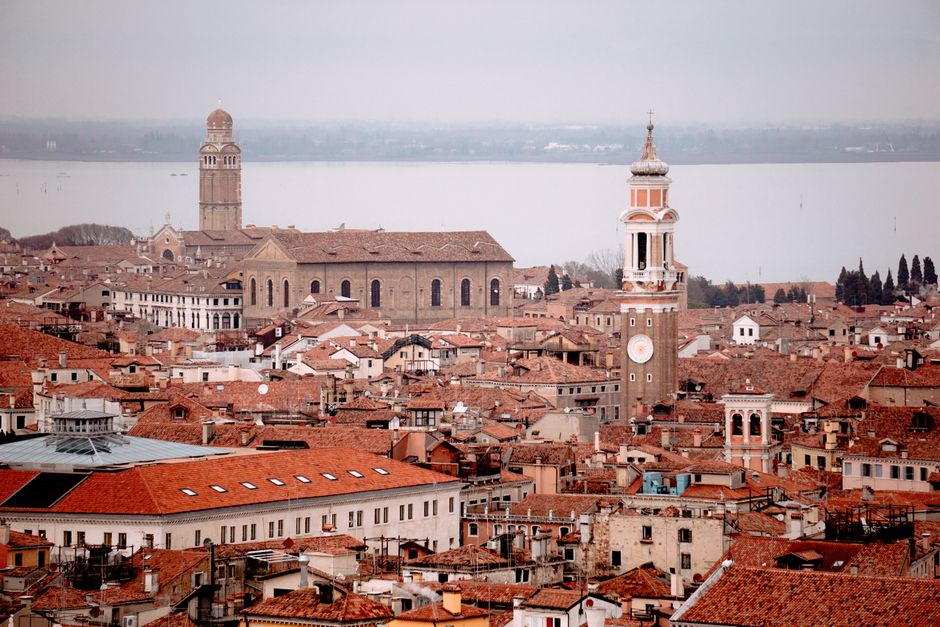
Venice is the city that shouldn’t exist: a thousand years of palaces, churches and bell towers rising straight out of a lagoon, with boats instead of cars and footbridges instead of roads. By day, crowds pack the route between the Rialto and St. Mark’s; step a few lanes away, or stay the night, and you find quiet canals, neighbourhood squares, bars serving cicchetti and a spritz, and the lap of water against stone. Add a boat trip to the colourful lagoon islands of Burano and Murano. Give it two full days for the highlights, three or four to slow down and explore the islands.
Right now in Venice
- Wed 15–23°C 58–73°F Partly cloudy
- Thu 17–23°C 63–73°F 23 mm Partly cloudy
- Fri 15–19°C 60–66°F 27 mm Cloudy
Weather: MET Norway (CC BY 4.0) · Sea temperature: NOAA CoastWatch · Rates: ECB
Top tours in Venice
See all tours for Venice →
From local operators, with prices and reviews; you check availability and book on Viator, our partner. We may earn a commission at no extra cost to you. How we earn money
Venice at a glance
- Best for: romance, art and architecture, wandering without a map, boat rides, lagoon islands and Venetian food and wine.
- How long: 2 days for the main sights, 3–4 with Murano, Burano and Torcello, or a day trip to Verona.
- Best time: April to June and September to October; November to February is quiet and atmospheric, with high tides possible.
- Access fee: day visitors paid €5–10 on 60 busy days between April and July 2026. The 2026 trial ended on 26 July, and no 2027 calendar had been published by early October 2026.
- Getting around: on foot and by vaporetto (water bus): €9.50 for a single ticket or €25 for a 24-hour pass, as of October 2026.
- Before you go: entry rules, money, trains and general safety are on our Italy travel guide.
Venice’s sestieri and who each one suits
Historic Venice is divided into six sestieri (districts), shaped like a fish when seen from above, with the Grand Canal curving through the middle in a reverse S. Only four bridges cross it (Rialto, Accademia, Scalzi and the modern Constitution Bridge), plus a handful of traghetti, gondola ferries that cross for a couple of euros. Everything is walkable, but expect to get lost: that is half the fun. House numbers run through each whole sestiere, so save your hotel’s location on your phone.
San Marco
The grand centre around St. Mark’s Square, with the basilica, the Doge’s Palace, the Campanile, La Fenice opera house and the luxury shops of the Mercerie. Unbeatable for sightseeing and magical at night when the crowds go, but the most expensive and busiest area by day.
Dorsoduro
Venice’s art quarter, across the Accademia bridge: the Gallerie dell’Accademia, the Peggy Guggenheim Collection, the Punta della Dogana and the white domes of the Salute church. The sunny Zattere waterfront is perfect for an evening walk, and Campo Santa Margherita fills with students and spritz drinkers. A favourite base for couples and art lovers.
Cannaregio
The most lived-in district, near the train station: long canals lined with bars (the Fondamenta della Misericordia and Ormesini are the evening hotspots), the historic Jewish Ghetto, the world’s first, and boats to Murano and Burano from the Fondamente Nove. Good value, local and lively.
Castello
The largest sestiere, stretching east from St. Mark’s past the Arsenale, the old shipyard, to the gardens where the Biennale is held. The western part is busy and close to the sights; the east, around Via Garibaldi, is where Venetians hang their laundry and children play in the squares.
San Polo and Santa Croce
The Rialto side of the Grand Canal: the Rialto fish and produce market, the Frari church with its Titian altarpiece, the Scuola Grande di San Rocco with Tintoretto’s paintings, and many of the best cicchetti bars. Santa Croce, near Piazzale Roma, is handy if you arrive by bus or car.
Giudecca and the Lido
Giudecca, a long island across a wide canal from Dorsoduro, has peaceful hotels, Palladio’s Redentore church and great views back to the city. The Lido, a sandy barrier island 15 minutes away by vaporetto, has beaches, cars, bikes and the Venice Film Festival; it suits families and summer stays.
The Venice access fee (contributo di accesso)
To manage crowds, the City of Venice charges day visitors a fee to enter the historic centre on its busiest days. It was trialled in 2024 and 2025, and again in 2026. This is how it worked in 2026, according to the city:
- When: 60 days between 3 April and 26 July 2026, mostly Fridays to Sundays and public holidays (all of the last week of April and the first week of June), from 8:30 to 16:00. Outside those hours it was free.
- How much: €5 if you paid at least four days in advance, €10 if you paid in the last three days or on the day.
- Who paid: day visitors aged 14 and over entering the historic centre. Guests staying overnight in the municipality didn’t pay (they pay the tourist tax instead) but had to register for a free exemption QR code; residents, workers, students and several other groups were also exempt.
- Where: the historic centre only. In 2026 the minor islands, including Murano, Burano, Torcello, the Lido and Pellestrina, were not included.
- How: online on the city’s official portal (cda.ve.it), which issued a QR code to show at spot checks. Visitors found without one risked a fine.
Status as of October 2026: the 2026 trial ended on 26 July, after some 650,000 paid entries, and since 27 July you can visit Venice without paying or registering. The city council will decide whether, and on how many days, the fee applies in 2027; no calendar had been published when this guide was checked. If you plan a day trip in spring or summer 2027, check the City of Venice’s official pages before you go, and use only the official portal: other sites selling “Venice tickets” are not the fee.
Top things to see in Venice
Prices and hours were checked on the official sites in October 2026; check again before you go, and book St. Mark’s Basilica and the Doge’s Palace in busy months. Dress codes apply in all churches: shoulders and knees covered.
St. Mark’s Basilica
Venice’s golden church, a dazzle of Byzantine domes and more than 8,000 square metres of mosaics, built to hold the relics of St. Mark. All tickets are timed and in the visitor’s name, sold on the basilica’s official site (tickets.basilicasanmarco.it) or at its ticket points. As of October 2026, the prices for individual visitors are:
- Basilica only: €10.
- Basilica and Pala d’Oro (the jewel-encrusted gold altarpiece): €20.
- Basilica and Museum, including the original bronze horses and the Loggia dei Cavalli terrace over the square: €20.
- Full ticket (basilica, Pala d’Oro, museum and terrace): €30.
- St. Mark’s Campanile (bell tower, with a lift): €15.
Under-10s go free; ages 10–18, students up to 26 and over-65s pay half. A nice bonus: any basilica ticket also lets you into more than 30 other Venetian churches within six months, including Torcello’s cathedral and the Redentore. Large backpacks are not allowed inside. The basilica closes to visitors during services, especially on Sunday mornings.
The Doge’s Palace and St. Mark’s Square
The pink-and-white Gothic palace was the seat of the Venetian Republic for centuries: vast council halls painted by Tintoretto and Veronese, the doge’s apartments, the armoury and, across the Bridge of Sighs, the prisons. The Musei di Piazza San Marco ticket covers the palace plus the Museo Correr, the National Archaeological Museum and the monumental rooms of the Marciana Library. As of October 2026 it costs €35, or €30 if bought online more than 30 days ahead, with a €15 reduced ticket for children aged 6–14, students aged 15–25 and over-65s. Book the “Secret Itineraries” guided tour well ahead to see the hidden offices and Casanova’s cell. On the square itself, coffee at the historic cafés Florian or Quadri comes with an orchestra and a surcharge.
The Grand Canal and the Rialto
The best introduction to Venice costs a vaporetto ticket: ride line 1, the slow boat, from Piazzale Roma or the station down the whole Grand Canal to St. Mark’s, past about 170 palaces, in around 45 minutes. Sit at the front or back outside. Stop at the Rialto Bridge and the market next to it, busiest in the morning (closed Sundays, and the fish market also on Mondays).
Art museums and churches
- Gallerie dell’Accademia: the great collection of Venetian painting, from Bellini and Carpaccio to Titian, Tintoretto and Veronese.
- Peggy Guggenheim Collection: modern art (Picasso, Pollock, Magritte) in an American heiress’s canal-side palace, with a sculpture garden; closed on Tuesdays.
- Frari church and Scuola Grande di San Rocco: Titian’s Assumption above the altar, and a building covered in Tintoretto’s paintings next door.
- Santa Maria della Salute and San Giorgio Maggiore: two domed landmarks; San Giorgio’s bell tower has a lift and the best view of St. Mark’s without the queue.
- Ca’ Rezzonico and Ca’ d’Oro: two palaces on the Grand Canal that show how Venetian nobles lived.
Other sights
- Bridge of Sighs
- Rialto Bridge
- St. Mark's Square (Piazza San Marco)
Churches and cathedrals
- St. Mark's Basilica
- Santa Maria della Salute
Palaces
Museums
- Gallerie dell'Accademia
Murano, Burano and the lagoon islands
The lagoon is part of the trip, and the island-hopping is easy on public vaporetti from the Fondamente Nove in Cannaregio. A 24-hour pass covers a full day of it.
- Murano: the glass island, about 10 minutes away, with furnaces where you can watch glass-blowers at work and the Glass Museum. Buy from workshops that show the official “Vetro Artistico Murano” trademark; cheap “Murano” glass in tourist shops is often imported.
- Burano: a fishing village of brightly painted houses, about 40–45 minutes from Fondamente Nove on line 12, famous for lace and for bussolai biscuits. Stay for a seafood lunch and the late-afternoon light, after the tour groups leave.
- Torcello: a short hop from Burano, the lagoon’s first settlement, now almost empty, with a 7th-century cathedral and its glittering Last Judgement mosaic.
- The Lido: beaches, bike rides and Art Nouveau villas; Venice’s summer seaside. See our guide to beaches.
Activities and best months
- Boat tripsVaporetto trips to the glass island of Murano and the lace island of Burano, plus Torcello, San Lazzaro degli Armeni, Sant'Erasmo and Pellestrina across the lagoon. · source
- City sightseeingSt Mark's Square is the heart of Venice, with the Basilica, Doge's Palace and Bell Tower; the Rialto Bridge is the oldest and most famous of the four bridges over the Grand Canal. · source
Acqua alta and the MOSE barriers
Acqua alta (high water) happens when strong tides, low pressure and the sirocco wind push the sea into the lagoon, mostly between October and January. St. Mark’s Square is the lowest point of the city and starts to flood at around 80–90 cm above the reference level; at higher tides, water spreads through many lanes for a few hours around the peak, then drains away.
Since 2020 the MOSE, a system of 78 mobile gates at the three inlets between the lagoon and the sea, has been raised to protect the city from exceptional tides. The authorities raise it when the forecast tide reaches about 110 cm, so the city is now spared the worst floods, such as the one of November 2019; but moderate tides below that level can still wet St. Mark’s Square and other low areas. The basilica is protected by glass barriers around its base.
What to do: check the city’s tide forecast (the Centro Previsioni e Segnalazioni Maree publishes it online and in the city’s apps) and listen for the sirens, which warn a few hours ahead, with tones that rise with the expected height. Raised walkways go up on the main routes, vaporetti may change routes, and shops sell cheap plastic over-boots. It is usually over within a few hours, and seeing it is a very Venetian experience.
Other things to do in Venice
Cicchetti, spritz and Venetian food
Venice’s answer to tapas is the giro di ombre: hopping between bacari (wine bars) for cicchetti, small snacks such as creamed salt cod on polenta, sweet-and-sour sardines (sarde in saor) and tiny sandwiches, with an ombra (small glass of wine) or a spritz. Try the bars around the Rialto market and in Cannaregio at aperitivo time. For dinner, look for seafood risotto, squid-ink pasta and fritto misto, and book ahead; Venetians eat early by Italian standards, and many kitchens close by 22:00.
Gondolas, traghetti and rowing
A gondola ride is pricey but unforgettable, especially through quiet side canals away from the Grand Canal. Gondoliers charge official fixed rates for a set time (higher in the evening), shared by up to five passengers; agree the price and route before you step in. For a 60-second taste for a couple of euros, ride a traghetto, a gondola ferry across the Grand Canal. You can also take a lesson in Venetian-style rowing (voga alla veneta) with local rowing clubs.
The Biennale, music and the evening
The Venice Biennale alternates years between art and architecture: the 61st International Art Exhibition runs until 22 November 2026 at the Giardini, the Arsenale and venues across the city, and the Architecture Biennale returns in 2027. In the evening, catch an opera at La Fenice, a baroque concert in a church (Vivaldi was Venetian), or simply walk St. Mark’s Square after dark, when it belongs to the locals again.
Day trips from Venice
- Verona: about 1 hour 10 by fast train: the Roman Arena, Juliet’s balcony, and summer opera nights.
- Padua: 25 minutes by train, with Giotto’s frescoes in the Scrovegni Chapel (booking required) and a lively university town.
- The Prosecco hills: UNESCO-listed vineyards around Valdobbiadene and Conegliano, about an hour by car, for wine tasting.
- The Dolomites: Cortina d’Ampezzo is about 2½ hours by bus or car; better with an overnight stay.
- Vicenza and Bassano del Grappa: Palladio’s villas and palaces, and a covered wooden bridge with grappa distilleries.
Nearby destinations
Getting there and getting around
From Marco Polo airport (VCE)
- Bus to Piazzale Roma: the ACTV Aerobus takes about 20–25 minutes and costs €10 as of October 2026 (€18 return); ATVO’s express coach is similar. From Piazzale Roma, walk or take a vaporetto to your hotel. ACTV also sells a combined airport bus and 75-minute vaporetto ticket.
- Alilaguna water bus: a slower but scenic boat from the airport dock to Murano, the Fondamente Nove, the Rialto and St. Mark’s, in about an hour; handy if your hotel is near one of its stops.
- Water taxi: a private launch to your hotel’s door in about 25–30 minutes, for a fixed price per boat that makes sense for groups.
By train, bus or car
High-speed trains from Milan (about 2 hours 25), Florence (about 2 hours 5) and Rome (about 3 hours 45) arrive at Venezia Santa Lucia, on the Grand Canal. Make sure your ticket says Santa Lucia: Venezia Mestre is on the mainland, 10 minutes away. Coaches and cars stop at Piazzale Roma or the Tronchetto car park, the end of the road; parking is expensive, so mainland hotels with a garage, or the car parks at Mestre, are cheaper. The People Mover monorail links Tronchetto, the cruise terminal and Piazzale Roma.
Vaporetti and passes
ACTV’s water buses are the city’s public transport, and the views are free. As of October 2026:
- Single ticket: €9.50, valid for 75 minutes in one direction, including changes.
- Tourist passes: €25 for 24 hours, €35 for 48 hours, €45 for 72 hours and €65 for 7 days, valid on vaporetti and ACTV buses in the city and on the Lido and mainland (not on the Alilaguna or a few special lines).
- Rolling Venice: for ages 6–29, €33 buys a 72-hour pass plus a discount card.
Validate your ticket on the electronic reader at the pier every time you board; a green light means it worked. Two or three boat rides a day make a pass worthwhile. Buy tickets at ACTV ticket offices, machines at major stops, or on the AVM Venezia app.
Walking and luggage
Walking is the main way to get around, and there are more than 400 bridges, most with steps. Pack light: dragging a big case over bridges is hard work, and porters at Piazzale Roma and the station will carry it for a fee. Keep to the right in narrow lanes, and don’t stop on bridges to take photos when people are trying to pass.
Rules for visitors
- Group limit: since 1 August 2024, guided groups in the historic centre and on Murano, Burano and Torcello can have no more than 25 people, and loudspeakers are banned. Groups may not stop on bridges or block narrow lanes.
- Behaviour: swimming or diving in the canals, sitting down to picnic on monuments, steps and bridges, cycling in the historic centre and walking around in swimwear are banned and can bring fines of several hundred euros.
- Feeding pigeons in St. Mark’s Square is forbidden.
When to go and how long to stay
Venice has humid summers, damp, chilly winters with occasional fog, and pleasant springs and autumns. The table uses the 1971–2000 climate normals of the Italian Air Force Meteorological Service for Venezia Tessera, the airport on the edge of the lagoon: average daily highs and lows, and days with rain.
| Season | Average high / low | Rainy days per month | What it’s like | Good for |
|---|---|---|---|---|
| Winter (Dec–Feb) | 7–9 °C / 0–1 °C | 5–6 | Cold, damp, sometimes foggy; acqua alta possible | Quiet lanes, Carnival, low prices |
| Spring (Mar–May) | 12–21 °C / 4–13 °C | 6–8 | Mild and fresh, warming fast in May | Walking, islands, terraces |
| Summer (Jun–Aug) | 25–28 °C / 16–18 °C | 6–9 | Warm and humid, with mosquitoes and thunderstorms | The Lido, Redentore, Biennale |
| Autumn (Sep–Nov) | 24 °C falling to 12 °C / 14 °C falling to 4 °C | 6–7 | Golden September, misty November, high tides from October | Biennale, Regata Storica, fewer crowds |
These are long-term averages; recent summers have often been hotter, with humid days above 30 °C. The busiest periods are Easter, the spring holidays, summer weekends and Carnival. For the best of Venice, stay at least one night and explore early in the morning and in the evening, when the day-trippers have gone.
Events worth planning around
- Carnival: masks, costume balls and parades in the two weeks before Lent, ending on Shrove Tuesday (9 February 2027). Book well ahead.
- Festa della Sensa: Ascension Sunday in May, when Venice re-enacts its “marriage to the sea”.
- Festa del Redentore: the third weekend of July (18–19 July in 2026), with a bridge of boats to the Redentore church on Giudecca and a huge fireworks display over St. Mark’s Basin on the Saturday night.
- Venice Film Festival: late August to early September on the Lido.
- Regata Storica: the first Sunday of September (6 September in 2026), a costumed parade of historic boats and rowing races on the Grand Canal.
- Festa della Salute: 21 November, when Venetians cross a temporary pontoon bridge to the Salute church.
How long to stay: 2-, 3- and 4-day plans
2 days: Day 1, St. Mark’s Basilica first thing, the Doge’s Palace, then lunch near the Rialto and line 1 down the Grand Canal at sunset. Day 2, the Rialto market in the morning, the Frari and San Rocco, the Accademia or Guggenheim in Dorsoduro, a spritz on the Zattere and cicchetti in Cannaregio.
3 days: add Murano, Burano and Torcello by vaporetto. 4 days: add San Giorgio Maggiore’s bell tower, the Ghetto, a lazy afternoon on the Lido, or a day trip to Verona or Padua.
Weather month by month
Averages from Aeronautica Militare normals 1991–2020, Treviso Sant'Angelo (airport) · Last reviewed 4 Oct 2026
Where to stay in Venice and the tourist tax
- San Marco: the heart of the sights; expensive, but magical at night.
- Dorsoduro: art, sunny waterfronts and a lively square; great for couples.
- Cannaregio: local life, canal-side bars and good value; close to the station.
- Castello: quiet eastern lanes, a short walk from St. Mark’s.
- San Polo and Santa Croce: central, near the Rialto and the best cicchetti bars.
- Mestre or the Lido: cheaper or beachier, with a bus, tram or boat ride into the centre.
Venice tourist tax (imposta di soggiorno): paid per person per night at your accommodation, for up to five consecutive nights. Children under 10 and residents of the municipality are exempt. The amount depends on the type and rating of the accommodation, the season and the area: as a guide, about €1 to €5 per adult per night in the historic centre in high season (for example around €4–5 in a 4- or 5-star hotel), with lower rates in low season and in Mestre on the mainland. Overnight guests don’t pay the day-tripper access fee. Hotels inside the historic centre are expensive, so a night or two on the island plus a cheaper base on the mainland is a common compromise.
Practical tips for Venice
- Check the access fee calendar if you visit on a spring or summer day trip in 2027; overnight guests are exempt.
- Book St. Mark’s Basilica and the Doge’s Palace on the official sites; book the Doge’s Palace more than 30 days ahead to save €5.
- Drink like a local: coffee standing at the bar costs a fraction of a table on St. Mark’s Square. Free drinking fountains are dotted around the city.
- Watch your pockets on crowded vaporetti, the Rialto Bridge and around St. Mark’s.
- Get lost on purpose: follow the yellow signs “Per Rialto” and “Per S. Marco” only when you need to; the best Venice lies off those routes.
What to pack for Venice
Light luggage on wheels that can be carried up steps, or better a backpack, and comfortable shoes with good grip, as stone pavements get slippery when wet. From October to January, add waterproof shoes or boots for high tides, a warm coat and an umbrella for the damp cold. In summer, pack light clothes, a sun hat, sunscreen and insect repellent for the evenings by the canals. A scarf or long sleeves covers you for St. Mark’s and other churches, and a small bag that fits the basilica’s rules saves a trip to the cloakroom.
What to pack
- City walking shoesLisbon and Porto are steep, with polished limestone cobbles that get slippery, so grippy soles matter.
- Day packs and anti-theft bagsA small zipped or anti-theft bag makes crowded trams and viewpoints less stressful.
- Dry bags and phone pouchesSpray soaks phones and cameras on open boats to the Algarve caves and on whale-watching trips.
- Fleeces and warm layersIt is cooler at sea than on land, especially on morning whale-watching trips.
- Rain jacketsA windproof, waterproof shell keeps you warm on open boats, where wind and spray cool you quickly.
- Reef-friendly sunscreenSun reflects off the water on cruises and cave tours.
- Travel adapters and convertersPortugal uses Type C and F sockets at 230 V, so most visitors from outside Europe need an adapter.
- Water shoesKayak and small-boat trips to the Algarve grottoes land on rock and wet sand.
Venice travel FAQ
Do I have to pay to enter Venice?
Not as of October 2026. Day visitors paid an access fee of €5 (booked four or more days ahead) or €10 on 60 busy days between 3 April and 26 July 2026, from 8:30 to 16:00. The trial ended on 26 July, and the 2027 calendar had not been announced. Overnight guests are exempt.
Does the Venice access fee apply to Murano and Burano?
No. In 2026 the fee applied only to the historic centre; Murano, Burano, Torcello, the Lido and the other minor islands were excluded.
How many days do you need in Venice?
Two full days covers St. Mark’s, the Doge’s Palace, the Grand Canal and a couple of museums. Three or four days lets you add Murano, Burano and Torcello and enjoy the quiet evenings.
What is the best time to visit Venice?
April to June and September to October. Summer is hot, humid and crowded; November to February is quiet and atmospheric, with Carnival in February and the chance of acqua alta.
How much is a vaporetto ticket in Venice?
As of October 2026, €9.50 for 75 minutes. Passes cost €25 for 24 hours, €35 for 48 hours, €45 for 72 hours and €65 for 7 days. Validate every time you board.
How much does St. Mark’s Basilica cost?
€10 for the basilica, €20 with the Pala d’Oro or with the museum and terrace, or €30 for everything; the Campanile is €15. Tickets are timed and in your name, and also give entry to more than 30 other churches within six months.
How much is the Doge’s Palace ticket?
The Musei di Piazza San Marco ticket, which includes the Doge’s Palace and the Museo Correr, costs €35, or €30 bought online more than 30 days ahead, and €15 reduced, as of October 2026.
What is acqua alta, and is Venice still flooding?
Acqua alta is a high tide that floods low parts of the city, mainly from October to January. The MOSE barriers are raised for tides forecast at about 110 cm or more, so major floods are rare now, but smaller tides can still cover St. Mark’s Square for a few hours.
How do I get from Venice airport to the city?
The ACTV Aerobus or ATVO coach reaches Piazzale Roma in about 20–25 minutes (Aerobus €10). The Alilaguna water bus goes to Murano, the Rialto and St. Mark’s in about an hour; private water taxis are fastest and most expensive.
How do I get to Murano and Burano?
Take a public vaporetto from the Fondamente Nove: Murano is about 10 minutes away, and line 12 reaches Burano in about 40–45 minutes, with a short hop on to Torcello. A day pass covers it.
How much is a gondola ride in Venice?
Gondoliers charge official fixed rates per boat for a set time, higher in the evening, shared by up to five people. Agree the price and route before boarding. For a cheap taste, a traghetto crossing of the Grand Canal costs a couple of euros.
Is there a limit on tour group size in Venice?
Yes. Since August 2024, guided groups in the historic centre and on Murano, Burano and Torcello are limited to 25 people, and guides may not use loudspeakers.
Sources
- © OpenStreetMap contributors · ODbL · fetched 4 Oct 2026
- Wikidata · CC0 · fetched 4 Oct 2026
Sources and last review
Researched and last reviewed on 3 October 2026. Access fee and group rules: City of Venice (comune.venezia.it); St. Mark’s Basilica prices: the Procuratoria di San Marco’s 2026 price list; Doge’s Palace: Fondazione Musei Civici di Venezia; vaporetto fares and the airport bus: AVM/ACTV; climate: Italian Air Force Meteorological Service 1971–2000 normals for Venezia Tessera; Biennale dates: La Biennale di Venezia; MOSE: published operating threshold. The tourist tax figures, the Alilaguna and water taxi details and some event dates come from secondary sources and are flagged for checking. Prices, hours and timetables change, so check the official links before you go. For entry rules, money and general safety, see our Italy travel guide.
Plan your trip
Partner links: TravelerCenter may earn a commission if you book, at no extra cost to you.
🇮🇹 Useful Italian phrases for Venice
All 38 Italian phrases: restaurant, hotel, emergencies, romance (printable) →