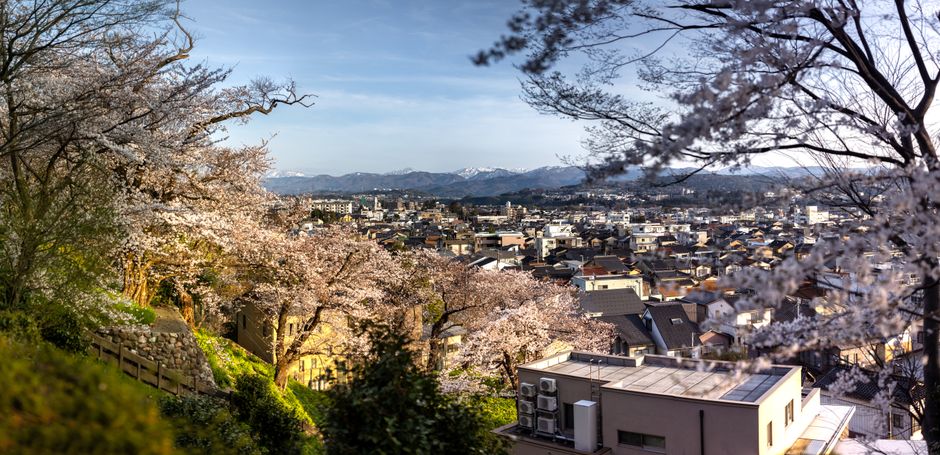
Kanazawa is the elegant capital of Ishikawa Prefecture on the Sea of Japan coast, a castle town of about 460,000 people that the powerful Maeda lords made one of the richest cities in Japan from the 1580s. Spared from bombing in World War II, it kept its geisha teahouse districts, samurai lanes and canals, and one of the three great gardens of Japan, Kenroku-en. Since the Hokuriku Shinkansen arrived in 2015, it has been an easy trip from Tokyo, and a natural stop on the way to Shirakawa-go and Takayama. Come for the garden in every season, the teahouses of Higashi Chaya, gold leaf and crafts, the 21st Century Museum of Contemporary Art, and superb seafood from Omicho Market. The best months are April to May and October to November; winters are gray, wet and snowy, but that is also the season for crab.
Right now in Kanazawa
- Wed 13–20°C 56–69°F Partly cloudy
- Thu 10–22°C 50–72°F Clear
- Fri 11–23°C 51–74°F Clear
- Mon 12 Oct Sports Day (スポーツの日)
Weather: MET Norway (CC BY 4.0) · Sea temperature: NOAA CoastWatch · Rates: ECB · Holidays: Nager.Date
Top tours in Kanazawa
See all tours for Kanazawa →
From local operators, with prices and reviews; you check availability and book on Viator, our partner. We may earn a commission at no extra cost to you. How we earn money
Kanazawa at a glance
- Best for: Kenroku-en and Japanese gardens, geisha and samurai districts, crafts and gold leaf, contemporary art, seafood and sake.
- How long: 2 days for the city; 3–4 days with Shirakawa-go or a hot spring town.
- Best time: April to May and October to November, with highs of about 17–22 °C (63–72 °F); winter for snow scenes and crab.
- Getting there: about 2.5 to 3 hours from Tokyo by the Hokuriku Shinkansen; about 2 hours 10 minutes from Osaka by limited express and shinkansen via Tsuruga.
- Getting around: city buses, the loop buses and walking; pay with an IC card.
- Fees to know: Kenroku-en costs ¥320 as of October 2026, with free entry in the early morning; Kanazawa’s accommodation tax is ¥200 or ¥500 per person per night on rooms from ¥5,000.
- Before you go: entry rules, rail passes, money and general safety are in our Japan travel guide; combine Kanazawa with our Shirakawa-go and Takayama guides.
Kanazawa’s areas and where to stay
Kanazawa lies between two rivers, the Asano and the Sai, with the castle and garden on a low hill in the middle. The station is about 2 km (1.2 miles) north-west of the center; most sights are in a compact area you can walk between.
Around Kanazawa Station
A modern area with the giant wooden Tsuzumi-mon gate and glass dome, business hotels, shopping and the bus terminal. The most practical base for day trips and early trains.
Korinbo and Katamachi
The downtown shopping and nightlife district south of the castle, with department stores, restaurants and izakaya along the river. A lively base, close to the garden, Nagamachi and the museum.
Higashi Chaya and Kazuemachi
Across the Asano River, the best-preserved geisha district in Kanazawa: rows of wooden teahouses with slatted windows, now cafés, craft and gold leaf shops, with a few still working. Kazuemachi’s riverside lane is especially pretty at night. Guesthouses and small ryokan here make a romantic stay.
Nagamachi
The samurai quarter west of Korinbo, with earthen walls, narrow lanes and canals, and the Nomura family house and garden. Quiet and residential.
Nishi Chaya and Teramachi
South of the Sai River, a smaller teahouse district and a hill of some 70 temples, including the “ninja temple” of Myoryu-ji.
Top things to see in Kanazawa
Kenroku-en
Created over nearly two centuries by the Maeda lords, Kenroku-en is considered one of the three great gardens of Japan: ponds and streams, a two-legged stone lantern that has become the city’s symbol, teahouses, moss and some of Japan’s oldest fountains. Each season has its moment: plum and cherry blossoms in spring, irises and azaleas in early summer, maples in November, and in winter the yukitsuri, rope cones that protect pine branches from heavy snow, put up from November 1.
According to Ishikawa Prefecture, as of October 2026 entry costs ¥320 (about US$2) for adults and ¥100 for children aged 6 to 17. The garden opens from 7 a.m. to 6 p.m. from March 1 to October 15, and from 8 a.m. to 5 p.m. from October 16 to the end of February, with last entry 30 minutes before closing. It also offers free early-morning entry, from as early as 4 a.m. in summer and 6 a.m. in winter, provided you leave 15 minutes before the paid hours begin. A “Kenrokuen+1” ticket for ¥500 adds one other cultural facility in the city. The garden takes cards and IC cards.
Kanazawa Castle Park
Next to Kenroku-en, the castle grounds are free to enter. The castle burned several times; its long white Gojukken Nagaya storehouse and turrets were rebuilt with traditional joinery in 2001, and the lead-tiled Ishikawa Gate is original from 1788. The landscaped Gyokusen-inmaru garden is lit up on weekend evenings.
Higashi Chaya district
Walk the main street early, before the crowds, and visit a historic teahouse such as Shima, open as a museum with its guest rooms and tea utensils. Shops sell gold leaf ice cream, lacquerware and Kutani porcelain. Kanazawa produces nearly all of Japan’s gold leaf, and several workshops let you decorate a chopstick or plate yourself.
21st Century Museum of Contemporary Art
A low, circular glass building by the architects SANAA, with free public zones and paid exhibitions. Its most famous work, Leandro Erlich’s “Swimming Pool”, lets you look into a pool from above and from below the water; viewing the inside often needs a timed ticket, so check the museum’s site. Next door, the D.T. Suzuki Museum is a calm, minimalist space devoted to the Zen thinker, with a “water mirror” garden.
Omicho Market
Kanazawa’s kitchen for nearly 300 years: about 170 stalls of fish, crab, vegetables and sweets, with small restaurants serving kaisendon, raw seafood on rice, from late morning. Go early; many stalls close in the afternoon and some on Wednesdays.
Nagamachi samurai district
A few lanes of earthen walls and canals where middle-ranking samurai lived. The Nomura family house has a small but beautiful garden with a waterfall, and the Shinise Kinenkan, an old pharmacy, shows merchant life.
More classic sights
- Myoryu-ji: the “ninja temple”, full of hidden stairs, trapdoors and lookouts for defense; visits are by guided tour, reserved in advance.
- Oyama Shrine: dedicated to the first Maeda lord, with an unusual gate topped by a stained-glass window.
- Kanazawa Station’s Tsuzumi-mon gate: a huge wooden gate in the shape of drums used in Noh theater.
- Ishikawa Prefectural Museum of Art and the National Crafts Museum: fine Kutani ware, lacquer and textiles, near Kenroku-en.
- Nishi Chaya: a quieter teahouse district with a small museum.
- Kazuemachi: a romantic riverside lane of teahouses, best at dusk.
Museums
- 21st Century Museum of Contemporary Art
- Ishikawa Prefectural Museum of Art
- National Crafts Museum
Parks and gardens
- Kenroku-en
Churches and cathedrals
- Myōryū-ji Temple
- Oyama Shrine
Castles and forts
- Kanazawa Castle
Historic centres
- Nagamachi Samurai District
Other things to do in Kanazawa
Food and drink
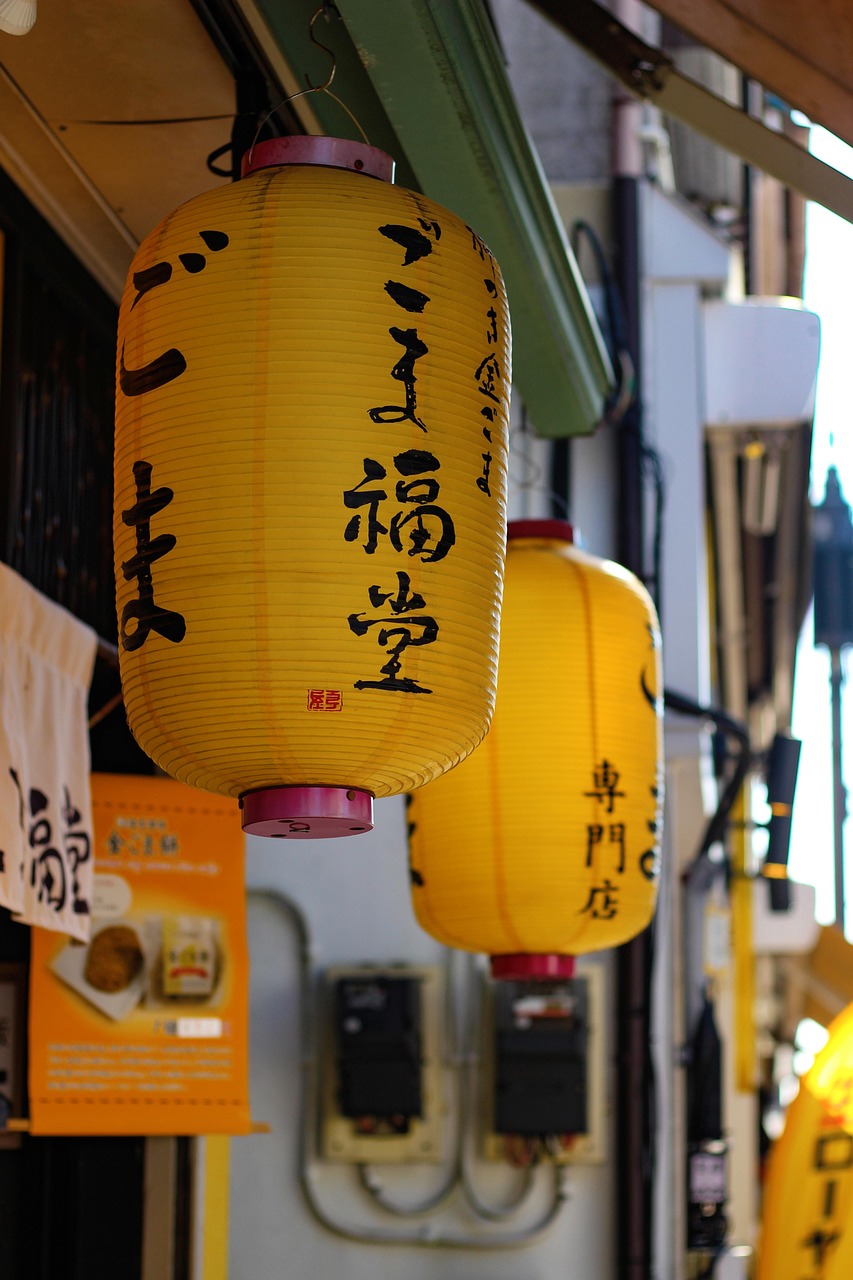
Kanazawa is one of Japan’s great food cities. From the Sea of Japan come sweet shrimp, yellowtail in winter, nodoguro (blackthroat seaperch) and, from early November to March, snow crab and the small, roe-filled female crab called kobako. Eat seafood bowls at Omicho, sushi at the counter, and local specialties such as jibuni, duck stewed with wheat gluten, and Kaga cuisine served on local lacquer and porcelain. Kanazawa also has its own oden, eaten year-round, a thick, dark Kanazawa curry, and a tradition of wagashi, tea sweets, linked to the tea ceremony. The region’s pure water makes good sake; the Fukumitsuya brewery in the city has a shop and tastings. For a treat, try a gold-leaf-topped ice cream in Higashi Chaya.
Crafts and workshops
Try gold leaf decoration, Kutani porcelain painting or Kaga yuzen silk dyeing at workshops around the city, or watch artisans at the Kanazawa Yasue Gold Leaf Museum. Many shops offer tax-free shopping on purchases of ¥5,000 or more; from November 1, 2026 you pay the full price and get the tax back after a customs check at the airport (see our Japan travel guide).
Tea, geisha and Noh
Several teahouses in Higashi Chaya serve matcha and sweets, and in some seasons the city offers chances to see geiko perform. The Ishikawa Prefectural Noh Theater hosts performances of Kaga Hosho Noh, a style promoted by the Maeda lords.
Festivals
The Hyakumangoku Matsuri in early June celebrates the first Maeda lord’s arrival in 1583 with a costumed parade and floating lanterns on the river. In winter, the yukitsuri ropes and snow-covered garden draw photographers.
Activities and best months
- City sightseeingKenroku-en is open all year (7:00-18:00 from 1 March to 15 October, 8:00-17:00 otherwise), adults ¥320, with free early-morning entry before the paid hours. · source
Day trips from Kanazawa
- Shirakawa-go: the thatched farmhouses of a UNESCO World Heritage village, about 1 hour 15 minutes by reserved highway bus. See our Shirakawa-go guide.
- Takayama: the Edo-era merchant town in the Hida mountains, about 2.5 hours by bus via Shirakawa-go. See our Takayama guide.
- Kaga Onsen: hot spring towns such as Yamanaka and Yamashiro, about 30 minutes by shinkansen and bus.
- Toyama and the Tateyama Kurobe Alpine Route: a spectacular mountain crossing with snow walls in spring, open from mid-April to November; Toyama is about 20 minutes by shinkansen.
- Eihei-ji and Fukui: a working Zen monastery in the forest and a large dinosaur museum, about an hour away.
- Gokayama: smaller, quieter thatched villages in Toyama, part of the same World Heritage site as Shirakawa-go.
Nearby destinations
- Shirakawa-go39 km
- Takayama71 km
- Nagoya155 km
- Kyoto190 km
- Nara222 km
- Osaka232 km
- Fuji Five Lakes236 km
- Kobe246 km
Getting there and getting around
By shinkansen and air
The Hokuriku Shinkansen links Tokyo with Kanazawa in about 2.5 hours on the fastest Kagayaki trains and continues to Tsuruga, where passengers from Osaka and Kyoto change to the Thunderbird limited express (about 2 hours 10 minutes from Osaka in total). From Nagoya, take the Shirasagi limited express and change at Tsuruga. The nationwide Japan Rail Pass (¥50,000 (about US$315) for 7 days on the official site, as of October 2026) covers all these trains. JR West’s Hokuriku Area Pass, ¥7,000 (about US$44) for 4 days, covers the shinkansen and local trains around Kanazawa, Toyama and Fukui, and the Kansai-Hokuriku Area Pass, ¥19,000 (about US$120) for 7 days, adds Kansai and the Thunderbird. Komatsu Airport, about 40 minutes by bus, has flights from Tokyo and a few Asian cities.
Highway buses
Reserved highway buses run to Shirakawa-go and Takayama from the station’s east exit; according to the operator, Nohi Bus, as of October 2026 the fare is ¥2,800 (about US$18) to Shirakawa-go and ¥4,200 (about US$27) to Takayama, and many services require reservations. Overnight buses run to Tokyo and Osaka.
Around the city
The Kanazawa Loop Bus runs in both directions between the station and the main sights, and the Kenrokuen Shuttle links the station with the garden and museum; city buses accept IC cards, and a one-day bus pass is sold at the station. Kanazawa is compact enough to walk between Kenroku-en, Higashi Chaya and Nagamachi, and the city’s Machi-nori bike-share is handy on dry days.
When to go and how long to stay
Kanazawa has one of Japan’s wettest climates: cold, gray, snowy winters blown in from the Sea of Japan, and hot, humid summers. The table uses the Japan Meteorological Agency’s (JMA) 1991–2020 normals for its Kanazawa station: average daily highs and lows, total precipitation (rain and melted snow) and days with at least 1 mm.
| Month | Average high / low | Precipitation (days with 1 mm or more) | What to expect |
|---|---|---|---|
| January | 7 °C (45 °F) / 1 °C (34 °F) | 256 mm (10.1 in), 23 days | Cold, gray and wet; frequent snow and sleet; crab season |
| February | 8 °C (46 °F) / 1 °C (34 °F) | 163 mm (6.4 in), 19 days | Cold; snowy spells; yukitsuri in the garden |
| March | 12 °C (53 °F) / 3 °C (38 °F) | 157 mm (6.2 in), 16 days | Cool; plum blossoms at Kenroku-en |
| April | 17 °C (63 °F) / 8 °C (47 °F) | 144 mm (5.7 in), 12 days | Cherry blossoms usually open around April 3 and peak around April 8 (JMA normals) |
| May | 22 °C (72 °F) / 14 °C (56 °F) | 138 mm (5.4 in), 10 days | Fresh green, azaleas and irises; pleasant |
| June | 26 °C (78 °F) / 18 °C (65 °F) | 170 mm (6.7 in), 11 days | Mild; Hyakumangoku Matsuri early in the month; rainy season usually from about June 11 |
| July | 30 °C (85 °F) / 23 °C (73 °F) | 233 mm (9.2 in), 13 days | Hot and humid; rainy season usually ends around July 23 |
| August | 31 °C (88 °F) / 24 °C (75 °F) | 179 mm (7.1 in), 9 days | The hottest month; humid |
| September | 27 °C (81 °F) / 20 °C (68 °F) | 232 mm (9.1 in), 12 days | Typhoons possible; often wet |
| October | 22 °C (71 °F) / 14 °C (57 °F) | 177 mm (7.0 in), 13 days | Comfortable; clear days between showers |
| November | 16 °C (61 °F) / 8 °C (47 °F) | 251 mm (9.9 in), 17 days | Maples peak in the second half of the month; crab season opens |
| December | 10 °C (50 °F) / 4 °C (38 °F) | 301 mm (11.9 in), 23 days | Cold and very wet; snow begins; yukitsuri and crab |
Kanazawa gets about 2,400 mm (95 in) of precipitation a year, the most in December and January, when it falls on more than 20 days a month, as rain, sleet and snow. Snow totals vary widely from year to year; the JMA’s normal for the deepest snow of the season in the city is about 30 cm (1 ft). The JMA’s normal rainy season for the Hokuriku region runs from about June 11 to July 23; in 2026 it ran from about June 20 to August 3.
Weather month by month
Averages from JMA normals 1991–2020, Kanazawa · Last reviewed 5 Oct 2026
Cherry blossoms and fall colors: the JMA’s normal date for the first cherry blossoms in Kanazawa is April 3, with full bloom around April 8; in 2026 they opened on March 29 and peaked on April 3. Kenroku-en, the castle park and the banks of the Asano River are the best spots. The maples at the JMA’s Kanazawa station normally turn around November 24.
Crowds: Kanazawa is busy in Golden Week, in the cherry blossom week and in November. Visit Kenroku-en during the free early-morning hours and Higashi Chaya before 9 a.m.
Two days in Kanazawa
Day one, Kenroku-en at opening, the castle park, the 21st Century Museum and the D.T. Suzuki Museum, then dinner in Katamachi. Day two, Omicho Market for breakfast, Higashi Chaya and a gold leaf workshop, then Nagamachi and Myoryu-ji in the afternoon.
Four days with Shirakawa-go
Add a day trip or overnight stay in Shirakawa-go, then continue by bus to Takayama, or spend a night in a Kaga Onsen ryokan.
Where to stay in Kanazawa and the accommodation tax
- Kanazawa Station: business and chain hotels, best for the shinkansen and buses.
- Korinbo and Katamachi: central hotels near the garden, shops and nightlife.
- Higashi Chaya: small ryokan and guesthouses in old townhouses.
- Kaga Onsen: hot spring ryokan for a night out of the city.
The City of Kanazawa charges an accommodation tax on hotels, ryokan and private rentals, based on the room-only rate per person per night (meals and consumption tax excluded). According to the City of Kanazawa, the rates since October 1, 2024 are:
| Room rate per person per night | Tax per person per night |
|---|---|
| under ¥5,000 | none |
| ¥5,000 to ¥19,999 | ¥200 (about US$1.3) |
| ¥20,000 or more | ¥500 (about US$3.2) |
Ishikawa Prefecture does not add its own accommodation tax as of October 2026. Hot spring inns also add a small bathing tax.
What a trip to Kanazawa costs
Prices are approximate, for October 2026, converted at about ¥158 to the US dollar.
| Item | Typical cost |
|---|---|
| Kenroku-en | ¥320 (about US$2) |
| Kanazawa Castle Park | free |
| Shima teahouse or Nomura house | about ¥500–750 (about US$3.2–4.7) |
| City bus ride | about ¥210–230 (about US$1.3–1.5) |
| Seafood bowl at Omicho | ¥2,500–5,000 (about US$16–32) |
| Sushi dinner | ¥5,000–15,000 (about US$32–95) |
| Matcha and sweet in a teahouse | ¥800–1,500 (about US$5.1–9.5) |
| Business hotel double, per night | ¥10,000–20,000 (about US$63–125) |
| Ryokan with dinner and breakfast, per person | ¥20,000–50,000 (about US$125–315) |
Practical tips for Kanazawa
- Go early: use Kenroku-en’s free early-morning entry, and see Higashi Chaya before the shops open.
- Reserve: Myoryu-ji tours, the “Swimming Pool” and the buses to Shirakawa-go often sell out; book ahead.
- Umbrella: Kanazawa locals say you may forget your lunch, but never your umbrella.
- Teahouse etiquette: don’t photograph geiko without permission, and don’t enter private houses in the chaya districts.
- Departure tax: since July 2026, Japan’s International Tourist Tax is ¥3,000 per departure, usually included in your air fare (tickets issued by June 30, 2026 keep the old ¥1,000).
- Visitor hotline: the JNTO’s Japan Visitor Hotline, 050-3816-2787, answers in English 24 hours a day.
Safety
Kanazawa is very safe. Its hazards are natural: snow and ice from December to February, which make streets and stone paths slippery and can delay buses; heavy rain and occasional typhoons from summer to fall; and earthquakes. The Noto Peninsula, north of Kanazawa, was hit by a powerful earthquake on January 1, 2024 and by floods later that year; the city itself was largely unaffected, but recovery in Noto continues, so check road and rail conditions before traveling there. If you feel strong shaking, take cover, follow staff instructions, move away from the coast if a tsunami warning is issued, and keep the JNTO’s Safety Tips app on your phone. In an emergency, call 110 for the police or 119 for an ambulance or fire.
What to pack for Kanazawa
A sturdy umbrella and rain jacket at any time of year; waterproof shoes with good grip and warm layers in winter; light clothes for summer; and socks you are happy to show in teahouses and temples. Japan uses 100 V and two-pin type A plugs like the US.
What to pack
- City walking shoesLisbon and Porto are steep, with polished limestone cobbles that get slippery, so grippy soles matter.
- Day packs and anti-theft bagsA small zipped or anti-theft bag makes crowded trams and viewpoints less stressful.
- Rain jacketsFrom October to April Porto and Lisbon see rain on roughly a third of days.
- Travel adapters and convertersPortugal uses Type C and F sockets at 230 V, so most visitors from outside Europe need an adapter.
Kanazawa travel FAQ
How much is Kenroku-en?
¥320 for adults and ¥100 for children aged 6–17 as of October 2026. Entry is free in the early morning if you leave before the paid hours begin.
What are Kenroku-en’s opening hours?
7 a.m. to 6 p.m. from March 1 to October 15, and 8 a.m. to 5 p.m. from October 16 to the end of February.
How many days do I need in Kanazawa?
Two days for the city; three or four to add Shirakawa-go or a hot spring town.
How do I get from Tokyo to Kanazawa?
The Hokuriku Shinkansen takes about 2.5 hours on the fastest trains, and the Japan Rail Pass covers it.
How much is Kanazawa’s accommodation tax?
Nothing under ¥5,000, ¥200 from ¥5,000 to ¥19,999, and ¥500 from ¥20,000 per person per night, based on the room-only rate.
Can I visit Shirakawa-go from Kanazawa?
Yes, by reserved highway bus in about 1 hour 15 minutes, for ¥2,800 each way as of October 2026.
When is the best time to visit Kanazawa?
April to May and October to November; winter is snowy but brings crab and the yukitsuri in Kenroku-en.
When is crab season in Kanazawa?
From early November to March, when snow crab and the small kobako crab are served all over the city.
Can I see geisha in Kanazawa?
Geiko still work in the chaya districts, though you rarely see them; some teahouses and city events offer performances.
Is Kanazawa affected by the Noto earthquake?
The city itself had little damage in the January 2024 earthquake; the Noto Peninsula to the north is still recovering, so check conditions there.
Sources
- © OpenStreetMap contributors · ODbL · fetched 5 Oct 2026
- Wikidata · CC0 · fetched 5 Oct 2026
Sources and last review
Researched and last reviewed on 4 October 2026. Kenroku-en hours, fees and early-morning entry: Ishikawa Prefecture (Kanazawa Castle and Kenroku-en management office); accommodation tax: the City of Kanazawa; bus fares: Nohi Bus; Hokuriku passes: JR West; JR Pass: the official Japan Rail Pass website; climate normals, rainy season and cherry blossom and maple dates: the Japan Meteorological Agency (JMA); tax-free shopping: the Japan Tourism Agency; visitor hotline: JNTO; exchange rate: the US Federal Reserve. Population, history, sight descriptions, journey times, crab season, festival dates, other admission prices, the absence of a prefectural tax and typical prices are general references or estimates, flagged for checking. Prices and hours change, so check the official sites before you go. For entry rules, money and general safety, see our Japan travel guide.
Plan your trip
Partner links: TravelerCenter may earn a commission if you book, at no extra cost to you.
🇯🇵 Useful Japanese phrases for Kanazawa
All 38 Japanese phrases: restaurant, hotel, emergencies, romance (printable) →