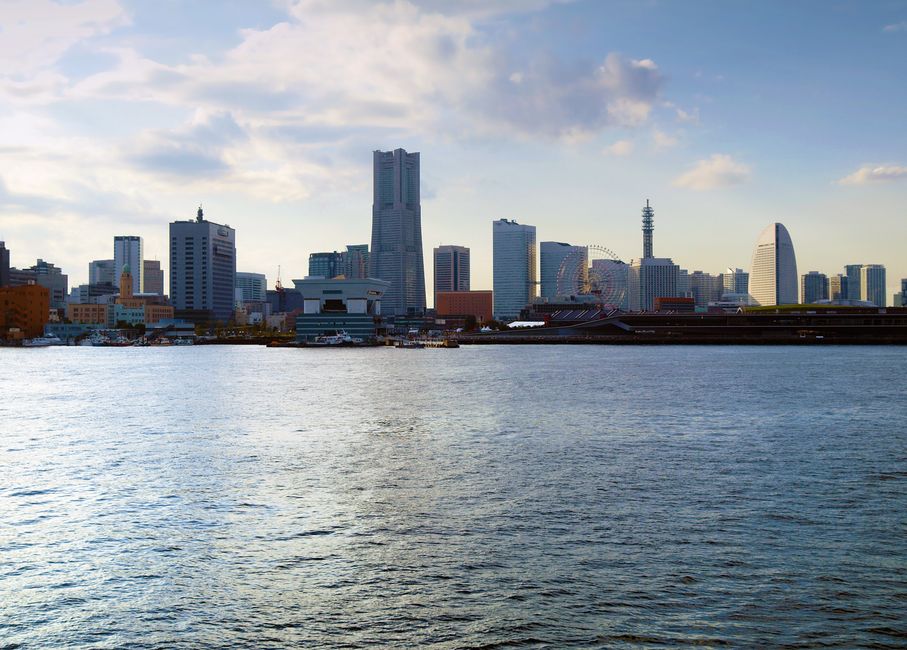
Yokohama is Japan’s second-largest city, with about 3.7 million people, and its great port: a fishing village until 1859, when it became one of the first harbors opened to foreign trade, and the place where railways, gas lamps, beer and ice cream first arrived in Japan. Only about 30 km (19 miles) from central Tokyo, it feels more relaxed than the capital, with a waterfront of parks and old brick warehouses, the futuristic skyline of Minato Mirai, the biggest Chinatown in Japan and the Western houses and cemetery on the Bluff. Come for harbor walks and night views, dumplings in Chinatown, the gardens of Sankeien, ramen and instant noodle museums, and an easy base for Kamakura and Hakone. The best months are March to May and October to November; the rainy season usually runs from early June to mid-July, summers are hot and humid, and winters dry and sunny.
Right now in Yokohama
- Wed 17–22°C 63–71°F 1 mm Cloudy
- Thu 14–23°C 57–73°F Clear
- Fri 15–23°C 60–74°F Clear
- Mon 12 Oct Sports Day (スポーツの日)
Weather: MET Norway (CC BY 4.0) · Sea temperature: NOAA CoastWatch · Rates: ECB · Holidays: Nager.Date
Top tours in Yokohama
See all tours for Yokohama →
From local operators, with prices and reviews; you check availability and book on Viator, our partner. We may earn a commission at no extra cost to you. How we earn money
Yokohama at a glance
- Best for: waterfront walks and skyline views, Chinatown and food, museums, gardens, port history, and a calmer base near Tokyo.
- How long: a long day trip from Tokyo covers the waterfront and Chinatown; 2–3 days with Sankeien, the museums and a day trip to Kamakura.
- Best time: late March to May and October to November, with highs of about 17–23 °C (63–73 °F); December is dry and bright, with Christmas markets.
- Getting there: about 25–30 minutes from Tokyo Station by JR, 25–30 minutes from Haneda Airport by train, and on the Tokaido Shinkansen at Shin-Yokohama.
- Getting around: the Minatomirai Line, JR, the subway, buses, water buses and plenty of walking; pay with an IC card.
- Fees to know: most of the waterfront, Chinatown and the Bluff are free; Sankeien garden costs ¥700 as of October 2026. Neither Yokohama nor Kanagawa Prefecture charges an accommodation tax.
- Before you go: entry rules, rail passes, money and general safety are in our Japan travel guide; see also our Tokyo and Hakone guides.
Yokohama’s areas and where to stay
Yokohama is a huge city, but the parts visitors want lie in a compact arc along the harbor, from Yokohama Station south to the Bluff, linked by the Minatomirai Line and a waterfront promenade.
Minato Mirai 21
The modern waterfront, built on reclaimed land since the 1980s: the Landmark Tower, the Cosmo World Ferris wheel, the Red Brick Warehouses, convention halls, museums and big hotels with harbor views. Spacious and pleasant, especially at night, and a good base for first-time visitors.
Kannai and Bashamichi
The old commercial center around the city hall and Yokohama Stadium, with early 20th-century bank and customs buildings, business hotels, the Noge district of tiny bars and izakaya, and the Isezakicho shopping street. Central and good value.
Chinatown and Yamashita Park
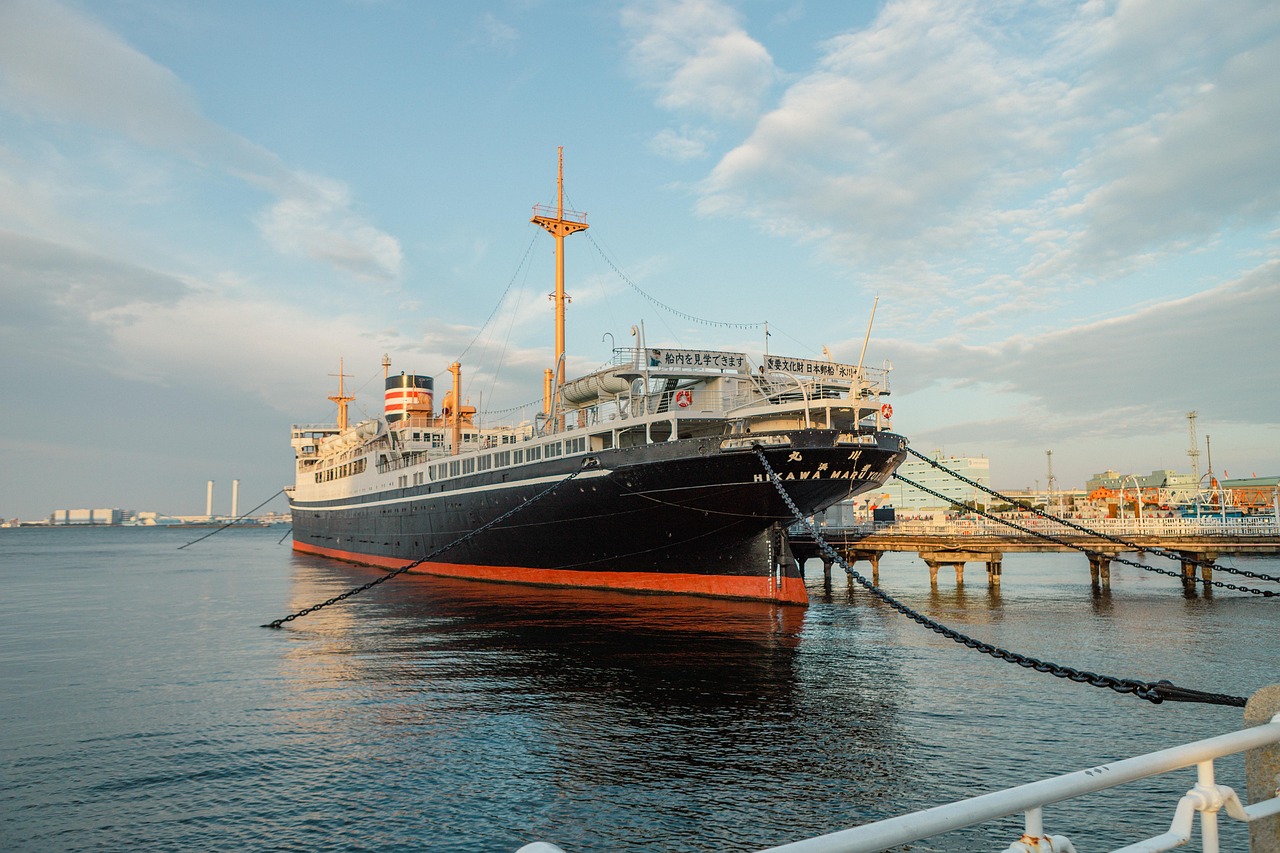
Yokohama Chinatown packs hundreds of restaurants and shops into a few blocks behind colorful gates. Next to it, Yamashita Park runs along the water, with the old ocean liner Hikawa Maru and Marine Tower. Lively hotels, close to everything.
Yamate (the Bluff) and Motomachi
The hill above Chinatown where foreign merchants lived in the 19th century: Western-style houses, churches, the Foreign General Cemetery, rose gardens and views of the bay. At its foot, Motomachi is an elegant shopping street. Quiet and residential, with few hotels.
Yokohama Station and Shin-Yokohama
Yokohama Station is a giant transport hub ringed by department stores and chain hotels, practical for day trips. Shin-Yokohama, a few kilometers north, is the shinkansen stop, with business hotels, the Ramen Museum and Nissan Stadium.
Top things to see in Yokohama
The waterfront and Minato Mirai
Walk the promenade from Sakuragicho Station past the old Nippon Maru sailing ship and the Cosmo World Ferris wheel to the Red Brick Warehouses, then along Osanbashi Pier, a cruise terminal whose wooden roof doubles as a park with views of the skyline. The Landmark Tower’s observation deck on the 69th floor and the evening lights over the harbor are the city’s classic views. The YOKOHAMA AIR CABIN, an urban gondola, glides between Sakuragicho and the warehouses.
Yokohama Chinatown
Japan’s largest Chinatown grew from the community of Chinese merchants who arrived after the port opened. Its streets are crowded with restaurants, steamed bun stalls, tea and grocery shops, and two colorful temples: the Kanteibyo, dedicated to the god Guan Yu, and the Masobyo, to the sea goddess Mazu. Come hungry, and come in the evening when the lanterns are lit.
Sankeien
A beautiful landscape garden in the south of the city, created by the silk merchant Hara Sankei in 1906, with a three-story pagoda from Kyoto, a feudal lord’s villa and old farmhouses moved from around Japan and set among ponds and wooded hills. It is lovely with plum blossoms in February, cherry blossoms in spring and maples in late November. According to Sankeien, entry costs ¥700 (about US$4.4) for adults as of October 2026, and it opens from 9 a.m. to 5 p.m. (last entry 4:30 p.m.). Take a bus from Yokohama or Sakuragicho Station.
Yamate, the Bluff
Several of the Western-style houses on the hill, from the late 19th and early 20th centuries, are open free of charge, with period rooms and gardens. Walk from Harbor View Park through the Italian Garden to the Foreign General Cemetery, then down to Motomachi.
Yamashita Park and the Hikawa Maru
A waterfront park built on rubble from the 1923 Great Kanto Earthquake, with rose gardens and the Hikawa Maru, a 1930 ocean liner that once sailed to Seattle and is now a museum ship. Marine Tower, across the road, has a viewing deck.
Museums for noodle lovers
The Cup Noodles Museum in Minato Mirai tells the story of Momofuku Ando, who invented instant ramen, and lets you design your own cup of noodles. The Shin-Yokohama Ramen Museum recreates a 1958 Tokyo street in its basement, with branches of famous ramen shops from around Japan serving small bowls.
More classic sights
- Red Brick Warehouses: two customs warehouses from the early 1900s, now shops, restaurants and an events plaza with markets.
- Yokohama Museum of Art: modern art in a building by Kenzo Tange, next to the Landmark Tower.
- Kanagawa Prefectural Museum of Cultural History: history in a grand 1904 bank building in Bashamichi.
- Yokohama Port Museum and the Nippon Maru: a sailing ship from 1930 and the story of the port.
- Hakkeijima Sea Paradise: an aquarium and amusement park on an island in the south of the city.
- Kirin Brewery Yokohama: factory tours with tastings, near Namamugi Station.
Viewpoints
- Yokohama Landmark Tower
Museums
- CupNoodles Museum Yokohama
- Sankei-en
- Shin-Yokohama Raumen Museum
Other sights
- Hikawa Maru
- Yokohama Chinatown
- Yokohama Red Brick Warehouse
Parks and gardens
- Yamashita Park
Other things to do in Yokohama
Food and drink
Yokohama has its own food traditions born from the port. In Chinatown, eat steamed pork buns, xiaolongbao dumplings, Peking duck and Cantonese seafood. Look for shumai, steamed pork dumplings that are the city’s best-known souvenir, sanma-men, a noodle soup with a thick stir-fried topping, and iekei ramen, a rich pork and soy broth that began here. Old hotels claim to have invented spaghetti Napolitan, with ketchup, and the city’s first ice cream. Noge, near Sakuragicho, is the place for cheap yakitori and small bars; Yokohama has also had craft breweries since the 1990s and a strong jazz scene.
Shopping
Minato Mirai has big malls such as Queen’s Square, MARK IS and Landmark Plaza, while Motomachi has boutiques and old family shops. Many shops offer tax-free shopping on purchases of ¥5,000 or more; from November 1, 2026 you pay the full price and get the tax back after a customs check at the airport (see our Japan travel guide).
Festivals and events
Yokohama celebrates Chinese New Year in Chinatown in late January or February, the anniversary of the port’s opening in early June, and summer fireworks over the harbor. In October the Yokohama Jazz Promenade fills the city with concerts, and from late November the Red Brick Warehouses host a Christmas market.
Sports and evenings
Watch baseball at Yokohama Stadium, home of the Yokohama DeNA BayStars, or football at Nissan Stadium, which hosted the 2002 World Cup final. Evening harbor cruises leave from Osanbashi and Pier Akarenga. For more ideas, see our guide to city sightseeing.
Activities and best months
- City sightseeingSankeien garden opens 9:00-17:00 (last entry 16:30); adults ¥700. · source
Day trips from Yokohama
- Kamakura: the Great Buddha, Zen temples and beaches, about 25 minutes south by JR Yokosuka Line; see our Kamakura guide.
- Tokyo: about 25–30 minutes by JR or the Tokyu Toyoko Line from Yokohama Station. See our Tokyo guide.
- Hakone: hot springs, Lake Ashi and views of Fuji, about 1.5 hours via Odawara. See our Hakone guide.
- Enoshima: a small island of shrines, caves and seafood, linked to Kamakura by the Enoden railway.
- The Miura Peninsula: the fishing port of Misaki, famous for tuna, and coastal walks, about an hour by Keikyu train.
- The Fuji Five Lakes: close-up views of Mount Fuji, about 2.5 hours by bus. See our Fuji Five Lakes guide.
Nearby destinations
- Kamakura17 km
- Tokyo27 km
- Hakone54 km
- Fuji Five Lakes69 km
- Nikko141 km
- Takayama228 km
- Nagoya249 km
- Shirakawa-go263 km
Getting there and getting around
From the airports and Tokyo
Haneda Airport (HND) is closest: Keikyu trains reach Yokohama Station in about 25–30 minutes, and limousine buses run to Yokohama City Air Terminal and Minato Mirai hotels. From Narita (NRT), the Narita Express runs to Yokohama in about 90 minutes. From central Tokyo, take the JR Tokaido or Yokosuka Line from Tokyo or Shinagawa (about 25–30 minutes), or the Tokyu Toyoko Line from Shibuya, which continues as the Minatomirai Line to Motomachi-Chukagai at Chinatown.
By shinkansen
Shin-Yokohama is a stop on the Tokaido Shinkansen: about 1 hour 20 minutes to Nagoya and 2 hours to Kyoto by Nozomi. The nationwide Japan Rail Pass (¥50,000 (about US$315) for 7 days on the official site as of October 2026) covers the Hikari and Kodama trains and JR lines around Yokohama; to ride a Nozomi, pass holders need an extra ticket, for example ¥4,180 (about US$26) from Tokyo to Nagoya. From Shin-Yokohama, the subway and JR Yokohama Line reach the center in about 15 minutes.
Around the city
The Minatomirai Line runs from Yokohama Station through Minato Mirai and Bashamichi to Chinatown, and offers a day pass; JR’s Negishi Line serves Sakuragicho, Kannai and Ishikawacho, the stations for the Bluff. Sightseeing buses and water buses such as the Sea Bass link the waterfront sights. Pay with an IC card: Suica and PASMO work on all trains and buses. Visitors can buy a Welcome Suica or a Tourist PASMO, valid for 28 days, but money left on a Tourist PASMO is not refunded. The waterfront from Sakuragicho to Yamashita Park is an easy, flat walk of about 3 km (2 miles).
When to go and how long to stay
Yokohama’s climate is close to Tokyo’s, a little milder thanks to the sea. The table uses the Japan Meteorological Agency’s (JMA) 1991–2020 normals for its Yokohama station: average daily highs and lows, total rain and days with at least 1 mm of rain.
| Month | Average high / low | Rain (days with 1 mm or more) | What to expect |
|---|---|---|---|
| January | 10 °C (50 °F) / 3 °C (37 °F) | 65 mm (2.5 in), 5 days | Cold, dry and sunny; quiet; Chinese New Year in some years |
| February | 11 °C (51 °F) / 3 °C (38 °F) | 65 mm (2.5 in), 5 days | Cool and clear; plum blossoms at Sankeien; Chinese New Year in some years |
| March | 14 °C (57 °F) / 6 °C (43 °F) | 140 mm (5.5 in), 10 days | Cherry blossoms usually open around Mar 25 (JMA normal) |
| April | 19 °C (66 °F) / 11 °C (51 °F) | 143 mm (5.6 in), 10 days | Full bloom around April 1; pleasant and busy |
| May | 23 °C (74 °F) / 16 °C (60 °F) | 153 mm (6.0 in), 10 days | Fresh and sunny; Golden Week crowds early in the month; roses on the Bluff |
| June | 26 °C (78 °F) / 19 °C (66 °F) | 189 mm (7.4 in), 12 days | Rainy season usually from about June 7 (JMA normal for Kanto-Koshin); port anniversary |
| July | 29 °C (85 °F) / 23 °C (73 °F) | 183 mm (7.2 in), 10 days | Humid; rainy season usually ends around July 19; summer fireworks |
| August | 31 °C (88 °F) / 24 °C (76 °F) | 139 mm (5.5 in), 8 days | The hottest month; humid nights; typhoons possible |
| September | 27 °C (81 °F) / 21 °C (70 °F) | 242 mm (9.5 in), 12 days | The wettest month; typhoons possible |
| October | 22 °C (72 °F) / 16 °C (60 °F) | 240 mm (9.5 in), 11 days | Comfortable but sometimes rainy; Jazz Promenade |
| November | 17 °C (63 °F) / 10 °C (50 °F) | 108 mm (4.2 in), 8 days | Clear and crisp; ginkgo and maples late in the month |
| December | 13 °C (55 °F) / 5 °C (41 °F) | 66 mm (2.6 in), 6 days | Dry and sunny; maples linger into the month; Christmas markets and harbor lights |
Yokohama gets about 1,730 mm (68 in) of rain a year, most from June to October. The JMA’s normal rainy season for the Kanto-Koshin region runs from about June 7 to July 19; in 2026 it ran from about June 2 to July 19. Typhoons are most likely from August to October. Winter is the sunniest season, with highs of about 10–12 °C (50–54 °F).
Weather month by month
Averages from JMA normals 1991–2020, Yokohama · Last reviewed 5 Oct 2026
Cherry blossoms and fall colors: the JMA’s normal date for the first cherry blossoms in Yokohama is March 25, with full bloom around April 1; in 2026 they opened on March 22. Good spots are Sankeien, the Ooka River promenade and Yamate. The JMA’s maple observations in Yokohama normally turn around December 14, so the ginkgo avenues and gardens are colorful from late November into early December.
Crowds: Chinatown and the waterfront are busiest on weekends and holidays, especially in Golden Week; visit on weekdays, and see Chinatown in the evening.
One day in Yokohama
Start at Sankeien in the morning, then take the bus to Yamashita Park. Walk up to the Bluff, back down through Motomachi, and spend the late afternoon and dinner in Chinatown. Finish with the harbor lights from Osanbashi Pier or the Air Cabin.
Three days with day trips
Add a day for Minato Mirai, the Cup Noodles Museum and the Red Brick Warehouses, then a day in Kamakura and Enoshima, or a night in Hakone.
Where to stay in Yokohama and taxes
- Minato Mirai: high-rise hotels with harbor views, close to the museums and malls.
- Kannai and Chinatown: good-value business hotels, near restaurants and the Bluff.
- Yokohama Station: chain hotels with easy trains to Tokyo, Kamakura and the airports.
- Shin-Yokohama: business hotels by the shinkansen, best for early departures.
Yokohama’s hotels are often cheaper than Tokyo’s for similar quality, and the city works well as a base for Tokyo itself. As of October 2026, neither the City of Yokohama nor Kanagawa Prefecture charges an accommodation tax; Japan’s 10% consumption tax is usually included in room rates, and hot spring hotels add a small bathing tax.
What a trip to Yokohama costs
Prices are approximate, for October 2026, converted at about ¥158 to the US dollar.
| Item | Typical cost |
|---|---|
| JR train Tokyo–Yokohama, each way | about ¥500 (about US$3.2) |
| Sankeien garden | ¥700 (about US$4.4) |
| Cup Noodles Museum | about ¥500 (about US$3.2) |
| Landmark Tower observation deck | about ¥1,000 (about US$6.3) |
| Steamed bun or dumplings in Chinatown | ¥500–1,000 (about US$3.2–6.3) |
| Chinese set lunch | ¥1,200–2,500 (about US$7.6–16) |
| Bowl of ramen | ¥900–1,400 (about US$5.7–8.9) |
| Business hotel double, per night | ¥10,000–20,000 (about US$63–125) |
| Harbor-view hotel double, per night | ¥25,000–60,000 (about US$160–380) |
Practical tips for Yokohama
- Pick the right station: use Sakuragicho or Minatomirai for the waterfront, Motomachi-Chukagai or Ishikawacho for Chinatown and the Bluff.
- Wear good shoes: the Bluff is steep, and the sights are best linked on foot.
- Chinatown: prices and portions vary a lot; look at menus and avoid touts offering all-you-can-eat deals if you prefer a quieter meal.
- Cash: most places take cards and IC cards, but small stalls may not.
- Departure tax: since July 2026, Japan’s International Tourist Tax is ¥3,000 per departure, usually included in your air fare (tickets issued by June 30, 2026 keep the old ¥1,000).
- Visitor hotline: the JNTO’s Japan Visitor Hotline, 050-3816-2787, answers in English 24 hours a day.
Safety
Yokohama is a very safe city. The main risks are natural: heat and humidity in July and August, typhoons from August to October, which can stop trains and ferries, and earthquakes. The 1923 Great Kanto Earthquake destroyed much of the city; today buildings follow strict codes, but if you feel strong shaking, take cover, follow staff instructions, and keep the JNTO’s Safety Tips app on your phone. Near the harbor, move to higher floors or ground if a tsunami warning is issued. Drink spiking and overcharging can happen in a few late-night bars, as in any big city. In an emergency, call 110 for the police or 119 for an ambulance or fire.
What to pack for Yokohama
Comfortable walking shoes, a folding umbrella, light clothes and a hat for summer, and a warm jacket for windy evenings by the water in winter. Japan uses 100 V and two-pin type A plugs like the US.
What to pack
- City walking shoesLisbon and Porto are steep, with polished limestone cobbles that get slippery, so grippy soles matter.
- Day packs and anti-theft bagsA small zipped or anti-theft bag makes crowded trams and viewpoints less stressful.
- Rain jacketsFrom October to April Porto and Lisbon see rain on roughly a third of days.
- Travel adapters and convertersPortugal uses Type C and F sockets at 230 V, so most visitors from outside Europe need an adapter.
Yokohama travel FAQ
Is Yokohama worth visiting from Tokyo?
Yes. It is only about 30 minutes away and offers a relaxed waterfront, Japan’s biggest Chinatown, the Bluff and Sankeien, quite different from Tokyo.
How do I get from Tokyo to Yokohama?
Take the JR Tokaido or Yokosuka Line from Tokyo or Shinagawa, about 25–30 minutes, or the Tokyu Toyoko Line from Shibuya, which runs through to Chinatown.
How many days do I need in Yokohama?
One day covers the waterfront and Chinatown; two or three days add Sankeien, the museums and a day trip to Kamakura.
Is there an accommodation tax in Yokohama?
No. As of October 2026, neither Yokohama nor Kanagawa Prefecture charges one; hot spring hotels add only a small bathing tax.
Is Yokohama a good base for Tokyo?
It can be: hotels are often cheaper, and central Tokyo is 25–40 minutes away by train. Stay near Yokohama Station for the fastest connections.
How much does Sankeien cost?
As of October 2026, ¥700 for adults; it opens from 9 a.m. to 5 p.m., with last entry at 4:30 p.m.
What food is Yokohama famous for?
Chinatown’s dumplings and pork buns, shumai, sanma-men noodles, iekei ramen and spaghetti Napolitan.
How do I get from Haneda Airport to Yokohama?
Keikyu trains reach Yokohama Station in about 25–30 minutes; limousine buses run to Yokohama City Air Terminal and Minato Mirai hotels.
When are the cherry blossoms in Yokohama?
The JMA’s normal date for the first blossoms is March 25, with full bloom around April 1.
Can I visit Kamakura from Yokohama?
Yes, easily: the JR Yokosuka Line reaches Kamakura in about 25 minutes, making it an ideal day trip.
Sources
- © OpenStreetMap contributors · ODbL · fetched 5 Oct 2026
- Wikidata · CC0 · fetched 5 Oct 2026
Sources and last review
Researched and last reviewed on 4 October 2026. Sankeien hours and fee: Sankeien; climate normals, rainy season and cherry blossom and maple dates: the Japan Meteorological Agency (JMA); JR Pass and Nozomi ticket: the official Japan Rail Pass website; IC cards: PASMO; tax-free shopping: the Japan Tourism Agency; visitor hotline: JNTO; exchange rate: the US Federal Reserve. The absence of an accommodation tax, population, history, sight descriptions, journey times, festival dates, other admission prices and typical prices are general references or estimates, flagged for checking. Prices and hours change, so check the official sites before you go. For entry rules, money and general safety, see our Japan travel guide.
Plan your trip
Partner links: TravelerCenter may earn a commission if you book, at no extra cost to you.
🇯🇵 Useful Japanese phrases for Yokohama
All 38 Japanese phrases: restaurant, hotel, emergencies, romance (printable) →