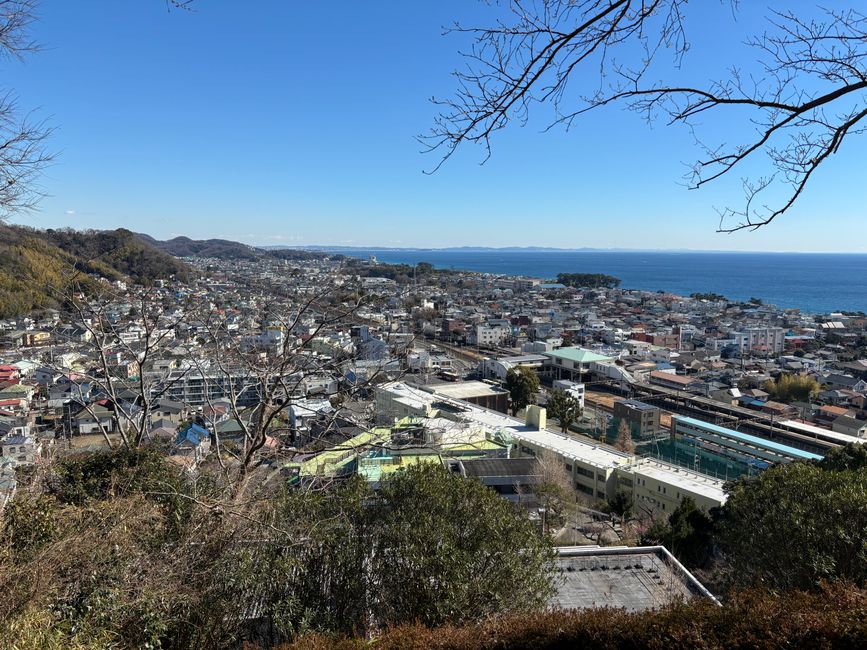
Kamakura is a seaside town of about 170,000 people on Sagami Bay, about 50 km (31 miles) south-west of Tokyo, that was the seat of Japan’s first warrior government, the Kamakura shogunate, from 1192 to 1333. That era left it with a giant bronze Buddha sitting in the open air, the great shrine of Tsurugaoka Hachimangu, and dozens of Zen temples tucked into wooded valleys, linked by hiking trails over the hills. Add surf beaches, the little Enoden railway along the coast, the island of Enoshima and good cafés, and Kamakura makes Tokyo’s favorite day out. That popularity brings crowds, so the city has rules on manners and runs crowd measures on busy days. The best months are April to May and October to November, and June for hydrangeas; summers are hot and humid, and winters mild and sunny.
Right now in Kamakura
- Wed 18–22°C 65–71°F Cloudy
- Thu 15–23°C 59–73°F Clear
- Fri 16–23°C 61–73°F Clear
- Mon 12 Oct Sports Day (スポーツの日)
Weather: MET Norway (CC BY 4.0) · Sea temperature: NOAA CoastWatch · Rates: ECB · Holidays: Nager.Date
Top tours in Kamakura
See all tours for Kamakura →
From local operators, with prices and reviews; you check availability and book on Viator, our partner. We may earn a commission at no extra cost to you. How we earn money
Kamakura at a glance
- Best for: the Great Buddha, Zen temples and gardens, shrine festivals, temple hikes, beaches and surfing, and an easy escape from Tokyo.
- How long: a full day covers the Great Buddha, Hase and Tsurugaoka Hachimangu; 2 days to add Kita-Kamakura’s temples, the trails and Enoshima.
- Best time: April to May and October to November, with highs of about 19–23 °C (66–73 °F); June for hydrangeas, July and August for the beaches.
- Getting there: about 1 hour from Tokyo Station by JR Yokosuka Line, or 25 minutes from Yokohama.
- Getting around: walking, the Enoden railway, local buses and rental bikes; pay with an IC card.
- Fees to know: as of October 2026, the Great Buddha costs ¥300, or ¥350 with the statue’s interior. Kamakura charges no accommodation tax.
- Before you go: entry rules, rail passes, money and general safety are in our Japan travel guide; see also our Tokyo and Yokohama guides.
Kamakura’s areas and where to stay
Kamakura is ringed by low wooded hills on three sides, with the sea on the fourth; the old capital fitted in the valleys between them.
Kamakura Station and Komachi-dori
The town center, with the JR and Enoden stations, the shopping street of Komachi-dori leading toward the shrine, and the quieter Wakamiya Oji avenue. Most hotels and guesthouses are here.
Tsurugaoka Hachimangu and Yukinoshita
The great shrine at the head of the town, with museums and quiet streets around it, and temple valleys to the east, such as Hokoku-ji’s bamboo grove.
Kita-Kamakura
One stop north by JR, a leafy area of major Zen temples, Engaku-ji, Kencho-ji and Meigetsu-in, and the start of the hiking trails.
Hase
Three stops west on the Enoden, home to the Great Buddha and Hase-dera temple, with old shops along the road between them.
The coast: Yuigahama, Zaimokuza and Shichirigahama
Long sandy beaches south of the center, busy with swimmers from July to August and surfers all year, and the coastal Enoden line west to Enoshima, which belongs to the neighboring city of Fujisawa.
Top things to see in Kamakura
The Great Buddha (Kotoku-in)
The bronze Amida Buddha of Kotoku-in, about 11 m (36 ft) tall, was cast in the 13th century; the hall that once covered it was destroyed by storms and a tsunami, and since the late 15th century the Buddha has sat in the open air, serene against the sky. You can step inside the hollow statue to see how it was cast in sections.
According to the temple, as of October 2026 admission costs ¥300 (about US$1.9) for adults and ¥150 for elementary to high school students, with preschool children free, and entry to the interior of the statue costs an extra ¥50. The grounds open from 8 a.m. to 5:30 p.m. from April to September and to 5 p.m. from October to March, with last entry 15 minutes before closing; the interior is open from 8 a.m. to 4:30 p.m. all year. No reservation is needed. The temple suspends visits inside the statue in the afternoon on any day when a Heatstroke Alert is issued for Kanagawa Prefecture, because the bronze traps heat. Drones are not allowed in the precincts, selfie sticks and filming are not allowed inside the statue, and there are no trash bins.
Tsurugaoka Hachimangu
Kamakura’s most important shrine, moved to this site by the first shogun, Minamoto no Yoritomo, in 1180, and dedicated to Hachiman, god of warriors. A long avenue and a raised path lined with cherry trees lead from the sea to its vermilion halls on a hill, with lotus ponds at the entrance. Entry to the grounds is free, and it hosts yabusame, horseback archery, at its festivals.
Hase-dera
A temple on the hillside near the Great Buddha, with a 9 m (30 ft) gilded wooden statue of the eleven-headed Kannon, a cave carved with images of the goddess Benzaiten, thousands of small Jizo statues and a terrace with views over the bay. In June its hillside path of hydrangeas is one of Kamakura’s sights. According to the temple, entry costs ¥400 (about US$2.5) for adults as of October 2026.
The Zen temples of Kita-Kamakura
Engaku-ji, founded in 1282, spreads up a valley of cedars and contains a relic hall that is a National Treasure and a huge bell. Kencho-ji, founded in 1253, is the oldest Zen training monastery in Japan, with a fine garden and a hike to a viewpoint behind it. Meigetsu-in, the “hydrangea temple”, is packed in June and has a famous round window. All charge small entry fees.
Hokoku-ji and its bamboo grove
A small Zen temple east of the center with a garden of some 2,000 moso bamboo stems, where you can drink matcha in a tea pavilion looking into the grove; a quieter alternative to Kyoto’s bamboo.
The hiking trails
Three trails link the temples over the hills: the Daibutsu trail from Kita-Kamakura to the Great Buddha (about 1.5 hours), the Tenen trail past the hills behind Kencho-ji, and the Gionyama trail in the east. They are narrow, rooty and muddy after rain, so wear proper shoes. Some sections close after storm damage; check the city’s notices. For more ideas, see our guide to hiking.
More classic sights
- Zeniarai Benten: a shrine in a cave where people wash coins in spring water, believing the money will multiply.
- Komachi-dori: a busy shopping street of snacks, sweets and crafts.
- Kamakura Museum of National Treasures: Buddhist sculpture and paintings from Kamakura’s temples, at Tsurugaoka Hachimangu.
- Kamakura Kokomae: the railway crossing by the sea made famous by the anime Slam Dunk; see the rules below.
- Enoshima: a small island of shrines, sea caves, a garden and an observation tower, at the end of the Enoden.
Churches and cathedrals
- Engaku-ji Temple
- Hase-dera Temple
- Hōkoku-ji Temple
- Kenchō-ji Temple
- Kōtoku-in Temple
- Meigetsu-in
- Tsurugaoka Hachimangū
- Zeniarai Benzaiten Ugafuku Shrine
Museums
- Kamakura Museum of National Treasures
Other things to do in Kamakura
Food and drink
Kamakura’s specialty is shirasu, tiny whitebait caught in the bay, served boiled or raw on rice (shirasu-don) when in season. Look for Zen temple cooking (shojin ryori), including kenchin-jiru, a vegetable soup said to have been invented at Kencho-ji; Kamakura vegetables from the farmers’ market near the station; and hato sabure, pigeon-shaped butter cookies, the town’s classic souvenir. The town is also known for bakeries, cafés with garden views, and seafood restaurants overlooking the beaches.
Beaches and surfing
Yuigahama and Zaimokuza have lifeguarded swimming areas in July and August, when beach huts open; Shichirigahama, toward Enoshima, is a well-known surf spot with Fuji views on clear days. Follow the posted beach rules, which the city sets for each season. See our guides to beaches and surfing.
Manners and local rules on crowding
Kamakura is small, and its narrow streets and single-track railway get very crowded at weekends and holidays. Since April 1, 2019, the city’s ordinance on public manners has listed behavior that bothers others, such as stopping in the roadway to take photos, taking photos in dangerous places near railway tracks, leaving trails to walk into the woods, and eating while walking in narrow or crowded places in a way that could soil other people’s clothes. The city stresses that eating while walking is not banned as such; it simply asks visitors to step aside and avoid the crowds. A separate ordinance bans littering.
On busy days the city adds crowd measures. In Golden Week 2026, for example, it placed traffic guards at the Kamakura Kokomae crossing every day, at Komachi-dori, at the station’s east exit and in front of Tsurugaoka Hachimangu, posted multilingual volunteer guides, and promoted an online congestion map. On May 3–5, 2026, it ran a trial at the Enoden’s Kamakura Station west gate letting registered residents along the line enter the station first when a queue formed outside. Visitors are encouraged to walk to Hase instead of queuing for the Enoden at peak times.
Festivals
The Kamakura Matsuri in April features dances and horseback archery, and Tsurugaoka Hachimangu’s grand festival in mid-September includes yabusame.
Activities and best months
- CultureThe Great Buddha at Kotoku-in needs no reservation: grounds open 8:00-17:30 (April-September) or 17:00 (October-March), adults ¥300, the interior ¥50 more; Hase-dera charges ¥400. · source
Day trips from Kamakura
- Enoshima: shrines, sea caves, the Samuel Cocking Garden and a lighthouse observation tower, about 25 minutes by Enoden.
- Yokohama: Chinatown and the waterfront, about 25 minutes by JR. See our Yokohama guide.
- Tokyo: about an hour by JR. See our Tokyo guide.
- Hakone: hot springs and Lake Ashi, about 1.5 hours via Odawara. See our Hakone guide.
- Zushi and Hayama: quiet beaches, a seaside shrine and a modern art museum by the sea, 10–30 minutes away.
- Miura and Misaki: a fishing port famous for tuna, about an hour by train and bus.
Nearby destinations
- Yokohama17 km
- Hakone41 km
- Tokyo43 km
- Fuji Five Lakes62 km
- Nikko156 km
- Takayama227 km
- Nagoya240 km
- Shirakawa-go261 km
Getting there and getting around
From Tokyo and Yokohama
The JR Yokosuka Line runs from Tokyo Station (about 1 hour) and Yokohama (about 25 minutes) to Kita-Kamakura and Kamakura; the JR Shonan-Shinjuku Line comes from Shinjuku and Shibuya in about an hour. The nationwide Japan Rail Pass (¥50,000 (about US$315) for 7 days on the official site, as of October 2026) covers these JR lines, but not the Enoden. From Shinjuku, Odakyu’s Enoshima-Kamakura Freepass costs ¥1,640 (about US$10) for one day as of October 2026, according to Odakyu, and covers the round trip on Odakyu trains plus unlimited rides on the Enoden.
The Enoden
The Enoshima Electric Railway (Enoden) is a small, mostly single-track line that runs about 10 km (6 miles) from Kamakura through Hase, along the sea at Shichirigahama and Kamakura Kokomae, to Enoshima and Fujisawa. It is charming but slow and very crowded on weekends; trains run about every 12 minutes. A one-day pass is sold for unlimited rides.
Around town
Walk: from Kamakura Station it is about 10 minutes to Tsurugaoka Hachimangu and 25–30 minutes to Hase along the coast road. Buses run to the outlying temples, though roads are narrow and traffic heavy on weekends; bikes are handy, but park only in official bicycle parking. Pay with an IC card: Suica and PASMO work on JR, the Enoden and buses. Visitors can buy a Welcome Suica or a Tourist PASMO, valid for 28 days, but money left on a Tourist PASMO is not refunded.
When to go and how long to stay
Kamakura has a mild coastal climate, a little warmer in winter and cooler in summer than central Tokyo. The JMA has no weather station in Kamakura itself, so the table uses its 1991–2020 normals for Tsujido, on the coast in neighboring Fujisawa, about 9 km (6 miles) west: average daily highs and lows and total precipitation.
| Month | Average high / low | Rain | What to expect |
|---|---|---|---|
| January | 11 °C (51 °F) / 2 °C (35 °F) | 61 mm (2.4 in) | Mild, dry and sunny; clear views of Fuji; New Year crowds at the shrine |
| February | 11 °C (53 °F) / 2 °C (36 °F) | 61 mm (2.4 in) | Cool and sunny; plum blossoms at the temples |
| March | 14 °C (58 °F) / 5 °C (42 °F) | 133 mm (5.2 in) | Mild; cherry blossoms usually open late in the month |
| April | 19 °C (65 °F) / 10 °C (50 °F) | 134 mm (5.3 in) | Full bloom early in the month; Kamakura Matsuri; busy |
| May | 22 °C (72 °F) / 15 °C (59 °F) | 148 mm (5.8 in) | Fresh green; Golden Week crowds |
| June | 25 °C (77 °F) / 19 °C (66 °F) | 172 mm (6.8 in) | Rainy season usually from about June 7 (JMA normal for Kanto-Koshin); hydrangeas |
| July | 28 °C (83 °F) / 23 °C (73 °F) | 160 mm (6.3 in) | Humid; rainy season usually ends around July 19; beach season opens |
| August | 30 °C (87 °F) / 24 °C (76 °F) | 121 mm (4.7 in) | The hottest month; beaches busy; heat alerts |
| September | 28 °C (82 °F) / 21 °C (69 °F) | 197 mm (7.8 in) | The wettest month; typhoons possible; Hachimangu festival |
| October | 23 °C (73 °F) / 15 °C (60 °F) | 191 mm (7.5 in) | Comfortable but often rainy; typhoons possible early |
| November | 18 °C (64 °F) / 10 °C (49 °F) | 98 mm (3.8 in) | Clear and crisp; good for hiking; maples begin late in the month |
| December | 13 °C (56 °F) / 4 °C (39 °F) | 64 mm (2.5 in) | Maples peak early in the month; dry and sunny |
Tsujido gets about 1,530 mm (60 in) of precipitation a year, most from June to October. The JMA’s normal rainy season for the Kanto-Koshin region runs from about June 7 to July 19; in 2026 it ran from about June 2 to July 19. Summer highs of about 28–30 °C (82–86 °F) with high humidity make the hiking trails hard work.
Weather month by month
Averages from JMA normals 1992–2020, Tsujido (Fujisawa) · Last reviewed 5 Oct 2026
Blossoms, hydrangeas and maples: the JMA’s normal date for the first cherry blossoms in nearby Yokohama is March 25, with full bloom around April 1; Kamakura is similar, with the best spots at Tsurugaoka Hachimangu’s Dankazura path and Engaku-ji. Hydrangeas peak in June at Meigetsu-in, Hase-dera and along the Enoden. Kamakura’s maples color late, usually from late November to early December, at Engaku-ji, Kencho-ji and Zuisen-ji.
Crowds: Kamakura is very busy on weekends and holidays, in Golden Week, in the hydrangea season and on summer beach days. Come on a weekday, start at the Great Buddha at 8 a.m., and save Komachi-dori for late afternoon.
One day in Kamakura
Start at Kita-Kamakura with Engaku-ji and Kencho-ji, walk the Tenen or Daibutsu trail, or take the train, to the Great Buddha at Hase, then Hase-dera. Ride the Enoden back to Kamakura, visit Tsurugaoka Hachimangu and walk down Komachi-dori.
Two days with Enoshima
On day two, see Hokoku-ji’s bamboo grove and Zeniarai Benten, then ride the Enoden along the coast to Enoshima for the caves and sunset.
Where to stay in Kamakura and taxes
- Around Kamakura Station: small hotels, guesthouses and a few upscale inns, central for everything.
- Hase and Yuigahama: guesthouses and boutique hotels near the sea and the Great Buddha.
- Enoshima and Fujisawa: seaside and business hotels at the western end of the Enoden.
- Yokohama: a much bigger choice, 25 minutes away.
Kamakura has relatively few hotels, so book ahead for weekends and the hydrangea season, or stay in Yokohama. As of October 2026, neither the City of Kamakura nor Kanagawa Prefecture charges an accommodation tax; Japan’s 10% consumption tax is usually included in room rates.
What a trip to Kamakura costs
Prices are approximate, for October 2026, converted at about ¥158 to the US dollar.
| Item | Typical cost |
|---|---|
| JR train Tokyo–Kamakura, each way | about ¥950 (about US$6) |
| Odakyu Enoshima-Kamakura Freepass from Shinjuku | ¥1,640 (about US$10) |
| Great Buddha, plus interior | ¥300 + ¥50 (about US$2.2) |
| Hase-dera | ¥400 (about US$2.5) |
| Zen temple entry (Engaku-ji, Kencho-ji) | about ¥500 (about US$3.2) |
| Matcha at Hokoku-ji | about ¥600 (about US$3.8) |
| Shirasu-don lunch | ¥1,500–2,500 (about US$9.5–16) |
| Guesthouse or hotel double, per night | ¥12,000–30,000 (about US$76–190) |
Practical tips for Kamakura
- Go early: the Great Buddha opens at 8 a.m., before the tour groups arrive.
- Walk instead of queuing: the coast road from Kamakura Station to Hase takes 25–30 minutes, often less than the Enoden queue on weekends.
- Photo manners: at Kamakura Kokomae and elsewhere, never stop in the road or step near the tracks for a photo.
- Take your trash with you: there are few bins in temples and on streets.
- Visitor hotline: the JNTO’s Japan Visitor Hotline, 050-3816-2787, answers in English 24 hours a day.
Safety
Kamakura is very safe. Its specific hazards are natural and seasonal: heat in July and August, when the Great Buddha may close its interior in the afternoon; typhoons and heavy rain from August to October, which can bring down trees and close the hiking trails; rip currents on the beaches, so swim only in the patrolled areas in season; and the steep, slippery trails after rain. Kamakura faces the sea in an earthquake zone: if you feel strong shaking near the coast, or hear a tsunami warning, move inland and uphill at once and follow the blue tsunami evacuation signs. Keep the JNTO’s Safety Tips app on your phone. On crowded streets and platforms, watch your step near the Enoden’s tracks. In an emergency, call 110 for the police or 119 for an ambulance or fire.
What to pack for Kamakura
Comfortable shoes with grip for the trails, a hat, sunscreen and water in summer, swimwear for the beaches, a light rain jacket, and socks you don’t mind showing in temple halls. Japan uses 100 V and two-pin type A plugs like the US.
Kamakura travel FAQ
How much is the Great Buddha in Kamakura?
As of October 2026, ¥300 for adults and ¥150 for students, plus ¥50 to go inside the statue; no reservation is needed.
What are the Great Buddha’s opening hours?
8 a.m. to 5:30 p.m. from April to September and 8 a.m. to 5 p.m. from October to March; the interior is open 8 a.m. to 4:30 p.m.
Can you go inside the Great Buddha?
Yes, for ¥50, except on afternoons when a Heatstroke Alert is issued for Kanagawa. Filming and selfie sticks are not allowed inside.
Is eating while walking banned in Kamakura?
No. The city’s 2019 manners ordinance asks people not to eat while walking in narrow or crowded places where they could soil others’ clothes.
How do I get from Tokyo to Kamakura?
The JR Yokosuka Line from Tokyo Station takes about an hour, and the JR Pass covers it; from Shinjuku, use the JR Shonan-Shinjuku Line or Odakyu’s Enoshima-Kamakura Freepass.
Is Kamakura worth a day trip?
Yes. The Great Buddha, Hase-dera, Tsurugaoka Hachimangu and a Zen temple fit comfortably in a day from Tokyo or Yokohama.
How do I avoid the crowds in Kamakura?
Come on a weekday, start at 8 a.m., walk instead of queuing for the Enoden, and visit Kita-Kamakura’s temples, which are calmer.
What are the rules at the Kamakura Kokomae crossing?
Don’t stop in the road or step near the tracks to take photos; the city places traffic guards there on busy holidays.
When are the hydrangeas in Kamakura?
In June, especially at Meigetsu-in, Hase-dera and along the Enoden line.
Is there an accommodation tax in Kamakura?
No. As of October 2026, neither Kamakura nor Kanagawa Prefecture charges one.
Sources
- © OpenStreetMap contributors · ODbL · fetched 5 Oct 2026
- Wikidata · CC0 · fetched 5 Oct 2026
Sources and last review
Researched and last reviewed on 4 October 2026. Great Buddha hours, fees and rules: Kotoku-in; Hase-dera fee: Hase-dera; manners ordinance and Golden Week 2026 crowd measures: the City of Kamakura; Enoshima-Kamakura Freepass: Odakyu Electric Railway; JR Pass: the official Japan Rail Pass website; IC cards: PASMO; climate normals, rainy season and cherry blossom dates: the Japan Meteorological Agency (JMA); visitor hotline: JNTO; exchange rate: the US Federal Reserve. The absence of an accommodation tax, population, history, statue sizes, sight descriptions, journey times, festival and seasonal timing, other admission prices and typical prices are general references or estimates, flagged for checking. Prices and hours change, so check the official sites before you go. For entry rules, money and general safety, see our Japan travel guide.
Plan your trip
Partner links: TravelerCenter may earn a commission if you book, at no extra cost to you.
🇯🇵 Useful Japanese phrases for Kamakura
All 38 Japanese phrases: restaurant, hotel, emergencies, romance (printable) →