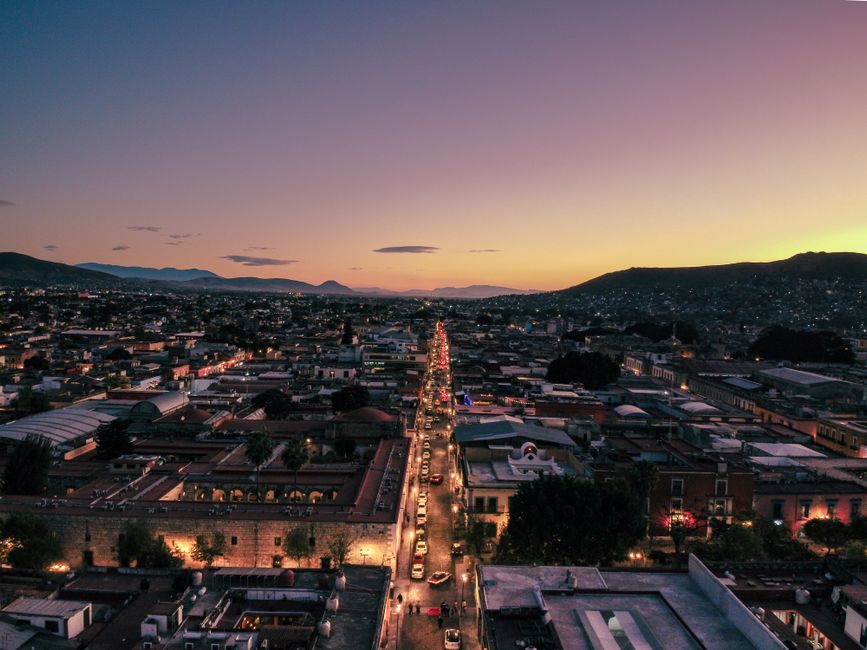
Oaxaca, officially Oaxaca de Juárez, is the capital of the southern state of the same name and one of the most rewarding cities in Mexico: a low-rise colonial center of green-stone churches and pastel houses, the gilded Santo Domingo church and its museum, markets famous for mole, chocolate, tlayudas and mezcal, and a living Indigenous culture of weaving, pottery and festivals. On a mountaintop above the city, the Zapotec capital of Monte Albán is one of Mexico’s great ancient sites, and the valleys around it hold the ruins of Mitla and Yagul, craft villages, mezcal distilleries and the petrified waterfalls of Hierve el Agua. The city sits at about 1,550 meters (5,090 feet), with warm, sunny days most of the year.
Right now in Oaxaca de Juárez
- Tue 17–24°C 62–76°F 7 mm Heavy showers
- Wed 15–24°C 60–76°F 10 mm Heavy rain
- Thu 17–24°C 62–74°F 14 mm Rain
Weather: MET Norway (CC BY 4.0) · Rates: ECB
Top tours in Oaxaca de Juárez
See all tours for Oaxaca de Juárez →
From local operators, with prices and reviews; you check availability and book on Viator, our partner. We may earn a commission at no extra cost to you. How we earn money
Oaxaca at a glance
- Best for: food and mezcal, Zapotec ruins, colonial architecture, crafts and textiles, festivals such as the Guelaguetza and the Day of the Dead.
- How long: 3 days for the city and Monte Albán; 5–6 days to add the Tlacolula valley, Hierve el Agua and the craft villages.
- Best time: October to March for dry, sunny weather; late October and early November for the Day of the Dead; July for the Guelaguetza.
- Getting there: Oaxaca International Airport (OAX), about 7 km (4 miles) south of the center, or first-class buses from Mexico City in about six to seven hours.
- Getting around: the center is compact and walkable; use taxis, colectivos (shared taxis), tours or a rental car for the valleys.
- Before you go: entry rules, the immigration fee, money and tipping are in our Mexico travel guide.
Oaxaca neighborhoods: where things are
The historic center of Oaxaca, together with Monte Albán, is a UNESCO World Heritage Site. Almost everything a visitor needs is within a 20-minute walk of the Zócalo.
The Zócalo and the center
The shady main square, with its bandstand, cafés under the arcades and the cathedral next door, is the heart of city life, especially in the evening. A few blocks south are the big Benito Juárez and 20 de Noviembre markets.
Andador Macedonio Alcalá and Santo Domingo
The pedestrian street known as the Andador runs north from the cathedral to the church of Santo Domingo, lined with galleries, mezcal bars, craft shops and restaurants. The blocks around it have many of the best small hotels.
Jalatlaco and Xochimilco
East of the center, Jalatlaco is a small, cobbled neighborhood of colorful houses, street art, cafés and guesthouses, one of the oldest in the city. North of Santo Domingo, Xochimilco (not to be confused with Mexico City’s) is a quiet, traditional area with an old aqueduct.
Reforma and the north
Further north, the Reforma district is more modern and residential, with some well-known restaurants and quieter streets, about 20–30 minutes on foot or a short taxi ride from the Zócalo.
Top things to see in Oaxaca
Prices and hours below were checked on the official sites in October 2026, unless we say otherwise; check again before you go. Sites run by INAH, Mexico’s National Institute of Anthropology and History, charge foreign visitors twice the price for Mexican nationals and residents.
Monte Albán
Founded around 500 BC on a leveled mountaintop 400 meters (1,300 feet) above the valley, Monte Albán was the capital of the Zapotecs for more than a thousand years. Walk the Grand Plaza between temple platforms, the ball court, the observatory and the carved stones of the “Danzantes,” and enjoy the views over the three central valleys. Tomb 7, found here in 1932, held a famous Mixtec treasure now in the Santo Domingo museum. According to INAH, the site opens daily, 8 a.m.–5 p.m. (last entry 4 p.m.), and admission is MXN 210 (about US$11) for foreign visitors and MXN 105 for nationals and residents, as of October 2026. It is about 10 km (6 miles) from the center: take a tourist shuttle from the center, a taxi or a tour. There is little shade, so go early and bring water and a hat.
Santo Domingo and the Museo de las Culturas de Oaxaca
The church of Santo Domingo de Guzmán, begun in the 16th century, has one of the most lavish baroque interiors in Mexico, covered in gilded stucco, with a famous genealogical tree of the Dominican order on the ceiling under the choir; entry is free outside services. The former convent next door houses the Museo de las Culturas de Oaxaca, which tells the region’s story from prehistory to today and displays the gold and jade of Monte Albán’s Tomb 7. Its windows look onto the Ethnobotanical Garden, a garden of native plants visited on guided tours. According to INAH, the museum opens Tuesday to Saturday, 10 a.m.–4 p.m., and charges MXN 210 (about US$11) for foreign visitors, as of October 2026.
The markets: Benito Juárez and 20 de Noviembre
These two neighboring markets are a feast. Benito Juárez sells chiles, chocolate, mole pastes, quesillo (Oaxacan string cheese), chapulines (toasted grasshoppers) and crafts. In 20 de Noviembre, walk down the smoky “pasillo de carnes asadas,” choose your meat at a butcher’s stall, have it grilled on the spot and eat it with tortillas, salsas and grilled onions. On Sundays, the big market at Tlacolula, about 30 km (19 miles) east, is the region’s most colorful.
Mitla and Yagul
About 45 km (28 miles) east of the city, Mitla was an important Zapotec and Mixtec religious center whose palaces are covered in intricate stone fretwork mosaics, unique in Mexico. On the way, Yagul is a hilltop fortress town with one of the largest ball courts in the region; the nearby prehistoric caves of Yagul and Mitla, with evidence of early plant domestication, are a separate UNESCO World Heritage Site. According to INAH, both Mitla and Yagul open daily, 8 a.m.–5 p.m., and each charges MXN 210 (about US$11) for foreign visitors, as of October 2026.
Hierve el Agua
Mineral springs have built two huge “petrified waterfalls” of white rock on a cliff above a valley, with natural infinity pools where you can swim. The site is run by local communities, about 70 km (43 miles) from the city via Mitla. Secondary sources give a total entry of about MXN 70 (about US$4) in community fees as of 2026, paid in cash. Access has been closed at times because of disputes between neighboring communities, so check with your hotel or a tour operator the day before you go. Wear shoes with grip: the rocks are slippery.
The Tule Tree
In Santa María del Tule, about 10 km (6 miles) east of the city, a Montezuma cypress beside the village church has one of the widest trunks of any tree in the world. A small fee lets you walk around it, and it is an easy stop on the way to Mitla.
Churches and cathedrals
- Santo Domingo de Guzmán Church, Oaxaca
Museums
- Museo de las Culturas de Oaxaca
Monuments
- Mitla
- Monte Albán
- Yagul
Nature
- Tule Tree (Árbol del Tule)
Activities and best months
- City sightseeingINAH: Monte Albán, on the hill above the city, is open daily 8:00-17:00 and is a UNESCO World Heritage Site together with the historic centre (1987); the Museo de las Culturas de Oaxaca is in the former convent of Santo Domingo; Mitla and Yagul are further archaeological zones in the valley. · source
Other things to do in Oaxaca
Food, cooking classes and mezcal
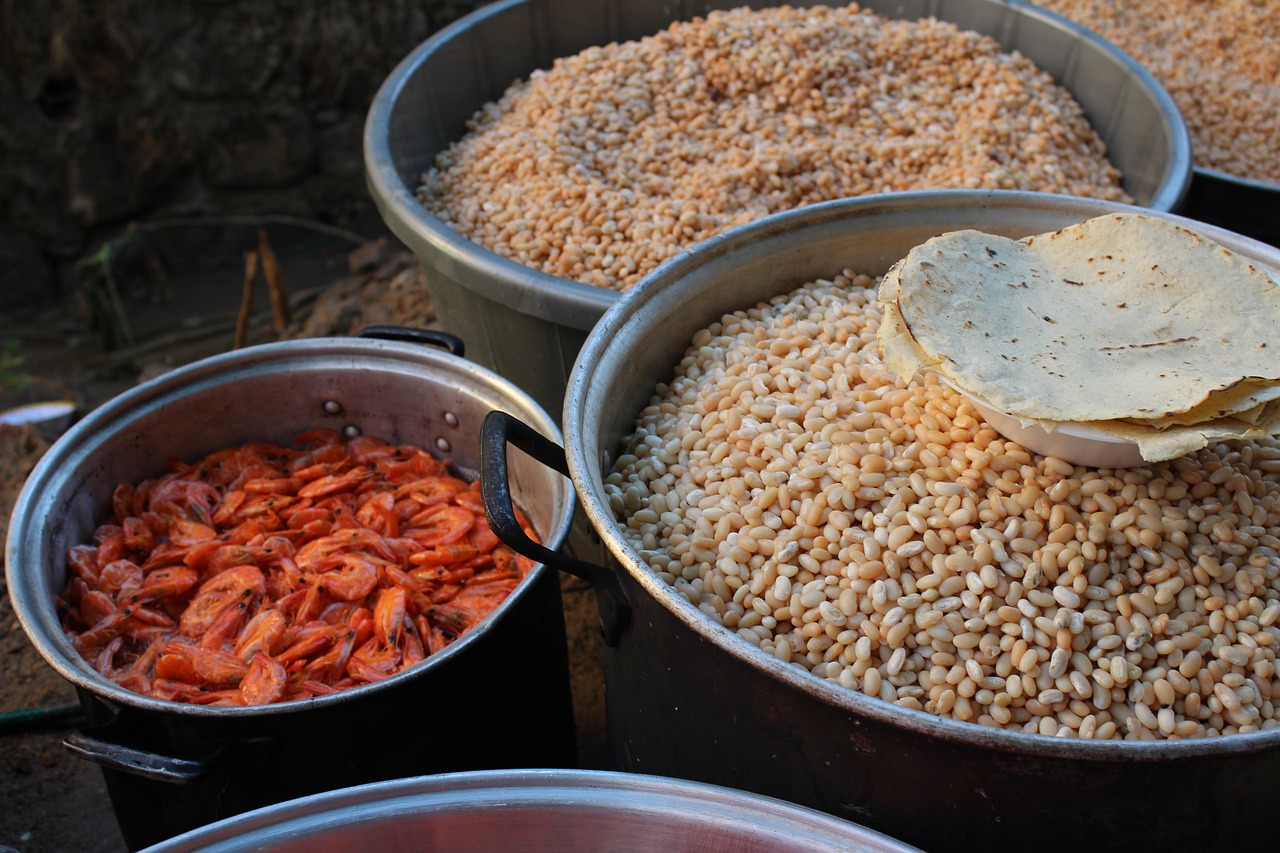
Oaxaca is known as the land of seven moles, from the dark, chocolate-rich negro to yellow amarillo and red coloradito. Try tlayudas (large crisp tortillas with beans, quesillo and meat), tamales in banana leaves, memelas, hot chocolate with pan de yema and tejate, a pre-Hispanic maize and cacao drink. A cooking class, often starting with a market visit, is one of the best things to do here. Oaxaca is also the heartland of mezcal: taste in the city’s mezcalerías or visit family distilleries (palenques) in Santiago Matatlán, which calls itself the world capital of mezcal.
Craft villages
Each village in the central valleys has its own craft. Teotitlán del Valle weaves wool rugs colored with natural dyes such as cochineal; San Bartolo Coyotepec makes shiny black pottery; San Martín Tilcajete and San Antonio Arrazola carve and paint the fantastical wooden figures called alebrijes; and Santo Tomás Jalieza weaves belts on backstrap looms. Buying directly from the families supports them, and many will demonstrate their techniques.
Hiking in the Sierra Norte
In the pine forests of the Sierra Norte, about 1.5–2 hours north, a network of Zapotec communities known as the Pueblos Mancomunados runs ecotourism cabins, local guides and trails between villages at up to about 3,000 meters (9,800 feet). Book through the communities’ own office in the city. See our hiking guide.
Day trips from Oaxaca
The Tlacolula valley: combine the Tule Tree, Teotitlán del Valle, a mezcal palenque, Yagul, Mitla and Hierve el Agua in a long day, by tour or rental car; on Sundays, add the Tlacolula market. The southern valleys: visit San Bartolo Coyotepec, San Martín Tilcajete and the Friday market at Ocotlán de Morelos. Atzompa: a smaller Zapotec site near Monte Albán, with a pottery village below. The Pacific coast: the surf town of Puerto Escondido, the beaches of Mazunte and Zipolite and the bays of Huatulco are a short flight or a long drive away on the new highway to the coast; see our surfing and beaches guides.
Nearby destinations
- Puerto Escondido138 km
- Huatulco158 km
- Heroica Puebla de Zaragoza272 km
Getting there and getting around
By air
Oaxaca International Airport (OAX) is in Santa Cruz Xoxocotlán, about 7 km (4 miles) south of the center, with frequent flights from Mexico City and a few from Guadalajara, Tijuana, Cancún and the United States (some routes are seasonal). From the terminal, buy a ticket for an authorized taxi or a cheaper shared shuttle van to your hotel; the ride takes about 20–30 minutes.
By bus
First-class and executive buses run several times a day from Mexico City’s TAPO and Terminal del Norte (and from Mexico City airport), taking about six to seven hours on the toll highway via Puebla. They arrive at the first-class bus station on Calzada Niños Héroes, north of the center. Buses also connect Oaxaca with Puebla, the Pacific coast and Chiapas.
Getting around
The center is flat and best explored on foot. Taxis are inexpensive; agree on the fare before you get in, as most do not use meters. Colectivos (shared taxis) and second-class buses run to the valley towns from the area around the Central de Abastos market and the second-class bus station. For a day covering several sites, a tour or a private driver is the easiest option; drivers who rent a car should avoid the highways at night and watch for speed bumps (topes) in every village.
When to go and how long to stay
Oaxaca has a warm, dry season from October to April and a rainy season from May or June to September, when green hills and afternoon showers cool the air. The table uses the 1991–2020 climate normals of Mexico’s National Meteorological Service (SMN-Conagua) for the Oaxaca station: average daily highs and lows, and days with rain.
| Season | Average high / low | Days with rain per month | What it’s like | Good for |
|---|---|---|---|---|
| Winter (Dec–Feb) | 29–31 °C (84–88 °F) / 10–12 °C (51–53 °F) | 1–2 | Dry, sunny days and cool nights | Sightseeing, ruins, markets, Christmas |
| Spring (Mar–May) | 33–35 °C (92–95 °F) / 14–17 °C (56–62 °F) | 4–14 | The hottest months; first storms in May | Early starts at the ruins, mezcal tasting |
| Summer (Jun–Aug) | 30–31 °C (86–88 °F) / 16–17 °C (61–62 °F) | 20–21 | Rainy afternoons, green valleys | The Guelaguetza in July, hiking |
| Fall (Sep–Nov) | 29 °C (84–85 °F) / 12–16 °C (54–61 °F) | 4–21 | Rains end in October; clear and pleasant | Day of the Dead, walking, villages |
The station records about 850 mm (34 inches) of rain a year, nearly all from May to October. The city is inland and high, but Pacific hurricanes, in season from May 15 to November 30, can cut the roads to the coast: in June 2025 Hurricane Erick made landfall on the western Oaxaca coast as a major hurricane and damaged parts of Puerto Escondido. If you plan to continue to the coast in the season, follow the forecasts.
Events worth planning around
- July: the Guelaguetza. The state’s great festival of regional dance and music, the “Lunes del Cerro,” is held on the last two Mondays of July in the open-air Auditorio Guelaguetza on Cerro del Fortín; in 2026 it took place on July 20 and 27, with parades, concerts and a mezcal fair around the city. Tickets for the best sections sell out early, and hotel prices peak.
- Late October to November 2: the Day of the Dead. Families build altars with marigolds, candles, bread and photos, cemeteries such as Xoxocotlán’s fill with candles at night, and comparsas (costumed parades) dance through the streets. It is the busiest week of the year; book months ahead.
- December 23: the Night of the Radishes. Giant radishes carved into scenes fill the Zócalo for one evening.
3 days in Oaxaca
Day one: the Zócalo, the cathedral, the Andador and Santo Domingo with the Museo de las Culturas, then a mezcal tasting. Day two: Monte Albán at opening time, the markets in the afternoon and dinner in 20 de Noviembre’s grill alley. Day three: the Tule Tree, Teotitlán del Valle, a palenque and Mitla, ending at Hierve el Agua if it is open.
5–6 days in Oaxaca
Add a cooking class, the southern craft villages and a Sunday at the Tlacolula market, Yagul and Atzompa, and one or two nights hiking between the villages of the Sierra Norte. With a week or more, continue to the Pacific coast.
Where to stay in Oaxaca and the hotel tax
- Around Santo Domingo and the Andador: boutique hotels in colonial houses, close to everything.
- Near the Zócalo: lively, central and close to the markets.
- Jalatlaco: guesthouses and apartments on quiet, pretty streets.
- Reforma: quieter, residential and often better value, a short ride from the center.
Room rates are often quoted before tax. The State of Oaxaca charges a lodging tax (impuesto sobre la prestación de servicios de hospedaje) of 3% under its state finance law, according to secondary summaries we could not confirm on the state’s site, and federal VAT (IVA) of 16% is added on top, as of October 2026. Prices rise sharply during the Guelaguetza and the Day of the Dead, when many hotels require minimum stays.
Practical tips for Oaxaca
- Cash: markets, colectivos, village workshops and Hierve el Agua work in cash; carry small notes.
- Museum days: the Museo de las Culturas closes on Sundays and Mondays; the archaeological sites open daily.
- Protests and blockades: demonstrations and road blockades happen in Oaxaca, sometimes on the Zócalo or on the roads to the airport and the coast; ask your hotel and allow extra time.
- Water and food: drink bottled or filtered water; street food is a highlight, so choose busy stalls.
- Safety: the center and the main sights are calm and welcoming; watch your belongings in markets and festival crowds, take authorized taxis at night and avoid driving rural roads after dark. Cartel-related violence in Mexico is concentrated in certain other states.
- Emergencies: call 911. Plugs and voltage (127 V, types A and B) are the same as in the United States.
What to pack for Oaxaca
Bring light clothes for hot, sunny days and a sweater or light jacket for the evenings, which can fall to around 10 °C (50 °F) in winter, and something warmer for the Sierra Norte. A hat, sunglasses, sunscreen and a refillable water bottle are essential at Monte Albán and Mitla. Pack comfortable shoes with good grip for the ruins and the rocks of Hierve el Agua, swimwear for its pools, and a light rain jacket from June to September. Leave room for textiles, black pottery and mezcal.
What to pack
- City walking shoesLisbon and Porto are steep, with polished limestone cobbles that get slippery, so grippy soles matter.
- Day packs and anti-theft bagsA small zipped or anti-theft bag makes crowded trams and viewpoints less stressful.
- Rain jacketsFrom October to April Porto and Lisbon see rain on roughly a third of days.
- Travel adapters and convertersPortugal uses Type C and F sockets at 230 V, so most visitors from outside Europe need an adapter.
Oaxaca travel FAQ
How much does it cost to visit Monte Albán?
As of October 2026, MXN 210 (about US$11) for foreign visitors and MXN 105 for Mexican nationals and residents. It opens daily, 8 a.m.–5 p.m., with last entry at 4 p.m.
How do I get to Monte Albán from Oaxaca?
Take a tourist shuttle from the center, a taxi (about 20 minutes) or a guided tour. Go early to avoid the midday heat.
Is Hierve el Agua open?
It is usually open daily, but it has closed at times because of disputes between local communities. Check the day before, and bring cash for the community fees of about MXN 70.
When is the Guelaguetza?
On the last two Mondays of July, with events across the city through the second half of the month. In 2026 the main performances were on July 20 and 27.
When is the Day of the Dead in Oaxaca?
The main days are October 31 to November 2, with altars, comparsas and candlelit cemeteries; celebrations start in late October.
How long does the bus from Mexico City to Oaxaca take?
About six to seven hours by first-class bus on the toll highway via Puebla. Flights take about an hour.
What food should I try in Oaxaca?
Mole negro, tlayudas, tamales, memelas, quesillo, chapulines, hot chocolate and tejate, and of course mezcal.
What is the hotel tax in Oaxaca?
A state lodging tax, reported at 3%, plus 16% IVA; check whether quoted rates include them.
Is Oaxaca safe for tourists?
The city center and the main sights are generally calm and friendly. Take normal care with belongings, use authorized taxis at night, and allow for protests or road blockades.
Sources
- © OpenStreetMap contributors · ODbL · fetched 4 Oct 2026
- Wikidata · CC0 · fetched 4 Oct 2026
Sources and last review
Researched and last reviewed on 4 October 2026. Monte Albán, Mitla, Yagul and the Museo de las Culturas de Oaxaca: INAH (Lugares INAH); Guelaguetza: Mexico’s Ministry of Tourism (Sectur); climate: SMN-Conagua 1991–2020 normals for the Oaxaca station; Hurricane Erick: the US National Hurricane Center’s tropical cyclone report. The Hierve el Agua fees and closures, the 3% state lodging tax, the 2026 Guelaguetza dates, airport and bus details, distances and event dates come from secondary sources and are flagged for checking. Check the official sites before you go. For entry rules, the immigration fee, money and tipping, see our Mexico travel guide.
Plan your trip
Partner links: TravelerCenter may earn a commission if you book, at no extra cost to you.
🇪🇸 Useful Spanish phrases for Oaxaca de Juárez
All 38 Spanish phrases: restaurant, hotel, emergencies, romance (printable) →