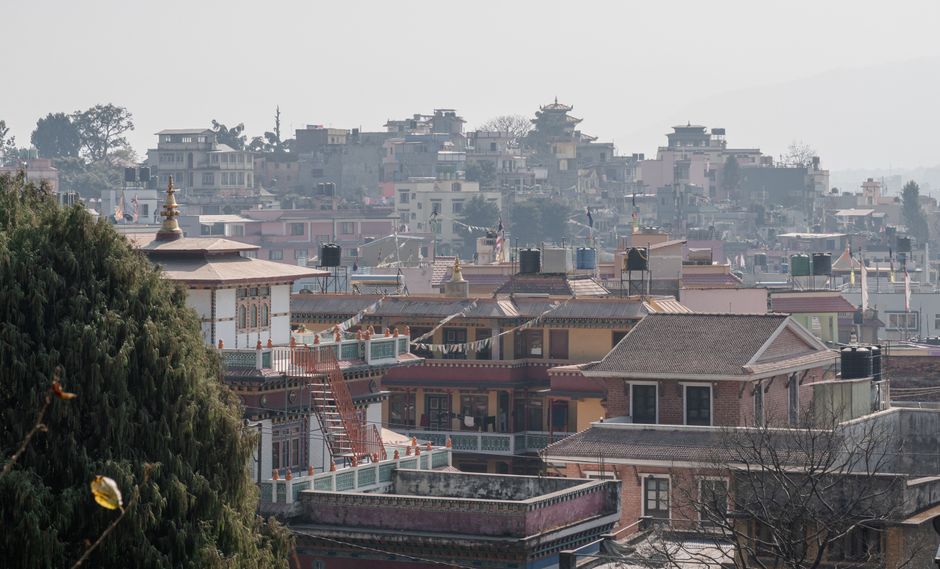
Kathmandu, Nepal’s capital, sits in a bowl-shaped valley at about 1,400 m (4,600 ft), ringed by green hills with the snow peaks of the Himalaya visible on clear days to the north. It is noisy, crowded and dusty, and also one of the most rewarding cities in Asia: within a few miles are three former royal capitals, Kathmandu, Patan and Bhaktapur, each with a Durbar (palace) Square of pagoda temples and carved wooden windows; two of the largest Buddhist stupas in the world, Swayambhunath and Boudhanath; and Pashupatinath, one of the holiest Hindu temples on the subcontinent. Seven groups of these monuments form the Kathmandu Valley UNESCO World Heritage Site, inscribed in 1979. The magnitude 7.8 earthquake of April 25, 2015, damaged many of them, and most have since been rebuilt with traditional techniques. For most travelers, Kathmandu is also the arrival point for Nepal and the base for arranging treks, permits and guides. The best months to visit are October and November and March to May; the monsoon, from June to September, brings heavy afternoon rain.
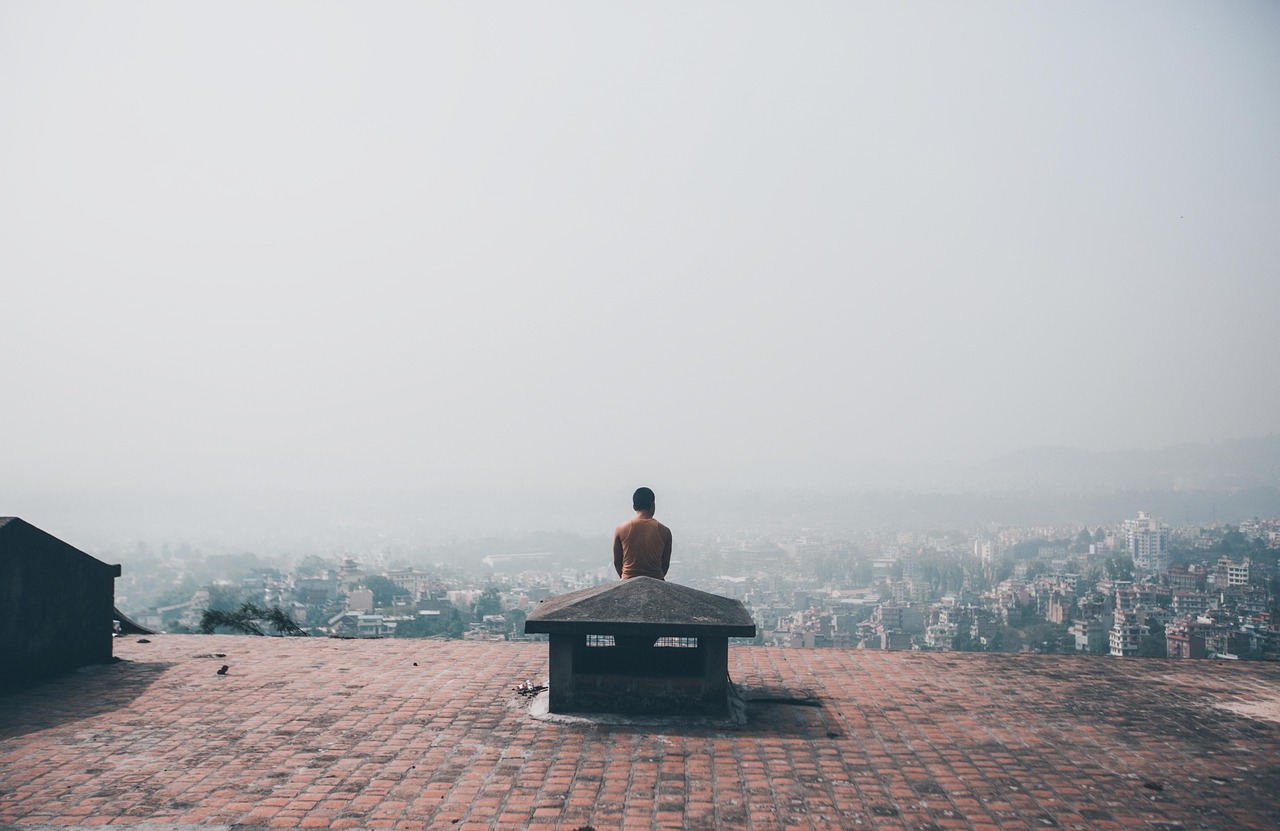
Right now in Kathmandu
- Wed 15–23°C 59–73°F 5 mm Showers
- Thu 15–23°C 58–73°F 5 mm Showers
- Fri 14–19°C 58–66°F 12 mm Showers
Weather: MET Norway (CC BY 4.0)
Top tours in Kathmandu
See all tours for Kathmandu →
From local operators, with prices and reviews; you check availability and book on Viator, our partner. We may earn a commission at no extra cost to you. How we earn money
Kathmandu at a glance
- Best for: temples and stupas, Newar architecture and crafts, festivals, food, and organizing treks.
- How long: 3 days for Kathmandu, Patan, Bhaktapur and the stupas; a day or two more for the valley rim.
- Best time: October to November, for clear skies and festivals; March to April is warm and pleasant, with more haze.
- Getting there: Tribhuvan International Airport (KTM), Nepal’s main gateway, is about 6 km (4 miles) east of Thamel.
- Getting around: on foot in the old city, by taxi or ride-hailing app (Pathao, InDrive) between sights.
- Good to know: each heritage area charges foreigners its own entry fee, from NPR 200 at Swayambhunath to NPR 1,800 at Bhaktapur.
- Before you go: the visa, trekking permits, money and general safety are in our Nepal travel guide.
Kathmandu’s areas and where to stay
The Kathmandu Valley holds three cities that have grown into one urban area: Kathmandu itself, Patan (officially Lalitpur) just south across the Bagmati River, and Bhaktapur about 13 km (8 miles) east.
Thamel
The backpacker and trekking district north of the old city is a dense grid of guesthouses, hotels of every level, restaurants, bars, trekking agencies, gear shops and bookshops. It is convenient and lively, but loud and congested; quieter lanes run toward Chhetrapati and Paknajol.
The old city and Freak Street
South of Thamel, the old bazaars of Asan and Indra Chowk lead to Kathmandu Durbar Square. Jhochhen, known as Freak Street from its 1960s hippie days, has a few simple guesthouses right beside the square.
Lazimpat and Durbar Marg
North and east of Thamel, the embassy district of Lazimpat and the wide avenue of Durbar Marg have international hotels, restaurants and the Narayanhiti Palace Museum, a short walk from Thamel but calmer.
Boudha
Around the Boudhanath stupa, guesthouses run by Tibetan families and monasteries offer a peaceful base, with the evening walk around the stupa on the doorstep, about 7 km (4 miles) east of Thamel.
Patan and Bhaktapur
Patan has heritage boutique hotels in restored Newar houses and a slower pace, close to cafés and craft workshops. Staying a night in Bhaktapur lets you see the squares after the day-trippers leave.
Top things to see in Kathmandu
Kathmandu Durbar Square
The old royal palace square, also called Hanuman Dhoka, is a cluster of temples, courtyards and shrines where Nepal’s kings were crowned. Highlights include the Kumari Ghar, home of the Kumari, a young girl worshipped as a living goddess, who sometimes appears at a window of the inner courtyard; the tall Taleju Temple; the Kasthamandap pavilion, said to have given the city its name, rebuilt after 2015; and the Hanuman Dhoka palace museum. According to the Nepal Tourism Board, foreigners pay NPR 1,000 (about US$6.50), including the Tribhuvan Museum.
Swayambhunath
On a wooded hill west of the city, the stupa of Swayambhunath, with the Buddha’s eyes painted on all four sides of its golden spire, overlooks the whole valley. Climb the 365 steep steps of the eastern stairway, watched by the monkeys that give it the nickname Monkey Temple, and come at dawn or sunset. Entry for foreigners is NPR 200.
Boudhanath
The great white dome of Boudhanath is one of the largest stupas in the world and the heart of Nepal’s Tibetan community, ringed by monasteries, shops and rooftop cafés. In the late afternoon, pilgrims walk the kora clockwise around it, turning prayer wheels. Entry is NPR 400.
Pashupatinath
Nepal’s most sacred Hindu temple, dedicated to Shiva, stands on the banks of the Bagmati River. Only Hindus may enter the main temple, but visitors can explore the surrounding shrines, watch open-air cremations on the ghats from the opposite bank (respectfully, and without photographing mourners), and meet the sadhus, Hindu holy men. Entry for foreigners is NPR 1,000. Maha Shivaratri, in February or March, draws huge crowds.
Patan Durbar Square
Patan, the “city of fine arts,” has perhaps the most beautiful of the three squares, with the octagonal Krishna Mandir built of stone and the superb Patan Museum of bronze and religious art in a restored palace wing. Behind the square, lanes lead to the Golden Temple (Hiranya Varna Mahavihar) and metalworkers’ workshops. Foreigners pay NPR 1,000, including the museum.
Bhaktapur
The best preserved of the valley’s royal cities is almost car-free, with three main squares: Durbar Square with the 55-Window Palace and the Golden Gate; Taumadhi Square with the five-story Nyatapola Temple, Nepal’s tallest pagoda; and Dattatreya Square, with its woodcarving museum. Potters work in the open in Pottery Square. Foreigners pay US$18 or NPR 1,800; the ticket covers the city’s main museums.
More classic sights
- Garden of Dreams: a restored neoclassical garden on the edge of Thamel, a quiet escape (NPR 400).
- Narayanhiti Palace Museum: the former royal palace, preserved as it was in 2008, including the site of the royal massacre of 2001.
- Changu Narayan: the valley’s oldest temple, from the 5th century, on a hilltop north of Bhaktapur (NPR 300).
- Asan and Indra Chowk: the old bazaars between Thamel and Durbar Square, full of spice stalls and small shrines.
- Kirtipur: a hilltop Newar town southwest of the city, with temples and views.
Other things to do in Kathmandu
Food and drink
Kathmandu is the best place in Nepal to eat. Try momos, steamed or fried dumplings, everywhere; dal bhat, the national rice-and-lentil meal; and the Newar specialties of the valley, such as bara (lentil patties), choila (spiced grilled buffalo or chicken), chatamari (rice-flour crepes), yomari (sweet steamed dumplings) and juju dhau, the creamy “king of yogurts” sold in clay pots in Bhaktapur. Boudha has Tibetan restaurants serving thukpa and butter tea, and Thamel and Jhamsikhel in Patan have international restaurants, bakeries and coffeehouses. Drink filtered or bottled water.
Festivals
Kathmandu’s festival calendar is packed. Indra Jatra, in September, fills Durbar Square with masked dances and the chariot procession of the Kumari; Dashain and Tihar, in October and November, are family festivals of blessings, kites and oil lamps; Holi, in March, is celebrated with colored powder; and Losar, the Tibetan New Year, fills Boudha with dancing in winter. Bhaktapur’s Bisket Jatra chariot festival marks the Nepali New Year in mid-April. See our city sightseeing guide.
Walks, hikes and cycling
The forested hills of Shivapuri Nagarjun National Park on the valley’s northern rim have day hikes to viewpoints and monasteries, with an entry fee of NPR 1,000 for foreigners. The Chandragiri cable car climbs to a ridge with Himalayan views southwest of the city. Mountain bikers ride village trails to the valley rim. See our hiking and cycling guides.
Mountain flights
Early-morning sightseeing flights from Kathmandu fly along the Himalaya to Everest and back in about an hour, weather permitting, a way to see the highest peaks without trekking.
Day trips from Kathmandu
- Nagarkot: a village on the valley rim at about 2,100 m (6,900 ft), about an hour’s drive east, for sunrise and sunset views of the Himalaya; many visitors stay a night.
- Dhulikhel and Namobuddha: a Newar town with mountain views, about 30 km (19 miles) east, and a walk or short drive to the Buddhist monastery of Namobuddha.
- Bungamati and Khokana: traditional Newar villages south of Patan, known for woodcarving and mustard-oil presses.
- Dakshinkali and Pharping: a Kali temple and Buddhist caves and monasteries on the southern edge of the valley.
- Pokhara and Chitwan: too far for a day trip, but tourist buses leave Kathmandu every morning. See our Pokhara and Chitwan National Park guides.
Nearby destinations
- Chitwan National Park100 km
- Sagarmatha National Park (Everest Region)137 km
- Pokhara142 km
- Annapurna Conservation Area178 km
Getting there and getting around
By air
Tribhuvan International Airport (KTM) is Nepal’s main international airport, about 6 km (4 miles) from Thamel. Visas on arrival are issued in the arrivals hall; queues can be long in October and November. Prepaid taxis to Thamel take 20 to 40 minutes depending on traffic. The domestic terminal next door has flights to Pokhara, Bharatpur (for Chitwan), Bhairahawa (for Lumbini) and Lukla, though in recent busy seasons Lukla flights have been moved to Manthali Airport in Ramechhap, a four- to five-hour drive away.
By bus and road
Tourist buses to Pokhara and Sauraha (Chitwan) leave early each morning from Kantipath, near Thamel, taking about 6 to 8 hours to Pokhara and 5 to 7 hours to Sauraha. Local buses leave from the Gongabu (New Bus Park) station on the Ring Road. Buses from the Indian border at Sunauli and Raxaul take 8 to 10 hours.
Around the city
The old city, Thamel and Durbar Square are best explored on foot. Taxis wait on main streets; agree the fare before you get in. Ride-hailing apps such as Pathao and InDrive operate cars and motorbike taxis. Local microbuses and tempos are cheap but crowded. Hiring a car and driver for a day of sightseeing around the valley is easy through hotels and agencies.
When to go and how long to stay
Kathmandu has a mild climate for its latitude, thanks to its altitude. October and November are the best months: dry, sunny and clear, with warm days and cool nights, and the main festivals. December to February brings sunny, mild days but cold nights near freezing, with smog building in the valley. March to May is warm and mostly dry, though hazy, with thunderstorms in late afternoon from April. The monsoon, from June to September, brings heavy rain, often in afternoon and evening downpours, and mountain views are rare. The table shows 1991–2020 normals for the Kathmandu airport station from Nepal’s Department of Hydrology and Meteorology (DHM), as published by the World Meteorological Organization (WMO).
| Month | Average high / low | Rain (rainy days) | What to expect |
|---|---|---|---|
| January | 19 °C (67 °F) / 3 °C (37 °F) | 15 mm (0.6 in), 2 days | Sunny days, near-freezing nights; morning fog and smog |
| February | 22 °C (72 °F) / 5 °C (42 °F) | 24 mm (0.9 in), 3 days | Mild and dry; Maha Shivaratri in some years |
| March | 26 °C (79 °F) / 9 °C (48 °F) | 38 mm (1.5 in), 4 days | Warm and pleasant; spring haze; Holi |
| April | 29 °C (83 °F) / 12 °C (54 °F) | 63 mm (2.5 in), 7 days | Warm; afternoon storms; Nepali New Year |
| May | 29 °C (85 °F) / 16 °C (61 °F) | 129 mm (5.1 in), 12 days | Warm and humid; pre-monsoon showers |
| June | 30 °C (85 °F) / 19 °C (67 °F) | 242 mm (9.5 in), 17 days | Monsoon begins; heavy downpours |
| July | 29 °C (84 °F) / 20 °C (69 °F) | 384 mm (15.1 in), 23 days | Wettest month; flooding in low areas |
| August | 29 °C (84 °F) / 20 °C (68 °F) | 343 mm (13.5 in), 23 days | Very wet; festivals of Teej and Janai Purnima |
| September | 29 °C (83 °F) / 19 °C (66 °F) | 208 mm (8.2 in), 15 days | Rain easing; Indra Jatra |
| October | 27 °C (81 °F) / 14 °C (57 °F) | 43 mm (1.7 in), 4 days | Clear, dry and warm; Dashain; peak season |
| November | 24 °C (74 °F) / 8 °C (47 °F) | 6 mm (0.3 in), under 1 day | Crisp and clear; Tihar |
| December | 20 °C (68 °F) / 4 °C (40 °F) | 8 mm (0.3 in), 1 day | Dry and sunny; cold nights |
The airport gets about 1,500 mm (59 in) of rain a year, three quarters of it from June to September.
3 days in Kathmandu
Day one, Kathmandu Durbar Square and the old bazaars in the morning, Swayambhunath for sunset. Day two, Pashupatinath in the morning and Boudhanath in the afternoon, staying for the evening kora. Day three, Bhaktapur, with lunch of juju dhau, and Patan’s Durbar Square and museum on the way back.
5 days with the valley rim
Add a night in Nagarkot or Dhulikhel for Himalayan sunrise, a hike in Shivapuri Nagarjun National Park, and a slow day in Patan’s lanes and workshops.
Where to stay in Kathmandu
- Thamel: the widest choice of guesthouses and hotels, close to agencies, restaurants and nightlife.
- Lazimpat and Durbar Marg: international and upscale hotels, a little calmer, within walking distance of Thamel.
- Boudha: guesthouses and monastery stays around the stupa, peaceful in the evenings.
- Patan: heritage boutique hotels and homestays in Newar houses, near cafés and galleries.
- Bhaktapur: small guesthouses overlooking the squares, best for a night after the crowds leave.
Rooms in Thamel fill in October and November; book ahead for the festival weeks.
What a trip to Kathmandu costs
Prices are approximate, for October 2026, converted at about 154 rupees (NPR) to the US dollar. Heritage fees are those listed by the Nepal Tourism Board.
| Item | Typical cost |
|---|---|
| Kathmandu or Patan Durbar Square, foreigners | NPR 1,000 (about US$6.50) |
| Bhaktapur, foreigners | US$18 or NPR 1,800 |
| Boudhanath / Swayambhunath, foreigners | NPR 400 / NPR 200 (about US$2.60 / US$1.30) |
| Pashupatinath, foreigners | NPR 1,000 (about US$6.50) |
| Plate of momos | NPR 150–350 (about US$1–2.30) |
| Dinner in a mid-range Thamel restaurant | NPR 1,200–2,500 (about US$8–16) per person |
| Taxi from the airport to Thamel | NPR 700–1,200 (about US$4.50–8) |
| Car and driver for a day around the valley | NPR 6,000–10,000 (about US$39–65) |
| Mid-range hotel double, per night | NPR 5,000–12,000 (about US$32–78) |
Practical tips for Kathmandu
- Keep your tickets: heritage area tickets are checked at several entrances; at some sites, a ticket is valid for repeated visits during your stay if registered with your passport.
- Walk clockwise: around stupas, prayer wheels and temples.
- Mask up in the dry season: dust and smog are heavy from December to April.
- Arrange permits early: your trekking agency buys the TIMS card and arranges restricted-area permits; park fees can be paid at the Tourist Service Center in Bhrikutimandap.
- Plan around power cuts and traffic: leave plenty of time for the airport, especially on festival days.
Safety
Kathmandu is generally safe, and violent crime against visitors is rare. Watch for pickpockets in crowded bazaars, at festivals and on buses, and for bag snatching in Thamel at night. Traffic is chaotic, with few pavements, so walk carefully. Political demonstrations and general strikes (bandh) occur from time to time and can close roads and shops at short notice; avoid crowds and follow local news. The valley lies in a highly active seismic zone: tremors are common, and it is worth knowing your hotel’s emergency procedures. During the monsoon, streets in low-lying areas flood after heavy rain, and dengue fever has become more common in the valley, so use insect repellent. Air pollution is high in winter and spring. The Tourist Police, at the Nepal Tourism Board office in Bhrikutimandap, help visitors around the clock on 1144; for other emergencies, call 100 for police and 102 for an ambulance.
What to pack for Kathmandu
Layers for warm days and cold nights from November to February, a light rain jacket and quick-drying shoes for the monsoon, a dust mask for the dry season, comfortable walking shoes for uneven streets, and clothes covering shoulders and knees for temples. Nepal uses 230 V, with round two-pin (type C) and three-pin (types D and M) sockets. See our rain jackets, hiking shoes and travel adapters guides.
Kathmandu travel FAQ
How many days do I need in Kathmandu?
Three days for Kathmandu, Patan, Bhaktapur, Swayambhunath, Boudhanath and Pashupatinath; four or five with a night on the valley rim.
How much are entry fees in Kathmandu?
According to the Nepal Tourism Board, foreigners pay NPR 1,000 for Kathmandu Durbar Square, Patan Durbar Square and Pashupatinath, US$18 or NPR 1,800 for Bhaktapur, NPR 400 for Boudhanath and NPR 200 for Swayambhunath.
What is the best time to visit Kathmandu?
October and November, for clear skies and festivals. March and April are also pleasant; June to September is the rainy season.
Where should I stay in Kathmandu?
Thamel for convenience and choice, Lazimpat for calmer upscale hotels, Boudha for a peaceful stay by the stupa, and Patan for heritage hotels.
Can non-Hindus enter Pashupatinath?
Not the main temple, but visitors can walk around the complex, the riverbank and the surrounding shrines and watch from the opposite bank.
How do I get from Kathmandu airport to Thamel?
By prepaid or metered taxi, or a ride-hailing app, in 20 to 40 minutes. Many hotels offer pickups.
Is Kathmandu safe for tourists?
Generally, yes. Watch for pickpockets and traffic, avoid demonstrations, and be aware that earthquakes and monsoon flooding can occur.
Can I see Everest from Kathmandu?
Not from the city itself. On clear days, Nagarkot on the valley rim has views along the Himalaya, and early-morning mountain flights fly close to Everest.
How do I get from Kathmandu to Pokhara?
By tourist bus in about 6 to 8 hours, or by a 25-minute domestic flight.
Was Kathmandu rebuilt after the 2015 earthquake?
Mostly. Many temples in the Durbar Squares, including the Kasthamandap, have been reconstructed, and work continues on a few monuments.
Sources and last review
Researched and last reviewed on 4 October 2026. Heritage site entry fees (Kathmandu, Patan and Bhaktapur Durbar Squares, Swayambhunath, Boudhanath, Pashupatinath, Changu Narayan, Garden of Dreams), Shivapuri Nagarjun park fee and the Tourist Police: the Nepal Tourism Board; visa on arrival at Tribhuvan: Nepal’s Department of Immigration; climate normals for Kathmandu airport: Nepal’s Department of Hydrology and Meteorology, via the World Meteorological Organization (1991–2020 normals archived by NOAA’s National Centers for Environmental Information); exchange rate: Nepal Rastra Bank; demonstrations, earthquakes and crime: the UK government’s travel pages (factual content only). The UNESCO inscription year, the 2015 earthquake, monument history, festival timing, Lukla’s seasonal move to Ramechhap, travel times, emergency numbers and typical prices are general references or estimates, flagged for checking. Prices and hours change, so check the official sites before you go. For entry rules, trekking permits, money and general safety, see our Nepal travel guide.
Plan your trip
Partner links: TravelerCenter may earn a commission if you book, at no extra cost to you.
🇳🇵 Useful Nepali phrases for Kathmandu
All 38 Nepali phrases: restaurant, hotel, emergencies, romance (printable) →