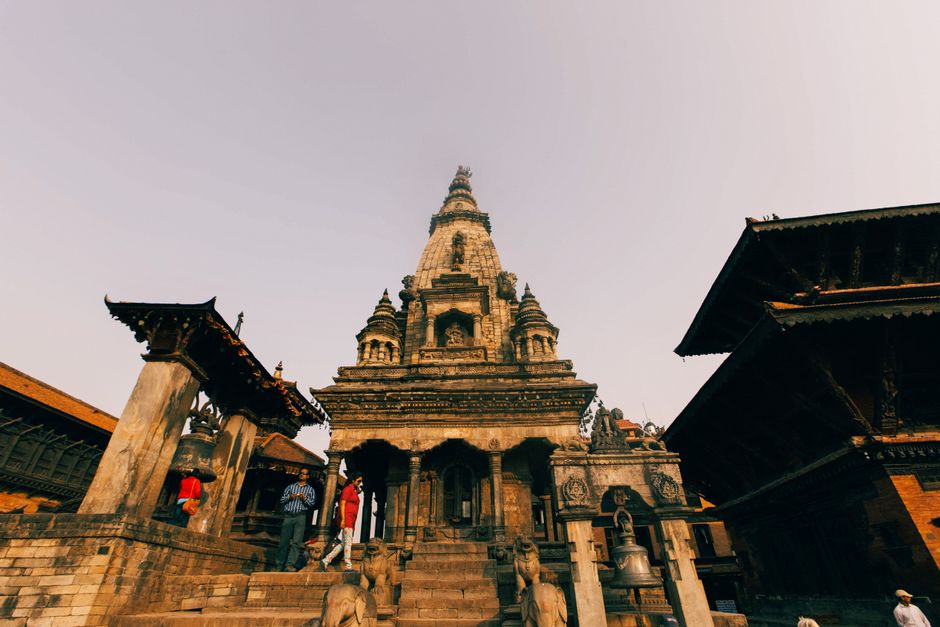
Nepal climbs from the subtropical plains of the Terai, barely 60 m (200 ft) above sea level on the Indian border, to the summit of Mount Everest, the highest point on Earth, in a little more than 150 km (90 miles). Within that short distance lie eight of the world’s fourteen peaks above 8,000 m (26,250 ft), the medieval royal cities of the Kathmandu Valley, the lakeside town of Pokhara beneath the Annapurna range, jungle parks where one-horned rhinos and Bengal tigers live, and Lumbini, the birthplace of the Buddha. Most visitors come to trek: on the classic routes to Everest Base Camp, around the Annapurna massif or into the Langtang Valley, sleeping in family-run lodges called teahouses. Others come for temples and festivals, white-water rafting, paragliding, or a few days of wildlife-watching in Chitwan. Since April 2023, foreigners must trek with a licensed guide on most routes in the national parks and conservation areas, and the best seasons are autumn, from October to November, and spring, from March to May, between the summer monsoon and the cold, clear winter.
Right now in Nepal
- Wed 15–23°C 59–74°F 7 mm Showers
- Thu 13–23°C 56–74°F 5 mm Heavy rain
- Fri 14–19°C 58–66°F 12 mm Showers
Weather: MET Norway (CC BY 4.0)
Multi-day tours of Nepal
Multi-day tours from local operators. You check dates and book on Viator, our partner; we may earn a commission at no extra cost to you. How we earn money
Nepal at a glance
Nepal is a landlocked federal republic in South Asia, between China (the Tibet Autonomous Region) to the north and India to the south, east and west. According to the Nepal Tourism Board, it covers 147,516 km² (56,956 sq miles), about the size of Arkansas and Mississippi combined, and stretches roughly 800 km (500 miles) from east to west but only 150 to 250 km (95 to 155 miles) from north to south. That narrow strip folds three landscapes together: the flat, hot Terai along the Indian border; the green Middle Hills, where the valleys of Kathmandu and Pokhara lie; and the high Himalaya, rising above the tree line at about 4,000 m (13,100 ft) to permanent snow. The country has about 29 million people, according to the 2021 national census, and is divided into seven provinces.
The official language is Nepali, written in the Devanagari script; English is widely spoken in tourism, and dozens of other languages, such as Newari, Maithili, Tamang and Sherpa, are spoken across the country. Most Nepalis are Hindu, and Buddhism is strong in the mountains and the Kathmandu Valley, where the two faiths often share the same shrines. Nepal keeps its own time zone, UTC+5:45, 15 minutes ahead of India, with no daylight saving time, and uses its own calendar, the Bikram Sambat, which is about 56 years and 8 months ahead of the Western one (October 2026 falls in the year 2083). Saturday is the main weekly day off. Electricity is 230 V; sockets take round two-pin (type C) and round three-pin (types D and M) plugs.
Nepal’s regions
- The Kathmandu Valley: the capital, Kathmandu, and the old Newar cities of Patan (Lalitpur) and Bhaktapur, with seven groups of monuments inscribed together as a UNESCO World Heritage Site.
- Pokhara and the Annapurna region: Nepal’s second city on Phewa Lake and the trekking routes around and into the Annapurna massif, from Poon Hill and Annapurna Base Camp to the Annapurna Circuit and the arid valleys of Mustang.
- Everest and the Khumbu: Sagarmatha National Park in the northeast, home of the Sherpa people, reached by the famous flight to Lukla.
- The central hills and Langtang: Langtang National Park, the Helambu villages and the sacred lakes of Gosaikunda, the closest major treks to Kathmandu, and the Manaslu and Tsum valleys to the west.
- The Terai: the lowland strip along the Indian border, with Chitwan and Bardia national parks, Lumbini and Janakpur.
- The far west and far east: remote and little visited, with Rara Lake, Dolpo and Humla in the west and Kanchenjunga and the tea gardens of Ilam in the east.
Where to go: valleys, lakes, jungles and the high Himalaya
A classic two-week first trip combines the Kathmandu Valley, Pokhara and a short trek in the Annapurna foothills, with two or three days in Chitwan at the end; a three-week trip leaves time for Everest Base Camp or the Annapurna Circuit. See our guides to each place:
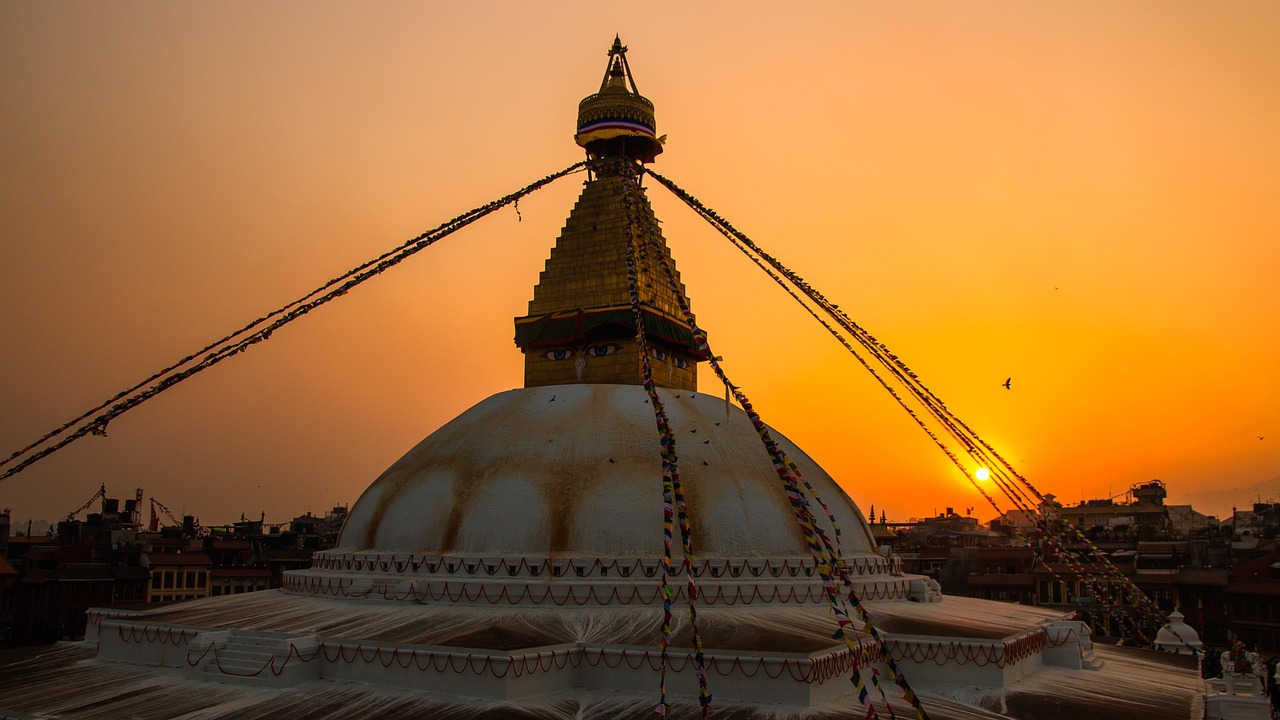
- Kathmandu: the capital’s Durbar Square, the great stupas of Swayambhunath and Boudhanath, the Hindu temple complex of Pashupatinath, Thamel’s guesthouses and the old cities of Patan and Bhaktapur.
- Pokhara: lakeside cafés, boating on Phewa Lake, sunrise over the Annapurnas from Sarangkot, paragliding and the starting point for most Annapurna treks.
- Chitwan National Park: Nepal’s first national park, a UNESCO site of grassland and sal forest with one-horned rhinos, tigers, crocodiles and more than 500 species of birds.
- Sagarmatha National Park: the Everest region, with Namche Bazaar, Tengboche Monastery, the Gokyo Lakes and Everest Base Camp.
- Annapurna Conservation Area: Nepal’s largest protected area and its most trekked, from Ghorepani and Annapurna Base Camp to the Thorong La pass and Muktinath.
Other favorites include Lumbini, the birthplace of the Buddha, in the western Terai; the hilltop Newar town of Bandipur, halfway between Kathmandu and Pokhara; Nagarkot and Dhulikhel on the valley rim, for mountain views; the Langtang Valley; Bardia National Park in the far west, quieter than Chitwan; and Upper Mustang, a restricted area with its own permit.
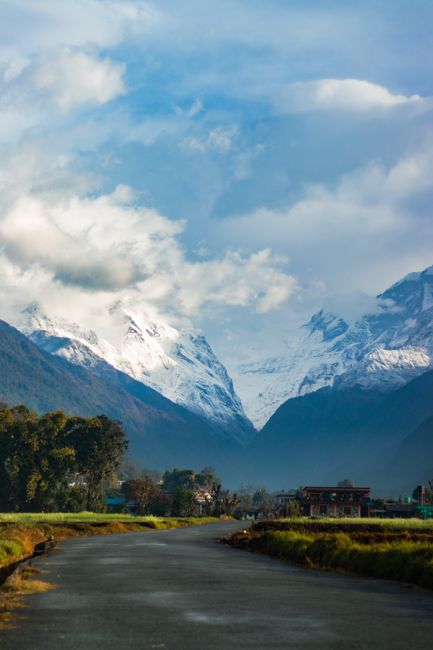
Annapurna Conservation Area Travel Guide
Plan a trek in the Annapurna Conservation Area: the ACAP permit fee, TIMS and the guide rule, Upper Mustang and Nar Phu permits, Poon…
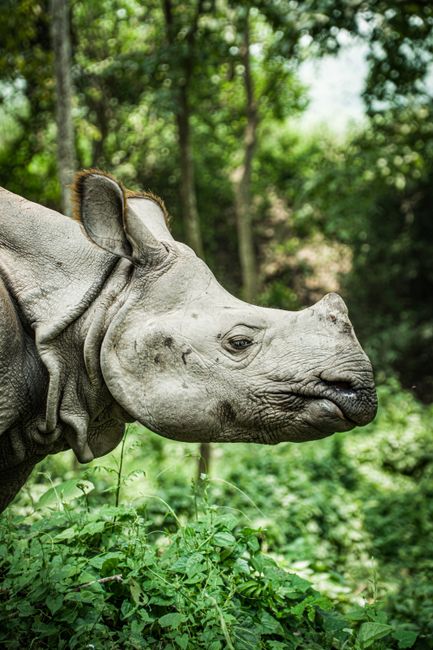
Chitwan National Park Travel Guide
Plan a visit to Chitwan National Park: entry fees and VAT, the licensed guide rule, Sauraha and Meghauli, one-horned rhinos, tigers, gharials and birds,…
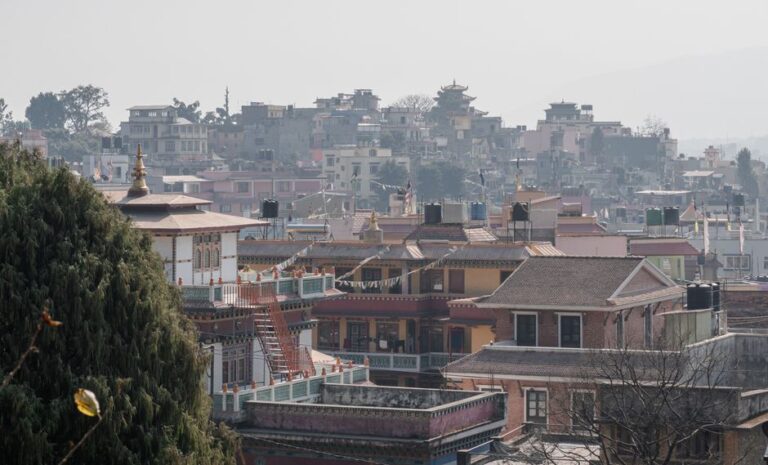
Kathmandu Travel Guide
Plan a trip to Kathmandu: Thamel, the old city, Boudha, Patan and Bhaktapur and where to stay, Kathmandu Durbar Square and the Kumari, Swayambhunath,…
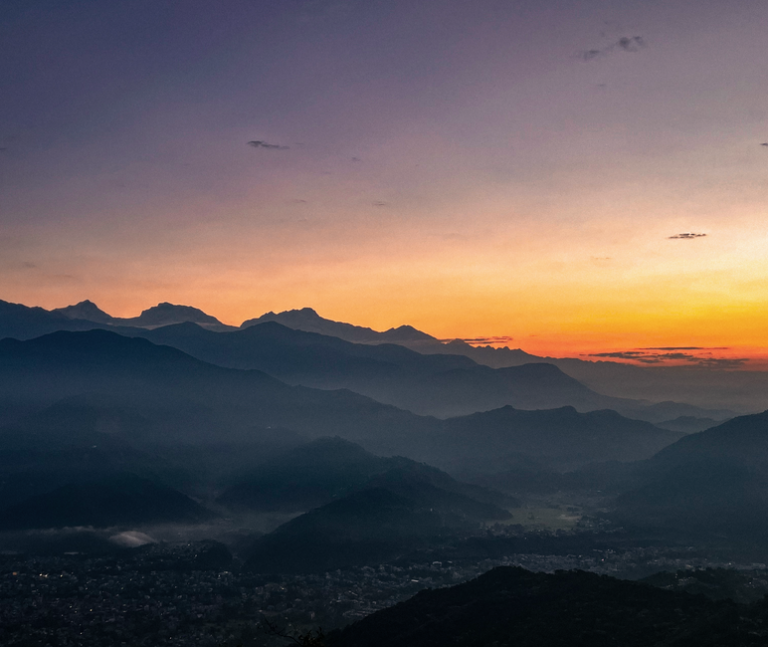
Pokhara Travel Guide
Plan a trip to Pokhara: Lakeside, North Lakeside, Damside and Sarangkot and where to stay, Phewa Lake and Tal Barahi Temple, the World Peace…
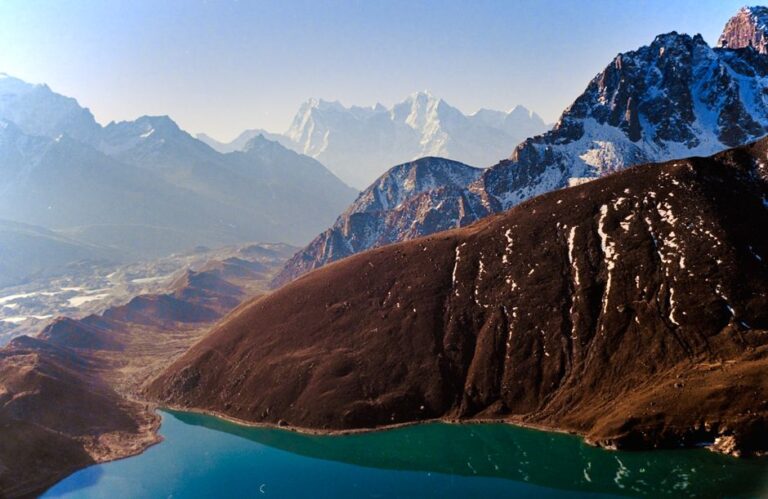
Sagarmatha National Park Travel Guide
Plan a trek in Sagarmatha National Park: park entry and Khumbu Pasang Lhamu municipality fees, TIMS and the guide rule, Lukla and Ramechhap flights,…
Best time to visit Nepal
Nepal’s weather is set by altitude and by the South Asian monsoon. Autumn, from October to November, is the main season: the monsoon has washed the air clean, skies are clear, mountain views are at their best, and the big festivals of Dashain and Tihar fall in this period. Spring, from March to May, is the second peak season: warmer, a little hazier, with rhododendrons flowering in the hills and the Everest climbing season under way. Winter, from December to February, brings cold nights in Kathmandu, snow and closed passes at high altitude, but clear, quiet days for lower treks and the jungle parks. The monsoon lasts roughly from June to September: most of the year’s rain falls in these months, clouds hide the mountains, and landslides and flooding block roads and trails, though the rain-shadow valleys of Mustang and Upper Dolpo stay fairly dry.
The table shows rounded averages from the 1991–2020 climate normals of Nepal’s Department of Hydrology and Meteorology (DHM), as submitted to the World Meteorological Organization (WMO), for a station in each main travel area; the Jomsom figures come from the DHM’s 1991–2020 data on the WMO World Weather Information Service.
| Area (station) | January high / low | July high / low | Rain a year | Wettest months |
|---|---|---|---|---|
| Kathmandu Valley: Kathmandu airport, 1,337 m (4,386 ft) | 19 °C (67 °F) / 3 °C (37 °F) | 29 °C (84 °F) / 20 °C (69 °F) | about 1,500 mm (59 in) | July and August |
| Pokhara, 827 m (2,713 ft) | 20 °C (68 °F) / 7 °C (45 °F) | 30 °C (87 °F) / 22 °C (72 °F) | about 3,870 mm (152 in) | July and August |
| Terai: Simara, about 70 km (45 miles) east of Chitwan | 21 °C (70 °F) / 8 °C (46 °F) | 33 °C (91 °F) / 26 °C (78 °F) | about 1,810 mm (71 in) | July |
| Eastern hills: Okhaldhunga, 1,731 m (5,679 ft), south of the Everest region | 16 °C (60 °F) / 5 °C (42 °F) | 25 °C (77 °F) / 18 °C (64 °F) | about 1,740 mm (69 in) | July and August |
| Mustang: Jomsom, about 2,700 m (8,900 ft) | 10 °C (51 °F) / −2 °C (29 °F) | 23 °C (73 °F) / 14 °C (57 °F) | about 290 mm (12 in) | July and August |
Temperatures fall by roughly 6 °C (11 °F) for every 1,000 m (3,300 ft) you climb, so nights at Namche Bazaar or Manang, around 3,500 m (11,500 ft), are cold for much of the year, and at Everest Base Camp they drop well below freezing even in the trekking seasons.
Nepal month by month
| Month | Weather | Highlights | Crowds and prices |
|---|---|---|---|
| January | Cold nights in Kathmandu; snow and closed passes high up; clear skies | Quiet lower treks; jungle parks; Maghe Sankranti | Low |
| February | Cool and mostly dry; warming late in the month | Losar (Tibetan and Sherpa New Year) in some years; Maha Shivaratri at Pashupatinath | Low to moderate |
| March | Warm in the valleys; spring haze begins | Holi; spring trekking season opens; rhododendrons start in the hills | Rising |
| April | Warm to hot in the lowlands; pre-monsoon storms in the afternoon | Nepali New Year (mid-April); Everest climbing season; rhododendrons in bloom | High on the main treks |
| May | Hot in the Terai; clouds building by midday | Buddha Jayanti in Lumbini; last good weeks for high treks | Moderate |
| June | Monsoon arrives in the east early in the month | Rain-shadow treks in Upper Mustang; green hills | Low |
| July | Peak monsoon; landslides and leeches | Upper Mustang and Dolpo; rice planting | Low |
| August | Very wet; flights and roads often disrupted | Teej and Janai Purnima festivals | Low |
| September | Rains easing late in the month; humid | Indra Jatra in Kathmandu; autumn season starts | Rising |
| October | Clear, dry and mild; the best mountain views | Dashain; peak trekking season | Very high; book flights and lodges ahead |
| November | Clear and dry; colder nights at altitude | Tihar (the festival of lights); Everest views at their sharpest | High |
| December | Cold nights, clear days; snow at high passes | Quieter trails; good for Chitwan and lower treks | Moderate |
The monsoon, landslides and earthquakes
Between about June and September, the monsoon brings most of Nepal’s rain. Landslides and floods regularly block highways, including the main roads from Kathmandu to Pokhara and Chitwan, wash out trails and cut off villages for days; mountain flights are often delayed or canceled when clouds settle in. Late-season storms can still bring heavy rain and snow at altitude in October. Nepal is also one of the world’s most earthquake-prone countries: the magnitude 7.8 Gorkha earthquake of April 25, 2015, killed about 9,000 people and damaged many temples in the Kathmandu Valley, most of which have since been rebuilt.
Festivals and holidays
- Dashain: Nepal’s biggest Hindu festival, 15 days in September or October, when families reunite and offices close for several days; in 2026, the main day, Vijaya Dashami, falls in October. Buses and flights fill up around it.
- Tihar: the five-day festival of lights in October or November, honoring crows, dogs, cows and the goddess Lakshmi, with oil lamps and garlands across the country.
- Holi: the festival of colors, at the full moon in March.
- Buddha Jayanti: the Buddha’s birthday, at the full moon of April or May, celebrated in Lumbini, Boudhanath and Swayambhunath.
- Indra Jatra: an eight-day festival in Kathmandu’s Durbar Square in September, when the Kumari, the living goddess, is carried through the streets in a chariot.
- Losar: the Tibetan, Sherpa and Tamang New Year celebrations, in the winter months, especially at Boudhanath.
- Nepali New Year: around mid-April, the start of the Bikram Sambat year, celebrated with chariot festivals in Bhaktapur.
How long to stay: sample itineraries
- 7 days: Kathmandu and the valley (3 nights), Pokhara with a sunrise at Sarangkot (2) and Chitwan (2); or Kathmandu (2) and a short trek to Poon Hill from Pokhara (4).
- 10 days: Kathmandu, Patan and Bhaktapur (3), Pokhara (2), a 4-day trek to Ghorepani and Poon Hill, and fly back to Kathmandu.
- 14 days: Kathmandu (3), Pokhara (2), a 6-day Annapurna Base Camp or Mardi Himal trek, and Chitwan (2); or Kathmandu (2) and the 12-day Everest Base Camp trek, with a spare day for Lukla weather.
- Three weeks: the Annapurna Circuit over the Thorong La (12–16 days) with Kathmandu, Pokhara and Chitwan; or Everest Base Camp with the Gokyo Lakes, plus the valley and a jungle park.
Entry, money and costs
Visas (last reviewed October 2026)
According to Nepal’s Department of Immigration, citizens of most countries can get a tourist visa on arrival at Tribhuvan International Airport in Kathmandu, Pokhara and Gautam Buddha international airports and the land border entry points, or apply in advance through the department’s online eVisa (ETA) portal or a Nepalese embassy. Tourist visas are multiple entry, and the fees are US$30 for 15 days, US$50 for 30 days and US$125 for 90 days, payable in US dollars, other convertible currency or by card. Visas can be extended at the immigration offices in Kathmandu and Pokhara for US$3 a day (minimum 15 days), up to a total of 150 days per calendar year; overstaying costs an extra US$5 a day. Your passport should be valid for at least six months. Children under 10 (except US citizens) and citizens of SAARC countries for up to 30 days once a year receive free visas, Chinese citizens receive free tourist visas, and Indian citizens do not need a visa but must carry a passport or voter ID card. Citizens of a short list of countries, including Nigeria, Ghana, Ethiopia, Iraq, Syria and Afghanistan, cannot get a visa on arrival and must apply in advance. US citizens can also apply for a five-year reciprocity tourist visa.
Trekking permits and the guide rule
Under the revised Trekkers’ Information Management System (TIMS) rules in force since March 31, 2023, the Nepal Tourism Board states that foreign trekkers on the main routes in Nepal’s protected areas, including the Everest, Annapurna, Langtang, Manaslu, Kanchenjunga and Makalu regions, must be accompanied by a licensed trekking guide and carry a TIMS card issued through a registered trekking agency. The TIMS card costs NPR 2,000 (about US$13) for most foreigners and NPR 1,000 for SAARC citizens; independent trekkers can no longer buy one directly. On top of TIMS, each protected area charges its own entry fee, which you can pay at the Tourist Service Center in Kathmandu or at park entrances; according to the Nepal Tourism Board, foreigners pay NPR 3,000 (about US$19.50) per entry for Sagarmatha (Everest) and Langtang national parks and the Annapurna and Manaslu conservation areas, and NPR 2,000 per day for Chitwan National Park, plus 13% VAT, with children under 10 free. In the Everest region, the local Khumbu Pasang Lhamu Rural Municipality also collects its own NPR 3,000 fee from foreign visitors.
Restricted areas, such as Upper Mustang, Upper Dolpo, Manaslu, Nar-Phu and Tsum, require a special permit from the Department of Immigration, issued through an agency for groups of at least two trekkers with a guide. According to the department, Upper Mustang costs US$50 per person per day, and Manaslu US$100 per week from September to November and US$75 per week from December to August. Climbing peaks require separate permits.
Customs
Visitors may bring personal effects duty-free. Exporting antiques, including statues, paintings and religious objects more than 100 years old, requires a certificate from the Department of Archaeology; reputable shops can arrange it. Drug offenses carry long prison sentences. Flying a drone requires permission from the Civil Aviation Authority and, in many protected areas, the park authorities.
Money and cards
The currency is the Nepali rupee (NPR). On October 4, 2026, Nepal Rastra Bank, the central bank, set the US dollar at about 154 rupees; prices on this site use that rate. ATMs are plentiful in Kathmandu, Pokhara and the larger towns but scarce or absent on the trails, so trekkers carry enough cash for the whole trek; ATMs often limit withdrawals to NPR 25,000–35,000 per transaction and charge a fee. Cards are accepted in mid-range and upscale hotels, restaurants and agencies, often with a surcharge. Indian rupees are widely accepted, but larger Indian notes may be refused, so carry small denominations.
Tipping
Tipping is expected in the trekking and tourism industry. Trekkers usually tip guides and porters at the end of a trek, commonly around 10–15% of the trek cost, shared among the crew. In tourist restaurants, a 10% service charge is often added to the bill; round up taxi fares.
What a trip costs
Prices are approximate, for October 2026, converted at about 154 rupees (NPR) to the US dollar.
| Item | Typical cost |
|---|---|
| Plate of dal bhat in a local restaurant | NPR 300–600 (about US$2–4) |
| Plate of momos (dumplings) | NPR 150–350 (about US$1–2.30) |
| Dinner in a mid-range Thamel or Lakeside restaurant | NPR 1,200–2,500 (about US$8–16) per person |
| Taxi from Kathmandu airport to Thamel | NPR 700–1,200 (about US$4.50–8) |
| Tourist bus, Kathmandu to Pokhara or Chitwan | NPR 1,200–4,000 (about US$8–26) |
| Licensed trekking guide, per day | NPR 4,000–6,000 (about US$26–39) |
| Teahouse room on a trek, per night | NPR 500–2,000 (about US$3–13) |
| TIMS card plus one national park or conservation area entry | NPR 5,000 (about US$32) |
| Mid-range hotel double in Kathmandu, per night | NPR 5,000–12,000 (about US$32–78) |
A comfortable mid-range trip costs roughly NPR 8,000–15,000 (about US$52–97) per person per day, sharing a double room; backpackers using guesthouses, local food and buses can manage on NPR 3,500–5,000 (about US$23–32). On a teahouse trek, budget roughly US$60–100 per person per day including a guide, a share of a porter, food, lodging and permits, rising with altitude, where food is carried up by porters and pack animals.
Getting there and getting around
Airports
Almost all international flights arrive at Tribhuvan International Airport (KTM) in Kathmandu, with direct flights from Delhi and other Indian cities, the Gulf (Doha, Dubai, Abu Dhabi), Istanbul, Bangkok, Kuala Lumpur, Singapore, Hong Kong, China and Bhutan. Two newer international airports, Pokhara International (PHH) and Gautam Buddha International (BWA) near Lumbini, opened in 2023 and 2022 and have few international flights so far. Expect queues at the visa counters in Kathmandu during the peak autumn season.
Land borders
The main land crossings with India, open to foreigners, are Sunauli–Bhairahawa (for Lumbini and Varanasi), Raxaul–Birgunj (for Kolkata and Patna), Kakarbhitta in the far east (for Darjeeling and Sikkim), and Nepalgunj, Dhangadhi and Mahendranagar in the west. Visas on arrival are issued at these entry points. Crossings to China, such as Rasuwagadhi–Kerung, have different rules for foreigners and are usually used only on organized tours to Tibet.
Domestic flights
Domestic flights save long, rough bus journeys: Kathmandu to Pokhara takes about 25 minutes, compared with 6 to 8 hours by road, and flights also serve Bharatpur (for Chitwan), Bhairahawa, Jomsom, Biratnagar and Nepalgunj. The most famous route is the 30-minute flight from Kathmandu to Lukla, the gateway to the Everest region, on small planes landing on a short, sloping mountain runway. During the busy seasons, Lukla flights have in recent years been moved to Manthali Airport in Ramechhap, a four- to five-hour drive from Kathmandu, to ease congestion at Tribhuvan. Mountain flights depend on visibility and are often delayed or canceled; leave one or two spare days at the end of any itinerary that relies on them. All Nepali airlines appear on the UK and EU air safety lists, which bar them from operating in UK and EU airspace.
Buses and roads
Comfortable tourist buses link Kathmandu with Pokhara, Chitwan (Sauraha) and Lumbini, leaving early in the morning from central Kathmandu; journeys are slow because of mountain roads, roadworks and traffic. Local buses and shared jeeps reach almost every district but are crowded, and accidents are frequent. In the cities, use metered taxis (agree the fare first, as meters are rarely used), the ride-hailing apps Pathao and InDrive, or walk.
Driving
Hiring a car with a driver is common and affordable; self-drive rental is rare. Nepalis drive on the left. Roads are narrow, winding and often unpaved, with trucks, buses, livestock and landslides; night driving is best avoided. Renting a motorbike in Kathmandu or Pokhara requires a valid license for that class, and helmets are compulsory.
National parks, trekking regions and World Heritage Sites
Nepal has four UNESCO World Heritage Sites:
- Kathmandu Valley: seven monument zones, including the Durbar Squares of Kathmandu, Patan and Bhaktapur, Swayambhunath, Boudhanath, Pashupatinath and Changu Narayan. See our Kathmandu guide.
- Lumbini, the Birthplace of the Lord Buddha: the Maya Devi Temple, the Ashoka pillar and international monasteries in the western Terai.
- Sagarmatha National Park: Everest and the Khumbu. See our Sagarmatha National Park guide.
- Chitwan National Park: subtropical forest and grassland with rhinos and tigers. See our Chitwan National Park guide.
About a quarter of the country is protected in national parks, conservation areas and wildlife reserves. Beyond the four listed above, the most visited are the Annapurna Conservation Area, Langtang National Park, the Manaslu Conservation Area, Bardia National Park and Shivapuri Nagarjun National Park on Kathmandu’s northern rim. See our hiking guide.
Culture, food and everyday etiquette
Food
The national meal is dal bhat, steamed rice with lentil soup, vegetable curry, pickles and often meat, eaten twice a day and refilled until you are full; on the trails it is the trekker’s staple. Momos, steamed or fried dumplings, are everywhere. The Newar cuisine of the Kathmandu Valley adds bara (lentil pancakes), choila (spiced grilled meat), yomari (sweet rice dumplings) and juju dhau, Bhaktapur’s “king of yogurts.” In the mountains, try thukpa (noodle soup), Tibetan bread and Sherpa stew, and everywhere sweet milky chiya tea; the Thakali dal bhat of the Kali Gandaki valley is famous across the country. Drink bottled, boiled or filtered water.
Etiquette
Greet people with “namaste,” palms pressed together. Remove your shoes before entering homes and temples; walk clockwise around stupas and prayer wheels; and ask before photographing people, cremations or the inside of temples. Some Hindu temples, including the main temple at Pashupatinath, are closed to non-Hindus. Use your right hand to give, receive and eat; do not touch people’s heads or point your feet at people or shrines; and avoid stepping over food. Dress modestly, covering shoulders and knees, especially at religious sites and in villages; public displays of affection are frowned upon.
Safety, health and connectivity
Nepal is generally safe for visitors, and serious crime against tourists is rare. These are the main things to know:
- Altitude sickness: acute mountain sickness (AMS) can affect anyone above about 2,500 m (8,200 ft), regardless of fitness. The Nepal Tourism Board recommends sleeping no more than 300–500 m (1,000–1,600 ft) higher each night above 2,500 m and taking a rest day for every 1,000 m (3,300 ft) gained; if symptoms such as headache, nausea or dizziness get worse, descend. The Himalayan Rescue Association runs aid posts staffed by volunteer doctors at Pheriche on the Everest route and Manang on the Annapurna Circuit in the trekking seasons.
- Trekking rules: trek with a licensed guide where required, carry your permits, register at checkpoints, and buy travel insurance that covers helicopter rescue at the altitude you plan to reach.
- Monsoon and landslides: from June to September, landslides and floods block roads and trails; check conditions before traveling.
- Mountain flights: flights to Lukla, Jomsom and other mountain airstrips depend on the weather and are often delayed; build in spare days.
- Roads: bus and jeep accidents are common, especially on mountain roads and at night; choose reputable tourist buses or private vehicles with experienced drivers.
- Earthquakes: tremors are common; know the safety procedures in your hotel.
- Demonstrations and strikes: political protests and general strikes (bandh) can start at short notice and close roads and shops; stay away from crowds.
- Petty crime: pickpocketing and bag theft occur in Thamel and on crowded buses; keep valuables in your hotel safe.
- Health: dengue fever occurs in the Terai and, increasingly, in the Kathmandu Valley, mainly during and after the monsoon; drink treated water; air pollution in Kathmandu is high in winter and spring.
- Emergencies: call 100 for police, 102 for an ambulance and 101 for fire; the Tourist Police, a unit of Nepal Police based at the Nepal Tourism Board in Kathmandu, can be reached on 1144 and operate around the clock in the Kathmandu Valley and Pokhara.
Mobile coverage from Nepal Telecom (NTC) and Ncell is good in cities and along the main trekking routes up to surprisingly high altitudes, though patchy in deep valleys. Tourist SIM cards are sold at the airport with your passport and a photo, and many teahouses sell Wi-Fi by the hour or day.
Things to do: trekking, temples, jungles and adventure
Trek to Everest Base Camp, Poon Hill or around the Annapurnas; explore the Durbar Squares of the Kathmandu Valley; walk the kora around Boudhanath at dusk; paraglide over Phewa Lake; raft the Trishuli, Seti or Bhote Koshi rivers; take a jeep safari in Chitwan; cycle the valley’s villages; watch the sunrise over the Himalaya from Nagarkot or Sarangkot; and make a pilgrimage to Lumbini. See our hiking, cycling and city sightseeing guides, and our hiking shoes and rain jackets guides for what to bring.
Nepal travel FAQ
Do I need a visa to visit Nepal?
Yes, unless you are an Indian citizen. Most nationalities can get a multiple-entry tourist visa on arrival or apply online in advance: US$30 for 15 days, US$50 for 30 days or US$125 for 90 days.
Can I trek in Nepal without a guide?
Not on most routes. Since March 31, 2023, foreigners trekking in Nepal’s national parks and conservation areas, including the Everest, Annapurna and Langtang regions, must be accompanied by a licensed guide and carry a TIMS card issued through a registered agency.
How much is the TIMS card?
NPR 2,000 (about US$13) for most foreigners and NPR 1,000 for SAARC citizens, bought online through a registered trekking agency.
What is the best time to visit Nepal?
October and November, for clear skies and mountain views, followed by March to May. Winter is good for lower treks and jungle parks; the monsoon, from June to September, is the wettest and least visited season.
Where should I go on a first trip to Nepal?
Kathmandu and the valley’s old cities, Pokhara, a short trek in the Annapurna foothills, and Chitwan National Park.
How hard is the Everest Base Camp trek?
It needs no climbing skills, but it is a long, high trek of about 12 days round trip from Lukla, reaching 5,364 m (17,598 ft) at Base Camp; good fitness and a slow ascent to avoid altitude sickness matter more than experience.
How do I get to Lukla?
By a 30-minute flight from Kathmandu or, in busy seasons, from Manthali Airport in Ramechhap, a four- to five-hour drive from Kathmandu. Flights are often delayed by weather, so plan spare days.
How much money do I need per day in Nepal?
About NPR 8,000–15,000 (US$52–97) per person for a comfortable mid-range trip, NPR 3,500–5,000 (US$23–32) on a budget, and roughly US$60–100 a day on a guided teahouse trek.
Can I use credit cards in Nepal?
In hotels, agencies and upscale restaurants in Kathmandu and Pokhara, usually with a surcharge. Elsewhere and on the trails, cash in Nepali rupees is essential.
Is Nepal safe for tourists?
Generally, yes. The main risks are altitude sickness, mountain road accidents, monsoon landslides, weather-delayed flights and occasional strikes and demonstrations.
How do I avoid altitude sickness?
Above 2,500 m (8,200 ft), sleep no more than 300–500 m higher each night, take a rest day for every 1,000 m gained, drink plenty of water, and descend if symptoms get worse.
What is the time difference in Nepal?
Nepal is on UTC+5:45, 15 minutes ahead of India and 10 hours and 45 minutes ahead of New York in winter (9 hours and 45 minutes in summer), with no daylight saving time.
Can I visit Nepal and Bhutan on the same trip?
Yes. Drukair and Bhutan Airlines fly between Kathmandu and Paro, a flight with views along the Himalaya. See our Bhutan travel guide for the visa and the Sustainable Development Fee.
Sources and last review
Researched and last reviewed on 4 October 2026. Tourist visa fees, extensions, visa on arrival exceptions and free visas, the eVisa portal and restricted-area trekking permit fees: Nepal’s Department of Immigration; the guide and TIMS rules, TIMS fees, protected-area entry fees, the Chitwan VAT, the visa page, altitude guidance, Tourist Police and geography: the Nepal Tourism Board; the Khumbu Pasang Lhamu Rural Municipality fee: the municipality’s Financial Act for 2083/84; the exchange rate: Nepal Rastra Bank; climate normals: Nepal’s Department of Hydrology and Meteorology via the World Meteorological Organization (1991–2020 normals archived by NOAA’s National Centers for Environmental Information, and the WMO World Weather Information Service for Jomsom); flight disruption, the air safety lists, roads, monsoon, earthquakes and demonstrations: the UK government’s travel pages (factual content only). The population figure, festival details, the 2015 earthquake toll, Lukla’s seasonal move to Ramechhap, airline names, land borders, emergency numbers and all typical prices are general references or estimates, flagged for checking. Fees and rules change, so check the official sites before you go.
Plan your trip
Partner links: TravelerCenter may earn a commission if you book, at no extra cost to you.
🇳🇵 Useful Nepali phrases for Nepal
All 38 Nepali phrases: restaurant, hotel, emergencies, romance (printable) →