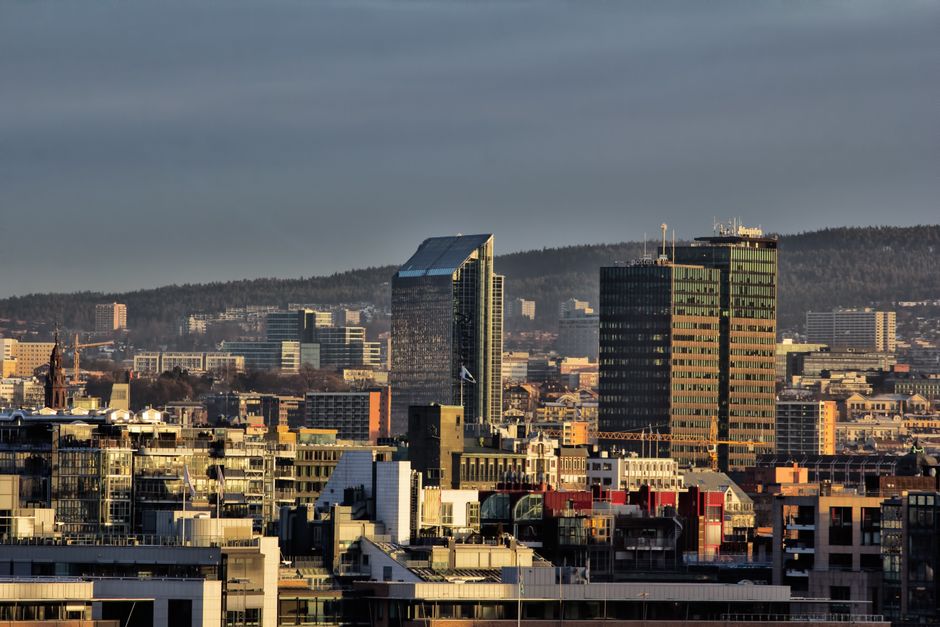
Oslo sits at the head of a long, island-dotted fjord, with forest on three sides and the sea on the fourth. It is a compact, green capital where you can walk on the roof of an opera house, stand in front of Edvard Munch’s The Scream, climb aboard a polar ship that sailed to Antarctica, and finish the day in a floating sauna before jumping into the fjord. Trams climb to the ski jump at Holmenkollen, ferries run to the museum peninsula of Bygdøy, and the old waterfront has become a long promenade of new architecture. Give it two days for the main sights and three or four to add the islands, the forest and a slower pace.
Right now in Oslo
- Wed 6–15°C 43–58°F Partly cloudy
- Thu 8–11°C 46–52°F 13 mm Cloudy
- Fri 5–9°C 40–47°F 5 mm Cloudy
Weather: MET Norway (CC BY 4.0) · Sea temperature: NOAA CoastWatch · Rates: ECB
Top tours in Oslo
See all tours for Oslo →
From local operators, with prices and reviews; you check availability and book on Viator, our partner. We may earn a commission at no extra cost to you. How we earn money
Oslo at a glance
- Best for: museums (Munch, the National Museum, polar and seafaring history on Bygdøy), modern architecture on the waterfront, sculpture in Vigeland Park, fjord saunas and easy forest walks.
- How long: 2 days for the Opera House, Munch, the National Museum, Akershus and Vigeland; 3–4 days to add Bygdøy, Holmenkollen and the islands.
- Best time: late May to early September for long, light evenings and swimming in the fjord; December for Christmas lights and short, crisp days; February and March for skiing in the forest above the city.
- Getting in: Oslo Airport, Gardermoen, is 19 minutes from Oslo Central Station (Oslo S) on the Flytoget airport express and about 23 minutes on Vy’s regional trains.
- Getting around: walk the centre; use Ruter’s metro, trams, buses and ferries for the rest. As of October 2026 a single adult ticket in zone 1 costs NOK 46, and the Oslo Pass costs from NOK 580 for 24 hours.
- Good to know: the Viking Ship Museum is closed until the new Museum of the Viking Age opens, planned for 2027. Norway is in the Schengen area, uses the Norwegian krone (NOK) and type C/F plugs, and almost everything is paid by card.
Oslo, area by area
Central Oslo is small. From Oslo S you can walk to the Opera House in five minutes, to the City Hall and the harbour in fifteen, and to the Royal Palace up the main street, Karl Johans gate, in twenty. The metro (T-bane) runs under the centre and up into the hills; trams and buses fill the gaps.
Sentrum and Karl Johans gate
The main street climbs from the station past the Cathedral, the Parliament (Stortinget) and the National Theatre to the Royal Palace and its park. Shops, department stores and many hotels are here. Best for: first visits and short stays.
Bjørvika: the Opera House and Munch
The former container port east of the station is now Oslo’s cultural waterfront: the white marble Opera House, the tall MUNCH museum, the Deichman main library and the “Barcode” row of office towers, with harbour baths and saunas along the quays. Best for: architecture, evening walks and modern hotels near the station.
Aker Brygge and Tjuvholmen
West of the City Hall, a former shipyard has become a long promenade of restaurants, bars and apartments, ending at Tjuvholmen with the Astrup Fearnley Museum of modern art, a small beach and a sculpture park. The National Museum and the ferries to the islands and Bygdøy are close by. Best for: waterfront dining, sunsets and the boat piers.
Grünerløkka and the Akerselva river
North of the centre, a former working-class district of tenement blocks is now Oslo’s café and vintage-shop quarter, with Sunday markets and the Mathallen food hall. A riverside path follows the Akerselva past waterfalls and old mills. Best for: food, nightlife and a more local feel.
Frogner, Majorstuen and the west
Elegant 19th-century apartment blocks, embassies, Vigeland Park in Frogner Park and the boutiques of Bogstadveien. The Holmenkollen metro line starts at Majorstuen. Best for: quiet stays and Vigeland at dawn.
Top things to see in Oslo
Prices and hours below were checked on the official sites in October 2026. Most museums are free for children under 18 or charge a small child fare. Prices change, so check before you go.
The Opera House roof
Opened in 2008, the Oslo Opera House rises out of the harbour like a sloping iceberg of white Italian marble and glass. Its great trick is the roof: you can walk straight up from the waterfront to the top, free of charge, at any time of day, for views over the fjord, the islands and the new Bjørvika skyline. Inside, the lobby and the oak-clad walls are worth a look, and guided tours and performances by the Norwegian National Opera and Ballet are ticketed. The marble is slippery in rain and ice, so wear shoes with grip.
MUNCH
The 13-storey MUNCH museum, opened in 2021 next to the Opera House, holds the largest collection of Edvard Munch’s work in the world, left to the city by the artist himself. Versions of The Scream are shown in rotation (the fragile painted and drawn versions take turns), alongside Madonna, his self-portraits and huge late canvases, and changing exhibitions of other artists. The upper floors have views over the fjord and a bar on the top floor. Tickets: as of October 2026, adults pay NOK 220, visitors under 25 pay NOK 100 and under-18s are free. It opens 10:00–18:00 from Sunday to Tuesday and 10:00–21:00 from Wednesday to Saturday, with free entry on the first Wednesday evening of the month (18:00–21:00) except in July, August and September.
The National Museum
Since 2022, Norway’s art, architecture and design collections have been under one roof in the National Museum by the City Hall, the largest art museum in the Nordic countries. Highlights include the Munch room with a painted version of The Scream and The Dance of Life, Norwegian landscape painting, a large design and crafts collection and the Light Hall on the top floor for temporary exhibitions. As of October 2026, adults pay NOK 220, under-25s NOK 100, students under 30 NOK 120 and under-18s are free. It opens 10:00–20:00 on Tuesday and Wednesday and 10:00–17:00 from Thursday to Sunday, and is closed on Mondays.
Akershus Fortress and the City Hall
The medieval castle and fortress of Akershus, begun around 1300 and rebuilt as a Renaissance palace by King Christian IV, guards the harbour. The grounds and ramparts are free and open daily, with fine views of Aker Brygge and the fjord; the castle interior, the Norwegian Resistance Museum and the Armed Forces Museum are inside the walls. Across the harbour, the red-brick City Hall, where the Nobel Peace Prize is awarded each December, has a main hall covered in murals and is usually free to visit.
Vigeland Park
Inside Frogner Park, Gustav Vigeland’s sculpture park has more than 200 works in bronze, granite and wrought iron, from the bridge of human figures (with the famous Angry Boy) to the 14-metre Monolith, carved from a single block of granite with 121 intertwined bodies. It is free and always open, and it is a favourite place for a morning run or a summer picnic. The Vigeland Museum, the sculptor’s former studio, is nearby. Take tram 12 or walk from Majorstuen.
Holmenkollen
The ski jump at Holmenkollen, on the forested ridge above the city, has hosted competitions since 1892; the current steel jump was built for the 2011 World Championships. The Ski Museum at its base covers 4,000 years of skiing and polar expeditions, and a lift and stairs take you to the top of the jump tower for a view over the whole Oslofjord. As of October 2026, a combined ticket for the museum and tower costs NOK 200 for adults and NOK 100 for children aged 6 to 17; it opens daily 10:00–16:00 from October to April and 10:00–17:00 from May to September. The tower is closed for maintenance from 13 to 16 October 2026. Take metro line 1 to Holmenkollen station and walk about 10 minutes uphill; carry on to Frognerseteren for forest trails and a classic timber restaurant.
Other sights
- Oslo City Hall
- Oslo Opera House
Castles and forts
- Akershus Fortress
Palaces
- Royal Palace, Oslo
Museums
- Fram Museum
- Munch Museum
Parks and gardens
- Frogner Park (Vigeland Sculpture Park)
Bygdøy: the museum peninsula
Bygdøy, a green peninsula just west of the centre, has royal farmland, beaches and some of Norway’s best-known museums. Plan a half day for two museums, a full day for three or four.
The Viking ships: closed until 2027
The old Viking Ship Museum, home of the Oseberg, Gokstad and Tune ships, closed in 2023 and is being rebuilt and enlarged as the Museum of the Viking Age. As of October 2026 the museum says it will reopen in 2027 (the planned date reported is 1 November 2027, which may still move), and the first loads of objects have been moved into the new building. The ships cannot be seen in the meantime. To see Viking swords, jewellery and other finds now, visit the Historical Museum in the city centre, which belongs to the same university museum.
The Fram Museum
You can walk the decks and cabins of the Fram, the wooden polar ship used by Fridtjof Nansen and Roald Amundsen, who sailed it to Antarctica before becoming the first to reach the South Pole in 1911. A second hall holds the Gjøa, the first ship through the Northwest Passage. As of October 2026, adults pay NOK 180 and children and students NOK 70; a joint ticket with the Kon-Tiki Museum is available. It opens daily 10:00–17:00 from October to April and 9:30–18:00 from May to September.
The Kon-Tiki Museum
Across the car park, the Kon-Tiki Museum tells the story of Thor Heyerdahl’s 1947 voyage across the Pacific on a balsa raft, with the original Kon-Tiki and the reed boat Ra II. As of October 2026, adults pay NOK 180, children aged 6 to 17 and students NOK 70, and families NOK 400. It opens daily 10:00–17:00 from September to April, 10:00–18:00 in May and 9:30–18:00 from June to August. The Norwegian Maritime Museum is next door.
The Norwegian Folk Museum
Norsk Folkemuseum is an open-air museum of more than 150 buildings moved from all over Norway, including a stave church from about 1200, turf-roofed farmhouses and a 19th-century Oslo street, plus indoor exhibitions on folk costume and Sámi culture. As of October 2026, adults pay NOK 200, students NOK 140, seniors NOK 160 and under-18s are free. Winter hours (5 October to 30 April) are 11:00–16:00, Tuesday to Sunday, closed on Mondays; in summer it opens daily 10:00–17:00.
Getting to Bygdøy
From April to October, the Bygdøy ferries leave City Hall Pier 3 about every 20 minutes (roughly 09:50–17:20), calling at Dronningen for the Folk Museum and at Bygdøynes for the Fram, Kon-Tiki and Maritime museums. As of October 2026, a one-way ticket costs NOK 70 at the ticket office or NOK 75 on board, and a day ticket NOK 115. Ruter tickets are not valid on these boats, but the Oslo Pass is. All year round, bus 30 runs from the centre to the museums on an ordinary Ruter ticket.
The fjord, the islands and the saunas
Oslo’s best free entertainment is the water. In summer, Ruter’s island ferries from Aker Brygge (on an ordinary ticket) hop between Hovedøya, with monastery ruins and swimming spots, Gressholmen, Lindøya and Langøyene, which has a long sandy beach. Harbour baths at Sørenga and Tjuvholmen let you swim right in the city. Sightseeing cruises leave from the City Hall piers all year; see our boat trips guide for what to look for in a fjord trip.
Floating saunas are now part of Oslo life all year round, with a cold plunge into the fjord between rounds. Oslo Badstuforening, a non-profit association, runs several saunas, including at Langkaia by the Opera House, with low-cost drop-in sessions. KOK has wood-fired floating saunas at Aker Brygge and Langkaia: as of October 2026, a shared 90-minute session for up to eight people starts at NOK 270 per person, and private saunas and sauna boats cost more. Prices are dynamic, so book online. Bring a swimsuit, towel and flip-flops.
Activities and best months
- Boat tripsIsland hopping in the Oslofjord is one of Visit Norway's Oslo suggestions, along with quiet fjord tours on electric catamarans. · source
- City sightseeingVisit Norway highlights the MUNCH museum and the National Museum, two of Europe's biggest art museums, the Oslo Opera House (walk on its roof) and the Vigeland sculpture park at Frogner, and calls Oslo one of the most walkable capitals in the world. · source
Day trips from Oslo
- Nordmarka forest: take metro line 1 to Frognerseteren or line 5 to Sognsvann for lakeside trails in summer and floodlit cross-country ski tracks in winter, within 30 minutes of the centre. See our hiking guide.
- Fredrikstad: a star-shaped fortified old town about an hour south by train.
- Towards the fjords: the Bergen Line leaves Oslo S for Bergen (about 6 hours 30 minutes to 7 hours 30 minutes), crossing the Hardangervidda plateau; change at Myrdal for the Flåm Railway, or book Norway in a Nutshell, which starts from Oslo too. We cover Bergen and Flåm in their own guides.
Nearby destinations
- Flåm225 km
- Skagen244 km
- Gothenburg255 km
Getting to Oslo
By air. Oslo Airport, Gardermoen, is about 50 km north of the city. The Flytoget airport express runs to Oslo S in 19 minutes, every 10 minutes for most of the day (every 20 minutes early, late, at weekends and in school holidays); as of October 2026 an adult single costs NOK 276, and children, students, young people and seniors pay NOK 138. Vy regional and local trains (R10, R11 and R12) take about 23 minutes, with more than 60 departures on weekdays from about 04:54 to 00:24; they are cheaper, at around NOK 130 for an adult single as of October 2026 (check the Vy or Ruter app for the exact fare). The Oslo Pass covers the Vy trains but not Flytoget.
By train. Oslo S has trains to Bergen (the Bergen Line), Trondheim (about 6 hours 30 minutes), Stavanger via Kristiansand and Stockholm and Gothenburg in Sweden. By sea. Overnight ferries link Oslo with Kiel in Germany and Copenhagen and Frederikshavn in Denmark, docking a short walk or tram ride from the centre.
Getting around Oslo and the Oslo Pass
Ruter runs the metro, trams, buses and the local island ferries on one ticket system. Buy tickets in the Ruter app (or at machines and kiosks); you cannot pay cash on board. As of October 2026, a single adult ticket for zone 1, which covers the whole city including Holmenkollen and Bygdøy, costs NOK 46 and is valid for an hour; children aged 6 to 17 pay NOK 19 and under-6s ride free. A 24-hour zone 1 ticket costs about NOK 137. City bikes (Oslo Bysykkel) are available from spring to late autumn.
The Oslo Pass gives free entry to more than 30 museums and attractions, including MUNCH, the National Museum, the Fram, Kon-Tiki and Folk museums, Holmenkollen and the Bygdøy ferries, plus free public transport in all Ruter zones. As of October 2026, it costs NOK 580, 845 and 995 for 24, 48 and 72 hours for adults; NOK 290, 420 and 495 for children aged 6 to 17; and NOK 465, 675 and 795 for seniors aged 67 and over. It usually pays off if you visit three paid museums in a day. Buy it in the Oslo Pass app.
When to go and how long to stay
Oslo has a sheltered inland climate for Norway: warm, bright summers and cold, short winter days with snow in the hills. In June the sun sets after 22:30 and it never gets fully dark; in December there are only about six hours of daylight. The table uses MET Norway’s 1991–2020 climate normals for Oslo-Blindern, on the university campus 3 km north of the centre (official sunshine figures for this station were not available).
| Season | Average daily high / low | Rain per month | Days with rain | What it’s like |
|---|---|---|---|---|
| Winter (Dec–Feb) | 0.1–1.1 °C / −4.7 to −3.7 °C | 46–58 mm | 8–10 | Cold and dark, often snowy; skiing in Nordmarka, Christmas markets |
| Spring (Mar–May) | 5.3 °C rising to 16.7 °C / −2.1 to 6.8 °C | 41–60 mm | 7–9 | Driest months; long evenings and 17 May National Day parades |
| Summer (Jun–Aug) | 20.4–22.7 °C / 10.8–13.4 °C | 80–103 mm | 10–11 | Warm and light, with showers; swimming, islands, festivals |
| Autumn (Sep–Nov) | 16.4 °C falling to 4.4 °C / 8.6 to 0 °C | 82–93 mm | 9–11 | Golden forests in September, then wetter and darker |
Oslo gets about 836 mm of rain a year on 115 days, and the average temperature is 7 °C. July is the warmest month and January the coldest. Many attractions keep shorter hours from October to April, and the Bygdøy ferries stop at the end of October.
Oslo in 2 days
Day 1: the Opera House roof early, MUNCH, a walk along the harbour promenade to Akershus Fortress and the City Hall, and dinner at Aker Brygge or Tjuvholmen. Day 2: the National Museum in the morning, then Bygdøy by ferry or bus 30 for the Fram and Kon-Tiki or the Folk Museum, and a fjord sauna at sunset.
Oslo in 4 days
Add Vigeland Park and Holmenkollen on day 3, with a walk from Frognerseteren into the forest, and an island day in summer (or a day trip to Fredrikstad) on day 4. Grünerløkka and the Akerselva river path fill any spare evening.
Weather month by month
Averages from MET Norway normals 1991–2020, Oslo – Blindern · Last reviewed 4 Oct 2026
Where to stay in Oslo
- Around Oslo S and Bjørvika: large modern hotels next to the airport trains, the Opera House and MUNCH; the most practical base.
- Sentrum and Karl Johan: classic and business hotels within walking distance of everything.
- Aker Brygge and Tjuvholmen: design hotels on the water; the priciest area.
- Grünerløkka: smaller hotels and apartments among cafés and bars, 10–15 minutes by tram from the centre.
Oslo hotel prices are often lower at weekends and in July, when business travel stops, and higher during big conferences and events. Breakfast is usually included and generous.
Practical tips for Oslo
- Pay by card: Norway is close to cashless; contactless cards and phones work almost everywhere, including at kiosks and market stalls.
- Budget for food and drink: eating out is expensive. Lunch specials, bakeries, the Mathallen food hall and supermarket picnics help; alcohol stronger than 4.7% is sold only in Vinmonopolet shops.
- Download the apps: Ruter for tickets and journeys, the Oslo Pass app if you buy the pass, and Vy or Entur for trains.
- Check the Viking ships: they will not be on show until the Museum of the Viking Age opens, planned for 2027.
For more ideas on visiting museums with timed tickets and city passes, see our city sightseeing guide.
What to pack for Oslo
Layers in every season and a light rain jacket for summer showers; a warm coat, hat, gloves and shoes with good grip from November to March, when pavements and the Opera House roof can be icy. Bring a swimsuit for the saunas and harbour baths, comfortable walking shoes or hiking shoes for the forest trails, and a plug adapter for type C/F sockets if you come from outside mainland Europe.
What to pack
- City walking shoesLisbon and Porto are steep, with polished limestone cobbles that get slippery, so grippy soles matter.
- Day packs and anti-theft bagsA small zipped or anti-theft bag makes crowded trams and viewpoints less stressful.
- Dry bags and phone pouchesSpray soaks phones and cameras on open boats to the Algarve caves and on whale-watching trips.
- Fleeces and warm layersIt is cooler at sea than on land, especially on morning whale-watching trips.
- Rain jacketsA windproof, waterproof shell keeps you warm on open boats, where wind and spray cool you quickly.
- Reef-friendly sunscreenSun reflects off the water on cruises and cave tours.
- Travel adapters and convertersPortugal uses Type C and F sockets at 230 V, so most visitors from outside Europe need an adapter.
- Water shoesKayak and small-boat trips to the Algarve grottoes land on rock and wet sand.
Oslo travel FAQ
Is the Viking Ship Museum in Oslo open?
No. It closed in 2023 and is being rebuilt as the Museum of the Viking Age, which plans to open in 2027. Until then, see Viking finds at the Historical Museum in the city centre.
How much is the Oslo Pass in 2026?
As of October 2026, NOK 580 for 24 hours, NOK 845 for 48 hours and NOK 995 for 72 hours for adults, with lower prices for children and seniors. It includes public transport, more than 30 museums and the Bygdøy ferries.
Is the Oslo Pass worth it?
Usually, if you visit three paid museums in a day, for example MUNCH, the National Museum and the Fram. On a day of free sights (the Opera House roof, Vigeland Park, Akershus), a Ruter ticket is cheaper.
How do I get from Oslo Airport to the city centre?
Take Flytoget (19 minutes, NOK 276 for adults as of October 2026) or a cheaper Vy regional train (about 23 minutes) to Oslo S. Both leave from the station under the arrivals hall.
Can you walk on the roof of the Oslo Opera House?
Yes, free of charge and at any time. Walk up the marble slope from the waterfront for views over the fjord; take care when it is wet or icy.
Where can I see The Scream in Oslo?
At both MUNCH, which shows its versions in rotation, and the National Museum, which has the famous 1893 painted version in its Munch room.
How do you get to the Bygdøy museums?
By ferry from City Hall Pier 3 from April to October (NOK 70 one way at the ticket office, not valid with Ruter tickets), or all year by bus 30 on a normal Ruter ticket.
How much does public transport cost in Oslo?
As of October 2026, a single adult ticket for zone 1 costs NOK 46 and lasts an hour; children pay NOK 19. Buy tickets in the Ruter app before boarding.
Can you swim in the Oslofjord?
Yes. In summer people swim at harbour baths in the city and beaches on the islands; in winter, they dip between rounds at the floating saunas. The water is around 18–20 °C at best in July and August.
How many days do you need in Oslo?
Two days for the main museums and the waterfront; three or four to add Holmenkollen, the forest and the islands.
When is the best time to visit Oslo?
Late May to early September for warm, light days and the islands; December for Christmas atmosphere; February and March for snow and skiing in the hills above the city.
Sources
- © OpenStreetMap contributors · ODbL · fetched 4 Oct 2026
- Wikidata · CC0 · fetched 4 Oct 2026
Sources and last review
Researched and last reviewed on 4 October 2026. Museum prices and hours: MUNCH, the National Museum, the Fram Museum, the Kon-Tiki Museum, Norsk Folkemuseum and Holmenkollen; the Viking ships: the Museum of the Viking Age; the Oslo Pass: VisitOSLO; the Bygdøy ferries: Visit Norway; saunas: KOK; local transport: Ruter; airport trains: Flytoget and Vy; climate: MET Norway 1991–2020 normals for Oslo-Blindern (WMO collection). The Vy airport fare, the Ruter 24-hour price and the reported Viking museum opening date come from secondary sources and are flagged for checking. Prices, timetables and rules change, so check the official links before you go.
Plan your trip
Partner links: TravelerCenter may earn a commission if you book, at no extra cost to you.
🇳🇴 Useful Norwegian phrases for Oslo
All 38 Norwegian phrases: restaurant, hotel, emergencies, romance (printable) →