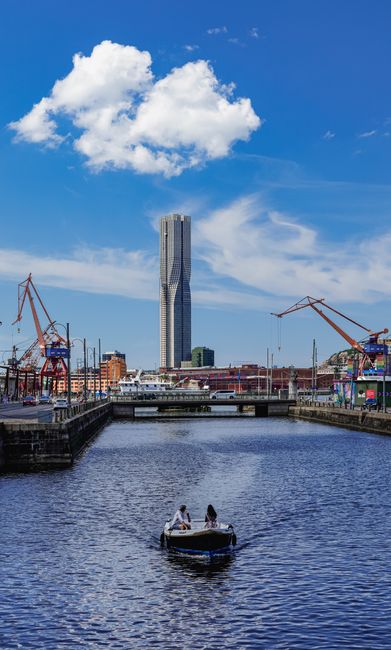
Gothenburg (Göteborg) is Sweden’s second city and its friendliest: a relaxed port on the west coast where the Göta älv river meets the sea, with Dutch-style canals, tree-lined boulevards, cafés serving cinnamon buns the size of a plate and some of the best seafood in Scandinavia. You come to ride the roller coasters at Liseberg, wander the wooden houses of Haga, eat shrimp sandwiches by the fish market everyone calls the “fish church”, and above all to take a tram and a ferry out to the car-free islands of the southern archipelago, all on an ordinary city transport ticket. Add the old fortress town of Marstrand, an hour up the coast, and you have three or four easy, outdoorsy days that feel quite different from Stockholm.
Right now in Gothenburg
- Wed 9–15°C 49–60°F 5 mm Partly cloudy
- Thu 9–13°C 49–55°F 7 mm Cloudy
- Fri 6–11°C 42–52°F 4 mm Rain
Weather: MET Norway (CC BY 4.0) · Sea temperature: NOAA CoastWatch · Rates: ECB
Top tours in Gothenburg
See all tours for Gothenburg →
From local operators, with prices and reviews; you check availability and book on Viator, our partner. We may earn a commission at no extra cost to you. How we earn money
Gothenburg at a glance
- Best for: a laid-back city break, seafood and fika, Liseberg amusement park, island-hopping in the archipelago, summer swimming from the rocks, festivals and Christmas lights.
- How long: 2 days for the city, Haga and Liseberg; 3–4 days to add the southern archipelago and Marstrand.
- Best time: June to August for long days, swimming and the islands; August for Way Out West and the city’s free culture festival; mid-November to late December for Christmas at Liseberg.
- Getting in: trains from Stockholm take about 3 hours, from Oslo just under 4 hours and from Copenhagen about 3 hours 30 minutes; Landvetter Airport is about 30–40 minutes by airport bus; Stena Line ferries arrive from Frederikshavn in Denmark and Kiel in Germany.
- Getting around: trams, buses and ferries run by Västtrafik, all on the same ticket, including the archipelago boats. As of October 2026, a single ticket in zone A costs from SEK 38 and a 24-hour ticket from SEK 125.
- Before you go: Sweden is almost cashless, so bring a contactless card; and if you arrive from Denmark or Germany, carry your passport or ID card, as Sweden runs temporary police checks at its borders.
Gothenburg, area by area
King Gustav II Adolf founded Gothenburg in 1621 and brought in Dutch engineers to build it, so the old centre is ringed by a canal, the Vallgraven. The central station sits by the river on the north side; Liseberg lies to the south-east, Haga to the south-west, and the trams run out to the sea at Saltholmen, where the island ferries leave.
Inom Vallgraven and the harbour
The old town inside the canal: Gustav Adolfs torg with the town hall and the statue of the founder, the Stora Saluhallen market hall on Kungstorget, the cathedral, Feskekôrka on the canal bank, and shopping streets such as Kungsgatan. North of it, the riverfront runs past the red-and-white Lilla Bommen tower (“the Lipstick”), the opera house and the Maritiman ship museum. Best for: first visits, short stays and train travellers.
The Avenyn, Götaplatsen and Liseberg
Kungsportsavenyn, the Avenyn, is the city’s boulevard of bars and restaurants, climbing to Götaplatsen and Carl Milles’ bronze Poseidon. Liseberg and Universeum are a few minutes east. Best for: nightlife, museums and families.
Haga, Linné and Majorna
Haga is the city’s best-preserved old working-class district, now cafés and small shops along the cobbled Haga Nygata. Linnégatan, just west, is lined with restaurants, and Majorna, towards the sea, is a laid-back area of wooden houses and the view from Masthugget Church. Across the river, the old shipyards of Lindholmen have waterfront hotels, linked by the free Älvsnabben ferry. Best for: cafés, local life and good-value apartments.
Top things to see in Gothenburg
Prices and hours below were checked on the official sites in October 2026. They change, so check before you go.
Liseberg
Opened in 1923, Liseberg is Scandinavia’s best-known amusement park and Gothenburg’s favourite day out: about 40 rides and attractions in a hillside garden right in the city, including Balder, a wooden roller coaster often voted among the best in the world, Helix, Scandinavia’s longest and fastest coaster, and the AtmosFear free-fall tower. Next door, Oceana is Liseberg’s indoor water world. The park opens in three seasons: summer (roughly April to September), Halloween (2 October to 1 November 2026) and Christmas at Liseberg, from 14 November to 30 December 2026, when the hill glitters with millions of lights, a Christmas market, ice skating and traditional Swedish Christmas food; the opening day runs 12:00–22:00.
Tickets. Entry and the ride pass are sold separately, prices change by date, and online is always cheaper than the gate. As of October 2026, Halloween entry costs from SEK 125 online, entry with a ride pass from SEK 425 and a ride pass alone from SEK 335. Christmas tickets go on sale in October; check the calendar on liseberg.se for opening days and hours.
Haga and Skansen Kronan
Haga’s 19th-century landshövdingehus, with a stone ground floor and two wooden storeys above (a trick to get around fire rules), line Haga Nygata, a pedestrian street of cafés, vintage and design shops. It is the place for fika: Café Husaren is famous for its Hagabulle, a cinnamon bun as big as a dinner plate. Climb the steps at the end of the street to Skansen Kronan, a 17th-century fortress tower crowned with a gilded crown, for a view over the rooftops to the harbour. Haga hosts a Christmas market on Advent weekends.
Feskekôrka and the seafood
The “fish church” on the Rosenlund canal has been Gothenburg’s fish market since 1874, in a hall built to look like a Gothic church. After several years of renovation it has reopened with fish counters, a smokehouse, new restaurants and bars and a big terrace facing the canal: come for a lunch of west-coast shrimp or fish soup. The Stora Saluhallen market hall on Kungstorget has more deli counters and lunch stalls.
Universeum
Sweden’s national science centre, next to Liseberg, fills ten floors with an indoor rainforest where birds and monkeys move around you, an ocean zone with sharks and rays, reptiles, space and chemistry labs and a dome cinema. It is excellent with children and on rainy days. As of October 2026, it is open every day of the year, 10:00–18:00; prices vary by date and are SEK 30 cheaper online, and under-3s go free.
Götaplatsen and the Gothenburg Museum of Art
At the top of the Avenyn, the Gothenburg Museum of Art (Göteborgs konstmuseum) has one of the finest collections of Nordic art from around 1900, including Carl Larsson, Anders Zorn and Edvard Munch. The Museum of Gothenburg tells the city’s story from the Vikings to the East India Company, and the World of Volvo shows off the carmaker founded here. For green space, Slottsskogen, a big park near Linné with a small free animal park, and the Botanical Garden next door are lovely on a fine day.
Other sights
- Feskekôrka
Historic centres
- Haga
Museums
- Gothenburg Museum of Art
Monuments
- Skansen Kronan
Zoos and aquariums
- Universeum
Theme parks
- Liseberg
Nature
- Vinga
The southern archipelago: car-free islands by tram and ferry
Gothenburg’s greatest treat is that its archipelago is part of the city transport network. Take tram 11 (and tram 9 in summer) to Saltholmen, about 35 minutes from the centre, or the faster bus 114 (Ö-snabben, about 25 minutes), and step onto a Västtrafik ferry. A zone A ticket covers the whole trip by tram, bus and boat. The islands are car-free: people get around on foot, by bike and with small electric carts, past red and white wooden houses, smooth granite rocks for sunbathing, small sandy coves and harbour cafés. Ferries to the larger islands usually leave about once an hour, more often in summer.
- Ferry lines from Saltholmen: line 281 to Köpstadsö, Styrsö, Donsö and Vrångö; line 282 to Köpstadsö, Styrsö and Brännö; line 283 to Asperö and Brännö; line 284 to Knarrholmen and Stora Förö. All year, a few boats on lines 281 and 282 also leave from Stenpiren in the city centre, taking about 1 hour 35 minutes.
- Asperö: the first stop, with easy swimming spots for a quick trip on a sunny day.
- Brännö: cafés, swimming rocks and a summer dance pier, with a bridge to Galterö and its nature reserve of bare, bird-filled rocks.
- Köpstadsö: the smallest, with about 100 residents and lanes so narrow that the only vehicle allowed is the wheelbarrow.
- Styrsö: the hub of the southern islands, with shops, cafés, restaurants and a hotel, and beaches, piers and cliffs for swimming.
- Donsö: a working shipping island with restaurants and a climb to Radarberget for views across the archipelago.
- Vrångö: the southernmost, about 380 year-round residents, known for its nature reserve and the best sandy beaches of the group.
- Vinga: Gothenburg’s westernmost point, a bare lighthouse island where the singer and poet Evert Taube grew up, reached only by summer boat tours, not regular ferries.
The northern archipelago (Hönö, Öckerö, Björkö and smaller islands) is different: bigger, with roads, reached by bus and a car ferry from Lilla Varholmen on Hisingen; regular Västtrafik tickets cover these ferries too. On summer weekends, the boats to the southern islands fill up, so go early, and bring water, sun cream and a picnic, as island shops are small.
Food, fika and festivals
Gothenburg calls itself Sweden’s seafood capital. Order a räksmörgås (an open sandwich piled with hand-peeled shrimp), fish soup or, in autumn, west-coast lobster and mussels. The city has several Michelin-starred restaurants and plenty of relaxed bistros around Linnégatan and the Avenyn.
- Göteborg Film Festival: the biggest film festival in the Nordic countries, every year in late January and early February.
- Way Out West 2027: the city’s big music festival, in Slottsskogen park, runs from 12 to 14 August 2027. Three-day tickets sold so fast that sales are paused until the first artists are announced in autumn 2026.
- Gothenburg Culture Festival (Kulturkalaset): several days of free concerts, theatre and street events across the centre, usually in mid-August; check the 2027 dates closer to the time.
- Christmas: Christmas at Liseberg (14 November to 30 December 2026), the Haga Christmas market on Advent weekends, and the Paddan boats’ Christmas trips to Liseberg.
Activities and best months
- Beaches and swimmingThe southern islands are made for swimming: Asperö has many good swimming spots, Styrsö has everything from child-friendly sandy beaches to piers and flat rocks, and Vrångö, the southernmost island, has nature reserves and excellent sandy beaches. All are reached by tram and ferry on an ordinary city ticket. · source
- Boat tripsThe car-free southern archipelago is part of the city's public transport: tram 11 (and line 9 in summer, about 35 minutes) or bus 114 (about 25 minutes) to Saltholmen, then Västtrafik ferries to Styrsö, Brännö, Donsö, Vrångö and other islands, usually about hourly and more often in the high season. One zone A ticket covers tram, bus and ferry; a few boats also leave Stenpiren in the centre, and free car ferries from Lilla Varholmen serve the northern archipelago. · source
- City sightseeingGöteborg & Co's must-dos are Liseberg (42 rides and attractions), the cobbled Haga district with its cafés, the Gothenburg Museum of Art at Götaplatsen (three stars in the Michelin Green Guide), Feskekôrka fish market hall, the Universeum science centre and the 17th-century Skansen Kronan fortress with its view over the city. Parks such as Trädgårdsföreningen, the Botanical Garden and Slottsskogen round it off. · source
Day trips from Gothenburg
Marstrand
About 45 km north-west of the city, Marstrand is one of the west coast’s most famous summer towns: a car-free island of pastel wooden villas, narrow lanes, sailing boats and cliff swimming, watched over by the massive Carlsten Fortress, begun in 1658. Leave the car or bus at Koön and cross on the small passenger ferry, a ride of a couple of minutes. Västtrafik buses from Gothenburg’s Nils Ericson Terminal take about an hour to the ferry, and in summer a direct boat sails from the city harbour; check times on the Västtrafik planner.
Carlsten Fortress. As of October 2026, entry costs SEK 120 for adults and SEK 60 for children aged 5 to 15 (under-5s free), and includes a 45-minute guided tour in season. In 2026 it opened daily from June to late August (10:30–18:00 in July and early August, 11:00–17:00 in June and late August) and at weekends in spring and September; outside those times, call ahead (+46 303 611 67). You can also sleep inside the walls at the fortress’s Soldathotellet, open all year. Walk the path around the island afterwards for rocks, coves and sea views.
More ideas
- Bohuslän coast: the granite fishing villages of Smögen, Fjällbacka and Grebbestad, about 1 hour 30 minutes to 2 hours north by car; best for a night or two in summer.
- Oslo or Copenhagen: both are under four hours by train, so Gothenburg works well on a Scandinavian route; Malmö is about 2 hours 30 minutes to 3 hours south.
Nearby destinations
- Skagen82 km
- Aarhus203 km
- Copenhagen229 km
- Malmö244 km
- Oslo255 km
Getting to Gothenburg
By air. Göteborg Landvetter Airport is about 20–25 km east of the city. Vy Flygbussarna airport buses run to Gothenburg Central Station (Nils Ericson Terminal) via Korsvägen and Kungsportsplatsen up to every 15 minutes, taking about 30–40 minutes; as of October 2026, tickets cost from about SEK 129 one way, with offers from SEK 99 online, and are flexible for three months.
By train. SJ high-speed trains reach Gothenburg Central from Stockholm in about 3 hours; Oslo is just under 4 hours and Copenhagen about 3 hours 30 minutes. Track work on the line between Gothenburg and Alingsås will disrupt some Stockholm trains until August 2027, with complete closures on some weekends, so check your journey before travelling.
By ferry. Stena Line sails from Frederikshavn in northern Denmark in about 3 hours 30 minutes, to a terminal near Masthugget, and overnight from Kiel in Germany in about 14 hours, to a terminal further west near the Älvsborg Bridge; Kiel is about 1 hour 30 minutes from Hamburg. Foot passengers can only board when the terminals are open.
By car. The E6, E20 and E45 meet in Gothenburg. Swedish roads are toll-free, but Gothenburg charges a congestion tax on weekdays from 06:00 to 18:29: as of October 2026, SEK 9 to 22 per passage, up to SEK 60 per vehicle per day, with no charge at weekends, on public holidays and the days before them, or in July. Foreign cars are invoiced through Epass24. Winter tyres are compulsory from December to March in winter conditions.
Getting around Gothenburg
Gothenburg has the largest tram network in Scandinavia, run with the buses and ferries by Västtrafik. Buy tickets in the Västtrafik To Go app, or tap a contactless bank card on the reader when you board in zone A; you cannot pay cash on board. As of October 2026 (prices from 9 June 2026), a single ticket costs from SEK 38 and is valid for 90 minutes; a 24-hour ticket costs from SEK 125, and 72-hour tickets are also sold. All tickets include the river ferries and the archipelago boats.
The centre is compact and easy to walk, and Styr & Ställ city bikes (rented through the Nextbike app) have stations across the city. Sightseeing pass: the tourist board no longer sells its own city card; the main pass is now Go City’s Gothenburg Pass, from SEK 449 as of October 2026, covering more than 20 attractions, such as Universeum and the Paddan canal boats, but not Liseberg or public transport.
When to go and how long to stay
Gothenburg has a mild, damp maritime climate: cool summers, grey and windy winters with little lasting snow, and rain spread through the year, heaviest in autumn. The table uses our averages for 1991–2020 from SMHI’s official records for the Göteborg A station in the city centre.
| Season | Average daily high | Average nightly low | Rain per month | What it’s like |
|---|---|---|---|---|
| Winter (Dec–Feb) | 3–4 °C | −2 to 0 °C | 63–93 mm | Dark, wet and windy; dark by about 15:30 in December; Christmas at Liseberg |
| Spring (Mar–May) | 6 °C rising to 17 °C | 0–8 °C | 52–58 mm | The driest season; fresh, bright days by May; Liseberg’s summer season opens |
| Summer (Jun–Aug) | 20–23 °C | 12–15 °C | 75–94 mm | Long, light evenings; island swimming, festivals, busy ferries |
| Autumn (Sep–Nov) | 18 °C falling to 7 °C | 11 °C falling to 3 °C | 79–104 mm | Mild September, then wet and stormy; seafood season, Halloween at Liseberg |
Gothenburg gets about 900 mm of rain a year, more than Stockholm, with October the wettest month. The sea around the islands warms to about 17–20 °C in July and August. July is the Swedish holiday month: the city is relaxed, the congestion tax is off, and the archipelago is at its liveliest.
Gothenburg in 2 days
Day 1: a walk along the canals and Kungsportsavenyn to Götaplatsen and the Museum of Art, lunch at Feskekôrka, fika in Haga and the climb to Skansen Kronan, and an evening at Liseberg. Day 2: tram 11 to Saltholmen and a ferry to Styrsö or Vrångö for swimming, walking and lunch by the harbour, then back for dinner around Linnégatan.
Gothenburg in 4 days
Add a day in Marstrand with Carlsten Fortress and a walk around the island, and a slower day for Universeum or the World of Volvo, Slottsskogen and the Botanical Garden, a Paddan boat tour and a seafood dinner.
Weather month by month
Averages from SMHI normals 1991–2020, Göteborg A; sunshine Göteborg Sol · Last reviewed 4 Oct 2026
Where to stay in Gothenburg
- Around the central station and Inom Vallgraven: the most convenient base, with chain and boutique hotels a short walk from trains, airport buses and the canals.
- Near Liseberg and the Avenyn: big hotels by the park and arenas; handy for families and events, lively at night.
- Haga, Linné and Majorna: apartments and small hotels among cafés and restaurants, on the tram lines to Saltholmen.
- Lindholmen and Eriksberg: modern waterfront hotels across the river, linked by the free Älvsnabben ferry.
- The islands: a few hotels, B&Bs and hostels on Styrsö, Vrångö and Donsö, and the fortress hotel in Marstrand, for a quiet night by the sea; book early for summer.
Prices rise on summer weekends, during the Gothia Cup youth football tournament in July and for Way Out West in August; book ahead.
Practical tips for Gothenburg
- Tap and go: your contactless card works as a ticket on trams, buses and boats in zone A, but each person needs their own card (or use the To Go app for groups).
- Leave the cash at home: almost everywhere takes cards and phone payments, and many cafés and stalls take nothing else.
- Check the ferry back: the last boats from the islands leave earlier out of season, and some island cafés close from September to May.
- Respect the right of public access: you can walk and swim almost anywhere on the islands, but keep away from gardens and private jetties, and take your rubbish home.
- Buying alcohol: wine, spirits and beer over 3.5% are sold only at Systembolaget shops, which close early on Saturdays and all day on Sundays; you must be 20 to buy.
What to pack for Gothenburg
A waterproof, windproof jacket in every season, layers, and comfortable shoes for cobbles and rocky island paths. In summer add swimwear, a towel and sun cream for the archipelago, plus a warm top for the ferry back; in winter, a warm coat, hat, gloves and waterproof boots for an evening at Liseberg. Carry your passport or ID card if you arrive by ferry from Denmark or Germany.
What to pack
- City walking shoesLisbon and Porto are steep, with polished limestone cobbles that get slippery, so grippy soles matter.
- Day packs and anti-theft bagsCarries water, towel and sunscreen down the long stairways to Algarve coves.
- Dry bags and phone pouchesProtects phones and cameras from sand and spray on beaches reached by ferry or steep paths.
- Fleeces and warm layersIt is cooler at sea than on land, especially on morning whale-watching trips.
- Quick-dry beach towelsA sand-shedding quick-dry towel packs small for beach days and lido visits.
- Rain jacketsA windproof, waterproof shell keeps you warm on open boats, where wind and spray cool you quickly.
- Reef-friendly sunscreenSummer UV is strong on Portuguese beaches and there is little shade below the cliffs.
- Travel adapters and convertersPortugal uses Type C and F sockets at 230 V, so most visitors from outside Europe need an adapter.
- Water shoesRocky coves, lava pools and weever fish in shallow sand make water shoes useful.
- WetsuitsOn the west and north coasts the sea stays around 16–18 °C even in summer, so a thin suit helps for long swims.
Gothenburg travel FAQ
How do I get to the Gothenburg archipelago?
Take tram 11 (or tram 9 in summer) or bus 114 to Saltholmen, then a Västtrafik ferry to the southern islands such as Styrsö, Brännö or Vrångö. A normal zone A ticket covers the tram and the boat.
Are the islands in the Gothenburg archipelago car-free?
The southern islands are: Asperö, Brännö, Köpstadsö, Styrsö, Donsö and Vrångö have no ordinary cars, only bikes and small electric carts. The northern islands, such as Hönö and Öckerö, have roads and a car ferry.
When is Christmas at Liseberg in 2026?
From 14 November to 30 December 2026. Tickets go on sale in October, and opening days and hours vary, so check Liseberg’s calendar before you go. Halloween at Liseberg runs from 2 October to 1 November 2026.
How much does Liseberg cost?
Prices change by date and are cheaper online. As of October 2026, Halloween entry starts at SEK 125 and entry with a ride pass at SEK 425; a ride pass alone starts at SEK 335.
Is there a Gothenburg City Card?
Not from the tourist board any more. As of October 2026, the main sightseeing pass is Go City’s Gothenburg Pass, from SEK 449, which covers more than 20 attractions but not Liseberg or public transport. For trams and ferries, buy a Västtrafik 24-hour or 72-hour ticket.
How do I get from Landvetter Airport to Gothenburg?
Vy Flygbussarna airport buses run to the central station up to every 15 minutes, taking about 30–40 minutes; as of October 2026, tickets cost from about SEK 129 one way, sometimes less online. A taxi costs much more.
Does Gothenburg have a congestion charge?
Yes. On weekdays from 06:00 to 18:29, cars pay SEK 9 to 22 per passage, up to SEK 60 a day, as of October 2026. There is no charge at weekends, on public holidays and the days before them, or in July.
When is Way Out West 2027?
From 12 to 14 August 2027 in Slottsskogen park. Ticket sales are paused until the first artists are announced in autumn 2026.
How many days do you need in Gothenburg?
Two days for the city, Haga, Feskekôrka and Liseberg; three or four to add a day in the archipelago and a day in Marstrand.
Sources
- © OpenStreetMap contributors · ODbL · fetched 4 Oct 2026
- Wikidata · CC0 · fetched 4 Oct 2026
Sources and last review
Researched and last reviewed on 4 October 2026. Liseberg: liseberg.se and the tourist board (goteborg.com); archipelago, Feskekôrka, Västtrafik fares and arrival options: goteborg.com and vasttrafik.se; Universeum, Carlsten Fortress, Way Out West, Vy Flygbussarna, Stena Line and Go City: their official sites; congestion tax: the Swedish Transport Agency; climate: our averages from SMHI’s official station records, 1991–2020. Some sight details, festival timings and Marstrand bus times come partly from general knowledge and are flagged for checking. Prices and timetables change, so check the official links before you go. For more ideas, see our city sightseeing, boat trips and beaches guides.
Plan your trip
Partner links: TravelerCenter may earn a commission if you book, at no extra cost to you.
🇸🇪 Useful Swedish phrases for Gothenburg
All 38 Swedish phrases: restaurant, hotel, emergencies, romance (printable) →