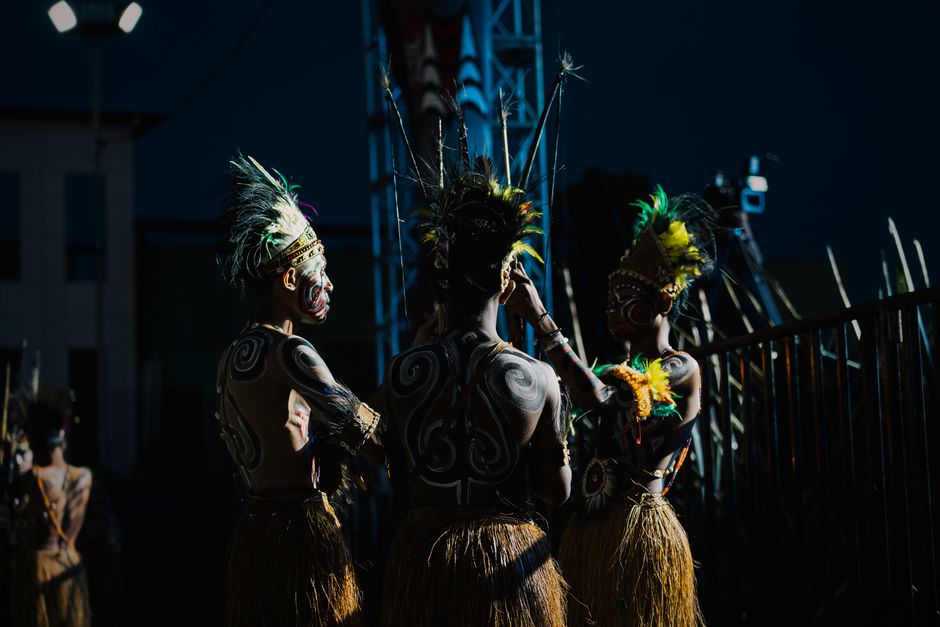
Papua New Guinea occupies the eastern half of the island of New Guinea and some 600 islands to its north and east, just across the Torres Strait from Australia. It is one of the most culturally diverse countries on Earth, with more than 800 languages spoken by peoples whose ways of life in mountain valleys, river villages and coral islands have stayed remarkably distinct. The landscape is just as varied: glaciated peaks rising to 4,509 m (14,793 feet) at Mount Wilhelm, cloud forest full of birds of paradise, the vast Sepik and Fly river systems, active volcanoes around Rabaul, and reefs in Milne Bay, Kimbe Bay and New Ireland that rank among the richest in the world. Travelers come to walk the Kokoda Track, to see the great highland “sing-sing” shows where hundreds of clans gather in paint, feathers and shells, to dive and surf, and to meet people whose cultures are still very much alive. Papua New Guinea is not an easy destination: infrastructure is limited, flights are the only way to reach many places, and costs are high. Most visitors travel with a local tour operator. All foreign visitors need a visa, most apply online for a free tourist visa with a US$50 eVisa fee, and the gateway is the capital, Port Moresby.
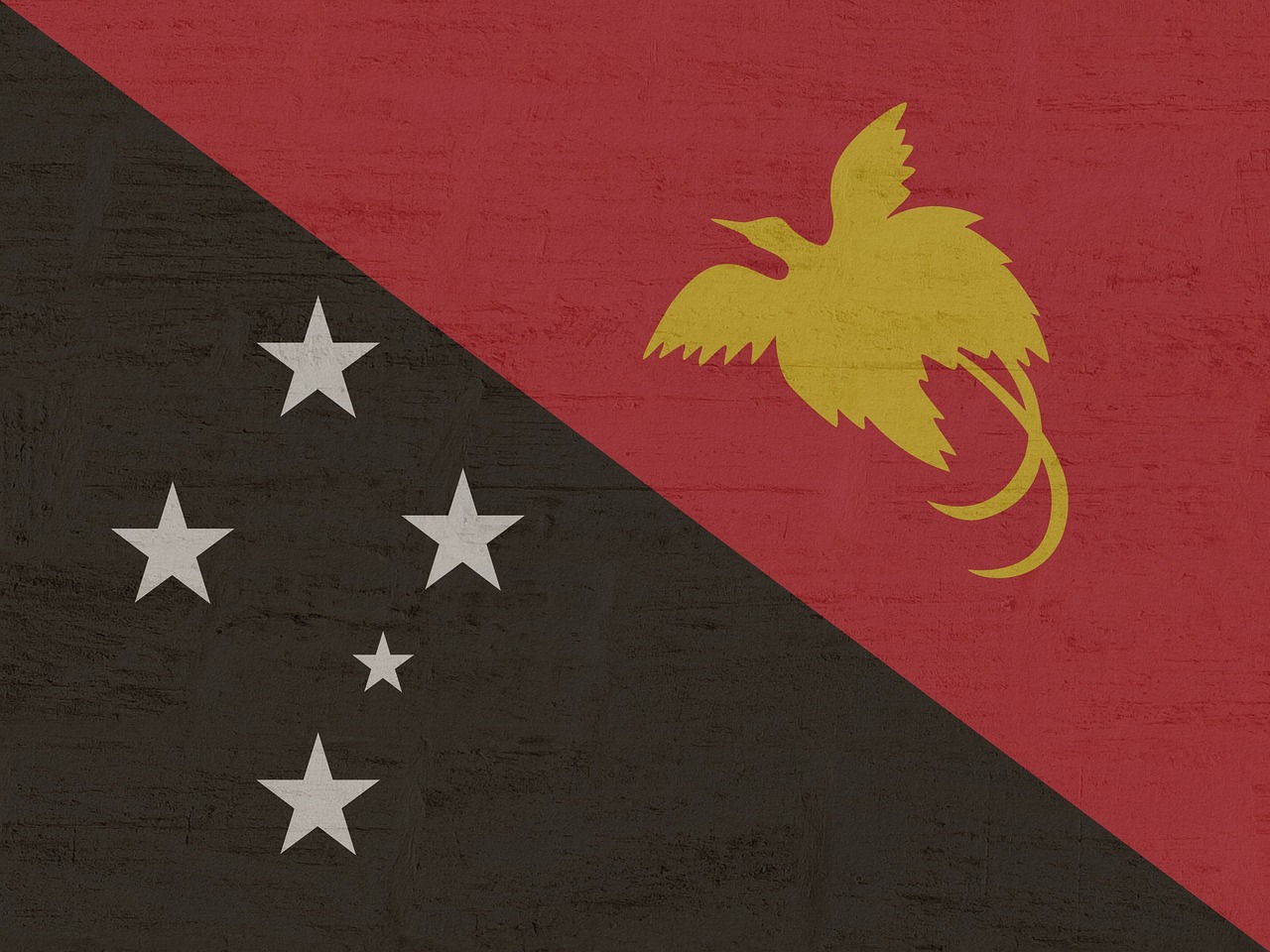
Right now in Papua New Guinea
- Wed 23–29°C 73–84°F Partly cloudy
- Thu 23–29°C 73–84°F Clear
- Fri 23–29°C 74–84°F Clear
Weather: MET Norway (CC BY 4.0)
Multi-day tours of Papua New Guinea
Multi-day tours from local operators. You check dates and book on Viator, our partner; we may earn a commission at no extra cost to you. How we earn money
Papua New Guinea at a glance
- Capital: Port Moresby, on the south coast of the mainland, the main international gateway.
- Size and population: about 462,840 km² (178,700 sq miles), larger than California. The population is estimated at around 10 million or more; estimates vary widely, and most people live in rural villages.
- Languages: English, Tok Pisin and Hiri Motu are official, along with sign language. Tok Pisin, an English-based creole, is the common language across most of the country; English is used in government, business and tourism.
- Independence: from Australia on 16 September 1975; the country celebrated 50 years of independence in 2025.
- Currency: the kina (PGK, written K). In early October 2026, K1 was worth about US$0.23–0.24.
- Time zone: UTC+10, with no daylight saving; the Autonomous Region of Bougainville is an hour ahead.
- Driving: on the left, though few visitors drive themselves.
- Entry: all foreign visitors need a visa; tourist visas are applied for online.
- Power: 240 volts with Type I plugs, as in Australia.
Papua New Guinea’s regions
The Tourism Promotion Authority divides the country into four regions. The Southern Region, also called Papua, includes Port Moresby, the Kokoda Track, Milne Bay and the Fly River lowlands. The Highlands Region is a chain of fertile, densely populated valleys at 1,500 to 2,000 m (5,000 to 6,500 feet), home to the famous shows of Goroka and Mount Hagen and to Mount Wilhelm. The Momase Region, on the north coast, covers Morobe, Madang and the Sepik, with river culture, the industrial city of Lae and coastal diving. The New Guinea Islands Region covers New Britain, New Ireland, Manus and Bougainville, with volcanoes, reefs and surf.
Where to go: Kokoda, the Highlands, the Sepik and the islands
Port Moresby
Most journeys begin in Port Moresby, a sprawling harbor city set among dry hills. It has the National Museum and Art Gallery, the striking Parliament House, the Port Moresby Nature Park with birds of paradise and tree kangaroos, and, just outside the city, the Bomana War Cemetery and the start of the Kokoda Track at Owers’ Corner. Most visitors spend a night or two before flying on.
The Kokoda Track
The Kokoda Track crosses the rugged Owen Stanley Range between Owers’ Corner, about an hour’s drive from Port Moresby, and the village of Kokoda in Oro Province. The Kokoda Track Authority describes it as 96 km (60 miles) of track; the walking distance along its ups and downs is often quoted as longer, and the Tourism Promotion Authority gives 138 km (86 miles). Most trekkers take 8 to 10 days, over steep ridges, through mud and rivers, reaching about 2,190 m (7,185 feet) near Mount Bellamy. The track follows the route of the 1942 Kokoda Campaign, when Australian forces and Papua New Guinean carriers halted the Japanese advance on Port Moresby, and it passes through village communities that host trekkers. Every trekker needs a Kokoda Track Authority permit and must trek with a licensed tour operator.
The Highlands
The Highlands were among the last places on Earth to be reached by outsiders, in the 1930s, and are now the most populous part of the country. Goroka, in the Eastern Highlands, hosts the Goroka Show, first held in the 1950s, which brings together clans from across the country in elaborate costumes each September; Mount Hagen, in the Western Highlands, has its own show. Around Tari, in Hela Province, the Huli people are known for their wigs made of human hair. The Highlands are also the base for climbing Mount Wilhelm, the country’s highest peak, and for birding in mountain forests. Travel in the Highlands is best arranged through operators who follow local conditions closely.
The Sepik River
The Sepik, one of the great rivers of the Pacific, winds through swamp and grassland in the north. Its villages are known for haus tambaran (spirit houses), carving and the crocodile-scarification initiation of some communities. Trips are usually by motorized canoe from Wewak or Pagwi, staying in simple village guesthouses. The Sepik Bilum Basket Show in Wewak celebrates the region’s weaving; its second edition runs from 12 to 14 October 2026.
Milne Bay
At the eastern tip of the mainland, Milne Bay Province has more than 160 islands, world-class diving and snorkeling, World War II history from the 1942 Battle of Milne Bay, and the National Kenu and Kundu Festival in Alotau, which celebrates traditional canoes and drums; in 2026 it runs from 6 to 8 November. The Trobriand Islands, to the north, are famous for their yam harvest festivals and their own style of cricket.
East New Britain and Rabaul
Rabaul, once one of the most beautiful towns in the Pacific, was largely buried by ash when the volcanoes Tavurvur and Vulcan erupted in 1994. Today you can climb Tavurvur at sunrise with a guide, soak in hot springs, explore Japanese tunnels and wartime relics, and dive wrecks in Simpson Harbor. Kokopo, the new provincial capital, has hotels and a good museum.
Kimbe Bay, New Ireland and the surf
Kimbe Bay in West New Britain is a famous dive destination with reefs and seamounts of extraordinary coral diversity. Kavieng, in New Ireland, offers diving, World War II wrecks and surfing on reef breaks; the Tourism Promotion Authority says the surf at Kavieng and Vanimo, on the north coast near the Indonesian border, works throughout the year. Surf camps limit numbers to protect the breaks and pay local communities.
Madang and Lae
Madang, on the north coast, is a laid-back town with good diving and snorkeling on nearby reefs and wrecks. Lae, the country’s second city and main port, is the starting point for the Highlands Highway and home to the annual Morobe Show.
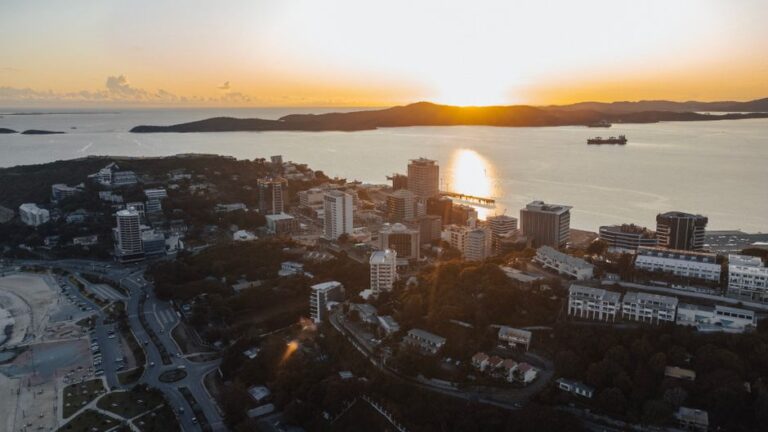
Port Moresby Travel Guide
Plan a trip to Port Moresby, Papua New Guinea: the National Museum and Art Gallery, Parliament House, Port Moresby Nature Park, Bomana War Cemetery,…
Best time to visit Papua New Guinea
Papua New Guinea’s climate varies by region and altitude. The coast and islands are hot and humid all year; the Highlands are warm by day and cool at night. Broadly, the drier season runs from about May to October, the most popular time for the Kokoda Track and the highland shows. The wetter season runs from about December to March, during the northwest monsoon, when rain makes trails muddy and some roads impassable. Local patterns differ widely: Port Moresby is unusually dry, while Lae and parts of the north coast are among the wettest places in the country.
| Month | Port Moresby high / low | Rain | Rain days |
|---|---|---|---|
| Jan | 32 / 24 °C (90 / 75 °F) | 192 mm (7.6 in) | 18 |
| Feb | 32 / 24 °C (89 / 74 °F) | 141 mm (5.5 in) | 16 |
| Mar | 31 / 23 °C (89 / 74 °F) | 190 mm (7.5 in) | 18 |
| Apr | 31 / 24 °C (88 / 74 °F) | 105 mm (4.1 in) | 11 |
| May | 31 / 24 °C (88 / 74 °F) | 56 mm (2.2 in) | 9 |
| Jun | 30 / 23 °C (87 / 74 °F) | 22 mm (0.9 in) | 6 |
| Jul | 30 / 22 °C (86 / 72 °F) | 14 mm (0.5 in) | 4 |
| Aug | 30 / 23 °C (87 / 73 °F) | 12 mm (0.5 in) | 4 |
| Sep | 31 / 23 °C (88 / 74 °F) | 14 mm (0.6 in) | 5 |
| Oct | 32 / 24 °C (90 / 74 °F) | 15 mm (0.6 in) | 5 |
| Nov | 33 / 24 °C (90 / 74 °F) | 40 mm (1.6 in) | 6 |
| Dec | 32 / 24 °C (90 / 75 °F) | 98 mm (3.9 in) | 12 |
Figures are the official climate averages for Port Moresby supplied by the Papua New Guinea National Weather Service to the World Meteorological Organization, based on 1973–2007 records: mean daily maximum and minimum, total rainfall and rain days. Port Moresby averages about 900 mm (35 in) a year, far less than most of the country. The Highlands are much cooler, with nights dropping to around 10 to 15 °C (50 to 59 °F) in towns such as Goroka and Mount Hagen, and near freezing on Mount Wilhelm.
Festivals and events
- Goroka Show (September): the most famous highland show, held around Independence Day; the 2026 show, its 70th anniversary edition, took place from 18 to 20 September.
- Independence Day (16 September): celebrations across the country, including the Hiri Moale Festival in Port Moresby.
- Mount Hagen Show (usually August): a large highland gathering of clans in the Western Highlands.
- Kutubu Kundu and Digaso Festival (September): a cultural festival at Lake Kutubu in the Southern Highlands; in 2026 from 23 to 26 September.
- Sepik Bilum Basket Show (12–14 October 2026): weaving and culture in Wewak.
- Morobe Show (usually October): an agricultural and cultural show in Lae.
- National Kenu and Kundu Festival (6–8 November 2026): canoe races, drums and dance in Alotau, Milne Bay.
- Bougainville Chocolate Festival: cocoa, food and culture in Buin, South Bougainville.
Festival dates and programs can change at short notice; confirm with the organizers or your tour operator, and book flights and rooms well ahead.
Public holidays
Government offices, banks and many businesses close on New Year’s Day, Good Friday, Easter Saturday and Easter Monday, the King’s Birthday (June), National Remembrance Day (23 July, honoring those who died in war), National Repentance Day (26 August), Independence Day (16 September), Christmas and Boxing Day. Domestic flights and hotels fill up around Easter, Independence and Christmas, when many people travel home to their villages.
How long to stay: sample itineraries
Papua New Guinea rewards focus. Choose one or two regions rather than trying to see everything; domestic flights are expensive and schedules can change.
5 days: Port Moresby and the Kokoda region
Two days in Port Moresby (museum, Parliament, Nature Park and Bomana War Cemetery), a day trip to Varirata National Park and a short guided walk from Owers’ Corner on the Kokoda Track, then a day on the water at Loloata Island or diving in Bootless Bay.
10 to 12 days: the Kokoda Track
Arrive in Port Moresby, trek the full Kokoda Track over 8 to 10 days with a licensed operator, and return by light aircraft, with a final visit to Bomana War Cemetery.
2 weeks: Highlands, Sepik and islands
A highland show or village stay around Goroka or Mount Hagen, a few days on the Sepik River, and a dive or beach finish in Madang, Milne Bay, Kimbe Bay or New Ireland, all linked by domestic flights.
Island hopping
Papua New Guinea’s islands are best linked by air: Air Niugini and PNG Air fly from Port Moresby to Alotau (Milne Bay), Hoskins (for Kimbe Bay), Rabaul/Kokopo, Kavieng, Manus and Buka (Bougainville), with some direct island-to-island routes. Within Milne Bay, small boats and dive liveaboards connect Alotau with the outer islands; in New Ireland, the Boluminski Highway runs down the east coast from Kavieng; and around Rabaul, boats cross Simpson Harbor to the volcano and the Duke of York Islands. A coastal ferry network exists but is slow and irregular. Allow buffer days, as island flights are sometimes canceled or delayed.
Entry, money and costs
Visas (as of October 2026)
According to Papua New Guinea’s Immigration and Citizenship Authority (ICA), all foreign visitors need a visa, and visitor visas must be applied for online through the ICA eVisa system at ica.gov.pg. For a holiday, the main options are:
- Tourist (Own Itinerary) visa: for independent travelers. There is no visa fee, but the ICA charges a US$50 eVisa fee. You upload a request letter, your passport bio page, your itinerary with a confirmed onward or return ticket and evidence that you can support yourself. An extension costs US$150.
- Tourist (Tour Package) visa: for group tours, with a letter from a tour agent registered with the Tourism Promotion Authority; the same US$50 eVisa fee applies.
- Easy Visitor Permit: a single-entry permit for 30 or 60 days for passport holders from eligible visa-on-arrival countries, also with the US$50 eVisa fee. Check on the ICA website whether your nationality qualifies.
The ICA says processing takes 10 working days when an application is complete, so apply at least a few weeks before travel. Your passport must be valid for at least six months. Visa on arrival is limited to selected nationalities and to Chinese tourists with ordinary passports traveling in organized groups with a registered PNG tour operator. Passengers transiting for less than seven hours do not need a visa. Visa fees are set in US dollars and charged in kina at the ICA’s rate.
Customs, medicines and health certificates
Medicines brought in for personal use must be declared on arrival; carry a prescription or doctor’s letter. A yellow fever certificate is required for travelers over one year old arriving from or through areas with yellow fever. Declare all food, plant and animal products.
Money and tipping
The kina is the currency. ATMs are found in towns, and major hotels, airlines and larger businesses take cards, but carry cash for markets, village fees, guesthouses and small purchases in rural areas. Tipping is not customary, though tour guides and trek porters often receive a gift or tip at the end of a trip; ask your operator what is appropriate. A 10% goods and services tax is included in most prices.
Customary fees and land ownership
According to the Tourism Promotion Authority, most land, beaches, lagoons, bays and islands are owned by a village, family or individual. Ask permission before entering, swimming, photographing or camping, and expect to pay a small fee. Your guide will usually arrange this.
Typical travel costs
| Item (as of October 2026) | Papua New Guinea kina | About US dollars |
|---|---|---|
| Tourist visa (Own Itinerary) | eVisa fee US$50 only | US$50 |
| Kokoda Track permit, international trekker | K350 | US$82 |
| Business hotel room in Port Moresby, per night | about K850–1,500 | about US$200–350 |
| Village guesthouse, per person with meals | about K100–250 | about US$24–59 |
| Domestic flight, one way | about K500–1,200 | about US$118–280 |
| Hotel airport transfer in Port Moresby | about K50–120 | about US$12–28 |
| Restaurant meal in Port Moresby | about K50–120 | about US$12–28 |
| Local beer | about K8–15 | about US$2–3.50 |
The visa fee is from the ICA and the Kokoda permit fee from the Kokoda Track Authority. All other prices are typical ranges, not official figures; Port Moresby hotels are expensive by regional standards. Conversions use about US$0.235 to K1 (based on Bank South Pacific buy and sell rates, 5 October 2026).
Getting there and getting around
International flights
Jacksons International Airport (POM) in Port Moresby is the country’s main gateway. Air Niugini, the national airline, flies to Australia, including Brisbane, Cairns and Sydney, and to Asian and Pacific cities such as Singapore and Manila. Qantas flies daily between Cairns and Port Moresby with a Boeing 737, and Philippine Airlines flies twice a week from Manila. Other airlines link Port Moresby with Australia and Asia; check current schedules.
Domestic flights
Papua New Guinea has more than 500 airstrips, and flying is the only practical way to reach many towns. Air Niugini, PNG Air, TropicAir and the mission airline MAF serve provincial capitals and many smaller places. Book early, keep a spare day before international connections, and expect occasional delays and schedule changes.
Roads
Many towns, including Port Moresby, are not connected to the rest of the country by road. The Highlands Highway links Lae and Madang with Goroka, Mount Hagen and the Highlands, and shorter highways run in New Ireland and on the north coast. Most visitors travel by road only with a tour operator or a hired car and driver; self-driving is uncommon and requires careful preparation. Public motor vehicles (PMVs), minibuses and trucks, are cheap but crowded; the Tourism Promotion Authority recommends that women not travel alone on PMVs.
Boats
Liveaboard dive boats, coastal ferries and small open “banana boats” link coastal towns and islands. Bring or insist on life jackets, avoid overloaded boats and bad weather, and ask locally about current conditions; piracy is a known risk in some open waters.
Where to stay
- Port Moresby: international business hotels near the airport, in Waigani and in the harbor-side downtown, with secure transport.
- Highland towns: lodges and hotels in Goroka and Mount Hagen, and mountain lodges with birding and views.
- Villages: simple guesthouses on the Sepik River, in the Highlands and along the Kokoda Track, often arranged by your operator.
- Islands and coast: dive resorts in Milne Bay, Kimbe Bay, Kavieng and Madang; hotels in Kokopo and Alotau; surf camps in New Ireland and near Vanimo.
- Liveaboards: dive boats cruise Milne Bay, Kimbe Bay and the islands.
Culture, food and etiquette
Papua New Guinea’s hundreds of cultures share some common threads: strong clan and family ties, the wantok system (obligations to those who speak your language), exchange of gifts and pigs at ceremonies, and a mix of Christianity and traditional belief. Sing-sings, gatherings with dance, song and body decoration, mark important events. Dress modestly, especially women in villages, where shorts and swimwear are uncommon; ask permission before taking photographs; follow your guide’s lead on village customs; and respect sites that are sacred or restricted. Betel nut (buai), chewed with lime and mustard stick, is everywhere, and its red stains on pavements are part of the urban scene. Smoking is banned in enclosed public spaces.
Papua New Guinea’s history in brief
People have lived on New Guinea for at least 40,000 years, and Highlanders were among the world’s earliest farmers, cultivating taro and bananas at sites such as Kuk, now a UNESCO World Heritage Site, thousands of years ago. In the 1880s the north was claimed by Germany as German New Guinea and the south by Britain as British New Guinea, later the Australian Territory of Papua. Australia took the German territory in World War I. During World War II, Japanese forces occupied the islands and the north coast and fought Allied troops along the Kokoda Track, at Milne Bay and across the north in some of the hardest fighting of the Pacific War; Papua New Guinean carriers and soldiers played a vital part. The two territories were administered jointly by Australia after the war and became independent as Papua New Guinea on 16 September 1975, a constitutional monarchy within the Commonwealth with a parliamentary government. Bougainville, after a long conflict, became an autonomous region in 2005 and voted in a 2019 referendum on its future political status, which is the subject of ongoing negotiations with the national government.
Food and drink
Staples include sweet potato (kaukau), taro, yams, sago and bananas, with pork, chicken and fish. The mumu, an earth oven in which food is cooked with hot stones, is used for feasts in the Highlands. Coastal areas offer excellent seafood, often cooked in coconut milk. Coffee from the Highlands and cocoa from the islands are world-class. SP Lager is the national beer. Drink bottled water or boil water in rural areas.
Safety, health and connectivity
Safety
Papua New Guinea has law-and-order challenges, and the Tourism Promotion Authority and the industry take a coordinated approach to visitor security. Visitors at major attractions and festivals with reputable operators are unlikely to face problems, but a few facts are worth knowing:
- Use reputable operators: book through members of the PNG Tourism Industry Association, the PNG Divers Association, the Surfing Association of PNG or Kokoda Track Authority licensed operators.
- In towns: crime, including robbery and carjacking, is a problem in Port Moresby, Lae and Mount Hagen. Avoid walking alone, especially at night, keep valuables out of sight, use hotel or operator transport and don’t resist if confronted.
- Tribal conflict: clan disputes flare at times in parts of the Highlands provinces, notably Enga and Hela; reputable operators monitor conditions and change routes when needed.
- World War II ordnance: unexploded bombs, shells and grenades remain on former battlefields, including the Kokoda Track, Milne Bay, Rabaul, Lae and Bougainville. Never touch, move or collect war relics; removing them is illegal.
- Volcanoes, earthquakes and tsunamis: Papua New Guinea sits on the Pacific Ring of Fire, with several active volcanoes, including Tavurvur at Rabaul and Manam. Check local news and follow official warnings; after strong coastal shaking, move to high ground.
- Water: ask permission before swimming, never swim alone or at night, check currents, and stay out of rivers, estuaries and mangroves, where saltwater crocodiles live.
- Trekking: the Kokoda Track and Mount Wilhelm are physically demanding and remote; trek with licensed operators and carry evacuation insurance.
- Roads and boats: road and sea travel can be hazardous; travel with experienced drivers and boat operators, in daylight and good weather.
Health
Malaria is a serious risk in most of the country below about 1,800 m (5,900 feet); talk to a doctor about antimalarial medication before you travel, and use repellent and nets. Dengue and typhoid occur. The World Health Organization has reported vaccine-derived poliovirus in parts of the country, so make sure your polio vaccination is up to date. Snakebite is a significant risk in rural areas; wear proper footwear. Medical facilities are limited outside Port Moresby and the main towns, and serious cases need evacuation to Australia, so comprehensive travel insurance with medical evacuation is essential.
Connectivity and power
Digicel and Vodafone PNG sell prepaid SIM cards with data in towns. Coverage is good in towns and along some highways but absent in much of the interior and on remote islands; satellite messengers are useful for trekkers. Power is 240 volts with Type I plugs, and outages are common.
Things to do: trekking, diving, culture and birds
Walk the Kokoda Track or a short section from Owers’ Corner; climb Mount Wilhelm; attend a highland show; travel the Sepik by canoe; dive Milne Bay, Kimbe Bay, Madang or Kavieng; surf New Ireland’s reef breaks; climb Tavurvur at sunrise; watch some of the 38 species of birds of paradise found in the country; and visit Bomana War Cemetery and the battlefields of 1942–45.
What to pack
For trekking: broken-in boots, quick-dry clothing, rain gear, a warm layer for the mountains, blister kit, water purification and rehydration salts. For everyone: light, modest clothing that covers the knees, insect repellent with DEET or picaridin, antimalarial medication, a basic medical kit, sunscreen and a hat, a headlamp, a dry bag, a Type I power adapter and copies of your passport, visa and insurance.
Papua New Guinea travel FAQ
Do I need a visa for Papua New Guinea?
Yes. All foreign visitors need a visa. Tourists apply online through the Immigration and Citizenship Authority’s eVisa system; the Tourist (Own Itinerary) visa has no visa fee but a US$50 eVisa fee.
How long does a PNG eVisa take?
The ICA says applications are processed in 10 working days when all requirements are met. Apply several weeks before travel.
Is visa on arrival available in Papua New Guinea?
Only for selected nationalities and for Chinese tourists traveling in organized groups with a registered PNG tour operator. Most visitors must apply online before travel.
Do I need a permit to walk the Kokoda Track?
Yes. Every trekker needs a Kokoda Track Authority trek permit, K350 for international trekkers, and must trek with a licensed tour operator, who usually includes the permit in the trek price.
How long does it take to walk the Kokoda Track?
Most trekkers take 8 to 10 days between Owers’ Corner and Kokoda. It is physically demanding, with steep climbs, mud and river crossings; train for at least three to six months.
When is the best time to trek Kokoda?
The drier months, roughly May to October, are the most popular. The wet season brings heavier rain and more difficult track conditions.
When is the Goroka Show?
Each September, around Independence Day on 16 September. The 2026 show ran from 18 to 20 September; check dates for 2027 with the organizers or a tour operator.
What currency is used in Papua New Guinea?
The kina (PGK). It was worth about US$0.23–0.24 in early October 2026. Carry cash outside the main towns.
How do I get around Papua New Guinea?
Mainly by domestic flights on Air Niugini, PNG Air, TropicAir and MAF, as many towns aren’t connected by road. Most visitors travel with a tour operator who arranges transport.
Do I need malaria tablets for Papua New Guinea?
Malaria is a serious risk in most lowland and coastal areas. Talk to a doctor about antimalarial medication before you go, and use repellent and nets.
Is there unexploded ordnance in Papua New Guinea?
Yes. World War II munitions remain on former battlefields, including the Kokoda Track, Milne Bay, Rabaul, Lae and Bougainville. Never touch or collect war relics.
Is Papua New Guinea safe for tourists?
Visitors traveling with reputable operators to major attractions and festivals are unlikely to have problems. Crime is a concern in Port Moresby, Lae and Mount Hagen, so use organized transport, avoid walking at night and follow local advice.
What plug adapter do I need for Papua New Guinea?
Type I, the angled flat-pin plug used in Australia; the supply is 240 volts.
Sources and last review
Researched and last reviewed on 5 October 2026. Visa types, fees, processing times, visa on arrival and transit rules come from Papua New Guinea’s Immigration and Citizenship Authority (2025 visa information booklet and fee notice); Kokoda Track permits, distances and operator rules from the Kokoda Track Authority; regions, festivals and 2026 event dates, transport, safety, health, customary land and Bomana War Cemetery details from the PNG Tourism Promotion Authority; climate from the World Meteorological Organization’s World Weather Information Service (PNG National Weather Service, 1973–2007); exchange rates from Bank South Pacific; area from Wikidata. Population estimates, hotel, flight, meal and trek prices, the Mount Hagen and Morobe show months, conflict areas and some cultural details are general estimates or secondary sources. Prices and rules change, so check official sites before you go.
Plan your trip
Partner links: TravelerCenter may earn a commission if you book, at no extra cost to you.