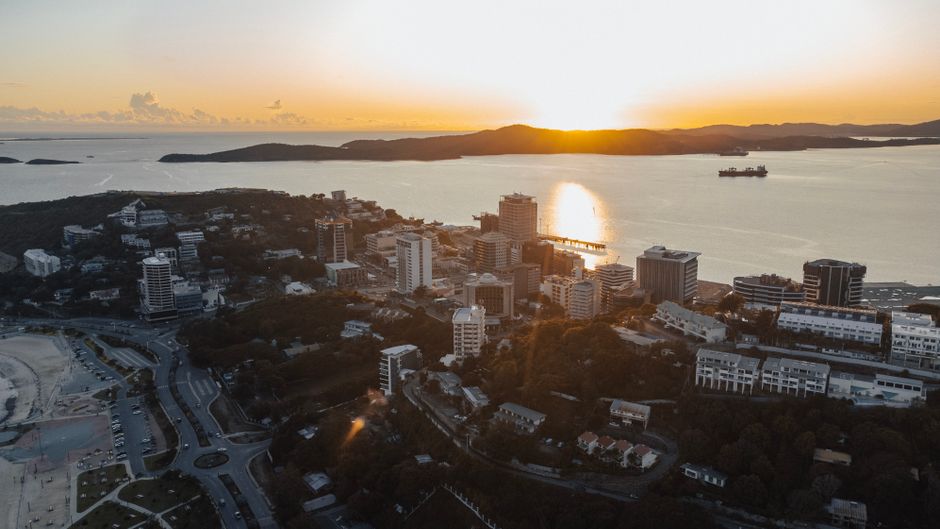
Port Moresby is the capital of Papua New Guinea and the gateway for almost every visitor to the country. It spreads around the hills and bays of the Gulf of Papua on the mainland’s south coast, from the old harbor-side downtown and Ela Beach to the government district of Waigani and the suburbs around Jacksons International Airport. Unlike much of the country, it sits in a rain shadow, so the surrounding hills are brown and dry for half the year. Most travelers spend only a night or two here between flights, but the city repays a little time: the National Museum and Art Gallery holds an outstanding collection of carvings and masks from across the country, Parliament House is a soaring modern version of a Sepik spirit house, and the Port Moresby Nature Park lets you see birds of paradise and tree kangaroos up close. Just outside town lie the Bomana War Cemetery, the start of the Kokoda Track at Owers’ Corner, Varirata National Park and the reefs of Bootless Bay. The city has a reputation for crime, and visitors move around in hotel or tour transport rather than on foot, but with sensible arrangements it is an interesting introduction to Papua New Guinea.
Right now in Port Moresby
- Wed23–29°C74–85°FPartly cloudy
- Thu24–29°C74–83°FClear
- Fri23–29°C73–84°FClear
Top tours in Port Moresby
See all tours for Port Moresby →
From local operators, with prices and reviews; you check availability and book on Viator, our partner. We may earn a commission at no extra cost to you. How we earn money
Port Moresby at a glance
- Best months: May to November, the dry season, with almost no rain from June to October; December to April is hotter and wetter.
- Getting there: Jacksons International Airport (POM), with flights from Australia, Asia and the Pacific, and domestic flights across the country.
- Getting around: hotel shuttles, tour operators and hired cars with drivers; walking around the city is not recommended.
- Time needed: one or two days in the city, plus day trips to Bomana, Owers’ Corner, Varirata and Bootless Bay.
- Before you go: visas (all foreign visitors need one, applied for online), money and health are covered in our Papua New Guinea travel guide.
Port Moresby’s areas and who each one suits
Downtown (Town) and Ela Beach
The original center sits on a peninsula by the harbor, with the port, office towers, banks, a waterfront development of hotels, restaurants and apartments, and Ela Beach, a long city beach with a promenade on the south side. Paga Hill, above it, has views over the harbor and the coast. It suits business travelers and those who want harbor views; some of the city’s newer hotels and restaurants are here.
Waigani
The government district, about 8 km (5 miles) inland, has Parliament House, the National Museum and Art Gallery, government departments, the University of Papua New Guinea and the Nature Park, along with several hotels and shopping centers. It is a practical base for sightseeing.
Boroko, Gordons and the airport area
The commercial suburbs between the airport and Waigani have shopping centers, markets, restaurants and international business hotels close to Jacksons International Airport. Staying here suits short stopovers and early flights.
Hanuabada and the bays
West of downtown, Hanuabada is a large village of houses on stilts over the water, home to the Motu-Koitabu people, the area’s original inhabitants. Visit only with a local guide. To the southeast, Bootless Bay and Loloata Island are a short drive and boat ride away.
Top things to see in Port Moresby
National Museum and Art Gallery
In Waigani, the national museum displays a remarkable range of carvings, masks, canoes, shields, ceremonial objects and pottery from every region of the country, from Sepik spirit figures and Highland shields to Massim canoe prows from Milne Bay, along with natural history and World War II material. It is the best single place to grasp the diversity of Papua New Guinea’s cultures before you travel on. Check opening days and hours locally, and allow at least two hours.
Parliament House
Next to the museum, Papua New Guinea’s National Parliament, opened in 1984, is designed after a Sepik haus tambaran (spirit house), with a steep, soaring front gable covered in a mosaic and carvings representing the country’s cultures. You can view and photograph the exterior; ask locally about guided visits when Parliament is not sitting.
Port Moresby Nature Park
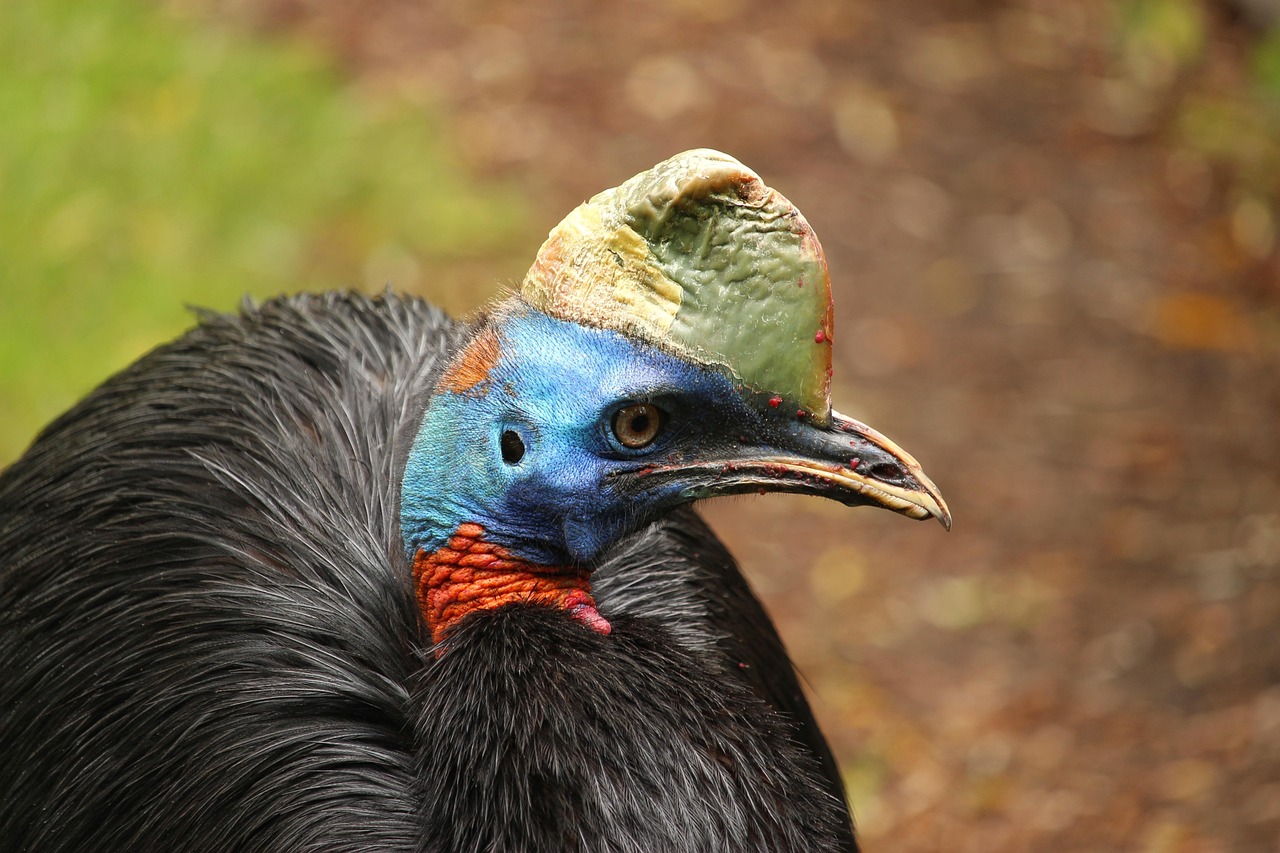
On the University of Papua New Guinea grounds, this botanical and wildlife park has paths through tropical gardens and walk-through aviaries with birds of paradise, cassowaries, hornbills, parrots and crowned pigeons, plus tree kangaroos, cuscus and other native animals. It is one of the safest and most relaxing places in the city for a walk, with a café. Plan a morning visit, when birds are most active.
Bomana War Cemetery
About 19 km (12 miles) northeast of the city center, less than 30 minutes by car, Bomana is the largest war cemetery in Papua New Guinea, maintained by the Commonwealth War Graves Commission. According to the Tourism Promotion Authority, it contains 3,824 war graves, including 699 unidentified soldiers, many of them from the Kokoda Campaign, and memorial walls honor the missing. The rows of white headstones on immaculate lawns are deeply moving. The cemetery is open daily and free; dress modestly, speak quietly, don’t walk on graves and bring water and a hat, as there is little shade.
Owers’ Corner and the Kokoda Track Memorial
About an hour’s drive from the city, Owers’ Corner marks the southern end of the Kokoda Track, with a memorial arch and views across the Owen Stanley Range. Many visitors combine it with Bomana. The Kokoda Track Authority also allows short day treks with a local guide from Owers’ Corner as far as Ua’ule Creek, and overnight stays can be arranged. Every trekker needs a Kokoda Track Authority permit; short treks have a lower fee than a full crossing.
Varirata National Park
On the Sogeri Plateau, about 45 km (28 miles) from the city, Papua New Guinea’s first national park protects rainforest and savanna with walking trails, lookouts over Port Moresby and the coast, and a famous display site for Raggiana birds of paradise, the national bird, which males perform at dawn. Go early with a guide and a hired car, and return before dark.
Ela Beach and Paga Hill
Ela Beach is the city’s main beach, with a promenade, a craft market at times and views of fishing canoes; the water is not always clean, so most people stroll rather than swim. Paga Hill and the Touaguba Hill area above downtown have the best views of the harbor and the city, especially at sunset.
Markets
Koki market, by the water, sells fresh fish, betel nut and produce, while other markets around the city sell fruit, vegetables and bilums, the string bags woven across the country. Craft markets, held at times in hotels and shopping centers, are the easiest and safest places to buy bilums, carvings and jewelry. Visit busy local markets with a guide.
Other things to do in Port Moresby
- Diving and snorkeling: Bootless Bay and the reefs around Loloata Island have coral, reef fish and wrecks, including World War II aircraft and ships, a short drive and boat ride from town.
- Loloata Island: a resort island in Bootless Bay, about 30 minutes from the city by road and boat, for a day of swimming, snorkeling and lunch.
- Birdwatching: Varirata, the Nature Park and the Sogeri Plateau offer birds of paradise, kingfishers and parrots.
- Golf and sailing: the Royal Port Moresby Golf Club and the yacht club are social hubs for residents.
- Cultural events: the Hiri Moale Festival, held around Independence Day on 16 September, celebrates the traditional trading voyages of the Motu people with lakatoi canoe races and dance.
- Short Kokoda walks: day treks from Owers’ Corner with a local guide.
Food and drink
Port Moresby’s restaurants are mostly in hotels, the waterfront development and shopping centers, serving Australian-style, Asian and international food, seafood and excellent PNG coffee. Look for local dishes such as fish or chicken cooked in coconut milk, sweet potato (kaukau), taro and sago, and for mumu (earth-oven) feasts at cultural events. SP Lager is the national beer. Restaurant prices are high by regional standards. Drink bottled water.
Day trips from Port Moresby
The Sogeri Plateau loop
A popular day trip with a driver climbs the Sogeri Road past the Rouna Falls lookout to the cooler Sogeri Plateau, with stops at Varirata National Park, Owers’ Corner, the Kokoda Track Memorial and Bomana War Cemetery on the way back.
Bootless Bay and Loloata
Southeast of the city, Bootless Bay has calm water, reefs and the Loloata Island resort, which takes day guests for diving, snorkeling and lunch.
Further afield
Port Moresby is the hub for domestic flights to Alotau and Milne Bay, Goroka and Mount Hagen in the Highlands, Popondetta and Kokoda, Rabaul and Kokopo, Kavieng, Madang and Wewak. See our Papua New Guinea travel guide for each region.
Getting there and getting around
By air
Jacksons International Airport (POM) is the country’s main airport, a few kilometers from Boroko and Waigani and about 10 km (6 miles) from downtown. Air Niugini flies to Australia, including Brisbane, Cairns and Sydney, and to Asian and Pacific cities such as Singapore and Manila; Qantas flies daily from Cairns, and Philippine Airlines twice a week from Manila. The domestic terminal is next door, with Air Niugini, PNG Air and other carriers flying across the country.
From the airport
Arrange your transfer in advance: most hotels send a vehicle and driver to meet you, and this is by far the best option. Taxis are available but quality varies; if you take one, use a reputable company recommended by your hotel. Don’t walk out of the airport with luggage looking for transport.
Getting around the city
Visitors usually rely on hotel shuttles, tour operators and cars hired with a driver. Public motor vehicles (PMVs), the minibuses that locals use, are cheap but crowded and not recommended for visitors unfamiliar with the city. Walking is fine within hotel compounds, the waterfront development and shopping centers, but not on the street, especially after dark. Self-driving is possible but not recommended for first-time visitors; if you do drive, keep doors locked and windows up, and don’t stop for strangers.
When to go and how long to stay
Port Moresby is hot all year, with highs of 30 to 33 °C (86 to 90 °F), and much drier than the rest of the country. From June to October there is almost no rain, and the hills turn brown; the wet season, roughly December to April, brings heavy afternoon storms and more humidity.
| Month | Port Moresby high / low | Rain | Rain days |
|---|---|---|---|
| Jan | 32 / 24 °C (90 / 75 °F) | 192 mm (7.6 in) | 18 |
| Feb | 32 / 24 °C (89 / 74 °F) | 141 mm (5.5 in) | 16 |
| Mar | 31 / 23 °C (89 / 74 °F) | 190 mm (7.5 in) | 18 |
| Apr | 31 / 24 °C (88 / 74 °F) | 105 mm (4.1 in) | 11 |
| May | 31 / 24 °C (88 / 74 °F) | 56 mm (2.2 in) | 9 |
| Jun | 30 / 23 °C (87 / 74 °F) | 22 mm (0.9 in) | 6 |
| Jul | 30 / 22 °C (86 / 72 °F) | 14 mm (0.5 in) | 4 |
| Aug | 30 / 23 °C (87 / 73 °F) | 12 mm (0.5 in) | 4 |
| Sep | 31 / 23 °C (88 / 74 °F) | 14 mm (0.6 in) | 5 |
| Oct | 32 / 24 °C (90 / 74 °F) | 15 mm (0.6 in) | 5 |
| Nov | 33 / 24 °C (90 / 74 °F) | 40 mm (1.6 in) | 6 |
| Dec | 32 / 24 °C (90 / 75 °F) | 98 mm (3.9 in) | 12 |
Figures are the official averages for Port Moresby supplied by the Papua New Guinea National Weather Service to the World Meteorological Organization, based on 1973–2007 records: mean daily maximum and minimum, total rainfall and rain days. The yearly total is about 900 mm (35 in).
How long to stay: 1, 2 and 3 days
- 1 day: the National Museum and Art Gallery, Parliament House and the Nature Park in Waigani, then sunset over the harbor from Paga Hill.
- 2 days: add the Sogeri Plateau loop with Bomana War Cemetery, Owers’ Corner and Varirata National Park.
- 3 days: add a day on Loloata Island and Bootless Bay, or a short guided trek from Owers’ Corner.
Events
Independence Day on 16 September brings flag-raisings, cultural shows and the Hiri Moale Festival. National Remembrance Day on 23 July is marked with ceremonies, and Anzac Day (25 April) dawn services are held at Bomana War Cemetery. Check dates locally, as programs change.
Where to stay in Port Moresby
- Airport and Boroko area: international business hotels with secure compounds, restaurants and airport shuttles; ideal for stopovers.
- Waigani: hotels close to the museum, Parliament and the Nature Park.
- Downtown and the waterfront: newer hotels and serviced apartments with harbor views and restaurants within a secure development.
- Loloata Island: a resort island in Bootless Bay for a quieter stay near the reefs.
Choose a hotel with secure grounds and its own transport, and book airport transfers through it. Rates are high: international hotels often cost the equivalent of US$200 to US$350 a night.
Typical costs in Port Moresby
| Item (as of October 2026) | Papua New Guinea kina | About US dollars |
|---|---|---|
| Business hotel room, per night | about K850–1,500 | about US$200–350 |
| Hotel airport transfer | about K50–120 | about US$12–28 |
| Car and driver, full day | about K500–900 | about US$118–210 |
| Kokoda Track permit, international trekker (full trek) | K350 | US$82 |
| Bomana War Cemetery | Free | Free |
| Restaurant meal | about K50–120 | about US$12–28 |
| Flat white coffee | about K10–15 | about US$2.40–3.50 |
| Local beer | about K8–15 | about US$2–3.50 |
The Kokoda permit fee is from the Kokoda Track Authority and Bomana information from the Tourism Promotion Authority. Other prices are typical ranges, not official figures. Conversions use about US$0.235 to K1 (Bank South Pacific buy and sell rates, 5 October 2026).
Safety in Port Moresby
Port Moresby has high rates of crime, including armed robbery, carjacking and bag snatching, and many residents live behind fences and travel by car. These practical habits are widely followed by visitors and expatriates:
- Transport: use hotel shuttles, tour operators or a trusted car and driver, arranged in advance; avoid PMVs and walking on the street, especially after dark.
- In the car: keep doors locked and windows up, and keep phones and bags out of sight.
- Valuables: carry little cash, leave jewelry at home and don’t use your phone openly on the street.
- If confronted: hand over what is demanded; resisting can escalate violence.
- Settlements and markets: visit informal settlements, Hanuabada and busy markets only with a local guide.
- Night-time: eat at your hotel or a restaurant your hotel recommends, and travel there and back by arranged transport.
- Health: malaria and dengue occur; use repellent, and see your doctor about antimalarials before travel.
- World War II relics: unexploded ordnance can still be found around former military sites and along the Kokoda Track; never touch or collect relics.
- Sea and sun: swim only at recommended spots, never alone; the sun is fierce all year.
What to pack for Port Moresby
Light, modest clothing (cover knees and shoulders away from hotels), a hat, sunscreen and sunglasses, insect repellent, antimalarial medication if prescribed, comfortable walking shoes for the Nature Park and Varirata, swimwear for Loloata, a power adapter for Type I plugs (240 volts), a photocopy of your passport and visa, and a small amount of cash in kina.
Port Moresby travel FAQ
How do I get from Jacksons International Airport to my hotel?
Arrange a transfer with your hotel before you arrive; most send a car and driver to meet your flight. This is the safest and simplest option.
Is it safe to walk around Port Moresby?
Walking on the streets is not recommended, particularly after dark. Visitors move between hotels, restaurants and sights by arranged transport and walk within secure areas such as hotel grounds, the waterfront development and the Nature Park.
What is there to do in Port Moresby?
Visit the National Museum and Art Gallery, Parliament House and the Port Moresby Nature Park; take a day trip to Bomana War Cemetery, Owers’ Corner and Varirata National Park; and snorkel or dive in Bootless Bay.
How far is Bomana War Cemetery from Port Moresby?
About 19 km (12 miles) northeast of the city center, less than 30 minutes by car. It is open daily and free to enter.
Can I do a short walk on the Kokoda Track from Port Moresby?
Yes. The Kokoda Track Authority supports short day treks from Owers’ Corner, about an hour’s drive from the city, as far as Ua’ule Creek with a local guide. A permit is required.
Where can I see birds of paradise near Port Moresby?
In the aviaries of the Port Moresby Nature Park, and in the wild at Varirata National Park, where Raggiana birds of paradise display at dawn; go early with a guide.
Do I need a visa to visit Port Moresby?
Yes. All foreign visitors to Papua New Guinea need a visa, applied for online through the Immigration and Citizenship Authority. The tourist visa has no visa fee but a US$50 eVisa fee.
What is the best time to visit Port Moresby?
May to November, the dry season, when there is very little rain. December to April is hotter and wetter.
Where should I stay in Port Moresby?
Near the airport for stopovers, in Waigani for sightseeing, or on the downtown waterfront for harbor views. Choose a hotel with secure grounds and its own transport.
Is Port Moresby expensive?
Yes. International hotels often cost US$200 to US$350 a night, and restaurant meals and cars with drivers are pricey by regional standards.
Plan your trip
Partner links: TravelerCenter may earn a commission if you book, at no extra cost to you.
Sources · last reviewed 5 October 2026
Researched and last reviewed on 5 October 2026. Bomana War Cemetery details, safety guidance, transport and visitor information come from the PNG Tourism Promotion Authority; Kokoda Track permits and short treks from the Kokoda Track Authority; visa rules from the Immigration and Citizenship Authority; climate from the World Meteorological Organization’s World Weather Information Service (PNG National Weather Service, 1973–2007); exchange rates from Bank South Pacific. Descriptions of the museum, Parliament, Nature Park, Varirata, markets and neighborhoods, flight routes, hotel, transport and meal prices, and urban crime details are general estimates or secondary sources. Prices and conditions change, so check with your hotel and operators before you go.
Data: Weather: MET Norway (CC BY 4.0) · Sea temperature: NOAA CoastWatch · Rates: ECB · Costs: World Bank ICP and price levels · Wikidata (CC0)