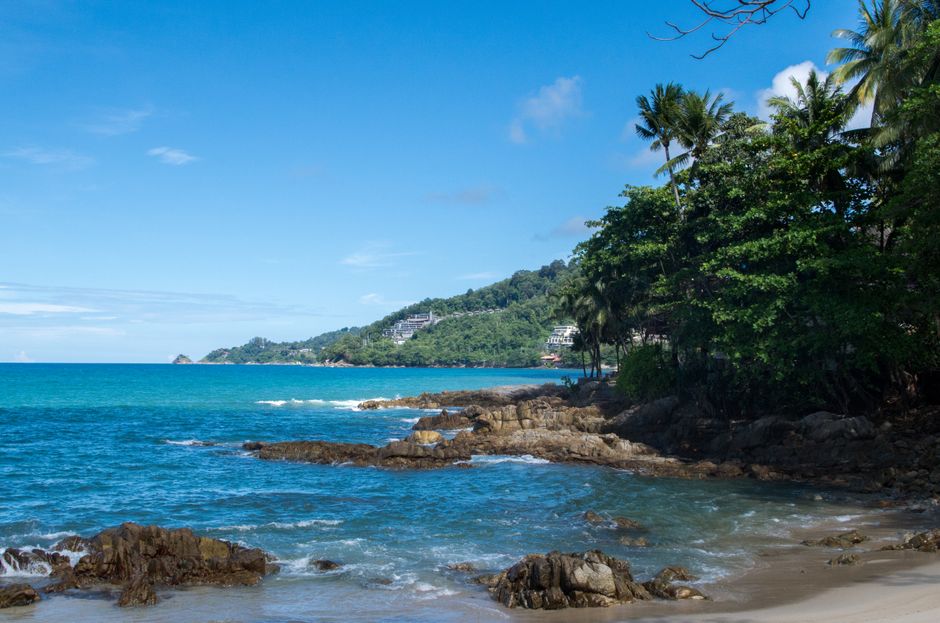
Phuket is Thailand’s largest island, about 50 km (31 miles) long, in the Andaman Sea off the country’s southwest coast: a string of white-sand bays on the west coast, jungle-covered hills in the middle, and a characterful old town of Sino-Portuguese shophouses in the east. It is Thailand’s most popular beach destination and an easy one, with an international airport, hotels for every budget, and day trips to the limestone islands of Phang Nga Bay and the Phi Phi Islands. Come for the beaches of Kata, Karon and Kamala, the nightlife of Patong, the food of Phuket Town, diving and island-hopping, and spas and resorts in the quieter north and south. The best months are November to April, when the sea is usually calm and clear; the southwest monsoon brings rain, big waves and dangerous currents from about May to October.
Right now in Phuket
- Wed 25–29°C 77–84°F 6 mm Rain
- Thu 25–29°C 76–85°F 7 mm Showers
- Fri 26–29°C 79–84°F 5 mm Showers
Weather: MET Norway (CC BY 4.0) · Sea temperature: NOAA CoastWatch · Rates: ECB
Top tours in Phuket
See all tours for Phuket →
From local operators, with prices and reviews; you check availability and book on Viator, our partner. We may earn a commission at no extra cost to you. How we earn money
Phuket at a glance
- Best for: beaches and resorts, island-hopping, snorkeling and diving, nightlife, family holidays, spas, food and Phuket’s old town.
- How long: 4–5 days for the beaches and two boat trips; a week or more to slow down or add Khao Lak or Krabi.
- Best time: December to March, with highs of about 33–34 °C (91–94 °F) and the calmest seas; November and April are good shoulder months.
- Getting there: Phuket International Airport (HKT), in the north of the island, has flights from Bangkok (about 1 hour 20 minutes) and direct flights from Asia, the Middle East, Europe and Australia.
- Getting around: Grab and Bolt, taxis and tuk-tuks with set fares, the Phuket Smart Bus along the west coast, or a rental car.
- Fees to know: marine national parks charge entry fees, usually included in tour prices; the Similan Islands open only from October 15 to May 15.
- Before you go: entry rules, the Thailand Digital Arrival Card, money and general safety are in our Thailand travel guide.
Phuket’s areas: where things are
The west coast is one long chain of beaches separated by headlands; each has its own character. The east coast is mostly mangroves and piers, and Phuket Town sits in the southeast.
Patong
Phuket’s busiest resort, with a long beach, big hotels, shopping malls and the neon nightlife of Bangla Road. Great for night owls, less so for a quiet holiday; it is crowded and the traffic is heavy.
Kata and Karon
Two broad, golden beaches just south of Patong, popular with families and couples, with plenty of mid-range hotels, restaurants and a more relaxed evening scene. Kata Noi, a small cove at the southern end, is one of the island’s prettiest beaches; Kata is also Phuket’s surf beach from June to September.
Kamala, Surin and Bang Tao
North of Patong, smaller bays with upmarket resorts and beach clubs. Bang Tao has the large Laguna resort complex, with several hotels around lagoons and a golf course; Surin’s small beach is lined with luxury villas.
The north: Nai Yang and Mai Khao
The quietest part of the west coast, next to the airport. Mai Khao is a long, wild beach inside Sirinat National Park, where sea turtles nest; Nai Yang has a pine-shaded beach and seafood restaurants. Good for a first or last night, or for peace.
Rawai, Nai Harn and the south
Phuket’s southern tip has a laid-back, residential feel, with Nai Harn beach and lake, the seafood market at Rawai pier and the Promthep Cape viewpoint. Boats leave from Rawai and Chalong for the Racha and Coral islands.
Phuket Town
The provincial capital, inland on the east side, is the cultural heart of the island: colorful Sino-Portuguese shophouses along Thalang, Dibuk and Krabi roads, Chinese shrines, cafés and some of the best food in southern Thailand. Hotels are cheaper here, but you are 30–40 minutes from the nearest beach.
Top things to see on Phuket
Phuket Old Town
Walk the restored streets around Thalang Road and Soi Romanee, built by Hokkien Chinese tin merchants in the 19th and early 20th centuries, with their pastel shophouses, Peranakan mansions and the Jui Tui and Shrine of Serene Light Chinese shrines. On Sunday evenings, Thalang Road becomes the Lard Yai walking street market. The Thai Hua Museum explains the island’s Chinese heritage and tin-mining past.
The Big Buddha
A 45 m (148 ft) white marble Buddha on the Nakkerd Hills between Kata and Chalong, with views over the bays of the south. It is free to visit, with donations welcome; dress modestly (sarongs are provided).
Wat Chalong
Phuket’s most important temple, with a tall chedi said to hold a relic of the Buddha, and murals telling the story of his life. It is the focus of local celebrations at Songkran and other Buddhist holidays.
Promthep Cape
Phuket’s southernmost point is the island’s favorite sunset spot, a grassy headland with a lighthouse and an elephant shrine. Arrive an hour before sunset for a place on the wall, or watch from the quieter Windmill Viewpoint nearby.
Beaches
Phuket has more than 30 beaches. Kata Noi, Nai Harn and Freedom Beach (reached by boat or a steep path) are among the most beautiful; Karon and Kata are long and lively; Mai Khao is the wildest. For more ideas, see our guide to beaches.
More classic sights
- Khao Rang: a hill above Phuket Town with views and a popular restaurant.
- Sirinat National Park: the protected beaches of Nai Yang and Mai Khao and their mangroves; the coral area around Ko Pling is closed to visitors until further notice, according to the national parks department.
- Khao Phra Thaeo: the island’s last rainforest, with short walks to Ton Sai and Bang Pae waterfalls (best in the rainy season).
- Thalang National Museum: the history of Phuket, including the famous defense of the island against a Burmese invasion in 1785 by two sisters, commemorated by the Heroines Monument.
- Phuket Weekend Night Market (Naka): clothes, souvenirs and food stalls on the edge of Phuket Town.
Beaches
- Karon Beach
- Kata Beach
- Kata Noi Beach
- Nai Harn Beach
- Patong Beach
Historic centres
- Old Phuket Town
Protected areas
- Sirinat National Park
Churches and cathedrals
- Wat Chalong
Monuments
- Phuket Giant Buddha
Viewpoints
- Phromthep Cape
Island-hopping, snorkeling and diving
Phuket is the best base in Thailand for boat trips; most tours include hotel pick-up, lunch, snorkel gear and national park fees. Speedboats are faster but bumpier than the bigger ferries and long-tails.
- Phang Nga Bay: towering limestone islands rising from a sheltered green sea, with sea-canoe trips into hidden lagoons, the Muslim fishing village of Ko Panyi built on stilts, and Khao Phing Kan, better known as “James Bond Island”. It is sheltered enough to visit in most weather.
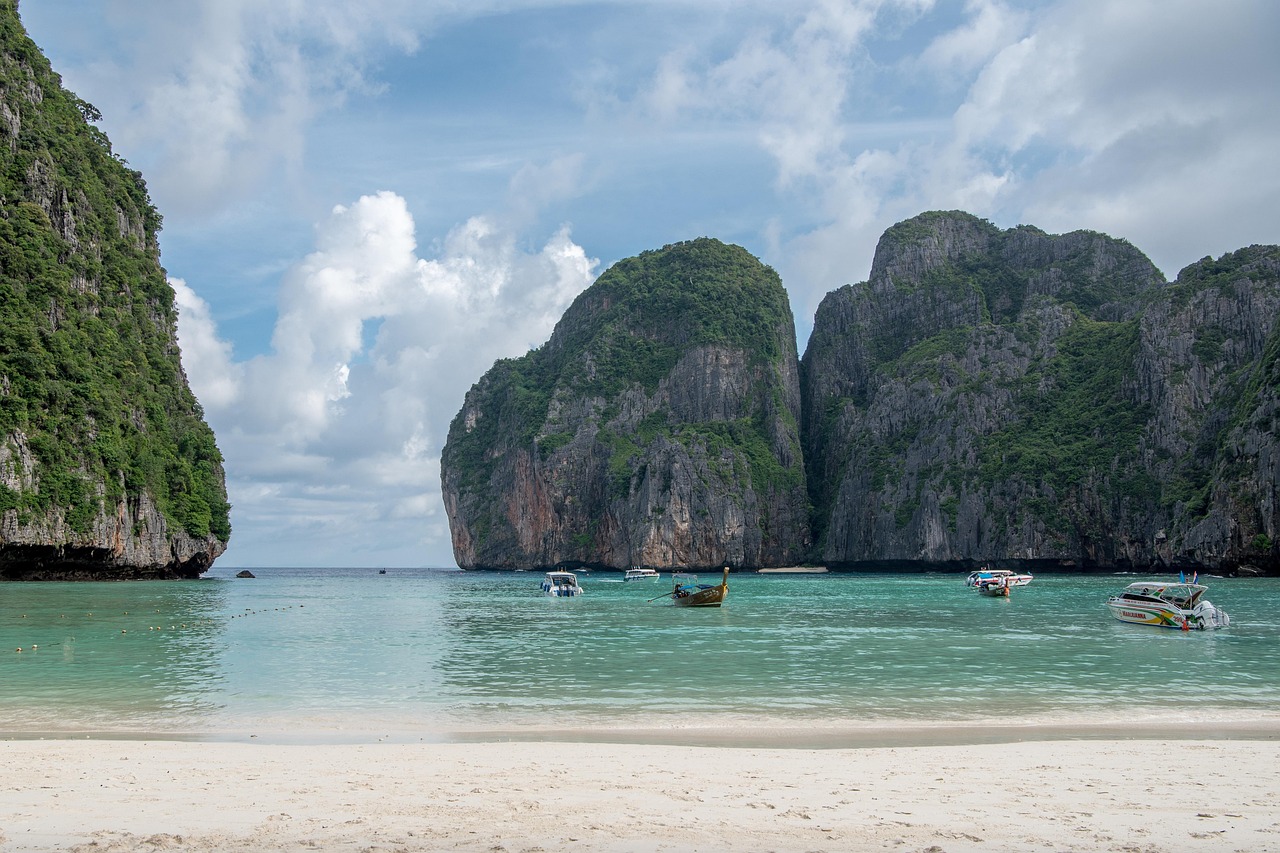
- The Phi Phi Islands: about 1.5–2 hours by ferry or 45 minutes by speedboat, with Maya Bay, Pileh Lagoon and Viking Cave. Maya Bay closes every year from August 1 to September 30, according to the national parks department. See our Ko Phi Phi guide.
- The Racha Islands: Racha Yai’s clear water and reefs, about 45 minutes by speedboat from Chalong, are good for snorkeling and beginner diving.
- Ko Khai and Coral Island: short trips from the south for beaches and snorkeling, popular with families.
- The Similan Islands: one of Thailand’s best dive areas, with granite boulders, clear water and coral, about 1.5 hours by speedboat from Khao Lak, north of Phuket. According to the national parks department, the park is closed from May 16 to October 14 every year, and several dive sites, including Fantasy Reef and Ko Tachai, are closed indefinitely. Visitor numbers are limited, so book well ahead.
Liveaboard dive trips to the Similans, Ko Bon and Richelieu Rock run from late October to May. Don’t touch or stand on coral, choose operators who don’t feed fish, and use reef-safe sunscreen. See our guides to snorkeling, diving and boat trips.
Other things to do on Phuket
Food and drink
Phuket’s food mixes Thai, Hokkien Chinese and Malay influences. Try mee hokkien (fried yellow noodles), moo hong (pork belly braised with black pepper), khanom jeen rice noodles with southern curries for breakfast, o-tao (a taro and oyster omelet) and dim sum in Phuket Town’s old cafés. UNESCO named Phuket a Creative City of Gastronomy in 2015. On the coast, choose your fish and prawns at Rawai’s seafood market and have them cooked next door. The old town’s restaurants range from street stalls to fine Peranakan dining.
Festivals
The Phuket Vegetarian Festival, held for nine days in the ninth month of the Chinese lunar calendar (usually late September or October), is the island’s most famous event: Chinese shrines hold processions of entranced devotees who pierce their cheeks with skewers, amid firecrackers and drums, and stalls sell vegetarian food marked with yellow flags. It is intense and can be graphic. Songkran in mid-April means water fights on Patong’s Bangla Road, and on Loy Krathong (November 24 in 2026) people float krathongs at Saphan Hin and on the beaches.
Nightlife, shows and spas
Patong’s Bangla Road is the loudest night out, with bars, clubs and cabaret shows. Beach clubs in Bang Tao, Kamala and Kata are mellower, with sunset DJs. Muay Thai fights are staged in Patong several nights a week, and Phuket has some of Thailand’s finest resort spas.
Day trips from Phuket
- Phang Nga Bay: a full day by boat or sea canoe, from the piers on the east coast.
- Ko Phi Phi: a day trip by speedboat, or better, a night or two on Phi Phi Don. See our Ko Phi Phi guide.
- Krabi and Ao Nang: about 2.5 hours by road or 2 hours by ferry, for Railay Beach and the Krabi islands. See our Ao Nang guide.
- Khao Lak and the Similan Islands: about 1.5–2 hours north by road, for long beaches and, from October 15 to May 15, the Similan Islands.
- Khao Sok National Park: a rainforest and a lake of limestone karsts, about 3 hours away, best with an overnight stay in a floating raft house.
Nearby destinations
- Ao Nang (Krabi)51 km
- Ko Phi Phi55 km
- Khao Lak72 km
- Ko Lanta90 km
- Ko Lipe198 km
- Langkawi243 km
- Ko Samui247 km
- Ko Pha Ngan268 km
Getting there and getting around
By air, road and sea
Phuket International Airport (HKT), run by Airports of Thailand, is about 30 km (19 miles) north of Phuket Town. It has frequent flights from Bangkok’s Suvarnabhumi and Don Mueang airports with Thai Airways, Thai AirAsia, Bangkok Airways, Thai Lion Air and others, and direct international flights from across Asia, the Middle East and Europe. The island is linked to the mainland by the Sarasin bridges in the north, so buses run from Bangkok’s Southern Bus Terminal (about 12 hours); there is no railway to Phuket, but you can take a train to Surat Thani and a bus from there. Ferries and speedboats link Rassada Pier, near Phuket Town, with Ko Phi Phi, Ao Nang, Railay and Ko Lanta.
Around the island
Phuket’s roads are hilly and congested, and public transport is limited. The Phuket Smart Bus runs from the airport down the west coast to Rawai, and blue songthaew buses run from Phuket Town to the main beaches by day. Grab and Bolt work across the island and are usually cheaper than taxis, though pick-ups from some piers and beaches are restricted. Taxis and tuk-tuks charge fixed fares, which can be high; agree the price before you set off. Renting a car is a good way to explore if you are comfortable driving on the left; you need an International Driving Permit along with your license.
Scooters
Renting a scooter is popular but risky: the roads are steep and busy, and accidents are a leading cause of injury for visitors. You legally need a motorcycle license (and an International Driving Permit covering motorcycles) and a helmet; police run frequent checkpoints, and many travel insurance policies refuse claims for unlicensed riders.
When to go and how long to stay
Phuket lies on the Andaman coast, where the southwest monsoon brings the rain. The table uses the 1991–2020 normals of the Thai Meteorological Department (TMD) for its Phuket station, as submitted to the World Meteorological Organization (WMO): average daily highs and lows, total rain, and days with at least 1 mm of rain.
| Month | Average high / low | Rain (days with 1 mm or more) | What to expect |
|---|---|---|---|
| January | 33 °C (91 °F) / 25 °C (77 °F) | 50 mm (2.0 in), 4 days | Dry, sunny and calm; peak season |
| February | 34 °C (93 °F) / 25 °C (78 °F) | 24 mm (0.9 in), 2 days | The driest month; clear water for diving |
| March | 34 °C (94 °F) / 26 °C (79 °F) | 81 mm (3.2 in), 6 days | Hot and mostly dry; excellent diving |
| April | 34 °C (94 °F) / 26 °C (79 °F) | 135 mm (5.3 in), 10 days | Hot; first storms late in the month; Songkran |
| May | 33 °C (92 °F) / 26 °C (79 °F) | 237 mm (9.3 in), 16 days | Monsoon begins; red flags on west-coast beaches; Similans close mid-month |
| June | 33 °C (91 °F) / 26 °C (78 °F) | 249 mm (9.8 in), 16 days | Showers and sunny spells; surf at Kata and Kalim |
| July | 32 °C (90 °F) / 26 °C (78 °F) | 240 mm (9.5 in), 16 days | Similar to June; good hotel deals |
| August | 32 °C (90 °F) / 26 °C (78 °F) | 309 mm (12.2 in), 17 days | Wet and windy; Maya Bay closed until September 30 |
| September | 32 °C (89 °F) / 25 °C (77 °F) | 350 mm (13.8 in), 19 days | The wettest month; rough seas |
| October | 32 °C (89 °F) / 25 °C (77 °F) | 336 mm (13.2 in), 19 days | Still wet; Vegetarian Festival; Similans reopen October 15 |
| November | 32 °C (90 °F) / 25 °C (77 °F) | 178 mm (7.0 in), 13 days | Drying out; seas calm down later in the month |
| December | 32 °C (90 °F) / 25 °C (77 °F) | 82 mm (3.2 in), 8 days | High season begins; busiest around Christmas and New Year |
Phuket gets about 2,270 mm (89 in) of rain a year, most of it from May to October. Even in the wettest months there are sunny hours most days, and hotel prices fall by a third or more, but the sea on the west coast is often too rough for swimming, and some boat trips are canceled when the waves are high.
Weather month by month
Averages from TMD normals 1991–2020, Phuket · Last reviewed 5 Oct 2026
4 days on Phuket
Day one, Phuket Old Town and dinner at a local restaurant. Day two, Phang Nga Bay by long-tail or sea canoe. Day three, a speedboat trip to the Phi Phi Islands (outside August and September) or the Racha Islands. Day four, the Big Buddha, a beach in the south and sunset at Promthep Cape.
A week or more
Add lazy beach days, a dive course, a cooking class and a spa day, or move on to Ko Phi Phi, Ao Nang or Khao Lak by boat or road.
Where to stay on Phuket
- Patong: big hotels and nightlife, close to everything but busy.
- Kata and Karon: the best all-round choice for families and couples, with good beaches and a wide range of hotels.
- Kamala, Surin and Bang Tao: upmarket resorts, villas and beach clubs.
- Nai Yang and Mai Khao: quiet beaches and resorts near the airport.
- Rawai and Nai Harn: relaxed villas and small hotels, good for longer stays.
- Phuket Town: boutique hotels in old shophouses, the best food, and the lowest prices.
Many resort rates are quoted with 10% service charge and 7% VAT added (“++”). Prices roughly halve from May to October.
What a trip to Phuket costs
Prices are approximate, for October 2026, converted at about 33 baht to the US dollar.
| Item | Typical cost |
|---|---|
| Street food dish or noodle soup | 60–120 baht (about US$1.80–3.60) |
| Seafood dinner for two in Rawai or Phuket Town | 800–1,800 baht (about US$24–55) |
| Beer in a beach bar | 100–180 baht (about US$3–5.50) |
| Phuket Smart Bus ride | 100–170 baht (about US$3–5) |
| Taxi from the airport to Patong or Kata | 800–1,200 baht (about US$24–36) |
| Phang Nga Bay or Phi Phi day tour, including park fees | 1,500–3,500 baht (about US$45–105) |
| Two fun dives with equipment | 3,500–5,500 baht (about US$105–165) |
| Mid-range beach hotel double, high season | 2,500–6,000 baht (about US$75–180) |
| Luxury resort or pool villa, high season | 8,000–30,000 baht (about US$240–910) |
Practical tips for Phuket
- Book boat trips with care: choose licensed operators, check that life jackets are provided, and accept a cancellation when the sea is rough.
- Jet skis: rentals have a long record of disputes over “damage”; photograph the machine before you ride, or skip it.
- Sun: the tropical sun is strong even on cloudy days; use reef-safe sunscreen and drink plenty of water.
- Temples: cover shoulders and knees at Wat Chalong and the Big Buddha.
- Cannabis and vaping: cannabis flower is a controlled herb that needs a Thai prescription, and e-cigarettes are illegal in Thailand, despite what you may see on sale.
- Help: the Tourist Police (1155) speak English, and the TAT Contact Center (1672) answers tourist questions.
Safety
Phuket is a safe island for most visitors; the main risks are the sea and the roads.
- Sea conditions and monsoon flags: from about May to October, strong rip currents form on the west-coast beaches, including Patong, Karon, Kata, Kamala, Surin and Nai Harn, and drownings happen every year. Lifeguards fly red flags when swimming is unsafe; obey them, swim only between flags where they are posted, and never swim after drinking. If a current pulls you out, swim parallel to the shore and signal for help.
- Jellyfish: box jellyfish have occasionally been reported in some places, such as Nam Bo Bay on the southeast coast, mostly in the rainy season. Swim where nets or notices are posted, carry vinegar, and call 1669 if stung.
- Road safety: Phuket’s roads are among the most dangerous in Thailand for scooter riders; wear a helmet, avoid riding at night or after drinking, and take Grab or a taxi instead.
- Scams: beware jet-ski damage claims, overpriced tuk-tuks and “free” island tours that end in a sales pitch, and check bar bills in Patong.
- Heat: drink plenty of water and avoid the midday sun, especially in March and April.
- Tsunamis: the 2004 tsunami struck the west coast; today warning towers and blue evacuation-route signs line the beaches. If you feel a strong earthquake or hear a siren, move inland and uphill at once.
- Emergencies: call 1155 for the Tourist Police (English spoken), 191 for the police and 1669 for an ambulance.
What to pack for Phuket
Swimwear and a rash guard, reef-safe sunscreen, a hat and sunglasses, sandals and water shoes for rocky coves, a dry bag for boat trips, a light rain jacket from May to October, and a sarong or long trousers for temples. Thailand uses 220 V; sockets take both flat two-pin and round two-pin plugs.
Phuket travel FAQ
When is the best time to visit Phuket?
December to March, when the weather is dry and the sea calm. May to October is the monsoon season: cheaper, greener and still often sunny, but rougher at sea.
Is it safe to swim in Phuket during the rainy season?
Only where lifeguards say so. From about May to October, rip currents are common on the west-coast beaches; never swim when red flags are flying.
Which is the best beach area to stay in Phuket?
Kata and Karon for families and couples, Patong for nightlife, Kamala to Bang Tao for upmarket resorts, and Nai Harn or Mai Khao for peace.
How do I get from Phuket Airport to Patong?
By taxi or Grab, about 45–60 minutes, or by the Phuket Smart Bus along the west coast.
Can I visit the Phi Phi Islands from Phuket?
Yes, by day tour or ferry. Maya Bay is closed every year from August 1 to September 30.
When are the Similan Islands open?
From October 15 to May 15. The national park is closed from May 16 to October 14 every year.
Do I need a license to rent a scooter in Phuket?
Yes. You need a motorcycle license from home plus an International Driving Permit that covers motorcycles, and you must wear a helmet.
Can I use Grab and Bolt in Phuket?
Yes, both apps work across the island and are usually cheaper than taxis, though pick-ups from some piers and beaches are restricted.
What is the Phuket Vegetarian Festival?
A nine-day Taoist festival in the ninth Chinese lunar month, usually late September or October, with street processions, firecrackers and vegetarian food.
How many days do I need in Phuket?
Four or five days for a mix of beaches and two boat trips; a week or more for a relaxed holiday.
Sources and last review
Researched and last reviewed on 4 October 2026. National park closures (Similan Islands, Maya Bay, Ko Pling): the Department of National Parks, Wildlife and Plant Conservation; jellyfish areas, Songkran, cannabis, e-cigarette rules and the Tourist Police: the Tourism Authority of Thailand (TAT); climate normals: the Thai Meteorological Department via the World Meteorological Organization’s 1991–2020 normals; Loy Krathong date: the 12th-month full moon from the US Naval Observatory; exchange rate: the US Federal Reserve. Flight times, transport fares, beach and sight descriptions, festival customs and typical prices are general references or estimates, flagged for checking. Prices and seasons change, so check the official sites before you go. For entry rules, money and general safety, see our Thailand travel guide.
Plan your trip
Partner links: TravelerCenter may earn a commission if you book, at no extra cost to you.
🇹🇭 Useful Thai phrases for Phuket
All 38 Thai phrases: restaurant, hotel, emergencies, romance (printable) →