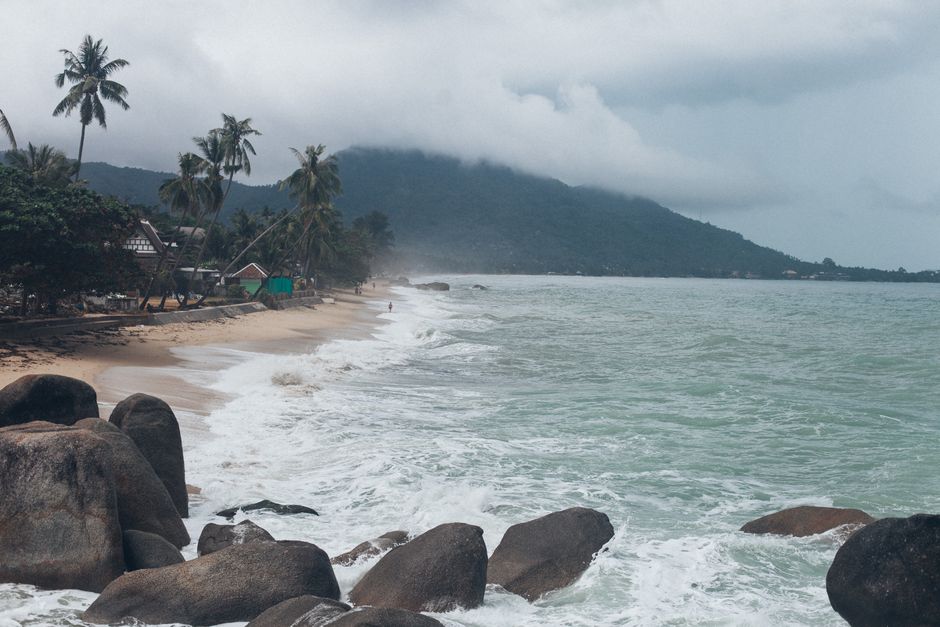
Ko Samui is Thailand’s second-largest island and the best known of the Gulf of Thailand, about 35 km (22 miles) off the east coast of southern Thailand: a rounded, hilly island covered in coconut palms and jungle, ringed by beaches of soft white sand. It has grown from a backpacker hideaway into one of Asia’s favorite resort islands, with everything from beach bungalows to some of Thailand’s finest villa resorts, and in 2026 it topped the Best Islands list in the Travel + Leisure Luxury Awards Asia Pacific. Come for the beaches of Chaweng, Lamai and Bophut, the Big Buddha and the temples, the Friday night market in Fisherman’s Village, waterfalls and viewpoints in the hills, wellness retreats, and boat trips to Ang Thong Marine National Park and the neighboring islands of Ko Pha Ngan and Ko Tao. Samui’s weather follows a different pattern from Phuket’s: it is driest from about January to August, and wettest from October to December, when the northeast monsoon brings heavy rain.
Right now in Ko Samui
- Wed 24–29°C 76–84°F 15 mm Showers
- Thu 25–29°C 76–84°F 8 mm Rain
- Fri 25–28°C 76–82°F 7 mm Light rain
Weather: MET Norway (CC BY 4.0) · Sea temperature: NOAA CoastWatch · Rates: ECB
Top tours in Ko Samui
See all tours for Ko Samui →
From local operators, with prices and reviews; you check availability and book on Viator, our partner. We may earn a commission at no extra cost to you. How we earn money
Ko Samui at a glance
- Best for: beach holidays and honeymoons, villa resorts and spas, families, island-hopping, snorkeling and diving trips, and wellness retreats.
- How long: 4–5 days for the beaches and one boat trip; a week or more to add Ko Pha Ngan or Ko Tao.
- Best time: January to August, with highs of about 29–33 °C (84–91 °F); February to April are the driest and calmest months.
- Getting there: about 1 hour by air from Bangkok to Samui Airport (USM), or by flight or train to Surat Thani and a ferry from the mainland.
- Getting around: taxis and songthaews, ride-hailing apps, or a rental car or scooter on the ring road.
- Fees to know: Ang Thong Marine National Park charges an entry fee, usually included in tour prices, and closes every year from November 1 to December 15.
- Before you go: entry rules, the Thailand Digital Arrival Card, money and general safety are in our Thailand travel guide.
Ko Samui’s areas: where things are
A ring road about 50 km (31 miles) long circles the island, and most beaches lie on its north and east coasts; the hilly, jungle-covered interior is crossed only by a few steep roads.
Chaweng
Samui’s longest and busiest beach, on the east coast, with fine white sand, clear water and a long strip of hotels, restaurants, shops and nightlife behind it. North Chaweng and Chaweng Noi, at either end, are calmer.
Lamai
South of Chaweng, a long beach with a more relaxed feel and a mix of resorts and budget bungalows, close to the Hin Ta and Hin Yai rock formations and good local restaurants.
Bophut and Fisherman’s Village
On the north coast, a charming strip of old wooden Chinese shophouses turned into boutique hotels, restaurants and bars, with a calm beach and views of Ko Pha Ngan. The Friday night Walking Street market is one of the island’s highlights.
Mae Nam, Bang Rak and Choeng Mon
The north coast’s quieter beaches: Mae Nam’s long sweep of sand with mid-range resorts and a weekly walking street; Bang Rak, near the Big Buddha and the airport, with ferry piers to Ko Pha Ngan; and Choeng Mon’s sheltered coves in the northeast, popular with families and luxury resorts.
The south and west coasts
Quieter still, with fishing villages, local life and sunset views: Taling Ngam and Lipa Noi in the west, Laem Set and Bang Kao in the south. Nathon, the island’s main town and ferry port, is on the west coast.
Top things to see on Ko Samui
The Big Buddha (Wat Phra Yai)
A golden seated Buddha, about 12 m (39 ft) high, on a small island joined to the northeast coast by a causeway. It is Samui’s best-known landmark and a lovely spot at sunset. Climb the steps barefoot and dress modestly; sarongs are available.
Wat Plai Laem
A short drive from the Big Buddha, this colorful temple stands on a lake, with a striking 18-armed statue of the goddess Guanyin and a white chapel. Feeding the catfish in the lake is a local custom.
Fisherman’s Village
Stroll the wooden houses and seafront of Bophut, then come back on a Friday evening, when the main street becomes a walking market of food stalls, crafts and street performers.
Hin Ta and Hin Yai
Two rock formations at the southern end of Lamai, whose suggestive shapes earned them the names “Grandfather” and “Grandmother” rocks. The site is a little touristy, but the rocks and the sea views are fun; there are snack and coconut-candy stalls nearby.
Na Muang waterfalls
Two waterfalls in the jungle in the south of the island: Na Muang 1, an easy walk from the road with a natural pool, and Na Muang 2, higher and reached by a steeper trail. They are best in the rainy season, when the water flows strongly; take care on slippery rocks.
More classic sights
- The Secret Buddha Garden (Magic Garden): a hillside garden of statues created by a local durian farmer, high in the island’s interior, reached by four-wheel drive.
- Wat Khunaram: a temple on the southern ring road where a revered monk’s mummified body sits in a glass case.
- Lad Koh and Overlap Stone viewpoints: views over Chaweng and the east coast from the hills.
- Silver Beach (Crystal Bay): a small, pretty cove between Chaweng and Lamai with good snorkeling.
- Chaweng Lake: a lakeside walk and evening market behind the beach.
Churches and cathedrals
- Wat Khunaram
- Wat Plai Laem
Beaches
- Choeng Mon
- Silver Beach
Islands, snorkeling and diving
Ang Thong Marine National Park
The 42 islands of Mu Ko Ang Thong National Park, about 30 km (19 miles) west of Samui, are a spectacular archipelago of jungle-clad limestone islands, hidden lagoons and white beaches. Day trips by speedboat or larger boat include snorkeling, kayaking among the islands, a climb to the viewpoint on Ko Wua Talap and a walk to the Emerald Lake (Thale Nai), a saltwater lake inside Ko Mae Ko. According to the national parks department, the whole park closes every year from November 1 to December 15, during the roughest weather. Boats may also be canceled at other times when the sea is rough. See our guide to boat trips.
Ko Pha Ngan and Ko Tao
Samui’s neighbors are easy to reach by ferry. Ko Pha Ngan, 30 minutes to an hour away, is famous for the Full Moon Party at Haad Rin, but also has quiet beaches, yoga retreats and jungle. Ko Tao, about 1.5 to 2 hours away, is one of the world’s busiest places to learn to dive, with reefs and dive sites such as Chumphon Pinnacle and Sail Rock. See our guides to snorkeling and diving.
Beaches and water sports
Samui’s calmest swimming beaches are on the north coast, such as Bophut, Mae Nam and Choeng Mon; the east coast beaches are livelier, with water sports, beach clubs and kite-surfing when the wind blows. See our guide to beaches.
Activities and best months
- Boat tripsMu Ko Ang Thong Marine National Park, the usual day trip from Ko Samui, closes every year from 1 November to 15 December. · source
Other things to do on Ko Samui
Food and drink
Samui’s food blends southern Thai cooking with the seafood of the Gulf: try spicy southern curries such as gaeng som and gaeng tai pla, khao yam rice salad, grilled squid and fresh crab, and the island’s coconuts in sweets and curries. The Friday night market in Fisherman’s Village and the Lamai and Chaweng night markets are full of food stalls; beachfront restaurants set out tables on the sand at night, and the island has a growing fine-dining scene in its luxury resorts.
Wellness and spas
Samui is one of Thailand’s main wellness destinations, with detox and yoga retreats, Muay Thai training camps and dozens of resort spas, many on hillsides with sea views.
Festivals
Songkran in mid-April is celebrated with water fights on Chaweng Beach Road, and buffalo-fighting festivals (a local tradition of bulls pitted against each other, not against people) are held on some holidays. On Loy Krathong (November 24 in 2026) people float krathongs on the beaches and Chaweng Lake.
Day trips from Ko Samui
- Ang Thong Marine National Park: a full day by boat, from December 16 to October 31.
- Ko Pha Ngan: beaches, viewpoints and waterfalls, by ferry from Bang Rak, Mae Nam or Nathon.
- Ko Tao: snorkeling and diving, by speedboat or high-speed catamaran; better with a night or two.
- Ko Tan and Ko Madsum: small islands off the south coast, for snorkeling and quiet beaches by long-tail boat.
- Khao Sok National Park: a rainforest with a lake of limestone karsts on the mainland, about 3 hours away by ferry and road, best with an overnight stay.
Nearby destinations
- Ko Pha Ngan27 km
- Ko Tao68 km
- Ao Nang (Krabi)208 km
- Khao Lak216 km
- Ko Lanta234 km
- Ko Phi Phi239 km
- Phuket247 km
Getting there and getting around
By air
Samui International Airport (USM), in the northeast of the island, is privately owned by Bangkok Airways and known for its open-air, garden-style terminal. Bangkok Airways and Thai Airways fly from Bangkok’s Suvarnabhumi Airport in about 1 hour, and there are flights from Phuket, Chiang Mai, Krabi, Singapore, Kuala Lumpur, Hong Kong and some Chinese cities. Because the airport is small, fares are often high; a cheaper option is to fly to Surat Thani (URT) on the mainland and take a combined bus and ferry ticket to the island.
By train, bus and ferry
The State Railway of Thailand (SRT) runs overnight trains from Bangkok’s Krung Thep Aphiwat Central Terminal to Surat Thani (Phun Phin station), about 10 to 12 hours, where combined bus and ferry tickets continue to Samui. Car ferries and passenger ferries run from Don Sak pier, east of Surat Thani, to Nathon and Lipa Noi in about 1.5 hours, and high-speed catamarans link Samui with Ko Pha Ngan, Ko Tao and Chumphon. Sailings can be canceled in rough weather, especially from October to December.
Around the island
Taxis rarely use meters and charge set fares, which can be high; agree the price first. Shared songthaews run around the ring road by day for a small fare. Ride-hailing apps such as Grab and Bolt also operate on the island, though fewer cars are available than in Bangkok. Renting a car is a good way to explore; scooters are popular, but you need a motorcycle license, an International Driving Permit and a helmet, and the hill roads are very steep.
When to go and how long to stay
Ko Samui sits in the Gulf of Thailand, sheltered from the southwest monsoon that soaks Phuket from May to October; its rainy season comes later, with the northeast monsoon. The table uses the 1991–2020 normals of the Thai Meteorological Department (TMD) for its Ko Samui station, as submitted to the World Meteorological Organization (WMO): average daily highs and lows, total rain, and days with at least 1 mm of rain.
| Month | Average high / low | Rain (days with 1 mm or more) | What to expect |
|---|---|---|---|
| January | 29 °C (84 °F) / 24 °C (76 °F) | 127 mm (5.0 in), 8 days | Showers early in the month, then drying out; breezy |
| February | 29 °C (85 °F) / 25 °C (77 °F) | 64 mm (2.5 in), 4 days | Sunny and calm; one of the best months |
| March | 30 °C (87 °F) / 25 °C (78 °F) | 116 mm (4.6 in), 5 days | Mostly dry and sunny; clear water |
| April | 32 °C (89 °F) / 26 °C (79 °F) | 83 mm (3.3 in), 6 days | Hot and calm; Songkran water festival |
| May | 33 °C (91 °F) / 26 °C (78 °F) | 132 mm (5.2 in), 11 days | The hottest month; afternoon showers |
| June | 33 °C (91 °F) / 25 °C (78 °F) | 134 mm (5.3 in), 10 days | Mostly fine; a good choice when the Andaman coast is wet |
| July | 32 °C (90 °F) / 25 °C (77 °F) | 117 mm (4.6 in), 11 days | Busy summer holidays; mostly fine |
| August | 32 °C (90 °F) / 25 °C (77 °F) | 102 mm (4.0 in), 10 days | Mostly fine; busy with European families |
| September | 32 °C (89 °F) / 25 °C (77 °F) | 118 mm (4.6 in), 11 days | Showers increase; quieter and cheaper |
| October | 31 °C (87 °F) / 24 °C (76 °F) | 295 mm (11.6 in), 16 days | Northeast monsoon rains begin |
| November | 30 °C (85 °F) / 24 °C (75 °F) | 445 mm (17.5 in), 16 days | The wettest month; rough seas; Ang Thong closed from November 1 |
| December | 29 °C (85 °F) / 24 °C (75 °F) | 263 mm (10.4 in), 12 days | Still wet and windy early on; Ang Thong reopens December 16; busy at Christmas |
Samui gets about 1,990 mm (79 in) of rain a year, more than half of it from October to December, when heavy downpours, strong winds and rough seas can cancel ferries and flood low roads. From January to September it is mostly sunny, with short showers.
Weather month by month
Averages from TMD normals 1991–2020, Ko Samui · Last reviewed 5 Oct 2026
4 days on Ko Samui
Day one, the Big Buddha, Wat Plai Laem and an afternoon in Fisherman’s Village (on a Friday, stay for the night market). Day two, a boat trip to Ang Thong Marine National Park. Day three, the south: Hin Ta and Hin Yai, Na Muang waterfalls and the Secret Buddha Garden, with sunset in the west. Day four, beach time and a spa.
A week or more
Add a day or two on Ko Pha Ngan and a dive trip or a few nights on Ko Tao.
Where to stay on Ko Samui
- Chaweng: the most choice, the best beach and nightlife, but busy.
- Lamai: a relaxed beach with good-value hotels.
- Bophut and Fisherman’s Village: boutique hotels, restaurants and charm, close to the airport.
- Mae Nam and Bang Rak: quieter beaches and mid-range resorts, close to the Ko Pha Ngan ferries.
- Choeng Mon: sheltered coves and luxury resorts, good for families.
- The west and south coasts: sunsets, villas and local life, away from the crowds.
Many resorts quote rates with 10% service charge and 7% VAT added (“++”). Prices are highest from late December to April and in July and August.
What a trip to Ko Samui costs
Prices are approximate, for October 2026, converted at about 33 baht to the US dollar.
| Item | Typical cost |
|---|---|
| Street food or market dish | 60–120 baht (about US$1.80–3.60) |
| Beachfront dinner for two | 1,200–3,000 baht (about US$36–90) |
| Taxi from the airport to Chaweng | 300–500 baht (about US$9–15) |
| Ang Thong day trip, including park fee | 1,800–3,000 baht (about US$55–90) |
| Ferry from Don Sak to Samui | 150–300 baht (about US$4.50–9) |
| One-hour Thai massage on the beach | 300–500 baht (about US$9–15) |
| Mid-range beach hotel double | 2,500–6,000 baht (about US$75–180) |
| Luxury pool villa | 10,000–40,000 baht (about US$300–1,200) |
Practical tips for Ko Samui
- Agree taxi fares first: they are not metered; ask your hotel for typical prices.
- Ferries and weather: from October to December, leave a buffer day before an international flight in case boats are canceled.
- Temples: cover shoulders and knees at the Big Buddha and Wat Plai Laem.
- Cannabis and vaping: cannabis flower needs a Thai prescription, and e-cigarettes are illegal in Thailand.
- Help: the Tourist Police (1155) speak English, and the TAT Contact Center (1672) answers tourist questions.
Safety
Ko Samui is a safe, easygoing island; most accidents happen on the roads or in the sea.
- Sea conditions and monsoon flags: from about October to January, the northeast monsoon brings big waves and rip currents to the east-coast beaches, including Chaweng and Lamai. Swim only when lifeguards’ flags allow it, never when red flags fly, and keep to the calmer north coast in rough weather.
- Jellyfish: box jellyfish are occasionally reported around Ko Samui and Ko Pha Ngan, mainly in the rainy season; swim where notices and vinegar stations are posted, and call 1669 if stung.
- Road safety: the ring road is busy and the hill roads very steep; scooter accidents are the most common cause of injury, so wear a helmet and don’t ride after drinking.
- Heat: drink plenty of water and use strong sunscreen, especially from April to August.
- Scams: agree taxi prices before you ride, and photograph rental scooters and jet skis before you take them.
- Emergencies: call 1155 for the Tourist Police (English spoken), 191 for the police and 1669 for an ambulance.
What to pack for Ko Samui
Swimwear and a rash guard, reef-safe sunscreen, a hat and sunglasses, sandals and water shoes, a dry bag for boat trips, a light rain jacket from October to December, and a sarong or long trousers for temples. Thailand uses 220 V; sockets take both flat two-pin and round two-pin plugs.
What to pack
- Dry bags and phone pouchesSpray soaks phones and cameras on open boats to the Algarve caves and on whale-watching trips.
- Fleeces and warm layersIt is cooler at sea than on land, especially on morning whale-watching trips.
- Rain jacketsA windproof, waterproof shell keeps you warm on open boats, where wind and spray cool you quickly.
- Reef-friendly sunscreenSun reflects off the water on cruises and cave tours.
- Water shoesKayak and small-boat trips to the Algarve grottoes land on rock and wet sand.
Ko Samui travel FAQ
When is the best time to visit Ko Samui?
From January to August, and especially February to April. The heaviest rain falls from October to December.
When is the rainy season on Ko Samui?
Mainly October to December, with November the wettest month, when the northeast monsoon brings heavy rain and rough seas.
Is Ko Samui a good choice from May to October?
Yes, for most of that period: Samui is mostly sunny from May to September, when Phuket and the Andaman coast are wet.
How do I get to Ko Samui?
Fly from Bangkok to Samui Airport in about 1 hour, or fly or take the train to Surat Thani and continue by bus and ferry.
When is Ang Thong Marine National Park closed?
Every year from November 1 to December 15, according to the national parks department; boats may also be canceled in rough weather.
Which beach is best on Ko Samui?
Chaweng for lively beach life, Lamai for a relaxed feel, Bophut for charm and restaurants, and Choeng Mon or Mae Nam for peace.
Can I visit Ko Pha Ngan and Ko Tao from Samui?
Yes, both are easy by ferry or speedboat, about 30 minutes to an hour to Ko Pha Ngan and 1.5 to 2 hours to Ko Tao.
Is there Grab on Ko Samui?
Ride-hailing apps such as Grab and Bolt work on the island, but there are fewer cars than in cities; taxis charge set fares.
How many days should I spend on Ko Samui?
Four or five days for the beaches and one boat trip; a week or more to add Ko Pha Ngan or Ko Tao.
Is Ko Samui expensive?
It is pricier than many Thai islands because of the airport and luxury resorts, but budget bungalows, local restaurants and markets keep costs down.
Sources
- © OpenStreetMap contributors · ODbL · fetched 5 Oct 2026
- Wikidata · CC0 · fetched 5 Oct 2026
Sources and last review
Researched and last reviewed on 4 October 2026. Ang Thong closure dates: the Department of National Parks, Wildlife and Plant Conservation; the Travel + Leisure island ranking, jellyfish areas, cannabis and e-cigarette rules and the Tourist Police: the Tourism Authority of Thailand (TAT); climate normals: the Thai Meteorological Department via the World Meteorological Organization’s 1991–2020 normals; Loy Krathong date: the 12th-month full moon from the US Naval Observatory; exchange rate: the US Federal Reserve. Flight and ferry times, transport fares, sight descriptions and typical prices are general references or estimates, flagged for checking. Prices and schedules change, so check the official sites before you go. For entry rules, money and general safety, see our Thailand travel guide.
Plan your trip
Partner links: TravelerCenter may earn a commission if you book, at no extra cost to you.
🇹🇭 Useful Thai phrases for Ko Samui
All 38 Thai phrases: restaurant, hotel, emergencies, romance (printable) →