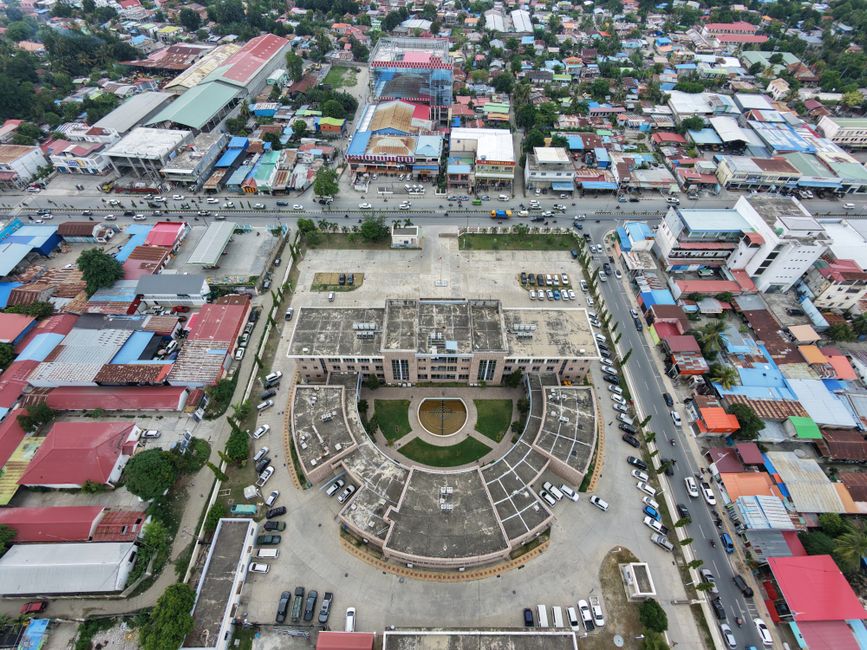
Dili, the capital of Timor-Leste, is a small, low-rise seaside city strung for about 15 km (9 miles) along a sheltered bay on the north coast of Timor, with steep, dry hills behind it and the island of Atauro on the horizon. It is a relaxed place of Portuguese colonial buildings, Catholic churches, banyan trees and a long waterfront promenade where families gather at sunset, and it carries the memory of the country’s struggle for independence. At the eastern end of the bay, the 27 m (89 ft) Cristo Rei statue stands on a headland above two of the best beaches near any Asian capital, while in town, the Timorese Resistance Archive and Museum and the Chega! exhibition in a former prison tell the story of the Indonesian occupation and the road to independence in 2002. Dili is also the base for diving and snorkeling along the coast and on Atauro, for whale-watching trips in October and November, and for journeys into the mountains and the east. It has the country’s only real choice of hotels, restaurants and cafés, and most of its ATMs. The currency is the US dollar, and visitors get a visa on arrival at the airport. The best time to visit is the dry season, from about June to November.
Right now in Dili
- Wed 22–30°C 72–86°F 1 mm Light showers
- Thu 24–30°C 74–86°F Mostly clear
- Fri 23–31°C 73–87°F Clear
Weather: MET Norway (CC BY 4.0) · Sea temperature: NOAA CoastWatch
Top tours in Dili
See all tours for Dili →
From local operators, with prices and reviews; you check availability and book on Viator, our partner. We may earn a commission at no extra cost to you. How we earn money
Dili at a glance
- Best for: beaches and sunsets, Cristo Rei, resistance history and museums, diving, snorkeling and whale watching, waterfront cafés and seafood, and markets for tais textiles.
- How long: 2–3 days in the city, plus 2–3 days on Atauro Island.
- Best time: the dry season, from about June to November; December to May is the wet season.
- Getting there: Presidente Nicolau Lobato International Airport is about 6 km (4 miles) west of the center, with flights from Bali, Darwin and Singapore; visas are issued on arrival.
- Getting around: by taxi (unmetered), microlet minibuses, rented car or on foot along the waterfront.
- Good to know: bring US dollars in small, post-2009 notes; ATMs are scarce outside Dili.
- Before you go: the visa on arrival, money and general safety are in our Timor-Leste travel guide.
Dili’s story in brief
The Portuguese moved their colonial capital to Dili from Lifau, in today’s Oecussi, in 1769, and it remained a quiet port of whitewashed buildings, churches and coffee warehouses for two centuries. During World War II, it was bombed and occupied by Japan. Indonesian forces invaded the city on December 7, 1975, and it became the center of the occupation. After the 1999 referendum, departing militias burned and looted much of Dili, and the city was rebuilt under UN administration and after independence in 2002; further unrest in 2006 displaced many residents. Today it is growing fast, with new government buildings, a convention center and an expanding waterfront, while keeping its small-town atmosphere.
Dili’s areas and where to stay
The city follows the curve of the bay from the airport and Comoro in the west to Cristo Rei in the east, with the government palace and the old Portuguese center in the middle.
The center and the waterfront
Around the Palácio do Governo, the Portuguese-era government palace, and the waterfront Avenida de Portugal are ministries, banks, cafés, restaurants and several hotels; the promenade and the seafront park are the city’s social heart at sunset.
Lecidere and the eastern waterfront
East of the center, Lecidere and the beach road toward Areia Branca have waterfront restaurants, bars, dive shops and guesthouses, with fish grilled at stalls along the beach.
Areia Branca and Cristo Rei
At the eastern end of the bay, Areia Branca (“white sand”) has a calm beach lined with cafés and a few hotels, a short drive from the Cristo Rei headland.
Comoro and the west
Toward the airport, Comoro and the western suburbs have markets, the Tasi Tolu lakes, newer hotels and the Dili Convention Center.
Where to stay in Dili
- Waterfront and center: the widest range of hotels and guesthouses, close to restaurants and the Palácio.
- Lecidere and Areia Branca: beachside guesthouses and small hotels, ideal for sunsets and swimming.
- Near the airport: business hotels for early flights.
- Budget: a few hostels and simple guesthouses in the center.
Choose accommodation with secure doors and parking, and book ahead around public holidays and major conferences.
Top things to see in Dili
Cristo Rei
The statue of Cristo Rei (Christ the King), 27 m (89 ft) tall on a globe, was built in 1996 during the Indonesian period on the Fatucama headland at the eastern end of the bay. About 500 steps, with Stations of the Cross along the way, climb to the statue, with sweeping views of the bay, Atauro and the beaches below. Go early in the morning or late in the afternoon, when it is cooler and the light is golden, and bring water.
Cristo Rei beaches
Below the statue, the small Cristo Rei Beach faces the city, while on the far side of the headland, Jesus Backside Beach (Dolok Oan) is a beautiful, quiet cove of white sand and clear water, good for swimming and snorkeling in calm conditions. Facilities are limited, so bring water and shade.
Timorese Resistance Archive and Museum
The Arquivo e Museu da Resistência Timorense in central Dili tells the story of the 24-year resistance to Indonesian occupation through photographs, documents, weapons, radio equipment and the testimonies of fighters, from the 1975 invasion to the 1999 referendum and independence. It is the best introduction to modern Timor-Leste.
Chega! exhibition at Balide
The Centro Nacional Chega!, in the former Comarca Balide prison, where political prisoners were held and tortured under both Portuguese and Indonesian rule, presents the findings of the country’s truth commission, Chega! (“Enough!”), with preserved cells and exhibitions on human rights. It is sobering and moving.
Santa Cruz Cemetery
On November 12, 1991, Indonesian troops opened fire on a peaceful procession to the Santa Cruz Cemetery, killing many young Timorese; footage of the massacre, smuggled out by foreign journalists, drew world attention to Timor’s cause. The cemetery remains a place of remembrance, especially on the anniversary.
More classic sights
- Palácio do Governo: the white Portuguese-era government palace on the waterfront, best seen from outside.
- Immaculate Conception Cathedral: Dili’s large cathedral, built in 1988, busy at Sunday Mass.
- Tais Market: a market of handwoven tais textiles from every region, plus baskets and crafts.
- Motael Church: the oldest church in Dili, on the waterfront, a focal point of the resistance.
- Xanana Gusmão Reading Room and the national library: exhibitions, books and cultural events.
- Tasi Tolu: three saltwater lakes west of the city, with views of the coast and Atauro; Pope John Paul II celebrated Mass here in 1989, and a statue marks the site.
- Largo de Lecidere: a waterfront square with a Portuguese-era monument, fishing boats and seafood stalls in the evening.
- Dili’s markets: the main fresh markets in Comoro and Becora, where farmers sell mountain vegetables, coffee and betel nut, are lively in the early morning.
Other things to do in Dili
Diving and snorkeling
Dili has some of the best shore diving in Southeast Asia, with reefs dropping off close to the coast east and west of the city at sites such as K41, Dili Rock and Tasi Tolu, where you may see turtles, nudibranchs, frogfish and occasional dolphins. Several dive centers in Dili offer guided dives, courses and boat trips to Atauro, whose reefs are among the most species-rich in the world. Visibility is best in the dry season. See our diving and snorkeling guides.
Whale watching
From about August to December, and especially in October and November, whales and dolphins migrate through the deep Wetar Strait just off Dili, including pygmy blue whales, pilot whales and sperm whales; specialist operators run day trips by boat, and sightings from the coast road and the Atauro ferry are possible. See our boat trips guide.
Food and drink
Dili’s waterfront is the place for grilled fish at sunset, bought from roadside stalls or seafood restaurants. Try Timorese dishes such as ikan sabuko (grilled fish with spices), batar da’an (corn, beans and pumpkin stew) and feijoada, Indonesian favorites, Portuguese pastries and Timor’s excellent organic coffee, served in a growing number of cafés that roast local beans. International restaurants serve Portuguese, Chinese, Thai and Western food, and bars along the beach road serve cold beer.
Shopping
Buy tais textiles, carvings, baskets and Timorese coffee at the Tais Market, fair-trade shops supporting women weavers, and cafés that sell beans from cooperatives.
Walking, cycling and running
The waterfront promenade is perfect for an early-morning or evening walk or run, and on weekends cyclists ride out along the coast toward Cristo Rei; the hills behind the city offer short hikes with views. See our hiking guide.
Day trips from Dili
- Atauro Island: reefs, beaches and village life, about 1.5 hours by fast boat; best with one to three nights.
- Areia Branca and Jesus Backside Beach: the beaches at the eastern end of the bay, 15–20 minutes by car.
- Liquiçá: a quiet coastal town with Portuguese buildings, about an hour west along the coast road.
- Dare and the hills: a memorial museum to the Australian and Timorese soldiers of World War II and views over Dili, about 30–40 minutes south.
- Maubisse and Mount Ramelau: the mountains, coffee and the sunrise hike, best as an overnight trip of 4–5 hours each way.
- Baucau: Timor’s second city, about 3 hours east, best with a night or two.
Getting there and getting around
By air
Presidente Nicolau Lobato International Airport (DIL), about 6 km (4 miles) west of the center, has flights from Bali (Denpasar), Darwin, Singapore and Kupang, with a small number of airlines and schedules that change often; check before planning. See our Bali and Singapore guides. Most visitors get a visa on arrival at the airport for US$30, paid in US dollars cash. Taxis to the center take 15–20 minutes; agree on the fare first, or arrange a hotel pickup.
By land and sea
Buses link Dili with Kupang in Indonesian West Timor via the Mota’ain–Batugade border crossing, about 3–4 hours west of Dili. Ferries and fast boats leave the Dili port area for Atauro, and a government ferry sails to Oecussi; schedules are irregular and weather-dependent.
Around the city
Taxis, mostly yellow, are unmetered: agree on the fare before you get in, and preferably book through your hotel, especially at night. Microlets, colorful minibuses on numbered routes, cost a few cents and are a fun way to cross town by day. Renting a car or a scooter is possible, but traffic and road conditions need care, and four-wheel drives are needed for trips outside Dili. The waterfront is pleasant to walk in the morning and evening.
When to go and how long to stay
Dili is hot all year, with highs usually around 30–32 °C (86–90 °F) and warm nights. The dry season, from about June to November, brings sunny days, calm seas and the best diving and whale watching, though the hills turn brown and dusty. The wet season, from about December to May, brings heavy showers and storms, usually more than 100 mm (4 in) of rain in most months, with flash floods in the city’s streets and drains; most dry-season months receive less than 30 mm (1.2 in). Air-temperature records for Dili are not long enough to calculate official climate normals, and no 1991–2020 WMO normals are published, so the table below describes typical conditions rather than measured averages.
| Month | Typical conditions in Dili | What to expect |
|---|---|---|
| January | Hot and wet; heavy showers | Flash flooding possible |
| February | Hot and wet | Few visitors |
| March | Wet; humid | Rough seas at times |
| April | Showers easing | Easter processions |
| May | Drying out | Restoration of Independence Day on May 20 |
| June | Dry and sunny | Good diving begins |
| July | Dry; slightly cooler nights | Ideal for Atauro and the mountains |
| August | Dry | Whale season begins; referendum anniversary on August 30 |
| September | Dry; clear water | Excellent diving |
| October | Dry and hot | Peak whale watching |
| November | Hot; first storms late in the month | Whales; Independence Proclamation Day on November 28 |
| December | Wet season begins | Christmas celebrations |
One day in Dili
An early climb to Cristo Rei and a swim at Jesus Backside Beach, lunch on the waterfront, the Resistance Museum and the Chega! exhibition in the afternoon, and sunset with grilled fish along the beach road.
Two or three days
Add a dive or snorkel trip along the coast, the Tais Market and the cathedral, a whale-watching trip in season, or a trip to Dare, before heading to Atauro or the mountains.
What a trip to Dili costs
Prices are approximate, for October 2026, in US dollars, the local currency.
| Item | Typical cost |
|---|---|
| Timorese Resistance Archive and Museum entry | about US$1–3 |
| Grilled fish at a waterfront stall | US$3–8 |
| Coffee in a café | US$1.50–3.50 |
| Dinner in a mid-range restaurant | US$12–25 per person |
| Microlet ride | US$0.25–0.50 |
| Taxi across the city | US$3–10 |
| Guided shore dive, with equipment | US$60–90 |
| Whale-watching day trip | US$100–200 per person |
| Mid-range hotel double, per night | US$60–130 |
Practical tips for Dili
- Bring small US dollar notes: printed after 2009; large and old notes are often refused.
- Use the ATMs in Dili: they are scarce elsewhere in the country.
- Agree taxi fares first: taxis are unmetered.
- Go to Cristo Rei early: the climb is hot by midday.
- Swim with care: ask locally about currents and crocodiles before swimming at less-visited beaches.
- Check boat schedules: Atauro boats can be canceled in rough weather.
Safety
Dili is generally relaxed, but crime such as robbery and assault occurs, and gang-related violence and occasional fights between groups, sometimes linked to martial-arts clubs, happen mostly at night; foreigners have not been targeted, but leave the area if fighting starts. Don’t display valuables, keep your accommodation and car locked, and take care after dark. There have been reports of harassment and assaults on travelers, mostly women, including on Beach Road; walk or exercise in groups and avoid taxis alone at night. Political demonstrations occasionally take place, particularly around Tasi Tolu and Comoro; stay away from them. In the wet season, flooded streets and uncovered drains have caused injuries and drownings. Saltwater crocodiles are occasionally seen near Dili’s beaches, so ask locally before swimming. Medical care is limited, and serious cases are evacuated to Darwin, Bali or Singapore; have insurance that covers evacuation. In an emergency, call 112 for police and 110 for an ambulance.
What to pack for Dili
Light, breathable clothes, with a modest outfit for churches, a sun hat, sunglasses and reef-safe sunscreen, a swimsuit and snorkel gear if you have your own, water shoes for rocky beaches, insect repellent against dengue and malaria, a rain jacket in the wet season, small US dollar notes, and an adapter for round two-pin or Australian-style plugs. See our water shoes, rain jackets and travel adapters guides.
Dili travel FAQ
Is Dili worth visiting?
Yes. Cristo Rei and its beaches, the resistance museums, excellent diving and snorkeling and a relaxed waterfront make Dili a rewarding stop, and it is the gateway to Atauro and the mountains.
Can I get a visa on arrival at Dili airport?
Yes. Most visitors get a 30-day tourist visa on arrival for US$30, paid in US dollars cash; Schengen and some ASEAN citizens are visa-exempt.
What currency is used in Dili?
The US dollar, with local centavo coins. Bring small notes printed after 2009.
How do I get from Dili airport to the city?
By taxi in 15–20 minutes, agreeing on the fare first, or by hotel pickup.
How do I get from Dili to Atauro Island?
By fast boat or water taxi in about 1.5 hours, or by the slower government ferry, depending on the weather.
When can I see whales from Dili?
Mainly in October and November, with sightings possible from about August to December, on boat trips into the Wetar Strait.
How tall is the Cristo Rei statue in Dili?
About 27 m (89 ft), reached by about 500 steps from the road.
What is the best time to visit Dili?
The dry season, from about June to November. December to May is the wet season.
How many days do I need in Dili?
Two to three days in the city, plus a few days on Atauro or in the mountains.
Is Dili safe for tourists?
Generally, but take care after dark, watch for petty and violent crime, and women should avoid walking or taking taxis alone at night.
Sources and last review
Researched and last reviewed on 5 October 2026. The visa on arrival, its fee and the airport and seaport as entry points: the Migration Service of Timor-Leste; seasonal rainfall in Dili and the lack of temperature normals: the Pacific–Australia Climate Change Science and Adaptation Planning Program. Crime, group fights, harassment on Beach Road, demonstrations at Tasi Tolu and Comoro, unmetered taxis, flooded streets and drains, crocodiles near Dili and banknote issues are from the UK government’s factual entry and safety pages. Monument heights and dates, museum details and fees, dive sites, whale seasons, flight routes, journey times, emergency numbers and typical prices are general references or estimates, flagged for checking. Prices and schedules change, so check locally before you go. For the visa, money and general safety, see our Timor-Leste travel guide.
Plan your trip
Partner links: TravelerCenter may earn a commission if you book, at no extra cost to you.
🇵🇹 Useful Portuguese phrases for Dili
All 38 Portuguese phrases: restaurant, hotel, emergencies, romance (printable) →