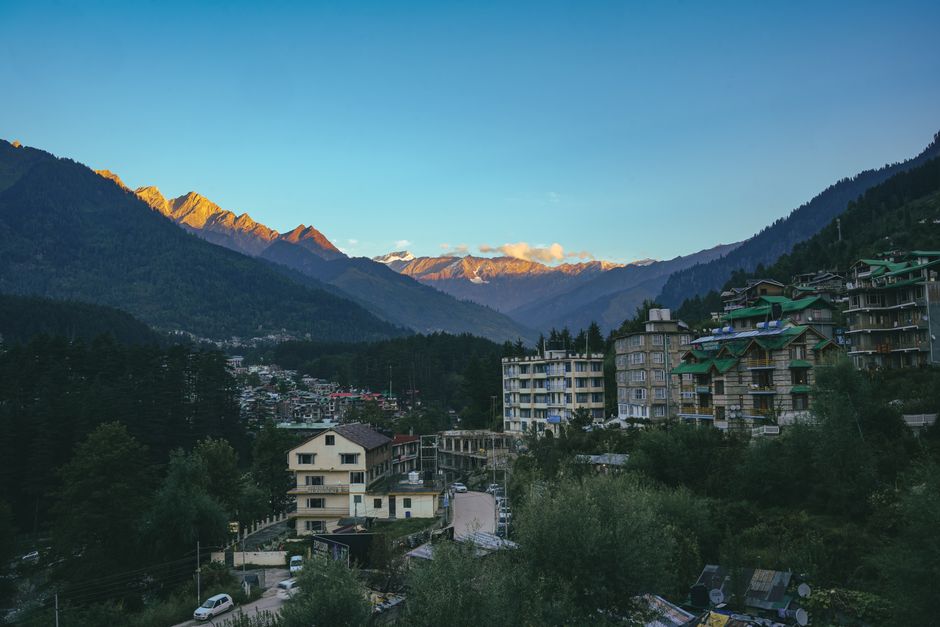
Manali sits at about 2,050 m (6,730 ft) near the head of the Kullu Valley in Himachal Pradesh, where the Beas River tumbles out of the high Himalayas between forests of deodar cedar, apple orchards and snow-capped peaks. Its name is said to come from “Manu-Alaya,” the abode of Manu, the lawgiver of Hindu tradition, who is believed to have stepped ashore here after a great flood, and the valley is known as the “Valley of the Gods” for its many village deities. Today Manali is one of India’s busiest mountain resorts, with a crowded Mall Road, a carved wooden temple in a cedar grove, the hot springs of Vashisht, the backpacker cafés of Old Manali, and adventure on every side: paragliding and skiing at Solang, treks to high lakes and passes, and the road over the Rohtang Pass or through the Atal Tunnel to the desert valleys of Lahaul and on to Ladakh. Manali is also the starting point of the Manali–Leh road, one of the world’s great mountain journeys. The best times to visit are March to June and late September to early November; the monsoon, in July and August, brings landslides, and winter brings snow.
Right now in Manali
- Wed 7–17°C 44–62°F 5 mm Showers
- Thu 6–20°C 43–67°F 16 mm Rain
- Fri 5–16°C 41–60°F 2 mm Light showers
Weather: MET Norway (CC BY 4.0)
Top tours in Manali
See all tours for Manali →
From local operators, with prices and reviews; you check availability and book on Viator, our partner. We may earn a commission at no extra cost to you. How we earn money
Manali at a glance
- Best for: mountain scenery, temples and village life, adventure sports, trekking, snow in winter, and road trips to Lahaul, Spiti and Ladakh.
- How long: 3 days for Manali, Old Manali, Vashisht and Solang; 4 or 5 with Naggar, Rohtang or the Atal Tunnel and Sissu.
- Best time: March to June and late September to early November; December to February for snow.
- Getting there: overnight buses from Delhi (about 530 km, 330 miles) and Chandigarh; flights to Kullu–Manali Airport at Bhuntar, about 50 km (31 miles) south.
- Getting around: on foot in town, by auto-rickshaw to Old Manali and Vashisht, and by taxi to Solang, Rohtang and the Atal Tunnel.
- Good to know: visiting the Rohtang Pass needs a vehicle permit, bought online in advance from the Kullu district administration; daily numbers are capped.
- Before you go: the e-Visa, the online e-Arrival card, money, trains and general safety are in our India travel guide.
Manali’s valley: where things are
Manali is spread along both banks of the Beas River and up the side valleys. Most visitors divide their time between the town and the villages above it.
Manali town and the Mall Road
The modern town on the right bank of the Beas, centered on the Mall Road, has the bus stand, shops, restaurants, the Tibetan market and many hotels. It is lively, crowded with Indian holidaymakers in season and convenient for transport.
Old Manali
Across the Manalsu bridge, about 3 km (2 miles) uphill from the Mall, Old Manali is a village of wooden houses, orchards and the Manu temple, with guesthouses, music-filled cafés and Israeli, Italian and Tibetan restaurants. It is popular with long-stay and backpacker travelers.
Vashisht
On the left bank, about 3 km (2 miles) north of town, Vashisht is a hillside village known for its temple and sulfur hot springs, with rooftop cafés and simple guesthouses looking up the valley.
Hadimba and Dhungri
The cedar forest around the Hadimba Devi temple, west of the Mall, is a quieter area of hotels and cottages within walking distance of town.
Top things to do in Manali
Hadimba Devi Temple
The Hadimba Devi temple, also known as the Dhungri temple, stands in a grove of giant deodar cedars a short walk from the Mall. Built in the 16th century on a stone foundation, it has a four-tiered pagoda roof of wood and stone, and its doorway is carved with deities, animals and scenes from folklore. It is dedicated to Hadimba, a demoness and the wife of Bhima, one of the five Pandava brothers of the Mahabharata; Manali is perhaps the only place in India where she is worshipped as a goddess. The sanctum is a cave shrine around a rock said to carry her footprints.
Vashisht hot springs
The village of Vashisht has a temple to the sage Vashisht, one of the seven great Vedic sages, and natural sulfur hot springs said to have healing properties. Separate public baths for men and women are next to the temple; respect the posted rules.
Old Manali and the Manu Temple
A path from the town climbs to Old Manali and the Manu temple, a stone, wood and tile temple said to be the only one in India dedicated to Manu, the author of the Manusmriti law code. Wander the lanes of traditional houses with carved balconies, apple orchards and stacked firewood, and stop at the cafés along the Manalsu stream.
Solang Valley
About 13 km (8 miles) north, Solang Nullah is a broad meadow ringed by cedar forest and high peaks. In summer it offers paragliding, zorbing, quad bikes, a gondola ropeway, rock climbing and camping; in winter, its snow-covered slopes become a ski area, where state and national championships are held. Solang is also a base for mountaineering expeditions to Hanuman Tibba and other peaks, and the road continues to the south portal of the Atal Tunnel.
Rohtang Pass and its permit
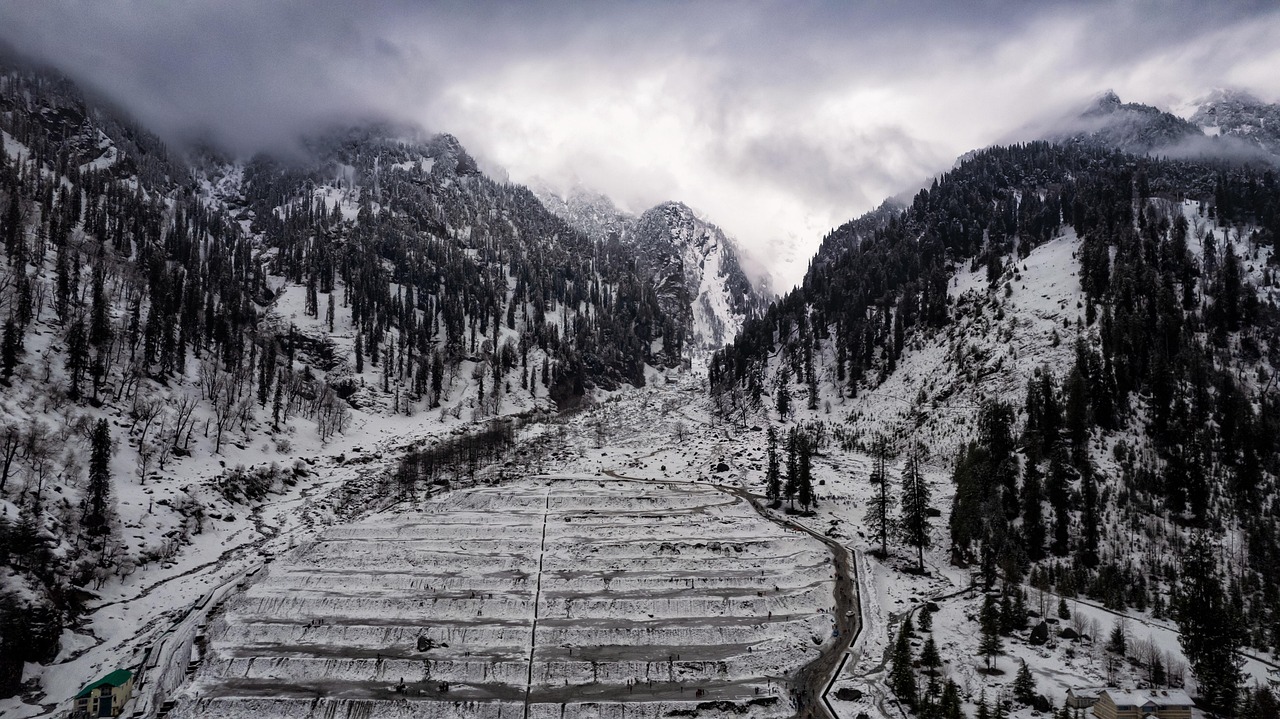
The Rohtang Pass, at about 3,980 m (13,050 ft) and 51 km (32 miles) from Manali, separates the green Kullu Valley from the arid Lahaul valley. According to Himachal Pradesh Tourism, heavy snow closes the pass in late November and it reopens around May; tourists come in summer to see snow, and the Lahaul and Spiti district administration notes that sudden blizzards and snowstorms are to be expected after 11 a.m. To protect the pass from overcrowding, vehicle access for tourism is regulated under a daily quota set by the National Green Tribunal and the district administration. According to the official Rohtang permit portal, run for the Kullu district administration:
- Every vehicle visiting the pass for tourism needs a permit, valid for one day (to and from), applied for online only.
- The daily limit is 800 petrol and 400 diesel vehicles, released in two batches at 10:00 and 16:00, and permits can be applied for only for the next two days.
- The permit fee is ₹500 per vehicle, plus a congestion charge of ₹50 for cars, jeeps and MUVs (₹100 for buses) for crossing Gulaba Bridge.
- Vehicles must not be more than 10 years old and need a valid pollution certificate; each vehicle can get only three permits in a week, and a printout is compulsory.
- Issued permits cannot be canceled.
In practice, most visitors go with a local taxi whose driver applies for the permit; ask your hotel to arrange it, and book a day or two ahead. A separate “special permit” for private vehicles is limited to 60 petrol and 40 diesel vehicles a day, once per season.
The Atal Tunnel and Lahaul
The Atal Tunnel, a road tunnel of about 9 km (5.6 miles) under the Rohtang ridge, opened in 2020 and now provides an important road connection from Manali to Lahaul that avoids the high pass. Its south portal is beyond Solang, and the north portal opens near Sissu, a village at about 3,130 m (10,270 ft) with a waterfall and views of glaciers, in a stark, high landscape quite different from Manali. According to the Lahaul and Spiti district administration, the route via the Atal Tunnel is subject to prevailing weather and road conditions, while the old route over the Rohtang Pass generally closes from about October to April. Day trips through the tunnel to Sissu are popular; traffic can be heavy, and the tunnel and its approach roads may close temporarily after heavy snow.
More classic sights
- Naggar: the old capital of the Kullu rajas, 22 km (14 miles) south, with a castle that is now a museum and a heritage hotel run by Himachal Tourism, the Nicholas Roerich Art Gallery and old temples.
- Jogini Falls: a waterfall reached by a walk through orchards from Vashisht.
- Manali Gompa: a Tibetan Buddhist monastery near the Mall, built by Tibetan refugees.
Other things to do in Manali
Trekking and mountaineering
Manali is one of India’s main trekking bases. Short hikes include the forest trails above Old Manali and the walk to Jogini Falls, while longer routes lead to Bhrigu Lake, a high-altitude lake at about 4,300 m (14,100 ft), and over the Hampta Pass into Lahaul, a popular trek of four or five days that needs a separate permit through the same official portal. The Atal Bihari Vajpayee Institute of Mountaineering and Allied Sports in Manali runs courses in mountaineering, rock climbing, skiing and rafting. Use registered guides and check forecasts. See our hiking guide.
Paragliding, rafting and skiing
Paragliding flights take off above Solang and at Dobhi, south of Manali, in the dry seasons. Rafting runs on the Beas around Pirdi and Raison, south toward Kullu, mainly in spring and autumn, when water levels allow. In winter, Solang offers beginner ski slopes and equipment rental when snow is good. Himachal Pradesh has rules for adventure and water sports, so use registered operators.
Food and drink
Try local food: trout from the Beas, grilled or fried; sidu, a steamed bread stuffed with spices or poppy seeds; kaddu ka khatta, a sweet-sour pumpkin dish; chicken anardana, cooked with pomegranate seeds; and Tibetan momos and thukpa. Fresh apples, plums and apricots fill the markets in late summer and autumn.
Festivals
The Winter Carnival, in the first week of January, fills Manali with folk dances, parades and music. The Dhungri fair honors Hadimba Devi in spring, and in October the week-long Kullu Dussehra, 40 km (25 miles) south in Kullu, gathers hundreds of village deities carried in procession. The Tibetan community celebrates Losar, the Tibetan New Year, in winter.
Day trips from Manali
- Solang Valley: 13 km (8 miles) north for adventure activities and views; combine it with the Atal Tunnel.
- Sissu and Lahaul via the Atal Tunnel: about 35 km (22 miles) and 1½ to 2 hours one way in normal traffic.
- Rohtang Pass: 51 km (32 miles), with a permit, from about May until the autumn snows.
- Naggar: 22 km (14 miles) south for the castle and the Roerich gallery.
- Keylong and Spiti: Keylong, the Lahaul district headquarters, is about 120 km (75 miles) away; Spiti and Kaza need several days.
- Leh: the Manali–Leh highway, about 473 km (294 miles), is open from about May or June to September or October and usually takes two days. See our Leh travel guide.
Nearby destinations
- Shimla127 km
- Leh (Ladakh)217 km
- Amritsar229 km
- Rishikesh261 km
- Lahore279 km
Getting there and getting around
By road
Most visitors arrive by road. Overnight air-conditioned buses run from Delhi, about 530 km (330 miles) and 12 to 14 hours away, and from Chandigarh, about 300 km (190 miles). State-run HRTC buses and private coaches arrive at the Manali bus stand near the Mall; book ahead in season. Shimla is about 7 to 8 hours away by road. See our Shimla travel guide.
By air
Kullu–Manali Airport at Bhuntar, about 50 km (31 miles) south of Manali, has a few small-plane flights from Delhi, Chandigarh and Shimla, which are often canceled in bad weather. Chandigarh, a designated e-Visa entry airport, is the nearest major airport, about 8 to 9 hours by road.
By train
There is no railway to Manali. Broad-gauge trains reach Chandigarh and Kiratpur, and a narrow-gauge line from Pathankot ends at Joginder Nagar, about 165 km (100 miles) away; from either, you continue by road.
Around the valley
Manali town is walkable, and auto-rickshaws run to Old Manali, Vashisht and Hadimba. Taxis from the official union stands do day trips to Solang, the Atal Tunnel, Rohtang and Naggar at fixed rates. Traffic jams are common in May and June and in snow season, so start early.
When to go and how long to stay
Manali has a mountain climate with four distinct seasons. March to June is the main season: spring blossom, then warm, sunny days of 17 to 26 °C (63 to 80 °F), and the Rohtang Pass usually opens in May. The monsoon, from July to mid-September, brings heavy rain, swollen rivers and landslides, and is the riskiest time for road travel. Late September to early November is clear and golden, with apple harvests and the best mountain views. December to February is cold, with nights below freezing and snow in town in most winters, ideal for snow lovers but with frequent road closures. The table shows 1991–2020 normals for the Manali station from the India Meteorological Department (IMD), as published by the World Meteorological Organization (WMO); rainy days are days with at least 2.5 mm of rain or snow (as water).
| Month | Average high / low | Rain (rainy days) | What to expect |
|---|---|---|---|
| January | 10 °C (51 °F) / −1 °C (30 °F) | 90 mm (3.5 in), 6 days | Coldest month; snow likely; Winter Carnival |
| February | 12 °C (54 °F) / 0 °C (33 °F) | 114 mm (4.5 in), 7 days | Cold; snow and rain |
| March | 17 °C (63 °F) / 3 °C (38 °F) | 155 mm (6.1 in), 8 days | Spring; snow melting, wet spells |
| April | 21 °C (71 °F) / 6 °C (44 °F) | 88 mm (3.5 in), 6 days | Blossom season; pleasant days |
| May | 25 °C (77 °F) / 9 °C (49 °F) | 66 mm (2.6 in), 6 days | Warm and sunny; peak season; Rohtang opens |
| June | 26 °C (80 °F) / 13 °C (55 °F) | 90 mm (3.5 in), 8 days | Warm; busy; monsoon arrives late in the month |
| July | 26 °C (78 °F) / 16 °C (61 °F) | 202 mm (7.9 in), 13 days | Monsoon; landslide risk |
| August | 25 °C (78 °F) / 16 °C (61 °F) | 217 mm (8.5 in), 15 days | Wettest month; road closures possible |
| September | 24 °C (76 °F) / 12 °C (54 °F) | 123 mm (4.9 in), 8 days | Rains easing late in the month |
| October | 22 °C (71 °F) / 6 °C (43 °F) | 25 mm (1.0 in), 2 days | Clear and dry; apple harvest; Kullu Dussehra |
| November | 17 °C (63 °F) / 3 °C (37 °F) | 31 mm (1.2 in), 2 days | Crisp; Rohtang closes |
| December | 14 °C (56 °F) / 0 °C (33 °F) | 39 mm (1.5 in), 2 days | Cold; first snow in some years |
The station gets about 1,240 mm (49 in) of precipitation a year, with peaks in the monsoon and in late winter, when much of it falls as snow.
Three days in Manali
Day one: Hadimba Devi temple, the Manu temple and Old Manali, and dinner at a riverside café. Day two: Solang Valley in the morning and through the Atal Tunnel to Sissu, back by evening. Day three: Vashisht hot springs, the walk to Jogini Falls, and the Tibetan monastery and Mall Road.
Five days with the valley
Add Naggar and its castle on the way south, the Rohtang Pass with a permit in season, or a short trek toward Bhrigu Lake.
Where to stay in Manali
- Mall Road area: hotels of every level, convenient for buses and shopping.
- Old Manali: guesthouses and cafés, relaxed and popular with backpackers.
- Vashisht: simple guesthouses near the hot springs, with valley views.
- Hadimba and Log Huts area: cottages and mid-range hotels in the cedar forest.
- Along the valley: orchard homestays and resorts at Jagatsukh, Prini, Naggar and Palchan.
Prices peak in May and June, around Christmas and New Year and on long weekends; book early, and check that rooms have heating in winter.
What a trip to Manali costs
Prices are approximate, for October 2026, converted at about 96 rupees (₹) to the US dollar. The Rohtang fees are from the official permit portal; the rest are estimates.
| Item | Typical cost |
|---|---|
| Rohtang Pass permit, per vehicle | ₹500 (about US$5.20) |
| Gulaba congestion charge, car | ₹50 (about US$0.50) |
| Taxi day trip to Rohtang or Sissu via the Atal Tunnel | ₹3,500–6,000 (about US$36–63) |
| Paragliding flight at Solang | ₹1,500–4,000 (about US$16–42) |
| Trout meal in a restaurant | ₹400–900 (about US$4–9.40) |
| Café meal in Old Manali | ₹300–700 (about US$3–7) |
| Overnight Volvo bus from Delhi | ₹1,200–2,500 (about US$12.50–26) |
| Mid-range hotel double, per night (high season) | ₹3,000–8,000 (about US$31–83) |
Practical tips for Manali
- Sort the Rohtang permit early: quotas fill fast in May and June; your taxi driver or hotel can apply.
- Start early: traffic to Solang, the Atal Tunnel and Rohtang builds up by mid-morning.
- Carry layers: even in summer, the passes are cold and weather changes quickly.
- Rent snow gear locally: coats and boots are hired at Solang and on the Rohtang road; check sizes and condition.
Safety
Manali is a friendly, safe town, but the mountains demand respect. Mountain roads and landslides: roads in the Kullu Valley and beyond are narrow and winding, and the monsoon, from July to September, brings landslides, flash floods and road closures; the Beas has caused serious floods in recent monsoons. Travel by day, avoid riverbanks after heavy rain, and check road conditions before setting off. Winter: snow and ice close roads and can strand traffic; the Rohtang Pass is closed from about late November to May, and the Atal Tunnel route can close after heavy snow. Altitude: the Rohtang Pass is close to 4,000 m (13,000 ft); visitors from the plains can feel headaches and breathlessness, so do not overexert, and come down if you feel unwell. Rivers: Himachal Pradesh Tourism warns not to stand on boulders near riverbanks for photographs, as the currents are strong and deceptive. Adventure sports: use registered paragliding, rafting and trekking operators. Drugs: cannabis grows wild in the region, but possession is illegal and penalties are severe. In an emergency, call 112.
What to pack for Manali
Warm layers in every season: a fleece, a down or insulated jacket, a hat and gloves for the passes and winter; a waterproof jacket for the monsoon; sturdy walking or hiking shoes; sunglasses and high-factor sunscreen against strong mountain sun; and medicines for altitude and road sickness. India uses 230 V, with round-pin plugs of types C, D and M. See our hiking shoes, rain jackets and travel adapters guides.
Manali travel FAQ
Do I need a permit for the Rohtang Pass?
Yes, every tourist vehicle needs an online permit from the Kullu district’s official portal. The fee is ₹500 per vehicle, plus a ₹50 congestion charge for cars, and daily numbers are capped.
When is the Rohtang Pass open?
Usually from about May until heavy snow closes it in November; the Lahaul and Spiti district says the road over the pass may stay closed from about October to April. Weather can close it on any day.
Do I need a Rohtang permit to use the Atal Tunnel?
The Rohtang permit is for vehicles visiting the pass itself; the tunnel route to Sissu and Lahaul is a separate road. Check current rules with your taxi driver, as local traffic regulations can change.
How long is the Atal Tunnel?
About 9 km (5.6 miles). It runs under the Rohtang ridge from beyond Solang to near Sissu in Lahaul.
What is the best time to visit Manali?
March to June and late September to early November for pleasant weather; December to February for snow.
Does it snow in Manali?
Yes, in most winters, usually between December and February. Solang and the Atal Tunnel area get more snow than the town.
How do I get from Delhi to Manali?
By overnight bus in about 12 to 14 hours, by car, or by flight to Bhuntar or Chandigarh and then by road.
How many days do I need in Manali?
Three days covers the town, Old Manali, Vashisht and Solang. Allow four or five with Naggar, Sissu or Rohtang.
Can I drive from Manali to Leh?
Yes, usually from about May or June to September or October. The 473 km (294-mile) road crosses high passes and takes two days.
Is Manali safe for tourists?
Yes. The main risks are mountain roads, landslides in the monsoon, snow in winter and altitude on the passes.
Sources and last review
Researched and last reviewed on 4 October 2026. The Rohtang Pass permit rules, quotas and fees and the Hampta Pass permit: the official Rohtang Pass Permit portal of the District Administration Kullu; the Rohtang Pass’s season, the main sights, festivals, food, access, distances and the river safety warning: Himachal Pradesh Tourism; the Rohtang Pass’s altitude, Sissu and the routes to Lahaul: the Lahaul and Spiti district administration; Manu-Alaya and local dishes: Incredible India (Ministry of Tourism); the Manali–Leh road: the Leh district administration; the list of designated e-Visa airports (which includes Chandigarh): the Bureau of Immigration; climate normals for the Manali station: the India Meteorological Department, via the World Meteorological Organization (1991–2020 normals archived by NOAA’s National Centers for Environmental Information); altitude: Wikidata; the exchange rate: the Reserve Bank of India (FBIL reference rate). The Atal Tunnel’s length and opening year, whether a Rohtang permit is needed for the tunnel route, recent floods, bus times and typical prices are general references or estimates, flagged for checking. Prices and hours change, so check locally before you go. For the e-Visa, money and trains, see our India travel guide.
Plan your trip
Partner links: TravelerCenter may earn a commission if you book, at no extra cost to you.
🇮🇳 Useful Hindi phrases for Manali
All 38 Hindi phrases: restaurant, hotel, emergencies, romance (printable) →