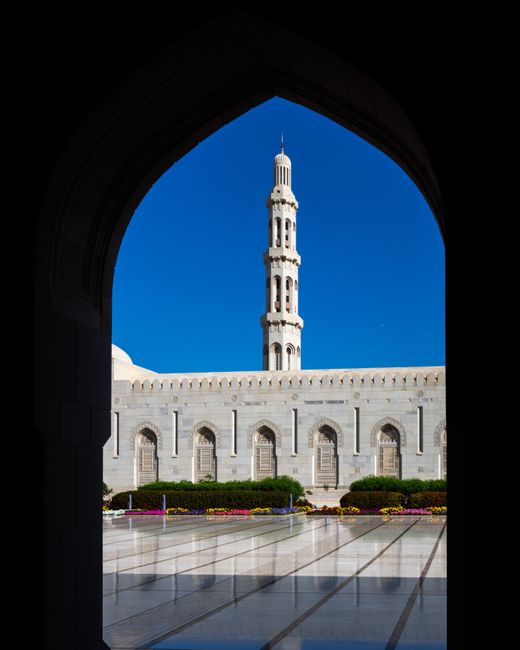
Oman, on the southeastern corner of the Arabian Peninsula, is a land of rugged mountains, deep wadis, golden dunes, mud-brick forts and more than 3,000 km (1,900 miles) of coastline on the Gulf of Oman and the Arabian Sea. It has kept much of its traditional character while building good roads and hotels, and its people are known for their hospitality. Visitors come for the Sultan Qaboos Grand Mosque, the souq and corniche of Muttrah and the museums of Muscat; the forts of Nizwa, Bahla and Jabreen in the interior; the canyons and terraced villages of Jebel Akhdar and Jebel Shams; swimming in the turquoise pools of the wadis; nights in the Wahiba Sands; sea turtles nesting on the beaches near Sur; the fjords of Musandam; and the green monsoon season, the Khareef, that transforms Salalah and the frankincense land of Dhofar every summer. Citizens of 103 countries can visit for up to 14 days without a visa. Plan around the climate, which is pleasant from October to March in the north but very hot in summer, when Dhofar’s Khareef offers cool, misty relief, and around wadi safety, as sudden storms can turn dry riverbeds into torrents.
Right now in Oman
- Wed 28–34°C 82–93°F Clear
- Thu 28–34°C 82–93°F Clear
- Fri 27–34°C 80–93°F Clear
Weather: MET Norway (CC BY 4.0)
Multi-day tours of Oman
Multi-day tours from local operators. You check dates and book on Viator, our partner; we may earn a commission at no extra cost to you. How we earn money
Oman at a glance: governorates and regions
Oman covers about 309,500 km² (119,500 square miles), roughly the size of Italy or New Mexico, with a population of about 5 million, including a large community of foreign workers. Arabic is the official language, and English is widely spoken in tourism and business. The country is a sultanate, divided into 11 governorates; the Hajar Mountains run in an arc through the north, the Rub’ al Khali desert lies on the western border, and the Dhofar mountains rise above the southern coast. The Musandam Peninsula, separated from the rest of Oman by UAE territory, guards the Strait of Hormuz.
Time and the weekend: Oman uses Gulf Standard Time (UTC+4) all year, with no daylight saving, the same as the UAE and one hour ahead of Saudi Arabia. The weekend is Friday and Saturday.
The main regions for visitors
- Muscat: the capital, with the Grand Mosque, Old Muscat’s palace and forts, Muttrah’s souq and corniche, beaches and museums.
- Ad Dakhiliyah (the interior): Nizwa, Bahla and Jabreen forts, Jebel Akhdar and Jebel Shams.
- Ash Sharqiyah (the east): the Wahiba Sands, Wadi Shab and Wadi Bani Khalid, the dhow-building town of Sur and turtle beaches at Ras Al Jinz.
- Dhofar (the south): Salalah, the Khareef season, frankincense sites, beaches and waterfalls.
- Al Batinah (the north coast): Sohar, Rustaq and Nakhal forts and long beaches.
- Musandam: fjords, dhow cruises and diving around Khasab.
Where to go: capital, interior, desert, coast and Dhofar
For a first trip of a week, most visitors combine Muscat with Nizwa, the mountains and a night in the Wahiba Sands, then return along the coast via Sur and Wadi Shab. In summer, Salalah and the Khareef are the main draw.
Muscat
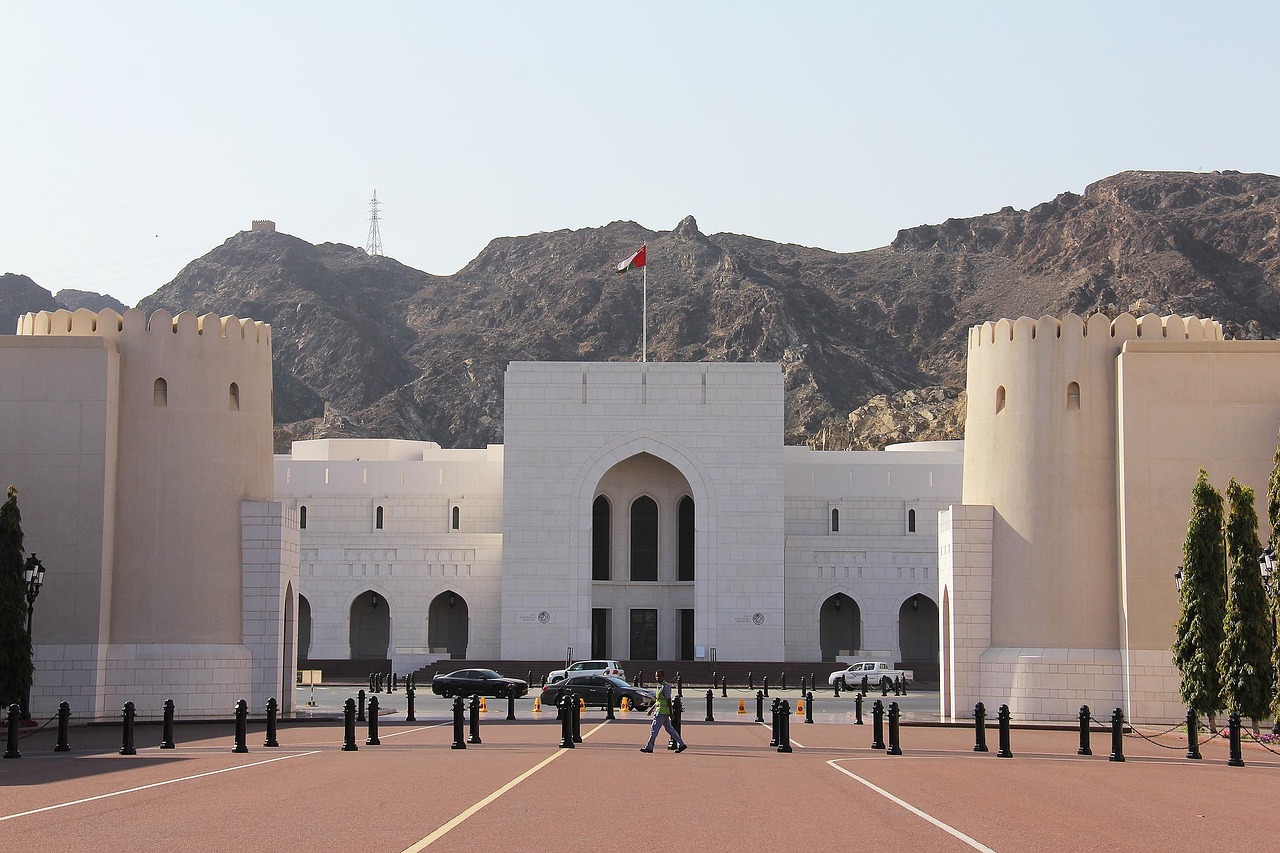
The capital stretches along the coast between mountains and sea, with the Sultan Qaboos Grand Mosque, the National Museum and Al Alam Palace in Old Muscat, the Portuguese-era forts of Al Jalali and Al Mirani, Muttrah’s souq and corniche, the Royal Opera House and city beaches. See our Muscat guide.
Nizwa and the interior
The former capital of the interior has a massive 17th-century round-towered fort, a busy souq and a Friday livestock market, and is the base for Jebel Akhdar, Jebel Shams and the UNESCO-listed Bahla Fort. See our Nizwa guide.
Salalah and Dhofar
The south has the Khareef from June to September, when mist, drizzle and green hills draw over a million visitors, plus the UNESCO-listed frankincense sites of Al Baleed and Sumhuram, Wadi Darbat, the blowholes of Mughsail and long white beaches. See our Salalah guide.
Jebel Akhdar and Jebel Shams
The “Green Mountain,” Jebel Akhdar, has terraced villages, rose gardens and fruit orchards at about 2,000 m (6,600 feet), with roses distilled from March to May; Jebel Shams, Oman’s highest mountain, overlooks the deep canyon of Wadi Ghul. Both are up to 15 °C cooler than the lowlands. Jebel Akhdar’s road requires a four-wheel-drive vehicle beyond a police checkpoint.
Sur, the Wahiba Sands and the wadis
East of Muscat, Wadi Shab and Wadi Bani Khalid have turquoise pools among canyon walls, the Wahiba Sands have high dunes and desert camps, Sur is known for dhow building, and Ras Al Jinz is a protected nesting beach for green turtles.
Al Batinah coast and the Daymaniyat Islands
Northwest of Muscat, the Batinah coast has long beaches, fishing villages and the old port of Sohar, while inland the forts of Nakhal and Rustaq stand at the foot of the Hajar Mountains, with hot springs nearby. Offshore, the protected Daymaniyat Islands have some of Oman’s best snorkeling and diving, with turtles and reef fish; boat trips leave from marinas west of Muscat, and access to the islands is regulated, so book with licensed operators.
Musandam
The northern exclave has dramatic fjords where dolphins follow dhow cruises from Khasab; travelers often arrive from Dubai and the UAE by road.
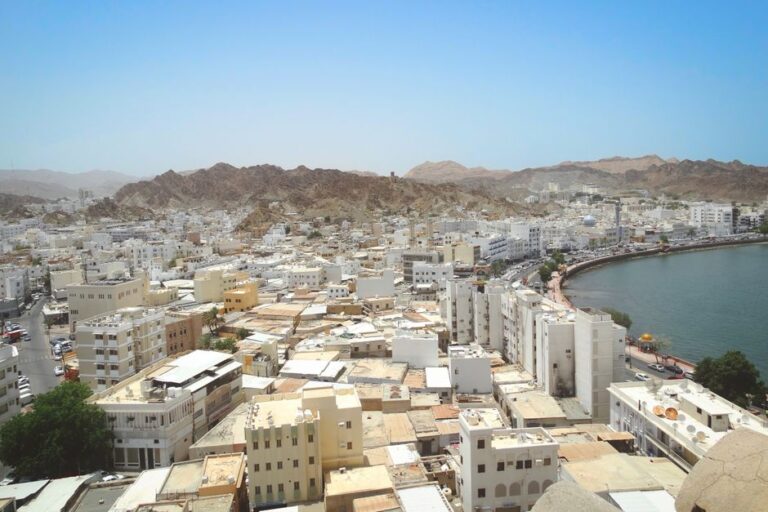
Muscat Travel Guide
Plan a trip to Muscat: the Sultan Qaboos Grand Mosque's visiting hours, fee and dress code, the National Museum, Old Muscat's palace and forts,…
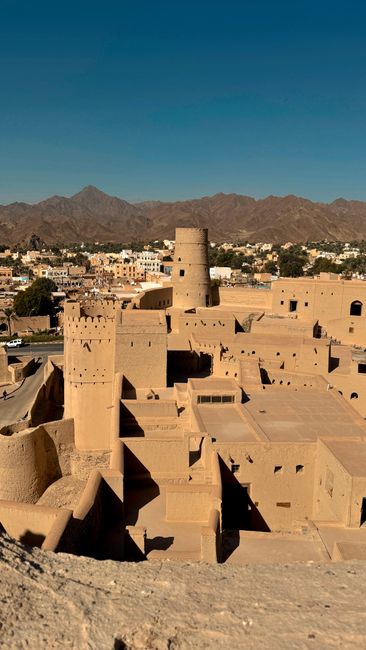
Nizwa Travel Guide
Plan a trip to Nizwa: Nizwa Fort's history and opening hours, the souq and Friday goat market, Bahla Fort, Jabreen Castle, Bayt Al Ridaydah,…
Salalah Travel Guide
Plan a trip to Salalah: the Khareef season (21 June to 21 September), Al Baleed and the Museum of the Frankincense Land, Sumhuram, Wadi…
Best time to visit Oman
In northern Oman, October to March is the best time, with sunny, warm days and cool evenings; the Ministry of Heritage and Tourism puts Muscat’s average winter temperature at about 26 °C (79 °F). Autumn (September to November) averages about 28 °C (82 °F) as the heat eases, and spring brings rose season on Jebel Akhdar and bird migration. Summer (June to August) is very hot in the lowlands, generally 35–45 °C (95–113 °F), while the mountains are up to 15 °C cooler. In Dhofar, the Khareef season from 21 June to 21 September brings cloud, drizzle and temperatures of about 20–28 °C (68–82 °F), turning the hills green. Rain is rare in the north but falls in sudden storms, mostly from October to March, that can cause flash floods in wadis.
| Lowest / highest recorded, °C (°F) | Muscat airport | Salalah airport | Nizwa |
|---|---|---|---|
| Jan | 11 / 33 (52 / 91) | 15 / 35 (60 / 95) | 5 / 34 (41 / 93) |
| Feb | 14 / 35 (56 / 94) | 14 / 35 (57 / 96) | 5 / 37 (40 / 98) |
| Mar | 16 / 41 (60 / 106) | 19 / 40 (66 / 104) | 6 / 43 (42 / 110) |
| Apr | 19 / 43 (66 / 110) | 23 / 39 (73 / 102) | 14 / 46 (56 / 114) |
| May | 23 / 47 (73 / 117) | 23 / 44 (74 / 110) | 18 / 48 (65 / 119) |
| Jun | 28 / 48 (82 / 118) | 25 / 46 (78 / 114) | 21 / 49 (70 / 120) |
| Jul | 26 / 48 (78 / 118) | 23 / 42 (74 / 107) | 21 / 50 (70 / 122) |
| Aug | 26 / 47 (78 / 116) | 23 / 44 (73 / 111) | 21 / 48 (70 / 119) |
| Sep | 24 / 42 (74 / 108) | 22 / 36 (71 / 96) | 19 / — (67 / —) |
| Oct | 18 / 42 (64 / 108) | 20 / 38 (68 / 100) | 13 / 43 (56 / 110) |
| Nov | 16 / 40 (60 / 103) | 19 / 37 (66 / 99) | 10 / 37 (51 / 99) |
| Dec | 13 / 32 (55 / 90) | 19 / 35 (65 / 94) | 6 / 38 (43 / 100) |
| Rain a year | 73 mm (2.9 in) | 133 mm (5.2 in) | 286 mm (11.3 in) on Jebel Akhdar (Saiq) |
The temperatures are the lowest and highest readings that Oman’s Directorate General of Meteorology reports for each month at Muscat International Airport and Salalah Airport (2002–2021) and Nizwa (2013–2024); Nizwa’s September maximum is left out as an apparent data error. Annual rainfall is from the 1991–2020 normals Oman submitted to the World Meteorological Organization, with the Saiq station on Jebel Akhdar shown for the mountains. Oman’s published normals don’t include reliable average highs and lows, so use the extremes as a guide to the range of temperatures.
Crowds and prices through the year
- Peak (November to March): the best weather in the north, cruise ship calls in Muscat and European winter holidays; book desert camps and mountain hotels early.
- Shoulder (October and April): hot afternoons but fewer visitors.
- Summer (May to September): low season and discounts in the north; high season in Salalah during the Khareef, when hotels fill with Gulf visitors.
- Eid holidays: Omani and Gulf families travel; mountain and Salalah hotels book up.
Festivals and events
- Khareef Dhofar Season (21 June to 21 September): events, concerts and festivals in Salalah and Dhofar; the 2026 program had 125 events.
- Rose season on Jebel Akhdar (March to May): rose picking and rosewater distilling.
- Turtle nesting (May to September peak): green turtles nesting at Ras Al Jinz, according to the Ministry of Heritage and Tourism’s seasonal guide.
- National Day (20 November): celebrations across the country.
- Ramadan (in 2027 expected from about 8 February to 9 March): quiet days and lively evenings.
Public holidays
Holidays include the Islamic New Year, the Prophet’s Birthday, Eid al-Fitr at the end of Ramadan (about 10 March 2027), Eid al-Adha (about 16 May 2027), National Day (20 November) and Accession Day (11 January). Islamic dates follow the lunar calendar and are confirmed shortly before. Government offices close, but most tourist sites and hotels stay open.
How long to stay: sample itineraries
5 days: Muscat and the interior
Two days in Muscat for the Grand Mosque, Old Muscat and Muttrah, then two days in Nizwa with Jebel Akhdar or Jebel Shams and Bahla and Jabreen forts, and a final morning at the Nizwa souq.
7 to 10 days: the classic loop
Muscat, Nizwa and the mountains, a night in the Wahiba Sands, Wadi Bani Khalid, Sur and Ras Al Jinz, then back along the coast past Wadi Shab and the Bimmah Sinkhole.
4 to 5 days: Salalah in the Khareef
Fly from Muscat to Salalah for the green hills, Wadi Darbat, Mughsail, Al Baleed and Sumhuram, and Mirbat.
Combining Oman with other countries
Oman borders the UAE, Saudi Arabia and Yemen. Mwasalat buses link Muscat with Dubai, and the border at Buraimi faces the UAE’s Al Ain. Many travelers combine Oman with the UAE; see our United Arab Emirates, Dubai and Al Ain guides. Muscat also has direct flights to India; see our India guide. For Saudi Arabia, see our Saudi Arabia guide.
Entry, money and costs
Entry: visa-free stays and e-visas (last reviewed October 2026)
Your passport must be valid for at least six months from your arrival. Citizens of the other Gulf Cooperation Council (GCC) states don’t need a visa.
- Visa-free for up to 14 days: citizens of 103 countries can enter Oman without a prior tourist visa and stay for up to 14 days. The Royal Oman Police list includes 44 European countries (among them the UK, Ireland, France, Germany, Italy, Spain and the Netherlands), 10 South American countries (including Brazil, Argentina and Chile) and 26 others, including the United States, Canada, Australia, New Zealand, Japan, South Korea, China, Singapore, Malaysia, Thailand, Indonesia, Türkiye and South Africa.
- Visa-free with a visa from a third country: nationals of 24 further countries, including India, Egypt, Jordan, Morocco, Mexico and Vietnam, qualify if they hold a valid visa from the United States, Canada, Australia, the UK, Japan or a Schengen country.
- Tourist e-visa: to stay longer than 14 days, or if your nationality isn’t on the lists, apply for an unsponsored tourist e-visa on the Royal Oman Police portal (evisa.rop.gov.om) at least four days before travel. Fees range from about US$15 to US$145 (€12 to €120), depending on nationality and whether you choose a single or multiple entry visa. You’ll need a digital passport photo and a card for payment.
At the border, you may be asked to show a return or onward ticket, a hotel booking and travel health insurance. Overstaying can lead to fines of up to OMR 10 a day, up to OMR 500, and detention. A single GCC tourist visa for the Gulf states has been agreed in principle but had not launched for travelers as of October 2026. Check the Royal Oman Police portal or your airline before you fly.
Customs, medicines and what not to bring
Declare goods that may be prohibited or dutiable. E-cigarettes and vape products are illegal to import or use in Oman. Pornography and drugs are banned. Medicines: some prescription and over-the-counter medicines that are legal elsewhere are illegal in Oman; carry a copy of your prescription and check with Oman’s Ministry of Health well before you travel. Keep medicines in their original packaging. Drones need a license.
Money and cards
The currency is the Omani rial (OMR, often written RO), divided into 1,000 baisa and pegged to the US dollar at about US$2.60 per rial. Cards are widely accepted in cities and hotels, and ATMs are common, but carry cash for souqs, villages, fuel stations in remote areas and fort tickets in some places. A 5% VAT applies to most goods and services.
Tipping
Service charges are often included in hotels. Elsewhere, 5–10% in restaurants and a small tip for guides and drivers are appreciated.
Typical travel costs
| Item (as of October 2026) | Omani rials | About US dollars |
|---|---|---|
| Sultan Qaboos Grand Mosque, non-Muslim visitors | OMR 8 | $21 |
| National Museum, foreign visitors | OMR 5 | $13 |
| Bait Al Zubair Museum, foreign visitors | OMR 3 | $7.80 |
| Muttrah Fort, non-resident adult | OMR 3 | $7.80 |
| Royal Opera House tour, adult | OMR 3.15 | $8.20 |
| Mwasalat bus Muscat–Salalah, single / return | OMR 8 / 12.5 | $21 / $32.50 |
| Casual restaurant meal | about OMR 2–5 | about $5–13 |
| Mid-range hotel room, per night in winter | about OMR 35–80 | about $90–210 |
Entry fees are those published by the Ministry of Heritage and Tourism’s Experience Oman website, and the bus fare is Mwasalat’s; meals and hotels are typical ranges.
Getting there and getting around
Arrival airports
Muscat International Airport (MCT) is the main gateway, the hub of Oman Air and SalamAir, with flights to the Gulf, India, Asia, Africa and Europe. Salalah International Airport (SLL) has flights from Muscat and the Gulf, especially busy during the Khareef. Smaller airports serve Duqm, Sohar and Khasab.
Flight disruptions
Since early 2026, regional tensions have led to periodic airspace closures across the Gulf, so flights can be delayed, rerouted or canceled at short notice; check your flight with the airline and the airport’s status before you travel.
Buses
The state transport company Mwasalat runs city buses in Muscat and Salalah and intercity buses from Muscat to Nizwa, Sur, Salalah, Sohar, other towns and Dubai. The Muscat–Salalah route costs OMR 8 one way or OMR 12.5 return. Buses are cheap and comfortable but infrequent, so most visitors rent a car.
Taxis
Use licensed taxi apps such as O Taxi, Marhaba and Tasleem, which the Ministry of Heritage and Tourism lists, or agree a fare before getting into a street taxi.
Driving
Driving is the best way to explore Oman. Traffic drives on the right, and roads are generally good, but the accident rate is high and driving can be dangerous outside Muscat. Watch for camels and goats on the road, especially at night. Many visitors can drive a rental car on their home license for a limited period (six weeks for UK photocard licenses), and rental companies often ask for an International Driving Permit, a minimum age and a year of experience. Seatbelts are compulsory, children aged 3 and under need car seats, using a phone while driving is illegal, and any alcohol in your system can lead to fines and prison. Traffic fines must be paid before you leave the country. Mountain roads to Jebel Akhdar require a four-wheel drive, and off-road trips to the desert and mountains need a well-equipped 4×4, water, a phone and ideally a second vehicle.
Culture, food and everyday etiquette
Islam and local customs
Oman is an Islamic country with a tradition of tolerance, and Omanis are courteous and reserved. Greet with “as-salaam alaykum,” wait for a woman to offer her hand, use your right hand to eat and pass things, and accept the coffee (kahwa) and dates offered as a welcome. Omani men often wear the dishdasha with an embroidered cap or turban, and women dress modestly.
Forts, falaj and frankincense
Oman’s heritage is written in its landscape. Hundreds of forts and watchtowers guard oases, passes and harbors, many restored and open to visitors with ticket desks on site. The aflaj, ancient channels that carry water from mountain springs and underground sources to palm groves and villages, are still in use, and five of them are inscribed by UNESCO as the Aflaj Irrigation Systems of Oman; you’ll see falaj water running through Nizwa, Birkat Al Mouz and Bayt Al Ridaydah. In the south, frankincense trees grow in the dry valleys of Dhofar, and the resin, burned in clay incense burners, scents homes, souqs and mosques across the country.
Food and drink
Omani food includes shuwa (lamb marinated in spices and slow-cooked underground for a day or more, a feast dish for Eid), majboos and kabsa-style rice dishes, mashuai (spit-roasted kingfish with lemon rice), harees and Omani halwa, a sticky sweet flavored with rosewater and saffron, served with bitter kahwa. Seafood is excellent along the coast. Alcohol is served in licensed hotels, restaurants and bars to people aged 21 and over; drinking in public or being drunk in public is illegal.
Ramadan etiquette
During Ramadan, Muslims fast from dawn to sunset. Visitors shouldn’t eat, drink, smoke or chew gum in public during daylight hours, including in their cars, and should avoid loud music, dancing and swearing in public. Hotels and some restaurants serve non-fasting guests, sometimes behind screens, and opening hours of shops, museums and offices change. Dress more conservatively than usual, and be patient: fasting can make people tired in the late afternoon. After sunset, families gather for iftar, and the evenings are lively and social.
Where to stay
Muscat has everything from international beach resorts to city hotels and guesthouses in Muttrah; the interior has heritage guesthouses in restored mud-brick houses in Nizwa, Al Hamra and Birkat Al Mouz, and mountain resorts on Jebel Akhdar and Jebel Shams; the Wahiba Sands have desert camps from simple to luxurious; and Salalah has beach resorts and apartments that fill during the Khareef. Book ahead for winter weekends and Eid holidays.
Laws visitors need to know
- Dress: cover the tops of the arms and the legs below the knee in public, including in malls; swimwear only at tourist beaches and pools.
- Behavior: swearing and rude gestures, including while driving and online, are illegal; public displays of affection are frowned upon.
- Relationships: it is illegal for unmarried couples of the opposite sex to live together or share a hotel room; same-sex relations and cross-dressing are illegal.
- Alcohol and vaping: alcohol only in licensed venues at 21 or over; e-cigarettes and vapes are illegal.
- Photography: don’t photograph government buildings or military sites, and ask before photographing people; drones need a license.
- ID: carry a copy of your passport’s photo page.
Safety, health, accessibility and connectivity
Safety
Oman has low crime and is one of the most relaxed countries in the region for visitors. The main risks come from the heat, the roads, the terrain and the weather.
- Heat: summer temperatures in the lowlands commonly reach 45 °C (113 °F), and heat has caused deaths among hikers. Hike early, carry plenty of water and avoid summer treks in the lowlands.
- Wadis and flash floods: wadis are prone to flash floods after heavy rain, mostly from October to March. Check the forecast, avoid wadis when rain is expected and for at least a day afterward, never cross flowing water, and if caught, climb to high ground. Follow the Royal Oman Police and the Civil Defence and Ambulance Authority.
- Tropical cyclones: storms from the Arabian Sea occasionally affect Oman and disrupt services; follow warnings from the Directorate General of Meteorology.
- Dress codes and decency: follow the dress rules above, and the stricter codes at mosques.
- Alcohol and drugs: drink-driving, public drinking and drug offenses carry severe penalties; there is no distinction between “soft” and “hard” drugs, and even residual amounts can lead to prosecution.
- Medicines: check with the Ministry of Health before bringing prescription medicines, and carry your prescription.
- Photography: avoid military sites, government buildings and airports; bird-watching or plane-spotting near them can be misunderstood.
- Sea and boats: check that tour boats carry life jackets for everyone, and swim only where it’s safe.
- Driving: drive defensively, avoid night driving in rural areas and use a 4×4 in the mountains.
- Flight disruptions: since early 2026, regional tensions have led to periodic airspace closures across the Gulf, and flights can be delayed, rerouted or canceled at short notice. Check your flight with the airline before you travel, and follow instructions from the local authorities, including official emergency alerts.
- Emergencies: call 9999 for police, ambulance and fire.
Health and insurance
Healthcare is of a good standard in Muscat and Salalah, but visitors must use private facilities, and those without insurance or funds may be stopped from leaving until bills are paid; buy travel insurance that covers treatment and evacuation. Dengue occurs, altitude can affect hikers on the high mountains, and a yellow fever certificate is required if you arrive from a country with a risk of transmission.
Accessibility
Major hotels, malls, the National Museum and the Grand Mosque have accessible facilities, but forts, souqs, wadis and mountain villages involve steps and uneven ground. Ask about access when booking tours.
Connectivity and power
Mobile coverage is good in towns and along main roads but patchy in wadis, deserts and mountains. Prepaid SIM cards and eSIMs are sold at airports. Power is 240 V, 50 Hz, with type G sockets (British three-pin).
Things to do: forts, wadis, mountains, desert and sea
Oman’s highlights are its landscapes and heritage: the Sultan Qaboos Grand Mosque and Muttrah’s souq; Nizwa, Bahla and Jabreen forts and the Friday market in Nizwa; hiking the balcony walk on Jebel Shams and the terraced villages of Jebel Akhdar; swimming in Wadi Shab and Wadi Bani Khalid; dune driving and camping in the Wahiba Sands; watching turtles at Ras Al Jinz; dhow cruises in Musandam’s fjords; snorkeling at the Daymaniyat Islands; and the Khareef, frankincense trees and beaches of Dhofar. Five sites are on the UNESCO World Heritage List: Bahla Fort, the archaeological sites of Bat, Al-Khutm and Al-Ayn, the Land of Frankincense, the Aflaj irrigation systems and the ancient city of Qalhat.
- Hiking: marked trails on Jebel Shams (including the balcony walk along the canyon rim), Jebel Akhdar’s village path and the wadis; start at dawn and carry plenty of water.
- Wadi swimming: Wadi Shab’s pools and cave, and the green pools of Wadi Bani Khalid; wear modest swimwear or cover-ups, as villagers live nearby.
- Desert nights: camps in the Wahiba Sands offer dune drives, camel rides and stargazing; book licensed camps and drivers.
- Turtle watching: the Ras Al Jinz Turtle Reserve runs guided night and dawn visits to see green turtles nest; numbers are limited.
- Dhow cruises and dolphins: sunset dhow trips from Muscat and full-day cruises in the fjords of Musandam.
- Diving and snorkeling: the Daymaniyat Islands, Musandam and the coast near Muscat.
- Souqs and crafts: silver, frankincense, pottery from Bahla, khanjar daggers and halwa in Muttrah and Nizwa.
What to pack
Pack light, loose clothes that cover shoulders and knees, a scarf or shawl (women need a headscarf for mosques), swimwear for beaches and modest cover-ups for wadis, water shoes for wadi swimming, sturdy hiking shoes, a hat, sunglasses and high-SPF sunscreen. Add warm layers for mountain nights and desert camps in winter, a light rain jacket for the Khareef, a refillable water bottle and a type G plug adapter. Don’t bring e-cigarettes, and carry medicines with a copy of your prescription.
Oman travel FAQ
Do I need a visa for Oman?
Citizens of 103 countries, including the US, Canada, the UK, Australia, most of Europe, Japan and China, can visit Oman without a visa for up to 14 days. Others, or anyone staying longer, need an e-visa from the Royal Oman Police portal.
How long can I stay in Oman without a visa?
Up to 14 days. For longer stays, apply for an unsponsored tourist e-visa at least four days before travel.
How much is an Oman e-visa?
About US$15 to US$145, depending on nationality and whether it is single or multiple entry.
What are the Sultan Qaboos Grand Mosque’s visiting hours?
Non-Muslim visitors are welcome Saturday to Thursday from 8 to 11 a.m. Entry costs OMR 8.
What is the dress code for the Grand Mosque?
Clothing that covers shoulders and knees; women must also cover their hair. Abayas and headscarves are available at the entrance.
When is the Khareef in Salalah?
The Khareef season runs from 21 June to 21 September, bringing mist, drizzle and temperatures of about 20–28 °C (68–82 °F).
When is the best time to visit Oman?
October to March for Muscat, Nizwa, the mountains and the desert; June to September for Salalah’s Khareef.
Is it safe to swim in Oman’s wadis?
In dry weather, yes, with care. Avoid wadis when rain is forecast and for a day afterward, as flash floods can be deadly.
Can tourists drink alcohol in Oman?
Yes, in licensed hotels, restaurants and bars, at 21 or over. Drinking or being drunk in public is illegal.
Are e-cigarettes allowed in Oman?
No. Importing or using e-cigarettes and vape products is illegal.
Do I need a 4×4 in Oman?
Not for the main roads, but you need one for Jebel Akhdar, off-road tracks and the desert.
Are flights to Oman ever disrupted?
Sometimes. Since early 2026, regional tensions have led to periodic airspace closures across the Gulf; check your flight with the airline before you travel.
What currency is used in Oman?
The Omani rial (OMR), divided into 1,000 baisa and worth about US$2.60.
Sources and last review
Researched and last reviewed on 5 October 2026. The visa-free lists come from the Royal Oman Police; the 103-country total, the 14-day stay, e-visa requirements and fees from Visit Oman (Oman’s official destination management company); border checks, overstay fines, medicines, vaping, alcohol, dress, relationship, drug and photography laws, driving rules, wadi floods, cyclones, heat, healthcare and emergency numbers from GOV.UK’s Oman travel information (updated 22 July 2026); the Grand Mosque’s hours, fee and dress code, museum and fort hours and fees, the Khareef temperatures, seasons, taxi apps and Dhofar’s sites from the Ministry of Heritage and Tourism’s Experience Oman website; the Khareef season dates and visitor numbers from the Ministry of Heritage and Tourism (citing the National Centre for Statistics and Information); the 2026 Khareef program from the Oman Observer (state-owned newspaper; secondary); bus fares from Mwasalat (search excerpt); World Heritage sites from UNESCO; airspace disruption from the European Union Aviation Safety Agency; temperature extremes from Oman’s Directorate General of Meteorology and rainfall from the 1991–2020 normals Oman submitted to the World Meteorological Organization; area, population and capital from Wikidata. The GCC visa status, the rial peg, VAT, holiday and Ramadan dates for 2027, the turtle season, airports, tipping, power and typical prices are general references and flagged for checking. Entry rules can change at short notice, so check official sources before you travel.
Plugs and power in Oman
Oman uses 240 V, 50 Hz and these plugs (left) and wall sockets (right):
All plug types and voltages by country → · Check what you need to pack →
Plan your trip
Partner links: TravelerCenter may earn a commission if you book, at no extra cost to you.
🇪🇬 Useful Arabic phrases for Oman
All 38 Arabic phrases: restaurant, hotel, emergencies, romance (printable) →