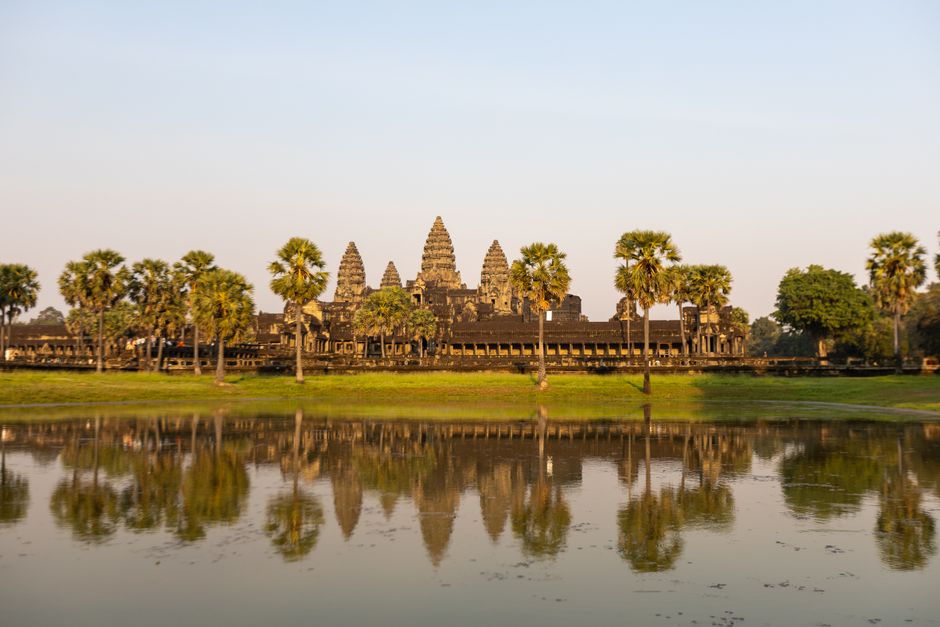
Short answer: For warm, dry weather in January 2027, go to Siem Reap for Angkor, southern Vietnam, Muscat, Maui or San Juan. For summer in the Southern Hemisphere, go to Melbourne for the Australian Open, Queenstown or Torres del Paine in Patagonia. For snow and ice, go to Tromsø for the northern lights and its film festival, or to Harbin for China’s giant ice sculptures.
January has a reputation as a quiet month for travel, but that is exactly why it works. The holiday crowds have gone home, the dry season is in full swing across much of the tropics, it is high summer south of the equator, and the far north is at its snowiest. A few places also hold their biggest events of the year in January.
For each of the ten places below you get why January works, typical January weather, one or two things to do, and a practical note. The weather figures are long-term averages (mostly the 1991–2020 climate normals from each country’s weather service), so they describe what is normal, not what will happen on your dates. Each section links to our full guide. If you are traveling earlier, see where to go in December.
Warm and dry: Asia and the Middle East
1. Siem Reap and Angkor, Cambodia
Why January: it is the heart of Cambodia’s dry season. Siem Reap gets almost no rain in January, and the nights are the coolest of the year, which matters when you are climbing temple steps in the tropics.
Typical weather: highs around 88°F (31°C) and lows around 68°F (20°C), with about 0.2 inches (4 mm) of rain in the whole month.
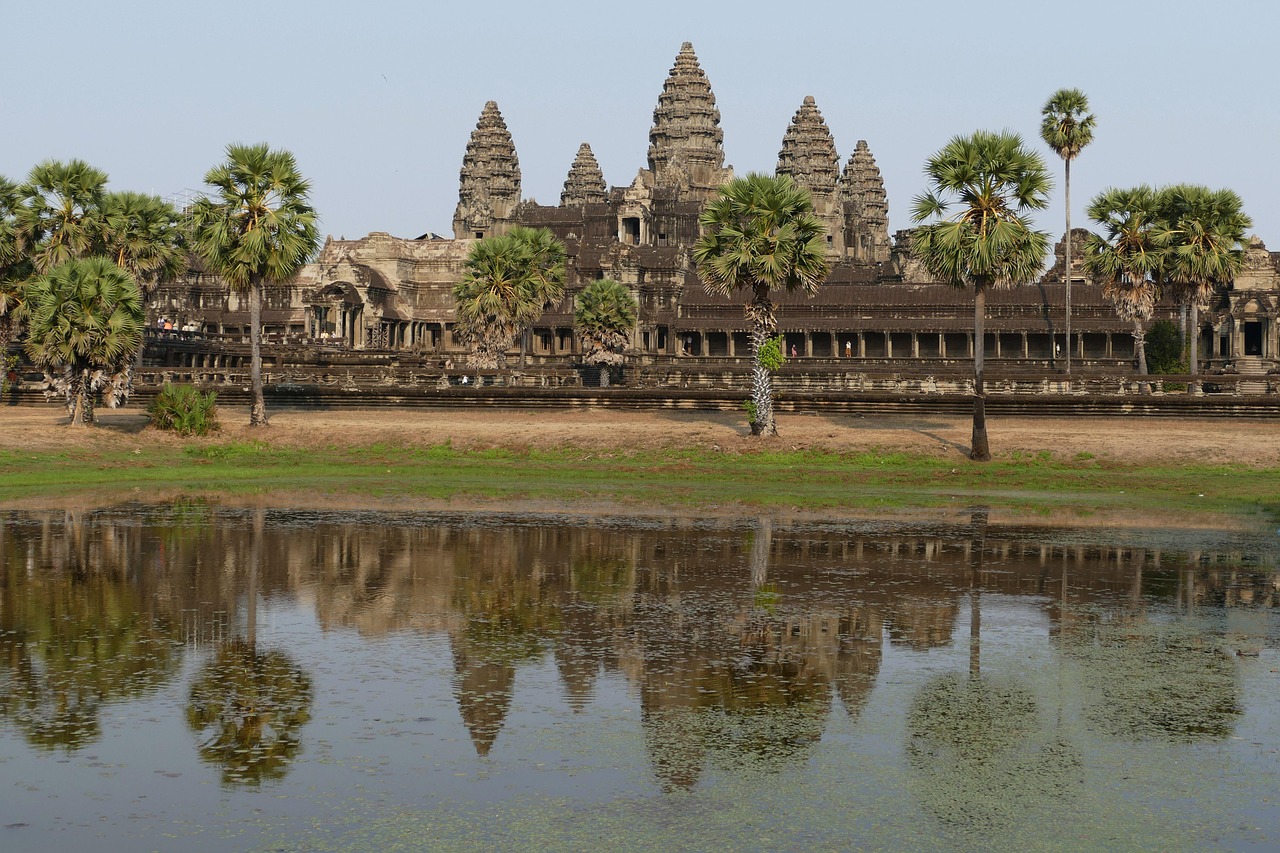
Best things to do: watch sunrise at Angkor Wat, then explore the Bayon’s carved stone faces and the tree-wrapped ruins of Ta Prohm. With more time, ride out to the pink sandstone carvings of Banteay Srei.
Practical note: the Angkor Pass costs US$37 for one day, US$62 for three days (used within a week) or US$72 for seven days (used within a month). Buy it only at the official ticket office or through Angkor Enterprise’s official website or app; tickets from anywhere else are not valid. The gates open at 5:00 a.m. for sunrise. January is peak season, so book rooms early. See our Siem Reap travel guide and Cambodia travel guide.
2. Ho Chi Minh City and Phu Quoc, Vietnam
Why January: southern Vietnam is in its dry season, and in 2027 January falls before the Lunar New Year rush. Tet arrives late this time: Lunar New Year’s Day is 6 February 2027, and the government’s Tet holiday for public employees runs from 2 to 10 February, when transport and hotels fill up and many businesses close.
Typical weather: in Ho Chi Minh City, highs around 90°F (32°C) and lows around 74°F (23°C), with about 0.5 inches (12 mm) of rain on roughly two days in the month. Phu Quoc, the island off the southwest coast, is also in its dry, sunny season.
Best things to do: spend a few days in Ho Chi Minh City for its street food, markets and colonial-era landmarks, take a trip into the Mekong Delta, then fly out to Phu Quoc for a few days on the beach.
Practical note: if you can only travel in early February, book transport well ahead; prices and demand climb in the days before Tet. See our Ho Chi Minh City travel guide, Phu Quoc travel guide, Can Tho travel guide for the Mekong Delta, and Vietnam travel guide.
3. Muscat, Oman
Why January: Oman’s winter runs from November to early March, and it is the season to visit. The fierce summer heat is gone, days are sunny and bright, and evenings are cool and fresh.
Typical weather: Oman’s tourism ministry gives Muscat’s winter average as around 79°F (26°C), with milder and drier weather than the rest of the year.
Best things to do: visit the Sultan Qaboos Grand Mosque, with its huge hand-woven carpet and central dome, then wander the old Mutrah waterfront and souq. In the evening, see a show at the Royal Opera House, or take one of its daytime tours. From Muscat, day trips reach the wadis and mountain villages of the interior and the old fort town of Nizwa.
Practical note: non-Muslim visitors can enter the Grand Mosque from Saturday to Thursday, 8:00 to 11:00 a.m. Cover shoulders and knees, women also cover their hair, and shoes come off at the door. See our Muscat travel guide, Nizwa travel guide and Oman travel guide.
Warm islands in the United States
4. Maui, Hawaii, United States
Why January: it is humpback whale season. Humpbacks spend the winter in the warm waters around Maui, from about November to April, and January falls in the middle of the season.
Typical weather: in Kahului, highs around 82°F (28°C) and lows around 64°F (18°C). January is one of the island’s wetter months, but that still means only about 2.4 inches (61 mm) of rain on four or so days in the month, mostly on the windward side.
Best things to do: take a whale-watching cruise, or simply watch for spouts and breaches from the beaches of Kīhei, Wailea and Kāʻanapali. Then drive up Haleakalā for sunrise above the clouds.
Practical note: to enter Haleakalā National Park by car between 3 and 7 a.m. you need a sunrise reservation ($1 per vehicle), released up to 60 days ahead, with a portion held back until two days before. Boats, swimmers and drones must stay at least 100 yards (91 m) from humpbacks. The summit is far colder than the coast, often near freezing before dawn, so bring warm layers. See our Maui travel guide and United States travel guide.
5. San Juan, Puerto Rico
Why January: the Atlantic hurricane season ended on 30 November, and the island’s best-known street party, the Fiestas de la Calle San Sebastián (known as “SanSe”), takes over Old San Juan for several days in the second half of January (the City of San Juan announces the exact dates each year).
Typical weather: highs around 83°F (28°C) and lows around 72°F (22°C). Expect about 4.1 inches (103 mm) of rain, usually as short showers on around ten days of the month.
Best things to do: walk the cobblestone streets of Old San Juan to the Castillo San Felipe del Morro, the great Spanish fort at the harbor mouth, then spend an afternoon on the beaches of Condado or Ocean Park. A day trip to the rainforest of El Yunque is easy from the city.
Practical note: SanSe brings huge crowds, music and parades into the old city, so book rooms early if your dates overlap, or stay in Condado and come in by taxi. El Morro, part of San Juan National Historic Site, is open from 9 a.m. to 5 p.m. and closed on New Year’s Day. See our San Juan travel guide, El Yunque travel guide and Puerto Rico travel guide.
Summer in the Southern Hemisphere
6. Melbourne, Australia
Why January: it is midsummer, and Melbourne hosts the Australian Open, the first tennis Grand Slam of the year. In 2027 it runs from 11 to 31 January at Melbourne Park: Opening Week from 11 to 16 January, main-draw play from Sunday 17 January, and the singles finals on 30 and 31 January.
Typical weather: highs around 81°F (27°C) and lows around 58°F (14°C), with about 1.5 inches (39 mm) of rain. Melbourne’s weather is famously changeable, with hot days and cool changes, so pack for both.
Best things to do: catch a session at the tennis, explore the city’s laneways, cafés and food scene, and spend a morning at the free National Gallery of Victoria. With a car, drive the Great Ocean Road for its coastal cliffs and the Twelve Apostles.
Practical note: book rooms early if you are coming for the tennis. Summer sun in Australia is strong, so use sunscreen and a hat even on mild days. See our Melbourne travel guide, Great Ocean Road travel guide and Australia travel guide.
7. Queenstown, New Zealand
Why January: it is summer on New Zealand’s South Island. Days are long and warm, the mountain tracks are open, and the lakes are at their most inviting.
Typical weather: highs around 72°F (22°C) and lows around 50°F (10°C), with about 2.8 inches (72 mm) of rain on around eight days of the month.
Best things to do: ride the gondola above Lake Wakatipu, take a day trip or flight to Milford Sound in Fiordland, and hike part of the Routeburn Track from Glenorchy. For adrenaline, Queenstown is where commercial bungy jumping began.
Practical note: the Routeburn Track’s Great Walk season runs from 1 November 2026 to 30 April 2027, and huts and campsites must be booked in advance with the Department of Conservation. See our Queenstown travel guide, Fiordland National Park travel guide, Wanaka travel guide and New Zealand travel guide.
8. Torres del Paine, Chile
Why January: Patagonia has a short hiking season, and January is the middle of it. The granite towers, glaciers and lakes of Torres del Paine are at their most accessible, and the days are long.
Typical weather: Patagonian summer is cool. At Punta Arenas, the nearest major weather station, January highs average around 60°F (15°C) and lows around 44°F (7°C), with about 1.5 inches (38 mm) of rain. In the park, conditions change fast, and strong winds are common.
Best things to do: hike to the base of the Torres, walk part of the W route past the French Valley and Grey Glacier, or take a catamaran across Lake Pehoé. Day visitors can see the main viewpoints by road from Puerto Natales.
Practical note: from October to April the park is open from 7:00 a.m. to 9:00 p.m. Entry tickets are sold online through Chile’s official Pases Parques site; a one-day ticket for a foreign adult costs CLP 32,400. January is the busiest month, so book refuges, campsites and buses well ahead. See our Torres del Paine National Park travel guide and Chile travel guide.
Snow, ice and northern lights
9. Tromsø, Norway
Why January: Tromsø is deep in its northern lights season, which runs from late August to early April, and January brings the town’s return of the sun. The polar night, when the sun stays below the horizon, ends around 15 January, and the city celebrates its first sight of the sun over the mountains, Sun Day, around 21 January with sun buns. The Tromsø International Film Festival also runs from 18 to 24 January 2027.
Typical weather: highs around 30°F (−1°C) and lows around 22°F (−5°C), milder than you might expect this far north. Expect about 4.3 inches (108 mm) of precipitation, much of it snow, on around 15 days of the month.
Best things to do: join an evening northern lights trip out of town, where guides chase clear skies, and try dog sledding or snowshoeing by day. In town, visit the Arctic Cathedral and Polaria, the Arctic aquarium.
Practical note: the northern lights depend on clear skies, so plan at least three or four nights to give yourself several chances. Pack proper winter boots with good grip; streets are often icy. See our Tromsø travel guide, Lofoten travel guide and Norway travel guide.
10. Harbin, China
Why January: Harbin, in China’s far northeast, turns winter into a festival. Its Ice and Snow World fills a huge park with buildings, castles and slides made from blocks of ice and lit up in color at night. The last edition opened on 17 December 2025 and ran until 21 February 2026, so January sits in the middle of the season.
Typical weather: severe cold, but dry and often sunny. January highs average around 11°F (−12°C) and lows around −8°F (−22°C), with almost no precipitation, about 0.2 inches (4 mm) in the month.
Best things to do: visit Ice and Snow World at dusk to see the sculptures as the lights come on, then walk Central Street, with its early 20th-century European-style buildings, and see the green-domed Church of St. Sophia.
Practical note: as of early October 2026, the dates and ticket prices for the 2026–27 edition of Ice and Snow World have not been announced; check the official channels before you book. Dress in many layers, with insulated boots, a hat and mittens, and keep phone batteries warm, since cold drains them fast. See our Harbin travel guide and China travel guide.
How to choose
- Dry tropical heat and culture: Siem Reap and southern Vietnam.
- Warm days without the humidity: Muscat.
- Beaches and wildlife on US soil: Maui for whales, San Juan for the SanSe festival.
- A summer city break with a big event: Melbourne during the Australian Open.
- Summer hiking and big scenery: Queenstown and Torres del Paine.
- Real winter: Tromsø for the northern lights, Harbin for ice sculptures.
Plan your January trip
Once you have picked a place, our free trip planner builds a day-by-day plan for your dates, travelers and budget from our guides. To check what the weather is usually like on your exact January dates, open the Destination weather tool, and if you are heading somewhere cold or somewhere hot, the packing list tool helps you pack for it.
Frequently asked questions
Where is warm and dry in January?
Siem Reap and Ho Chi Minh City are both in their dry season, with typical highs of around 88–90°F (31–32°C) and well under an inch of rain in the month. Muscat averages around 79°F (26°C) in winter. Maui and San Juan are warm too, with highs in the low 80s°F (around 28°C), though both get some short showers.
When is the Australian Open 2027?
The Australian Open 2027 runs from 11 to 31 January at Melbourne Park. Opening Week is 11 to 16 January, the main draw starts on Sunday 17 January, and the singles finals are on 30 and 31 January.
When is the San Sebastián Street Festival in 2027?
The Fiestas de la Calle San Sebastián take place in Old San Juan, Puerto Rico, over several days in the second half of January; the City of San Juan announces the exact dates each year. Expect huge crowds, live music and parades, and book your hotel early.
Is January a good month to visit Vietnam in 2027?
For the south, yes: Ho Chi Minh City and Phu Quoc are in their dry season. In 2027 the Lunar New Year (Tet) falls on 6 February, with the public holiday from 2 to 10 February, so January travel avoids the busiest and most expensive days of the year for domestic travel.
How cold is Harbin in January?
Very cold. Typical January highs are around 11°F (−12°C) and lows around −8°F (−22°C). It is also very dry and often sunny, which makes the cold easier to handle if you dress in proper winter layers.