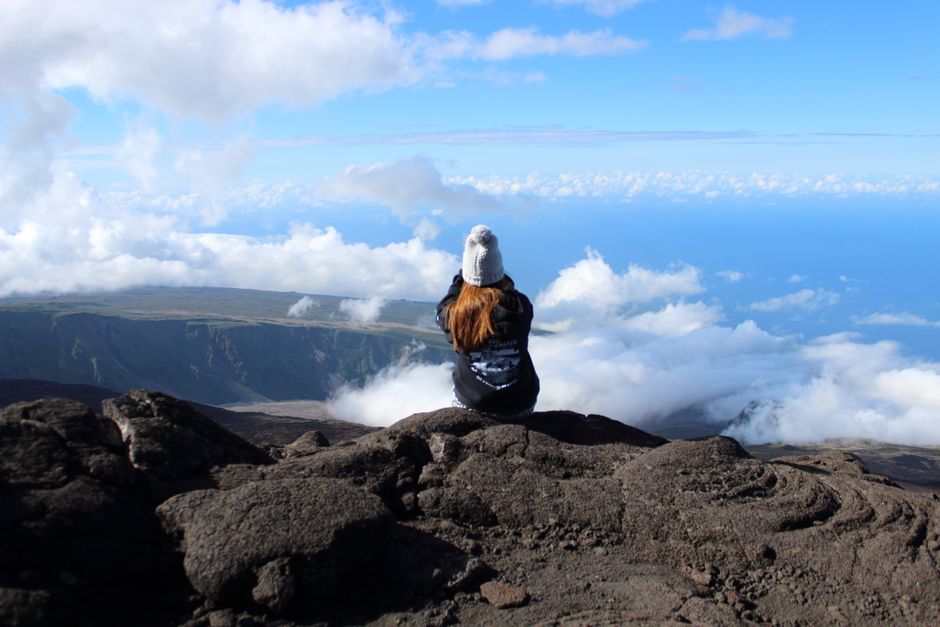
Réunion is a French island in the southwest Indian Ocean, about 175 km (110 miles) southwest of Mauritius and 700 km (435 miles) east of Madagascar, and one of the most spectacular hiking destinations on Earth. Two great volcanoes built the island: the extinct Piton des Neiges, the highest summit in the Indian Ocean at just over 3,000 m (9,800 ft), whose collapsed flanks form three vast natural amphitheaters, the cirques of Mafate, Cilaos and Salazie; and the Piton de la Fournaise, one of the most active volcanoes in the world, which erupts on average about twice a year. Between them lie rainforests, waterfalls, high plains, lava fields and gorges, much of them protected by a national park and inscribed by UNESCO as a World Heritage Site. On the west coast, a coral lagoon and the beaches of Saint-Gilles-les-Bains offer swimming and snorkeling inside the reef. Réunion is a French overseas department and part of the European Union, so it uses the euro and has French infrastructure, from good roads and hospitals to bakeries in every village, while its Creole culture blends African, Malagasy, Indian, Chinese and French roots. EU citizens enter with an ID card, and US, UK and Canadian citizens need no visa. May to November, the cool, dry season, is the best time for hiking.
Right now in Réunion
- Wed 20–26°C 68–78°F Cloudy
- Thu 20–27°C 68–80°F Partly cloudy
- Fri 21–27°C 70–80°F 4 mm Showers
Weather: MET Norway (CC BY 4.0)
Multi-day tours of Réunion
Multi-day tours from local operators. You check dates and book on Viator, our partner; we may earn a commission at no extra cost to you. How we earn money
Réunion at a glance: overview and geography
Réunion covers about 2,512 km² (970 sq miles), roughly 70 km (43 miles) long and 50 km (31 miles) wide, and has about 890,000 inhabitants, most of them along the coast. The prefecture, Saint-Denis, is on the north coast; Saint-Pierre is the main city of the south, and Saint-Paul and Saint-Gilles-les-Bains are on the drier west coast. The interior is almost entirely mountainous. According to the island’s tourism board, Réunion has about 30 km (19 miles) of white and black sand beaches and a 22 km (14 mile) coral lagoon along the west and southwest coast.
The island was uninhabited until French settlers arrived in the 17th century; it became a plantation colony worked by enslaved people from Madagascar and East Africa, and after slavery was abolished on December 20, 1848, an anniversary celebrated every year as the Fèt Kaf, indentured laborers came from India and later traders from China. Réunion became a French department in 1946. It is an outermost region of the European Union.
French is the official language, and Réunion Creole (kréol rényoné) is spoken by most people at home. Réunion is on UTC+4 all year, with no daylight saving time, the same as Mauritius and Seychelles. The currency is the euro. Electricity is 230 V with European sockets (types E and F), and traffic drives on the right.
The regions of Réunion
- The west (the “côte sous le vent”): the sunniest and driest coast, with the lagoon, Saint-Gilles-les-Bains, L’Hermitage, Saint-Leu and Saint-Paul, and the Maïdo viewpoint above Mafate.
- The north: Saint-Denis, with Creole houses, the Jardin de l’État and the airport.
- The east (the “côte au vent”): the wetter, greener windward coast, with waterfalls, vanilla plantations and Saint-André’s Tamil temples.
- The south and the “wild south”: Saint-Pierre, Saint-Joseph and the lava coast of Saint-Philippe, where flows from the volcano reach the sea.
- The cirques: Mafate, Cilaos and Salazie, the three collapsed calderas of the Piton des Neiges.
- The volcano and the high plains: the Plaine des Cafres and Plaine des Palmistes, and the Piton de la Fournaise massif.
Where to go: lagoon, cirques and volcano
Most visitors split their stay between the west coast, for the lagoon, beaches and sunsets, and the mountains, for the cirques and the volcano. See our guide to Saint-Gilles-les-Bains, the island’s main beach resort, with the lagoon of L’Hermitage, the netted swimming area at Boucan Canot, the Bassins waterfalls and boat trips to see dolphins and, from June to October, humpback whales.
The cirques: Mafate, Cilaos and Salazie
The three cirques are the heart of Réunion. Mafate has no roads at all: its scattered hamlets, or “îlets,” are reached only on foot or by helicopter, and hikers sleep in simple gîtes run by local families. Cilaos is reached by a famously winding road with hundreds of bends, and has a spa town with thermal springs, lentil fields and wine, trails to the Piton des Neiges and some of the best canyoning in the world. Salazie, the greenest cirque, has dozens of waterfalls, including the Voile de la Mariée, and the village of Hell-Bourg, with its colorful Creole houses. The long-distance trails GR R1 (around the Piton des Neiges), GR R2 (the island crossing) and GR R3 (around Mafate) link the cirques.
Maïdo
Above the west coast, a winding road climbs through sugarcane, geranium fields and tamarind forest to the Maïdo viewpoint, at about 2,200 m (7,200 ft) on the rim of Mafate. At sunrise, before the clouds rise, the view drops straight into the cirque, with its îlets, ridges and the Piton des Neiges beyond. Bring warm clothes, as dawn temperatures can be close to freezing in winter, and leave Saint-Gilles about 1.5 hours before sunrise. Trails from Maïdo lead along the rim to the Grand Bénare and down into Mafate.
The Piton des Neiges
The island’s highest peak is usually climbed from Cilaos in two days, with a night at the Caverne Dufour mountain refuge and a pre-dawn ascent to watch the sunrise over the whole island. It is a steep, demanding hike; nights at the summit are cold, and frost is common in winter.
Piton de la Fournaise
The Piton de la Fournaise rises to 2,632 m (8,635 ft) in the southeast of the island and is monitored around the clock by the Piton de la Fournaise Volcanological Observatory (OVPF-IPGP). According to the observatory, it has erupted about twice a year on average since 1998, mostly with fluid lava flows inside the Enclos Fouqué caldera; eruptions outside the Enclos are rare. A forest road crosses the Plaine des Sables, a red and ochre desert of volcanic ash, to the Pas de Bellecombe, a lookout over the Enclos, from where a trail descends the cliff and crosses the lava fields to the rim of the summit craters. Walking around the main crater, Dolomieu, has not been possible since it collapsed in 2007, according to the island’s tourism board. Other walks lead to the Piton de l’Eau crater lake, and lava tunnels can be explored with guides on the coast.
Saint-Denis and Saint-Pierre
Saint-Denis has the island’s finest Creole villas along rue de Paris, the Jardin de l’État botanical garden, mosques, Tamil temples and churches side by side, and the seafront promenade of the Barachois. Saint-Pierre, the capital of the south, has a lively Saturday market, a beach with a small lagoon and good restaurants.
The east and the wild south
On the wet east coast, look for the Anse des Cascades waterfalls, the Notre-Dame-des-Laves church at Sainte-Rose, where a lava flow stopped at its doors in 1977, vanilla plantations and the Grand Bassin and Cascade Niagara waterfalls. In the south, the coast road crosses recent lava flows at Saint-Philippe, and the Cap Méchant cliffs face the open ocean.
Saint-Gilles-les-Bains Travel Guide
Plan a trip to Saint-Gilles-les-Bains, Réunion: the L'Hermitage lagoon, netted swimming at Boucan Canot and Roches Noires, the shark swimming rules, dolphin and whale…
Best time to visit Réunion
Réunion has a tropical climate with two seasons. The hot, humid season, from about November to April, brings most of the year’s rain, heavy downpours in the mountains and on the east coast, and the risk of tropical cyclones, mostly from January to March. The cool, dry season, from about May to October, is the best time for hiking, with clear mornings, cooler temperatures and less rain, though nights in the mountains can drop close to freezing. The west coast is much drier and sunnier than the east, and the mountains are much cooler and wetter than the coast.
The table shows Météo-France’s 1991–2020 normals for Saint-Denis Gillot airport on the north coast.
| Month | Average high | Average low | Rain | Rain days (≥1 mm) |
|---|---|---|---|---|
| Jan | 30 °C (86 °F) | 24 °C (74 °F) | 270 mm (10.6 in) | 13.8 |
| Feb | 30 °C (87 °F) | 24 °C (75 °F) | 279 mm (11.0 in) | 13.5 |
| Mar | 30 °C (86 °F) | 23 °C (74 °F) | 264 mm (10.4 in) | 13.5 |
| Apr | 29 °C (85 °F) | 22 °C (72 °F) | 133 mm (5.3 in) | 10.9 |
| May | 28 °C (82 °F) | 21 °C (69 °F) | 96 mm (3.8 in) | 9.6 |
| Jun | 26 °C (79 °F) | 19 °C (66 °F) | 67 mm (2.6 in) | 7.5 |
| Jul | 25 °C (78 °F) | 18 °C (65 °F) | 51 mm (2.0 in) | 8.5 |
| Aug | 26 °C (78 °F) | 18 °C (65 °F) | 55 mm (2.2 in) | 8.8 |
| Sep | 26 °C (79 °F) | 19 °C (66 °F) | 48 mm (1.9 in) | 7.5 |
| Oct | 27 °C (81 °F) | 20 °C (68 °F) | 43 mm (1.7 in) | 6.9 |
| Nov | 28 °C (83 °F) | 21 °C (70 °F) | 62 mm (2.5 in) | 6.1 |
| Dec | 30 °C (85 °F) | 23 °C (73 °F) | 160 mm (6.3 in) | 10.2 |
| Year | 28 °C (82 °F) | 21 °C (70 °F) | 1,530 mm (60.2 in) | 117 |
By contrast, Météo-France’s station at Pointe des Trois-Bassins on the west coast, near Saint-Gilles, records only about 480 mm (19 in) of rain a year and highs of 26–32 °C (79–89 °F), while Cilaos, at 1,197 m (3,927 ft) in the cirque, averages highs of 19–26 °C (66–78 °F), lows of 7–15 °C (45–60 °F) and about 1,760 mm (69 in) of rain. The sea ranges from about 22 °C (72 °F) in winter to 30 °C (86 °F) in summer, according to the tourism board.
Réunion month by month
| Month | Weather | Highlights | Crowds and prices |
|---|---|---|---|
| January | Hot, humid; heavy showers; cyclone risk | Lagoon warm; lush waterfalls | French summer holidays end early January |
| February | Wettest month; peak cyclone risk | Chinese New Year in Saint-Denis | Low |
| March | Hot, wet; cyclone risk | Waterfalls at their fullest | Low |
| April | Drying out; warm | Good hiking returns; Easter | Moderate |
| May | Pleasant, drier | Excellent hiking; clear views | Moderate |
| June | Cool, dry; cold nights in the mountains | Humpback whales arrive | Moderate |
| July | Coolest month; frost possible above 2,000 m | Whale watching; French school holidays | High |
| August | Cool, dry | Whale watching; Mafate and Piton des Neiges treks | High |
| September | Dry, warming up | Whales; best hiking conditions | Moderate |
| October | Warm, dry | Grand Raid ultra-trail race; Dipavali festival | Busy around the Grand Raid |
| November | Warm; showers increase | Start of the hot season | Moderate |
| December | Hot, humid; cyclone season begins | Fèt Kaf (December 20), Christmas | High in the holidays |
Cyclones and the volcano
Tropical cyclones can affect Réunion from about November to April. Météo-France La Réunion manages the cyclone alert system, from a yellow pre-alert to orange, red and violet alerts and then a “phase de sauvegarde”; under a red alert, everyone must stay indoors and traffic is banned, and flights stop. Heavy rain can close mountain roads, trails and the cirques for days, so follow Météo-France and the prefecture’s announcements.
The Piton de la Fournaise follows a separate alert system set by the prefecture, based on the observatory’s data. As of October 5, 2026, according to the OVPF-IPGP’s daily bulletin, the volcano was at the “Vigilance” level, the lowest alert level, in force since May 7, 2026; the most recent eruption lasted from March 12 to May 5, 2026, and the observatory was recording continued inflation of the volcano. At the Vigilance level, the Enclos Fouqué is normally open to hikers; when the prefecture raises the alert level because an eruption is likely or under way, it closes the Enclos and sometimes the forest road, and it may organize viewing areas and roadside parking during eruptions. Check the OVPF bulletin and the prefecture’s current rules before you go.
Crowds, prices and events
Réunion’s busiest periods are the French school holidays, especially July and August, Christmas and New Year, and the Grand Raid in October, when thousands of runners take part in the “Diagonale des Fous,” a mountain ultra-race across the island. Other events include Fèt Kaf on December 20, celebrating the abolition of slavery; Dipavali, the Tamil festival of lights, in October or November in Saint-André; Chinese New Year; and village festivals for lentils in Cilaos and vanilla in Bras-Panon.
How long to stay: sample itineraries
7 days: coast, volcano and one cirque
Day 1–2: Saint-Gilles-les-Bains and the lagoon. Day 3: sunrise at Maïdo over Mafate. Day 4: the Piton de la Fournaise via the Plaine des Sables. Day 5: Saint-Pierre’s market and the wild south. Day 6–7: Cilaos or Salazie, with a walk and a night in a Creole guesthouse.
10–14 days: hiking the cirques
Add two or three nights in Mafate’s gîtes on the GR R3, the two-day climb of the Piton des Neiges, the east coast’s waterfalls and a night in Hell-Bourg.
Two weeks or more: Réunion and Mauritius
Combine Réunion with Mauritius, a 45-minute flight away, for beaches after the mountains; or add Seychelles or Madagascar, both with direct flights.
Entry, money, fees and costs
Entry rules (last reviewed October 2026)
Réunion is part of France and the European Union, but it is outside the Schengen area; France sets separate visa rules for its overseas departments. The EU’s Entry/Exit System and ETIAS do not apply to travel to Réunion, and a Schengen visa alone is not valid here.
- EU, EEA and Swiss citizens: a valid passport or national identity card; no visa.
- US, Canadian, UK, Australian and New Zealand citizens: no visa for stays of up to 90 days for tourism. According to the UK government’s entry page, UK passports must be valid for at least three months after the date you plan to leave.
- South African citizens: no visa needed, according to the island’s tourism board.
- Indian and Chinese citizens: a simplified scheme exempts holiday visitors from the visa requirement, subject to conditions, according to the tourism board; check the conditions before booking.
- Others: check France-Visas, the French government’s official visa site, which has a section for overseas France.
French customs rules apply, including EU limits on meat and dairy products. Rules change, so check France-Visas and your own government’s information before you travel. For France’s own rules, see our France travel guide.
Money and tipping
Réunion uses the euro; in early October 2026, €1 was worth about US$1.12, according to the European Central Bank. Cards are accepted almost everywhere except at markets and some snack bars and gîtes in the cirques; carry cash for Mafate, which has no ATMs. Service is included in restaurant prices, so tipping is optional.
Hotel taxes
Hotels, gîtes, guesthouses (chambres d’hôtes) and holiday rentals add a taxe de séjour (tourist tax) per adult per night, set by each local authority, usually from a few tens of cents to a few euros depending on the classification; for unclassified rentals, French law sets it as a percentage of the nightly price. Children under 18 are exempt.
Typical travel costs
Réunion’s prices are similar to mainland France, with higher costs for imported goods. These estimates are a planning guide as of October 2026:
| Item | Euros | About US dollars |
|---|---|---|
| Night in a mountain gîte with dinner and breakfast | €50–70 | US$56–78 |
| Guesthouse (chambre d’hôte) double with breakfast | €70–110 | US$78–125 |
| Mid-range hotel double in Saint-Gilles | €110–200 | US$125–225 |
| Rental car, per day | €30–60 | US$34–67 |
| Bus fare (Car Jaune) | €2–5 | US$2–6 |
| Helicopter flight over the cirques and volcano | €250–400 | US$280–450 |
| Canyoning half day | €55–80 | US$62–90 |
| Carry (Creole curry) at a snack bar | €8–12 | US$9–13 |
| Dinner main in a restaurant | €18–30 | US$20–34 |
Per person per day, a budget trip in gîtes and guesthouses with a shared car costs about US$90–140 (€80–125); mid-range travel about US$180–280 (€160–250). Add the tourist tax and fuel. These are our estimates, not official statistics.
Getting there and getting around
Flights
Roland Garros Airport (RUN), at Sainte-Marie, just east of Saint-Denis, is the main gateway, with nonstop flights of about 11 hours from Paris (Air Austral, Air France, Corsair and French bee) and regional flights to Mauritius (about 45 minutes), Madagascar, Seychelles, Mayotte, Johannesburg and other destinations. Pierrefonds Airport (ZSE), near Saint-Pierre in the south, has a few regional flights. There are no direct flights from North America; connect through Paris or Mauritius. Check current routes, as regional services change.
Driving and buses
A rental car is almost essential for exploring, as many trailheads, viewpoints and villages are far from bus routes. Driving is on the right, as in mainland France. The coastal expressways are good but congested at rush hour, especially between Saint-Denis and the west coast and around Saint-Pierre; mountain roads to the cirques, the volcano and Maïdo are narrow and full of hairpin bends, and can be closed by rockfalls or heavy rain. The island’s Car Jaune bus network links the main towns, and local networks serve each area, including the road into Cilaos and Salazie; there is no road into Mafate.
Helicopters
Helicopter flights over the cirques, the volcano and the waterfalls of Trou de Fer are one of the island’s great experiences, best early in the morning before clouds build up. Helicopters also supply Mafate.
Hiking, beaches and the sea
Hiking
With about 1,000 km (620 miles) of marked trails, Réunion is a paradise for hikers, and its national park, created in 2007, covers much of the interior. The classic routes include the GR R1, GR R2 and GR R3, the climb to the Piton des Neiges, the volcano trails from Pas de Bellecombe, the walk to the Trou de Fer viewpoint and day hikes into Mafate from Maïdo or the Rivière des Galets. Gîtes de montagne in the mountains and Mafate must be booked in advance. Start early, as clouds often cover the peaks by late morning, carry rain gear and warm layers, and check trail closures after heavy rain. See our hiking guide.
Swimming, sharks and the lagoon
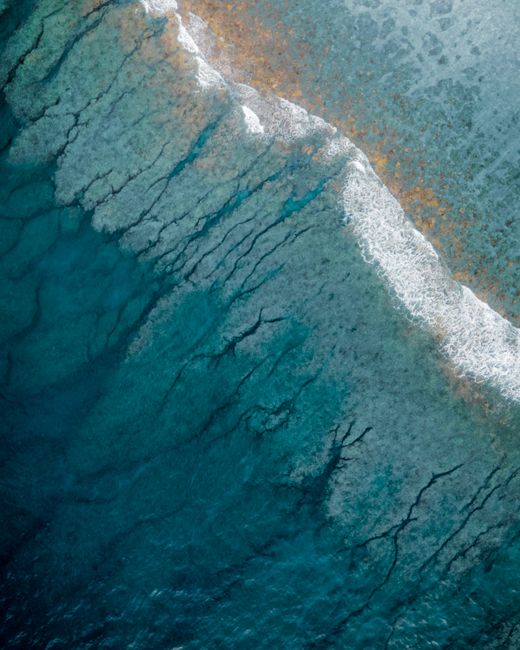
Réunion is not an island for swimming everywhere. Since a series of shark attacks in the 2010s, swimming, water sports and diving have been banned within 300 m (330 yards) of the coastline, except inside the lagoon and in designated, supervised swimming areas, according to the island’s tourism board, under a prefectoral order that is renewed regularly. The coral lagoon on the west and southwest coast, protected by the reef, from Saint-Gilles to L’Hermitage, La Saline, Saint-Leu and Étang-Salé, is where most people swim and snorkel. At Boucan Canot and Roches Noires in Saint-Gilles, swimming areas have been equipped with permanent shark nets since 2019 and are watched by lifeguards; the nets are removed only for dangerous swell or cyclones. Always follow the lifeguards’ flags and signs. Outside these areas, enjoy the ocean from the shore, or with diving and boat operators that follow the current rules. See our beaches, snorkeling and diving guides.
Whales and dolphins
Humpback whales come to Réunion’s coast to breed and give birth from about June to October, and dolphins live off the west coast all year. Licensed boat operators follow a code of conduct for approaching marine mammals; choose one that respects it.
Safety, health and connectivity
Safety
Réunion is generally safe, with French standards of policing, roads and health care. The main points:
- Sharks: swim only in the lagoon and in supervised, netted areas; swimming and water sports outside them are banned within 300 m of the coast.
- The sea: currents can be strong at reef passes and on beaches outside the lagoon; watch flags and lifeguards.
- Cyclones (November to April): follow Météo-France La Réunion’s alerts and the prefecture’s instructions; under a red alert, stay indoors.
- The volcano: respect the prefecture’s access rules for the Enclos Fouqué; stay on marked trails, and never approach an eruption outside authorized areas.
- Hiking: trails are steep and slippery after rain, and weather changes fast in the mountains; carry water, rain gear and warm layers, tell someone your route and start early. Rockfalls close trails and roads.
- Roads: drive carefully on mountain roads, which are narrow and winding, with sheer drops.
- Theft: do not leave valuables in cars at trailheads and beaches.
- Emergencies: call 15 for medical emergencies (SAMU), 17 for police, 18 for fire or 112 from any phone.
Health and water
Réunion has good hospitals, including the university hospital with sites in Saint-Denis and Saint-Pierre. EU visitors can use a European Health Insurance Card; others should have travel insurance, including mountain rescue. Mosquito-borne diseases such as dengue and chikungunya occur, sometimes as large epidemics; use repellent. Leptospirosis can be caught in fresh water, especially after rain; cover cuts and avoid swimming in rivers and pools in the wet season. Tap water is generally safe in towns, but heavy rain can affect quality; follow local notices. There is no malaria.
Accessibility
Coastal towns, many hotels and some beaches have accessible facilities, and some lagoon beaches offer adapted equipment for swimming in season. The mountains, cirques and volcano trails, however, are steep and rough, and Mafate is accessible only on foot or by helicopter, so travelers with limited mobility will see the interior mainly from viewpoints such as Maïdo and the Pas de Bellecombe, or from the air.
Réunion with children
Réunion is a rewarding family destination: the lagoon is shallow and calm, the netted swimming areas are supervised, and short walks lead to waterfalls and natural pools, such as the Bassins above Saint-Gilles. Children enjoy the Kelonia turtle center, the Cité du Volcan, horse riding at the Plaine des Cafres and boat trips to see dolphins. Choose short, well-marked trails, carry snacks and warm layers in the mountains, and avoid long drives on winding roads with children prone to car sickness.
Responsible travel
About 40% of Réunion is a UNESCO World Heritage Site, and the lagoon is a national marine reserve with zones where fishing and collecting are banned. Stay on marked trails in the national park, do not pick plants, and never feed wildlife. In the lagoon, do not walk on coral, use reef-safe sunscreen, and do not touch turtles. In Mafate, carry out your trash and respect the residents’ land; buying meals and local products in the îlets supports the families who live there.
Connectivity and power
As part of the EU, Réunion is covered by “roam like at home” rules for EU mobile plans; others should check roaming charges or buy a local SIM card. Coverage is good on the coast but patchy in the cirques. Electricity is 230 V with European sockets, so North Americans need a travel adapter.
Food, drink and culture
Réunion’s Creole cooking is hearty and spicy. The everyday dish is carry (or cari), a curry of chicken, pork, fish or octopus with turmeric, ginger and garlic, served with rice, lentils or beans and rougail, a fiery chutney of tomato, mango or chili. Try rougail saucisses (sausages in tomato sauce), samoussas, bouchons (Chinese-style dumplings), bonbons piment (chili fritters) and achards (pickled vegetables). Cilaos is famous for its lentils and sweet wine, and the island produces some of the world’s finest Bourbon vanilla. Drink Bourbon beer (the “Dodo”), rhum arrangé infused with fruit and spices, and fresh fruit juices. Snack bars and roadside “camions bar” are the cheapest places to eat.
Réunion’s culture is a celebrated mix of origins and religions, with Catholic churches, Hindu temples, mosques and Chinese pagodas side by side. Listen for maloya, the traditional music born among enslaved people, listed by UNESCO as intangible cultural heritage, and séga.
Things to do: hiking, canyoning, lagoon and volcano
- Hike into Mafate and sleep in a family-run gîte.
- Climb the Piton des Neiges for sunrise over the island.
- Walk across the lava fields of the Piton de la Fournaise.
- Watch the sun rise from the Maïdo viewpoint over Mafate.
- Go canyoning in Cilaos or Salazie, or paragliding from Saint-Leu.
- Snorkel in the lagoon at L’Hermitage or Saint-Leu.
- Take a helicopter flight over the cirques and the Trou de Fer waterfalls.
- Visit the Cité du Volcan museum at the Plaine des Cafres and the Kelonia sea turtle center at Saint-Leu.
- Watch humpback whales from June to October.
What to pack
Bring sturdy hiking shoes, a rain jacket, warm layers and a hat and gloves for the mountains, swimwear, water shoes, reef-safe sunscreen, insect repellent, a headlamp, a refillable bottle and a European plug adapter.
Réunion travel FAQ
Do US citizens need a visa for Réunion?
No. US citizens can visit Réunion without a visa for up to 90 days for tourism. Réunion is outside the Schengen area, so ETIAS does not apply.
Is Réunion part of France?
Yes. Réunion is a French overseas department and region and part of the European Union, using the euro.
Is the Piton de la Fournaise erupting now?
As of October 5, 2026, the OVPF-IPGP observatory listed the volcano at the “Vigilance” level, with no eruption; the last eruption ran from March 12 to May 5, 2026. Check the observatory’s daily bulletin before you go.
Can you hike the Piton de la Fournaise?
Yes, when the alert level allows. From the Pas de Bellecombe lookout, a trail crosses the Enclos Fouqué to the summit area; the prefecture closes the Enclos when an eruption is likely or under way.
Can you swim in the sea in Réunion?
Only inside the lagoon and in designated, supervised areas, such as the netted zones at Boucan Canot and Roches Noires. Elsewhere, swimming and water sports are banned within 300 m of the coast because of the shark risk.
What is the best time to visit Réunion?
May to November, the cooler, drier season, for hiking; December to April is hot and humid, with a cyclone risk.
What are the cirques of Réunion?
Three huge natural amphitheaters, Mafate, Cilaos and Salazie, formed by the collapse of the Piton des Neiges volcano. Mafate can only be reached on foot or by helicopter.
Do I need a car in Réunion?
It is strongly recommended. Buses link the towns, but many trailheads, viewpoints and the volcano are far from bus routes.
How do I get from Mauritius to Réunion?
By air, about 45 minutes; several flights a day link the two islands.
What currency is used in Réunion?
The euro. Cards are widely accepted, but carry cash for markets and the cirques.
Is there malaria in Réunion?
No, but dengue and chikungunya occur; use insect repellent.
When is cyclone season in Réunion?
From about November to April, most often from January to March.
What is the tourist tax in Réunion?
Accommodation adds a taxe de séjour per adult per night, set locally, usually a few euros or less; children under 18 are exempt.
Sources and last review
Researched and last reviewed on 5 October 2026. Piton de la Fournaise alert level, eruption dates, altitude, eruption frequency and inflation: the Piton de la Fournaise Volcanological Observatory (OVPF-IPGP) daily and monthly bulletins; cyclone alert levels: Météo-France La Réunion; climate: Météo-France’s 1991–2020 station climate sheets for Saint-Denis Gillot, Pointe des Trois-Bassins and Cilaos; the 300 m swimming ban, netted areas since 2019, beach and lagoon lengths, sea temperatures, the Dolomieu collapse and visa schemes for South African, Indian and Chinese travelers: Île de la Réunion Tourisme, the official tourism board; UK entry rules: the UK government’s entry page; the euro–dollar rate: the European Central Bank; area, population and coordinates: Wikidata. The prefectoral swimming order and volcano access rules (not readable from here), visa rules for other nationalities, history, the height of the Piton des Neiges, flight routes, trail lengths, events, emergency numbers and all prices are general references or estimates, flagged for checking. Rules change, so check the official sites before you go.
Plugs and power in Réunion
Réunion uses 230 V, 50 Hz and these plugs (left) and wall sockets (right):
All plug types and voltages by country → · Check what you need to pack →
Plan your trip
Partner links: TravelerCenter may earn a commission if you book, at no extra cost to you.
🇫🇷 Useful French phrases for Réunion
All 38 French phrases: restaurant, hotel, emergencies, romance (printable) →