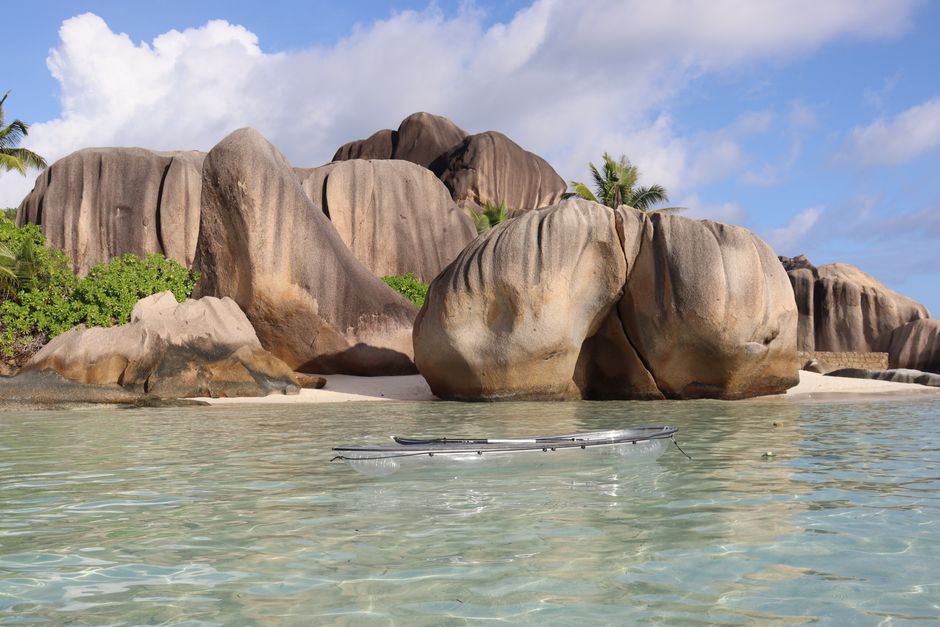
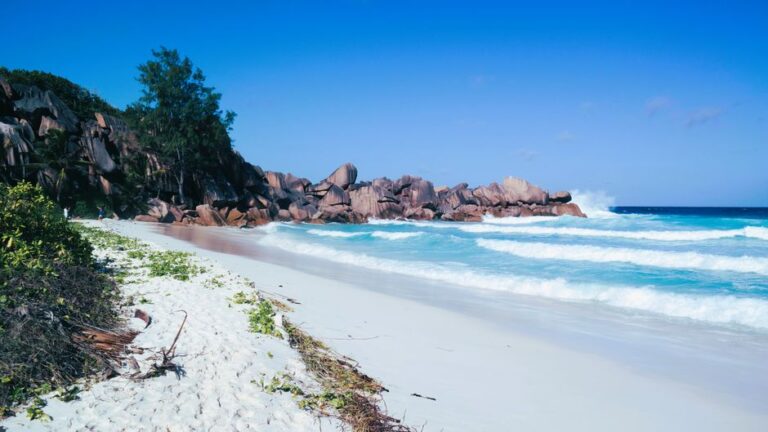
Seychelles is an archipelago of 115 islands scattered across the western Indian Ocean, about 1,500 km (930 miles) east of the coast of Kenya and 1,000 km (620 miles) north of Madagascar. Its fame rests on the granite Inner Islands, a cluster of mountainous islands that are fragments of the ancient supercontinent Gondwana: Mahé, Praslin, La Digue and their neighbors, where smooth pink and gray boulders frame beaches of powder-white sand and water in every shade of turquoise. Forests of endemic palms, including the legendary coco de mer, cover the hills; giant tortoises roam the islands; and seabirds nest in their hundreds of thousands on protected islands such as Cousin, Aride and Bird Island. Farther out, the low coral Outer Islands, including the UNESCO-listed Aldabra Atoll, are among the most remote places on Earth. Seychelles is known for luxury resorts and private-island hideaways, but it also has small hotels, self-catering apartments and Creole guesthouses, and ferries make island hopping easy. Every visitor must obtain a paid online Travel Authorization before flying; a free visitor’s permit is then issued on arrival. Seychelles is warm all year; the calm months of April to May and October to November are often the best for beaches, snorkeling and diving.
Right now in Seychelles
- Wed 25–27°C 77–81°F 12 mm Rain
- Thu 25–27°C 78–81°F 5 mm Showers
- Fri 26–28°C 79–83°F 15 mm Cloudy
Weather: MET Norway (CC BY 4.0)
Multi-day tours of Seychelles
Multi-day tours from local operators. You check dates and book on Viator, our partner; we may earn a commission at no extra cost to you. How we earn money
Seychelles at a glance
Seychelles is the smallest country in Africa by population, with about 120,000 inhabitants, almost 90% of them on Mahé, and a land area of only about 460 km² (178 sq miles) spread over an ocean area larger than France. The islands were uninhabited until French settlers arrived in 1770 with enslaved Africans; Britain took control in 1814, and Seychelles became independent in 1976. Its Creole culture blends African, French, British, Indian and Chinese influences. The capital, Victoria, on Mahé, is one of the smallest capitals in the world.
Seychelles has three official languages: Seychellois Creole (Kreol Seselwa), spoken by almost everyone, English and French. Most people are Roman Catholic. Seychelles Time is UTC+4, with no daylight saving time, the same as Mauritius and Réunion. The currency is the Seychelles rupee (SCR). Electricity is 240 V with British-style three-pin sockets (type G), and traffic drives on the left. Nearly half the land area is protected as national parks and nature reserves.
The islands and regions
- Mahé: the largest island, with the capital, Victoria, the international airport, Morne Seychellois National Park and more than 60 beaches, including Beau Vallon.
- Praslin: the second island, with the Vallée de Mai World Heritage Site and beaches such as Anse Lazio and Anse Georgette.
- La Digue: a small, slow-paced island of bicycles and boulders, home to Anse Source d’Argent.
- Satellite islands of the inner group: Curieuse, Cousin, Félicité, Sainte Anne and Silhouette, with marine parks, nature reserves and private-island resorts.
- Bird and Denis islands: low coral islands at the edge of the Seychelles Bank, north of Mahé, with one lodge each.
- The Outer Islands: the Amirantes, Alphonse, Farquhar and Aldabra groups, remote coral islands reached by charter flight or expedition ship, with world-class fly fishing and diving.
Where to go: islands, beaches and nature reserves
Most visitors combine two or three of the Inner Islands, linked by fast ferries and short flights. See our guides:
- Mahé: Victoria’s market and botanical garden, the mountain trails of Morne Seychellois National Park, Beau Vallon and dozens of quieter coves, and boat trips to Sainte Anne Marine Park.
- Praslin: the coco de mer palms of the Vallée de Mai, Anse Lazio and Anse Georgette, and day trips to Curieuse and Cousin islands.
- La Digue: Anse Source d’Argent’s granite boulders, cycling between beaches, the wild east coast and the L’Union Estate.
Beyond these, consider Silhouette, a mountainous national park island with one resort; Bird Island, for its sooty tern colony from about May to October; Denis Island, a private island with conservation programs; and, for adventurous travelers with a large budget, the Outer Islands such as Alphonse and Desroches.
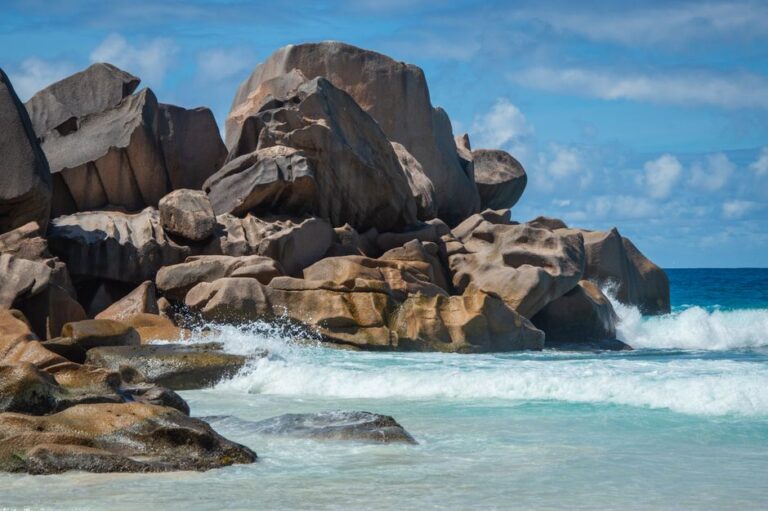
La Digue Travel Guide
Plan a trip to La Digue, Seychelles: Anse Source d'Argent and L'Union Estate, bicycles instead of cars, Grand Anse, Petite Anse and Anse Cocos,…
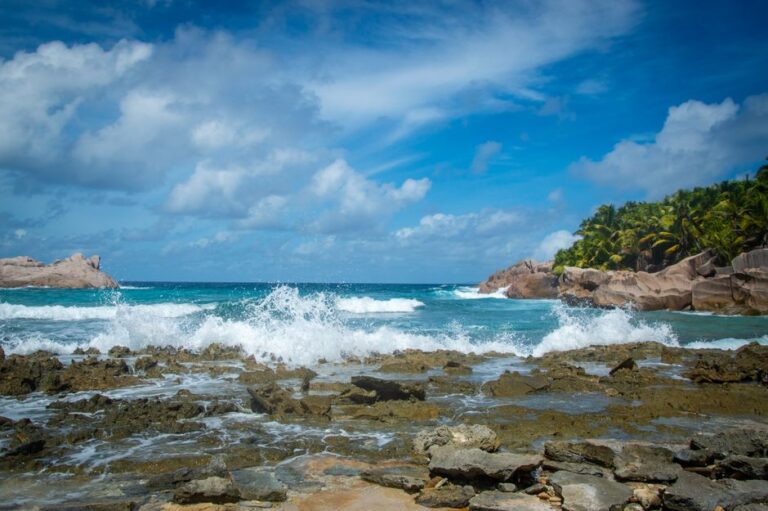
Mahé Travel Guide
Plan a trip to Mahé, Seychelles: Victoria's market and botanical garden, Beau Vallon and the southern beaches, Morne Seychellois National Park trails, Sainte Anne…
Praslin Travel Guide
Plan a trip to Praslin, Seychelles: the Vallée de Mai World Heritage Site (SCR 450 fee, hours), coco de mer and black parrots, Anse…
Where to stay: resorts, guesthouses and self-catering
Luxury resorts and private islands
Seychelles has some of the most exclusive hotels in the Indian Ocean, from villas with private pools on Mahé and Praslin to whole private islands, such as Frégate, North Island and Félicité, reached by helicopter or boat. Prices are high, but so are the settings.
Mid-range hotels
Beach hotels on Mahé (especially at Beau Vallon), Praslin (Grand Anse, Côte d’Or) and La Digue offer comfortable rooms, pools and restaurants at more moderate prices.
Guesthouses and self-catering
Small, Seychellois-owned guesthouses and self-catering apartments are the backbone of affordable travel in Seychelles. Many are on hillsides a short walk from the beach, with kitchens or Creole dinners cooked by the owners. According to the official Travel Authorization website, visitors must stay in accommodation certified by the Department of Tourism, and you need your booking to apply for the Travel Authorization.
Liveaboards and yacht charters
Catamaran and yacht charters, with or without a skipper, cruise between the Inner Islands, and a few dive and expedition vessels sail to the Amirantes and Aldabra.
Mahé, Praslin or La Digue: which island suits you?
| Island | Mahé | Praslin | La Digue |
|---|---|---|---|
| Size | About 155 km² (60 sq miles); mountainous | About 38 km² (15 sq miles); hilly | About 10 km² (4 sq miles); small and flat on the west |
| Character | The capital, the airport, most hotels and restaurants, busiest roads | Quieter, with palm forest and long beaches | Village life, bicycles and very few cars |
| Best for | Hiking, variety, Victoria, Beau Vallon, Sainte Anne Marine Park | The Vallée de Mai, Anse Lazio, trips to Curieuse and Cousin | Anse Source d’Argent, cycling, snorkeling trips to the nearby islands |
| Getting around | Rental car, bus or taxi | Rental car, bus or taxi | Bicycle, on foot or electric buggy taxi |
| Stay | 3–4 nights | 2–4 nights | 2–3 nights |
Seychelles with children
Seychelles is a gentle destination for families, with warm water, short distances, giant tortoises and Creole food that is rarely too spicy for children. Choose sheltered beaches in season, such as Beau Vallon in the southeast trade-wind months or Côte d’Or on Praslin, since lifeguards are few. Many hotels offer family rooms and kids’ clubs, and self-catering apartments make longer stays affordable. Bring reef shoes, rash vests and plenty of sunscreen, and plan ferry crossings for calm mornings if your children get seasick.
Best time to visit Seychelles
Seychelles lies just south of the equator, and it is hot and humid all year, with temperatures that barely change: highs of about 29–32 °C (84–89 °F) and nights of 24–26 °C (75–79 °F), with the sea at 26–30 °C (79–86 °F). The seasons are set by the winds. The northwest monsoon, from about December to March, brings warmer, more humid weather, the heaviest rains, especially in December and January, and calmer seas on the southeast-facing coasts. The southeast trade winds, from about May to September, bring drier, sunnier, slightly cooler weather, but stronger winds and rougher seas, especially on the south and east coasts, and seaweed on some beaches. The transition months of April and October to November usually have light winds, calm, clear water and the best conditions for snorkeling and diving.
The table shows the 1991–2020 climate normals for Seychelles International Airport on Mahé, as published by the Seychelles Meteorological Authority through the World Meteorological Organization (WMO).
| Month | Average high | Average low | Rain | Sunshine (hours a month) |
|---|---|---|---|---|
| Jan | 30 °C (86 °F) | 25 °C (76 °F) | 427 mm (16.8 in) | 155 |
| Feb | 31 °C (87 °F) | 25 °C (78 °F) | 251 mm (9.9 in) | 178 |
| Mar | 31 °C (88 °F) | 25 °C (78 °F) | 204 mm (8.1 in) | 217 |
| Apr | 32 °C (89 °F) | 26 °C (78 °F) | 196 mm (7.7 in) | 239 |
| May | 31 °C (88 °F) | 26 °C (79 °F) | 171 mm (6.7 in) | 250 |
| Jun | 30 °C (85 °F) | 25 °C (77 °F) | 122 mm (4.8 in) | 216 |
| Jul | 29 °C (84 °F) | 24 °C (76 °F) | 80 mm (3.1 in) | 234 |
| Aug | 29 °C (84 °F) | 24 °C (76 °F) | 115 mm (4.5 in) | 235 |
| Sep | 29 °C (85 °F) | 25 °C (76 °F) | 184 mm (7.2 in) | 210 |
| Oct | 30 °C (86 °F) | 25 °C (77 °F) | 191 mm (7.5 in) | 224 |
| Nov | 30 °C (87 °F) | 25 °C (76 °F) | 215 mm (8.5 in) | 203 |
| Dec | 30 °C (87 °F) | 25 °C (76 °F) | 298 mm (11.7 in) | 176 |
| Year | 30 °C (86 °F) | 25 °C (77 °F) | 2,454 mm (96.6 in) | 2,538 |
Rain falls mostly in short, heavy tropical showers, and even the wettest months have plenty of sunshine. The granitic islands lie outside the usual track of tropical cyclones; storms in the southwest Indian Ocean occasionally affect the southern Outer Islands between November and April, and bring heavy rain and swell to the Inner Islands.
Seychelles month by month
| Month | Weather | Highlights | Crowds and prices |
|---|---|---|---|
| January | Wettest month; hot, humid | Lush forests; calm on the southeast coasts | High in early January |
| February | Showers ease; warm | Turtle nesting season ending | Moderate |
| March | Hot and humid; calmer | Good diving | Moderate |
| April | Calm transition month; warm sea | Excellent snorkeling, diving and visibility | High at Easter |
| May | Calm early; trade winds begin | Good beach weather and diving | Moderate |
| June | Southeast trades; drier | Sooty terns nesting on Bird Island | Moderate |
| July | Windy; rougher seas on south and east coasts | Sheltered beaches on the northwest coasts | High in European holidays |
| August | Windy, dry, slightly cooler | Hiking weather | High |
| September | Winds easing | Good for hiking and fishing | Moderate |
| October | Calm transition month | Excellent diving; Festival Kreol in late October | Moderate to high |
| November | Calm, warm; showers increasing | Hawksbill turtles start nesting; whale sharks some years | Moderate |
| December | Northwest monsoon; rain increases | Christmas and New Year | Very high from mid-December |
Holidays and festivals
The Festival Kreol, held each year in the last week of October, celebrates Creole music, food, dance and crafts across the islands. Other public holidays include Constitution Day (June 18), National Day (June 29, Independence Day), the Assumption (August 15), when La Digue holds its biggest festival, and Liberation Day (June 5). The SUBIOS underwater festival and the Seychelles Carnival have run in some years; check current dates.
How long to stay: sample itineraries
- 5–6 nights: three nights on Mahé and three on Praslin or La Digue, with a day trip between Praslin and La Digue.
- 7–10 nights: three nights each on Mahé, Praslin and La Digue, with boat trips to Curieuse, Cousin and the islands around La Digue.
- 2 weeks: add a stay on Bird, Denis or Silhouette, a sailing charter, or a twin-center trip with Mauritius, the Maldives or Dubai.
Entry, money and costs
Travel Authorization and visitor’s permit (last reviewed October 2026)
Seychelles does not require a visa for any nationality, but since its borders were fully digitized, every visitor must hold an approved Travel Authorization (TA) before departure, applied for on the official Seychelles Electronic Border System, seychelles.govtas.com, or its e-Border app. According to the official site:
- Fees for adults: standard processing (24 hours) €10; premium processing (6 hours) €30; expedited processing (60 minutes) €70. For children aged 12 and under, the fees are €10, €30 and €30. Bank fees are added, and the fee is non-refundable.
- Timing: you can apply up to 10 days before departure; standard review can take up to 24 hours, and you cannot travel if your application has not been approved.
- What you need: a passport valid for the duration of your trip, your flight details and your accommodation booking; you can only apply after booking both. If you are staying with friends or family, you need an invitation letter with the host’s details.
- Validity: one journey only; it expires when you leave the country.
- Without a TA: travelers who arrive without an approved Travel Authorization are charged a penalty fee of €30 at the airport and must apply on the spot with their own phone and card.
- Third-party sites: only use the official website or app; unofficial sites charge higher fees.
On arrival, Seychelles Immigration issues a free visitor’s permit for up to three months to holiday, business and family visitors who are not prohibited immigrants and who hold a return or onward ticket, confirmed accommodation and sufficient funds for the stay; the Immigration and Civil Status department sets the minimum at US$150 or equivalent per day. Your passport must be valid for the period of your stay until you return home. The permit can be extended for further three-month periods, up to a total of 12 months, for SCR 5,000 per extension.
Travel and health insurance
According to the official Travel Authorization FAQ, Seychelles does not require visitors to have health or travel insurance, but it is highly recommended, and border officials may ask how you will cover any medical costs. Medical care outside Victoria is basic, and serious cases may need evacuation, so take insurance that covers treatment and medical evacuation, and diving if you dive. Travelers arriving from a country with a risk of yellow fever need a vaccination certificate.
Taxes and levies
Room rates often exclude taxes. Hotels charge 15% VAT, and accommodation collects an Environmental Sustainability Levy per guest per night, which rises with the size of the establishment, from SCR 25 at small guesthouses to SCR 100 at large hotels; children under 12 are exempt. Check what is included when booking.
Money and cards
The Seychelles rupee (SCR) traded at about SCR 14.7 to the US dollar and SCR 16.5 to the euro in early October 2026, according to the Central Bank of Seychelles. Hotels, guesthouses, car rental companies and dive centers accept cards and often quote prices in euros; you can pay most tourist services in euros or rupees. ATMs are found in Victoria, at the airport, at Beau Vallon, on Praslin (Grand Anse, Baie Sainte Anne) and in La Passe on La Digue. Carry rupees for buses, small shops and takeaways.
What a trip costs
Seychelles is one of the more expensive destinations in the region, because almost everything is imported. Prices are approximate for October 2026, converted at about SCR 14.7 per US dollar.
| Item | Seychelles rupees | About US dollars |
|---|---|---|
| Travel Authorization, standard (adult) | €10 | about US$11 |
| Vallée de Mai entrance, adult | SCR 450 | about US$31 |
| Cat Cocos ferry, Mahé–Praslin, one way | about SCR 950–1,300 | about US$65–90 |
| Bus fare on Mahé or Praslin | about SCR 15 | about US$1 |
| Bicycle rental on La Digue, per day | SCR 150–200 | US$10–14 |
| Rental car, per day | SCR 700–1,100 | US$48–75 |
| Takeaway Creole lunch | SCR 75–120 | US$5–8 |
| Dinner main in a restaurant | SCR 300–600 | US$20–41 |
| Guesthouse or self-catering double, per night | SCR 1,500–3,000 | US$100–200 |
| Mid-range beach hotel double | SCR 3,700–7,300 | US$250–500 |
| Luxury resort villa, per night | SCR 15,000 and up | US$1,000 and up |
A couple staying in guesthouses and eating takeaways and some restaurant meals can manage on about US$250–350 a day; mid-range trips cost US$500–800 a day for two.
Getting there and getting around
Flights
Seychelles International Airport (SEZ) is on the east coast of Mahé, about 10 km (6 miles) south of Victoria. There are direct flights from the Gulf (Dubai, Doha and Abu Dhabi), Istanbul, Addis Ababa, Nairobi, Johannesburg, Mumbai, and seasonal or regular services from European cities; Air Seychelles, the national airline, flies regional routes. There are no direct flights from North America; most travelers connect in the Gulf, Istanbul or Europe.
Ferries: Cat Cocos and the inter-island boats
Cat Cocos, the main ferry operator, runs several high-speed catamaran crossings daily between Mahé’s Inter Island Quay in Victoria, Praslin’s jetty at Baie Sainte Anne and La Digue. According to the operator, the crossing takes about 1 hour 15 minutes from Mahé to Praslin, about 1 hour 45 minutes from Mahé to La Digue via Praslin (or about 1 hour 10 minutes on direct sailings), and about 15 minutes between Praslin and La Digue, a route also served by smaller inter-island boats. Book online in advance, especially in high season, be at the quay 30 minutes before departure, and bring your passport, which you must show to board. The open-sea crossing to Praslin can be rough, particularly from June to September; sit low and toward the back if you are prone to seasickness.
Domestic flights and helicopters
Air Seychelles flies small planes between Mahé and Praslin many times a day, in about 15–20 minutes, with views over the islands and tight baggage limits. Helicopters fly to La Digue, Praslin and the private islands, and charter planes go to Bird, Denis and the Outer Islands.
Driving, buses and taxis
On Mahé and Praslin, you can rent a car, which is the most flexible way to explore. Drive on the left; roads on Mahé are narrow, steep and winding, with hairpin bends, deep open drains and few barriers, and sudden heavy rain can make them slippery. Public buses are cheap and cover most of Mahé and Praslin, but they are crowded at peak times and most stop running by early evening. Taxis are available on both islands; agree on the fare if there is no meter. La Digue has very few cars and is explored by bicycle or on foot; see our La Digue guide.
Island hopping and day trips
- Sainte Anne Marine Park: glass-bottom boat and snorkeling trips from Mahé.
- Curieuse: a national park island near Praslin with giant tortoises, coco de mer palms and a mangrove boardwalk.
- Cousin Island: a special reserve for seabirds, visited on guided tours from Praslin on set days.
- Félicité, Coco and the Sisters: snorkeling trips from La Digue and Praslin.
- Silhouette: a mountainous island with a national park, reached by boat from Mahé.
Things to do in Seychelles
- Beaches: Anse Lazio and Anse Georgette on Praslin, Anse Source d’Argent and Grand Anse on La Digue, and Beau Vallon, Anse Intendance and Anse Takamaka on Mahé are among the most beautiful in the world. All beaches are public by law, even those in front of hotels.
- Snorkeling and diving: granite reefs and boulders with turtles, rays and reef sharks; good sites include Shark Bank and Brissare Rocks off Mahé, the Ennerdale wreck, and the islands around Praslin and La Digue. Whale sharks visit some years from about August to November.
- Hiking: trails such as Copolia, Morne Blanc and Anse Major in Morne Seychellois National Park on Mahé, the Vallée de Mai paths and the Glacis Noire trail on Praslin, and Nid d’Aigle, the highest point of La Digue.
- Wildlife: Aldabra giant tortoises, the Seychelles black parrot of Praslin, the paradise flycatcher of La Digue, fruit bats and huge seabird colonies on Cousin, Aride and Bird Island.
- Victoria: the Sir Selwyn Selwyn-Clarke Market, the Clock Tower, the colorful Hindu temple, the Botanical Garden and the National Museum.
- Sailing and fishing: catamaran charters, deep-sea fishing and world-class saltwater fly fishing on the Outer Islands.
See our beaches, snorkeling, diving, boat trips, hiking and cycling guides.
The Vallée de Mai
On Praslin, the Vallée de Mai is a valley of ancient palm forest, inscribed as a UNESCO World Heritage Site in 1983 and managed by the Seychelles Islands Foundation (SIF). According to SIF, it covers only 19.5 hectares (48 acres), making it one of the smallest natural World Heritage Sites, and holds the Seychelles’ largest intact forest of the coco de mer, whose double nut is the largest seed in the plant kingdom, along with the five other endemic palms of the islands, the rare Seychelles black parrot, geckos, chameleons and tree frogs. The entrance fee is SCR 450 for adults; children under 12 enter free with identification. The site is open daily from 8:30 a.m. to 4:30 p.m., with last entry at 3:30 p.m., and is closed on December 25 and January 1. Paths range from about 1.5 to 4 km (1–2.5 miles). See our Praslin guide.
Aldabra Atoll
Aldabra, one of the world’s largest raised coral atolls, about 1,100 km (680 miles) southwest of Mahé, is a UNESCO World Heritage Site and home to more than 100,000 Aldabra giant tortoises. It is managed by SIF as a research station; visits are limited to a small number of expedition cruises each year.
Morne Seychellois National Park
The largest national park in the Inner Islands covers about a fifth of Mahé, rising from mangroves on the west coast to the island’s highest peak, Morne Seychellois, at 905 m (2,969 ft). Cloud forest on the upper slopes shelters endemic pitcher plants, orchids, tree frogs and the tiny Seychelles sunbird. The Copolia trail is the easiest short climb, about an hour each way to a granite summit with views over Victoria and the islands; Morne Blanc starts near the ruins of an old tea plantation, and the coastal path to Anse Major leads to a secluded cove. Start early, as clouds often cover the peaks by midday.
Responsible travel
Seychelles has made conservation central to its identity: nearly half its land is protected, many islands have been cleared of rats and cats to save endemic birds, and fees from visitors to sites such as the Vallée de Mai fund research and protection. Do not touch coral or turtles, use reef-safe sunscreen, never buy coco de mer nuts without an official export permit, and do not take shells or coral from beaches. Turtle nesting beaches have rules for lights and distance; follow your guide.
Food and drink
Seychellois Creole cooking is based on fish, rice, coconut, chili and spices. Try fish curry or octopus curry (kari zourit) in coconut milk, grilled fish with rougaille tomato sauce and sauce chien, ladob (plantains or breadfruit cooked in coconut milk, sweet or savory), breadfruit chips, smoked fish salads and shark chutney, a traditional dish of mashed shark with bilimbi fruit and lime. Fruit bat curry is a traditional dish you may see on menus. Takeaways, simple counters serving Creole lunch boxes at local prices, are the best way to eat cheaply. Drink SeyBrew beer, Takamaka rum, fresh coconut water and citronnelle (lemongrass) tea. Tap water is treated on Mahé, but most visitors drink bottled or filtered water.
Culture and etiquette
Seychellois are friendly and easygoing. Dress casually but modestly away from the beach; nudity and topless sunbathing are not accepted on public beaches. Greet people with a “bonzour” and be patient: “Seychelles time” is real. Ask before photographing people. Sunday is family day, with church in the morning and beach picnics in the afternoon, and many shops close.
Safety, health and connectivity
Seychelles is generally safe and relaxed. The main points:
- Swimming: beaches can be safe at one time of year and dangerous at another. According to the UK government’s factual guidance, the west coasts are often unsafe during the northwest monsoon (around December to March) and the east coasts during the southeast trade winds (around May to September); beaches at the southern tip of Mahé are not suitable for swimming at any time, and Beau Vallon can have dangerous rip currents when the sea is rough. There are few lifeguards, so ask locally and follow warning signs.
- Sea and boats: use licensed operators and make sure life jackets are provided on smaller boats; wear reef shoes for stonefish and sea urchins.
- Roads: Mahé’s mountain roads are narrow and winding, with steep drops and deep drains; take it slowly, especially in rain and at night.
- Hiking: trails are generally safe, but visitors sometimes get lost; carry water, start early and tell someone your route.
- Cyclones (November to April): rare on the Inner Islands, but tropical storms can bring heavy rain and swell; follow the Seychelles Meteorological Authority.
- Crime: petty theft from beaches, cars and rooms occurs; use safes and do not leave valuables on the sand.
- Health: dengue fever occurs; use repellent. There is no malaria. The main hospital is in Victoria; facilities on Praslin and La Digue are basic.
- Drugs: penalties for possession are severe.
- Emergencies: call 999 for police, ambulance and fire.
Mobile coverage from Airtel and Cable & Wireless is good on the main islands; tourist SIM cards and eSIMs are available, and the official e-Border platform also offers SIM cards. Wi-Fi is standard in hotels.
Seychelles travel FAQ
Do I need a visa for Seychelles?
No visa is needed for any nationality, but every visitor must obtain an approved Travel Authorization online before flying. A free visitor’s permit for up to three months is issued on arrival.
How much is the Seychelles Travel Authorization?
According to the official site, seychelles.govtas.com, €10 for standard 24-hour processing, €30 for 6-hour premium processing and €70 for 60-minute expedited processing (€30 for children 12 and under), plus bank fees.
When should I apply for the Seychelles Travel Authorization?
Up to 10 days before departure, after booking your flights and accommodation. Standard processing takes up to 24 hours.
Is travel insurance mandatory for Seychelles?
No. The official Travel Authorization FAQ says insurance is not required but highly recommended; medical evacuation can be very expensive.
What is the best time to visit Seychelles?
April to May and October to November, when winds are light and the sea is calm and clear. Seychelles is warm all year.
How do I get from Mahé to Praslin and La Digue?
By Cat Cocos ferry, about 1 hour 15 minutes from Mahé to Praslin and 15 minutes from Praslin to La Digue, or by a 15–20-minute Air Seychelles flight to Praslin.
How much does it cost to visit the Vallée de Mai?
SCR 450 for adults, according to the Seychelles Islands Foundation; children under 12 enter free.
Is Seychelles expensive?
Yes, compared with many destinations, but guesthouses, self-catering apartments, takeaways and buses keep costs down.
What currency should I take to Seychelles?
Euros or US dollars and a card. Many tourist services price in euros; use rupees for buses, shops and takeaways.
Can you drink tap water in Seychelles?
Tap water on Mahé is treated, but most visitors drink bottled or filtered water, especially on the smaller islands.
Which Seychelles island is best?
Mahé for variety and hiking, Praslin for the Vallée de Mai and Anse Lazio, and La Digue for cycling and Anse Source d’Argent. Most visitors see all three.
Is it safe to swim in Seychelles?
At sheltered beaches in calm conditions, yes. Swimming conditions change with the monsoons, and there are few lifeguards, so ask locally and avoid rough seas.
Do they speak English in Seychelles?
Yes. English is an official language, along with Seychellois Creole and French.
Sources and last review
Researched and last reviewed on 5 October 2026. The Travel Authorization, its fees, timing, validity, penalty fee and the insurance position: the official Seychelles Electronic Border System (seychelles.govtas.com); the visitor’s permit, entry criteria, US$150-a-day minimum funds and extension fee: the Department of Immigration and Civil Status; ferry durations and boarding rules: Cat Cocos; the Vallée de Mai’s size, fee, hours and history: the Seychelles Islands Foundation; climate: the Seychelles Meteorological Authority’s 1991–2020 normals for Seychelles International Airport, via the World Meteorological Organization (archived by NOAA’s National Centers for Environmental Information); rupee rates: the Central Bank of Seychelles; seasonal swimming conditions, road conditions and boat safety: the UK government’s travel pages (factual content only); area and population: Wikidata. The Environmental Sustainability Levy and VAT, ferry and other prices, flight routes, festivals, wildlife seasons, emergency numbers and all typical prices are general references or estimates, flagged for checking. Rules change, so check the official sites before you go.
Plan your trip
Partner links: TravelerCenter may earn a commission if you book, at no extra cost to you.