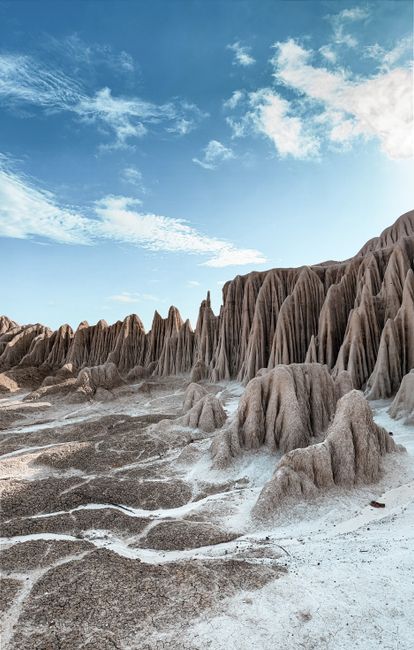
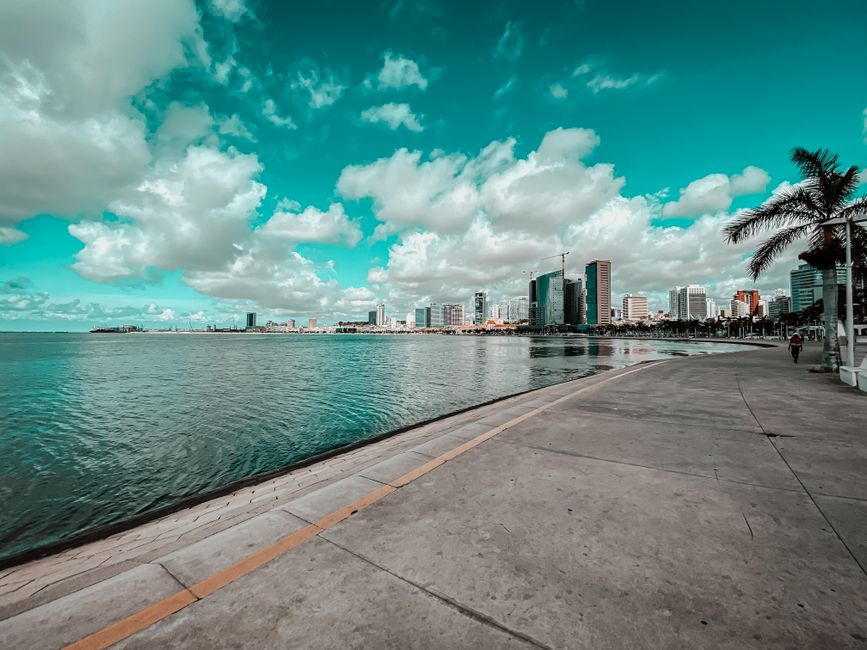
Angola is one of the largest countries in Africa and one of the least visited, which is exactly its appeal for travelers who like wide open spaces and few crowds. It stretches for about 1,600 km (1,000 miles) along the South Atlantic, from the rainforests of the Cabinda enclave in the north to the edge of the Namib Desert in the south, and climbs inland to cool highland plateaus, great waterfalls and savanna parks. Most trips start in Luanda, the capital, with its palm-lined seafront Marginal, the beach bars of the Ilha do Cabo, the 16th-century Fortress of São Miguel and the eroded cliffs of the Miradouro da Lua just south of the city. Beyond it lie the thundering Kalandula Falls, the giant black boulders of Pungo Andongo, the colonial towns and bays of Benguela and Lobito, the highland city of Lubango with the famous hairpins of the Serra da Leba and the Tundavala gap, and the desert coast of Namibe. Portuguese is the official language. According to Angola’s government, citizens of 98 countries, including the United States, Canada, the UK, all EU countries, Australia and Japan, can visit as tourists without a visa for up to 30 days per entry, and a yellow fever vaccination certificate is required on arrival. The dry, cooler months from June to September are the most comfortable time to travel. Give it ten days to two weeks to combine Luanda with the highlands or the south.
Right now in Angola
- Sat26–32°C79–89°FMostly clear
- Sun26–32°C79–90°F1 mm rain
- Mon27–32°C80–90°FPartly cloudy
Weather, sun and air quality here are for one point near the centre of Angola, not the whole country; conditions elsewhere can differ. Readings refresh through the day.
Angola: quick answers
- Best time to visit Angola
- Angola has two main seasons. The dry season, called the cacimbo, runs from about June to September: skies are often grey and hazy on the coast, but it is cooler, there is almost no rain, and it is the best time for road trips, wildlife viewing and the highlands, where nights can be cold. More
- Things to do in Angola
- Coast, waterfalls, highlands and desert. More
- Entry rules for Angola
- According to Angola’s government, Presidential Decree 189/23 exempts citizens of 98 countries from tourist visas, including the United States, Canada, the United Kingdom, all 27 EU countries, Australia and Japan. More
Angola at a glance
Angola covers about 1,246,700 km² (481,000 sq miles), roughly twice the size of Texas, on the southwest coast of Africa. It borders the Republic of the Congo and the Democratic Republic of the Congo to the north, Zambia to the east and Namibia to the south. The province of Cabinda is an enclave on the Atlantic coast, separated from the rest of the country by a narrow strip of the Democratic Republic of the Congo along the Congo River. A narrow coastal plain rises steeply to a vast central plateau, mostly between 1,000 and 2,000 m (3,300 and 6,600 ft) high, crossed by great rivers such as the Kwanza, the Kunene and the Kwango. Mount Moco, in Huambo province, is the highest point at about 2,620 m (8,600 ft). The cold Benguela Current runs up the coast, keeping Luanda and the south cooler and drier than you might expect so close to the equator.
The Kingdom of Kongo ruled the north for centuries before Portuguese ships reached the mouth of the Congo River in the 1480s; its capital, Mbanza Kongo, is now Angola’s first UNESCO World Heritage site, inscribed in 2017. Luanda was founded by the Portuguese in 1576, and Angola became independent on 11 November 1975, now its national day. Portuguese is the official language and is spoken almost everywhere, alongside many national languages, including Umbundu, Kimbundu and Kikongo. Angola uses West Africa Time (UTC+1) all year, with no daylight saving time, the same as Lagos and one hour behind Namibia and Zambia. Driving is on the right.
Angola’s regions
- Luanda and the coast around it: the capital, the Ilha do Cabo and the Mussulo peninsula, the Miradouro da Lua cliffs and Kissama (Quiçama) National Park to the south.
- Malanje and the north-central interior: the Kalandula Falls on the Lucala River, the black rocks of Pungo Andongo and the Cangandala National Park.
- Benguela and Cuanza Sul: the colonial city of Benguela, the port and sandy spit of Lobito, the beaches of Baía Azul and Baía Farta, and the gorges and waterfalls around Sumbe and Conda.
- Huíla and the southern highlands: Lubango, with its Cristo Rei statue, the Tundavala gap and the Serra da Leba pass dropping to the coast.
- Namibe and the desert south: the town of Moçâmedes, the desert coast, Iona National Park and the strange Welwitschia mirabilis plants of the Namib.
- The north and Cabinda: Mbanza Kongo, the old capital of the Kingdom of Kongo, and the forests of the Cabinda enclave.
Videos of Angola
Hand-picked travel videos from YouTube creators to help you picture the trip. They play from YouTube; the facts in this guide come from our own research.
Where to go: the capital, waterfalls, highlands and desert
Distances in Angola are large, so most visitors spend a few days in Luanda and then either drive east to Malanje for the waterfalls or fly south to Lubango or Benguela for the highlands, the bays and the desert. See our guide:
- Luanda: the seafront Marginal and the Bay of Luanda, the beach restaurants of the Ilha do Cabo, the Fortress of São Miguel, the National Museum of Anthropology, the Agostinho Neto Memorial, the National Slavery Museum, the Benfica craft market, boat trips to Mussulo and day trips to the Miradouro da Lua and Kissama.
Other highlights include the Kalandula Falls, one of the largest waterfalls in Africa by volume; the giant boulders of Pungo Andongo; the old towns and bays of Benguela and Lobito; the highland city of Lubango, the Tundavala gap and the Serra da Leba road; the desert coast of Namibe and Iona National Park; and Mbanza Kongo, the World Heritage site in the far north.
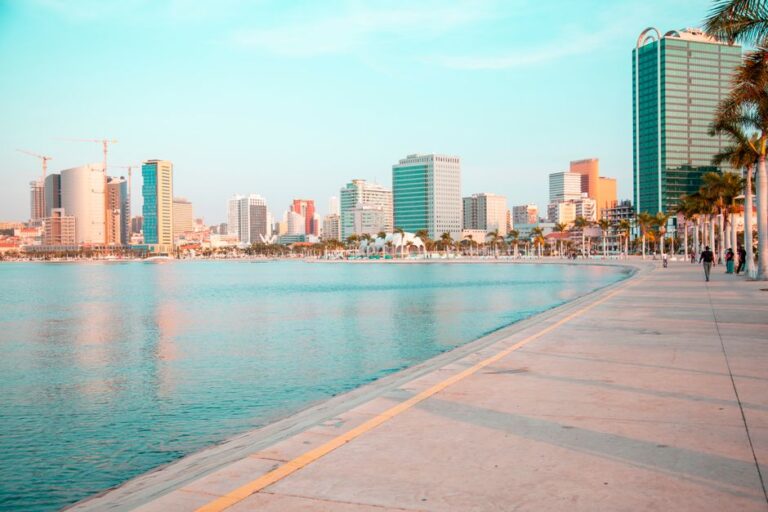
Luanda Travel Guide
Plan a trip to Luanda: the Marginal and the Bay of Luanda, the Ilha do Cabo, the Fortress of São Miguel, the Iron Palace…
Beyond Luanda
Kissama National Park and the Miradouro da Lua
South of Luanda, the coast road passes the Miradouro da Lua (the Moon Viewpoint), where wind and rain have carved the red and white cliffs into fluted towers above the Atlantic, a classic stop at sunset. Further on, the road crosses the Kwanza River into Kissama (Quiçama) National Park, a large area of dry savanna, baobabs and riverine forest between the Kwanza and Longa rivers. Elephants, giraffes, zebras and antelopes have been brought back to the park, and game drives, river trips and fishing are arranged by lodges and Luanda tour operators. Both make good day trips from the capital, though an overnight stay in Kissama gives a better chance of seeing wildlife.
Malanje: Kalandula Falls and Pungo Andongo
About 360 km (225 miles) east of Luanda, the province of Malanje holds two of Angola’s most famous natural sights. The Kalandula Falls, on the Lucala River, are a curved wall of water about 105 m (345 ft) high and some 400 m (1,300 ft) wide, at their most powerful at the end of the rainy season, from about March to May. A viewpoint by the road looks across the top of the falls, and a steep path leads down to the pool at the bottom. Nearby, the Pedras Negras de Pungo Andongo are a cluster of enormous black rock towers rising out of the savanna, linked in legend to Queen Njinga, the 17th-century ruler of the kingdoms of Ndongo and Matamba; one of the rocks is said to carry her footprints. Malanje town is the usual base, and the drive from Luanda takes most of a day.
Benguela, Lobito and the central coast
Halfway down the coast, Benguela is a relaxed old city of pastel colonial buildings, acacia-shaded avenues and long beaches, with the sheltered Baía Azul (Blue Bay) and the fishing town of Baía Farta to the south. Just to the north, Lobito is a busy port with a long sand spit, the Restinga, lined with beach restaurants and old villas. Benguela was the start of the Benguela Railway, which climbs across the plateau to Huambo and the eastern border. On the way down from Luanda, the gorges and waterfalls around Sumbe and the coffee hills of Conda and Kibala in Cuanza Sul are worth a stop.
Lubango, Tundavala and the Serra da Leba
In the southern highlands, at about 1,700 m (5,600 ft), Lubango is a pleasant, cooler city with a white Cristo Rei statue on the hill above it, similar to those in Rio de Janeiro and Lisbon. Just outside town, the Tundavala gap (Fenda da Tundavala) is a sheer escarpment where the plateau ends in a drop of about 1,000 m (3,300 ft), with views far over the lowlands toward the coast on clear days. West of the city, the road down the Serra da Leba pass is one of the most photographed in Africa, a tight ladder of hairpin bends falling down the cliffs; the viewpoint at the top is a short drive from Lubango. The route continues down to Namibe and the coast.
Namibe and the desert south
The province of Namibe is where the Namib Desert begins: a coast of dunes, gravel plains and dry riverbeds, cooled by sea fogs from the cold Benguela Current. The town of Moçâmedes (Namibe) has a seafront, old colonial buildings and fresh fish. Inland and to the south, Iona National Park, Angola’s largest, protects desert landscapes, mountains and the extraordinary Welwitschia mirabilis, a desert plant with two long, leathery leaves that can live for many centuries. Further south, the Kunene River forms the border with Namibia. Trips into the desert need a four-wheel-drive vehicle and an experienced local driver or tour operator.
Mbanza Kongo and the north
In the far north, the town of Mbanza Kongo, capital of Zaire province, stands on a plateau where the kings of Kongo ruled from the 14th century. UNESCO inscribed it as “Mbanza Kongo, Vestiges of the Capital of the former Kingdom of Kongo” in 2017. Visitors can see the ruins of the Kulumbimbi cathedral, among the oldest church buildings in sub-Saharan Africa, the royal burial grounds and the museum of the kings of Kongo. It is a long road journey from Luanda; domestic flights also serve the town.
Best time to visit Angola
Angola has two main seasons. The dry season, called the cacimbo, runs from about June to September: skies are often grey and hazy on the coast, but it is cooler, there is almost no rain, and it is the best time for road trips, wildlife viewing and the highlands, where nights can be cold. The rainy season, from about October to May, is hot and humid, with the heaviest rain in March and April; the coast around Luanda and the south stays fairly dry, but storms are frequent on the central plateau and in the north, and dirt roads can become difficult. The waterfalls are fullest from March to May. The far south and Namibe are dry desert all year.
The table shows average daily highs and lows in Luanda from the 1961–1990 climate normals published by Angola’s national meteorological service on the World Meteorological Organization’s (WMO) World Weather Information Service. The highlands around Lubango and Huambo are several degrees cooler.
Angola month by month
| Month | Luanda high / low | Weather | Good for |
|---|---|---|---|
| January | 30 / 24 °C (85 / 75 °F) | Hot and humid; showers | Beaches on the Ilha and Mussulo |
| February | 30 / 25 °C (87 / 76 °F) | Hot; rain inland | Carnival in Luanda (dates move with Easter) |
| March | 31 / 25 °C (87 / 76 °F) | Hottest month; heavy rain inland | Kalandula Falls at their fullest |
| April | 30 / 24 °C (86 / 76 °F) | Wet, especially on the plateau | Waterfalls; green landscapes |
| May | 29 / 23 °C (84 / 74 °F) | Rains ending | Waterfalls still strong; fewer storms |
| June | 26 / 20 °C (78 / 69 °F) | Dry season begins; cooler | Road trips; the highlands |
| July | 24 / 19 °C (75 / 66 °F) | Cool, dry and often overcast | Kissama and wildlife; Lubango |
| August | 24 / 19 °C (75 / 66 °F) | Coolest and driest | The desert south and Namibe |
| September | 25 / 20 °C (78 / 68 °F) | Dry, warming up | Road trips and parks |
| October | 27 / 22 °C (80 / 72 °F) | First rains inland | Quieter travel before the heat |
| November | 28 / 23 °C (83 / 74 °F) | Warm; rainy spells | Independence Day on 11 November |
| December | 29 / 23 °C (83 / 74 °F) | Hot and humid | Beach season; holidays |
Festivals worth planning around
- Luanda Carnival: in February or early March, on the days before Lent, with dance groups (grupos carnavalescos) parading along the Marginal to the rhythms of semba and other Angolan music.
- Independence Day: 11 November, the national day, with celebrations in Luanda and across the country.
- Christmas and New Year: a busy holiday season, when many Angolans travel and beach areas fill up.
Public holidays close government offices and some museums, so check dates before you plan visits.
How long to stay: sample itineraries
- 4–5 days: Luanda (4 nights), with the Ilha do Cabo, the fortress and museums, a boat to Mussulo, and a day trip to the Miradouro da Lua and Kissama.
- One week: Luanda (3 nights), then two nights in Malanje for the Kalandula Falls and Pungo Andongo, and back to Luanda, or a night in Kissama on the way south.
- 10 days: Luanda (3 nights), fly to Lubango (3 nights) for Tundavala, the Serra da Leba and Namibe, then Benguela and Lobito (2 nights) and back to Luanda.
- Two weeks or more: combine Luanda, Malanje, Benguela, Lubango and Namibe, add Iona National Park with a specialist operator, or continue south across the Kunene to Namibia.
Entry, money and costs
Visas (last reviewed November 2026)
According to Angola’s government, Presidential Decree 189/23 exempts citizens of 98 countries from tourist visas, including the United States, Canada, the United Kingdom, all 27 EU countries, Australia and Japan. Visitors from these countries can stay up to 30 days per entry and up to 90 days per year. The exemption covers tourism only: work, study, business and other visas must be obtained in advance from an Angolan embassy or consulate. Your passport must be valid for more than six months, and the UK government adds that it should have at least two blank pages. Citizens of other countries can apply for a tourist visa online through the portal of Angola’s Migration and Foreigners Service (SME), which aims to decide within three working days. Overstaying is fined, at 15,000 kwanzas a day according to the UK government. Rules change, so check the SME and an Angolan embassy before you travel.
Yellow fever and health papers
According to the US Centers for Disease Control and Prevention (CDC), Angola requires a yellow fever vaccination certificate from all arriving travelers aged 9 months or older, and the CDC recommends the vaccine for all travelers of that age. Carry the yellow card with your passport. The UK government notes that you will also need it for some onward travel, including to South Africa. The CDC also recommends prescription medicine to prevent malaria for travelers to Angola, so see a travel health clinic well before your trip.
Money and cards
The currency is the kwanza (AOA, Kz). The Banco Nacional de Angola publishes the official reference rate each day; check it before you travel. Prices in shops, restaurants and markets are in kwanzas, although some hotels and tour operators quote in US dollars or euros. Bring clean, recent US dollar or euro notes to change at banks and official exchange offices (casas de câmbio). Visa and Mastercard are accepted at larger hotels, supermarkets and some restaurants in Luanda, but cash is still needed for markets, taxis and most places outside the big cities. According to the UK government, you must declare cash of US$5,000 or more on arrival, and you may not leave with more than US$5,000 in foreign currency, plus up to 50,000 kwanzas.
Tipping
Tipping is appreciated rather than expected. In restaurants, leave about 10% if no service charge is included; round up taxi fares; and give drivers and guides a tip at the end of a trip.
What a trip costs
Angola, and Luanda in particular, is an expensive destination for international-standard hotels, while local food and transport are much cheaper. These are rough planning estimates in US dollars, for November 2026; prices are paid in kwanzas.
| Item | Typical cost |
|---|---|
| Grilled fish or chicken in a local restaurant | US$8–15 |
| Dinner for two in a mid-range Luanda restaurant | US$50–100 |
| Beer in a bar | US$1–3 |
| Ride-hailing trip across Luanda | US$5–15 |
| Full-day car and driver | US$120–200 |
| Mid-range hotel double in Luanda, per night | US$120–220 |
| Guesthouse double outside Luanda, per night | US$50–100 |
A comfortable trip with mid-range hotels, restaurant meals and a driver for day trips costs roughly US$150–250 per person per day for two people sharing. The figures are our estimates, not official statistics.
Getting there and getting around
Airport and flights
Luanda’s main gateway is now the Dr. António Agostinho Neto International Airport (NBJ), in the new province of Icolo e Bengo, about 40 km (25 miles) southeast of central Luanda in a straight line. Scheduled passenger flights moved there from the old Quatro de Fevereiro Airport (LAD) in the city between late 2025 and early 2026. The national airline, TAAG Angola Airlines, flies from Luanda to Lisbon, São Paulo, Johannesburg and other African cities, and several European, Middle Eastern and African airlines also serve the city. Allow plenty of time for the road between the airport and the center, and arrange a hotel transfer or ride-hailing car in advance. Check which airport your flight uses when you book. Domestic flights link Luanda with Lubango, Benguela (Catumbela), Namibe, Cabinda, Malanje and other cities.
Getting around
- Domestic flights: the fastest way to cover Angola’s long distances, especially from Luanda to Lubango, Benguela and Namibe.
- Car with driver: the most popular choice for visitors, and easily arranged through hotels and tour operators in Luanda, Lubango and Benguela; a four-wheel drive is needed for parks, the desert and dirt roads.
- Long-distance buses: several companies run coaches between Luanda and the main cities, such as Benguela, Lubango, Huambo and Malanje.
- Trains: three separate railways run inland from the coast: the Luanda line toward Malanje, the Benguela Railway from Lobito and Benguela across the plateau, and the Moçâmedes line from Namibe to Lubango and beyond. Services are limited, so check current timetables locally.
- In towns: ride-hailing apps operate in Luanda; elsewhere, use taxis booked through your hotel. The blue-and-white shared minibuses called candongueiros are cheap but crowded and hard to use without Portuguese.
- Self-drive: possible with a rental car, but traffic in Luanda is heavy, road conditions vary widely outside the main highways, and there are police checkpoints, so keep your passport, license and car papers with you. An International Driving Permit is useful alongside your national license.
As a rough guide to road times: Luanda to the Miradouro da Lua takes about an hour, to Kissama about two hours, to Malanje about six hours, and to Benguela about eight hours. Lubango to the top of the Serra da Leba is about 40 minutes, and on to Namibe about three hours.
Wildlife, beaches and the outdoors
Angola’s outdoor attractions are big and uncrowded. Kissama National Park is the easiest place to see large mammals near Luanda, and Cangandala National Park in Malanje protects the giant sable antelope, the palanca negra gigante, a national symbol that appears on the tail of TAAG’s planes. The Atlantic coast has long beaches and good fishing: the Mussulo peninsula and the Ilha do Cabo near Luanda, Baía Azul near Benguela, the Restinga at Lobito and the wild coast around Namibe, where surfers find waves at Cabo Ledo south of Luanda. Inland, the highlands of Huíla offer walking around Tundavala and the Serra da Leba, and river trips and fishing are popular on the Kwanza. See our beaches, surfing, hiking and boat trips guides.
Culture, food and everyday etiquette
Food
Angolan cooking mixes African staples with Portuguese and Brazilian influences. The base of many meals is funje, a smooth porridge of cassava flour (or maize flour in the south, where it is called pirão), served with stews such as moamba de galinha, chicken cooked with palm oil, okra and garlic, or calulu, dried and fresh fish with vegetables and palm oil. Muamba de ginguba uses peanuts, and mufete, grilled fish with beans in palm oil, cassava and sweet potato, is a classic weekend dish on the Ilha in Luanda. Seafood is excellent all along the coast, especially grilled fish, prawns and lobster. Portuguese-style bakeries, coffee and pastries are everywhere, and the local beers, such as Cuca and Nocal, are cheap and widely sold. Angola grows coffee in the hills of Cuanza Sul, and fresh tropical fruit is easy to find in markets.
Music and dance
Music is central to Angolan life. Semba, the classic Angolan rhythm, is often described as an ancestor of Brazil’s samba; kizomba, a slower, close partner dance that grew out of it, is now danced around the world; and kuduro is a fast, energetic electronic style born in Luanda. Live music bars and weekend parties in Luanda are the best places to hear them.
Etiquette
Greetings matter: shake hands and say bom dia (good morning) or boa tarde (good afternoon) before getting down to business. Dress is smart casual in Luanda; people dress up for restaurants and evenings out. Ask before photographing people, and do not photograph government buildings, military or police sites, or airports. A few words of Portuguese go a long way: obrigado or obrigada (thank you), por favor (please), sim and não (yes and no), and quanto custa? (how much is it?).
Shopping and crafts
Look for wooden carvings, including copies of the Pensador (the Thinker), a traditional Chokwe figure that has become a national symbol, as well as masks, basketry, colorful printed cloth (panos), paintings and Angolan coffee. The Benfica craft market on the southern edge of Luanda is the best-known place to browse and bargain.
Health, safety and connectivity
Practical points for a smooth trip:
- Vaccinations and malaria: a yellow fever certificate is required on arrival, and the CDC recommends malaria prevention medicine; use insect repellent and sleep under a net where provided.
- Water: drink bottled or filtered water, sold everywhere.
- Health care: Luanda has private clinics, but facilities are limited elsewhere and care is paid for upfront; have travel insurance that covers medical treatment and evacuation.
- Everyday care: as in any big city, keep phones and bags out of sight in crowded places, use ride-hailing or hotel taxis, and carry a copy of your passport.
- Roads: traffic is the main everyday risk; travel between cities in daylight and wear a seat belt.
- Emergencies: the police number is 111 in Luanda and Benguela, the Civil Protection and Fire Service is on 115, and the national medical emergency institute (INEMA) answers 116. Your hotel can help you reach local services.
Angola’s main mobile networks, Unitel and Africell, sell prepaid SIM cards in their shops with your passport; coverage is good in cities and along main roads but patchy in remote areas. Hotels and many cafés in Luanda have Wi-Fi. Sockets are mostly the European two-pin types C and F, at 220 V; see our travel adapters guide.
Things to do: coast, waterfalls, highlands and desert
Walk the Marginal in Luanda at sunset and eat grilled fish on the Ilha do Cabo; take a boat to the Mussulo peninsula; watch the light change on the cliffs of the Miradouro da Lua; look for elephants and giraffes in Kissama; stand at the edge of the Kalandula Falls; climb among the black rocks of Pungo Andongo; swim in Baía Azul near Benguela; look down the hairpins of the Serra da Leba and over the drop at Tundavala; see the welwitschia plants of the Namib; and dance to semba and kizomba on a Luanda night out. See our city sightseeing, beaches and hiking guides, and our hiking shoes guide.
What to pack
Light, breathable clothes for the coast, a sweater or fleece for the cool dry season and for highland nights in Lubango and Huambo, smart casual outfits for Luanda restaurants, sun protection, strong insect repellent, swimwear, comfortable hiking shoes for Kalandula and Tundavala, a light rain jacket from October to May, your yellow fever certificate, clean US dollar or euro notes to exchange, and a power bank.
Angola travel FAQ
Do I need a visa for Angola?
Not for tourism if you hold a passport from one of the 98 countries on Angola’s exemption list, which includes the United States, Canada, the UK, all EU countries, Australia and Japan. You can stay up to 30 days per entry and 90 days a year. Other nationalities can apply for a tourist visa online through Angola’s Migration and Foreigners Service (SME).
Do I need a yellow fever vaccination for Angola?
Yes. According to the CDC, Angola requires a yellow fever vaccination certificate from all arriving travelers aged 9 months or older.
What currency is used in Angola?
The kwanza (AOA). Bring clean US dollar or euro notes to change at banks or official exchange offices, and carry cash outside the big hotels and supermarkets.
What is the best time to visit Angola?
June to September, in the cool, dry season, for road trips, parks and the highlands. March to May is best for seeing the waterfalls at full power.
How many days do I need in Angola?
Four or five days for Luanda and nearby day trips; a week to add the Kalandula Falls; ten days to two weeks to include Lubango, the Serra da Leba, Namibe and Benguela.
Which airport do I fly into for Luanda?
Scheduled passenger flights now use the Dr. António Agostinho Neto International Airport (NBJ), about 40 km (25 miles) southeast of the city center in a straight line. Check your ticket, and arrange a transfer in advance.
How high are the Kalandula Falls?
About 105 m (345 ft) high and around 400 m (1,300 ft) wide, on the Lucala River in Malanje province, roughly six hours by road from Luanda.
What language is spoken in Angola?
Portuguese is the official language and is spoken almost everywhere, alongside national languages such as Umbundu, Kimbundu and Kikongo. English is spoken in some hotels and businesses in Luanda, but much less elsewhere.
What are the emergency numbers in Angola?
Police 111 (in Luanda and Benguela), Civil Protection and Fire Service 115, and medical emergencies (INEMA) 116.
What plugs are used in Angola?
Mostly the European two-pin types C and F, at 220 V and 50 Hz.
Can I combine Angola with Namibia?
Yes. Many travelers fly between Luanda and Windhoek, and overland trips cross the Kunene River in the far south. See our Namibia travel guide.
What is the time difference in Angola?
Angola uses West Africa Time, UTC+1, all year, with no daylight saving time.
Plugs and power in Angola
Angola uses 220 V, 50 Hz and these plugs (left) and wall sockets (right):
All plug types and voltages by country → · Check what you need to pack →
Plan your trip
Partner links: TravelerCenter may earn a commission if you book, at no extra cost to you.
🇵🇹 Useful Portuguese phrases for Angola
All 38 Portuguese phrases: restaurant, hotel, emergencies, romance (printable) →
Before you go: guidebooks and travel gear
Affiliate links: we may earn a commission at no extra cost to you. As an Amazon Associate we earn from qualifying purchases. We pick items for the place, not for the commission. How we earn money
Sources · last reviewed 10 November 2026
Researched and last reviewed on 10 November 2026. Tourist visa exemption, stay limits and passport validity: Government of Angola (governo.gov.ao), Presidential Decree 189/23; online visas: Angola’s Migration and Foreigners Service (sme.gov.ao); blank pages, overstay fine and cash limits: UK government (GOV.UK) entry requirements for Angola; yellow fever and malaria: US Centers for Disease Control and Prevention; Luanda temperatures: Angola’s meteorological service via the World Meteorological Organization’s World Weather Information Service (1961–1990 normals); World Heritage: UNESCO; area, coordinates and airport locations: Wikidata; country outline: OpenStreetMap. Emergency numbers come from a Ministry of the Interior statement reported in the press and the statute of INEMA, and are flagged for checking. The move of flights to the new airport, sight descriptions, waterfall dimensions, railways, mobile networks, plugs, tipping, travel times and prices are general references or estimates, flagged for checking. Rules, fees and timetables change, so check the official sites before you travel.
Data: Weather: MET Norway (CC BY 4.0) · Rates: ECB · Wikidata (CC0)