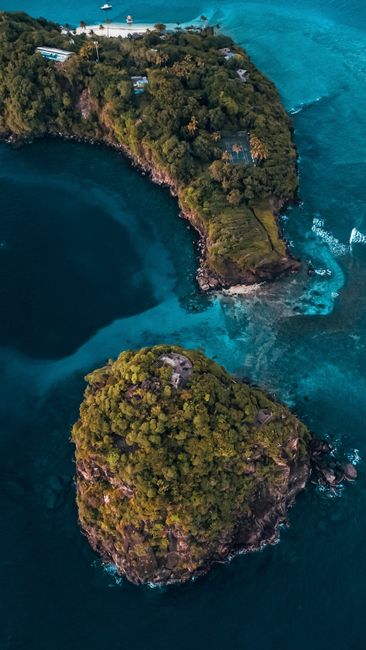
Saint Vincent and the Grenadines is a small island nation in the southern Caribbean, made up of 32 islands and cays strung across about 70 miles of sea between Saint Lucia and Grenada, with roughly 110,000 people. At the northern end lies St. Vincent, the largest island by far: green, steep and volcanic, with black-sand beaches, rainforest trails, waterfalls such as Dark View Falls and the summit of La Soufrière, an active volcano that rises above 4,000 feet. The capital, Kingstown, is a busy little port on its south coast. South of it, the Grenadines are the sailing islands of postcards: Bequia, with its harbor of yachts and boatbuilding heritage; private, exclusive Mustique; Canouan, with its barrier reef and golf course; tiny Mayreau, reached only by sea; Union Island, the hub of the south; and the Tobago Cays, five uninhabited islets in a turquoise lagoon full of green turtles. English is the official language, the currency is the Eastern Caribbean dollar, and most visitors fly into Argyle International Airport on St. Vincent and continue by ferry or small plane. The dry season runs from December to May.
Right now in Saint Vincent and the Grenadines
- Sat25–29°C78–85°F5 mm rain
- Sun25–30°C78–86°F2 mm rain
- Mon25–28°C78–82°F4 mm rain
Weather, sun and air quality here are for one point near the centre of Saint Vincent and the Grenadines, not the whole country; conditions elsewhere can differ. Readings refresh through the day.
Saint Vincent and the Grenadines: quick answers
- Best time to visit Saint Vincent and the Grenadines
- The islands are warm all year, with daytime highs around 30 °C (86 °F) and nights around 22–23 °C (72–73 °F). More
- Things to do in Saint Vincent and the Grenadines
- Sailing, snorkeling, hiking and festivals. More
- Entry rules for Saint Vincent and the Grenadines
- According to Discover SVG, the government tourism authority, visitors need a valid passport and a return or onward ticket. Visas are required only for nationals of a short list of countries: Afghanistan, Cameroon, China, the Dominican Republic, Haiti, Iran, Iraq, Jordan, Lebanon, Nigeria and Syria. More
Saint Vincent and the Grenadines at a glance
The country covers about 389 km² (150 square miles) of land, most of it on St. Vincent itself, which is about 18 miles (29 km) long. The Grenadines string south from Bequia, about 9 miles from St. Vincent, to Petit St. Vincent, a short boat ride from Grenada’s own Grenadine islands. St. Vincent is mountainous and wet, with rainforest in the interior and fertile valleys where bananas, breadfruit and arrowroot grow; the Grenadines are low, dry and fringed with white sand and coral reefs. Locals often call the country simply “SVG,” and its people “Vincentians” or “Vincies.”
English is the official language, spoken alongside a lively Vincentian Creole. The currency is the Eastern Caribbean dollar (XCD, written EC$), which it shares with seven other members of the Eastern Caribbean Currency Union. The islands keep Atlantic Standard Time, UTC−4, all year, with no daylight saving time. Cars drive on the left. Mains electricity on St. Vincent is 230 V at 50 Hz, and the international dialing code is +1 784.
Saint Vincent and the Grenadines’ regions
- Kingstown and the south coast of St. Vincent: the capital, with its ferry and cruise terminal, markets and the Botanical Gardens, and, to the east, the beaches, marinas and small resorts of Villa, Indian Bay and Calliaqua, facing Young Island and Fort Duvernette. Argyle International Airport is on the southeast coast.
- The leeward (west) coast: a winding road past fishing villages, black-sand coves and the Vermont Nature Trail to Wallilabou Bay, a film location for Pirates of the Caribbean, and on to Chateaubelair and Dark View Falls in the northwest. Most of St. Vincent’s dive sites lie off this sheltered shore.
- The windward (east) coast and the north: the Atlantic side, with wild surf, the Rabacca Dry River and the slopes of La Soufrière, which dominates the north of the island.
- Bequia and Mustique: the northern Grenadines. Bequia is the largest of the Grenadines and the most visited, with Port Elizabeth on Admiralty Bay; Mustique, about 17 miles south of St. Vincent, is a private island of villas and one famous beach bar.
- The southern Grenadines: Canouan, Mayreau, Union Island, the Tobago Cays, and the private resort islands of Palm Island and Petit St. Vincent.
Videos of Saint Vincent and the Grenadines
Hand-picked travel videos from YouTube creators to help you picture the trip. They play from YouTube; the facts in this guide come from our own research.
Where to go: a volcanic island and 31 more
A first trip usually combines a few days on St. Vincent, for the rainforest, waterfalls and Kingstown, with a stay on one or two of the Grenadines for beaches, sailing and snorkeling. Bequia, an hour from Kingstown by ferry, is the easiest and most popular of the Grenadines, with a harbor full of yachts, walkable beaches, small hotels and good restaurants; our Bequia guide has the details. Farther south, the islands get smaller and quieter, and many visitors explore them by chartered yacht or on day trips by boat.
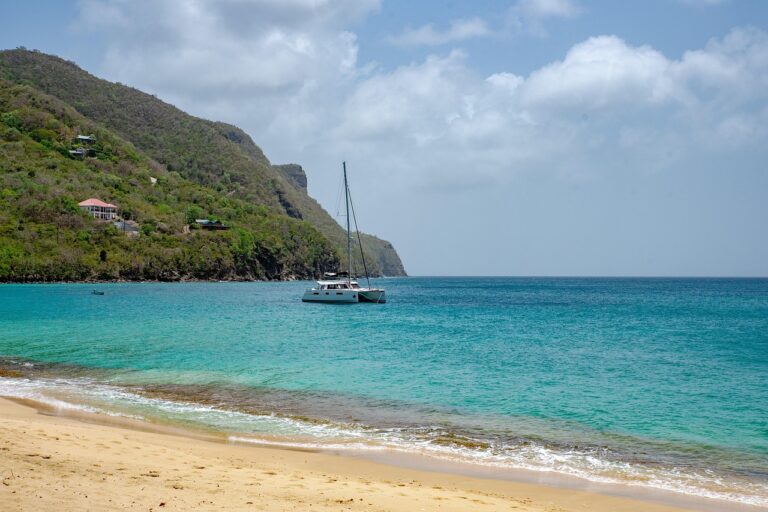
Bequia Travel Guide
Plan a trip to Bequia, the largest of the Grenadines: Port Elizabeth and Admiralty Bay, Princess Margaret Beach and Lower Bay, Friendship Bay, Fort…
Multi-day tours of Saint Vincent and the Grenadines
Multi-day tours from local operators. You check dates and book on Viator, our partner; we may earn a commission at no extra cost to you. How we earn money
Beyond Bequia: St. Vincent and the southern Grenadines
Kingstown and the south of St. Vincent
Kingstown is a working town rather than a resort: a grid of stone arcades, churches and shops climbing the hills around the harbor, with the ferry and cruise ship terminal on the waterfront and a lively market for fruit and vegetables. Just north of the center, the Botanical Gardens are among the oldest in the Western Hemisphere, founded in the 1760s, and keep a small aviary of St. Vincent parrots, the national bird; in December, the gardens host the Nine Nights of Lights, with music, storytelling and steel pan in the evenings. Above the town, Fort Charlotte looks out over the Grenadines. East of Kingstown, tiny Fort Duvernette, on a rock beside Young Island, can be climbed for wide views of the south coast.
Waterfalls, rainforest and La Soufrière
St. Vincent is the place for hiking. On the leeward side, the Vermont Nature Trail loops through rainforest on the slopes of Grand Bonhomme; according to the St. Vincent and the Grenadines Tourism Authority (Discover SVG), an estimated 500 St. Vincent parrots live in the interior, and dawn and dusk at the trail’s Parrot Lookout are the best times to see them. You may also hear the whistling warbler, another bird found only on St. Vincent. In the northwest, Dark View Falls has two waterfalls dropping into natural pools, reached by a short trail through bamboo and over a suspension bridge, with picnic areas; Trinity Falls, about 30 minutes’ walk into the forest, has three cascades about 40 feet in total above a swimming pool.
La Soufrière, the volcano that fills the north of the island, last erupted explosively in a series of eruptions beginning on April 9, 2021. Discover SVG describes it as out of its explosive phase but notes that hikers are discouraged from climbing until further notice by the local authorities, so check the current position locally before planning a hike to the crater.
The Tobago Cays
The Tobago Cays Marine Park, established in 1998, protects five uninhabited islets east of Mayreau: Petit Rameau, Petit Bateau, Baradal and Jamesby, sheltered by the great arc of Horseshoe Reef, and Petit Tabac, just outside it, a palm-fringed sandbar where scenes of the first Pirates of the Caribbean film were shot. Off Baradal, a buoyed area is set aside as a turtle-watching reserve, where you can snorkel with green turtles in the wild. The cays are reached by day trip from Union Island, Mayreau, Canouan or Bequia, or by yacht; park fees are paid at the park offices on Union Island and Mayreau or to the wardens on arrival, and are usually included in the price of boat tours and dive trips. See our snorkeling and boat trips guides.
Mustique and Canouan
Mustique, about 3 miles long and 1½ miles wide, is managed by the Mustique Company and known for its private villas, the Cotton House hotel and Basil’s Bar on Britannia Bay, home of the Mustique Blues Festival in late January and early February. Beaches include Macaroni Bay and Endeavour Bay; there are no public buses or rental cars, so visitors get around by taxi or on foot. Canouan, about 25 miles south of St. Vincent, has one of the longest barrier reefs in the Caribbean along its windward coast, white-sand beaches, a championship golf course and luxury resorts in the north of the island, with the village of Charlestown and its wharf in the center.
Mayreau and Union Island
Mayreau, with no airstrip and about 300 residents, is reached only by sea. A single road runs from the ferry jetty at Saline Bay up to the hilltop village of Old Wall, with its old stone church, and down to Saltwhistle Bay, a calm crescent of sand that is one of the most photographed anchorages in the Grenadines. Union Island, about 3 miles long, is the hub of the southern Grenadines, with an airport, a ferry wharf and a busy yacht anchorage at Clifton, a market, bars and a Tobago Cays Marine Park office. Mount Taboi, at 999 feet, is the highest point in the Grenadines, and Chatham Bay on the west coast offers a long, quiet beach. Clifton is especially lively during its Easterval celebrations.
Best time to visit Saint Vincent and the Grenadines
The islands are warm all year, with daytime highs around 30 °C (86 °F) and nights around 22–23 °C (72–73 °F). The St. Vincent and the Grenadines Meteorological Services divides the year into two seasons: the dry season, from December 1 to May 31, and the wet season, which is also the Atlantic hurricane season, from June 1 to November 30. Even in the wet season, showers usually alternate with sunshine. The dry season is the busiest time to visit, with Christmas, New Year and Easter the peak weeks; the Meteorological Services notes that rough sea swells are frequent at this time of year, which can make some ferry crossings bumpy. Saharan dust can bring hazy skies in summer.
St. Vincent is much wetter than the Grenadines, especially in its mountainous interior, while the small southern islands are dry and sunny for much of the year. No official 1991–2020 climate normals for the country are published in the World Meteorological Organization’s archive, so this guide uses the Meteorological Services’ own figures: its monthly bulletins show average maximum temperatures of 30.4 °C in March 2025 and 29.7 °C in November 2025, with average minimums of 22.5 °C and 23.0 °C. Its 1991–2020 averages for E.T. Joshua, the former airport near Kingstown, show the least rain from February to April, roughly 90–100 mm (3.5–4 inches) a month, and the most in October and November, roughly 280–290 mm (11 inches) a month.
| Season | Months | What to expect |
|---|---|---|
| Early dry season | December–February | Fresh trade winds, the most comfortable temperatures, Christmas festivals; the busiest and priciest weeks; rough swells possible |
| Late dry season | March–May | Driest, sunniest months in the Grenadines; Bequia Easter Regatta; good diving visibility |
| Early wet season | June–August | Hotter and more humid, with showers; Vincy Mas carnival; quieter hotels outside the festival |
| Late wet season | September–November | Wettest months on St. Vincent and the peak of the hurricane season; lowest prices; Independence Day on October 27 |
Festivals and events
- Bequia Music Fest: four days of local, regional and international music at venues around Bequia, in late January or early February.
- Mustique Blues Festival: at Basil’s Bar, from late January to early February, first held in 1995.
- National Heroes Day: March 14, when the village of Fancy in the far north hosts the Garifuna Cultural and Culinary Festival, celebrating one of the country’s Indigenous peoples.
- Bequia Easter Regatta: over the Easter weekend (Easter Sunday falls on March 28 in 2027), with yacht races, races between Bequia’s traditional double-ended sailboats and model boats, and shore parties; Discover SVG calls it the southern Caribbean’s most popular regatta.
- Mayreau Regatta: in late April or early May, with boat races, a fishing tournament and traditional games.
- Vincy Mas: the national carnival, a two-month season of calypso, soca, steel pan, the King and Queen of Carnival and Miss SVG competitions, culminating with the Parade of the Bands in late June and early July.
- Breadfruit Festival: in August, during Emancipation month, celebrating the more than 25 varieties of breadfruit grown on the islands.
- Independence: celebrations through October, peaking on October 27 with a national parade.
- Nine Mornings: on the nine mornings before Christmas, when Vincentians rise around 4 a.m. for concerts, cultural shows and steel band “jump-ups.”
How long to stay: sample itineraries
- A cruise day in Kingstown: the market and town center, the Botanical Gardens and Fort Charlotte, or a tour up the leeward coast to Wallilabou and Dark View Falls; a fast ferry day trip to Bequia is also possible.
- 5 days: two nights on St. Vincent’s south coast for Kingstown, the Vermont Nature Trail and a leeward coast tour, then three nights on Bequia for beaches, snorkeling and an island tour.
- 8–10 days: three nights on St. Vincent, three on Bequia, then fly or take the ferry to Union Island or Canouan for three nights, with a full day in the Tobago Cays and a visit to Mayreau’s Saltwhistle Bay.
- A week or more under sail: charter a yacht, crewed or bareboat, and work south from Bequia to Mustique, Canouan, Mayreau, the Tobago Cays and Union Island, clearing customs at an official port of entry. See our boat trips guide.
Entry, money and costs
Passports, visas and visitor permits (as of November 2026)
According to Discover SVG, the government tourism authority, visitors need a valid passport and a return or onward ticket. Visas are required only for nationals of a short list of countries: Afghanistan, Cameroon, China, the Dominican Republic, Haiti, Iran, Iraq, Jordan, Lebanon, Nigeria and Syria. Everyone else receives a visitor’s permit from the immigration officer on arrival, valid for six months for citizens of CARICOM countries, the United Kingdom, Schengen countries and the United States, and three months for other nationalities; you should be able to show your return ticket, say why you are visiting and where you will stay. To stay longer, apply for an extension at the Immigration Head Office in Kingstown or at the ports on Bequia, Mustique, Canouan and Union Island; the fee is EC$75 (US$28) per person for each month or part of a month.
The UK government’s entry information adds that a passport should have an expiry date at least six months after the date you arrive, that a yellow fever vaccination certificate is required if you come from a country with a risk of yellow fever transmission, and that you need an import licence to bring food into the country. Rules change, so check with the immigration authorities or your nearest St. Vincent and the Grenadines mission before you travel.
Money and cards
The Eastern Caribbean dollar (EC$) has been fixed by the Eastern Caribbean Central Bank at EC$2.70 to US$1 since July 7, 1976, so prices are easy to convert: EC$100 is about US$37. US dollars are widely accepted, though change usually comes in EC dollars, and on Mustique both currencies are used. Credit cards are accepted in most hotels, restaurants and boutiques, and banks with ATMs are found in Kingstown and Port Elizabeth on Bequia, but carry cash for taxis, buses, ferries, market stalls, small beach bars and the smaller islands, where ATMs are few. Hotel and restaurant bills often include tax and a service charge, so read the bill before you tip.
What a trip costs
Prices are approximate, for November 2026, in Eastern Caribbean dollars, with US dollar equivalents at EC$2.70 to US$1. The Grenadines, especially Mustique and Canouan, are much more expensive than St. Vincent.
| Item | Typical cost |
|---|---|
| Ferry Kingstown–Bequia, adult, one way / return (Bequia Express) | EC$25 / EC$40 (about US$9 / US$15) |
| Ferry Kingstown–Canouan, adult, one way | EC$60 (about US$22) |
| Ferry Kingstown–Mayreau, adult, one way | EC$80 (about US$30) |
| Temporary driving permit | EC$125 (about US$46) |
| Minibus ride on St. Vincent | EC$2–8 |
| Roti or local lunch | EC$15–30 (US$6–11) |
| Dinner for two at a mid-range restaurant, without wine | EC$200–350 (US$75–130) |
| Day trip by boat to the Tobago Cays, per person | US$100–180 |
| Rental car, per day | US$50–80 |
| Guesthouse double on St. Vincent or Bequia, per night | US$80–150 |
| Beach hotel double, high season, per night | US$250–600 |
A comfortable trip with guesthouses or mid-range hotels, ferries, a few tours and meals out costs roughly US$150–250 per person per day for two people sharing; luxury resorts in the Grenadines can cost many times more. The figures other than ferry fares and fees are our estimates, not official statistics.
Getting there and getting around
Flights
Argyle International Airport (SVD), about 5 miles from Kingstown on St. Vincent’s southeast coast, opened in February 2017 and is the main gateway, with a 9,000-foot runway. According to Discover SVG, direct flights connect it with London Heathrow (Virgin Atlantic, several times a week), Toronto (Air Canada, on Mondays and Thursdays in winter from October 26, 2026, and Wednesdays in summer), Miami (American Airlines, daily from October to April and five times a week from May to September), New York JFK (Caribbean Airlines on Wednesdays and Saturdays, JetBlue on Wednesdays and Sundays, and American Airlines on Saturdays from December to March), Charlotte (American Airlines, Saturdays from December to March) and Atlanta (Delta, Saturdays from January to August and in December). Other travelers connect through Barbados, Grenada, Trinidad, Saint Lucia or Martinique, on regional airlines such as interCaribbean, LIAT2020, Caribbean Airlines and Sunrise Airways. Schedules change, so check with the airlines.
Four smaller airports serve the Grenadines: J.F. Mitchell Airport on Bequia, Canouan, Mustique and Union Island. Local airlines such as SVG Air and Mustique Airways fly scheduled and charter flights from Argyle, and some routes connect directly with Barbados, which can save a change of plane.
Ferries between the islands
Ferries leave from the terminal on Kingstown’s waterfront. The busiest route is Kingstown–Bequia, about an hour, served by the Bequia Express and Bequia Fast Ferry; according to Bequia Express, its boats leave Kingstown at 8:00 a.m., 9:30 a.m., 1:00 p.m., 4:15 p.m. and 5:00 p.m. on weekdays, with fewer sailings on weekends, and adult fares are EC$25 one way and EC$40 return. Farther south, Bequia Express sails from Kingstown to Canouan, Mayreau and Union Island four days a week, and the MV Gem Star and the Jaden Sun fast ferry also run to the southern islands on set days, as listed on Discover SVG’s ferry page. A ferry links St. Vincent and Mustique on Mondays, Tuesdays, Thursdays and Fridays. Timetables change with the seasons and holidays, so check them before you travel, and arrive early on busy days.
Cruise ships and yachts
Cruise ships dock at the cruise ship terminal in Kingstown, beside the ferry terminal, and smaller ships anchor off Bequia, Mustique and the southern islands. The Grenadines are one of the Caribbean’s great sailing grounds; yachts clear customs and immigration at official ports such as Kingstown, Bequia, Canouan and Union Island, where Clifton is a popular base for exploring the south.
Getting around
Driving is on the left. According to the Ministry of Finance, visitors need a temporary driving permit from the Licensing Authority, valid for up to six months, for a fee of EC$125; bring your valid license from home and your passport. Holders of an international driving permit from a country that signed the international convention, and of a license from another Commonwealth Caribbean country, are exempt, but must first register their permit with the Licensing Authority. Rental companies can usually help with the paperwork. Roads on St. Vincent are narrow, steep and winding, with sharp bends and few signs, so allow plenty of time. Minibuses run fixed routes from Kingstown along the coasts and are cheap and frequent by day. Taxis are not metered, so agree on the fare before you set off; Discover SVG publishes a list of tourism-approved taxi drivers, tour guides and rental companies. On Bequia, Union Island and the other small islands, taxis, water taxis and walking cover most needs.
Beaches, reefs and nature
The Grenadines have the classic white-sand beaches: Princess Margaret Beach and Lower Bay on Bequia, Macaroni Bay on Mustique, Saltwhistle Bay on Mayreau, the beaches of Canouan and Union Island, and the sandbars of the Tobago Cays. St. Vincent’s beaches are mostly black volcanic sand, such as those on the south coast near Villa and Indian Bay, with calm water on the leeward side and strong Atlantic surf on the windward coast, where swimming is not advised. See our beaches guide.
Under water, Discover SVG calls the country the “Critter Capital of the Caribbean,” with more than 100 dive sites across the islands and more than 45 along St. Vincent’s sheltered leeward coast, from black-sand muck dives, rich in seahorses, frogfish and other small creatures, to walls, caves and wrecks. Anchor Reef, a wall dive named for the 18th-century anchor buried in it, is one of the best known. Canouan’s barrier reef, the Tobago Cays and the reefs around Bequia and Mayreau are superb for snorkeling. On land, St. Vincent’s rainforest is home to the endemic St. Vincent parrot and whistling warbler, and to hummingbirds, tanagers and tremblers found only in the Lesser Antilles. See our diving, snorkeling and hiking guides.
Culture, food and everyday etiquette
A short history
Amerindian peoples from South America settled the islands long before Europeans arrived. The Kalinago, and later the Garifuna, descendants of Kalinago and Africans, resisted European settlement on St. Vincent for longer than on most Caribbean islands. The French established plantations in the 18th century, and the islands passed between France and Britain before the Treaty of Versailles confirmed British possession in 1783. After a long struggle, many Garifuna were deported to Central America in the late 1790s; Garifuna communities still live in the north of St. Vincent. Sugar, cotton and later arrowroot and bananas shaped the economy, while the Grenadines turned to the sea, to fishing, whaling, boatbuilding and sailing. Saint Vincent and the Grenadines became independent from Britain on October 27, 1979, and remains a member of the Commonwealth.
Food and drink
The national dish is roasted breadfruit and fried jackfish; breadfruit, first brought to the islands during slavery as a cheap food source, is now grown in more than 25 varieties. Try callaloo soup, buljol (salt fish with peppers and onions), curried goat and chicken roti, conch, lobster in season, fresh tuna and mahi-mahi, and dumplings and provisions such as dasheen and eddoes. Union Island holds a Conch Festival, and Bequia’s restaurants are known for seafood. Drink fresh coconut water, sorrel at Christmas, local beer and rum punch made with Vincentian rum, and pick up a bottle of local hot sauce at the market.
Etiquette
Vincentians are friendly and courteous; greet people with a “good morning” or “good afternoon” before asking a question or starting a conversation. Keep swimwear for the beach and cover up in town, shops and churches. Ask before photographing people, and in markets, it is polite to buy something if you have chatted with a vendor at length. Life on the smaller islands moves slowly, so be patient with service and ferry schedules.
Health, practical tips and connectivity
- Everyday precautions: do not leave bags or valuables unattended on the beach or in view in a car, use your hotel safe, and take care on unlit roads after dark.
- Sun and heat: the tropical sun is strong all year; use high-factor reef-safe sunscreen, a hat and sunglasses, and drink plenty of water, especially on hikes.
- Mosquitoes: dengue occurs in the Caribbean, so use insect repellent, particularly in the rainy season.
- The sea: swim on calm leeward beaches, avoid the windward Atlantic coast, and remember that crossings between the islands can be rough in the winter swells.
- Hiking: use a tourism-approved guide for remote trails, start early, and check the current position on La Soufrière before you plan a climb.
- Storms: from June to November, follow forecasts from the St. Vincent and the Grenadines Meteorological Services and the instructions of your hotel and the local authorities, and have travel insurance that covers disruption and medical evacuation.
- Emergencies: call 911 or 999 for the police, fire service and ambulance.
Mobile coverage is good on St. Vincent and Bequia and patchier in remote corners of the smaller islands; check your plan’s roaming rates or buy a local SIM or eSIM. Most hotels, guesthouses and many bars have Wi-Fi. St. Vincent’s mains supply is 230 V at 50 Hz, and the Grenadines run at about 220 V; many places use British three-pin sockets, so bring a travel adapter, and check that North American devices accept 230 V.
Things to do: sailing, snorkeling, hiking and festivals
Snorkel with green turtles in the Tobago Cays; sail through the Grenadines on a chartered yacht; take the ferry to Bequia and watch the yachts in Admiralty Bay; walk the Vermont Nature Trail at dawn to see St. Vincent parrots; swim beneath Dark View Falls; dive the walls and black-sand slopes of St. Vincent’s leeward coast; climb Fort Duvernette; laze on Saltwhistle Bay; have a drink at Basil’s Bar on Mustique; join the Bequia Easter Regatta or the Parade of the Bands at Vincy Mas; and eat roasted breadfruit and jackfish by the sea. See our boat trips, snorkeling, diving, hiking, beaches and city sightseeing guides.
What to pack
Light cotton clothes, swimwear and a cover-up for town, a sun hat, sunglasses and reef-safe sunscreen, sandals and water shoes for rocky beaches, river pools and boat landings, sturdy hiking shoes for the rainforest trails, a light rain jacket, especially from June to November, insect repellent, a dry bag for ferries and boat trips, and some cash in small EC dollar notes. If you plan to drive, bring your license from home.
Saint Vincent and the Grenadines travel FAQ
Do I need a visa for Saint Vincent and the Grenadines?
Most nationalities do not. You need a valid passport and a return or onward ticket, and you receive a visitor’s permit on arrival: six months for US, UK, Schengen and CARICOM citizens and three months for most others. Nationals of a short list of countries, including China, Haiti, the Dominican Republic and Nigeria, need a visa.
What is the best time to visit Saint Vincent and the Grenadines?
The dry season, from December to May, has the most sunshine and the calmest weather for sailing, though winter swells can be rough. The wet season, from June to November, brings showers, lower prices and Vincy Mas, and is also the hurricane season.
How do I get to Bequia?
Take a ferry from Kingstown, about an hour, with several sailings a day; adult fares on the Bequia Express are EC$25 one way. Small planes also fly to Bequia’s J.F. Mitchell Airport from St. Vincent and some nearby islands.
How do I visit the Tobago Cays?
On a boat day trip from Union Island, Mayreau, Canouan or Bequia, or by yacht. A marine park fee applies; it is usually included in the price of tours and dive trips, or paid at the park offices on Union Island and Mayreau or to the wardens.
Can I hike La Soufrière?
The volcano erupted in 2021. Discover SVG says it is out of its explosive phase, but that hikers are discouraged from climbing until further notice by the local authorities, so check the latest position locally before planning a hike.
What currency is used in Saint Vincent and the Grenadines?
The Eastern Caribbean dollar, fixed at EC$2.70 to US$1. US dollars are widely accepted, and cards work in most hotels and restaurants, but carry cash for taxis, buses, ferries and small islands.
Do I need a driving permit in Saint Vincent and the Grenadines?
Yes, unless you are exempt: visitors buy a temporary permit from the Licensing Authority for EC$125, valid for up to six months. International driving permit holders from convention countries must register their permit first. Driving is on the left.
Which island is best for a first visit?
Bequia, for easy ferry access, walkable beaches and a choice of places to stay and eat, combined with a few days on St. Vincent for its waterfalls and rainforest. For quiet beaches and the Tobago Cays, add Union Island, Mayreau or Canouan.
What are the emergency numbers in Saint Vincent and the Grenadines?
911 or 999 for the police, fire service and ambulance.
Can I combine Saint Vincent and the Grenadines with other islands?
Yes. Regional flights link Argyle with Barbados, Saint Lucia, Grenada, Trinidad and Martinique, and yachts often sail on south to Grenada’s Carriacou. See our Barbados and Saint Lucia guides.
Plugs and power in Saint Vincent and the Grenadines
Saint Vincent and the Grenadines uses 230 V, 50 Hz and these plugs (left) and wall sockets (right):
British three-pin (G) sockets are common; the Grenadines run at about 220 V, and Petit St. Vincent at 110 V, 60 Hz.
All plug types and voltages by country → · Check what you need to pack →
Plan your trip
Partner links: TravelerCenter may earn a commission if you book, at no extra cost to you.
Before you go: guidebooks and travel gear
Affiliate links: we may earn a commission at no extra cost to you. As an Amazon Associate we earn from qualifying purchases. We pick items for the place, not for the commission. How we earn money
Sources · last reviewed 10 November 2026
Researched and last reviewed on 10 November 2026. Entry, visas, visitor permits and extension fees, flights and airports, ferry schedules, islands, attractions, the Tobago Cays Marine Park, La Soufrière, birds, diving, festivals, food and approved taxis and guides: the St. Vincent and the Grenadines Tourism Authority (discoversvg.com); passport validity, yellow fever, food imports and emergency numbers: the UK government’s entry information for St Vincent and the Grenadines; driving permits: the Ministry of Finance and Economic Planning; ferry fares and timetables: Bequia Express; the exchange rate: the Eastern Caribbean Central Bank; seasons, temperatures, rainfall averages and sea swells: the St. Vincent and the Grenadines Meteorological Services monthly climatic bulletins; mains voltage: the US International Trade Administration’s electric current table; area and population: Wikidata. History, the Botanical Gardens and Fort Charlotte details, food beyond the national dish, plug types, minibus and taxi practice, and food, tour, car and hotel prices are general references or estimates, flagged for checking. Rules and prices change, so check the official sites before you go.
Data: Weather: MET Norway (CC BY 4.0) · Rates: ECB · Wikidata (CC0)