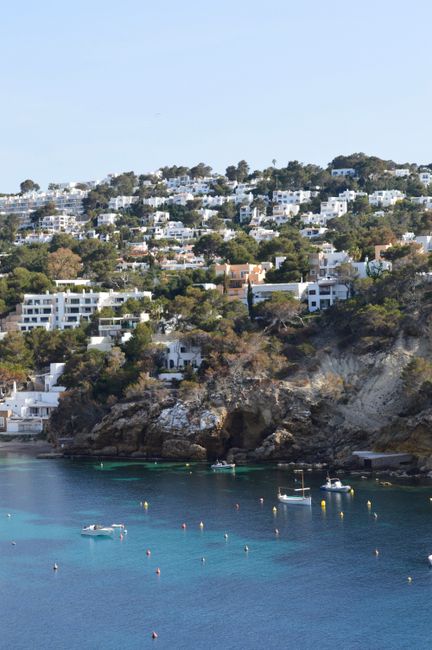
Ibiza is much more than its clubs. It is a small, pine-covered island with a UNESCO-listed walled old town, dozens of turquoise coves, hippy markets, whitewashed villages and famous sunsets. Stay in Eivissa town for history and transport, Santa Eulària or the north for calm, Sant Antoni or Playa d’en Bossa for nightlife, and hop over to Formentera. Give it five days to a week.
Right now in Ibiza (Ibiza Town)
- Wed22–24°C71–75°F2 mm rain
- Thu22–24°C71–76°FClear
- Fri20–23°C68–73°F1 mm rain
- Mon 12 Oct National Day of Spain (Fiesta Nacional de España)
Top tours in Ibiza
See all tours for Ibiza →
From local operators, with prices and reviews; you check availability and book on Viator, our partner. We may earn a commission at no extra cost to you. How we earn money
Ibiza at a glance
- What it is: the third-largest of Spain’s Balearic Islands (about 577 km²), with Formentera, its smaller neighbour, just to the south. The capital is Eivissa (Ibiza town).
- Best for: coves, boat days, sunsets, the old town, markets and, from late spring to early October, the clubs.
- World Heritage: “Ibiza, Biodiversity and Culture” (inscribed 1999) covers the walled upper town of Dalt Vila, Phoenician sites and the Posidonia seagrass meadows between Ibiza and Formentera.
- Climate: hot, dry summers and mild winters. At Ibiza airport, average daytime highs run from about 16 °C in January to 30 °C in August (AEMET normals).
- Tourist tax: the Balearic sustainable tourism tax (ITS) adds €1–4 per person per night in high season, plus VAT; under-16s are exempt (as of October 2026).
- Airport: Ibiza Airport (IBZ), just south-west of Eivissa town, with buses to the main resorts.
- Entry, money, time zone and general safety: the same as mainland Spain (Central European Time); see our Spain travel guide.
Ibiza’s towns and areas, and who each one suits
Ibiza is about 40 km end to end, but each corner has its own mood.
Eivissa town: Dalt Vila, La Marina and the port
The capital climbs from the harbour to Dalt Vila, the old town inside its 16th-century walls, with the cathedral at the top. Below, La Marina’s narrow streets are full of boutiques and terraces. Best for first-timers, food lovers and anyone without a car: buses and the Formentera ferries start here.
Playa d’en Bossa and Figueretes
A long sandy beach just south of town, lined with hotels, beach clubs and some of the island’s biggest clubs. Busy, loud in season and close to the airport; Figueretes, nearer town, is quieter. Best for clubbers and groups of friends.
Sant Antoni de Portmany
Ibiza’s second town sits on a wide west-facing bay famous for its sunsets, watched from the bars of the “Sunset Strip” at Caló des Moro. The West End is a street of bars aimed at young party crowds and falls under the Balearic rules on tourist excess (see the local rules below). Calmer coves such as Cala Salada and Cala Gració are close by. Best for young groups, sunset lovers and budget beach holidays.
Santa Eulària des Riu and the east coast
A relaxed riverside town with a palm-lined promenade, a marina and the fortified white church of Puig de Missa. Nearby are family beaches (Es Canar, Cala Llonga, Es Figueral) and both hippy markets. Best for families and couples who want a gentler pace.
The north: Sant Joan, Portinatx and Sant Miquel
The greenest, wildest part of the island: pine-covered hills, farmhouses turned into rural hotels (agroturismos), and coves such as Cala Xarraca, Cala d’en Serra and Benirràs. Portinatx is a small family resort with sheltered beaches. Best for nature lovers and slow travellers with a car.
Sant Josep, Es Cubells and the south-west
The municipality of Sant Josep covers the whole south-west: the Ses Salines natural park and its beaches, the cliffs and coves around Es Cubells, the island’s highest hill, Sa Talaia, and the view of Es Vedrà from Cala d’Hort. Cala Tarida and Cala Vadella have hotels and villas by the sand. Best for beach lovers and villa groups with a car.
Top things to see in Ibiza
- Dalt Vila: walk up through the Portal de ses Taules gate and along the bastions to the cathedral, with views to Formentera. It is part of the UNESCO site “Ibiza, Biodiversity and Culture” (1999), which also takes in the Phoenician necropolis of Puig des Molins, the Phoenician settlement of Sa Caleta and the Posidonia seagrass meadows offshore.
- Es Vedrà and Cala d’Hort: a 413-metre limestone island rising straight out of the sea off the south-west coast, a protected nature reserve. See it from Cala d’Hort, the cliffs above, or a boat.
- The hippy markets: Punta Arabí in Es Canar, running since 1973, opens on Wednesdays from 10:00 with hundreds of craft, fashion and jewellery stalls; Las Dalias in Sant Carles opens on Saturdays (as of October 2026, both until late October).
- Ses Salines natural park: salt pans where flamingos and other waterbirds stop, dunes and juniper woods, and two of the island’s best-known beaches, Ses Salines and Es Cavallet. The park continues across the strait to Formentera.
- Sant Antoni sunsets: the bay faces due west. Join the crowd on the rocks of Caló des Moro, or find a quieter spot at Cala Conta or on the cliffs near Cala Salada.
Monuments
- Puig des Molins, Ibiza
Beaches
- Cala Salada
- Cala Vadella
- Platja d'en Bossa
Archaeological sites
- Sa Caleta Phoenician Settlement
Peaks and mountains
- Sa Talaiassa
Nature reserves
- Ses Salines Natural Park
Beaches, coves and boat days
Ibiza has long sandy beaches in the south and east and dozens of small coves (calas) in the rocky west and north, most with a beach restaurant and sunbeds. For more ideas, see our beach guide.
The best-known beaches
| Beach | Area | Type | Good for |
|---|---|---|---|
| Ses Salines | South, natural park | Long sandy beach, dunes | Swimming, people-watching, beach clubs |
| Es Cavallet | South, natural park | Long sandy beach, partly naturist | Space, a wilder feel |
| Cala Conta (Cala Comte) | West, near Sant Antoni | Small sandy coves and rocks, shallow turquoise water | Snorkelling, sunsets |
| Cala Bassa | West, near Sant Antoni | Sandy bay with pine trees | Families, boats from Sant Antoni |
| Cala d’Hort | South-west | Sand and pebbles | The view of Es Vedrà, seafood lunches |
| Cala Llonga | East, Santa Eulària | Deep sandy bay | Families, calm water |
| Benirràs | North | Pebbly cove | Sunset, Sunday drums |
In July and August, car parks at popular coves fill by mid-morning; go early or take the bus or a boat. Swim inside the buoyed zones.
Boat trips and the Posidonia meadows
Water taxis cross from Sant Antoni to Cala Bassa and Cala Conta, and charters and skippered sailing boats visit the coves around Es Vedrà. See our boat trips guide for what to look for in an operator.
The clear water owes a lot to Posidonia oceanica, a protected seagrass that is part of the World Heritage listing. Boats must not anchor on the meadows, so choose an operator who uses sand patches or mooring buoys.
Walks and hikes
Ibiza is not a big hiking destination, but it has lovely walks along cliffs, through pine forest and between villages, at their best from October to May when the heat lets up. Paths are stony and unshaded; in summer, walk early. See also our hiking guide.
Torre des Savinar and the Es Vedrà cliffs
From the road above Cala d’Hort, a track leads through the pines to the Torre des Savinar, an old watchtower with the best view of Es Vedrà. It is a short walk; go for sunset, bring a torch for the way back, and keep well back from the unfenced cliff edges.
Sa Talaia, the highest point
Sa Talaia (about 475 m), above Sant Josep, is the island’s highest hill. A path climbs from the village through pine forest to the summit, with views across the island to Formentera. Allow half a day.
Coastal paths
- Ses Salines and Es Cavallet: flat walking between the salt pans, the dunes and the Torre de ses Portes watchtower at the island’s southern tip; easy and good with children.
- Cala d’en Serra to Portinatx: wild north-coast scenery with coves and old stone paths.
Never light fires or smoke on trails in summer. In an emergency, call 112.
Activities and best months
- Beaches and swimmingIbiza's coast mixes long fine-sand beaches with small coves between cliffs; some lie in protected areas such as Ses Salines Natural Park. Outside summer they are used for coastal walks and sunsets.
- SnorkelingThe island tourist board names many beaches as starting points for snorkelling and kayaking.
Other things to do in Ibiza
Clubbing: how the season really works
The big clubs, around Playa d’en Bossa, Eivissa town and Sant Antoni, open in late spring with “opening” parties and close in early autumn with “closing” parties. In 2026 the closing parties began on 26 September, and the big final weekend is 9–11 October, with some events running into Monday 12 October, a national holiday.
- Tickets: buy from the club’s own website or official sellers; tickets for headline nights and closings sell out and cost noticeably more than ordinary nights.
- Timing: clubs open late and peak after 2:00. Plan your way home: night buses (lines D1–D4) link the main clubs with Eivissa town, Sant Antoni and the Santa Eulària coast in season.
Villages, churches and the countryside
Inland Ibiza is a world of almond and carob trees, dry-stone walls and fortified white churches built to shelter villagers from pirate raids. Drive a loop through Sant Miquel, Sant Joan, Sant Llorenç and Santa Gertrudis, stopping for coffee in the squares.
Eating and drinking
Try bullit de peix, a fish stew followed by rice cooked in the broth (arròs a banda); sofrit pagès, a hearty country dish of meats and potatoes; borrida de ratjada, ray with potatoes and an almond sauce; and flaó, a mint-scented cheesecake. Locals finish with hierbas ibicencas, a herb liqueur.
A day trip to Formentera
Formentera, just south of Ibiza, is flat, slow and ringed by white sand and clear water. Ses Illetes, in the Ses Salines natural park, is the famous beach; Cala Saona and the Migjorn coast are quieter. There is no airport: everyone arrives by sea.
- Ferries: Baleària and Trasmapi sail all year from Eivissa port to La Savina on Formentera. Trasmapi’s timetable for Monday 5 October 2026 shows 18 departures from Ibiza, from 06:30 to 23:30; frequencies drop through the autumn and winter.
- Getting around Formentera: the island tourist board recommends bikes and the public bus; scooters and electric cars are also for hire in La Savina.
- Taking a car: from 1 June to 30 September, visitors need a prior authorisation from formentera.eco to bring a vehicle onto Formentera (under the island’s Law 7/2019), with a daily cap on visitor cars and a fee. For a day trip, leave the car in Ibiza.
Catch an early ferry, rent bikes or a scooter at the port, swim at Ses Illetes, lunch on the Migjorn coast and take an evening boat back. Better still, stay a night or two.
Nearby destinations
- Formentera31 km
- Benidorm144 km
- Mallorca151 km
- Valencia165 km
- Peñíscola177 km
- Alicante180 km
- Costa Daurada230 km
- Sitges253 km
Getting there and getting around
Flying in
Ibiza Airport (IBZ), run by Aena, is a short drive south-west of Eivissa town. It has year-round flights to Madrid, Barcelona and Palma, and many seasonal flights from across Europe from spring to October; in winter, expect to connect in Spain.
By ferry
Baleària, Trasmed and GNV link Ibiza with mainland ports including Barcelona, Valencia and Dénia, which has the shortest crossing. Ferries also connect Ibiza with Palma and the rest of Mallorca; see our Mallorca travel guide. Many routes run less often in winter.
From the airport
Five airport bus lines, AERO 1 to AERO 5, run to Sant Antoni, Eivissa town and port, Santa Eulària and Es Canar, and Playa d’en Bossa and Figueretes. As of October 2026, a single ticket costs €3.50–4.00 by bank card or QR code, or €4.90–5.60 in cash, depending on the destination. Taxis wait outside arrivals.
Buses
ALSA runs Ibiza’s public bus network for the Consell d’Eivissa; timetables, maps and a guide to the new line numbers are on alsaibiza.es. As of October 2026, a single costs €1.70–2.60 with a bank card on board or a QR ticket bought online, and €2.40–3.60 in cash. In summer, beach lines serve popular coves and the “D” night lines (the Discobus) link the clubs. The north and inland villages have few buses.
Taxis
On 25 September 2026 the Consell d’Eivissa approved its first fare rise in three years, effective once it is published in the Balearic official bulletin (BOIB) and meters are re-sealed: €4.35 flag fall, €1.32 per km by day and €1.60 per km at night and on holidays, plus €2.15 from the airport or port. When you book by phone or app, drivers may now ask for a deposit of up to €5.95. Use only licensed taxis: unlicensed drivers touting rides at the airport or outside clubs operate illegally.
Renting a car, and the vehicle limit
A car or scooter makes the coves and the north far easier. Book early in summer: since 2025 the Consell d’Eivissa has capped the number of vehicles on the island from 1 June to 30 September. For 2026 and 2027 the cap is 17,668 non-resident vehicles a day, including at most 14,000 rental cars. If you bring your own car by ferry in that period, check whether you need an authorisation (and a fee) on the official site, ibizacircular.es, before you sail. Exemptions include round-trip tickets with the same shipping company, motorbikes and mopeds, and residents of Ibiza, Mallorca or Menorca.
When to go and how long to stay
Mid-June to mid-September is hot, full and expensive; May, early June, late September and October are warm and calmer; from November to March many hotels and all the big clubs close, but the island is green and quiet. The table uses AEMET’s published normals for Ibiza airport (average daily high and low, and days with at least 1 mm of rain).
| Season | High / low | Rainy days a month | What it’s like | Good for |
|---|---|---|---|---|
| Winter (Dec–Feb) | 16–17 °C / 8–10 °C | about 5 | Mild days, cool nights; most resorts closed | Walking, Dalt Vila, villages, Sant Antoni’s festival on 17 January, almond blossom from late January |
| Spring (Mar–May) | 18–23 °C / 10–15 °C | 3–4 | Green countryside, the sea still cool; the island reopens | Walking, cycling, quiet beaches, the start of the club season |
| Summer (Jun–Aug) | 27–30 °C / 18–22 °C | under 2 | Hot, dry, crowded and at its priciest | Beaches, boats, clubs, village festivals |
| Autumn (Sep–Nov) | 20–28 °C / 12–20 °C | 4–6 | Warm sea, fewer people; storms possible from September | Swimming, closing parties, walking, Formentera |
Ibiza is dry: about 413 mm of rain a year at the airport, falling mostly from September to December, often in short storms. July is the sunniest month, with about 334 hours of sun.
Events worth planning around
- Closing parties: the main weekend is 9–11 October 2026, after a run that began on 26 September.
- Nit de Sant Joan: bonfires and fireworks on the night of 23 June across the island.
- Festes de la Terra: Eivissa town’s festival around 5 August, ending with fireworks over the port.
- Sant Bartomeu: Sant Antoni’s summer festival on 24 August, with fireworks over the bay.
How long to stay: 3-, 5- and 7-day plans
3 days: Day 1, Eivissa town: Dalt Vila in the morning, La Marina and the port in the evening. Day 2, Ses Salines in the morning, then the south-west: Cala d’Hort, the walk to Torre des Savinar for sunset over Es Vedrà. Day 3, a day trip to Formentera.
5 days: add a day in the north (Sant Joan, Portinatx, Cala Xarraca, sunset at Benirràs) and a day on the east coast with the hippy market at Es Canar (Wednesday) or Las Dalias (Saturday), Santa Eulària’s promenade and Cala Llonga.
7 days: slow down: add a boat day on the west coast, a walk up Sa Talaia, a village loop, and a night or two on Formentera instead of a day trip.
Weather month by month
Where to stay in Ibiza
- Eivissa town, La Marina and Dalt Vila: boutique hotels and apartments in the heart of things; best without a car.
- Playa d’en Bossa: big hotels by the beach and the clubs, close to the airport.
- Sant Antoni and its bay: lively, good value, sunsets; Cala Gració and Cala de Bou are quieter options nearby.
- Santa Eulària, Es Canar and Cala Llonga: family hotels and a relaxed pace.
- The north and the countryside: rural hotels (agroturismos) and villas near Sant Joan, Sant Miquel and Sant Carles; you will need a car.
The sustainable tourism tax (as of October 2026)
Every overnight stay in the Balearics carries the sustainable tourism tax (ITS), paid at your accommodation. The Govern’s official ITS calculator lists these rates per person per night, plus 10% VAT:
| Type of accommodation | High season (1 May–31 Oct) | Low season (1 Nov–30 Apr) |
|---|---|---|
| 5-star hotels and 4-key apartments | €4 | €1 |
| 4-star hotels and 3-key apartments | €3 | €0.75 |
| 3-star hotels, 1–3-key apartments, rural hotels, agroturismos, holiday rentals | €2 | €0.50 |
| Hostels, guesthouses and campsites | €1 | €0.25 |
Children under 16 pay nothing, and from the ninth night in the same accommodation the tax is halved. The Govern has proposed raising the tax in peak months several times since 2025; as of October 2026 the official calculator still shows the rates above, so check it again before you book for 2027.
Book legal holiday rentals
Ibiza has a long-running problem with illegal holiday lets. Legal rentals are registered with the Consell d’Eivissa and show a tourist registration number in the listing; without one, you may have no protection if the let is closed or something goes wrong. The Consell runs a public tourist-registry portal and an online form to report illegal rentals.
Local rules for visitors (as of October 2026)
To curb drunken tourism, the Balearic Government brought in Decree-law 1/2020 on tourism in certain zones, tightened by Decree-law 2/2024, in force until 31 December 2027. In Ibiza it applies to a delimited area of Sant Antoni de Portmany that includes the West End. Inside that zone:
- No drinking in the street: drinking alcohol on public roads is banned, except on licensed terraces and at official festivities. Fines run from €500 to €1,500.
- No late-night alcohol sales in shops: shops may not sell alcohol between 21:30 and 08:00.
- No drinking promotions: open bars, happy hours, 2-for-1 offers and organised pub crawls are banned.
- No party boats: boats holding parties cannot pick up or drop off passengers in the zone, or come within one nautical mile of its coast.
- Balconing: the decree also bans climbing between balconies or jumping from them, and hotels must expel guests who do it.
Practical tips
- Budget for the season: July and August are the priciest months for rooms, car hire, sunbeds and club tickets; May, June and October cost much less. Buses and the set lunch (menú del día) are good value; beach clubs are not.
- Go to the beach early in July and August: car parks at popular coves fill by mid-morning.
- Leave the dried Posidonia on the beaches alone; it protects the sand.
- Off season: from November to March, check that hotels and boat trips are open.
What to pack for Ibiza
- Swimwear, a quick-dry towel and a beach cover-up for the walk into town.
- Reef-friendly sun cream, a hat and sunglasses: the summer sun is fierce and there is little shade on the coves.
- Water shoes for rocky coves, and a snorkel mask for the clear water.
- Comfortable sandals or trainers for Dalt Vila’s steep cobbles and the Torre des Savinar path.
- A refillable water bottle and a small torch for sunset walks back in the dark.
What to pack
- Day packs and anti-theft bagsCarries water, towel and sunscreen down the long stairways to Algarve coves.
- Dry bags and phone pouchesProtects phones and cameras from sand and spray on beaches reached by ferry or steep paths.
- Quick-dry beach towelsA sand-shedding quick-dry towel packs small for beach days and lido visits.
- Reef-friendly sunscreenSummer UV is strong on Portuguese beaches and there is little shade below the cliffs.
- Snorkel masks and finsYour own mask fits better than a rental and makes clear-water coves and lava pools more fun.
- Water shoesRocky coves, lava pools and weever fish in shallow sand make water shoes useful.
- WetsuitsOn the west and north coasts the sea stays around 16–18 °C even in summer, so a thin suit helps for long swims.
Ibiza travel FAQ
How much is the tourist tax in Ibiza?
As of October 2026, the Balearic sustainable tourism tax (ITS) is €1–4 per person per night from May to October and €0.25–1 from November to April, depending on the type of accommodation, plus 10% VAT. Under-16s are exempt and the tax is halved from the ninth night.
When are the Ibiza closing parties in 2026?
They started on 26 September 2026; the main closing weekend is 9–11 October, with some events on Monday 12 October. Then most big clubs close until next season.
Is Ibiza worth visiting if I don’t like clubbing?
Yes. Most of the island has nothing to do with clubs: Dalt Vila, the coves, Formentera, the markets, the villages and the walks around Es Vedrà. Stay in Santa Eulària or the north, and visit in May, June or late September.
Can I drink in the street in Sant Antoni?
Not in the zone covered by the Balearic decree on tourism, which includes the West End. Drinking on public roads there is banned, with fines of €500–1,500, and shops can’t sell alcohol from 21:30 to 08:00. Drink on licensed terraces instead.
Do I need a car in Ibiza?
Not if you stay in Eivissa town, Sant Antoni, Santa Eulària or Playa d’en Bossa: buses link them with each other, the airport and many beaches. For the north, the quieter coves and rural hotels, a car or scooter makes life much easier. In summer, book early because rental numbers are capped from June to September.
Can I bring my own car to Ibiza by ferry?
Yes, but from 1 June to 30 September non-resident vehicles are capped, and many need an authorisation and a fee. Check ibizacircular.es before you book the ferry. Round-trip tickets with the same shipping company, motorbikes and Balearic residents are among the exemptions.
How do I get from Ibiza Airport to my hotel?
Take an airport bus (AERO 1 to AERO 5) to Sant Antoni, Eivissa town, Santa Eulària and Es Canar, or Playa d’en Bossa. Tickets cost €3.50–4.00 by card or €4.90–5.60 in cash (as of October 2026). Taxis wait outside arrivals.
How do I get to Formentera from Ibiza?
Take a Baleària or Trasmapi ferry from Eivissa port to La Savina. Boats run all year and very often in season; on 5 October 2026, Trasmapi alone has 18 departures from Ibiza. Leave the car behind: from June to September cars need a formentera.eco authorisation.
What is the best time to visit Ibiza?
Late May, June and September give you warm sea, long days and most things open, with fewer crowds and lower prices than July and August. Come in October for the closing parties and calm beaches, or in winter for walking and quiet villages.
How do I know a holiday rental in Ibiza is legal?
Legal rentals are registered with the Consell d’Eivissa and show their tourist registration number in the advert. If there is no number, ask for it, or book elsewhere. The Consell has an online form to report illegal rentals.
Plan your trip
Partner links: TravelerCenter may earn a commission if you book, at no extra cost to you.
🇪🇸 Useful Spanish phrases for Ibiza
All 38 Spanish phrases: restaurant, hotel, emergencies, romance (printable) →
Traveler centers in Ibiza
Tourist information offices, visitor centers and travel agencies in Ibiza, from OpenStreetMap.
- Tourist information office
Oficina d'Informacio Turistica
- Tourist information office
Oficina de Turisme La Cúria
- Tourist information office
Tourist info
Sources · last reviewed 3 October 2026
Researched and last reviewed on 3 October 2026. Tourist tax: the Govern de les Illes Balears’ official ITS calculator; local rules: Balearic Decree-laws 1/2020 and 2/2024; vehicle limits: the Consell d’Eivissa (ibizacircular.es) and the Consell de Formentera (formentera.eco); buses: ALSA Ibiza; taxi fares: Consell d’Eivissa; ferries: Trasmapi’s timetable and the Ibiza tourist board; airport: Aena; climate: AEMET normals for Ibiza airport; markets: Punta Arabí Hippy Market and Las Dalias. Prices, timetables and rules change often, so check the official links before you travel. For entry rules, money and general safety, see our Spain travel guide.
Also: ibiza.travel · AEMET normals 1991–2020, Ibiza Aeropuerto (Es Codolar) (climate)
Data: Weather: MET Norway (CC BY 4.0) · Sea temperature: NOAA CoastWatch · Rates: ECB · Holidays: Nager.Date · Costs: World Bank ICP and price levels · © OpenStreetMap contributors (ODBL) · Wikidata (CC0)