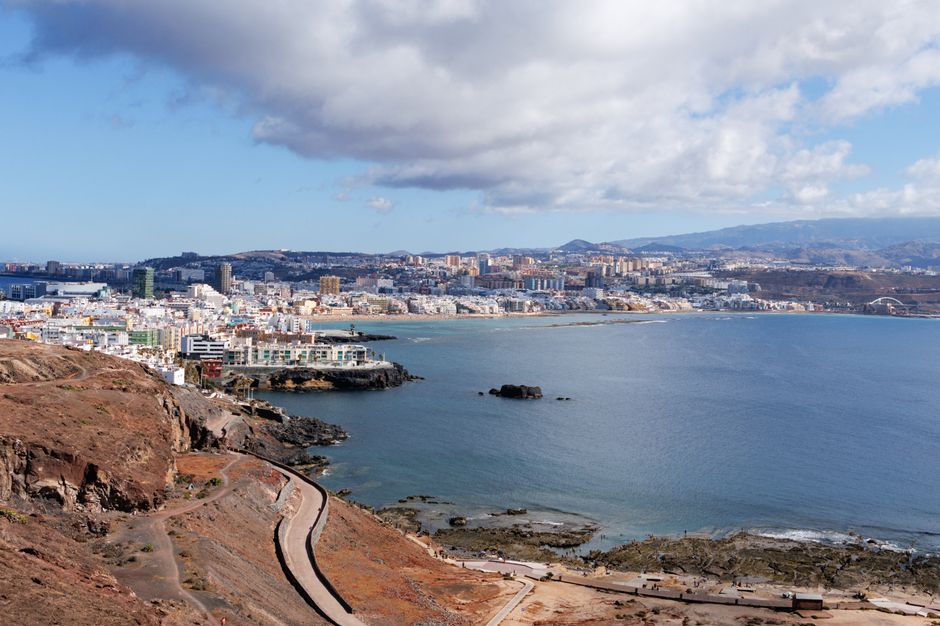
Gran Canaria is a round volcanic island where you can walk on golden dunes in the morning, hike through pine forest after lunch and eat grilled fish in a fishing harbour at sunset. The south is dry and sunny, the north greener, and the centre a ring of peaks and ravines. Base yourself in Las Palmas for city life and surf, or in the south for beaches and sun, and book your Roque Nublo slot before you go. Give it a week.
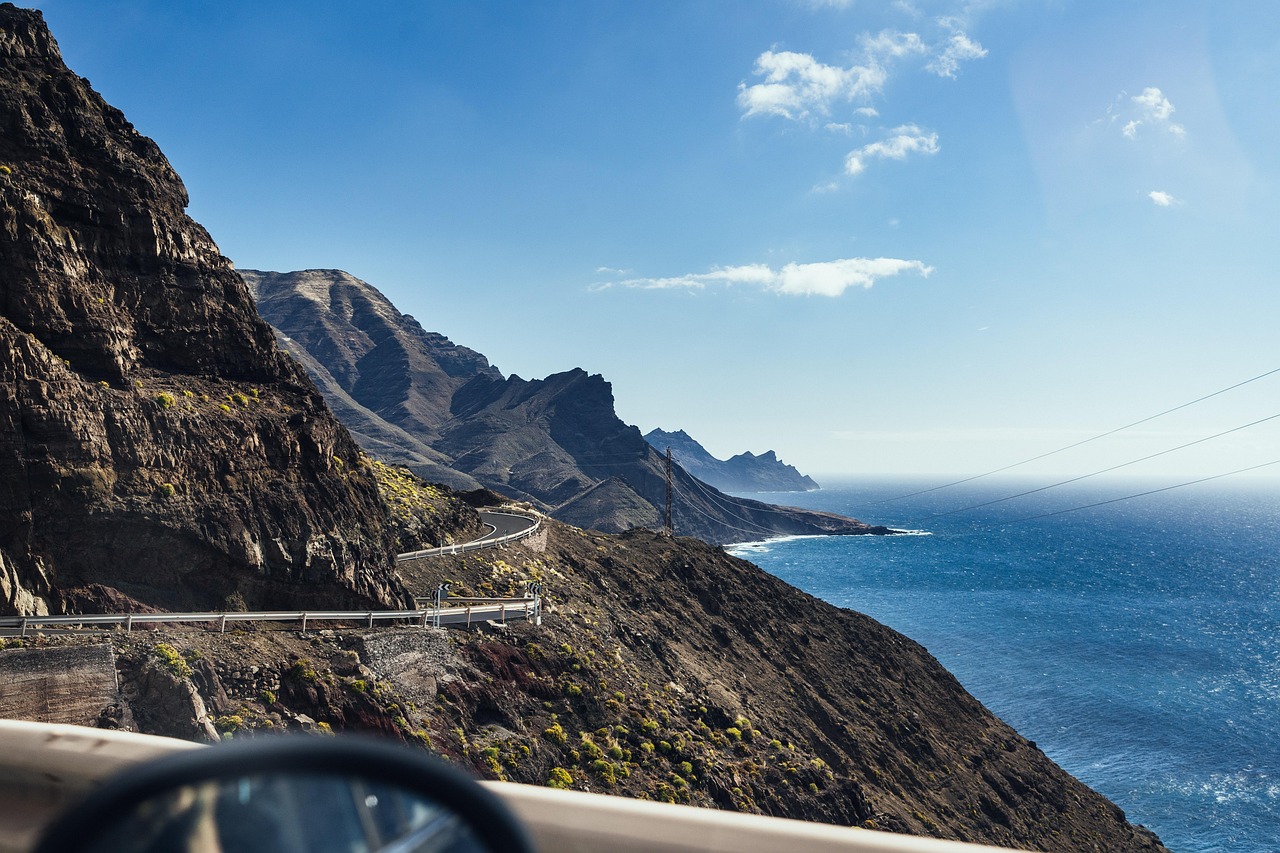
Right now in Gran Canaria (Maspalomas)
- Wed23–27°C73–81°F1 mm rain
- Thu21–24°C69–76°F7 mm rain
- Fri21–24°C69–75°F9 mm rain
- Mon 12 Oct National Day of Spain (Fiesta Nacional de España)
Top tours in Gran Canaria
See all tours for Gran Canaria →
From local operators, with prices and reviews; you check availability and book on Viator, our partner. We may earn a commission at no extra cost to you. How we earn money
Gran Canaria at a glance
- What it is: the third-largest of Spain’s Canary Islands (about 1,560 km²), in the Atlantic off north-west Africa. Its capital, Las Palmas de Gran Canaria, is the biggest city in the Canaries.
- Best for: winter sun, long beaches, surfing and windsurfing, mountain walks, a real Spanish city with a beach, and quick ferries to Tenerife and Fuerteventura.
- Highest point: the Pico de las Nieves area, around 1,950 m, with Roque Nublo, the island’s emblem, close by.
- Climate: at Gran Canaria Airport, daytime highs average about 21 °C in January and 27.5 °C in August, with only about 132 mm of rain a year (AEMET 1991–2020 normals).
- Roque Nublo: the path to the rock needs a free online booking during the day, and the trailhead car park is closed; you park in Tejeda or Cruz de Los Llanos and take a shuttle bus (as of October 2026).
- Time zone: one hour behind mainland Spain (the same as London and Lisbon).
- Airport: Gran Canaria Airport (LPA), on the east coast between Las Palmas and the southern resorts.
- Entry, money and general safety: the same as the rest of Spain; see our Spain travel guide.
The island’s areas and who each one suits
A motorway runs along the east and south coasts, so the city, the airport and the resorts are close together. The west and the centre are slower: winding mountain roads, villages and viewpoints.
Las Palmas and Las Canteras
The capital’s jewel is Las Canteras, a long city beach where a natural rock reef calms the water, so you can snorkel among fish a few metres from the promenade. Around it are tapas bars, surf schools and locals out for a sunset walk. Best for travellers who want a real city, good food, surf and buses everywhere; it is often cloudier than the south in summer.
Vegueta, the old town
The city’s founding quarter, more than 500 years old: cobbled lanes, wooden balconies, the cathedral of Santa Ana and the Casa de Colón museum. Triana, next door, is the shopping street. Stay here for history and evenings on the squares.
Maspalomas, Playa del Inglés and San Agustín
The big resort area of the south. Playa del Inglés is the busiest, with large hotels and nightlife; Maspalomas and Meloneras are calmer, with the dunes, the lighthouse and a long promenade; San Agustín is quieter still. Best for sun-seekers and families who want a beach within walking distance.
Puerto Rico and Amadores
West of Maspalomas, steep dry valleys end in sheltered beaches. Puerto Rico has a marina, boat trips and apartments climbing the hills; Amadores next door has pale sand and calm, clear water. Good for families with small children.
Puerto de Mogán
A low-rise harbour village of white houses, bougainvillea and little canals, often called “Little Venice”, with a small beach and a fishing port. Best for couples and a slow pace; evenings are quiet.
Agaete and Puerto de las Nieves
On the north-west coast, Agaete is a white village with a green valley of coffee and fruit farms behind it. Its harbour, Puerto de las Nieves, has seafood restaurants, natural rock pools, sunsets against tall cliffs and the fast ferry to Tenerife. A good base for walkers heading to Tamadaba.
Tejeda and the mountain villages
Tejeda, a member of the “Most Beautiful Villages of Spain” association, looks across a huge volcanic basin to Roque Nublo and Roque Bentayga, and is famous for almond blossom and almond sweets. Artenara has houses dug into the rock; Cruz de Tejeda is a mountain pass with a parador hotel. Stay here for hiking, stargazing and cool evenings.
Teror and Arucas
Teror is a hill town of carved wooden balconies around the 18th-century basilica of the island’s patron saint, Our Lady of the Pine. Arucas, among banana plantations, has a dark-stone neo-Gothic church and a rum distillery. Both are easy half-day trips from Las Palmas by bus.
Top things to see in Gran Canaria
- Dunas de Maspalomas: golden dunes between Playa del Inglés and the lighthouse, protected as a nature reserve with the palm grove and La Charca lagoon. They are open to walkers, but the Cabildo and the town council ask you to stay on the marked paths, follow the signs, not build stone windbreaks or other structures, and respect plants and animals; camping is forbidden. Go early or late, as the sand gets very hot.
- Las Canteras: the city beach of Las Palmas, with snorkelling off the sand inside the reef and surfing at its southern end.
- Roque Nublo: a tall basalt monolith on a summit plateau and the best short walk on the island; book a free slot first (see below).
- Pico de las Nieves: the highest viewpoint, around 1,950 m, looking over Roque Nublo to Tenerife’s Teide on clear days. It is named after old wells built to store winter snow, two of them restored. You can drive almost to the top.
- Risco Caído and the Sacred Mountains: cave dwellings, granaries and ancient sanctuaries of the island’s pre-Hispanic people around Artenara and Tejeda, a UNESCO World Heritage cultural landscape since 2019.
- Vegueta and the Casa de Colón: the old quarter of Las Palmas, with the cathedral, the Canary Museum and a Columbus museum in a balconied mansion.
- Caldera de Bandama: a near-perfect volcanic crater about 20 km from Las Palmas, up to 927 m across, with paths to the bottom and around the rim.
Peaks and mountains
- Roque Nublo
- Pico de las Nieves
Protected areas
- Maspalomas Dunes
- Barranco de Guayadeque
Monuments
- Cathedral of Santa Ana (Las Palmas)
- Maspalomas Lighthouse
Beaches
- Playa de Las Canteras
Hiking in Gran Canaria
The centre of the island is made for walking: old caminos reales (royal paths, the stone mule tracks that once linked villages), pine forests, palm-filled ravines and summits above the clouds. Most routes are free and need no permit; the big exception is Roque Nublo. See our hiking guide for gear and general tips.
Roque Nublo: booking, parking and the shuttle (as of October 2026)
Since February 2025 the Cabildo de Gran Canaria (the island government) has controlled access to the Roque Nublo Natural Monument path from Degollada de La Goleta, to cut traffic and crowding. The official tourist board still points visitors to the same system:
- Book a free slot online on the Cabildo’s platform, grancanariasenderos.com. You get a QR code to show at the control point. There is no access fee.
- Booking applies only during the controlled daytime hours, which end at 17:00; outside them you can walk up freely. Check the morning start time when you book, as official sources have given both 9:00 and 10:00.
- Limits: at launch, individual visitors were capped at 60 per hour, with up to five bookings per person; tour companies and schools have separate quotas.
- No parking at the trailhead: the Degollada de La Goleta car park is closed. Park in Tejeda village or at Cruz de Los Llanos.
- The shuttle is Global bus line 18, a circular service linking Tejeda with the Roque Nublo stop via Cruz de Tejeda and Ayacata, at normal Global fares. Line 18 also comes up from Faro de Maspalomas through San Bartolomé de Tirajana. From Las Palmas, take line 303 to San Mateo, then 305 to Tejeda.
- Exempt: residents of Tejeda and Artenara, with proof of residence.
The walk is short but steady: a stony path climbs through pines to the summit plateau, where the rock and its smaller neighbour, El Fraile (“the Monk”), stand against the sky. Allow a couple of hours there and back with time for photos; once through the control you can stay as long as you like. For sunrise or sunset, outside the controlled hours, bring a head torch and warm clothes.
More good walks
| Walk | Start | Distance and time | Level | Why go |
|---|---|---|---|---|
| Caldera de Bandama, crater floor | Bandama, Santa Brígida (Global bus 311) | 3.4 km; about 1 h 45 (tourist board) | Easy, but slippery gravel and a 200 m climb back out | Walk down inside a volcano to old farm ruins and a wine press |
| Caldera de Bandama, rim | Mirador de Los Cuartos, Bandama | Circuit of the crater edge; about 1 h 10 | Moderate; a few exposed points | Views into the crater and out to the sea |
| Camino de Santiago de Gran Canaria | Tunte (San Bartolomé de Tirajana) | Across the summits to Gáldar, usually in three days | Moderate to hard | A pilgrim route over the island on old royal paths |
| Tamadaba pine forest | Tamadaba Natural Park, above Agaete and Artenara | Loops of a few hours | Moderate | Canary pines and cliff-top views to Tenerife |
| Barranco de Guayadeque | Visitors’ centre, between Ingenio and Agüimes | Short walks along the ravine, or longer climbs | Easy to moderate | Cave houses, a cave chapel and cave restaurants |
Royal paths link many mountain villages, such as Tejeda, Artenara, Ayacata and San Bartolomé de Tirajana, so you can walk from one to the next and return by bus. Main routes are signposted, but carry an offline map.
Safety on the trails
- Stay on the path: places like Bandama are protected natural spaces where leaving the footpaths is not allowed.
- Carry water, warm clothing and ID, as the tourist board advises; the summits are much colder and windier than the coast.
- No smoking or fires, especially in the dry summer and early autumn, and respect any closures.
- Start early to avoid midday heat and afternoon cloud.
- Emergencies: call 112.
Activities and best months
- Beaches and swimmingAlmost 60 km of beaches along 236 km of coast: the dunes of Maspalomas and Playa del Inglés in the south, quieter family beaches at San Agustín, Amadores and Puerto de Mogán, and Las Canteras city beach in Las Palmas.
- Scuba divingDivers come for the sea beds, where currents bring shoals of fish; water sports are possible all year (sea 18-22 °C).
- SurfingSea and wind conditions allow water sports twelve months a year; the island draws surfers, windsurfers and kitesurfers. Sea temperature about 18 °C in winter and 22 °C the rest of the year.
Other things to do in Gran Canaria
Surfing at Las Canteras and El Confital
Las Palmas is the island’s surf town. The southern end of Las Canteras, La Cícer, has gentle beach-break waves and a row of surf schools: a good place for a first lesson. El Confital, at the northern tip, is a powerful reef break for experienced surfers, best in winter swells. See our surfing guide for gear and choosing a school.
Windsurfing at Pozo Izquierdo
Pozo Izquierdo and Vargas on the south-east coast are famous among windsurfers for strong, steady trade winds. Summer is windiest: AEMET’s normals show mean wind at the nearby airport rising from about 5 m/s in winter to 11.5 m/s in July. Pozo is for experts; beginners do better with a school at calmer spots further south. Kitesurfers use the same coast.
Diving and boat trips
The water is clear for the Atlantic, with rays, groupers, octopus and shoals of fish. Dive centres in the south and in Las Palmas run try-dives and courses, with well-known sites such as El Cabrón near Arinaga. From Puerto Rico, Arguineguín and Puerto de Mogán you can join dolphin-watching trips, catamaran cruises and glass-bottom boats, and small coastal ferries hop between the harbours. Choose operators that keep their distance from dolphins; see our boat trips guide.
Eating and drinking
Order papas arrugadas, small wrinkly potatoes boiled in salty water, with red and green mojo sauces; fish of the day such as vieja (parrotfish); gofio, toasted grain flour, in soups and desserts; and goat stew in the mountains. Look for queso de flor from Guía, a cheese made with thistle flower, and bienmesabe, an almond cream from Tejeda. Arucas makes rum and honey rum (ron miel), and Agaete grows coffee.
Day trips to other islands
Tenerife is 80 minutes from Agaete by fast ferry, so a day on Teide is possible; Fuerteventura’s southern beaches at Morro Jable are about two hours from Las Palmas. To compare islands, see our Tenerife travel guide; Portugal’s Madeira is greener and steeper with better walking, while Gran Canaria has the big beaches and more sun.
Nearby destinations
- Tenerife105 km
- La Gomera161 km
- Fuerteventura164 km
- Lanzarote226 km
- La Palma235 km
Getting there and getting around
Flying in and the airport bus
Gran Canaria Airport (LPA), run by AENA, has flights from mainland Spain, the other islands and much of Europe all year. Global buses leave from outside arrivals; as of October 2026 Global lists these direct-payment fares:
- Las Palmas, San Telmo station: lines 60 and 91, about 20 minutes, €2.30.
- Las Palmas, Santa Catalina (near Las Canteras): lines 60 and 91, about 30 minutes, €2.95, at :15 and :45 past each hour.
- Faro de Maspalomas: lines 66 and 90, about 40 minutes, €4.05.
- Puerto de Mogán: line 91, about 60 minutes, €6.80.
You can pay on board in cash or by contactless card or phone. Taxis wait outside arrivals.
Global buses and the TransGC card
Global runs the intercity buses (guaguas, as Canarians say) from San Telmo and Santa Catalina stations in Las Palmas. Useful lines include 30 and 50 to Maspalomas, 91 to Puerto de Mogán, 103 to Puerto de las Nieves, 216 to Teror, 210 to Arucas and 18 to Roque Nublo. Fares depend on distance, so tell the driver your stop. The free flat-rate bonos (Bono Residente Canario, Wawa Joven, Bono Oro) are for Canary residents; visitors can use a rechargeable TransGC card, which adds a 20% bonus to top-ups of €10–59, 30% for €60–99 and 40% from €100 (as of October 2026).
Guaguas Municipales in Las Palmas
The yellow city buses link Las Canteras, Santa Catalina, Triana and Vegueta. As of October 2026 a single ticket costs €1.40 on board, and the Tarjeta Turística LIVE gives unlimited rides for 24 hours (€5) or 72 hours (€12).
Renting a car
Buses cover the coast well, but a car makes the mountains, Risco Caído and the west coast much easier. The GC-1 motorway links the airport, Las Palmas and the south; mountain roads are narrow and full of bends and cyclists. You cannot park at the Roque Nublo trailhead, and parking in central Las Palmas is tight, so many visitors hire a car for just a few days.
Ferries to Tenerife, Fuerteventura and Lanzarote
- Fred. Olsen Express, Agaete–Santa Cruz de Tenerife: about 80 minutes, up to eight departures a day, with a free ferry bus from central Las Palmas timed to the sailings.
- Fred. Olsen Express, Las Palmas–Morro Jable (Fuerteventura): about two hours, up to four departures a day.
- Naviera Armas, now Baleària Canarias in the islands: from the port of Las Palmas to Santa Cruz de Tenerife, Morro Jable and Arrecife (Lanzarote), plus Cádiz on the mainland.
When to go and how long to stay
Gran Canaria is a year-round island: the south is sunniest, Las Palmas often has low cloud in summer, and the mountains are much cooler. The table uses AEMET’s 1991–2020 normals for Gran Canaria Airport (average daily high and low, and days with at least 1 mm of rain).
| Season | Airport high / low | Rainy days a month | What it’s like | Good for |
|---|---|---|---|---|
| Winter (Dec–Feb) | 21–22 °C / 16–17 °C | 2.7–4.0 | Warm days, the “wettest” months; cold on the peaks | Winter sun, surfing, Carnival, almond blossom |
| Spring (Mar–May) | 22–24 °C / 16–18 °C | 0.2–2.3 | Settled and sunny, green hills | Hiking, beaches, touring the island |
| Summer (Jun–Aug) | 25–27.5 °C / 19.5–22 °C | 0–0.2 | Hot in the south, cloudier in Las Palmas, windy | Beaches, windsurfing, village fiestas |
| Autumn (Sep–Nov) | 24–27 °C / 18–21 °C | 1.1–3.4 | Warm, with showers returning in November | Swimming, diving, hiking from late October |
The airport averages about 2,870 hours of sunshine a year, more than 300 a month in July and August. Wind is part of the climate: great for windsurfers, but some beaches get blowy in summer afternoons.
Events worth planning around
- Las Palmas Carnival: one of Spain’s biggest. The city’s advance programme runs from 22 January to 28 February 2027, with the Drag Queen Gala on 19 February and the Gran Cabalgata parade on 20 February. Book early.
- Almond blossom: pink and white trees around Tejeda in late winter, with almond fairs.
- Bajada de la Rama, Agaete: in early August, crowds carry pine branches down to the sea, dancing behind the band.
- Fiesta del Pino, Teror: the island’s biggest pilgrimage, in early September.
How long to stay: 3-, 5- and 7-day plans
3 days: Day 1, Las Palmas: Vegueta and the Casa de Colón, then a swim and sunset at Las Canteras. Day 2, the mountains: Roque Nublo (booked) and Pico de las Nieves, lunch in Tejeda. Day 3, the south: the dunes early, then a beach afternoon in Amadores or Puerto de Mogán.
5 days: add a north day (Arucas, Teror and the Cueva Pintada painted cave in Gáldar, ending at Puerto de las Nieves for sunset) and a morning at the Caldera de Bandama followed by a surf lesson.
7 days: slow down and add Tamadaba or Guayadeque, a boat or diving trip, and a ferry day to Tenerife or Fuerteventura. Keep one flexible day: if the summits are in cloud, go to the beach and try again tomorrow.
Weather month by month
Where to stay in Gran Canaria
- Las Palmas, Las Canteras: beachfront apartments and hotels; the best base without a car.
- Las Palmas, Vegueta and Triana: boutique hotels in old houses, near museums and tapas bars.
- Playa del Inglés: big hotels, lively nightlife, closest to the dunes; good value.
- Maspalomas, Meloneras and San Agustín: calmer, more upmarket resort hotels and villas.
- Puerto Rico, Amadores and Puerto de Mogán: family apartments and small harbour hotels; quiet at night.
- Agaete and the interior: rural houses for walkers and stargazers; you will want a car.
Tourist tax: as of October 2026 the Canary Islands have no regional tourist tax. Only Mogán (Puerto de Mogán, Puerto Rico, Amadores, Taurito) charges €0.15 per person per night, collected by hotels and holiday rentals since 2025. In July 2026 the Canary Islands High Court annulled the town’s ordinance, but the ruling is not final while Mogán appeals to the Supreme Court, and the town is still collecting the charge.
Practical tips
- Set your watch back an hour if you arrive from mainland Spain.
- Book Roque Nublo once your mountain day is fixed, and plan the shuttle from Tejeda or Cruz de Los Llanos.
- Pick your coast by the weather: if Las Palmas is grey, the south is often sunny.
- Respect the sea. Swells and currents can be strong, especially in the north and west; swim at lifeguarded beaches and obey the flags.
- The sun is stronger than it feels: the breeze keeps you cool, but you burn fast, even in winter.
- Learn “guagua”: it means bus everywhere in the Canaries.
What to pack for Gran Canaria
- High-factor sun cream, a hat and sunglasses all year.
- A warm layer and a windproof jacket for the summits and early starts.
- Trail shoes with good grip for loose volcanic gravel.
- Swimwear, a quick-dry towel and water shoes for rocky coves and natural pools.
- A mask and snorkel for Las Canteras.
- A daypack with a water bottle and snacks; mountain villages have few shops.
- A head torch for sunrise or sunset at Roque Nublo.
- Your phone, with offline maps and your Roque Nublo QR code saved.
What to pack
- Day packs and anti-theft bagsCarries water, towel and sunscreen down the long stairways to Algarve coves.
- Dry bags and phone pouchesProtects phones and cameras from sand and spray on beaches reached by ferry or steep paths.
- Fleeces and warm layersA warm layer or windproof after a dive stops you chilling on the boat ride back.
- Quick-dry beach towelsA sand-shedding quick-dry towel packs small for beach days and lido visits.
- Reef-friendly sunscreenSummer UV is strong on Portuguese beaches and there is little shade below the cliffs.
- Surf accessories (boots, leashes, wax)Neoprene boots keep feet warm in winter and protect them on rock and reef breaks.
- Water shoesRocky coves, lava pools and weever fish in shallow sand make water shoes useful.
- WetsuitsOn the west and north coasts the sea stays around 16–18 °C even in summer, so a thin suit helps for long swims.
Gran Canaria travel FAQ
Do I need to book to visit Roque Nublo?
Yes, during the controlled daytime hours (until 17:00): book a free slot on grancanariasenderos.com, the Cabildo’s platform, and show the QR code at the control. Outside those hours no booking is needed (as of October 2026).
Can I drive to Roque Nublo?
Not to the trailhead: the Degollada de La Goleta car park is closed. Park in Tejeda or at Cruz de Los Llanos and take Global line 18, which also runs from Maspalomas. Access is free; you pay only the bus fare.
Can I walk on the Maspalomas dunes?
Yes. The dunes are open, but they are a protected reserve: keep to the marked paths, follow the signs, don’t build stone windbreaks and don’t camp.
Is there a tourist tax in Gran Canaria?
Not across the island or the Canaries as of October 2026. Only Mogán charges €0.15 per person per night; a court annulled it in July 2026, but the ruling is under appeal and the town still collects it.
What time zone is Gran Canaria in?
Canary time: UTC+0 in winter and UTC+1 in summer, one hour behind Madrid and the same as London and Lisbon.
Is it better to stay in Las Palmas or in the south?
Las Palmas for city life, food, surfing and buses; the south for more sunshine and bigger beaches. On a week’s trip, split your nights between the two.
How do I get from the airport to Maspalomas or Las Palmas?
By Global bus: lines 60 and 91 to Las Palmas (€2.30–€2.95, 20–30 minutes) and lines 66 and 90 to Faro de Maspalomas (€4.05, about 40 minutes), as of October 2026. Taxis wait outside arrivals.
Do I need a car in Gran Canaria?
Not for Las Palmas or the resorts, which buses link well. A car is worth it for a few days in the mountains and the west.
Can I visit Tenerife on a day trip?
Yes. Fred. Olsen Express sails from Agaete to Santa Cruz de Tenerife in about 80 minutes, with a free ferry bus from Las Palmas; Baleària Canarias also sails from Las Palmas.
When is the best time to visit Gran Canaria?
Any time. October to April is best for winter sun and hiking; February brings Carnival and almond blossom; summer is hottest and windiest. The airport averages about 21 rainy days a year.
Where is the best surfing in Gran Canaria?
Las Canteras in Las Palmas for beginners and lessons; El Confital, at its northern end, for experienced surfers in winter. Pozo Izquierdo is for windsurfing.
Plan your trip
Partner links: TravelerCenter may earn a commission if you book, at no extra cost to you.
🇪🇸 Useful Spanish phrases for Gran Canaria
All 38 Spanish phrases: restaurant, hotel, emergencies, romance (printable) →
Sources · last reviewed 3 October 2026
Researched and last reviewed on 3 October 2026. Roque Nublo access: Cabildo de Gran Canaria, the official Gran Canaria tourist board and Global (line 18); dunes rules, Bandama route and highlights: Gran Canaria tourist board; buses: Global and Guaguas Municipales; ferries: Fred. Olsen Express and Armas Trasmediterránea (Baleària Canarias); climate: AEMET 1991–2020 normals for Gran Canaria Airport, as published by the WMO; Carnival: LPA Carnaval; Mogán tourist tax: regional press reporting the court ruling. Prices, timetables and access rules change, so check the official links before you travel. For entry rules, money and general safety, see our Spain travel guide.
Also: grancanaria.com · AEMET normals 1991–2020, Gran Canaria Aeropuerto (climate)
Data: Weather: MET Norway (CC BY 4.0) · Sea temperature: NOAA CoastWatch · Air quality: OpenAQ · Rates: ECB · Holidays: Nager.Date · Costs: World Bank ICP and price levels · © OpenStreetMap contributors (ODBL) · Wikidata (CC0)