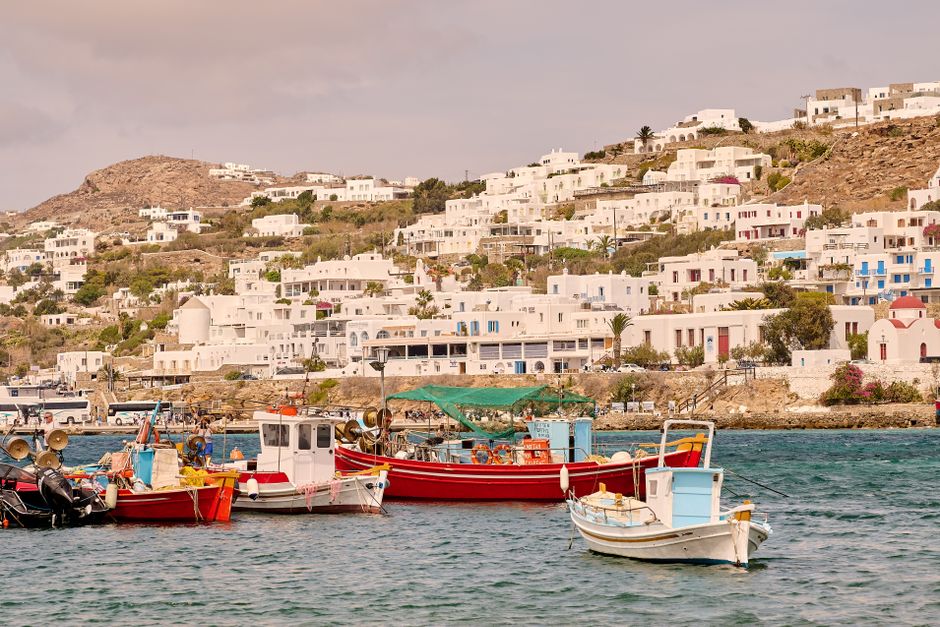
Mykonos is the Cyclades at full volume: a dazzling white harbour town, windmills on the hill, golden beaches with music from noon and a nightlife that runs until sunrise. It is also smaller and calmer than its reputation outside July and August. Wander the lanes of Chora early in the morning, take the boat to sacred Delos, one of the great archaeological sites of Greece, then pick a beach to match your mood, from family coves to party bays and wild, empty sand on the north coast. It is expensive and very busy in high season, and windy. Come from late May to June or in September, stay three or four nights, and combine it with a calmer island such as Naxos or Tinos.
Right now in Mykonos (Mykonos town)
- Wed 19–20°C 66–69°F Clear
- Thu 19–22°C 67–71°F Partly cloudy
- Fri 20–22°C 68–72°F Clear
Weather: MET Norway (CC BY 4.0) · Sea temperature: NOAA CoastWatch · Rates: ECB
Top tours in Mykonos
See all tours for Mykonos →
From local operators, with prices and reviews; you check availability and book on Viator, our partner. We may earn a commission at no extra cost to you. How we earn money
Mykonos at a glance
- Best months: late May–June and September. Average highs run from about 18 °C in April to 28–29 °C in July and August, and winters are mild but windy, around 13–14 °C by day (HNMS normals 1991–2020, Mykonos station). Swimming is comfortable from June to early October.
- Days needed: 3 for Chora, Delos and a couple of beaches; 4–5 to add the north coast, Ano Mera and more nightlife.
- Getting there: fly into Mykonos (JMK), about 40 minutes from Athens and direct from many European cities in summer; or take a ferry from Piraeus or Rafina.
- Getting around: KTEL buses from two terminals in Chora to the main beaches, small sea taxis along the south coast, and a car, scooter or quad for the rest.
- Budget level: one of the most expensive islands in Greece in July and August, for rooms, sunbeds and drinks alike; much cheaper in May, June and late September. A climate resilience fee is added per room per night (€2–€15 from April to October). See our Greece guide for money, entry rules and daily costs.
Mykonos’s areas and who each one suits
- Chora (Mykonos Town): the harbour town, Little Venice and the windmills, with most of the bars, restaurants, shops and the bus terminals. For first-timers, nightlife and anyone without a car; noisy in summer.
- Ornos and Agios Ioannis: sheltered bays a short bus ride south-west of Chora, with calm water, tavernas and family hotels. For families and sunset dinners.
- Platys Gialos, Psarou and Paraga: the south coast’s busiest beach strip, from family-friendly Platys Gialos to glamorous Psarou. For beach days with everything on hand.
- Paradise, Super Paradise, Elia and Kalo Livadi: the beach-club and party coast further east, with music, cocktails and late nights, and long sandy Kalo Livadi for a calmer day.
- Ano Mera and the north: the inland village of Ano Mera with its monastery and square, and the wilder, windier north coast (Agios Sostis, Panormos, Ftelia). For quiet, nature and windsurfing, with a car.
Top things to see in Mykonos
Prices and hours below come from the Greek Ministry of Culture’s ticketing service (Hellenic Heritage) and the Mykonos–Delos boat operators, as of October 2026.
Chora and Little Venice
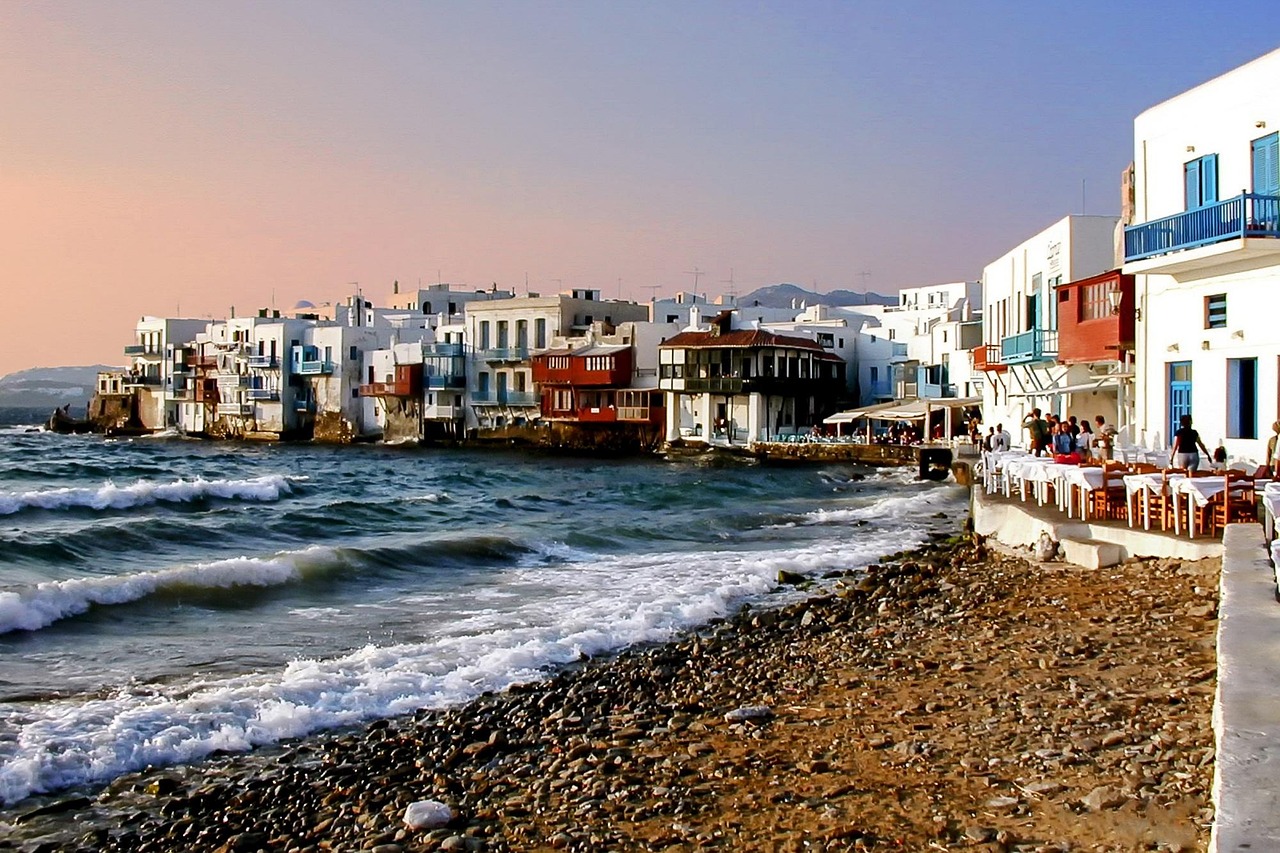
Mykonos Town is a maze of narrow, whitewashed lanes with blue and red doors, bougainvillea and tiny chapels, built tight and twisting to break the wind and, it is said, to confuse pirates. Get lost in it before 10:00, when only the cats and the cleaners are out. See the Paraportiani church, a white cluster of five chapels joined into one sculpture-like building near the old kastro; look for the island’s pelican mascot on the harbour front; and visit the small museums: the Archaeological Museum by the old port (€5, €3 reduced; 9:00–16:00 from April to October, closed Tuesdays), the folklore museum and the Aegean maritime museum. Little Venice, in the Alefkandra quarter, is a row of old captains’ houses with wooden balconies built right over the water. At sunset its bars fill up and waves splash the front tables on windy evenings; get there early for a seat.
The windmills
On the low ridge above Little Venice stands a row of white, thatched windmills, the Kato Mili, built from the 16th century onwards to grind grain from passing ships and now the symbol of the island. It is a two-minute walk from Little Venice, free and always open, and the classic place to watch the sun go down over Little Venice. One mill can sometimes be visited inside; others are private.
Ano Mera and Armenistis lighthouse
Inland, the village of Ano Mera shows a quieter Mykonos: a square of tavernas and the 16th-century Panagia Tourliani monastery with its carved bell tower. On the north-west tip, the 19th-century Armenistis lighthouse is a calmer, wilder sunset spot than town, with views to Tinos.
Museums
- Aegean Maritime Museum
- Archaeological Museum of Mykonos
Other sights
- Mykonos Windmills (Kato Mili)
- Panagia Paraportiani
Beaches
- Psarou Beach
Archaeological sites
Delos: the sacred island
A short boat ride from Mykonos, the small, uninhabited island of Delos was, in Greek myth, the birthplace of Apollo and Artemis, and for centuries one of the holiest places of the ancient world and later a busy free port. Its ruins cover almost the whole island and are a UNESCO World Heritage Site: the Terrace of the Lions, temples and sanctuaries, the theatre and whole streets of houses with mosaic floors, such as the House of Dionysus and the House of the Dolphins. Climb Mount Kynthos, 112 m, for a view over the site and the Cyclades. The museum on site holds the original lions and many finds. Allow at least three hours.
How to visit Delos
- Site ticket: €20, €10 reduced, including the museum. Open daily from 8:00: until 20:00 from April to August, 19:30 in early September, 19:00 in late September, 18:30 in early October, 18:00 in late October and 16:00 in November; closed from December to March. Last entry is 20 minutes before closing. Buy online through Hellenic Heritage or on arrival.
- Boats: local boats leave from the Old Port in Chora, by the town hall. In the 2026 timetable they leave at 10:00 and 11:30 (returning at 13:30 and 15:00) from April to November, except Mondays, when only the 10:00 boat runs in the morning, plus an afternoon boat at 17:00 from May to August, moving earlier through September and October (15:00 in late October) and returning in the evening. The crossing takes about 30 minutes; a return ticket is €25, and guided tours including the site ticket are about €79. No one may stay overnight on Delos.
- Tips: take the first boat to beat the heat and the cruise groups. There is almost no shade; bring a hat, sunscreen, water and sturdy shoes. Boats can be cancelled in strong winds.
Beaches and beach rules
Mykonos has more than 25 beaches. The north wind, the meltemi, blows hard on many summer days, so the south coast, sheltered from it, is where most people swim; the north coast is wilder, windier and emptier.
- Calm and family-friendly: Ornos, Agios Ioannis, Platys Gialos and Agios Stefanos, with shallow water, tavernas and buses from town.
- Glamour and beach clubs: Psarou, Paradise, Super Paradise, Paraga and the eastern part of Elia, with music and cocktails from midday; Elia and Super Paradise have long been popular with LGBTQ+ travellers.
- Long and sandy: Kalo Livadi and Elia, with clear water and room to spread out.
- Wild and quiet: Agios Sostis and Fokos in the north, with no sunbeds, and Panormos and Ftelia, where windsurfers and kitesurfers ride the meltemi.
Sunbeds and your rights: sunbeds at Mykonos beach clubs can cost as much as a meal, and the front rows far more; ask the price before you sit down. Under Greece’s 2024 coastal law (Law 5092/2024), beach businesses may cover only part of a beach with loungers, must keep the strip next to the water and the access paths free, and the rest of the beach is open to everyone: you can always lay your own towel on the free sand, and on beaches with no licence there should be no sunbeds at all. If a business blocks access or covers more beach than allowed, you can report it in the government’s MyCoast app. See our beaches guide.
Nightlife
Mykonos nightlife starts at the beach clubs in the afternoon, moves to sunset cocktails in Little Venice, and carries on in the bars and clubs of Chora’s lanes after midnight; big-name DJs play at the clubs above Paradise beach, where parties end after sunrise. Peak season is July and August; in June and September it is livelier than most islands but easier to get in. Drinks are expensive. Never drink and ride a scooter or quad, and agree taxi fares in advance or use the night buses. The island has long been one of Europe’s best-known LGBTQ+ destinations, with a relaxed, mixed scene in town.
Crowds and cruise days
On busy summer days, cruise passengers and day visitors fill Chora, Little Venice and the windmills from late morning to late afternoon. Since July 2025, Greece charges a fee to every cruise passenger who goes ashore, set by Law 5162/2024: for Mykonos and Santorini it is €20 per passenger from 1 June to 30 September, €12 in April, May and October, and €4 from November to March, as of October 2026; the cruise line collects it. To avoid the crush: walk Chora early in the morning and again late at night, take the first boat to Delos, spend the middle of the day at a beach, and stay outside July and August if you can. The week around 15 August, a major Greek holiday, is the busiest of the year.
Food is part of the fun: try kopanisti, a peppery, tangy local cheese, louza (cured pork), fresh fish in Ano Mera or on the quieter beaches, and almond sweets from the bakeries of Chora.
Activities and best months
- Beaches and swimmingSome 25 beaches: Ornos and Platis Gialos, Psarou, Paraga, Paradise and Super Paradise with beach bars since the 1970s, Elia, Kalo Livadi with the calmest water for families, and windsurfing at Kalafatis and Ftelia. · source
Nearby destinations
Getting there and getting around
Flights
Mykonos airport (JMK) is only about 4 km from Chora. Flights from Athens take about 40 minutes and run all year; from spring to autumn there are also direct flights from many European cities. KTEL buses run from the airport to the Fabrika bus terminal in town, and taxis and pre-booked transfers wait outside, though taxi queues can be long in summer.
Ferries
- From Piraeus: high-speed boats take about 2½–3 hours, conventional ferries about 5 hours, often via Syros or Tinos.
- From Rafina: the closest port to Athens airport, with fast boats in about 2–3 hours and slower ferries via Andros and Tinos.
- Island hopping: frequent boats to Tinos, Paros, Naxos and Santorini in summer. Strong meltemi winds sometimes delay or cancel sailings.
Most ferries and cruise ships use the New Port at Tourlos, about 2 km north of Chora; a small sea bus, buses and taxis link it with town. Delos boats and some small boats leave from the Old Port in Chora itself. Check which port your ferry uses.
Getting around the island
- KTEL buses: two terminals in Chora. From Fabrika (south of the centre), buses go to Ornos, Agios Ioannis, Platys Gialos, Paraga, Paradise, the airport and the New Port; from the Old Port terminal, to the New Port, Agios Stefanos, Ano Mera, Elia, Kalo Livadi, Kalafatis, Panormos and Super Paradise. In summer the busiest lines run frequently until late at night. Buy tickets at the kiosks or online before boarding.
- Sea taxis: small boats hop along the south coast from Platys Gialos and Ornos to Paraga, Paradise, Super Paradise, Agrari and Elia in summer.
- Car, scooter or quad: useful for the north coast and quieter beaches, but parking near Chora and the busy beaches is very difficult in summer. Roads are narrow and winding; wear a helmet on scooters and quads, as required by law, and note that the government announced stricter quad rental rules in June 2026.
- Taxis: few for the number of visitors; book ahead or expect queues at the main ranks in town.
When to go and how long to stay
Mykonos has a hot, dry, windy summer and a mild, wet, windy winter. July and August bring the most sun, parties, crowds and highest prices. Late May, June and September are the sweet spot: warm, sunny, with the beach clubs open and the sea warming up or still warm. From late October to April most hotels, clubs and restaurants close and the island becomes a quiet, local place, good for walking but not for beach holidays.
| Season | Average high / low | What it’s like |
|---|---|---|
| Spring (Mar–May) | 15–22 °C / 10–16 °C | Fresh and green; quiet until late May; sea cool; good for Delos and walking. |
| Summer (Jun–Aug) | 27–29 °C / 21–23 °C | Hot, sunny and dry; strong meltemi wind on many days in July and August; peak parties and prices. |
| Autumn (Sep–Nov) | 18–26 °C / 14–20 °C | Warm sea and calmer days in September; season winds down in October. |
| Winter (Dec–Feb) | 13–14 °C / 9–10 °C | Mild, windy and showery; most tourist businesses closed. |
Temperatures are the 1991–2020 climate normals of the Hellenic National Meteorological Service (HNMS) for its Mykonos station. Rain falls mainly from November to February; summer is almost completely dry.
3 days in Mykonos
Day 1: Chora in the morning, a beach afternoon at Ornos or Platys Gialos, sunset at the windmills and Little Venice. Day 2: the first boat to Delos, a late lunch in town and an evening out. Day 3: Ano Mera, Kalo Livadi or Elia, and sunset at Armenistis lighthouse.
A week with Mykonos
Three nights on Mykonos, then a ferry to Naxos for beaches and mountain villages and on to Santorini for the caldera, flying home from Santorini or back via Athens.
Where to stay in Mykonos
- Nightlife and no car: Chora, or just above it, within walking distance of bars, restaurants and both bus terminals.
- Families: Ornos, Agios Ioannis or Platys Gialos, with calm, shallow water and direct buses to town.
- Beach-club holidays: Paradise, Super Paradise, Elia or Kalo Livadi.
- Quiet and views: villas around Agios Sostis, Houlakia or Ano Mera, with a car.
Book early for July and August, and check the noise: rooms in central Chora and near beach clubs can be loud until dawn. The climate resilience fee is added per room per night and paid at the hotel.
Practical tips for Mykonos
- Ask prices first: sunbeds, seafood priced by the kilo and drinks at beach clubs can add up fast; check the menu and the bill.
- Wind: on meltemi days, pick a south-coast beach and expect choppy boat rides.
- Delos early: the first boat is cooler and calmer.
- Respect the town: Chora is lived in; keep the noise down in residential lanes late at night and cover up away from the beach.
- Ferries: check whether you leave from the New Port or the Old Port, and allow time for traffic.
- Emergencies: call 112.
Weather month by month
Averages from HNMS normals 1991–2020, Mykonos (airport); rain: HNMS averages (period not stated), Naxos · Last reviewed 4 Oct 2026
What to pack for Mykonos
Pack swimwear, light summer clothes, something smarter for evenings out, a sun hat, sunglasses, high-factor sunscreen and a refillable water bottle. Bring comfortable sandals or trainers for the stone lanes and for Delos, where there is little shade, and a light windproof jacket for windy evenings and boat trips. A beach towel or sarong lets you use the free part of any beach, and a snorkel mask is worth it for the clear south-coast coves.
What to pack
- Day packs and anti-theft bagsCarries water, towel and sunscreen down the long stairways to Algarve coves.
- Dry bags and phone pouchesProtects phones and cameras from sand and spray on beaches reached by ferry or steep paths.
- Quick-dry beach towelsA sand-shedding quick-dry towel packs small for beach days and lido visits.
- Reef-friendly sunscreenSummer UV is strong on Portuguese beaches and there is little shade below the cliffs.
- Water shoesRocky coves, lava pools and weever fish in shallow sand make water shoes useful.
- WetsuitsOn the west and north coasts the sea stays around 16–18 °C even in summer, so a thin suit helps for long swims.
Mykonos travel FAQ
How many days do you need in Mykonos?
Three days for Chora, Delos and a few beaches; four or five if you want more beach time, the north coast and several nights out.
How do you get from Mykonos to Delos?
By local boat from the Old Port in Chora, about 30 minutes each way, for €25 return. In 2026 boats leave at 10:00 and 11:30, with an afternoon boat from May to October; the site ticket (€20) is separate.
How much does Delos cost?
€20, or €10 reduced, including the museum, as of October 2026, plus the boat. The site is closed from December to March.
Do you have to pay for a sunbed in Mykonos?
Only if you use one. Under Greek law, part of every beach must stay free of sunbeds and the strip by the water must be kept clear, so you can always lay your own towel. Ask the price before sitting down.
What is the best beach in Mykonos?
Ornos and Platys Gialos for families, Psarou and Paradise for beach clubs, Kalo Livadi and Elia for long sand, and Agios Sostis for an unspoilt beach without sunbeds.
Do you need a car in Mykonos?
Not if you stay in Chora or on the south coast: KTEL buses and sea taxis reach the main beaches. A car or scooter helps for the north coast and Ano Mera, but parking is hard in summer.
Is Mykonos only for partying?
No. Delos, the lanes of Chora, quiet villages such as Ano Mera, family beaches and the wild north coast make it good for couples and families too, especially outside July and August.
How much is the cruise passenger fee in Mykonos?
€20 per passenger going ashore from June to September, €12 in April, May and October and €4 from November to March, as of October 2026, usually included in the cruise fare.
Where is the best sunset in Mykonos?
Little Venice and the windmills are the classic spots, and the busiest. Armenistis lighthouse and the bays of Agios Ioannis and Ornos are calmer.
When is the best time to visit Mykonos?
Late May, June and September: warm and sunny, with everything open but fewer crowds and lower prices than July and August.
Which port does the ferry use in Mykonos?
Most ferries use the New Port at Tourlos, about 2 km north of Chora; some small boats and the Delos boats use the Old Port in town. Your ticket shows which.
Sources
- © OpenStreetMap contributors · ODbL · fetched 4 Oct 2026
- Wikidata · CC0 · fetched 4 Oct 2026
Sources and last review
Researched and last reviewed on 4 October 2026. Prices and hours of Delos and the Archaeological Museum of Mykonos come from the Greek Ministry of Culture (Hellenic Heritage). Delos boat times and fares come from the 2026 timetable of the Mykonos–Delos passenger boat operators. The bus network comes from KTEL Mykonos. The cruise passenger fee is set by Law 5162/2024, the beach rules by Law 5092/2024, and the climate resilience fee by Greek tax law (collected by AADE). Climate figures are the HNMS 1991–2020 normals for Mykonos. Ferry times are typical and change by season, so check the ferry companies and KTEL before you travel.
Plan your trip
Partner links: TravelerCenter may earn a commission if you book, at no extra cost to you.
🇬🇷 Useful Greek phrases for Mykonos
All 38 Greek phrases: restaurant, hotel, emergencies, romance (printable) →