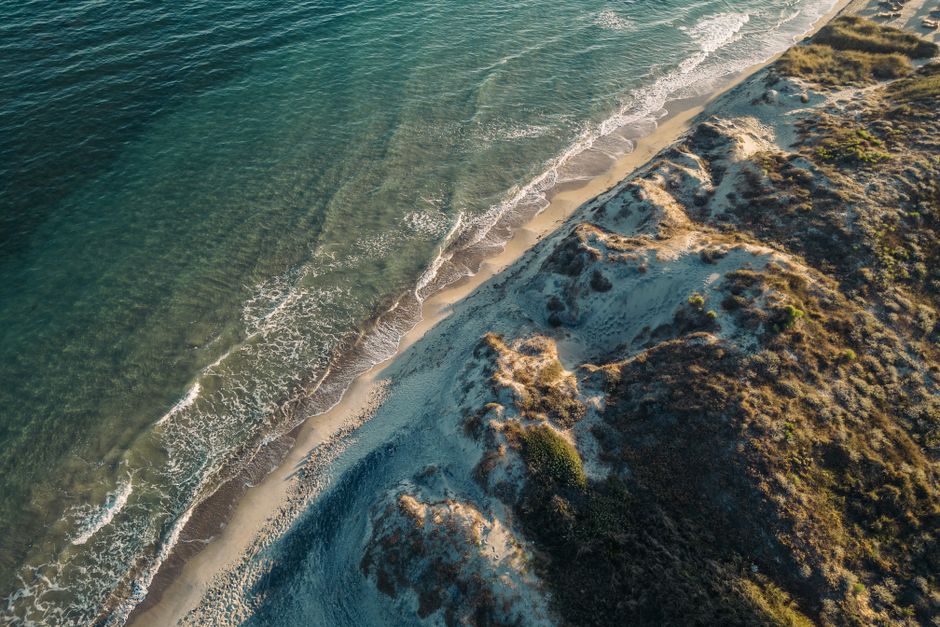
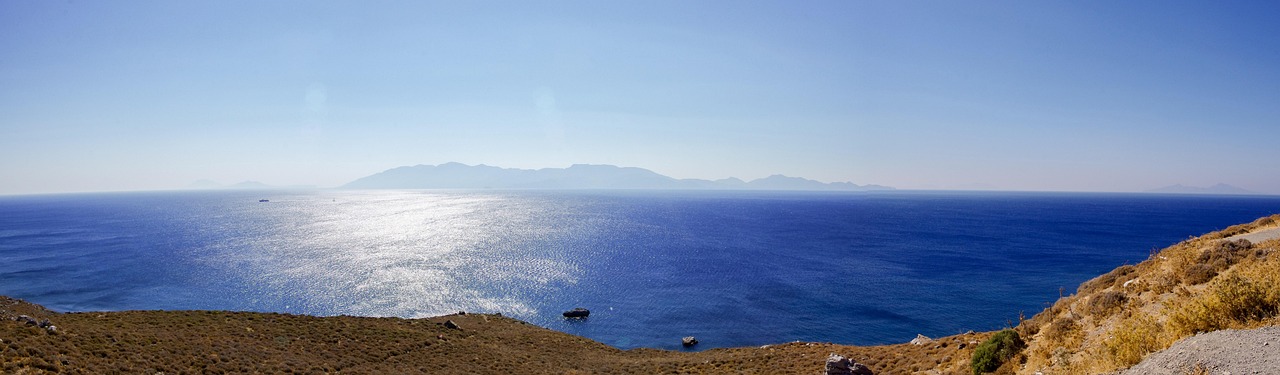
Kos is the island where medicine was born. Hippocrates, the father of medicine, was born here in the 5th century BC, and the healing sanctuary of the Asklepion still looks out over the sea towards the Turkish coast from its terraces above Kos Town. The island is long, flat in the north and mountainous in the middle, ringed by long, mostly sandy beaches, and easy to cross by bike, bus or car. Kos Town mixes a crusader castle, Roman streets, mosaics and a plane tree said to shade the spot where Hippocrates taught, with a busy harbour and lively bars. Inland, the village of Zia clings to the slopes of Mount Dikeos for the sunset, and the south-west ends in the wild bays of Kefalos. Bodrum in Turkey is less than an hour away by boat, and Kalymnos and Nisyros are short hops. Come in May, June, September or early October, and give it four days to a week.
Right now in Kos (Kos Town)
- Wed 19–23°C 67–73°F Partly cloudy
- Thu 18–23°C 64–73°F Partly cloudy
- Fri 20–23°C 68–74°F Clear
Weather: MET Norway (CC BY 4.0) · Sea temperature: NOAA CoastWatch · Rates: ECB
Top tours in Kos
See all tours for Kos →
From local operators, with prices and reviews; you check availability and book on Viator, our partner. We may earn a commission at no extra cost to you. How we earn money
Kos at a glance
- Best months: May–June and September–early October. Average highs run from about 24 °C in May to 31 °C in July and August, and winters are mild, around 14–15 °C by day (HNMS normals 1991–2020, Kos station). The sea is warm enough for swimming from June to October.
- Days needed: 2 for Kos Town, the Asklepion and Zia; 4–7 to add the beaches, cycling, a boat to Kalymnos or Nisyros and a day trip to Bodrum.
- Getting there: fly into Kos airport (KGS), with direct flights from much of Europe in season and from Athens all year; or take a ferry from Piraeus (from about 11½ hours), Rhodes and the other Dodecanese islands, or Bodrum in Turkey.
- Getting around: KTEL buses from Kos Town to the beaches and villages, with tickets bought on the bus; bikes for the flat north coast; a car or scooter for the mountain villages and the far south-west.
- Budget level: mid-range, with many all-inclusive resorts and good-value rooms; Kos Town and Psalidi cost more than the villages. Like everywhere in Greece, a climate resilience fee is added per room per night (€2–€15 from April to October, depending on the type of accommodation). See our Greece guide for money, entry rules and daily costs.
Kos’s towns and resorts, and who each one suits
- Kos Town: the capital and main port on the north-east tip, with the castle, the ancient sites, the museum, the marina, the bars of the old town and the town beaches of Lambi and Psalidi either side. The best base without a car and for history lovers.
- Tigaki and Marmari: long, shallow sandy beaches on the north coast, with small hotels and tavernas and flat roads for cycling. Good for families and easy-going beach holidays.
- Mastichari: a fishing village and small port on the north-west coast, with a sandy beach and boats to Kalymnos. Calm and close to the airport.
- Kardamena: a busy resort on the south coast, known for its nightlife and its boats to Nisyros. For young groups and late nights.
- Kefalos and the south-west: the wildest part of the island, with Kamari Bay, the islet of Kastri, Agios Stefanos and Paradise Beach nearby. Quieter, with big beaches, for nature lovers and windsurfers.
- Zia and the mountain villages: stone villages on the green slopes of Mount Dikeos, with views over the north coast and the islands. For a cooler, quieter stay with a car.
Top things to see in Kos
Prices and hours below come from the Greek Ministry of Culture’s ticketing service (Hellenic Heritage), as of October 2026. Summer hours run from 1 April to 31 October; at all state sites entry is free for all under-18s and EU citizens under 25 with ID, and on a few set days a year.
The Asklepion
The Asklepion was the most famous healing sanctuary of the ancient Greek world after Epidaurus. It was built after the death of Hippocrates on three terraces cut into a hillside about 4 km south-west of Kos Town, among cypresses and pines. Patients came to bathe, rest and be treated by priest-physicians who followed his teaching. Climb the grand staircases past the foundations of temples to Asclepius and Apollo, Roman baths and a spring, to the top terrace, where the view stretches over the town and the strait to Turkey. How to visit: a ticket is €15, €8 reduced. It opens daily from 8:00 (until 20:00 from April to August, 19:30 in early September, 19:00 in late September, 18:30 in early October and 18:00 in late October); from November to March it is open daily 8:30–15:30. Last entry is 20 minutes before closing. Cycle out along the signposted road from town, or take a taxi.
Neratzia Castle and the harbour
The Knights of St John built this fortress at the harbour entrance in the 14th and 15th centuries, using columns, altars and inscribed blocks from the ancient city, which you can spot in its walls. A stone bridge over a palm-lined avenue (once a moat) joins it to the town. How to visit: €5, €3 reduced; open 8:30–15:30 all year, closed on Tuesdays.
The plane tree of Hippocrates and the old town
Next to the castle bridge, the huge, propped-up plane tree of Hippocrates is said to grow where the great doctor taught his pupils. The tree you see is several centuries old rather than 2,400, but it is a lovely spot, with an Ottoman fountain beside it and the 18th-century Gazi Hassan Pasha (Loggia) Mosque behind. From here, the lanes of the old town, around Eleftherias Square and the old market hall, fill with shops, cafés and bars in the evening.
The ancient agora, the Western Excavations and the Roman Odeon
Much of ancient Kos was revealed after an earthquake in 1933 flattened parts of the town, and the ruins now lie open among the streets. The ancient agora, beside the old town, has columns of a temple of Aphrodite, a market hall and a Christian basilica. Across town, the Western Excavations show a stretch of Roman street, the decumanus, houses with mosaic floors, a gymnasium colonnade and baths. A short walk away, the small marble Roman Odeon seated an audience for music and speeches. These open-air sites can mostly be seen freely or through railings; check on the spot for any that are fenced off.
Casa Romana and the Archaeological Museum
The Casa Romana is a large Roman town house, restored with a roof, rooms around three courtyards with pools, and fine mosaics and wall paintings (€10, €5 reduced; from April to October 8:00 until 20:00 in summer and 18:00 in late October, closed on Tuesdays; in winter 8:30–15:30, closed on Tuesdays). The Archaeological Museum of Kos on Eleftherias Square displays statues from the island’s sanctuaries and houses, including a famous statue believed to be Hippocrates, and a large mosaic of the arrival of Asclepius on Kos (€10, €5 reduced; from April to October 8:00–20:00, in winter 8:30–15:30, closed on Tuesdays all year). Buy tickets online through Hellenic Heritage or at the entrance.
Zia, Mount Dikeos and the mountain villages
Zia is the best known of the villages on the slopes of Mount Dikeos, about 15 km from Kos Town, with a lane of craft shops and tavernas whose terraces face west over the north coast and the islands. Come for dinner and the sunset. Paths climb from the village to the summit of Dikeos, about 850 m: allow three to four hours up and down, start early, and carry plenty of water. Nearby, the abandoned Byzantine village and castle of Palio Pyli make a short, atmospheric walk, and the Venetian castle of Antimachia stands on the plateau near the airport. See our hiking guide.
Beaches in Kos
Kos has long sandy beaches on all its coasts. The north coast is shallow and family-friendly but windy in July and August; the south coast is calmer when the north wind, the meltemi, blows.
- Tigaki and Marmari: kilometres of fine sand and shallow water on the north coast, with sunbeds, tavernas and water sports; between them lies the Alykes salt lake, a wetland for birds.
- Lambi and Psalidi: the town beaches either side of Kos Town, within walking or cycling distance.
- Mastichari: a wide sandy beach next to the harbour, with tavernas and shade.
- Paradise Beach: a long, organised sandy beach on Kefalos Bay, with clear water and bubbles that rise from the seabed in one corner.
- Agios Stefanos: a beach with the ruins of two early Christian basilicas on the shore, facing the tiny islet of Kastri and its chapel, which strong swimmers can reach. One of the most photographed views on Kos.
- Kefalos and Kamari: the long bay below Kefalos, with sand, pebbles, fishing boats and fish tavernas.
Under Greece’s coastal law, part of every organised beach must be left free of sunbeds and you can always reach the water and spread your own towel. See our beaches guide, and our snorkeling guide for the clearest coves.
Cycling, water sports and boat trips
- Cycling: Kos is one of the flattest and most bike-friendly islands in Greece. Kos Town has cycle lanes along the seafront, and the coast roads to Lambi, Psalidi and Tigaki are easy rides; rental shops are everywhere. Go early in summer, wear a helmet and take care on the main road. See our cycling guide.
- Windsurfing and kitesurfing: the meltemi makes the north coast (Tigaki, Marmari, Mastichari) and Kefalos Bay popular with schools and rental centres in summer. See our surfing guide.
- Diving: licensed dive centres in Kos Town and the resorts take beginners and certified divers to reefs, caves and wrecks. See our diving guide.
- Boat trips: day cruises leave Kos harbour for the beaches of Kalymnos and the islet of Pserimos, and Kardamena for Nisyros. See our boat trips guide.
Food in Kos
Look for Kos cheese (krasotyri, aged in wine sediment), pitaridia (thick handmade pasta), slow-cooked lamb or goat in the mountain villages, and fresh fish at Mastichari and Kefalos. The most traditional tavernas are in the villages, away from the seafront strips.
Day trips from Kos
Bodrum in Turkey
Bodrum faces Kos across a narrow strait, and a day trip is easy: morning boats from Kos harbour, an afternoon at the castle and its Museum of Underwater Archaeology, the Mausoleum and the bazaar, and an evening boat back. See our Bodrum guide and our Turkey guide.
- Ferries: fast boats and ferries cross between Kos harbour and Bodrum (or Turgutreis), taking about 20–35 minutes by fast catamaran and up to an hour by conventional boat. In 2026, operators’ listed fares were around €25 one way, €35 for a same-day return and €40 for an open or different-day return, with lower fares on some boats and port taxes sometimes extra; the full range is about €17–40 one way. Sailings are frequent from spring to autumn and few in winter; book a day or two ahead in summer.
- Documents: you leave Greece and the Schengen area and enter Türkiye, so bring a valid passport (some nationalities can use a national ID card for Türkiye; check Türkiye’s own entry rules, including any e-Visa, for your nationality).
- Coming back: the EU’s Entry/Exit System (EES) has been fully in use at all Schengen external borders since 10 April 2026. Non-EU visitors are registered (fingerprints and a facial image) when they leave and re-enter Greece, so allow extra time at Kos port. ETIAS is not yet required; its launch now looks likely in 2027.
Kalymnos, Pserimos and Nisyros
Ferries and small boats link Kos with Kalymnos, the island of sponge divers and one of Europe’s top rock-climbing areas, from Kos Town and from Mastichari. Day boats call at Pserimos, a tiny island with a sandy beach and tavernas. Nisyros, to the south, is a round volcanic island where you can walk down into the steaming Stefanos crater; summer boats leave from Kardamena and Kos Town, and local buses climb to the crater from Mandraki. Ferries and catamarans also run on to Rhodes, Leros and Patmos.
Nearby destinations
Getting there and getting around
Flights
Kos airport “Ippokratis” (KGS) is near Antimachia in the middle of the island, about 25 km from Kos Town. It is run by Fraport Greece. Flights from Athens take about an hour and run all year; from spring to autumn there are direct flights from much of Europe, many of them charters and low-cost airlines. KTEL buses link the airport with Kos Town, Mastichari, Kardamena and Kefalos, from a stop about 50 m from the terminal, with tickets sold by the driver; taxis wait in front of arrivals.
Ferries
- From Piraeus (Athens’ main port): Blue Star Ferries sails to Kos up to six times a week, taking from about 11½ hours, usually overnight and calling at other islands; cabins are available.
- Within the Dodecanese: ferries and catamarans connect Kos with Rhodes, Symi, Nisyros, Kalymnos, Leros, Lipsi, Patmos and Astypalea.
- From Turkey: Bodrum and Turgutreis, see above.
Book on the operator’s own site or app or a comparison platform, especially in July and August, and keep a buffer day before an international flight: the Coast Guard can ban sailings in strong winds.
Buses, bikes and cars
KTEL Kos runs buses from Kos Town to Tigaki, Marmari, Pyli, Zia, Antimachia, Mastichari, Kardamena and Kefalos, with more services in summer and none on some public holidays. Tickets are bought on the bus. The Asklepion and the Kos Town beaches are easy by bike. A car or scooter is the easiest way to reach Zia at sunset, the mountain villages and the south-west beaches. You need a driving licence valid for the vehicle (from outside the EU, usually with an International Driving Permit); helmets are compulsory on scooters and quads, and your travel insurance may not cover quads.
When to go and how long to stay
Kos has hot, dry summers and mild, wetter winters, and it is warmer than the Cyclades, with a slightly longer season. The meltemi blows from the north on many days in July and August, cooling the air and roughing up the north coast. July and August are the busiest and most expensive months. May, June, September and early October have warm days, a warm sea and fewer people, and are the best time for cycling and walking. From November to March many resort hotels close, but Kos Town stays open and pleasant for sightseeing.
| Season | Average high / low | What it’s like |
|---|---|---|
| Spring (Mar–May) | 16–24 °C / 10–17 °C | Green and flowery; good for cycling, walking and the ancient sites; sea still cool; Easter is a big celebration. |
| Summer (Jun–Aug) | 28–31 °C / 21–23 °C | Hot, sunny and dry; windy on the north coast in July and August; peak crowds and prices. |
| Autumn (Sep–Nov) | 19–28 °C / 14–21 °C | Warm sea in September and October, quieter beaches; first rain from late October. |
| Winter (Dec–Feb) | 14–15 °C / 9–11 °C | Mild, with rainy spells; most resorts closed; Kos Town quiet and local. |
Temperatures are the 1991–2020 climate normals of the Hellenic National Meteorological Service (HNMS) for its Kos station. Rain falls mainly from November to February; from June to August it hardly rains at all. Greece’s wildfire season runs from 1 May to 31 October: on days of high fire risk (category 4–5 on the daily map of the Ministry of Climate Crisis and Civil Protection), forests may be closed and any outdoor fire is banned. Call 112 if you see a fire.
3 days in Kos
Day 1: Kos Town, Neratzia Castle, the plane tree, the agora and the Western Excavations, with dinner in the old town. Day 2: cycle or bus to the Asklepion in the morning, Casa Romana and the museum after lunch, and a swim at Lambi. Day 3: a beach day at Tigaki or Marmari, then up to Zia for the sunset.
5–7 days in Kos
Add the south-west (Agios Stefanos, Paradise Beach and Kefalos), a walk up Mount Dikeos or to Palio Pyli, a boat to Kalymnos or Pserimos, a day on Nisyros and its volcano, and a day trip to Bodrum. Then sail on to Rhodes, or fly back to Athens.
Where to stay in Kos
- Without a car: Kos Town, at the hub of the buses, ferries and cycle lanes, with the most restaurants and nightlife.
- Families and beach time: Tigaki, Marmari or Psalidi, with shallow sandy beaches and larger hotels.
- Quiet and the west: Mastichari or Kefalos, with a more village feel.
- Nightlife: Kardamena or the bar streets of Kos Town.
Greece adds a climate resilience fee per room per night, set by type of accommodation, usually paid at the property (from April to October €2 for 1–2-star hotels and rooms up to €15 for 5-star hotels; campsites and youth hostels are exempt).
Practical tips for Kos
- Go early: the Asklepion and the Kos Town sites are best before the midday heat; Zia is best at sunset, after the tour coaches have left.
- Bring your passport for Turkey: and allow time for the EES border check when you come back.
- Wind and ferries: strong winds can delay or cancel boats; leave a spare day before an international flight.
- Fire risk: no barbecues or fires in the countryside in summer; follow 112 alerts.
- Emergencies: call 112; tourist police 1571; coast guard 108.
What to pack for Kos
Pack light summer clothes, a sun hat, sunglasses, high-factor sunscreen and a refillable water bottle. Bring comfortable shoes for the ancient sites and the old town, walking shoes for Mount Dikeos, and sandals or water shoes for pebbly coves. Add a swimsuit and a snorkel mask, a light windproof layer for windy evenings and boat trips, a warmer jacket from November to April, and a light scarf to cover your shoulders in churches. Remember your passport if you plan to visit Bodrum.
Kos travel FAQ
How many days do you need in Kos?
Two days covers Kos Town, the Asklepion and Zia. Four to seven days lets you add the beaches of the south-west, cycling, a boat to Kalymnos or Nisyros and a day trip to Bodrum.
How much does the Asklepion of Kos cost?
€15, or €8 reduced, as of October 2026. It opens daily, from 8:00 until 18:00–20:00 between April and October depending on the month, and 8:30–15:30 from November to March. Entry is free for under-18s and EU citizens under 25.
Is Kos good for cycling?
Yes. The north of the island is flat, Kos Town has seafront cycle lanes, and the Asklepion, Lambi, Psalidi and Tigaki are easy rides. The centre of the island and the south-west are hillier.
What is the best beach in Kos?
Agios Stefanos for its view of Kastri islet, Paradise Beach for sand and clear water, and Tigaki or Marmari for long, shallow beaches that suit families. On windy days in summer, the south coast is calmer.
How long is the ferry from Kos to Bodrum?
About 20–35 minutes by fast catamaran and up to an hour by conventional boat. In 2026, one-way fares were mostly around €17–40, with same-day returns from about €35 on many boats.
What documents do I need for a day trip from Kos to Bodrum?
A valid passport (some nationalities can use a national ID card for Türkiye) and any visa or e-Visa Türkiye requires for your nationality. Non-EU visitors are registered in the EU’s Entry/Exit System when they leave and return to Kos. ETIAS is not yet required.
How do I get from Kos airport to Kos Town?
By KTEL bus from the stop about 50 m from the terminal (tickets from the driver), by taxi from the rank outside arrivals, or by hire car. The airport is about 25 km from Kos Town.
How do you get to Kos from Athens?
Fly from Athens in about an hour, or take a Blue Star ferry from Piraeus, which takes from about 11½ hours, usually overnight.
Can you visit Kalymnos or Nisyros from Kos?
Yes. Boats go to Kalymnos from Kos Town and Mastichari, and to Nisyros, with its walk-in volcano crater, from Kardamena and Kos Town in summer. Both make easy day trips.
When is the best time to visit Kos?
May, June, September and early October: warm, sunny and less crowded than July and August, with the sea warm enough for swimming from June.
Sources and last review
Researched and last reviewed on 4 October 2026. Prices and hours of the Asklepion, Neratzia Castle, Casa Romana and the Archaeological Museum of Kos come from the Greek Ministry of Culture’s Hellenic Heritage service. Airport bus and taxi information comes from Kos airport (Fraport Greece) and KTEL Kos; Piraeus ferry times and island connections from Blue Star Ferries; Bodrum ferry fares from the operators’ published 2026 fares. The climate resilience fee is set by Greek tax law and collected by the Independent Authority for Public Revenue (AADE). Climate figures are the HNMS 1991–2020 normals for Kos. Ferry times and fares change by season, so check the ferry companies, KTEL Kos and Türkiye’s entry rules before you travel.
Plan your trip
Partner links: TravelerCenter may earn a commission if you book, at no extra cost to you.
🇬🇷 Useful Greek phrases for Kos
All 38 Greek phrases: restaurant, hotel, emergencies, romance (printable) →