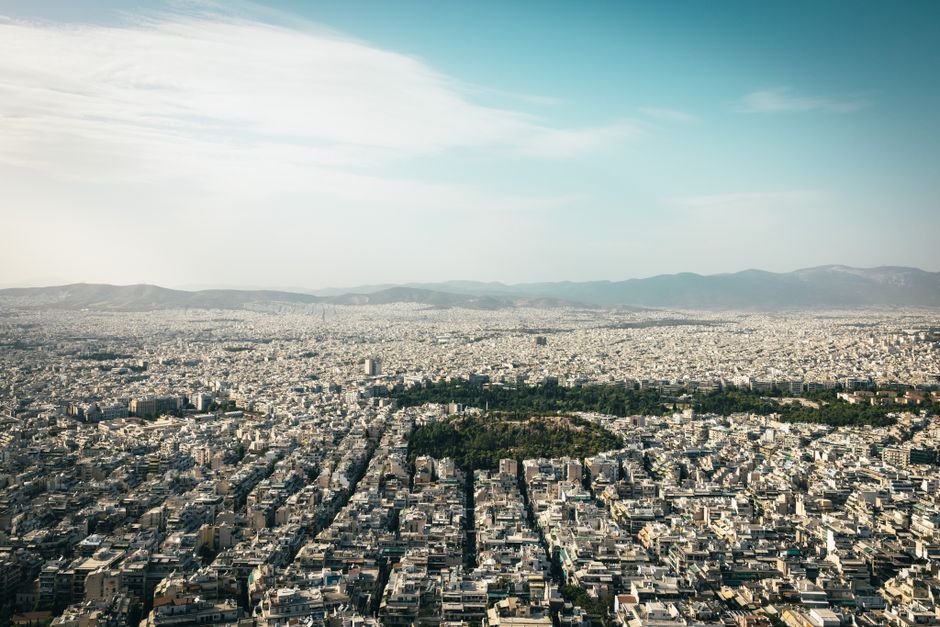
Athens is where the Western world’s story begins, and it wears its 3,000 years lightly. The Parthenon still crowns the Acropolis above a sprawling, sun-bleached modern city of cafés, rooftop bars, street art and neighbourhood tavernas. You come to climb the sacred rock early in the morning, walk the Ancient Agora where Socrates argued, see the Parthenon sculptures in the glass-walled Acropolis Museum, lose yourself in the lanes of Plaka and Anafiotika, and watch the sunset from Lycabettus Hill or the Temple of Poseidon at Cape Sounion. It is also the gateway to the islands: Piraeus, the country’s biggest port, is 25 minutes away by metro. Give it two or three days before or after your island time.
Right now in Athens
- Wed 14–26°C 57–78°F Mostly clear
- Thu 16–25°C 61–76°F Clear
- Fri 19–25°C 66–77°F Mostly clear
Weather: MET Norway (CC BY 4.0) · Air quality: OpenAQ · Rates: ECB
Top tours in Athens
See all tours for Athens →
From local operators, with prices and reviews; you check availability and book on Viator, our partner. We may earn a commission at no extra cost to you. How we earn money
Athens at a glance
- Best for: ancient history and world-class museums, food and nightlife, rooftop views, and a base for island ferries and mainland day trips.
- How long: 2 days for the highlights, 3–4 with Cape Sounion, a Saronic island or Delphi.
- Best time: April to early June and mid-September to October; July and August are very hot, and heatwaves can close the Acropolis at midday.
- Getting in: metro line 3 or the X95 express bus from the airport (about 40–60 minutes), or a taxi at a fixed fare.
- Book ahead: a timed Acropolis ticket (€30 as of October 2026) on the Ministry of Culture’s official ticket site, tickets.hh.gr.gr, especially from April to October.
- Before you go: entry rules, money, ferries and general safety are in our Greece travel guide.
Athens neighbourhoods and who each one suits
Almost everything a visitor wants lies in a compact area around the Acropolis, walkable in 20–30 minutes from end to end. A pedestrian promenade, Dionysiou Areopagitou and Apostolou Pavlou, curves round the south and west of the hill and links many of the sights.
Plaka and Anafiotika
The old town on the north and east slopes of the Acropolis: neoclassical houses, Byzantine chapels, souvenir streets and taverna terraces under vines. Climb above it into Anafiotika, a tiny cluster of whitewashed island-style houses built in the 19th century by builders from the island of Anafi, with cats, flowerpots and glimpses of the city below. Best for: first-timers who want to walk everywhere.
Monastiraki and Psyrri
Monastiraki Square, with its Ottoman mosque and metro station, opens onto the flea market lanes and the street of souvlaki grills. Next door, Psyrri is a maze of street art, bars, small tavernas and late-night music. Best for: nightlife, street food and being central on a budget.
Koukaki and Makrygianni
South of the Acropolis, around the Acropolis Museum: quiet residential streets, good cafés and bakeries, and easy access to the hill’s south-east entrance and to metro line 2 (Akropoli station). Best for: couples and families who want calm evenings close to the sights.
Syntagma and Kolonaki
Syntagma Square is the city’s hub, facing the Parliament, with the main metro interchange and the airport bus stop. Up the hill, Kolonaki is the elegant district of boutiques, galleries and pavement cafés at the foot of Lycabettus. Best for: transport links, shopping and a more grown-up night out.
Thiseio, Gazi and Exarchia
Thiseio has café terraces facing the Acropolis and the Ancient Agora; Gazi, around a former gasworks, is a clubbing and LGBTQ+ nightlife area; and Exarchia, near the National Archaeological Museum, is the bohemian, political student quarter with cheap eats and bookshops. Best for: views (Thiseio), late nights (Gazi) and an alternative feel (Exarchia).
Top things to see in Athens
Prices and hours below were checked on the Ministry of Culture’s official site and the museums’ own sites in October 2026. They change, and since April 2025 the old seven-site combined ticket is no longer sold at most sites, so each site is paid separately. EU citizens under 25 and children and teenagers under 18 from any country enter state sites free with ID.
The Acropolis and the Parthenon
The rocky hill at the heart of the city has been a fortress and a sanctuary for more than 3,000 years. Its great buildings date from the golden age of Pericles in the 5th century BC: the monumental gateway of the Propylaia, the little temple of Athena Nike, the Erechtheion with its porch of six maiden columns (the Caryatids, today copies; five originals are in the Acropolis Museum), and the Parthenon, temple of Athena and the most famous building of ancient Greece. Restoration works are always under way, so expect some scaffolding. The ticket also covers the slopes, with the Theatre of Dionysus, where the great tragedies were first staged, and the Odeon of Herodes Atticus, still used for summer concerts (seen from above). The Acropolis has been a UNESCO World Heritage Site since 1987.
- Tickets (as of October 2026): €30 full, €15 reduced, the same all year. Entry is by timed slot, and daily numbers are capped, so book online on tickets.hh.gr.gr, the Ministry of Culture’s official e-ticket site, and avoid resellers charging more. Ticket offices on site also sell tickets when slots remain.
- Hours: in summer 8:00–20:00 (last entry 19:30). From September the closing time moves earlier in steps: 19:30 in the first half of September, 19:00 in the second half, 18:30 from 1 to 15 October and 18:00 from 16 to 31 October. In winter (November to March) 8:00–17:00 (last entry 16:30).
- Sunrise and sunset: there is no public sunrise access: the gates open at 8:00 all year. Be there at opening for the coolest, quietest hour. There is no sunset entry either, except in midsummer, when the 20:00 closing is close to sunset; for the classic golden-hour view of the Parthenon, go to Filopappou Hill, the Areopagus rock or Lycabettus instead.
- Heatwave closures: on extreme-heat days the Ministry of Culture closes the Acropolis in the middle of the day, typically 12:00 to 17:00, as happened in July 2023, 2024 and 2025. If you hold a midday slot, check odysseus.culture.gr and the news before you go.
- Free days: 6 March, 18 April, 18 May, the last weekend of September, 28 October and, from November to March, the first and third Sunday of each month. Free days are crowded and tickets can only be collected at the site.
- Tips: there are two entrances, the main west gate (busiest, near the Areopagus) and the south-east entrance on Dionysiou Areopagitou near the Acropolis Museum, which brings you up past the Theatre of Dionysus. The marble is polished and slippery, so wear shoes with grip. There is almost no shade on top; the official rules ban food and drink on the site, so drink before you go up. Visitors with disabilities normally use a lift on the north face, but as of 4 October 2026 the Ministry reports it out of order: phone the guards’ office (+30 213 131 7762) an hour before you come.
The Acropolis Museum
One of Europe’s great modern museums, built over the excavated ruins of an ancient neighbourhood that you see through glass floors as you walk in. It holds the finds from the Acropolis: archaic statues of young women (korai) with traces of paint, the original Caryatids, and, on the top floor, the Parthenon frieze laid out in its original order in a glass gallery facing the temple itself, with white casts where pieces are held in the British Museum and elsewhere. The café terrace has a superb view of the Acropolis.
As of October 2026, general admission is €20, bought at the museum or on its official e-ticket site. From 1 April to 31 October it opens Monday 9:00–17:00, Tuesday to Sunday 9:00–20:00 and Friday until 22:00; from 1 November to 31 March, Monday to Thursday 9:00–17:00, Friday 9:00–22:00 and weekends 9:00–20:00 (last entry 30 minutes before closing). It closes on 1 January, Orthodox Easter Sunday, 1 May and 25–26 December. Visit the Acropolis first thing, then the museum in the hot afternoon, or go on a Friday evening.
The Ancient Agora
The marketplace and civic heart of ancient Athens, below the north-west side of the Acropolis: a green, shady site with the Temple of Hephaestus, the best-preserved classical temple in Greece, the reconstructed Stoa of Attalos (now the site museum) and the little Byzantine Church of the Holy Apostles. As of October 2026 the ticket costs €20 (reduced €10) and includes the museum. Summer hours are 8:00–19:30 and winter 8:00–16:30. Because of redevelopment works, entry and exit are through the gate at Thiseio Square. Next to it, the Roman Agora with the octagonal Tower of the Winds and Hadrian’s Library cost €10 each.
Temple of Olympian Zeus, Hadrian’s Arch and the Panathenaic Stadium
South-east of Plaka, the Olympieion was the largest temple in Greece, finished by the Roman emperor Hadrian; 15 of its giant columns still stand (ticket €20 as of October 2026; part of the surroundings is fenced off during roadworks on Vasilissis Olgas Avenue). A short walk away, the white-marble Panathenaic Stadium hosted the first modern Olympic Games in 1896; you can run a lap of the track.
The National Archaeological Museum
The finest collection of ancient Greek art in the world, a 15-minute walk or two metro stops north of Syntagma: the gold “Mask of Agamemnon” from Mycenae, the bronze god from Cape Artemision, the Antikythera Mechanism (an ancient astronomical computer), Cycladic figurines and the frescoes from prehistoric Akrotiri on Santorini. Allow at least two to three hours. The museum’s board set a single ticket of €20 from 1 January 2026, with no winter discount (reported). It usually opens Tuesday to Sunday from 8:30 and Monday afternoons, with longer hours from April to October; check the museum’s website.
Lycabettus Hill and the city viewpoints
Lycabettus, at 277 metres the highest point in central Athens, rises above Kolonaki with the white chapel of St George on top and views over the whole city to the sea. Walk up through the pine woods (about 30–45 minutes, hot in summer) or take the funicular from Aristippou Street in Kolonaki (reported at about €10 one way in 2026). Go for sunset, when the Acropolis lights come on. Free alternatives: Filopappou Hill, opposite the Acropolis, and the Areopagus rock beside its entrance.
Syntagma, the Evzones and the National Garden
In front of the Parliament on Syntagma Square, the Presidential Guard (Evzones), in kilts and pom-pom shoes, change guard every hour at the Tomb of the Unknown Soldier, with a full ceremony and band on Sunday mornings at about 11:00. Behind the Parliament, the shady National Garden is a cool escape on hot afternoons.
More classic sights
The ancient cemetery of Kerameikos, a peaceful site with a small museum; the Benaki Museum, covering Greek art from antiquity to the 20th century; the Museum of Cycladic Art with its minimal marble figurines; the Byzantine and Christian Museum; the Stavros Niarchos Foundation Cultural Center, with its park, canal and the National Opera, by the sea in Kallithea; and the Varvakios Central Market on Athinas Street for meat, fish, spices and olives.
Museums
- Acropolis Museum
- National Archaeological Museum of Athens
Archaeological sites
- Ancient Agora of Athens
- Panathenaic Stadium
- Temple of Olympian Zeus
Peaks and mountains
- Mount Lycabettus
Monuments
Eating, drinking and nights out
Athens eats late and well. Start the day with a koulouri (sesame bread ring) from a street stall or a freddo espresso; lunch on souvlaki or gyros around Monastiraki, or on meze at a mezedopoleio; and dine after 21:00 in Psyrri, Koukaki, Pangrati or Kypseli, where the best tavernas are full of Athenians rather than tour groups. Rooftop bars in Monastiraki and around Plaka face the floodlit Parthenon, and summer open-air cinemas such as those in Plaka and Thiseio show films under the stars with the Acropolis as a backdrop. Free tap water is safe to drink.
Day trips from Athens
Cape Sounion and the Temple of Poseidon
About 70 km south-east of the city, the marble Temple of Poseidon stands on a cliff at the very tip of Attica, 60 metres above the sea, one of the most famous sunset spots in Greece (look for Lord Byron’s name carved into a column). As of October 2026 the site costs €20 (reduced €10) and opens from 9:30 until sunset, with last entry 20 minutes before. KTEL Attica buses leave from Mavromateon Street, by Pedion tou Areos park, and take about two hours along the coast road; a car, an organised tour or a taxi is quicker. Combine it with a swim at one of the coves below or a fish lunch in the village of Sounion or Lavrio. See our beaches guide for the Athens Riviera.
The Saronic islands: Aegina, Hydra and Poros
Fast boats from Piraeus reach Aegina in about 40 minutes and Hydra in about 1¼–2 hours, making either an easy day trip. Aegina has the Temple of Aphaia and its famous pistachios; Hydra is car-free, with stone mansions, donkeys and swimming off the rocks. Organised one-day cruises visit Aegina, Poros and Hydra together. See our boat trips guide.
Delphi, Nafplio and Meteora
Delphi, the sanctuary of Apollo on the slopes of Mount Parnassus, is about 2½–3 hours by car or KTEL bus, a long but rewarding day. Nafplio, with Mycenae and Epidaurus, is about two hours away and better with a night. Meteora is too far for a comfortable day trip; stay at least one night in Kalambaka.
Activities and best months
- Beaches and swimmingMayJunJulAugSepOctThe Athens Riviera has sandy beaches you can swim at for six months of the year; the serviced beaches of Voula, Vouliagmeni, Kavouri and Lagonisi, and quieter coves at Limanakia and below the Temple of Poseidon at Sounion. · source
- City sightseeingThe City of Athens' official guide starts with an early visit to the Acropolis and the Parthenon, then the Acropolis Museum and the pedestrian promenade of Dionysiou Areopagitou around the rock; the Ancient Agora and the Kerameikos now need separate tickets. · source
- CyclingThe official guide lists an Athens Riviera bike tour along the coast south of the city; cycling is becoming part of city life (Greek National Tourism Organisation). · source
Getting there and getting around
From Athens airport (ATH) to the city
- Metro line 3 (blue): direct to Syntagma in about 40 minutes and on to Monastiraki, about every half hour on the airport section. The airport ticket costs €9 one way, €16 return (valid 30 days), €4.50 reduced, as of October 2026. Some trains end at Doukissis Plakentias, where you change to a city-bound train on the same platform.
- Express buses: the X95 runs 24 hours a day to Syntagma Square in about an hour, depending on traffic. Other express lines are the X96 to Piraeus port, the X93 to the KTEL Kifisos and Liosion bus terminals and the X97 to Elliniko. The fare is €5.50 (reduced €2.70).
- Taxi: taxis charge a fixed fare to the city centre that includes luggage, tolls and surcharges. In September 2026 the fare rose to €50 between 05:00 and midnight and €65 from midnight to 05:00 (it was €40 and €55 before); confirm the fare with the driver before you set off. The ride takes about 35–50 minutes. Use the official taxi rank outside arrivals.
- Tourist ticket: the 3-day tourist ticket (€20) covers all city transport for 72 hours plus one return trip to the airport by metro or express bus, good value for a 3-day stay.
Metro, buses, trams and tickets
Athens has three metro lines, run by STASY: line 1 (green, the old electric railway from Piraeus to Kifisia via Monastiraki and Omonia), line 2 (red, via Syntagma, Akropoli and Omonia) and line 3 (blue, from the airport via Syntagma and Monastiraki to Piraeus’ Dimotiko Theatro). Trams run from Syntagma to the beaches of the south coast. As of October 2026, OASA’s fares are €1.20 for a 90-minute ticket valid on all city buses, trams and the metro (not the airport section), €4.10 for 24 hours and €8.20 for five days. Tap a contactless bank card or phone at the gates, or buy a paper ticket or reloadable Ath.ena card from the machines, and validate it every time you board.
Piraeus and the ferries
Piraeus is Greece’s main ferry port, with boats to the Cyclades, Crete, the Dodecanese, the North Aegean and the Saronic islands. Take metro line 1 from Monastiraki or Omonia to Piraeus station (about 25 minutes), which is opposite the gates for many Cyclades ferries, or line 3 to Dimotiko Theatro; from the airport, take the X96 bus. The port is huge, with departure gates numbered E1 to E12 spread along several kilometres; Crete ferries leave from the far end. A free shuttle bus runs along the port, but allow at least an hour. Some ferries to Mykonos, Tinos and Andros leave from Rafina, closer to the airport, and boats to Kea from Lavrio. See our Greece guide for ferry booking tips.
Taxis, driving and trains
Yellow taxis are plentiful and cheap by European standards; use the meter or a ride-hailing app that books licensed taxis. Don’t drive in central Athens: traffic is heavy, parking is scarce and the centre has restrictions. Pick up a hire car on your way out of town, or at the airport. Trains to Thessaloniki and the suburban railway to the airport and Corinth leave from Athens’ central station (Larissis, metro line 2); long-distance buses leave from the KTEL terminals.
When to go and how long to stay
Athens has a hot Mediterranean climate: long, dry, very hot summers, mild, sunny winters with occasional rain, and lovely springs and autumns. The table uses the 1991–2020 normals of the National Observatory of Athens for the city centre, and rainy days from the Hellenic National Meteorological Service’s station at Elliniko on the coast.
| Season | Average high / low | Rainy days per month | What it’s like |
|---|---|---|---|
| Spring (Mar–May) | 17–27 °C / 9–17 °C | 6–11 | Fresh, green and flowering; ideal for walking |
| Summer (Jun–Aug) | 32–34 °C / 22–24 °C | 2–4 | Hot and dry, heatwaves over 40 °C, warm nights |
| Autumn (Sep–Nov) | 30 °C falling to 19 °C / 20 °C falling to 12 °C | 5–11 | Warm September, first rains in October and November |
| Winter (Dec–Feb) | 13–14 °C / 7–9 °C | 11–14 | Mild with sunny spells, short site hours, few crowds |
July and August average 34 °C in the city centre, and heatwaves regularly push it above 40 °C. Plan outdoor sightseeing for 8:00–11:00 and after 17:00, and spend the middle of the day in museums or at the beach. Many Athenians leave the city in August, and some restaurants close for a couple of weeks.
Athens in 2 days
Day 1: the Acropolis at 8:00, down through Anafiotika and Plaka, lunch in Monastiraki, the Acropolis Museum in the afternoon, and dinner in Koukaki or Psyrri. Day 2: the Ancient Agora and the Roman Agora, the changing of the guard at Syntagma, the National Garden and the Panathenaic Stadium, then sunset on Lycabettus or Filopappou Hill.
Athens in 3–4 days
Add the National Archaeological Museum and Exarchia on day 3, with a late-afternoon trip to Cape Sounion for sunset. On day 4, take a boat to Aegina or Hydra, or go to Delphi.
Weather month by month
Averages from HNMS normals 1991–2020, Athens Ellinikon (rain: 1955–2010 averages) · Last reviewed 4 Oct 2026
Where to stay in Athens
- Plaka and Monastiraki: the most central, walking distance to everything, with Acropolis-view rooftops; busier and pricier.
- Koukaki and Makrygianni: quieter, close to the Acropolis Museum and metro line 2.
- Syntagma: best for transport, including the airport metro and bus.
- Kolonaki: upmarket and residential, near Lycabettus.
- Piraeus: practical for an early ferry, with good fish tavernas around Mikrolimano.
All stays pay Greece’s climate resilience fee per room per night, as of October 2026 from €2 in a 1–2-star hotel to €15 in a 5-star from April to October, and €8 in a short-term rental; it is usually collected at the property. Areas around Omonia and some streets near Metaxourgeio feel rough at night; check the exact street before booking.
Practical tips for Athens
- Book the Acropolis: buy a timed ticket on tickets.hh.gr.gr and go at 8:00.
- Watch the heat: from June to September, sightsee early and late, and check for heatwave closures.
- Pickpockets: take care on metro line 1 and line 3, at Monastiraki and in the crowds at the Acropolis.
- Fixed taxi fare: from the airport the fare is fixed; don’t accept a higher price.
- Strikes and demonstrations: public transport strikes are announced a few days ahead; avoid marches around Syntagma.
- Easter and holidays: sites close on Easter Sunday, 1 May and 25–26 December, and keep short hours on Good Friday and Holy Saturday.
What to pack for Athens
Shoes with good grip for the polished marble of the Acropolis and the uneven lanes of Plaka, a sun hat, sunglasses, high-factor sunscreen and a refillable bottle in summer, light clothes, a swimsuit for the Athens Riviera or an island day trip, and something to cover shoulders and knees for churches. In winter, bring a warm layer and a light rain jacket.
What to pack
- City walking shoesLisbon and Porto are steep, with polished limestone cobbles that get slippery, so grippy soles matter.
- Day packs and anti-theft bagsCarries water, towel and sunscreen down the long stairways to Algarve coves.
- Dry bags and phone pouchesProtects phones and cameras from sand and spray on beaches reached by ferry or steep paths.
- Quick-dry beach towelsA sand-shedding quick-dry towel packs small for beach days and lido visits.
- Rain jacketsFrom October to April Porto and Lisbon see rain on roughly a third of days.
- Reef-friendly sunscreenSummer UV is strong on Portuguese beaches and there is little shade below the cliffs.
- Travel adapters and convertersPortugal uses Type C and F sockets at 230 V, so most visitors from outside Europe need an adapter.
- Water bottles and hydration packsRiding in the Algarve and Alentejo heat needs more water than you expect.
- Water shoesRocky coves, lava pools and weever fish in shallow sand make water shoes useful.
- WetsuitsOn the west and north coasts the sea stays around 16–18 °C even in summer, so a thin suit helps for long swims.
Athens travel FAQ
How much is an Acropolis ticket in 2026?
€30 full price and €15 reduced, the same all year, as of October 2026. It includes the slopes with the Theatre of Dionysus. At state sites, EU citizens under 25 and under-18s from any country enter free with ID (the Acropolis Museum has its own rules).
Do I need to book the Acropolis in advance?
It is strongly recommended. Entry is by timed slot with a daily cap, and morning slots sell out from spring to autumn. Book on hhticket.gr, the Ministry of Culture’s official site.
What are the Acropolis opening hours?
8:00–20:00 in summer, closing earlier in steps through September and October (18:00 from 16 October), and 8:00–17:00 from November to March. Last entry is 30 minutes before closing.
Can you visit the Acropolis at sunrise or sunset?
Not at sunrise: it opens at 8:00 all year. In midsummer the 20:00 closing comes close to sunset. For sunset views of the Parthenon, go to Filopappou Hill, the Areopagus or Lycabettus.
Does the Acropolis close in a heatwave?
Yes. On extreme-heat days the Ministry of Culture usually closes it from 12:00 to 17:00. Book an early slot in summer and check announcements the day before.
Is there still a combined ticket for Athens sites?
The old €30 ticket for seven sites was withdrawn in the April 2025 price reform, and each site is now paid separately (the Acropolis €30, the Ancient Agora €20, the Roman Agora €10). One Ministry page still mentions a 5-day package, so ask at the ticket office.
How much is the Acropolis Museum?
General admission is €20 as of October 2026. It is open every day, until 20:00 on most days from April to October and until 22:00 on Fridays all year.
How do I get from Athens airport to the city centre?
By metro line 3 to Syntagma in about 40 minutes (€9), by the 24-hour X95 bus to Syntagma in about an hour (€5.50), or by taxi at a fixed fare of €50 by day and €65 at night since September 2026.
How do I get from Athens to Piraeus port?
Metro line 1 from Monastiraki or Omonia takes about 25 minutes on a €1.20 ticket; from the airport take the X96 bus or metro line 3. Check your departure gate, as the port is very large.
How many days do you need in Athens?
Two full days cover the Acropolis, the Acropolis Museum, the Agora and Plaka. Three or four let you add the National Archaeological Museum, Cape Sounion and an island day trip.
Is Cape Sounion worth a trip?
Yes, especially at sunset. The Temple of Poseidon costs €20 and opens until sunset. It is about two hours by KTEL bus along the coast, or about an hour by car.
Is Athens safe for tourists?
Yes. The main risk is pickpocketing on the metro and in crowds. Keep valuables zipped away, use licensed taxis, avoid demonstrations and call 112 in an emergency.
Nearby destinations
Sources
- © OpenStreetMap contributors · ODbL · fetched 4 Oct 2026
- Wikidata · CC0 · fetched 4 Oct 2026
Sources and last review
Researched and last reviewed on 4 October 2026. Acropolis, Ancient Agora, Roman Agora, Hadrian’s Library, Olympieion and Sounion prices and hours: the Ministry of Culture (odysseus.culture.gr); Acropolis Museum prices and hours: the Acropolis Museum; city and airport fares: OASA; climate: National Observatory of Athens 1991–2020 normals and the Hellenic National Meteorological Service. The National Archaeological Museum price, the Lycabettus funicular fare, the new airport taxi fares and the end of the combined ticket come from press reports and are flagged for checking. Prices, timetables and rules change, so check the official links before you go. For entry rules, money and ferries, see our Greece travel guide.
Plan your trip
Partner links: TravelerCenter may earn a commission if you book, at no extra cost to you.
🇬🇷 Useful Greek phrases for Athens
All 38 Greek phrases: restaurant, hotel, emergencies, romance (printable) →