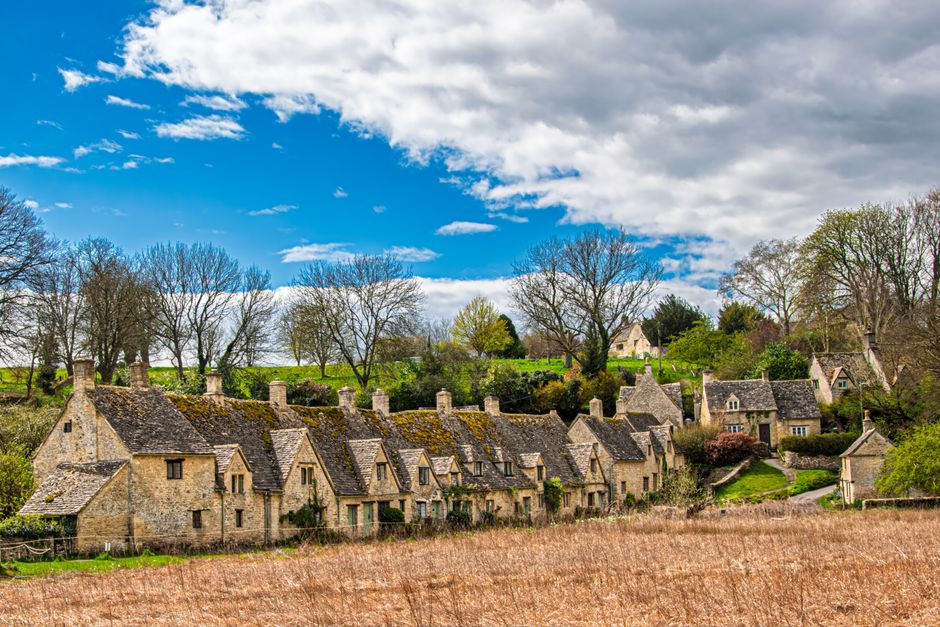
The Cotswolds are the England of storybooks: a long stretch of rolling limestone hills west of Oxford, dotted with villages of honey-coloured stone cottages, wool churches, market squares, thatched and stone-tiled roofs, trout streams and country pubs. Grown rich on the medieval wool trade and then left behind by industry, the villages have hardly changed in centuries. You come to wander Bourton-on-the-Water, Bibury, Castle Combe and Chipping Campden, walk between villages on field paths and the Cotswold Way, visit Blenheim Palace, eat a long Sunday lunch by a pub fire and stay in a stone inn. It is about an hour and a half from London by train or car. Give it two or three days for the famous villages, or a week to walk and slow down.
Right now in Cotswolds (Bourton-on-the-Water)
- Wed8–14°C46–57°F10 mm rain
- Thu6–13°C44–55°FPartly cloudy
- Fri10–16°C49–60°F3 mm rain
Top tours in Cotswolds
See all tours for Cotswolds →
From local operators, with prices and reviews; you check availability and book on Viator, our partner. We may earn a commission at no extra cost to you. How we earn money
The Cotswolds at a glance
- Best for: chocolate-box villages, country walks, stately homes and gardens, pub lunches, antiques and markets, romantic weekends and slow touring.
- How long: 1 day from London or Oxford for two or three villages; 3 days for the north Cotswolds and Blenheim; a week to walk part of the Cotswold Way.
- Best time: May to September for gardens, long days and lavender in July; spring and autumn weekdays are quieter; winter is cosy but short on daylight.
- Getting in: trains from London Paddington reach Moreton-in-Marsh in about 1 hour 30 minutes, via Oxford; Kemble (for Cirencester) and Cheltenham serve the south and west.
- Getting around: a car is easiest, but trains, the Pulhams 801 bus and footpaths link the best-known northern villages. As of October 2026, a Palace, Park and Gardens ticket for Blenheim Palace cost £41 online for an adult.
- Before you go: entry rules, money and general safety are in our United Kingdom travel guide.
The Cotswolds, area by area
The Cotswolds National Landscape (the new name for an Area of Outstanding Natural Beauty) covers nearly 800 square miles across Gloucestershire, Oxfordshire, Wiltshire, Warwickshire, Worcestershire and Somerset, from near Stratford-upon-Avon in the north to Bath in the south. There is no single centre: most visitors focus on the north Cotswolds, around Stow-on-the-Wold, Bourton-on-the-Water and Chipping Campden, where the most famous villages sit close together.
The north Cotswolds
Chipping Campden, Broadway, Stow-on-the-Wold, Moreton-in-Marsh, Bourton-on-the-Water and the Slaughters lie within a few miles of one another, with stately homes and gardens such as Hidcote and Snowshill nearby. This is the classic Cotswolds, with the most hotels and the best public transport. Best for: first visits and travellers without a car.
The south and central Cotswolds
Cirencester, the old Roman town of Corinium and the “capital of the Cotswolds”, Bibury, Tetbury, Painswick and the steep wooded valleys around Stroud are quieter and greener, with fewer coach tours. Best for: walkers, gardens and repeat visitors.
The Oxfordshire Cotswolds
Burford, with its sloping high street, Woodstock and Blenheim Palace, and the Evenlode valley villages around Charlbury and Kingham are the closest part of the Cotswolds to Oxford and London, linked by the Cotswold Line railway. Best for: short breaks and day trips from Oxford.
The southern edge: Castle Combe and Bath
In Wiltshire, Castle Combe sits in a wooded valley at the southern end of the hills, and the Cotswold Way ends in the Georgian city of Bath. Best for: combining the villages with a city break; see our Bath guide.
The best Cotswold villages and towns
Prices and hours below were checked on the official sites in October 2026. They change, so check before you go.
Bourton-on-the-Water
The “Venice of the Cotswolds” has the River Windrush running through its green, crossed by five low stone footbridges, with paddling children in summer, tea rooms, a model village of the village itself, a motor museum and Birdland wildlife park. It is the busiest village in the Cotswolds: come early, late or out of season. A short footpath leads to Lower Slaughter, with its watermill, and on to Upper Slaughter, two of the most peaceful villages in the hills.
Bibury
William Morris called Bibury the most beautiful village in England. Its famous view is Arlington Row, a terrace of 17th-century weavers’ cottages owned by the National Trust, beside a water meadow and the little River Coln. The cottages are private homes, and the lane to them is closed to traffic, so walk from the main road, keep voices down and do not go into gardens or doorways. Parking is limited to the roadside and fills fast; go early in the morning.
Castle Combe
In a steep wooded valley in Wiltshire, Castle Combe is a single street of stone cottages around a market cross and an old bridge over the By Brook, so unchanged that it has been used in many films. Cars cannot park in the village: use the visitor car park at the top of the hill, about a 10-minute walk away (downhill on the way in, uphill on the way back). It is quiet and lovely early in the morning and on weekdays.
Stow-on-the-Wold
At about 240 metres, Stow is the highest town in the Cotswolds, built around a large market square once used for sheep fairs. It has antique shops, old coaching inns and St Edward’s Church, whose north door is framed by two ancient yew trees, often compared to the doors of Moria in The Lord of the Rings. It makes a good base, with buses to Bourton and Moreton.
Chipping Campden
Many people think Chipping Campden has the finest high street in England: a gently curving line of golden stone houses built by wealthy wool merchants, the arched Market Hall of 1627 and the great wool church of St James. It is also the start of the Cotswold Way. Hidcote, an Arts and Crafts garden of outdoor “rooms”, is nearby.
Broadway and Broadway Tower
Broadway, just over the border in Worcestershire, has a wide grass-edged high street of honey-coloured houses, art galleries and smart hotels. Above it, Broadway Tower, an 18th-century folly on a ridge more than 300 metres high, has views across many counties on a clear day; the Cotswold Way passes right by it.
More villages and towns
Burford’s high street runs steeply down to a medieval bridge; Painswick, the “Queen of the Cotswolds”, has a churchyard of clipped yews and a Rococo garden; Tetbury is known for antiques; Cirencester has a market, a vast parish church and the Corinium Museum of Roman finds; Snowshill has a manor and, in summer, purple lavender fields nearby. See our sightseeing ideas.
Peaks and mountains
- Cleeve Hill
Palaces
- Sudeley Castle
Museums
- Hailes Abbey
Parks and gardens
- Dyrham Park
- Westonbirt Arboretum
Other sights
- Broadway Tower
Archaeological sites
- Rollright Stones
Blenheim Palace
Blenheim Palace, at Woodstock on the eastern edge of the Cotswolds, is one of the grandest houses in England: a baroque palace built for the Duke of Marlborough after his victory at Blenheim in 1704, the birthplace of Winston Churchill in 1874, and a UNESCO World Heritage Site, set in a vast park landscaped by Capability Brown, with a lake, the Grand Bridge and formal gardens.
Tickets. As of October 2026, a Palace, Park and Gardens day ticket cost £41 for an adult online (£44 on site), £24 for a child (£27) and £110 for a family (£116). A Park and Gardens ticket without the palace cost £31 for adults online (£34), £15 for children and £85 for a family. A ticket that adds the adventure play area cost £51 for adults online. Blenheim treats tickets as donations to its heritage foundation and converts them into 12-month passes at no extra cost, so you can come back free for a year; buy online to save £3 per adult. The site opens from 10:00 to 17:30, and parking is free. Special events, such as the Christmas light trail, are ticketed separately.
Getting there. From Oxford, about 8 miles away, local buses run to Woodstock, stopping by the palace gates. Hanborough station, on the Cotswold Line from London and Oxford, is about 2 miles away. Allow at least half a day; a full day lets you walk the park to the Column of Victory and around the lake.
Walking the Cotswold Way
The Cotswold Way is a 102-mile (164 km) National Trail from Chipping Campden to Bath, following the edge of the Cotswold escarpment with huge views west over the Severn Vale towards Wales. Most walkers take seven or eight days, staying in villages and inns, with luggage-transfer companies to carry bags; it is waymarked with the acorn symbol of England’s National Trails. Highlights include Broadway Tower, the ruins of Hailes Abbey, Cleeve Hill (the highest point), the Devil’s Chimney at Leckhampton Hill, Painswick at the halfway point, Cooper’s Hill of cheese-rolling fame, the Tyndale Monument, and the finish at Bath Abbey.
You do not need to walk it all. Good day walks include Chipping Campden to Broadway (about 6 miles), the circuit from Winchcombe to Hailes Abbey, and the short climb to Broadway Tower. Paths cross farmland with sheep and cattle: close gates, keep dogs on leads and wear boots, as the clay can be very muddy after rain. See our hiking guide.
Things to do in the Cotswolds
Walk between villages
Some of the best walks link famous villages: Bourton-on-the-Water to Lower and Upper Slaughter (about 3 miles round trip), Stow to the Slaughters, and the riverside path in Bibury. Many pubs welcome muddy boots and dogs.
Visit gardens and stately homes
Hidcote, Snowshill Manor, Sudeley Castle near Winchcombe (where Katherine Parr is buried), Chastleton House and the Painswick Rococo Garden are all close to the main villages; most open from spring to autumn. Check opening days before you go, as many close one or two days a week.
Cycle the quiet lanes
Back lanes between the villages are quiet but hilly; e-bikes from hire shops in Bourton, Moreton and Chipping Campden make the climbs easy. See our cycling guide.
Eat and drink like a local
Book Sunday lunch at a village pub, try Double Gloucester and other local cheeses, Cotswold lamb, cream teas, local gin and ales from breweries such as Hook Norton, and browse farm shops for picnic supplies.
Markets and antiques
Stow, Tetbury, Burford and Moreton-in-Marsh (with a big Tuesday market) are the places for antiques, interiors and market stalls.
Activities and best months
- CyclingThe official Cotswolds tourism site lists circular rides from Burford, Cirencester (mainly flat, via the Cotswold Water Park), Winchcombe, Painswick and Nailsworth, the 33-mile Berkeley ride with a steep escarpment climb, the Cotswold Line route from Oxford to Worcester and a 7-day cycle tour.
- HikingThe Cotswold Way National Trail runs 102 miles (164 km) along the Cotswold escarpment from Chipping Campden to Bath, typically over about 10 days, past pastures, beech woods and honey-coloured villages; it is well waymarked but has some steep climbs.
Getting to the Cotswolds
From London by train. Great Western Railway trains from London Paddington run on the Cotswold Line via Oxford, Hanborough (for Blenheim), Charlbury and Kingham to Moreton-in-Marsh, the best station for the northern villages, in about 1 hour 30 minutes, roughly every hour. For the south, trains run from Paddington to Kemble (for Cirencester) and Stroud, and to Cheltenham Spa.
From Oxford. Oxford is the natural gateway: trains reach Moreton-in-Marsh in about 35–40 minutes, and buses run to Burford, Woodstock and Blenheim. Many guided day tours of the Cotswolds start in Oxford or London.
By car. The northern Cotswolds are about two hours from central London via the M40 and A44, and a little less from Oxford. From the M5, Cheltenham and Stroud are the gateways from the west.
By air. London Heathrow is about 1 hour 30 minutes by road from the eastern Cotswolds; Birmingham and Bristol airports also work.
Getting around without a car
You can see the northern Cotswolds well by train, bus and on foot. Base yourself in Moreton-in-Marsh, which has the railway station, or in Stow or Bourton. The Pulhams 801 bus links Chipping Norton, Moreton-in-Marsh, Stow-on-the-Wold, Bourton-on-the-Water and Cheltenham, with buses timed to meet trains at Moreton; on the 2026 timetable it ran about hourly from Monday to Saturday and every two hours on Sundays. Combined rail and bus tickets to Bourton and Stow are available. Other villages, such as Chipping Campden, Broadway and Bibury, have only occasional buses, so use a taxi (book ahead), join a small-group tour, hire an e-bike or walk.
By car. A car gives the most freedom, but village lanes are narrow and parking is limited. Car parks in Bourton, Broadway and Castle Combe fill by late morning on summer weekends; use the official pay-and-display car parks, never park on verges or in front of gates, and carry coins or a parking app.
When to go and how long to stay
The Cotswolds have a mild, fairly dry climate for England: warm summers, cool, grey winters with frosts and occasional snow on the hills. The table uses the WMO 1991–2020 normals for Brize Norton (82 m), on the eastern edge of the Cotswolds near Burford.
| Season | Average high / low | Rainy days per month | What it’s like |
|---|---|---|---|
| Spring (Mar–May) | 11–17 °C / 3–8 °C | about 9–10 | Lambs, bluebell woods in late April and May, gardens opening, quiet weekdays |
| Summer (Jun–Aug) | 20–23 °C / 11–13 °C | 8–10 | Warmest and sunniest, lavender in July, busiest villages, book pubs and hotels ahead |
| Autumn (Sep–Nov) | 19 °C falling to 11 °C / 10 °C falling to 4 °C | 9–13 | Golden stone in low sun, autumn colour, muddy paths from October |
| Winter (Dec–Feb) | 8 °C / about 2 °C | 10–12 | Frosty mornings, log fires in the pubs, Christmas markets and light trails, some gardens closed |
Brize Norton records about 710 mm of rain a year and about 1,650 hours of sunshine, with May to August the sunniest months. Late spring and September are the sweet spot; in July and August, see the famous villages early in the morning or in the evening.
The Cotswolds in 1 day
From London or Oxford, take the train to Moreton-in-Marsh and the 801 bus to Stow-on-the-Wold and Bourton-on-the-Water, walking to Lower Slaughter between buses. By car, add Chipping Campden or Bibury.
The Cotswolds in 3 days
Day 1: Blenheim Palace and Woodstock, then Burford. Day 2: Stow, the Slaughters and Bourton-on-the-Water. Day 3: Chipping Campden, the walk to Broadway Tower, Broadway and Snowshill, or Bibury and Cirencester, ending in Castle Combe on the way to Bath.
Weather month by month
Where to stay in the Cotswolds
- Moreton-in-Marsh: the station town, practical for travellers without a car, with buses to Stow and Bourton.
- Stow-on-the-Wold: central, with coaching inns and good access to the northern villages.
- Chipping Campden and Broadway: beautiful and upmarket, perfect for walkers on the Cotswold Way.
- Bourton-on-the-Water: lively and family-friendly, quiet once the day visitors leave.
- Burford and Woodstock: handy for Oxford and Blenheim.
- Cirencester and Tetbury: good bases for the southern Cotswolds, Bibury and Castle Combe.
Pub rooms and country house hotels book up months ahead for summer weekends; many ask for two-night minimum stays.
Practical tips for the Cotswolds
- Go early or late: Bourton, Bibury and Castle Combe are at their best before 10:00 and after 17:00.
- Respect the villages: people live in the famous cottages; do not block doors, lanes or gates for photos.
- Book Sunday lunch: popular pubs fill days ahead, and many stop serving food in mid-afternoon.
- Check bus times: rural buses are infrequent, and Sunday services are thin.
- Wear boots: footpaths cross fields and get very muddy after rain.
- Follow the Countryside Code: leave gates as you find them, keep dogs under control near livestock and take litter home.
What to pack for the Cotswolds
Walking boots or waterproof shoes for muddy paths, a waterproof jacket and umbrella, warm layers for cool evenings, a small rucksack and water bottle for village walks, sunscreen and a hat in summer, and a smart-casual outfit for dinner in a country inn.
What to pack
- Day packs and anti-theft bagsA 20–30 litre pack carries layers, water, a head torch and snacks on full-day levada walks.
- Fleeces and warm layersSummits like Pico do Areeiro averaged about 11 °C over 2024, so a fleece is needed even in summer.
- HeadlampsLevada routes such as PR1 and PR9 pass through long, dark, wet tunnels.
- Hiking shoes and bootsMadeira's levadas and the Azores' crater rims are wet, rocky and slippery, so grippy shoes matter more than anywhere else in Portugal.
- Rain jacketsA packable shell covers showers and wind on coastal routes outside summer.
- Trekking polesLong stone staircases and steep descents on Madeira's peaks and the Azores' crater rims are easier on the knees with poles.
- Water bottles and hydration packsRiding in the Algarve and Alentejo heat needs more water than you expect.
Cotswolds travel FAQ
What are the prettiest villages in the Cotswolds?
The most famous are Bourton-on-the-Water, Bibury, Castle Combe, Lower and Upper Slaughter, Chipping Campden, Broadway, Stow-on-the-Wold and Burford. Painswick and Snowshill are quieter favourites.
Can you visit the Cotswolds without a car?
Yes. Take the train from London or Oxford to Moreton-in-Marsh, then the Pulhams 801 bus to Stow-on-the-Wold and Bourton-on-the-Water, and walk to the Slaughters. For Bibury, Castle Combe and Broadway, use a taxi, a tour or an e-bike.
How do I get from London to the Cotswolds?
By Great Western Railway train from London Paddington to Moreton-in-Marsh, in about 1 hour 30 minutes, or to Kemble or Cheltenham for the south. By car it takes about two hours.
Can you do the Cotswolds as a day trip from London?
Yes, by train to Moreton-in-Marsh and the bus to Stow and Bourton, or on a guided day tour. You will see two or three villages; stay at least one night to enjoy them without the crowds.
How much are Blenheim Palace tickets?
As of October 2026, a Palace, Park and Gardens ticket cost £41 for adults online and £44 on site; Park and Gardens only cost £31 online. Tickets convert into a free 12-month pass.
How far is Blenheim Palace from Oxford?
About 8 miles, at Woodstock. Local buses run from Oxford to the palace gates, and Hanborough station is about 2 miles away.
How long is the Cotswold Way?
It is 102 miles (164 km) from Chipping Campden to Bath. Most people walk it in seven or eight days; there are many shorter day walks along it.
Where is the best place to stay in the Cotswolds?
Stow-on-the-Wold or Moreton-in-Marsh for the northern villages and public transport, Chipping Campden or Broadway for walkers, and Cirencester or Tetbury for the south.
How many days do you need in the Cotswolds?
One day gives a taste of two or three villages; three days covers the north Cotswolds and Blenheim; a week lets you walk part of the Cotswold Way.
Where do you park in Castle Combe?
At the visitor car park at the top of the village, about a 10-minute walk from the street. Cars cannot park in the village itself.
When is the best time to visit the Cotswolds?
May, June and September for gardens, long days and fewer crowds, or July for the lavender. Visit the famous villages early in the morning in summer.
Is Bourton-on-the-Water worth visiting?
Yes, for its river and stone bridges, but it is very busy at midday in summer. Go early, combine it with the walk to Lower Slaughter, or stay overnight.
Nearby destinations
- Stratford-upon-Avon49 km
- Bath52 km
- Oxford54 km
- Birmingham76 km
- Cardiff87 km
- London135 km
- Jurassic Coast139 km
- Cambridge154 km
Plan your trip
Partner links: TravelerCenter may earn a commission if you book, at no extra cost to you.
Sources · last reviewed 4 October 2026
Researched and last reviewed on 4 October 2026. Landscape: Cotswolds National Landscape; Blenheim Palace prices and hours: Blenheim Palace; Cotswold Way: National Trails; trains and buses: Cotswolds tourism (cotswolds.com), Great Western Railway and Pulhams Coaches; climate: Met Office normals for Brize Norton from the WMO 1991–2020 climate normals collection. Prices, timetables and rules change, so check the official links before you go. For entry rules, money and general safety, see our United Kingdom travel guide; for nearby cities, our guides to Oxford, Bath and London.
Also: cotswolds.com · nationaltrail.co.uk · Met Office normals 1991–2020, Brize Norton (Oxfordshire) (climate)
Data: Weather: MET Norway (CC BY 4.0) · Air quality: OpenAQ · Rates: ECB · Costs: World Bank ICP and price levels · © OpenStreetMap contributors (ODBL) · Wikidata (CC0)