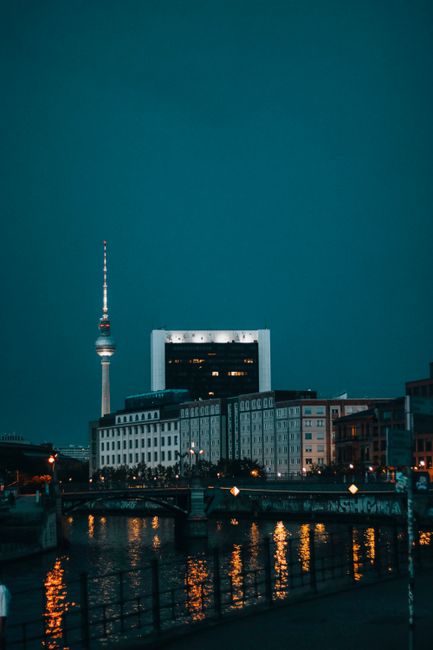
Berlin is a city where history is never far away, and one of Europe’s best places for city sightseeing. In one day you can walk through the Brandenburg Gate, climb the glass dome of the Reichstag, stand where the Wall divided the city for 28 years and see the bust of Nefertiti on Museum Island, then spend the evening in a Kreuzberg beer garden or a Friedrichshain club that doesn’t close until Monday. It is green, spread out and surprisingly relaxed, with lakes for swimming in summer and Christmas markets in winter. Give it four days for the highlights, five or six to add Potsdam or the lakes, and a week to settle into the neighbourhoods.
Right now in Berlin
- Wed 10–21°C 50–69°F Mostly clear
- Thu 12–17°C 53–63°F 4 mm Light rain
- Fri 9–14°C 47–58°F 1 mm Cloudy
Weather: MET Norway (CC BY 4.0) · Air quality: OpenAQ · Rates: ECB
Top tours in Berlin
See all tours for Berlin →
From local operators, with prices and reviews; you check availability and book on Viator, our partner. We may earn a commission at no extra cost to you. How we earn money
Berlin at a glance
- Best for: 20th-century history and the Cold War, museums, contemporary art, nightlife, street food, parks and lakes.
- How long: 4 days for the main sights, 5–6 with Potsdam or Sachsenhausen, 7 at a relaxed pace.
- Best time: May, June and September. Summer is lively and warm; late November to December brings the Christmas markets; January to March is grey and cold.
- Getting in: the FEX Airport Express or S-Bahn from BER airport to the centre in about 30 minutes, on an ABC ticket costing €5.00 (as of October 2026).
- Book ahead: the free Reichstag dome visit needs advance registration, and the dome is closed from 19 to 30 October 2026 for maintenance.
- Before you go: the Deutschlandticket, money, Sunday closing and entry rules are on our Germany travel guide.
Berlin’s neighbourhoods and who each one suits
Berlin is huge, about 890 km² and home to roughly 3.7 million people, and it has no single centre: it grew from two old towns and dozens of villages, and was split in two from 1961 to 1989. Most sights lie in the districts of Mitte (east and centre) and Charlottenburg (west), inside the S-Bahn ring line, which is also the edge of the city’s environmental zone and of fare zone A.
Mitte
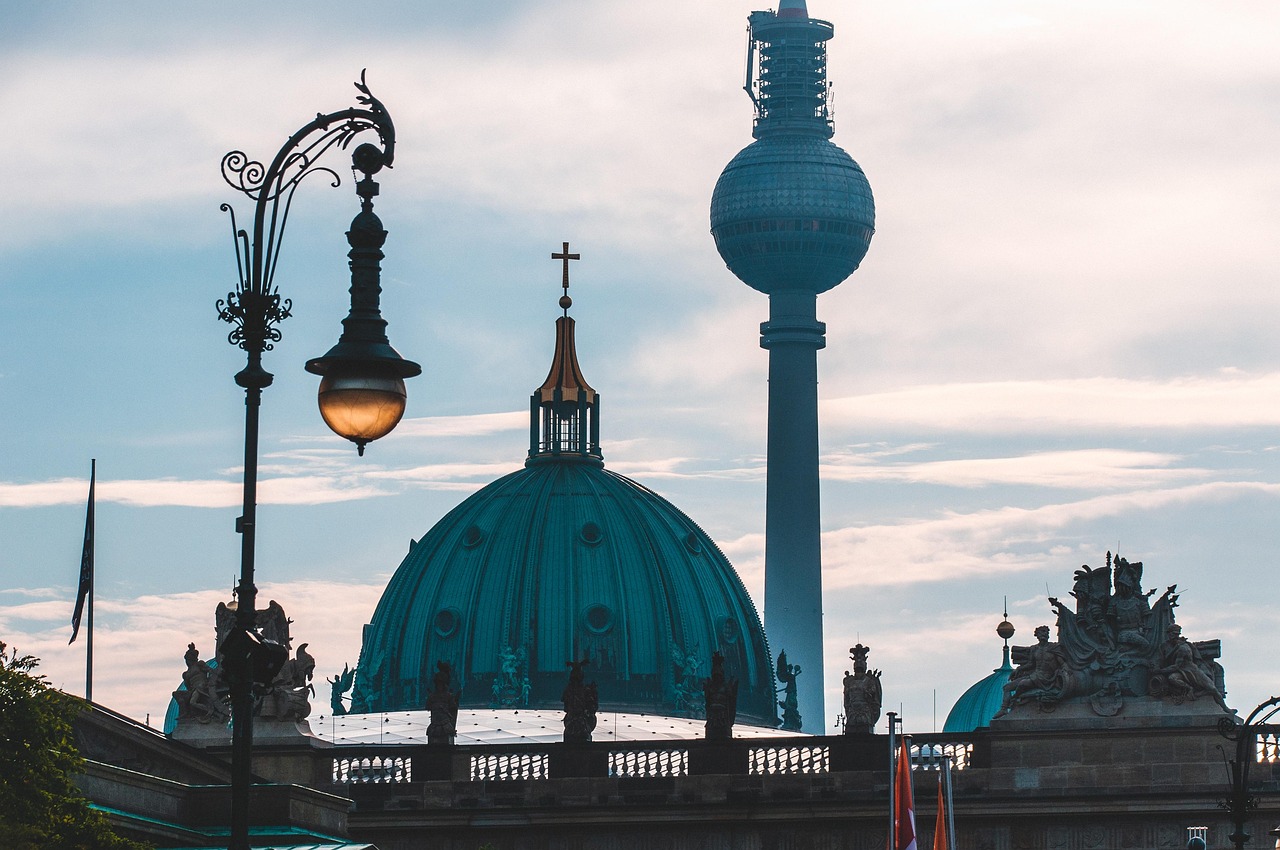
Historic Berlin: the Brandenburg Gate, Pariser Platz, the Reichstag and the government quarter, the boulevard Unter den Linden, Museum Island, the Berlin Cathedral, Gendarmenmarkt and the TV Tower at Alexanderplatz. North of the river, the Scheunenviertel and Hackescher Markt have galleries, courtyards and restaurants. Central and walkable, ideal for a first visit, but busy and quieter at night around the government buildings.
Prenzlauer Berg
Leafy streets of restored 19th-century apartment blocks, cafés, playgrounds and boutiques, with the Mauerpark flea market and karaoke on Sundays and the Kulturbrauerei. Calm, pretty and family-friendly, a short tram ride from Mitte.
Kreuzberg and Neukölln
Multicultural, creative and loud: Turkish markets on the Landwehr Canal, döner and street food, bars and clubs, the Jewish Museum and Checkpoint Charlie on the edge. Neukölln, further south, is younger and grittier, with Tempelhofer Feld, the old airport turned giant park, where you can cycle down the runways. Great for food and nightlife; not for light sleepers.
Friedrichshain
Former East Berlin, now the heart of the club scene, with the East Side Gallery, the longest surviving stretch of the Wall, along the Spree, the Oberbaum Bridge to Kreuzberg, and the Stalin-era boulevard Karl-Marx-Allee. Good-value hotels and hostels; lively at weekends.
Charlottenburg and Schöneberg
Elegant West Berlin: Charlottenburg Palace, the shopping street Kurfürstendamm and the KaDeWe department store, the ruined Kaiser Wilhelm Memorial Church and the Zoo. Schöneberg, to the south-east, has been the centre of gay Berlin for a century, with a Saturday market on Winterfeldtplatz. Quieter, grown-up and well connected.
Top things to see in Berlin
Prices and hours were checked on the official sites in October 2026; check again before you go. Many of Berlin’s most important memorials are free.
The Reichstag dome: free, but book ahead
The Reichstag building, seat of the German parliament (the Bundestag), is crowned by Norman Foster’s glass dome, with a spiral ramp that circles up above the debating chamber and gives a 360° view over the city. A visit to the dome and roof terrace is free, but only with advance registration on the Bundestag’s website (bundestag.de), where you choose a date and time slot and give the names of everyone in your group; registration by phone is not possible. Book a few weeks ahead for summer weekends. As of October 2026:
- Hours: open daily, with admissions every quarter of an hour and last admission at 21:45. Sunset and evening slots are the most popular.
- Closures: the dome is closed from 19 to 30 October 2026 for cleaning and maintenance (the roof terrace stays open), all day on 24 December and from 16:00 on 31 December. It can also close at short notice for parliamentary events or bad weather.
- On the day: arrive at the visitor entrance at least 15 minutes early with photo ID (passport or national ID card) for everyone aged 16 and over, and expect an airport-style security check. A free audio guide in 12 languages is available.
- No booking? The Bundestag’s visitor service centre near the Reichstag takes same-day registrations for later slots if any are left (open 08:00–20:00 from April to October and 08:00–18:00 from November to March, 10:00–18:00 at weekends), but don’t count on it in summer. Booking a table at the rooftop restaurant also gets you in.
Brandenburg Gate and the Holocaust Memorial
The Brandenburg Gate, built in 1791, stood in no man’s land behind the Wall for nearly three decades; today it is the symbol of reunified Germany and free to walk through at any hour (it is most magical at night, or early in the morning before the crowds). Two minutes south, the Memorial to the Murdered Jews of Europe is a field of 2,711 concrete slabs of different heights that you walk between, free and always open; the underground information centre tells the stories of individual victims. Nearby are memorials to the Sinti and Roma and to gay men and women persecuted under the Nazis, and the site of Hitler’s bunker, marked only by a sign in a car park.
Museum Island and the Pergamon closure
Museum Island (Museumsinsel), on the Spree in Mitte, is a UNESCO World Heritage Site of five great museums run by the Berlin State Museums: the Neues Museum, with the bust of Nefertiti and Egyptian treasures; the Altes Museum, with Greek and Roman art; the Alte Nationalgalerie, with 19th-century painting; the Bode-Museum, with sculpture and coins; and the Pergamonmuseum. The James-Simon-Galerie is the modern entrance building.
- The Pergamonmuseum is closed for a major renovation and is due to reopen on 4 July 2027, according to the museums. Until then, a selection of its masterpieces and a 360° panorama of the ancient city of Pergamon are on show in the separate exhibition hall “Pergamonmuseum. Das Panorama”, opposite the island.
- Museum Island ticket: as of October 2026, the Museumsinsel-Ticket costs €24 (€12 reduced) for one day and covers all the exhibitions on the island, including the Panorama. Everyone under 18 gets in free. Book a time slot online for the Neues Museum, the busiest, especially at weekends.
- Museum Pass Berlin: €32 (€16 reduced) for three consecutive days at more than 30 museums, including Museum Island, the Gemäldegalerie and the Neue Nationalgalerie; it is now digital only. It pays off if you visit at least three paid museums.
- Opening days: they vary by museum, and several Berlin State Museums close on Mondays, so check the individual museum’s page before you go.
The Berlin Wall
Little of the 155 km Wall survives, but where it does, it is powerful. The Berlin Wall Memorial on Bernauer Straße is the best place to understand it: an outdoor exhibition along a preserved section of the border strip, with a watchtower, escape tunnels and the windows of houses that people jumped from; it is free, and a viewing platform shows the “death strip” from above. The East Side Gallery in Friedrichshain is a 1.3 km stretch covered in murals painted in 1990, including the famous socialist “fraternal kiss”. At Checkpoint Charlie, the old Allied crossing point, a replica guard hut draws crowds, but the nearby museums and the open-air panels tell the story better. A line of cobblestones marks the Wall’s route across the city centre; following it by bike on the Berlin Wall Trail is a great way to spend a day.
More classic sights
- Berlin Cathedral (Berliner Dom): the domed Protestant cathedral next to Museum Island, with a climb to the dome gallery and royal tombs in the crypt (paid entry).
- TV Tower (Fernsehturm): at 368 m the tallest structure in Germany, with a viewing deck and revolving restaurant at about 200 m; book a timed ticket to skip the queue.
- Topography of Terror: a free documentation centre on the site of the Gestapo and SS headquarters, next to a surviving section of the Wall.
- Jewish Museum Berlin: Daniel Libeskind’s zigzag building tells 1,700 years of Jewish life in Germany.
- Charlottenburg Palace and Gendarmenmarkt: the Prussian royal summer palace and its gardens in the west, and what many call Berlin’s most beautiful square, with its twin churches and concert hall.
- Kulturforum: the Gemäldegalerie (old masters from Dürer to Rembrandt) and Mies van der Rohe’s Neue Nationalgalerie for modern art; a Kulturforum day ticket costs €22.
Monuments
- Brandenburg Gate
- East Side Gallery
Other sights
- Checkpoint Charlie
- Fernsehturm Berlin
- Reichstag
Museums
- Museum Island
Churches and cathedrals
- Berlin Cathedral
Activities and best months
- Boat tripsBerlin boat tours run on the Spree and the Landwehr Canal past Museum Island, the Nikolai Quarter, the government district and the Victory Column, from about one hour (around 19-23.50 euros) to all-day trips out to the Havel lakes, Potsdam and the Muggelsee. Boats leave from Friedrichstrasse, Hackescher Markt, the East Side Gallery, Charlottenburg and Wannsee, and operators such as Reederei Winkler and Stern und Kreisschiffahrt sail year-round, with Christmas and summer sundowner cruises. · source
- City sightseeingvisitBerlin's top sights are the Brandenburg Gate, symbol of German reunification, the Reichstag parliament building, the TV Tower with its views, the remains of the Berlin Wall and Museum Island, a UNESCO World Heritage Site. It suggests seeing the city by bus, bike, boat or on foot, and the Berlin WelcomeCard gives up to 50% off attractions. · source
- CyclingThe Berlin Wall Trail circles former West Berlin for 160 km, about 50 km of it inside the city, on the mostly asphalted old border patrol path; visitBerlin says it needs no special skills or fitness. It passes the East Side Gallery, Checkpoint Charlie, Potsdamer Platz, the Bernauer Strasse memorial, Glienicke Bridge and old GDR watchtowers, with forest and waterside stretches along the Spree, Teltow Canal and Havel. · source
Other things to do in Berlin
Nightlife, music and culture
Berlin’s techno clubs are legendary, and many run from Friday night to Monday morning. Door policies are strict and unpredictable: dress down in black, go in small groups, speak quietly in the queue and don’t take photos inside (cameras are taped over at the door). If clubbing isn’t your thing, there are three opera houses, the Berlin Philharmonic, cabaret and variety shows, jazz bars and hundreds of small galleries. Berlin’s Christopher Street Day (Pride) in July is one of Europe’s biggest.
Food, markets and beer gardens
Eat currywurst from a stand under the elevated U-Bahn, a döner kebab (Berlin claims to have invented the modern version), Vietnamese food, and anything from the street-food halls of Markthalle Neun in Kreuzberg (Thursday evening is street-food night). Saturday markets on Kollwitzplatz and Winterfeldtplatz and the Sunday flea market in Mauerpark are good for browsing. In summer, head to a beer garden such as Prater in Prenzlauer Berg, the Café am Neuen See in the Tiergarten, or a riverside beach bar on the Spree. Late-night kiosks (Spätis) sell cold beer to drink on the street, which is legal and a Berlin institution.
Parks, lakes and the river
A third of Berlin is parks, forest or water. Walk or cycle through the Tiergarten, fly a kite on the runways of Tempelhofer Feld, and in summer swim at the Wannsee lido or at one of the lakes in the Grunewald forest and the east, such as the Müggelsee, all reachable by S-Bahn. Spree river boat trips of one to three hours leave from near the Berlin Cathedral and the Reichstag, and bike hire makes Berlin, which is flat and full of bike lanes, perfect for cycling.
Day trips from Berlin
Regional trains reach the best day trips in under an hour, and all are covered by the Deutschlandticket; Potsdam is also inside the ABC fare zone.
Potsdam
The capital of the state of Brandenburg, about 25 minutes from Berlin’s main station by regional train or 40 minutes by S-Bahn, is a UNESCO World Heritage Site of royal palaces and parks: Frederick the Great’s rococo Sanssouci Palace and its terraced vineyard, the New Palace, the Dutch Quarter and the Cecilienhof, where Truman, Churchill (then Attlee) and Stalin met for the Potsdam Conference in 1945. Book Sanssouci’s timed tickets ahead in summer.
Sachsenhausen Memorial
The former concentration camp at Oranienburg, north of Berlin, is a moving memorial and museum, free to enter. Take the S1 or a regional train to Oranienburg (zone C) and walk about 20 minutes or take a local bus; allow at least half a day.
Dresden, the Spreewald and Hamburg
Dresden, with its rebuilt Frauenkirche and the Zwinger, is about two hours by train and worth an overnight stay. The Spreewald, a UNESCO biosphere reserve of canals punted through by flat boats, famous for its pickled gherkins, is about an hour south by regional train. Hamburg is under two hours away by ICE now that the Hamburg–Berlin line has reopened after its 2025–2026 renewal.
Nearby destinations
- Leipzig148 km
- Dresden165 km
- Saxon Switzerland189 km
- Bohemian Switzerland196 km
- Rügen215 km
- Kołobrzeg235 km
- Hamburg254 km
- Karlovy Vary257 km
Getting there and getting around
From BER airport
Berlin Brandenburg Airport Willy Brandt (BER) is Berlin’s only airport, about 25 km south-east of the centre and just outside the city limits, in fare zone C. You need an ABC ticket: as of October 2026 a single ABC ticket costs €5.00 and a 24-hour ABC ticket €12.90. Buy it from the machines in the airport station (you can’t buy tickets on the train) or in the BVG or DB Navigator app. The Deutschlandticket is valid on all of these routes.
- FEX Airport Express: the fastest option, a regional train to Südkreuz, Potsdamer Platz, Hauptbahnhof (Berlin’s main station) and Gesundbrunnen, about 30 minutes to the main station. Other regional trains (RE8, RB23) use the same tracks.
- S-Bahn S9 and S85: slower but frequent, about every 10 minutes between them; the S9 runs to Ostkreuz, Alexanderplatz, Friedrichstraße and the Zoo.
- Express bus X7: to U-Bahn Rudow, for the U7 line into Neukölln and Kreuzberg.
- Taxi: about 40–60 minutes to the centre and typically €50–70.
By train
Berlin Hauptbahnhof, a glass cathedral of a station near the Reichstag, is the hub for ICE trains to Hamburg (about 1 hour 45 minutes to 2 hours), Munich (about 4 hours), Dresden, Leipzig, Frankfurt and Cologne, and for trains to Prague, Warsaw, Amsterdam and Copenhagen, and night trains to Vienna, Brussels and Paris. Some trains also stop at Südkreuz, Gesundbrunnen, Spandau or Ostbahnhof, which may be closer to your hotel. Long-distance coaches use the central bus station (ZOB) in the west.
U-Bahn, S-Bahn, trams and buses
Berlin’s transport network, run by BVG and S-Bahn Berlin, is excellent and runs all night at weekends (U-Bahn lines) and every night (night buses). There are no ticket barriers: buy a ticket and validate it in the small stamping machines on the platform before you board (tickets bought in the app are already valid), as inspectors are frequent and the fine is €60. Fare zone A is inside the S-Bahn ring, B runs to the city limits, and C covers BER airport and Potsdam. As of October 2026:
- Single ticket AB: €4.00, valid for two hours in one direction with changes; a short-trip ticket (Kurzstrecke, three train or six bus stops) costs €2.80.
- 24-hour ticket: €11.20 for zones AB and €12.90 for ABC; with three or more journeys a day it pays off.
- Berlin WelcomeCard: public transport plus discounts of 25–50% at many sights and tours, for one adult and up to three children aged 6 to 14; the 48-hour version costs €28.50 for zones AB and €34.50 for ABC, including the airport and Potsdam. It is worth it only if you will use several of the discounts; it does not include free museum entry.
- Deutschlandticket: at €63 a month it covers all of Berlin’s transport, the airport and day trips by regional train. For a stay of five days or more, or several day trips, it usually beats day tickets. See our Germany guide for how the monthly subscription works.
Bus 100 and bus 200 run past many of the big sights between Zoo station and Alexanderplatz on a normal ticket, a cheap alternative to a sightseeing bus. Use the BVG or Jelbi app for routes and tickets.
Driving and cycling
Don’t drive in central Berlin unless you must: parking is scarce and paid, and the area inside the S-Bahn ring is an environmental zone where cars need a green Umweltplakette sticker. Cycling is the local way to get around, on a hire bike or one of the app-based bikes parked all over the city; use the bike lanes, follow traffic lights and watch for tram tracks.
When to go and how long to stay
Berlin has a continental-leaning climate: warm summers, cold and often grey winters, and fairly little rain overall, about 570 mm a year. The table uses averages calculated from the German Weather Service’s (DWD) monthly records for 1991–2020 at Berlin-Tempelhof.
| Season | Average high / low | Rain per month | What it’s like | Good for |
|---|---|---|---|---|
| Winter (Dec–Feb) | 4–5 °C / -1 to 0 °C | 36–48 mm | Cold, grey and dark by about 16:00; frost common, some snow | Museums, opera, Christmas markets, New Year’s Eve at the Brandenburg Gate |
| Spring (Mar–May) | 9–20 °C / 1–9 °C | 29–52 mm | Cool March, then blossom and warm, sunny May days | Walking, cycling, parks in blossom, beer gardens opening |
| Summer (Jun–Aug) | 23–25 °C / 13–15 °C | 58–72 mm | Warm, long days with thunderstorms; heatwaves top 30 °C | Lakes, beach bars, open-air cinema, Pride, beer gardens |
| Autumn (Sep–Nov) | 20 °C falling to 8 °C / 11 °C falling to 3 °C | 42–47 mm | Golden September, then cooler and greyer | Sightseeing, Berlin Marathon, Festival of Lights in October |
July is the warmest and wettest month, with average highs around 25 °C and short, heavy downpours. Many older apartments and hotels have no air conditioning, so check if you are visiting in a heatwave.
Events worth planning around
- February: the Berlinale international film festival, with public screenings.
- May and June: the Carnival of Cultures street parade in Kreuzberg at Pentecost; Fête de la Musique, free concerts across the city, on 21 June.
- July and August: Christopher Street Day (Pride) in late July; open-air cinemas and concerts; Long Night of Museums.
- September and October: the Berlin Marathon in late September; the Festival of Lights, when landmarks are lit up with projections, in October; 3 October, the Day of German Unity, with celebrations at the Brandenburg Gate.
- November and December: 9 November marks the fall of the Wall (1989); Christmas markets from late November, including the WeihnachtsZauber on Gendarmenmarkt (small entry fee) and markets at Charlottenburg Palace and around the Kaiser Wilhelm Memorial Church; a huge New Year’s Eve party at the Brandenburg Gate.
How long to stay: 4-, 5- and 7-day plans
4 days: Day 1, the Brandenburg Gate, the Holocaust Memorial, the Topography of Terror and Checkpoint Charlie, then the Reichstag dome at sunset (booked ahead). Day 2, Museum Island and the Berlin Cathedral, Hackescher Markt and the TV Tower. Day 3, the Berlin Wall Memorial on Bernauer Straße, Prenzlauer Berg and the Mauerpark (on Sunday), then the East Side Gallery. Day 4, Kreuzberg and the Jewish Museum, Tempelhofer Feld and dinner in Neukölln.
5–6 days: add Potsdam’s palaces and a day at Charlottenburg Palace and the Kulturforum. 7 days: add Sachsenhausen, a lake day at the Wannsee or the Müggelsee, a Spree boat trip and a night at the opera or the Philharmonie.
Weather month by month
Averages from DWD normals 1991–2020, Berlin-Tempelhof · Last reviewed 4 Oct 2026
Where to stay in Berlin and the city tax
- Mitte: walk to Museum Island, the Brandenburg Gate and Hackescher Markt; best for a first trip.
- Prenzlauer Berg: leafy and calm, with cafés and good tram links; great for families and couples.
- Kreuzberg and Friedrichshain: lively, creative and good value, for food lovers and night owls.
- Charlottenburg: elegant and quiet, near the Ku’damm shops and Zoo station.
- Near Hauptbahnhof: modern chain hotels, handy for trains and the airport express, but little atmosphere.
Berlin hotels are good value for a capital: a central 3- or 4-star double often costs €100–180 a night, more during trade fairs, the marathon and New Year’s Eve. Berlin adds a city tax (Übernachtungsteuer) of 7.5% of the room price (excluding breakfast), for tourists and business travellers alike, as of October 2026. Choose somewhere near a U-Bahn or S-Bahn station; distances are long.
Practical tips for Berlin
- Validate your ticket: paper tickets must be stamped in the platform machines before you ride; the fine is €60.
- Carry cash: many Spätis, bars, clubs and small restaurants are still cash-only.
- Plan around Sundays: shops close, but flea markets, museums and brunch spots are at their best.
- Stay off the bike lanes: the red or marked lanes on pavements are for cyclists, who will ring at you.
- Watch your bag: pickpockets work Alexanderplatz, the busy U-Bahn lines and the Christmas markets.
What to pack for Berlin
Comfortable shoes come first: Berlin’s sights are far apart and you’ll walk many kilometres a day on pavements and cobblestones. Pack layers and a light rain jacket from spring to autumn, swimwear and a towel for the lakes in summer, and from November to March a properly warm coat, hat, gloves and waterproof boots, especially for the Christmas markets. Bring dark, casual clothes if you plan to go clubbing, a passport or ID card for the Reichstag, a little cash, a type F/C plug adapter if you need one, and a phone with the BVG app installed.
What to pack
- City walking shoesLisbon and Porto are steep, with polished limestone cobbles that get slippery, so grippy soles matter.
- Day packs and anti-theft bagsA small zipped or anti-theft bag makes crowded trams and viewpoints less stressful.
- Dry bags and phone pouchesSpray soaks phones and cameras on open boats to the Algarve caves and on whale-watching trips.
- Fleeces and warm layersIt is cooler at sea than on land, especially on morning whale-watching trips.
- Rain jacketsA windproof, waterproof shell keeps you warm on open boats, where wind and spray cool you quickly.
- Reef-friendly sunscreenSun reflects off the water on cruises and cave tours.
- Travel adapters and convertersPortugal uses Type C and F sockets at 230 V, so most visitors from outside Europe need an adapter.
- Water bottles and hydration packsRiding in the Algarve and Alentejo heat needs more water than you expect.
- Water shoesKayak and small-boat trips to the Algarve grottoes land on rock and wet sand.
Berlin travel FAQ
How many days do you need in Berlin?
Four days covers the Brandenburg Gate, the Reichstag, Museum Island, the Wall sites and two or three neighbourhoods. Add a day each for Potsdam and Sachsenhausen; a week lets you enjoy the lakes, markets and nightlife.
What is the best time to visit Berlin?
May, June and September, with average highs of about 20–24 °C and long days. July and August are warmest (about 25 °C) and liveliest; winter is cold and grey, with highs of 4–5 °C, but brings the Christmas markets.
Is the Reichstag dome free?
Yes, but you must register in advance on bundestag.de and bring photo ID. Last admission is at 21:45. The dome is closed from 19 to 30 October 2026 for maintenance, and on 24 December.
Is the Pergamon Museum open?
No. As of October 2026 it is closed for renovation and due to reopen on 4 July 2027. Highlights are on show in the “Pergamonmuseum. Das Panorama” exhibition hall, included in the €24 Museum Island ticket.
How much is the Museum Island ticket?
€24 (€12 reduced) for one day at all the museums on the island, as of October 2026; under-18s are free. The three-day Museum Pass Berlin costs €32 and covers more than 30 museums.
How do I get from BER airport to central Berlin?
Take the FEX Airport Express to Hauptbahnhof in about 30 minutes, or the S9 or S85 S-Bahn. You need an ABC ticket, €5.00 for a single as of October 2026, bought before boarding; the Deutschlandticket is also valid.
Is the Berlin WelcomeCard worth it?
Only if you’ll use several of its discounts. The 48-hour card costs €28.50 (AB) or €34.50 (ABC) and includes transport, but a 24-hour ticket costs €11.20 and museums are not free with it. The Museum Pass Berlin is better for museum lovers.
Which ticket do I need for Berlin’s public transport?
An AB ticket covers the whole city (€4.00 single, €11.20 for 24 hours, as of October 2026); you need ABC for BER airport and Potsdam. Stamp paper tickets before boarding. For longer stays, the €63 monthly Deutschlandticket covers everything.
Where can I see the Berlin Wall?
At the Berlin Wall Memorial on Bernauer Straße, the best place to understand the border strip, and at the East Side Gallery in Friedrichshain, the longest surviving section, covered in murals. Both are free.
Is there a tourist tax in Berlin?
Yes. As of October 2026, Berlin adds a city tax of 7.5% of the room price to hotel and holiday-rental bills.
Are shops open on Sundays in Berlin?
Most are closed, apart from shops in the main stations, petrol stations and the Spätis (late-night kiosks). Museums, cafés, restaurants and flea markets such as Mauerpark are open.
Is Berlin safe for tourists?
Yes, Berlin is generally safe. Watch for pickpockets at Alexanderplatz, on busy trains and at Christmas markets, and take normal care around big stations and some parks late at night.
What are the best day trips from Berlin?
Potsdam’s palaces (25–40 minutes), the Sachsenhausen Memorial, the Spreewald’s canals, and Dresden (about two hours by train). Hamburg is under two hours by ICE.
Sources
- © OpenStreetMap contributors · ODbL · fetched 4 Oct 2026
- Wikidata · CC0 · fetched 4 Oct 2026
Sources and last review
Researched and last reviewed on 4 October 2026. Climate: averages calculated from the German Weather Service’s (DWD) 1991–2020 monthly records for Berlin-Tempelhof; the Reichstag dome: the German Bundestag; Museum Island, the Pergamon closure and tickets: the Berlin State Museums (smb.museum); fares and the WelcomeCard: S-Bahn Berlin, BVG and visitBerlin; BER airport trains: S-Bahn Berlin; the Deutschlandticket: Deutsche Bahn. The Museum Pass price, the 48-hour ABC WelcomeCard price, the city tax rate, taxi fares and some journey times come partly from search summaries or general knowledge and are flagged for checking. Prices, hours and timetables change, so check the official links before you go. For entry rules, money and general safety, see our Germany travel guide.
Plan your trip
Partner links: TravelerCenter may earn a commission if you book, at no extra cost to you.
🇩🇪 Useful German phrases for Berlin
All 38 German phrases: restaurant, hotel, emergencies, romance (printable) →