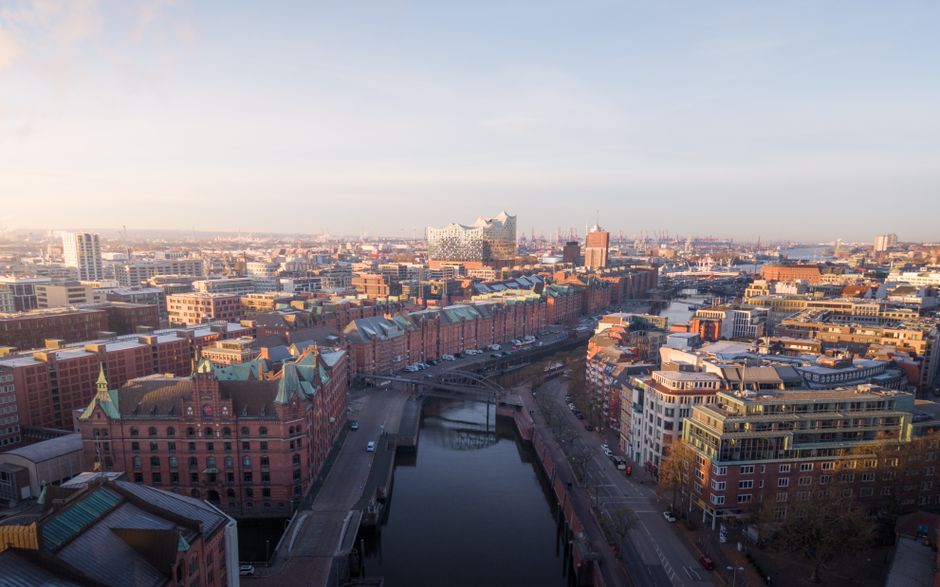
Hamburg is a city made by water: one of Europe’s biggest ports on the river Elbe, two lakes in the middle of town, and canals crossed by more than 2,000 bridges. Ride a harbour ferry past container ships on a normal transport ticket, watch the sunset from the Plaza of the Elbphilharmonie, wander the red-brick warehouses of the Speicherstadt, lose an afternoon in the Miniatur Wunderland model railway, and finish on the Reeperbahn, where the Beatles learned their trade. It is a rich, elegant and down-to-earth city, Germany’s second largest, with a mild, breezy climate. Give it two or three days for the highlights, four or five to add Lübeck or the coast.
Right now in Hamburg
- Wed 15–20°C 59–67°F Partly cloudy
- Thu 12–15°C 53–59°F 11 mm Cloudy
- Fri 11–13°C 51–55°F 3 mm Rain
Weather: MET Norway (CC BY 4.0) · Rates: ECB
Top tours in Hamburg
See all tours for Hamburg →
From local operators, with prices and reviews; you check availability and book on Viator, our partner. We may earn a commission at no extra cost to you. How we earn money
Hamburg at a glance
- Best for: the harbour and boat trips, architecture old and new, concerts and musicals, seafood, nightlife and shopping.
- How long: 2–3 days for the city, 4–5 with Lübeck, Lüneburg or the Baltic coast.
- Best time: May to September, when the waterfront and lakes come alive; December for the Christmas markets.
- Elbphilharmonie Plaza: from 5 October 2026 a Plaza ticket costs €5, whether booked online or picked up on the spot (it used to be free on the day).
- Getting in: the S1 S-Bahn from the airport to the main station in about 25 minutes, on an AB ticket (€4.10 as of October 2026).
- Before you go: the Deutschlandticket, money, Sunday closing and entry rules are on our Germany travel guide.
Hamburg’s neighbourhoods and who each one suits
Hamburg has about 1.9 million people. The centre sits between the Alster lakes to the north and the Elbe harbour to the south; most sights are within a 30-minute walk of the main station, and the harbour ferries, U-Bahn and S-Bahn link the rest.
Altstadt, Neustadt and the Alster
The neo-Renaissance town hall (Rathaus), the shopping arcades and the Jungfernstieg promenade on the Inner Alster, with the bigger Outer Alster beyond for sailing and jogging. St Michael’s Church (“Michel”), the city’s emblem, rises in the Neustadt. Central and elegant, best for a first visit.
Speicherstadt and HafenCity
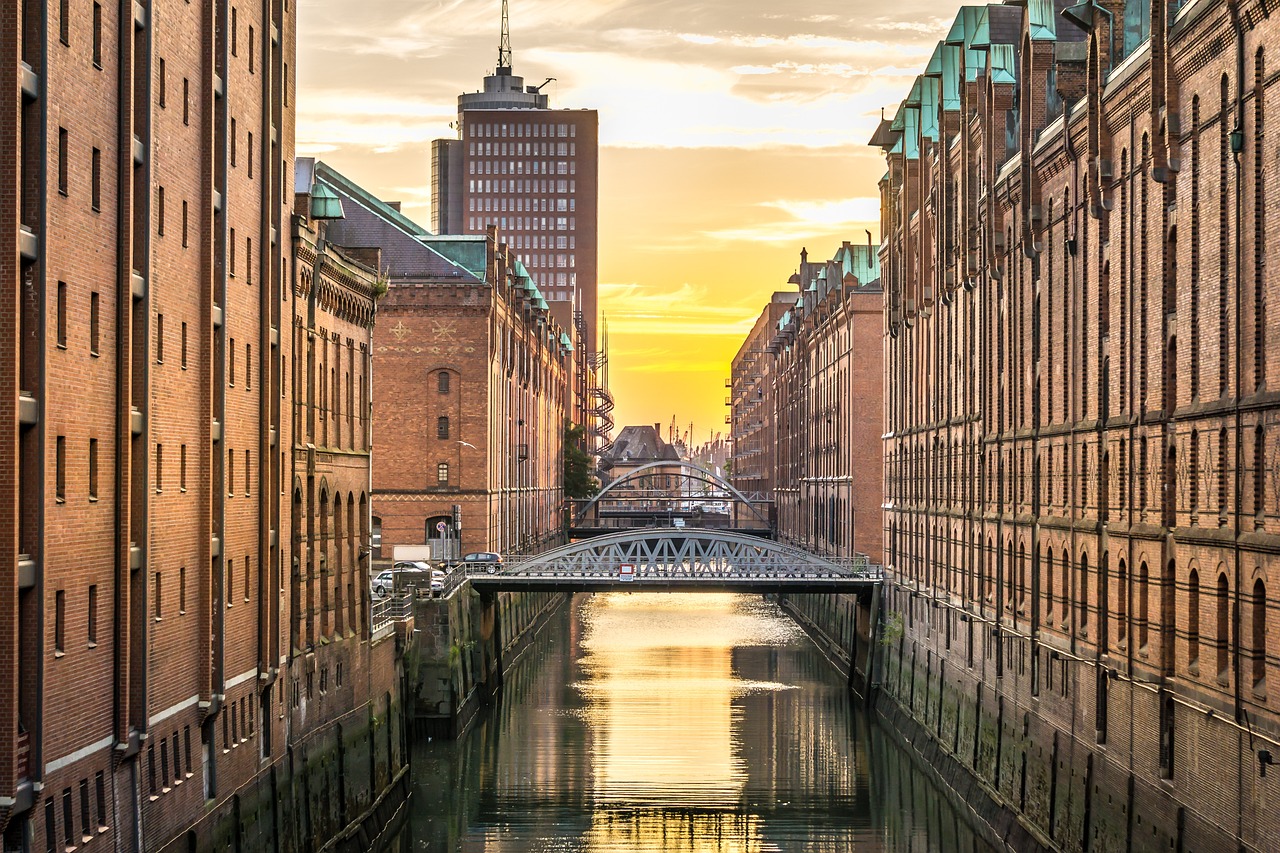
The Speicherstadt, the world’s largest warehouse district, built on oak piles in the canals from 1883, is a UNESCO World Heritage Site together with the neighbouring Kontorhaus district of 1920s office buildings, including the ship-shaped Chilehaus. Next to it, HafenCity is a modern quarter on the water, anchored by the Elbphilharmonie. Atmospheric by day and night; mostly offices and museums, with a few hotels.
St Pauli and the Landungsbrücken
The harbour quarter: the Landungsbrücken piers where ferries and harbour tours leave, the Old Elbe Tunnel, the Sunday fish market, and the Reeperbahn, Hamburg’s famous strip of clubs, music bars, theatres and the red-light district. Great for nightlife; noisy and rowdy at weekends.
Sternschanze, Ottensen and Altona
Hamburg’s young, alternative side. The Schanzenviertel is packed with cafés, bars and graffiti; Ottensen, around Altona station, has independent shops, good restaurants and a short walk to the Elbe beach at Övelgönne. A relaxed local base.
St Georg and Eppendorf
St Georg, behind the main station, mixes the lively Lange Reihe street, Hamburg’s gay village, with a rougher area near the station; it has many hotels and is close to the Outer Alster. Eppendorf and Winterhude, north of the lakes, are leafy, prosperous and quiet, with canal-side cafés.
Top things to see in Hamburg
Prices and hours were checked on the official sites in October 2026; check again before you go.
The Elbphilharmonie and its Plaza
Hamburg’s glittering concert hall, opened in 2017, is a wave-shaped glass building on top of an old brick warehouse at the tip of HafenCity. Even without a concert ticket you can visit the Plaza, a public viewing platform that runs right around the building 37 metres above the ground, with views over the harbour, the river and the city. You get there on the “Tube”, an 82-metre curved escalator lined with thousands of glittering discs.
- New prices from 5 October 2026: the Plaza is no longer free on the day. A Plaza ticket now costs €5, whether you book a timed slot online in advance or take one of the remaining tickets on the spot. (Before that date, same-day tickets on site were free and online advance bookings carried a €3 fee.)
- Hours: the Plaza is open daily from 10:00 to 24:00, with last admission at 23:30. Sunset and weekend afternoons are busiest; booking ahead saves queuing.
- Concerts: tickets for the Grand Hall sell out fast, but cheaper seats, smaller-hall concerts and guided tours are released through the season; check elbphilharmonie.de early. A concert ticket includes Plaza access.
Miniatur Wunderland
The world’s largest model railway fills several floors of a Speicherstadt warehouse with miniature landscapes from Hamburg and the Alps to Scandinavia, Italy and South America, with thousands of trains, a working airport where planes take off, and day turning to night every 15 minutes. It is one of Germany’s most popular attractions, for adults as much as children. As of October 2026, tickets cost €22 for adults, €13 for children under 16 and €19 for students and seniors; children under 1 metre tall go free. Every ticket comes with an entry time slot: book online to avoid long waits, particularly at weekends, in school holidays and on rainy days, and allow two to three hours. Early-morning and late-evening slots are quieter.
The harbour, the ferries and the Old Elbe Tunnel
The port is Hamburg’s soul. The best way to see it is from the water, and the cheapest is a harbour ferry run by HADAG, which is part of the city’s HVV public transport network, so a normal HVV ticket, day ticket or the Deutschlandticket is valid. The favourite is ferry line 62, from Landungsbrücken (pier 3) past the fish market, the cruise terminal and the beach at Övelgönne to Finkenwerder, about 30 minutes each way, with views of container ships and cranes. As of October 2026, a single HVV ticket for Hamburg AB costs €4.10 (7% less in the HVV app) and a day ticket €8.20, so a return trip on the 62 costs less than a coffee and cake. Line 72 runs to the Elbphilharmonie.
For commentary, take a one-hour harbour tour (Hafenrundfahrt) from the Landungsbrücken, or a small barge that slips through the Speicherstadt canals at high tide. Next to the piers, walk under the Elbe through the Old Elbe Tunnel, opened in 1911, for a free view back over the city from the south bank. The museum ships Rickmer Rickmers and Cap San Diego are moored nearby.
The fish market, the Reeperbahn and the Beatles
Every Sunday morning, the Altona fish market sets up by the river from dawn until about 09:30, with market criers auctioning baskets of fruit and fish, fish sandwiches, and a live band in the old fish auction hall where night owls finish their Saturday. The Reeperbahn in St Pauli comes alive after dark with music clubs, theatres, musicals and bars; the Beatles played their first long residencies here from 1960, remembered at Beatles-Platz. The Herbertstraße side street is closed to women and under-18s.
More classic sights
- Rathaus: the grand town hall, with guided tours of its state rooms on most days.
- St Michael’s Church: a Baroque church with a tower viewing platform about 100 metres up, reached by stairs or a lift.
- Kunsthalle: one of Germany’s finest art museums, by the main station, from medieval altars to Caspar David Friedrich and contemporary art.
- International Maritime Museum and the Speicherstadt museums: ship models and maritime history, plus the Spicy’s spice museum and the Hamburg Dungeon for families.
- Planten un Blomen and the Alster: a city park with a Japanese garden and free water-light concerts on summer evenings, and boat tours or rowing boats on the Alster lakes.
- St Nicholas Memorial: the ruined spire of a church bombed in 1943, now an anti-war memorial with a lift to a viewing platform.
Museums
- Hamburger Kunsthalle
- St. Nicholas Church, Hamburg
Other sights
- Elbphilharmonie
- Miniatur Wunderland
- Speicherstadt
Churches and cathedrals
- St. Michaelis Church, Hamburg
Zoos and aquariums
- Tierpark Hagenbeck
Activities and best months
- Boat tripsAll Hamburg harbour round trips leave from the Landungsbrucken, lasting one or two hours with live commentary. They pass the museum ships Cap San Diego and Rickmer Rickmers, the container terminals and the Elbphilharmonie, and go into the Speicherstadt when the tide allows. Alster lake cruises run all year, every 20-30 minutes from April to October and a few times a day in winter, and can be combined with a red double-decker bus tour. · source
- City sightseeingHamburg Tourism's must-sees include the Elbphilharmonie, opened in 2017 on top of an old quay warehouse, the baroque St. Michael's Church with harbour views from its tower, the Town Hall with guided tours and Miniatur Wunderland. The list also includes the UNESCO-listed Speicherstadt warehouse district, the Landungsbrucken piers, the Sunday Fish Market (over by 9:30 am) and Planten un Blomen park with Europe's largest Japanese garden. · source
Other things to do in Hamburg
Food and drink
Try a Fischbrötchen (fish roll, with herring, smoked salmon or fried fish) from a stand at the Landungsbrücken, Labskaus (a sailors’ hash of corned beef, potato and beetroot with a fried egg and herring), Franzbrötchen (a flattened cinnamon pastry) for breakfast, and eel soup if you’re brave. Hamburg has a strong coffee culture, great Portuguese cafés in the “Portuguese quarter” near the harbour, and plenty of craft beer alongside the local Astra lager.
Musicals, music and the Dom fair
Hamburg is Germany’s capital of musicals, with long-running shows in theatres on the Reeperbahn and across the harbour (reached by a free shuttle boat). Live music is everywhere, from the Elbphilharmonie and the Laeiszhalle to small clubs in St Pauli. Three times a year, the Hamburger Dom funfair fills the Heiligengeistfeld; the winter Dom runs from 6 November to 6 December 2026, with free entry.
Beaches, bikes and boats
On summer evenings, Hamburgers head to the sandy Elbe beach at Övelgönne to watch the ships go by (swimming in the Elbe is dangerous because of currents and ship wash), or to beach bars along the river. Cycle around the Outer Alster (about 7 km) or along the Elbe to Blankenese, a former fishing village of steep lanes and captains’ houses. Rent a canoe or stand-up paddleboard on the Alster canals, or take an Alster steamer tour for a gentle boat trip.
Day trips from Hamburg
Regional trains reach Lübeck, Lüneburg and the coast in under 90 minutes, all covered by the Deutschlandticket or a Schleswig-Holstein or Lower Saxony regional day ticket.
Lübeck
The “Queen of the Hanseatic League”, about 45 minutes by regional train, is a UNESCO-listed island old town of brick Gothic churches, merchants’ houses, alleys and courtyards, entered through the Holsten Gate. Eat marzipan at Niederegger, visit the European Hansemuseum, and continue to the beach resort of Travemünde on the Baltic.
Lüneburg, Schwerin and the North Sea
Lüneburg, a salt-trading town of leaning gabled houses, is about 30 minutes away and the gateway to the purple heather of the Lüneburg Heath in late summer. Schwerin’s fairy-tale castle on a lake is about an hour by train. Further afield, the North Sea island of Sylt, with its dunes and long beaches, is about three hours by train across the Hindenburgdamm causeway, and Bremen, with its town hall and the Town Musicians statue, about an hour.
Hamburg is also the starting point for Berlin, under two hours by ICE, and for Cologne and the Rhine, about four hours. See our Berlin guide and our Cologne guide.
Nearby destinations
Getting there and getting around
From Hamburg airport (HAM)
Hamburg Airport is in the north of the city, only about 9 km from the centre. The S1 S-Bahn runs from the station under the terminals to Hauptbahnhof (the main station) and Jungfernstieg in about 25 minutes, every 10 minutes for most of the day. The airport is inside the Hamburg AB fare zone, so a normal single ticket (€4.10 as of October 2026, a little less in the app) or the €8.20 day ticket covers it; the Deutschlandticket is valid too. Buy tickets from the machines before boarding. A taxi to the centre takes about 25 minutes and typically costs €30–40.
By train
Hamburg Hauptbahnhof is one of Germany’s busiest stations, with ICE trains to Berlin (about 1 hour 45 minutes to 2 hours, now that the line has reopened after its 2025–2026 renewal), Cologne (about 4 hours), Frankfurt (about 3 hours 40 minutes) and Munich (about 6 hours), and trains to Copenhagen, Amsterdam and Sylt. Hamburg-Altona and Hamburg-Dammtor are also served by many long-distance trains and may be closer to your hotel.
U-Bahn, S-Bahn, buses and ferries (HVV)
Hamburg’s transport authority, HVV, covers U-Bahn, S-Bahn, buses, regional trains and the HADAG harbour ferries with one set of tickets. The Hamburg AB zone includes the whole city, the airport and the ferries. As of October 2026:
- Single ticket Hamburg AB: €4.10, or 7% less bought in the HVV app or online.
- Day ticket (Ganztageskarte) Hamburg AB: €8.20, valid all day for one adult plus up to three children aged 6 to 14. The cheaper 9 a.m. day ticket was discontinued at the start of 2026.
- Hamburg CARD: free public transport plus discounts on sights, tours and harbour cruises, from €12.90 for one day; worth it only if you use several discounts.
- Deutschlandticket: valid on all HVV transport, including the harbour ferries. See our Germany guide for how the €63 monthly subscription works.
Hamburg’s U-Bahn line U3 runs partly on an elevated track along the harbour between Rathaus and Landungsbrücken, a cheap sightseeing ride in itself. Use the HVV app for routes and tickets.
Driving and cycling
You don’t need a car in Hamburg, and parking in the centre is expensive. Unusually for a big German city, Hamburg has no environmental zone, but traffic is heavy. The city is flat and bike-friendly, with app-based bike hire (StadtRAD) at stations across town and paths around the Alster and along the Elbe.
When to go and how long to stay
Hamburg has a mild, maritime climate shaped by the North Sea: cooler summers and milder winters than Berlin or Munich, frequent wind and drizzle, and grey skies for much of the winter. Locals joke that there is no bad weather, only the wrong clothes. The table uses averages calculated from the German Weather Service’s (DWD) monthly records for 1991–2020 at Hamburg-Fuhlsbüttel, by the airport.
| Season | Average high / low | Rain per month | What it’s like | Good for |
|---|---|---|---|---|
| Winter (Dec–Feb) | 4–5 °C / around 0 °C | 55–73 mm | Grey, damp and windy; dark by 16:00; snow is rare | Museums, musicals, Christmas markets, the Winter Dom |
| Spring (Mar–May) | 9–18 °C / 1–8 °C | 39–58 mm | Cool and breezy, brightening in May | Walks around the Alster, the harbour birthday in May |
| Summer (Jun–Aug) | 21–23 °C / 11–13 °C | 74–82 mm | Pleasantly warm, long evenings, showers | Ferries, the Elbe beach, beach bars, cycling |
| Autumn (Sep–Nov) | 19 °C falling to 8 °C / 10 °C falling to 3 °C | 61–65 mm | Mild September, then wetter and stormier | Sightseeing, concerts, the Reeperbahn Festival in September |
Hamburg gets about 770 mm of rain a year, spread across every month, with the most in summer and December. In June it stays light until after 22:00. Autumn and winter storms occasionally push high tides into the fish market area and the lower harbour streets.
Events worth planning around
- Spring and summer: the spring Dom funfair; the Harbour Birthday (Hafengeburtstag) in May, with tall ships and a parade on the Elbe; the Kirschblütenfest cherry-blossom fireworks on the Alster; Pride (Hamburg CSD) in August; and the Alster fair.
- Autumn: the Reeperbahn Festival, a big club music festival in September; the Hamburg Film Festival.
- Winter: the Winter Dom (6 November – 6 December 2026); the Christmas market on Rathausmarkt (23 November – 23 December 2026), with a Father Christmas who flies over the square on a sleigh, plus markets at the Jungfernstieg, St Pauli and other districts.
How long to stay: 2-, 3- and 5-day plans
2 days: Day 1, the Rathaus, the Inner Alster, St Michael’s Church, the Speicherstadt and Kontorhaus district, and the Elbphilharmonie Plaza at sunset. Day 2, Miniatur Wunderland in the morning (booked ahead), ferry 62 from Landungsbrücken to Övelgönne and Finkenwerder, the Old Elbe Tunnel, then St Pauli and the Reeperbahn at night.
3 days: add the Kunsthalle, Sternschanze and Ottensen, and the fish market if your stay includes a Sunday. 5 days: add day trips to Lübeck and Lüneburg or Schwerin, and a concert at the Elbphilharmonie.
Weather month by month
Averages from DWD normals 1991–2020, Hamburg-Fuhlsbüttel (airport) · Last reviewed 4 Oct 2026
Where to stay in Hamburg
- Altstadt and Neustadt: central, near the Alster and the shops; easy walking to most sights.
- HafenCity and the Speicherstadt: waterfront hotels near the Elbphilharmonie; quiet at night.
- St Pauli: for nightlife and the harbour; loud at weekends.
- St Georg: lots of hotels near the main station, good for trains; pick a street towards the Alster rather than right by the station.
- Sternschanze and Altona: a local, creative feel and good restaurants.
A central 3- or 4-star double often costs €120–220 a night, more during big events, musical weekends and the Christmas season. Hamburg adds a small culture and tourism tax (Kultur- und Tourismustaxe) to each night of a private stay, graded by the room price, as of October 2026.
Practical tips for Hamburg
- Say “Moin”: it’s the all-day northern greeting.
- Use the ferries: they’re part of public transport, so the harbour view costs only a transport ticket.
- Book the big two: reserve Miniatur Wunderland and, ideally, an Elbphilharmonie Plaza slot in advance.
- Get up early on Sunday: the fish market winds down by about 09:30.
- Watch your belongings: pickpockets work the main station, the Reeperbahn and crowded events.
What to pack for Hamburg
A windproof, waterproof jacket is Hamburg’s essential garment in every season, along with layers you can add for breezy ferry rides and the Plaza. Bring comfortable, water-resistant walking shoes, a compact umbrella (though wind often wins), a warm hat, scarf and gloves from November to March, and sunglasses and a light sweater for summer evenings by the Elbe. Smart-casual clothes are fine for the Elbphilharmonie. Pack a type F/C plug adapter if you need one and some cash for fish-roll stands and bars.
What to pack
- City walking shoesLisbon and Porto are steep, with polished limestone cobbles that get slippery, so grippy soles matter.
- Day packs and anti-theft bagsA small zipped or anti-theft bag makes crowded trams and viewpoints less stressful.
- Dry bags and phone pouchesSpray soaks phones and cameras on open boats to the Algarve caves and on whale-watching trips.
- Fleeces and warm layersIt is cooler at sea than on land, especially on morning whale-watching trips.
- Rain jacketsA windproof, waterproof shell keeps you warm on open boats, where wind and spray cool you quickly.
- Reef-friendly sunscreenSun reflects off the water on cruises and cave tours.
- Travel adapters and convertersPortugal uses Type C and F sockets at 230 V, so most visitors from outside Europe need an adapter.
- Water shoesKayak and small-boat trips to the Algarve grottoes land on rock and wet sand.
Hamburg travel FAQ
How many days do you need in Hamburg?
Two days covers the Rathaus, the Speicherstadt, the Elbphilharmonie, Miniatur Wunderland, a harbour ferry and the Reeperbahn. Add a third for neighbourhoods and museums, and more for Lübeck or the coast.
Is the Elbphilharmonie Plaza free?
Not any more. From 5 October 2026, a Plaza ticket costs €5, booked online or picked up on site. The Plaza is open daily from 10:00 to 24:00, with last entry at 23:30; concert tickets include it.
Do I need to book Miniatur Wunderland?
It’s strongly recommended. Every ticket has an entry time slot, and walk-up waits can be long at weekends and in holidays. As of October 2026, adults pay €22 and children under 16 €13.
Can I use a public transport ticket on the Hamburg harbour ferries?
Yes. The HADAG ferries, including the popular line 62 from Landungsbrücken to Finkenwerder, are part of the HVV network, so a normal single (€4.10), day ticket (€8.20) or the Deutschlandticket is valid, as of October 2026.
How do I get from Hamburg airport to the city centre?
Take the S1 S-Bahn to Hauptbahnhof in about 25 minutes. The airport is in the Hamburg AB zone, so a normal single ticket (€4.10 as of October 2026) or day ticket covers it.
When is the Hamburg fish market?
Every Sunday morning by the Elbe in Altona and St Pauli, from early morning until about 09:30. Arrive by 07:00 for the full atmosphere.
What is the best time to visit Hamburg?
May to September, with highs of about 18–23 °C, long evenings and life on the water. Winter is grey and windy, with highs of 4–5 °C, but the Christmas markets and musicals make it cosy.
When are the Hamburg Christmas markets in 2026?
The main market on Rathausmarkt runs from 23 November to 23 December 2026, with smaller markets across the city in the same period. The Winter Dom funfair runs from 6 November to 6 December.
Is the Hamburg CARD worth it?
Only if you’ll use several of its discounts. It includes public transport, but a day ticket costs €8.20 and the harbour ferries are already included in normal tickets.
Is there a tourist tax in Hamburg?
Yes. Hamburg charges a small culture and tourism tax on each night of a private hotel stay, graded by the room price, as of October 2026.
Can you swim in Hamburg?
Not in the Elbe, where currents and ship wash are dangerous; enjoy the Övelgönne beach from the sand. Swim in the city’s lidos and outdoor pools, or at lakes outside town and on the Baltic coast.
What are the best day trips from Hamburg?
Lübeck (about 45 minutes by train), Lüneburg, Schwerin, Bremen and the Baltic resort of Travemünde. Berlin is under two hours by ICE.
Sources
- © OpenStreetMap contributors · ODbL · fetched 4 Oct 2026
- Wikidata · CC0 · fetched 4 Oct 2026
Sources and last review
Researched and last reviewed on 4 October 2026. Climate: averages calculated from the German Weather Service’s (DWD) 1991–2020 monthly records for Hamburg-Fuhlsbüttel; the Elbphilharmonie Plaza: elbphilharmonie.de; Miniatur Wunderland: miniatur-wunderland.com; fares and ferry line 62: HVV; the Hamburg CARD: Hamburg Tourismus; Christmas markets and the Dom: hamburg.de; the Deutschlandticket: Deutsche Bahn. The airport’s fare zone, the culture and tourism tax, the fish market times, taxi fares and journey times come partly from search summaries or general knowledge and are flagged for checking. Prices, hours and timetables change, so check the official links before you go. For entry rules, money and general safety, see our Germany travel guide.
Plan your trip
Partner links: TravelerCenter may earn a commission if you book, at no extra cost to you.
🇩🇪 Useful German phrases for Hamburg
All 38 German phrases: restaurant, hotel, emergencies, romance (printable) →