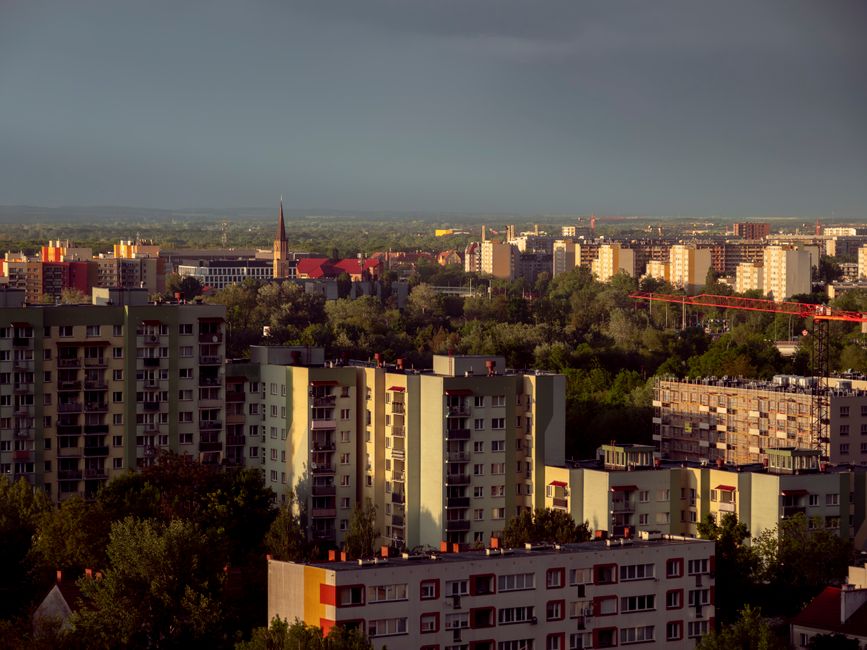
Wrocław, the capital of Lower Silesia, is one of Poland’s most likeable cities: a university town spread over a dozen islands in the Oder river, linked by more than a hundred bridges, with one of the largest market squares in Europe at its heart. It has been Bohemian, Austrian, Prussian and German (as Breslau) and became Polish only in 1945, when its German population was expelled and replaced by Poles, many from Lwów in the east. You come to hunt for the bronze dwarfs hidden around its streets, watch the lamplighter light the gas lamps on the cathedral island, stand inside the giant Panorama of Racławice and admire the modernist Centennial Hall. Give it two days, three to slow down and add a day trip to the castles and mountains of Lower Silesia.
Right now in Wrocław
- Wed7–20°C45–68°FPartly cloudy
- Thu10–21°C50–69°F2 mm rain
- Fri9–14°C48–57°FPartly cloudy
Top tours in Wrocław
See all tours for Wrocław →
From local operators, with prices and reviews; you check availability and book on Viator, our partner. We may earn a commission at no extra cost to you. How we earn money
Wrocław at a glance
- Best for: old-town architecture, quirky street art, river islands, student nightlife and good-value food.
- How long: 2 days for the Market Square, Ostrów Tumski and the Panorama; 3 days to add the Centennial Hall and a day trip.
- Best time: May to September; from 1 May to late October for the Multimedia Fountain; December for the Christmas market.
- Getting in: bus 106 links Wrocław Airport with the main station; trains run from Kraków (about 3 hours), Warsaw (about 3 hours 30 minutes), Berlin and Dresden.
- Key prices: as of October 2026, the Panorama of Racławice cost 50 zł, and a 24-hour city transport ticket 15 zł.
- Before you go: entry rules, money and trains are in our Poland travel guide.
Wrocław, area by area
The Old Town (Stare Miasto)
The Market Square (Rynek) and the smaller Salt Square, ringed by colourful gabled houses, cafés and the Gothic Old Town Hall, with the university and its baroque halls on the riverbank to the north. Best for: first visits, sightseeing and nightlife.
Ostrów Tumski and the islands
The oldest part of the city, the “Cathedral Island”, is a quiet quarter of churches, seminaries and cobbled lanes around the twin-spired Cathedral of St John the Baptist. Nearby, the islands of Wyspa Piasek, Wyspa Słodowa and others have parks, riverside bars and boat landings. Best for: evening walks and atmosphere.
Nadodrze
North of the river, a once-neglected district of old tenements now full of murals, workshops, galleries and cafés. Best for: street art and a local feel.
Around the Centennial Hall
East of the centre, near the zoo and the Szczytnicki Park with its Japanese Garden, the UNESCO-listed Centennial Hall and its pergola and fountain. Best for: modern architecture and green space.
Top things to see in Wrocław
Prices and hours below were checked on official sites in October 2026. They change, so check before you go.
The Market Square and the Old Town Hall
Wrocław’s Rynek, laid out in the 13th century, is one of the largest market squares in Europe, with a block of buildings in the middle, including the Old Town Hall, an extravagant Gothic building with a pinnacled gable and an astronomical clock, which houses the Museum of Bourgeois Art. The square is busy day and night with café terraces, buskers and, in winter, the Christmas market. Look for the pair of tiny houses called Hansel and Gretel, linked by an arch, in the north-west corner beside St Elizabeth’s Church, whose tower you can climb.
The dwarfs
Wrocław’s bronze dwarfs (krasnale) began as a symbol of the Orange Alternative, an anti-communist protest movement of the 1980s that used absurdist happenings and painted dwarfs on walls to mock the regime. The first statue, Papa Dwarf, appeared on Świdnicka Street in 2001; today there are more than a thousand small bronze figures around the city, each with its own name and trade, from a dwarf firefighter to a dwarf ATM user. Hunting for them is the city’s favourite game. Get a dwarf map from the tourist information centre on the Market Square, or use the city’s official dwarf map and app.
The Panorama of Racławice
This colossal painting, 15 m high and 114 m long, hangs in a circle in a round rotunda so that visitors standing in the middle feel they are in the middle of the battle. It depicts the Battle of Racławice of 1794, when Polish peasants armed with scythes, led by Tadeusz Kościuszko, defeated the Russian army. Painted in Lwów in 1894, it came to Wrocław after the Second World War and was only put on display in 1985, as its anti-Russian theme was sensitive under communism.
Visits are timed: shows start every 30 minutes, with a narration in 19 or more languages through headphones. As of October 2026, tickets cost 50 zł (35 zł reduced) and include free entry to three other branches of the National Museum within three months. From 1 April to 31 October it opens daily 8:30–19:00; from 1 November to 31 March it is closed on Mondays and opens 9:30–16:00 (to 17:00 on Saturdays). Book a time online, especially in summer.
Ostrów Tumski and the lamplighter
Cross the blue Tumski Bridge, hung with lovers’ padlocks, to the Cathedral Island. Climb the cathedral tower for a view over the river, and stay until dusk: the island’s gas lamps, about a hundred of them, are still lit by hand every evening by a lamplighter in a cape and top hat, and put out again before dawn.
The University of Wrocław
The baroque main building of the university, founded by the Jesuits in 1702, has the magnificent Aula Leopoldina assembly hall with painted ceilings, and the Mathematical Tower with a view over the Old Town.
The Centennial Hall and the Multimedia Fountain
Built by Max Berg in 1913, the Centennial Hall (Hala Stulecia) was a pioneering reinforced-concrete building with a dome wider than the Pantheon’s, and has been a UNESCO World Heritage Site since 2006. Beside it, the Four Domes Pavilion holds the National Museum’s collection of contemporary Polish art (closed on Mondays, free on Tuesdays). In front, the Multimedia Fountain, one of the largest in Europe, puts on free shows of water and music from 1 May to late October: hourly by day and, in the evenings, with lights and projections. In 2026 the season was due to end on 25 October.
Hydropolis
A modern, interactive museum about water in a former underground reservoir, popular with families. As of October 2026, tickets cost 45 zł on weekdays and 47 zł at weekends; entries are timed.
Historic centres
- Market Square (Rynek), Wrocław
Monuments
- Centennial Hall
- St. Elizabeth’s Church Wrocław
- Wrocław Cathedral
Museums
- National Museum in Wrocław
- Racławice Panorama
Zoos and aquariums
- Wrocław Zoological Garden
A city of many names
Few European cities have changed hands as often as Wrocław. Founded on Ostrów Tumski around the year 1000 as one of the first bishoprics of the Polish state, it passed to the Kingdom of Bohemia in the 14th century, to the Habsburgs in the 16th and to Prussia in 1741, and as Breslau it grew into one of the largest cities in Germany. In 1945 it was declared a fortress by the Nazis and besieged for three months by the Red Army, and much of the city was destroyed. After the war, the borders moved west: the German population was expelled, and the city was resettled by Poles, many of them from Lwów (now Lviv in Ukraine), who brought with them treasures such as the Panorama of Racławice and the Ossolineum library. The Old Town was rebuilt, and in 1997 a great flood of the Oder submerged much of the city again. Today Wrocław is one of Poland’s most prosperous and international cities, and it was a European Capital of Culture in 2016. The layers of this history, Polish, Czech, Austrian, German and Jewish, are part of what makes it so interesting to explore; the restored White Stork Synagogue and the Old Jewish Cemetery, with the graves of many famous Breslau families, are worth a visit.
Things to do in Wrocław
River trips and the islands
From May to September, boats, kayaks and pedal boats can be hired on the Oder, and tourist boats leave from the islands for cruises past the cathedral and the zoo. Bars and beach bars line the riverbanks in summer. See our boat trips guide.
Eat and drink
Wrocław has a large student population and lots of good-value restaurants, craft-beer bars and cafés, especially around the Market Square, in Nadodrze and on Ruska and Włodkowica streets. Piwnica Świdnicka, in the cellars of the town hall, claims to be one of the oldest restaurants in Europe. See our city sightseeing guide.
Christmas in Wrocław
Wrocław’s Christmas market, one of the best in Poland, fills the Market Square and the surrounding streets from late November until the end of December, with wooden stalls, a big wheel and a giant mulled-wine stall.
Activities and best months
- Boat tripsVisit Wrocław recommends seeing the city from the Oder on a warm day: cruises run on large passenger ships, smaller boats, motorboats and solar-powered electric boats past the islands of the old town, including Ostrów Tumski with its Romanesque churches.
- CyclingWrocław calls itself a paradise for cyclists: routes run along the Oder, and a network of separated cycle paths with contraflow lanes crosses the inner centre; electric scooters and electric buggies are other ways to tour the sights.
Day trips from Wrocław
- Książ Castle: Poland’s third-largest castle, above a gorge near Wałbrzych, about 1 hour 15 minutes away, with tunnels dug under it by the Nazis.
- The Peace Churches of Świdnica and Jawor: huge timber-framed Lutheran churches of the 17th century, UNESCO-listed.
- The Karkonosze Mountains: Karpacz and Szklarska Poręba, about 2 hours away, for hiking to Śnieżka (1,603 m), on the Czech border.
- The Valley of Palaces and Gardens: dozens of manor houses and palaces around Jelenia Góra.
- Dresden: about 3 hours 30 minutes by train or bus.
Nearby destinations
- Saxon Switzerland194 km
- Bohemian Switzerland197 km
- Brno215 km
- Prague217 km
- Dresden230 km
- Kraków236 km
- Zakopane289 km
- Berlin296 km
Getting to Wrocław
By air. Wrocław Copernicus Airport (WRO) is 10 km west of the centre. City bus 106 runs to the main station (Wrocław Główny) every 15–20 minutes and takes 30–45 minutes; taxis and ride-hailing cars take about 20–30 minutes.
By train. Wrocław Główny, a pink neo-Gothic station, is a 15-minute walk south of the Old Town. PKP Intercity trains arrive from Kraków (about 3 hours), Warsaw (about 3 hours 30 minutes), Poznań and Gdańsk, and international trains from Berlin and Dresden. Book on intercity.pl.
By bus. FlixBus and other coaches use the bus station behind the train station, with services to Prague, Berlin and Dresden.
By car. The A4 motorway links Wrocław with Dresden and Kraków; the state-run section from Wrocław to Sośnica is free for cars, but the A4 between Katowice and Kraków charges a toll.
Getting around Wrocław
The Old Town and the islands are walkable. Trams and buses run by MPK Wrocław cover the city. As of October 2026, a single ticket costs 4.60 zł, a 30-minute ticket 4 zł, a 60-minute ticket 5.20 zł and a 24-hour ticket 15 zł; buy at machines on board or at stops by card, or in an app. The city’s bike-share system and the riverside paths make cycling easy. See our cycling guide.
When to go and how long to stay
Wrocław is one of the warmest cities in Poland. The table uses the IMGW 1991–2020 averages for Wrocław-Strachowice, at the airport.
| Season | Average high | Average low | Rain per month | What it’s like |
|---|---|---|---|---|
| Winter (Dec–Feb) | 3–5 °C | −3 to −2 °C | 26–28 mm | Cold and grey, with the Christmas market lifting spirits in December |
| Spring (Mar–May) | 9 °C rising to 20 °C | 0 °C rising to 8 °C | 31–60 mm | Pleasant, with the fountain season starting on 1 May |
| Summer (Jun–Aug) | 23–26 °C | 12–14 °C | 60–91 mm | Warm to hot, with thunderstorms; riverside bars and boats |
| Autumn (Sep–Nov) | 20 °C falling to 8 °C | 9 °C falling to 1 °C | 31–48 mm | Golden September and October; students back in town |
Wrocław gets about 540 mm of rain a year, with July the wettest month.
Wrocław in 2 days
Day 1: the Market Square, the Old Town Hall, the Hansel and Gretel houses and St Elizabeth’s tower, a dwarf hunt, and the university. Day 2: the Panorama of Racławice in the morning, Ostrów Tumski and the cathedral tower in the afternoon, and the lamplighter at dusk.
Wrocław in 3 days
Add the Centennial Hall, the Japanese Garden and the Multimedia Fountain (in season), or a day trip to Książ Castle or the Peace Church in Świdnica.
Weather month by month
Where to stay in Wrocław
- The Old Town: hotels and apartments around the Market Square, close to everything but lively at night.
- Near the islands: quieter streets near Ostrów Tumski and the river.
- Near Wrocław Główny: convenient for trains and buses, a 15-minute walk to the square.
- Nadodrze: characterful apartments in a creative district.
Practical tips for Wrocław
- Book the Panorama: timed shows sell out in summer; in winter it is closed on Mondays.
- Get a dwarf map: from the tourist information centre on the Market Square or the city’s app.
- Time the lamplighter: be on Ostrów Tumski at dusk.
- Fountain season: from 1 May to late October; the evening shows are the best.
What to pack for Wrocław
Comfortable shoes for cobbles and bridges, layers and a light waterproof from spring to autumn, and a warm coat, hat and gloves for the Christmas market. A small torch or phone light helps on Ostrów Tumski’s dark lanes after dusk.
What to pack
- Dry bags and phone pouchesSpray soaks phones and cameras on open boats to the Algarve caves and on whale-watching trips.
- Fleeces and warm layersIt is cooler at sea than on land, especially on morning whale-watching trips.
- Rain jacketsA windproof, waterproof shell keeps you warm on open boats, where wind and spray cool you quickly.
- Reef-friendly sunscreenSun reflects off the water on cruises and cave tours.
- Water bottles and hydration packsRiding in the Algarve and Alentejo heat needs more water than you expect.
- Water shoesKayak and small-boat trips to the Algarve grottoes land on rock and wet sand.
Wrocław travel FAQ
How many dwarfs are there in Wrocław?
More than a thousand in public spaces, with new ones added every year. The city’s official dwarf map and the tourist information centre on the Market Square help you find them.
How much is the Panorama of Racławice?
As of October 2026, 50 zł for adults and 35 zł reduced, including headphone narration and free entry to three other National Museum branches within three months. Shows start every 30 minutes.
Is the Panorama of Racławice open on Mondays?
From April to October, yes, daily 8:30–19:00. From November to March it is closed on Mondays.
When does the Wrocław Multimedia Fountain run?
From 1 May to late October (until 25 October in 2026), with free daytime and evening shows beside the Centennial Hall.
What time does the lamplighter light the lamps on Ostrów Tumski?
At dusk every evening, so the time changes with the season. He lights about a hundred gas lamps by hand.
How do I get from Wrocław Airport to the city centre?
Take bus 106 to Wrocław Główny station, about 30–45 minutes, or a taxi, about 20–30 minutes.
How many days do you need in Wrocław?
Two days for the main sights, three to add the Centennial Hall and a day trip.
What are the best day trips from Wrocław?
Książ Castle, the Peace Churches of Świdnica and Jawor, the Karkonosze Mountains and the Valley of Palaces and Gardens.
Is Wrocław worth visiting?
Yes. It is lively, beautiful and less crowded than Kraków, with excellent value for food and drink.
Why does Wrocław have so many names?
Because it has belonged to Poland, Bohemia, the Habsburg monarchy, Prussia and Germany, where it was called Breslau. It became Polish again in 1945, when its population was almost completely replaced.
Plan your trip
Partner links: TravelerCenter may earn a commission if you book, at no extra cost to you.
🇵🇱 Useful Polish phrases for Wrocław
All 38 Polish phrases: restaurant, hotel, emergencies, romance (printable) →
Sources · last reviewed 4 October 2026
Researched and last reviewed on 4 October 2026. The Panorama of Racławice and the Four Domes Pavilion: the National Museum in Wrocław (mnwr.pl); the Multimedia Fountain: the City of Wrocław and visitwroclaw.eu; Hydropolis: hydropolis.pl; city transport fares: the City of Wrocław; the dwarf map: visitwroclaw.eu; climate: IMGW 1991–2020 averages for Wrocław-Strachowice via secondary sources. The number of dwarfs, the lamplighter, the fountain’s end date, the airport bus and train times come partly from secondary sources and are flagged for checking. Prices and timetables change, so check the official links before you go. For entry rules and money, see our Poland travel guide; for the old royal capital, our Kraków guide.
Also: visitwroclaw.eu · IMGW-PIB normals 1991–2020, Wrocław (Strachowice) (climate)
Data: Weather: MET Norway (CC BY 4.0) · Rates: ECB · Costs: World Bank ICP and price levels · © OpenStreetMap contributors (ODBL) · Wikidata (CC0)