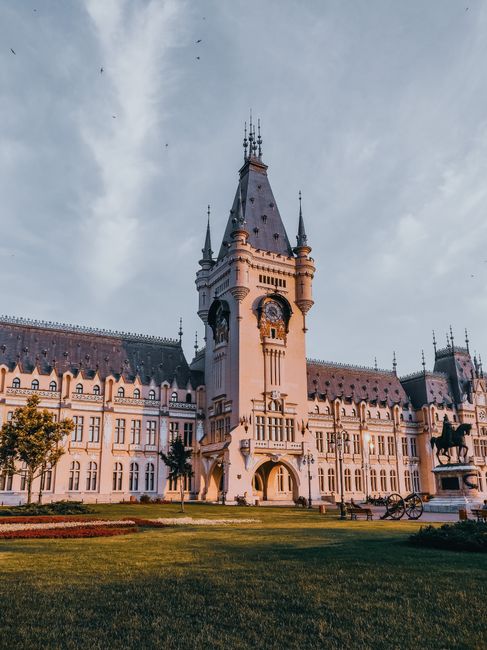
Romania is one of Europe’s most rewarding and least crowded countries: the arc of the Carpathian mountains with bears, wolves and old beech forests; the Saxon towns and fortified churches of Transylvania; the painted monasteries of Bukovina and the wooden churches of Maramureș; the Danube Delta, Europe’s great wetland; and Bucharest, a big, lively capital of grand boulevards and communist-era monuments. Villages still keep hay meadows and horse carts, prices are lower than in most of the EU, and since 2025 the country has been fully part of the Schengen area. May, June and September are the best months. Give it a week for a first trip, two weeks to add the north or the delta.
Right now in Romania
- Wed 8–21°C 46–71°F Partly cloudy
- Thu 7–23°C 45–73°F Clear
- Fri 10–24°C 49–75°F Partly cloudy
Weather: MET Norway (CC BY 4.0) · Rates: ECB
Key facts
| Currency | Romanian leu (RON, plural lei); cards widely accepted in cities, cash useful in villagesSource: bnr.ro · Last reviewed 4 Oct 2026 |
|---|---|
| Languages | Romanian; Hungarian is widely spoken in parts of Transylvania; many younger people speak EnglishSource: cdep.ro · Last reviewed 4 Oct 2026 |
| Plugs and voltage | Type C and F · 230 V, 50 HzSource: wikidata.org · Last reviewed 4 Oct 2026 |
| Emergency number | 112 for all emergencies (ambulance, police, fire, mountain rescue)Source: sts.ro · Last reviewed 4 Oct 2026 |
| Driving side | On the right; 130 km/h on motorways, 120 on expressways, 100 on E roads, 90 on other roads, 50 in towns; a rovinieta (e-vignette) is needed on national roads and motorways; zero alcoholSource: etoll.ro · Last reviewed 4 Oct 2026 |
| Tap water | Safe to drink from the public supply in cities; use bottled water in villages with wells and in the Danube DeltaSource: apanovabucuresti.ro · Last reviewed 4 Oct 2026 |
| Tipping | Not required; about 10% in restaurants for good service, round up in cafés and taxisSource: romaniatourism.com · Last reviewed 4 Oct 2026 |
| Calling code | +40 (dial 00 for international calls)Source: wikidata.org · Last reviewed 4 Oct 2026 |
| Time zones | EET (UTC+2), summer time EEST (UTC+3) from the last Sunday in March to the last Sunday in October; one hour ahead of Hungary, Austria and ItalySource: transport.ec.europa.eu · Last reviewed 4 Oct 2026 |
| Entry summary | EU, and a full Schengen member since 1 January 2025. Most visitors from outside the EU stay visa-free for up to 90 days in 180 and register in the EU Entry/Exit System at the border; ETIAS is not yet in operation.Source: home-affairs.ec.europa.eu · Last reviewed 4 Oct 2026 |
Multi-day tours of Romania
Multi-day tours from local operators. You check dates and book on Viator, our partner; we may earn a commission at no extra cost to you. How we earn money
Romania at a glance: Carpathians, Transylvania and the Danube
Romania covers about 238,000 km² in south-east Europe, between Hungary and Serbia to the west, Ukraine and Moldova to the north and east, Bulgaria across the Danube to the south, and a 245 km coast on the Black Sea. The Carpathian mountains curve through the middle of the country like a horseshoe, enclosing the high plateau of Transylvania; outside them lie the plains of Wallachia and Moldavia, and in the far south-east the Danube ends its journey in the delta. According to the National Institute of Statistics (INS), Romania had about 19.04 million residents on 1 January 2026.
Romanian is a Romance language, close in many words to Italian, Spanish and French, which helps visitors read signs. Many younger people speak good English, and French, German and Italian are also common; Hungarian is spoken widely in parts of Transylvania, where about a million ethnic Hungarians live. Most Romanians are Orthodox Christians, with Catholic and Protestant churches in Transylvania and Banat.
Time zone: Romania uses Eastern European Time (UTC+2), and summer time (UTC+3) from the last Sunday in March to the last Sunday in October, one hour ahead of Austria, Hungary and Italy.
Romania’s regions
- Bucharest and Wallachia: the capital, the plains of the south, the monasteries of the sub-Carpathian hills and the royal resort of Sinaia with Peleș Castle in the Prahova valley.
- Transylvania: the heart of most trips, a high plateau ringed by mountains, with the Saxon towns of Brașov, Sibiu and Sighișoara, the fortified churches, Bran Castle, the university city of Cluj-Napoca and the Hungarian-speaking Székely Land.
- The Carpathians: the Bucegi, Piatra Craiului, Făgăraș and Retezat ranges and the Apuseni mountains, with Romania’s best hiking, the Transfăgărășan and Transalpina roads and ski resorts such as Poiana Brașov and Sinaia.
- Maramureș: the far north, a land of tall wooden churches, carved gates, hay stacks and village traditions, including the Merry Cemetery of Săpânța.
- Bukovina and Moldavia: the 15th- and 16th-century monasteries with painted outer walls around Suceava and Gura Humorului, and the old capital of Moldavia, Iași.
- Dobrogea, the Black Sea and the Danube Delta: the port of Constanța, the beach resorts from Mamaia to Vama Veche, Greek and Roman ruins, and the reed beds and pelicans of the delta around Tulcea.
- Banat and Crișana: the west, with Timișoara, the city where the 1989 revolution began, and the Art Nouveau city of Oradea.
Regions
- Alba County
- Arad County
- Argeș County
- Bacău County
- Bihor County
- Bistrița-Năsăud County
- Botoșani County
- Brașov County
- Brăila County
- Buzău County
- Caraș-Severin County
- Cluj County
- Constanța County
- Covasna County
- Călărași County
- Dolj County
- Dâmbovița County
- Galați County
- Giurgiu County
- Gorj County
- Harghita County
- Hunedoara County
- Ialomița County
- Iași County
- Ilfov County
- Maramureș County
- Mehedinți County
- Mureș County
- Neamț County
- Olt County
- Prahova County
- Satu Mare County
- Sibiu County
- Suceava County
- Sălaj County
- Teleorman County
- Timiș County
- Tulcea County
- Vaslui County
- Vrancea County
- Vâlcea County
Where to go: cities, castles, mountains and the delta
Most first trips start in Bucharest and head north into Transylvania by train or car: through the Prahova valley to Sinaia and Brașov, on to Sighișoara and Sibiu, and either back to Bucharest over the Transfăgărășan in summer or on to Cluj-Napoca and Maramureș. The Danube Delta and Bukovina are long journeys from this loop, and are best on a two-week trip.
Bucharest
The capital is often skipped, but it deserves two days: the vast Palace of the Parliament, the Old Town and Stavropoleos Monastery, the Romanian Athenaeum, Revolution Square, the open-air Village Museum and some excellent restaurants and parks. Tours of the palace need booking and a passport or ID card.
Brașov, Bran and Sinaia
Brașov is a colourful Saxon town in a ring of mountains, with the Gothic Black Church, the Council Square and a cable car up Mount Tâmpa. From here, day trips go to Bran Castle, marketed as Dracula’s castle, the peasant fortress of Râșnov, the UNESCO-listed fortified church of Prejmer and, an hour away by train, Peleș Castle in Sinaia, the ornate summer palace of Romania’s kings.
Sighișoara and the Saxon villages
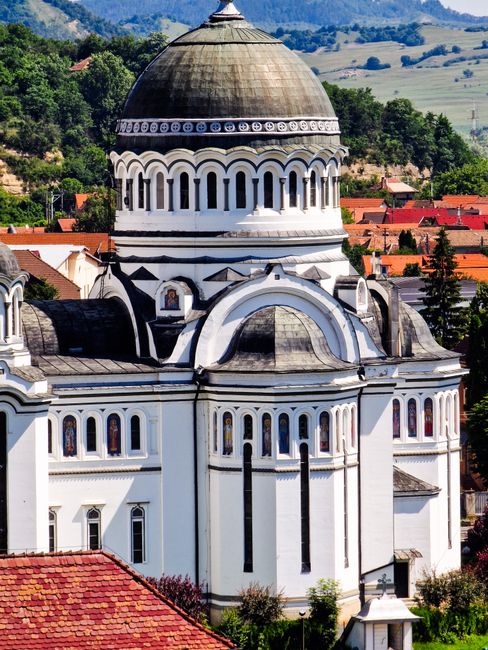
Sighișoara’s hilltop citadel, with its Clock Tower and guild towers, is one of the best-preserved inhabited medieval towns in Europe and a UNESCO World Heritage Site. In the hills between Sighișoara, Brașov and Sibiu, villages such as Biertan, Viscri and Saschiz grew up around fortified churches, also on the UNESCO list, among some of the richest farmland meadows in Europe.
Sibiu and the Transfăgărășan
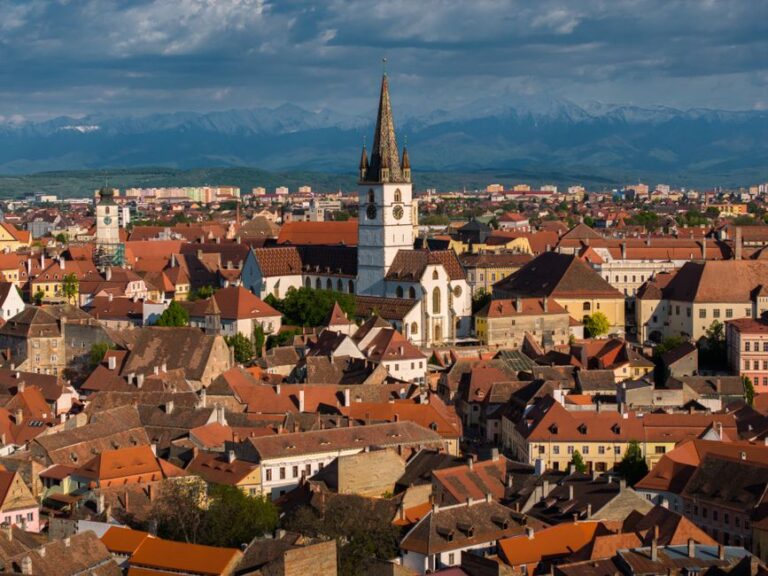
Sibiu has three linked squares of pastel houses, the Brukenthal art museum and the ASTRA open-air museum in the forest outside town. South of it, the Transfăgărășan road climbs in hairpins to Bâlea Lake at about 2,040 m; it is open only in summer, usually from late June or July to the end of October. The Transalpina, further west, is the highest road in Romania.
Cluj-Napoca and the Apuseni mountains
Cluj-Napoca is Transylvania’s biggest city and a young, lively university town, with good restaurants, the Botanical Garden and the huge UNTOLD music festival in August. To the west, the Apuseni mountains have caves, gorges and the old Turda Salt Mine, an underground theme park in a former mine.
Maramureș
In Romania’s far north, close to Ukraine, Maramureș is famous for its wooden churches with tall spires, eight of them on the UNESCO list, its carved wooden gates and its traditional village life. Visit the Merry Cemetery of Săpânța, with colourful painted grave crosses that tell the lives of the dead with humour, and ride the Mocănița steam train in the Vaser valley.
Bukovina’s painted monasteries
In the north-east, around Suceava and Gura Humorului, monasteries such as Voroneț, Sucevița, Moldovița and Humor are covered inside and out with 16th-century frescoes of saints and Bible scenes, in vivid blues and reds. They are working monasteries: dress modestly and expect a small entry and photography fee.
The Danube Delta and the Black Sea coast
The Danube Delta, a UNESCO-listed biosphere reserve, is a world of channels, reed beds and lakes with more than 300 bird species, including pelicans. Base yourself in a village such as Crișan or Sulina and explore by small boat; visitors need a cheap access permit. South of the delta, Constanța has Roman remains and an Art Nouveau casino, and the coast has busy resorts such as Mamaia and the more bohemian Vama Veche, at their best in July and August.
Timișoara and Oradea
In the west, close to Hungary and Serbia, Timișoara has grand squares of Secessionist buildings and was European Capital of Culture in 2023; Oradea is a showcase of restored Art Nouveau architecture. Both are good stops on the way in from Budapest or Vienna by train or car.
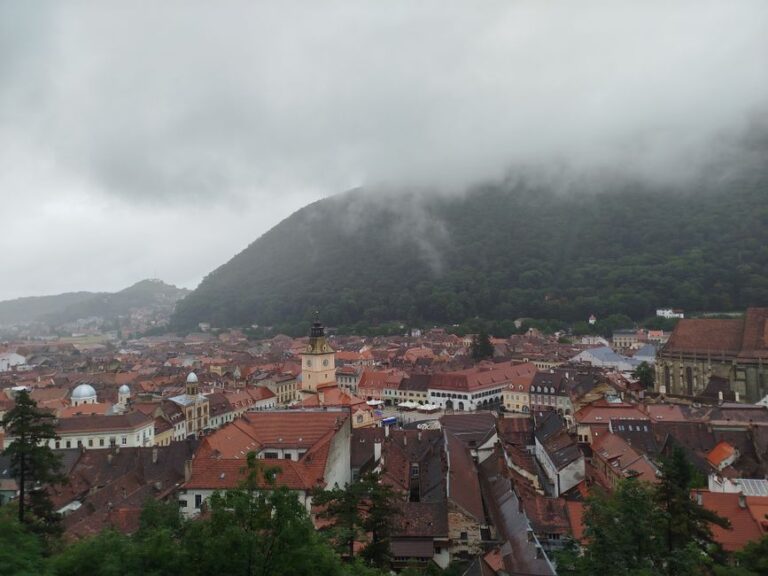
Brașov Travel Guide
Plan a trip to Brașov: the Black Church and Council Square, the Tâmpa cable car and the Brașov sign, Rope Street, the towers and…
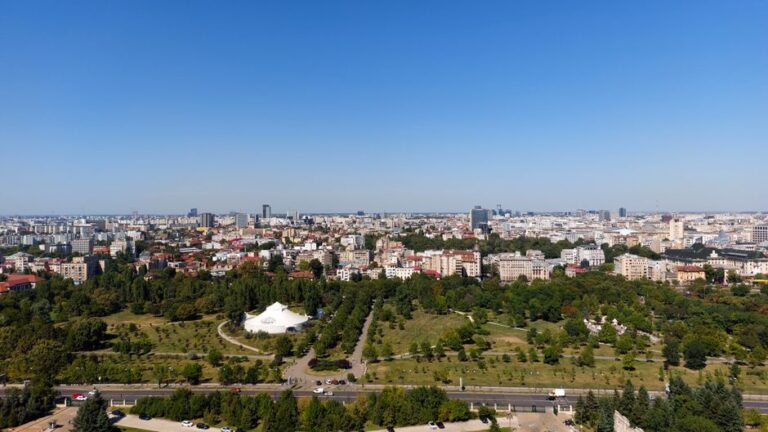
Bucharest Travel Guide
Plan a trip to Bucharest: Palace of the Parliament tour prices, booking and ID rules, the Old Town and Stavropoleos Monastery, the Romanian Athenaeum,…
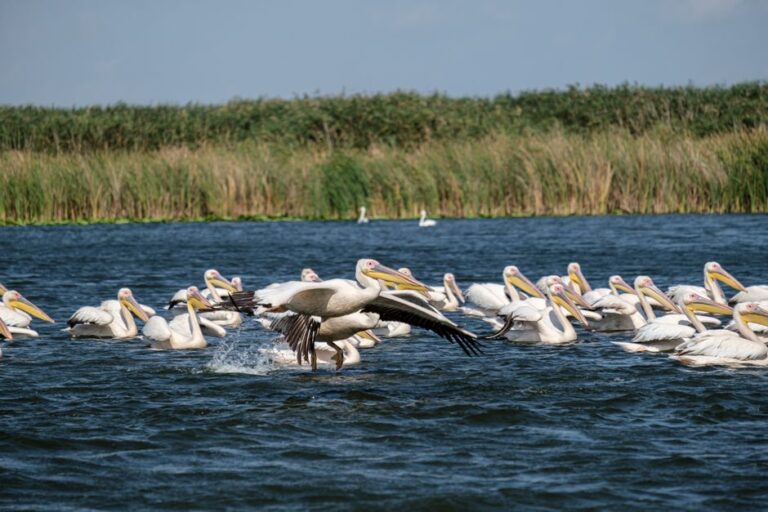
Danube Delta Travel Guide
Plan a visit to the Danube Delta Biosphere Reserve: the ARBDD access permit price and how to buy it, Navrom Delta boats from Tulcea…
Sibiu Travel Guide
Plan a trip to Sibiu: the Big and Small Squares, the Bridge of Lies, the Council Tower closure, the Lutheran Cathedral tower, Brukenthal and…
Sighișoara Travel Guide
Plan a trip to Sighișoara: the UNESCO citadel, Clock Tower and History Museum tickets, the Church on the Hill and the Scholars' Stairs, the…
Best time to visit Romania, region by region
Romania has a continental climate: hot summers, cold winters with snow in the mountains and the north, and short, pleasant springs and autumns. The south and the Black Sea coast are the warmest and sunniest; Transylvania and the north are cooler; and the high Carpathians are cold all year. The table shows rounded average daily highs and rainfall from the 1991–2020 climate normals of Romania’s National Meteorological Administration (ANM), as published in the World Meteorological Organization’s collection.
| Region (ANM station) | Spring highs (Mar–May) | Summer highs (Jun–Aug) | Autumn highs (Sep–Nov) | Winter highs (Dec–Feb) | Rain a year | Days with 1 mm+ of rain |
|---|---|---|---|---|---|---|
| Bucharest and Wallachia (Bucharest-Băneasa) | 12–24 °C | 28–31 °C | 25 °C falling to 11 °C | 3–6 °C | about 650 mm | about 76 |
| Southern Transylvania (Sibiu) | 11–21 °C | 25–27 °C | 22 °C falling to 10 °C | 2–6 °C | about 640 mm | about 89 |
| Northern Transylvania (Cluj-Napoca) | 10–21 °C | 25–27 °C | 22 °C falling to 8 °C | 1–4 °C | about 620 mm | about 95 |
| Moldavia (Iași) | 10–23 °C | 27–29 °C | 23 °C falling to 9 °C | 1–4 °C | about 550 mm | about 75 |
| Banat (Timișoara) | 13–24 °C | 27–30 °C | 24 °C falling to 12 °C | 4–7 °C | about 600 mm | about 87 |
| Black Sea coast (Constanța) | 10–21 °C | 26–28 °C | 23 °C falling to 12 °C | 5–7 °C | about 470 mm | about 60 |
| Danube Delta (Sulina) | 8–19 °C | 24–27 °C | 22 °C falling to 11 °C | 4–6 °C | about 240 mm | about 43 |
| High Carpathians (Vârful Omu, 2,504 m) | −5 to 4 °C | 8–10 °C | 6 °C falling to −1 °C | −7 to −6 °C | about 950 mm | about 139 |
Most rain falls in late spring and early summer, often in afternoon thunderstorms, especially in the mountains; autumn is usually the most settled season. The Black Sea coast and the delta are the sunniest places in the country, with more than 2,300 hours of sunshine a year. Winters bring snow to Transylvania and the mountains, and frosts of −10 °C or lower in the basins; in Bucharest, heatwaves above 35 °C are common in July and August.
Crowds and prices through the year
- April to June: one of the best times: green hills, wildflowers in the meadows, migrating birds in the delta and comfortable temperatures. Mountain roads and high trails are still closed by snow until June or July.
- July and August: peak season, with the warmest weather, the Transfăgărășan open, festivals and the busy Black Sea resorts. Bran, Brașov and Sighișoara are crowded; book ahead.
- September and October: excellent: settled weather, autumn colours in the Carpathians, the grape harvest and the bird migration in the delta. Mountain roads close around the end of October.
- November to March: cold, quiet and cheap, with Christmas markets in December and skiing from about December to March. Many delta guesthouses and boats run reduced or no services.
Festivals and events: late 2026 and 2027
Confirmed dates for the next big ones, as published by the organisers:
| Event | Dates | Good to know |
|---|---|---|
| Sibiu Christmas Market | 13 November 2026 – 3 January 2027 | On the Big Square, free entry; one of the longest-running Christmas markets in the country |
| National Day | Tuesday 1 December 2026 | Military parade in Bucharest at the Arcul de Triumf; a public holiday |
| Sibiu International Theatre Festival (FITS) | 18–27 June 2027 | Street theatre, concerts and performances across Sibiu |
| UNTOLD | 5–8 August 2027 | One of Europe’s biggest electronic music festivals, in Cluj-Napoca |
| George Enescu International Festival | 27 August – 26 September 2027 | Classical music festival in Bucharest and other cities, held every two years |
- December: Christmas markets in Bucharest, Brașov, Sibiu, Cluj-Napoca, Timișoara and Craiova; carol singers (colindători) in villages, and masked processions in Maramureș and Bukovina between Christmas and New Year.
- Spring: Orthodox Easter, the biggest religious festival of the year, with midnight services and painted eggs; in 2027 it falls on 2 May.
- Summer: Electric Castle near Cluj (usually in July), the Sighișoara Medieval Festival (usually in late July), the Anonimul film festival in Sfântu Gheorghe (usually in August), and village festivals across Maramureș and Transylvania.
- Autumn: grape-harvest festivals in the wine regions in September and October, and the start of the concert season in Bucharest.
Public holidays
Romania has 17 public holidays a year. Banks, offices and many museums close on them, while shops and restaurants in cities usually stay open, except on Christmas Day, New Year’s Day and Easter Sunday, when many places close. Easter and Pentecost follow the Orthodox calendar. The next ones, from October 2026:
| Holiday | Date |
|---|---|
| St Andrew’s Day | Monday 30 November 2026 |
| National Day | Tuesday 1 December 2026 |
| Christmas | Friday 25 and Saturday 26 December 2026 |
| New Year | Friday 1 and Saturday 2 January 2027 |
| Epiphany and St John the Baptist | Wednesday 6 and Thursday 7 January 2027 |
| Union Day | Sunday 24 January 2027 |
| Orthodox Good Friday | Friday 30 April 2027 |
| Labour Day | Saturday 1 May 2027 |
| Orthodox Easter | Sunday 2 and Monday 3 May 2027 |
| Children’s Day | Tuesday 1 June 2027 |
| Orthodox Pentecost (Rusalii) | Sunday 20 and Monday 21 June 2027 |
| Assumption of Mary | Sunday 15 August 2027 |
| St Andrew’s Day and National Day | Tuesday 30 November and Wednesday 1 December 2027 |
Weather month by month
Averages from ANM normals 1991–2020, Bucharest-Băneasa · Last reviewed 4 Oct 2026
How long to stay: sample itineraries
Distances in Romania take longer than the map suggests: many roads are two-lane and pass through villages, motorways are still incomplete across the Carpathians, and trains are slow outside the main lines. Plan on 60 km an hour on average away from motorways. A good pattern is to use the train between Bucharest and Brașov, then hire a car for Transylvania.
5 days: Bucharest and Brașov
Two days in Bucharest (the Palace of the Parliament, the Old Town, the Athenaeum and the Village Museum), then the train to Brașov for three nights, with day trips to Bran and Râșnov, and to Peleș Castle in Sinaia (not on Mondays or Tuesdays).
7 days: the Transylvania loop
Bucharest (two nights), Brașov (two nights, with Bran), Sighișoara (one night, with Biertan or Viscri on the way) and Sibiu (two nights, with the ASTRA museum). In summer, drive back to Bucharest over the Transfăgărășan; otherwise take the Olt valley road.
10 days: Transylvania and the north
Follow the seven-day loop, then continue from Sibiu or Sighișoara to Cluj-Napoca and the Apuseni mountains or the Turda Salt Mine, and on to Maramureș for two nights among the wooden churches. Fly home from Cluj-Napoca.
14 days: the grand tour
Bucharest, Brașov, Sighișoara, Sibiu, Cluj-Napoca and Maramureș, then across to Bukovina’s painted monasteries and Iași, and back south to the Danube Delta for three nights in Crișan or Sulina before returning to Bucharest. In summer, finish with a few days on the Black Sea coast. Romania combines easily with Bulgaria to the south, Hungary to the west and, by air, with Istanbul.
Entry, money and costs
Entry: Schengen, EES and ETIAS (last reviewed October 2026)
Romania joined the Schengen area for air and sea travel on 31 March 2024, and fully, including land borders, on 1 January 2025. There are no routine passport checks on flights from other Schengen countries or at the land borders with Hungary and Bulgaria, though police can make spot checks inside the country, so carry your passport or ID card. Citizens of EU and EEA countries and Switzerland can enter with a national ID card or passport. Visitors from many other countries, including the United States, Canada, the UK and Australia, can stay without a visa for up to 90 days in any 180-day period, counting time in all Schengen countries. Others need a Schengen visa.
- Entry/Exit System (EES): the EU’s digital border system has been fully running at all Schengen external borders since 10 April 2026. Non-EU visitors on short stays have their passport details, a photo and fingerprints recorded on their first entry instead of getting passport stamps; children under 12 are not fingerprinted. Registration is free and lasts three years. In Romania, expect it at airports on flights from outside Schengen, such as the UK and Turkey, and at land borders with Ukraine, Moldova and Serbia, where queues can be long in summer.
- ETIAS: the EU’s planned online travel authorisation (fee €20) is not in operation as of October 2026, and the EU has not set a start date; press reports point to 2027. Until the EU announces a date, you don’t need one, and you should ignore websites selling “ETIAS applications”.
- Passports: for non-EU visitors, your passport should have been issued less than 10 years before you arrive and be valid for at least 3 months after the day you plan to leave the Schengen area.
- Trips to Moldova, Ukraine and Serbia: these are outside the EU and Schengen; check your own visa rules and your government’s travel information before crossing, especially for Ukraine.
Rules change, so check the official pages before you travel: the European Commission’s EES and ETIAS pages, the Romanian Ministry of Foreign Affairs and the Romanian Border Police, and your own government’s travel information.
Language
A few words help: bună ziua (hello), mulțumesc (thank you), vă rog (please), da / nu (yes / no), noroc (cheers), intrare / ieșire (entrance / exit) and bărbați / femei (men / women) on toilet doors.
Money: the leu, cards and cash
Romania uses the leu (plural lei, code RON), not the euro. The National Bank of Romania’s reference rate was 5.34 lei to the euro on 2 October 2026, so 100 lei is roughly €19. Some hotels quote prices in euros, but you pay in lei. Cards and phone payments are accepted almost everywhere in cities, including on public transport in Bucharest, but carry cash for markets, village guesthouses, monastery entry, small shops and parking in the countryside. Use cash machines attached to banks, and when a machine or card terminal offers to charge you in your home currency, choose lei.
Tipping
In restaurants, leave about 10% for good service, more for exceptional service; tips are usually given in cash or added when you pay by card. Round up taxi fares, and tip guides and drivers on tours. In bars, leaving the small change is enough.
VAT and tax-free shopping
Prices include VAT. Since 1 August 2025, the standard rate has been 21%, with a reduced rate of 11% on hotel stays, restaurant food and some basic goods. Visitors who live outside the EU can reclaim VAT on goods bought in shops that offer tax-free shopping, when they spend more than about €175 in one shop and take the goods out of the EU within 90 days; ask for the form, have it stamped by customs when you leave the EU and claim the refund through the shop or its refund agent. Bucharest has added a local tourist tax of 10 lei per person per night since 2026, normally added to the bill.
Typical travel costs
Romania is one of the cheapest countries in the EU for visitors, though prices have risen quickly in recent years and Bucharest, Brașov and Sibiu cost more than the countryside. These estimates, per person per day, are a planning guide as of October 2026:
| Style | Estimated cost per day | What that looks like |
|---|---|---|
| Budget | about 200–300 lei (€40–55) | Hostel dorm or simple guesthouse, market food and canteen lunches, trains and buses, a couple of museum tickets |
| Mid-range | about 450–800 lei (€85–150) | Double room in a good hotel or boutique guesthouse shared by two, restaurant meals with wine, castle tickets, a share of a hire car |
| High-end | about 1,500 lei+ (€280+) | Luxury hotels or restored manor houses, fine dining, private guides and drivers |
These figures are our estimates, not official statistics. Car hire, fuel and the rovinieta are extra.
Getting there and getting around
Airports
- Bucharest Henri Coandă (OTP): the main international airport, at Otopeni, about 17 km north of the centre, linked by express bus 100 and by train to Gara de Nord.
- Cluj-Napoca (CLJ): the main airport for Transylvania and the north, with many European flights.
- Sibiu (SBZ), Târgu Mureș (TGM) and Brașov-Ghimbav (GHV): smaller airports in Transylvania with flights to European cities.
- Timișoara (TSR), Iași (IAS), Suceava (SCV), Oradea (OMR) and Constanța (CND): useful for the west, Moldavia, Bukovina and the Black Sea.
Budapest airport is another option for western Romania, about 3–4 hours from Oradea or Timișoara by road.
Trains: CFR Călători and private operators
Most trains are run by the state company CFR Călători, with private operators (such as Regio Călători, Transferoviar Călători, Softrans and Astra Trans Carpatic) on some routes; tickets for CFR trains are sold on its website and app and at stations. Trains are cheap and comfortable on the main line from Bucharest to Brașov (about 2 hours 30 minutes on the fastest services) and on to Cluj-Napoca, and from Bucharest to Constanța (about 2 hours). Elsewhere they are slow, as much of the network is old and parts are being rebuilt: in 2026 the line between Brașov and Sighișoara, for example, takes 3 hours or more. International trains link Bucharest with Budapest and Vienna, and sleeper trains run overnight on long domestic routes. Interrail and Eurail passes are valid on CFR Călători trains, with seat reservations on some.
Buses and minibuses
Coaches and minibuses (maxi-taxi) reach many places the trains don’t, including Bran, Sighișoara, the Saxon villages, Tulcea and Maramureș. They usually leave from a town’s bus station (autogara), and there can be several in big cities; check online timetables or ask at your hotel. Buy tickets from the driver or the office.
Driving: the rovinieta and the rules
A car gives you the most freedom in the countryside, but driving in Romania needs patience.
- The rovinieta: all cars need an electronic road vignette, the rovinieta, to use national roads and motorways outside towns. From 1 October 2026, the price for cars depends on the vehicle’s Euro emissions standard, under Transport Ministry Order 888/2026: as of October 2026, a 1-day vignette costs 20–29 lei, 10 days 27–39 lei, 30 days 43–62 lei and 12 months 228–330 lei, with the cheapest rates for electric cars and the highest for Euro 3 or older engines. Buy it only from the official CNAIR channels (the etoll.ro portal and the TollRo app) or authorised sellers, before you drive; there is no sticker, as cameras check your number plate. Vignettes bought before 1 October 2026 stay valid until they expire. Hire cars should already have one; ask.
- Bridge tolls: a separate toll is charged on the A2 motorway bridges over the Danube at Fetești, and on the bridges to Bulgaria at Giurgiu–Ruse and Calafat–Vidin.
- Rules: drive on the right. There is zero tolerance for alcohol: any alcohol in the blood is an offence. Dipped headlights are compulsory outside built-up areas, day and night. Speed limits are generally 50 km/h in towns, 90 km/h on other roads, 100 km/h on European (E) roads, 120 km/h on expressways and 130 km/h on motorways, unless signs say otherwise. Winter tyres are compulsory when roads are covered in snow or ice.
- On the road: watch for horse carts, cattle and cyclists without lights in villages, especially at night; overtaking on two-lane roads can be risky; and traffic police use speed cameras and radar.
- Licences: EU licences are valid; drivers from the US, UK and many other countries can use their licence for short visits, but an International Driving Permit is recommended alongside a non-EU licence.
Taxis and city transport
Use metered taxis with prices displayed on the door, or ride-hailing apps such as Bolt and Uber, which work in the main cities. In Bucharest, the metro and the express airport bus accept contactless cards. Most cities have cheap trams or buses.
Culture, food and everyday etiquette
Romanians are proud of their Latin language and history, and warm and generous hosts, especially in the countryside, where guests are offered food and a glass of țuică (plum brandy) or pălincă, a stronger fruit brandy. Orthodox Christianity shapes daily life: people cross themselves when passing churches, and Easter, with midnight services and painted eggs, is the biggest celebration of the year. In churches and monasteries, women should cover their shoulders and often their hair, men should remove hats, and everyone should wear long trousers or skirts; many monasteries lend wraps at the gate, and some charge for photography.
Food is hearty and seasonal. Try sarmale (cabbage or vine leaves stuffed with minced meat, with polenta and sour cream), mici (grilled minced-meat rolls with mustard), ciorbă (sour soups, from tripe to meatballs and vegetables), mămăligă (polenta) with cheese and sour cream, tochitură (a pork stew), fish and fish soup in the Danube Delta, and Hungarian and Saxon dishes in Transylvania. For dessert: papanași (fried doughnuts with sour cream and jam), cozonac (sweet bread) and pies. Romania is one of Europe’s larger wine producers: look for Fetească Neagră, Fetească Albă and Tămâioasă from Dealu Mare, Cotnari, Murfatlar and the Târnave valley. See our wine tasting guide.
Greet people with a handshake; friends kiss on both cheeks. Older people are addressed formally, with domnule (sir) and doamnă (madam). Romania’s Roma communities, among the largest in Europe, face discrimination; treat everyone with the same respect, and ask before photographing anyone, especially in villages and at markets.
Safety, health, accessibility and connectivity
Safety
Romania is generally a safe country to visit, with low violent crime against visitors. Watch for pickpockets on busy public transport and at stations, use metered taxis or apps, and be wary of currency exchange offices advertising rates that don’t include their commission. On the roads, take extra care: Romania has one of the highest road death rates in the EU.
Emergency number: 112 for police, ambulance, fire service and Salvamont mountain rescue. Government alerts (RO-ALERT) are sent to all phones in an area for floods, storms or bears in town; read them and follow the advice.
Bears and the outdoors
Romania has Europe’s largest population of brown bears outside Russia, mainly in the Carpathians, and bears increasingly come close to roads, resorts and the edges of towns such as Brașov and Sinaia, looking for food. Attacks are rare, but there have been deaths in recent years, including on the Transfăgărășan. Follow the authorities’ advice:
- Never feed bears or leave food or rubbish out; feeding them is illegal and in 2026 drivers on the Transfăgărășan were fined 10,000 lei or more.
- Never approach a bear or stop your car to photograph one; stay inside with the windows closed and drive on slowly.
- On trails, hike in groups, make noise in thick forest, avoid dawn and dusk, keep dogs on a lead and carry food in sealed bags. If you meet a bear, don’t run: back away slowly and calmly, giving it space.
- Sheepdogs guarding flocks in the mountains can be aggressive; give flocks a wide berth and don’t run.
Before mountain hikes, check the forecast and trail conditions, register your route with your accommodation, and save the Salvamont number through 112. See our hiking guide.
Health
EU and EEA visitors should bring a European Health Insurance Card (EHIC), and UK residents a GHIC, for necessary treatment in public hospitals; everyone should have travel insurance, as private clinics, which many visitors use, are not covered. Pharmacies (farmacie) are everywhere in towns. Tap water in the cities is treated and generally safe, though many people drink bottled water. Ticks are common in forests and meadows in spring and summer, and mosquitoes in the Danube Delta.
Accessibility
Newer hotels, shopping centres and many museums are accessible, and Bucharest’s metro has lifts at most stations, but cobbled old towns, monasteries, castles and older buildings can be difficult, and pavements are often uneven. Ask hotels and sights in advance.
Connectivity and power
Mobile internet is fast and cheap, and 4G and 5G coverage is good in cities and on main roads, patchier in the mountains and the delta. EU mobile plans work at home prices; others can buy an eSIM or a prepaid SIM from Orange, Vodafone or Digi. Wi-Fi is standard in hotels and cafés. Romania uses 230 V and type F (Schuko) sockets, which also take type C plugs; see our guide to travel adapters.
Things to do: hiking, sightseeing, wine, cycling and boat trips
- Hiking: the Carpathians have Romania’s finest walking: the limestone ridge of Piatra Craiului, the Bucegi plateau above Sinaia, the high Făgăraș ridge with Moldoveanu (2,544 m), the highest peak, the glacial lakes of Retezat National Park and the gorges of the Apuseni. Huts (cabane) and marked trails are common, but trails are rough; go with a guide if you are new to mountains, and read the bear advice above.
- City sightseeing: Bucharest’s architecture and museums, the Saxon towns of Brașov, Sibiu and Sighișoara, Cluj-Napoca, Timișoara and the Art Nouveau of Oradea.
- Wine tasting: wineries in Dealu Mare north of Bucharest, the Târnave valley in Transylvania, Cotnari in Moldavia and Murfatlar near the Black Sea.
- Cycling: quiet lanes between the Saxon villages, the Danube, and the Via Transilvanica, a long-distance trail of about 1,400 km across the country for walkers and cyclists.
- Boat trips: by small boat through the channels of the Danube Delta, and along the Danube gorge at the Iron Gates in the south-west, past the giant rock carving of the Dacian king Decebalus.
- Beaches: the Black Sea coast from Mamaia to Vama Veche, and the wild beaches of Sulina and Sfântu Gheorghe in the delta; the sea is warm enough for swimming from late June to early September.
What to pack
Pack for the season and the height. In summer, bring light clothes, sunscreen and a hat for the hot south and the coast, but also a warm layer and a waterproof for the mountains, where storms build up on summer afternoons: see our guides to rain jackets and hiking shoes. Comfortable shoes with grip are essential for cobbled old towns and castle stairs. For churches and monasteries, carry a scarf and long trousers or a skirt. In the Danube Delta, bring strong insect repellent and long sleeves, and water shoes for boats and beaches. In winter, pack a warm coat, hat, gloves and boots for snow and ice. Bring a type F plug adapter if you need one, and some cash in lei for the countryside.
Romania travel FAQ
When is the best time to visit Romania?
May, June and September are the best all-round months: warm, green and not too crowded. July and August are hot and busy but best for the mountain roads, festivals and the coast. Winter is good for Christmas markets and skiing.
Is Romania in the Schengen area?
Yes. Romania has been fully part of Schengen, including its land borders, since 1 January 2025, so there are no routine passport checks from other Schengen countries. Non-EU visitors are registered by the EU’s Entry/Exit System at external borders.
Do I need ETIAS to visit Romania?
Not as of October 2026. ETIAS is not running yet, and the EU has not set a start date; press reports point to 2027.
Does Romania use the euro?
No. Romania uses the leu (RON). As of 2 October 2026, one euro was worth about 5.34 lei at the National Bank of Romania’s reference rate. Cards are widely accepted, but carry some cash in lei for the countryside.
Do I need a rovinieta to drive in Romania?
Yes, for national roads and motorways. From 1 October 2026, the price depends on your car’s Euro emissions standard: as of October 2026, 20–29 lei for a day, 27–39 lei for 10 days or 43–62 lei for 30 days. Buy it from the official CNAIR channels before you drive.
Is it safe to travel in Romania?
Yes, generally. Watch for pickpockets, use metered taxis or apps, drive carefully, and never feed or approach bears in the mountains. In an emergency, call 112.
Are there bears in Romania, and are they dangerous?
Romania has thousands of brown bears, mostly in the Carpathians. Attacks are rare, but they happen, usually when bears have learned to expect food. Don’t feed them, stay in your car if you see one by the road, and follow local RO-ALERT warnings.
How many days do you need in Romania?
Five days cover Bucharest and Brașov with Bran and Peleș; a week lets you see the main Transylvanian towns; ten days to two weeks add Maramureș, Bukovina or the Danube Delta.
Is Bran Castle really Dracula’s castle?
Not really. Bran is marketed as Dracula’s castle, but Bram Stoker never visited Romania, and Vlad III, the prince whose nickname inspired the name, probably had little to do with it. It is still a beautiful castle, once a home of Queen Marie of Romania.
What plug type does Romania use?
Type F (Schuko), which also takes type C plugs, at 230 V. Visitors from the UK, North America and Australia need an adapter.
When is Orthodox Easter in 2027?
Sunday 2 May 2027. Good Friday (30 April), Easter Sunday and Easter Monday (3 May) are public holidays, and many businesses close.
Do you tip in Romania?
Yes: about 10% in restaurants for good service, rounding up for taxis, and a tip for guides and drivers.
Can I get around Romania by train?
Yes, on the main lines, such as Bucharest to Brașov, Cluj-Napoca and Constanța, but trains are slow on many other routes. Buses, a hire car or tours are often quicker for the Saxon villages, Maramureș and Bukovina.
Sources
- Natural Earth · Public domain · fetched 4 Oct 2026
- © OpenStreetMap contributors · ODbL · fetched 4 Oct 2026
- Wikidata · CC0 · fetched 4 Oct 2026
Sources and last review
Researched and last reviewed on 4 October 2026. Population from the National Institute of Statistics (INS); climate from Romania’s National Meteorological Administration 1991–2020 normals in the WMO collection; Schengen membership from the Council of the EU; EES and ETIAS from the European Commission; the exchange rate from the National Bank of Romania; the rovinieta from CNAIR’s etoll.ro portal and Transport Ministry Order 888/2026; festival dates from the organisers (the Sibiu Christmas Market, FITS, UNTOLD) and, for the Enescu Festival, AGERPRES; public holidays from the Labour Code calendar; castle and museum details from the sites themselves. The rovinieta price table, the INS population figure, VAT rates and the tax-free threshold, the Bucharest tourist tax, the bear-feeding fines, speed limits, train journey times and the 2027 holiday dates were checked partly through press reports and are flagged for checking. Daily costs are estimates. Prices, timetables and entry rules change, so check the official links before you travel.
Plugs and power in Romania
Romania uses 230 V, 50 Hz and these plugs (left) and wall sockets (right):
All plug types and voltages by country → · Check what you need to pack →
Plan your trip
Partner links: TravelerCenter may earn a commission if you book, at no extra cost to you.
🇷🇴 Useful Romanian phrases for Romania
All 38 Romanian phrases: restaurant, hotel, emergencies, romance (printable) →