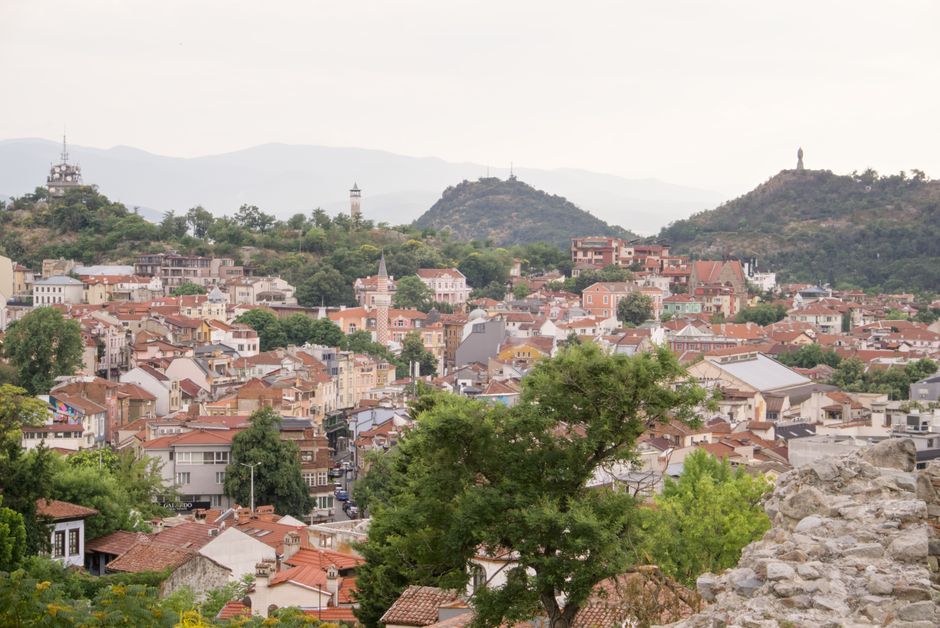
Plovdiv, Bulgaria’s second city, is one of the oldest continuously inhabited cities in Europe, built over and around a group of rocky hills on the River Maritsa. Thracians, Greeks under Philip II of Macedon and Romans all left their mark: a Roman theatre that still hosts concerts and opera, a Roman stadium under the main shopping street and early Christian mosaics. Above them, the cobbled Old Town has colourful 19th-century merchants’ houses, and below, the Kapana district is full of cafés, craft beer and street art. Plovdiv was a European Capital of Culture in 2019, and it is relaxed, walkable and great value. Give it two days, three with Bachkovo Monastery and Asen’s Fortress.
Right now in Plovdiv
- Wed 10–24°C 50–74°F Partly cloudy
- Thu 11–24°C 51–74°F Partly cloudy
- Fri 14–25°C 57–76°F Clear
Weather: MET Norway (CC BY 4.0) · Rates: ECB
Top tours in Plovdiv
See all tours for Plovdiv →
From local operators, with prices and reviews; you check availability and book on Viator, our partner. We may earn a commission at no extra cost to you. How we earn money
Plovdiv at a glance
- Best for: Roman ruins, a beautiful old town, cafés and nightlife in Kapana, wine from the Thracian valley and easy day trips into the Rhodope mountains.
- How long: 2 days for the Old Town, the Roman sites and Kapana; 3 days to add Bachkovo Monastery and Asen’s Fortress.
- Best time: May, June, September and October; July and August are hot, but bring summer performances in the Roman theatre.
- Getting in: trains from Sofia take about 2 hours 40 minutes to 3 hours on the fastest services, and buses about 2 hours; Plovdiv’s small airport has a few flights.
- Getting around: the centre and Old Town are compact and best on foot; city buses and taxis for the rest.
- Before you go: Bulgaria has used the euro since 1 January 2026 and is a full Schengen member; country-wide entry rules, money and driving are covered on our Bulgaria country page.
Plovdiv, area by area
The city centre lies between the main railway station in the south and the River Maritsa in the north. The long pedestrian Main Street (Knyaz Alexander I) runs north from the central square to Dzhumaya Square and the Roman stadium; the Old Town climbs the three hills to the east, and Kapana fills the lanes to the west of Dzhumaya Square.
The Old Town (Staria Grad)
On Nebet Tepe, Taksim Tepe and Dzhambaz Tepe, three of Plovdiv’s historic hills, the Old Town is a protected architectural reserve of cobbled lanes, Ottoman-era churches and painted houses of the Bulgarian National Revival, their upper floors jutting out over the street on carved brackets. Many are museums or galleries. At the top of Nebet Tepe are the ruins of the Thracian and Roman fortress, with views across the city. Best for: atmosphere, boutique guesthouses and sunset views.
Main Street and Dzhumaya Square
The pedestrian Main Street is one of the longest in Europe, lined with shops and cafés in 19th- and early 20th-century buildings. At its northern end, Dzhumaya Square has the 15th-century Dzhumaya Mosque and part of the Roman stadium. Best for: central hotels and people-watching.
Kapana, the creative district
Kapana, “the trap”, is a tangle of narrow streets that was once the craftsmen’s quarter. Restored for the 2019 European Capital of Culture year, it is now full of small bars, craft beer, coffee roasters, galleries, murals and design shops. Best for: evenings out, food and nightlife.
Top things to see in Plovdiv
Prices and hours below come from the Old Plovdiv municipal institute’s official ticket page as of October 2026. Most of its sites were converted from leva at the fixed rate, which is why the prices look odd; tickets can be bought at each site or online.
The Ancient Theatre
Built in the early second century AD under Emperor Trajan, the theatre of Philippopolis is carved into the slope between two of the Old Town’s hills, with marble seats for about 6,000 spectators and a two-storey stage building with columns. It was buried by a landslide and only rediscovered in the 1970s. Today it is one of the best-preserved ancient theatres in the world still in use, with opera, concerts and festivals in summer. As of October 2026, entry for adults costs €3.58 (€1.53 for schoolchildren and students), and the theatre is included in the combined ticket. It can close for rehearsals and events, and for performances you need a separate show ticket.
The Roman Stadium
Under Main Street lie the remains of the Roman stadium of Philippopolis, built in the second century and large enough for about 30,000 spectators. Its curved northern end, with rows of marble seats, has been excavated and opened up in Dzhumaya Square below street level; you can see it free from above or walk down among the seats. A small visitor centre shows a short 3D film about the stadium.
The Old Town houses and the combined ticket
Several Revival-era houses are open as museums: the Ethnographic Museum in the Kuyumdzhiev House, with its curving baroque façade; the Balabanov House, with painted ceilings and art exhibitions; the Hindliyan House, with its murals of distant cities; and the Nedkovich House. As of October 2026, most of these sites cost €3.58 for adults each, and a combined ticket for up to five sites costs €10.74 for adults (€4.09 for students), which saves about a third if you visit four or five. Most Old Town sites open from 9:30 to 18:00 from April to October and from 9:00 to 17:30 from November to March, many with a lunch break and a weekly closing day; check the times for each house.
The Bishop’s Basilica and its mosaics
Near the central square, the Bishop’s Basilica of Philippopolis, the largest early Christian church found in Bulgaria, is covered by a modern building that protects about 2,000 square metres of fourth- to sixth-century floor mosaics with birds, plants and geometric patterns. As of October 2026, a separate ticket costs €7.57 for adults; a combined ticket covers it with the Small Basilica and the Late Antique “Irene” building (€12.78).
Nebet Tepe and the city’s hills
The hill at the northern tip of the Old Town, Nebet Tepe, holds the oldest remains in Plovdiv: walls of the Thracian settlement and later Roman and medieval fortifications, with a free viewpoint over the Maritsa. For the best sunset, climb Sahat Tepe with its clock tower, or Bunardzhika, crowned by the Soviet Army monument known as “Alyosha”.
Museums
- Bishop's Basilica of Philippopolis
- Regional Ethnographic Museum, Plovdiv
- Roman Stadium of Plovdiv
Archaeological sites
- Ancient Theatre of Plovdiv
Historic centres
- Old Plovdiv
Viewpoints
- Nebet Tepe
Churches and cathedrals
- Bachkovo Monastery
Food, wine and nights out
Plovdiv is a great place to eat: try Thracian-style grilled meats, kavarma stew, roasted peppers and local cheese, washed down with wine from the Thracian valley, where Mavrud, a dark, robust red, is the local grape, and estates around Asenovgrad and Brestovitsa open for tastings. In the evenings, Kapana’s bars, wine bars and craft-beer pubs fill the lanes, and in summer there are open-air concerts, opera and festivals in the Ancient Theatre. See our guide to wine tasting.
Activities and best months
- City sightseeingPlovdiv Municipality's top ten sights are the Ancient Plovdiv architectural and historical reserve (the Old Town), the Ancient Theatre, the Bishop's Basilica of Philippopolis, the Roman Stadium, Tsar Simeon's Garden with the Singing Fountains, Kapana, the Regional Archaeological Museum, the City Art Gallery, the Regional Ethnographic Museum and the Regional History Museum. · source
- Wine tastingPlovdiv Municipality publishes a wine route map of the wineries around the city, and Plovdiv was named European Best Wine Capital 2025. · source
Day trips from Plovdiv
Bachkovo Monastery
About 30 km south, in a wooded valley at the edge of the Rhodope mountains, Bachkovo Monastery was founded in 1083 by the Georgian-Byzantine brothers Gregory and Abasius Pakourianos and is Bulgaria’s second-largest monastery. Its courtyard churches are covered with frescoes, including works by Zahari Zograf, and the ossuary above the monastery has rare 12th-century paintings. Entry to the courtyard and main church is free; dress modestly. Stalls on the path sell honey, jams and herbs. Buses run from Plovdiv to Asenovgrad and on to the monastery; by car it takes about 40 minutes.
Asen’s Fortress
On a cliff above the Asenitsa river gorge, about 3 km south of Asenovgrad, stand the ruins of Asen’s Fortress, rebuilt in the 13th century by Tsar Ivan Asen II. The 12th-century Church of the Holy Mother of God, with its two-storey tower, is the best-preserved part, and the views down the gorge are dramatic. As of October 2026, adult entry is reported at about €4. Combine it with Bachkovo Monastery, which is a few kilometres further up the valley.
The Rhodopes and the Thracian tombs
Further south, the Rhodope mountains offer green ridges, caves and villages: the Wonderful Bridges rock arches, the resort of Pamporovo and the villages of Shiroka Laka and Momchilovtsi are about two hours away by car. To the north-east, the Rose Valley around Kazanlak, with its Thracian tombs, is about two hours away, and Koprivshtitsa about an hour and a half. See our guide to hiking.
Nearby destinations
- Bansko109 km
- Sofia132 km
- Edirne160 km
- Halkidiki202 km
- Thessaloniki225 km
- Sunny Beach251 km
- Skopje274 km
- Bucharest275 km
Getting to Plovdiv
By train. Plovdiv’s central station is a 10–15 minute walk south of the central square. On BDZ’s October 2026 timetable, the fastest direct trains from Sofia take about 2 hours 40 minutes to 3 hours; some services involve a change and take much longer, so check before you buy. Trains also run to Burgas, Varna and Stara Zagora.
By bus. Buses from Sofia take about two hours on the Trakia motorway and run often through the day, arriving at the Yug (South) bus station near the train station. There are also buses to the Rhodopes and the coast.
By air. Plovdiv Airport (PDV), about 12 km south-east, has only a few low-cost flights; Sofia Airport, about 2 hours away, has many more.
By car. Plovdiv is on the Trakia motorway between Sofia and Burgas. Motorways and most roads outside towns need the e-vignette (one day €5.30, one week €10 for a car as of October 2026), from bgtoll.bg. The centre has paid parking zones, and the Old Town’s lanes are not for cars.
Getting around Plovdiv
Everything in the centre is within walking distance, but the Old Town’s cobbles are steep and uneven. City buses link the stations with the centre, and taxis are cheap; use registered companies. Plovdiv is flat outside the hills, and bikes and e-scooters are popular along the river.
When to go and how long to stay
Plovdiv lies in the Thracian Plain and is one of the hottest cities in Bulgaria in summer, with mild springs and autumns and cold, sometimes foggy winters. The table uses the 1991–2020 climate normals of Bulgaria’s National Institute of Meteorology and Hydrology (NIMH) for the Plovdiv station. They are averages over day and night: summer afternoons usually reach the low 30s °C, and heatwaves go higher.
| Season | Average temperature | Rain per month | What it’s like |
|---|---|---|---|
| Winter (Dec–Feb) | 1.2–3.3 °C | 36–45 mm | Cold and often foggy; quiet, with Christmas lights |
| Spring (Mar–May) | 7.6 °C rising to 18 °C | 41–60 mm | Pleasant and green; good for walking the hills |
| Summer (Jun–Aug) | 22–24 °C | 39–60 mm | Hot; evening concerts in the Ancient Theatre |
| Autumn (Sep–Nov) | 19 °C falling to 7.4 °C | 37–46 mm | Warm September, grape harvest, golden October |
Plovdiv gets about 550 mm of rain a year, much of it in late spring and early summer thunderstorms.
Plovdiv in 2 days
Day 1: the Ancient Theatre in the morning, the Old Town houses on the combined ticket, lunch in the Old Town, Nebet Tepe for the view, then dinner and drinks in Kapana. Day 2: the Roman Stadium and Dzhumaya Mosque, the Bishop’s Basilica mosaics, Main Street, and sunset from Sahat Tepe or Bunardzhika.
Plovdiv in 3 days
Add a day south to Asen’s Fortress and Bachkovo Monastery, with lunch in the valley and, on the way back, a wine tasting near Asenovgrad.
Weather month by month
Averages from NIMH normals 1991–2020, Sliven · Last reviewed 4 Oct 2026
Where to stay in Plovdiv
- The Old Town: guesthouses and boutique hotels in restored Revival houses; atmospheric but steep and cobbled.
- The centre and Main Street: hotels within a few minutes’ walk of everything.
- Kapana: apartments and small hotels in the heart of the nightlife; can be noisy at weekends.
- Near the station: practical for early trains and buses.
Prices are moderate all year, rising during big festivals and events. A small tourist tax per night is added to most hotel bills.
Practical tips for Plovdiv
- Combined ticket: buy it at your first site if you plan to see four or five houses and the theatre.
- Shoes: the Old Town’s cobbles are slippery and uneven; wear shoes with grip.
- Heat: in July and August, sightsee early, rest at midday and go out in the evening.
- Check the theatre: it can close to visitors on performance days.
- Monasteries: cover shoulders and knees at Bachkovo.
- Emergencies: call 112.
What to pack for Plovdiv
Comfortable walking shoes with good grip, light breathable clothes, a sun hat and sunscreen in summer, and a refillable water bottle. Pack something that covers shoulders and knees for churches and Bachkovo Monastery, a light jacket for spring and autumn evenings, and a warm coat in winter. Bulgaria uses type F and C sockets; see our guide to travel adapters.
What to pack
- City walking shoesLisbon and Porto are steep, with polished limestone cobbles that get slippery, so grippy soles matter.
- Day packs and anti-theft bagsA small zipped or anti-theft bag makes crowded trams and viewpoints less stressful.
- Rain jacketsFrom October to April Porto and Lisbon see rain on roughly a third of days.
- Travel adapters and convertersPortugal uses Type C and F sockets at 230 V, so most visitors from outside Europe need an adapter.
- Wine bottle travel protectorsPort and Douro wines bought at the quintas travel home safely in checked luggage with padded bottle protectors.
Plovdiv travel FAQ
How much is the Roman theatre in Plovdiv?
As of October 2026, €3.58 for adults and €1.53 for schoolchildren and students. It is also covered by the combined ticket, and it may close on performance days.
Is there a combined ticket for Plovdiv’s Old Town?
Yes. As of October 2026, a combined ticket for up to five sites, including the Ancient Theatre and Old Town houses, costs €10.74 for adults and €4.09 for students.
Is the Roman Stadium in Plovdiv free?
Yes, you can see the excavated end of the stadium free from Dzhumaya Square or walk down among the seats. A short 3D film in the visitor centre is extra.
What is Kapana?
Plovdiv’s creative quarter, a maze of lanes west of Dzhumaya Square with bars, cafés, galleries and street art; the best place for an evening out.
How do you get from Sofia to Plovdiv?
By train in about 2 hours 40 minutes to 3 hours on the fastest direct services, or by bus in about two hours. By car it is about 150 km on the Trakia motorway.
Is Bachkovo Monastery free?
Yes, the courtyard and main church are free to visit. Dress modestly. It is about 30 km south of Plovdiv.
Can I visit Asen’s Fortress and Bachkovo in one day?
Yes. They are only a few kilometres apart in the same valley south of Asenovgrad, an easy half-day by car from Plovdiv.
How many days do you need in Plovdiv?
Two days for the Old Town, Roman sites and Kapana; three to add Bachkovo Monastery and Asen’s Fortress.
When is the best time to visit Plovdiv?
May, June, September and October for pleasant weather. July and August are hot, but bring open-air performances in the Ancient Theatre.
Sources
- © OpenStreetMap contributors · ODbL · fetched 4 Oct 2026
- Wikidata · CC0 · fetched 4 Oct 2026
Sources and last review
Researched and last reviewed on 4 October 2026. Ticket prices and hours for the Ancient Theatre, the Old Town houses, the combined tickets and the Bishop’s Basilica: the official Old Plovdiv municipal institute; train times: BDZ; climate: the 1991–2020 climate normals of the National Institute of Meteorology and Hydrology (NIMH) for Plovdiv; the euro changeover: the Bulgarian National Bank; vignette prices: BG TOLL and Bulgarian National Television. Asen’s Fortress prices, Bachkovo bus details, the Roman Stadium film and bus journey times come from secondary sources and are flagged for checking. Prices, timetables and rules change, so check the official links before you go.
Plan your trip
Partner links: TravelerCenter may earn a commission if you book, at no extra cost to you.
🇧🇬 Useful Bulgarian phrases for Plovdiv
All 38 Bulgarian phrases: restaurant, hotel, emergencies, romance (printable) →