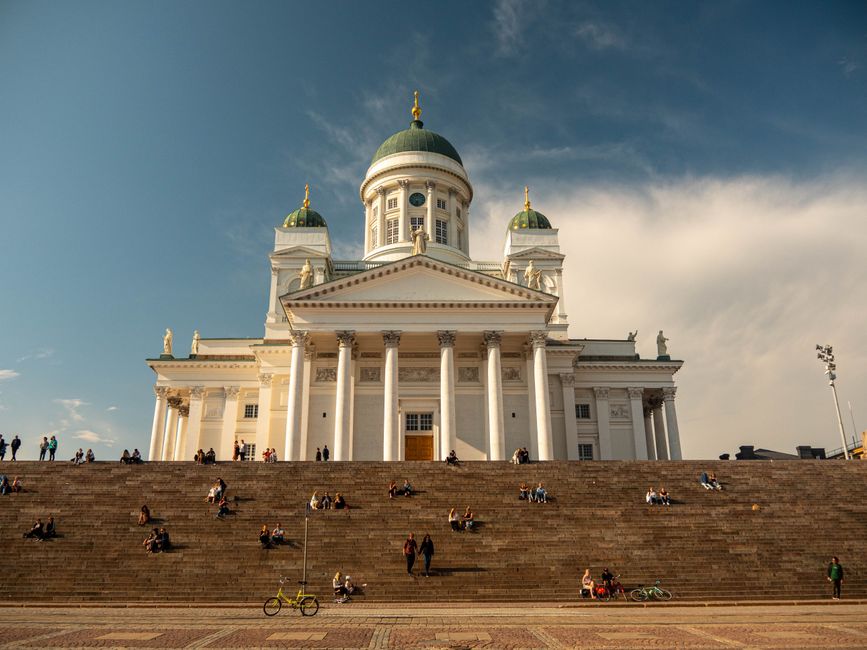
Finland is a land of forests, lakes and light at the north-eastern edge of the European Union. In the south, Helsinki sits on the Baltic with a sea fortress, design shops and public saunas on the waterfront, and Turku, the old capital, looks out over one of the world’s largest archipelagos. Inland, the Lakeland region is a maze of blue water and pine forest, best seen from a canoe or a lakeside cottage. In the north, Finnish Lapland has the Arctic Circle and Santa Claus Village at Rovaniemi, ski resorts such as Levi on low, rounded fells, reindeer, Sámi culture and the Northern Lights from late August to early April. Summer brings white nights and the midnight sun; winter brings snow, frozen lakes and a deep, blue polar twilight. Travel is safe, calm and well organised, and almost everything can be paid by card. Give it a week for Helsinki and the south, or ten days to two weeks to add Lakeland and Lapland.
Right now in Finland
- Wed 5–9°C 41–48°F Mostly clear
- Thu 2–8°C 35–46°F Partly cloudy
- Fri 1–3°C 34–37°F 9 mm Rain
Weather: MET Norway (CC BY 4.0) · Rates: ECB
Key facts
| Currency | Euro (EUR, €); cards and contactless almost everywhere, some places cash-freeSource: visitfinland.com · Last reviewed 4 Oct 2026 |
|---|---|
| Languages | Finnish and Swedish (both national languages; signs often bilingual); Sámi in the far north of Lapland; Åland is Swedish-speaking; English widely spokenSource: en.kotus.fi · Last reviewed 4 Oct 2026 |
| Plugs and voltage | Type C and F · 230 V, 50 HzSource: wikidata.org · Last reviewed 4 Oct 2026 |
| Emergency number | 112 (police, fire, ambulance, rescue); 116 117 medical helplineSource: eu-healthcare.fi · Last reviewed 4 Oct 2026 |
| Driving side | On the right; headlights on at all times; 50 in towns, 80 outside, 100-120 on motorways; alcohol limit 0.5 per mille; winter tyres when conditions require, 1 Nov-31 Mar; watch for reindeer and elkSource: visitfinland.com · Last reviewed 4 Oct 2026 |
| Tap water | Safe to drink everywhere; run the cold tap brieflySource: hsy.fi · Last reviewed 4 Oct 2026 |
| Tipping | Not expected; service is included; round up for exceptional serviceSource: visitfinland.com · Last reviewed 4 Oct 2026 |
| Calling code | +358 (dial 00 for international calls)Source: wikidata.org · Last reviewed 4 Oct 2026 |
| Time zones | EET (UTC+2), summer time EEST (UTC+3) from the last Sunday in March to the last Sunday in OctoberSource: data.iana.org · Last reviewed 4 Oct 2026 |
| Entry summary | Schengen and EU. Most visitors from outside the EU stay visa-free for up to 90 days in 180 and register in the EU Entry/Exit System at the border; ETIAS is not yet in operation. The land border with Russia is closed; Sweden checks arrivals from Finland until 11 November 2026.Source: home-affairs.ec.europa.eu · Last reviewed 4 Oct 2026 |
Multi-day tours of Finland
Multi-day tours from local operators. You check dates and book on Viator, our partner; we may earn a commission at no extra cost to you. How we earn money
Finland at a glance: lakes, forests and the Arctic
Finland covers about 338,000 km², and roughly three-quarters of it is forest. It has around 188,000 lakes, a long Baltic coastline with tens of thousands of islands, and 41 national parks that are free to visit. It stretches more than 1,100 km from the Gulf of Finland to the Arctic fells near Norway, and borders Sweden, Norway and Russia. According to Statistics Finland, the preliminary population at the end of August 2026 was 5,659,324, of whom about 701,700 lived in the city of Helsinki. Outside the south, the country feels very empty: Lapland makes up almost a third of the land but has only a few per cent of the people.
Finland has been a member of the European Union since 1995, uses the euro and is part of the Schengen area. It joined NATO in 2023. Finnish and Swedish are both official languages, so many signs and street names are bilingual (Helsinki is Helsingfors in Swedish, Turku is Åbo), and three Sámi languages are spoken in the far north. The Åland Islands, between Finland and Sweden, are a self-governing, Swedish-speaking region. English is spoken very widely, especially by younger people, and menus, timetables and apps are almost always available in English.
Time zone: Finland runs on Eastern European Time (UTC+2) in winter and Eastern European Summer Time (UTC+3) from the last Sunday in March to the last Sunday in October. That is one hour ahead of Sweden, Norway and Germany, and two hours ahead of the UK.
Finland’s regions
- Helsinki and the south coast: the capital on its peninsula and islands, the old wooden town of Porvoo to the east, the seaside resort of Hanko in the south-west, and Nuuksio National Park on the edge of the metropolitan area.
- The coast and archipelago (south-west and west): Turku, Naantali and the Archipelago Trail through thousands of islands; the self-governing Åland Islands; and the west coast towns of Rauma (a UNESCO-listed wooden old town), Pori and Vaasa, with the Kvarken archipelago.
- Lakeland (central and eastern Finland): Tampere between two lakes, Lake Saimaa with Savonlinna’s Olavinlinna castle and the rare Saimaa ringed seal, Kuopio, Jyväskylä and Alvar Aalto’s buildings, and the hill of Koli in North Karelia.
- Northern Ostrobothnia and Kainuu: the city of Oulu, the wild river and gorge country around Kuusamo and Oulanka National Park, and long forests along the eastern border.
- Lapland: Rovaniemi on the Arctic Circle; the fell resorts of Levi, Ylläs, Pyhä and Saariselkä; Pallas-Yllästunturi and Urho Kekkonen national parks; and Inari, the centre of Finnish Sámi culture, with Utsjoki on the Norwegian border at the northern tip of the EU.
Regions
- Central Finland
- Central Ostrobothnia
- Kainuu
- Kanta-Häme
- Kymenlaakso
- Lapland
- North Karelia
- North Ostrobothnia
- North Savo
- Ostrobothnia
- Pirkanmaa
- Päijät-Häme
- Satakunta
- South Karelia
- South Ostrobothnia
- South Savo
- Southwest Finland
- Uusimaa
- Åland
Where to go: Helsinki, the archipelago, Lakeland and Lapland
A first trip usually pairs Helsinki with either Lapland (in winter) or Lakeland and the archipelago (in summer). Trains link the main cities, a night train runs from Helsinki to Lapland, and short flights save time in the north.
Helsinki
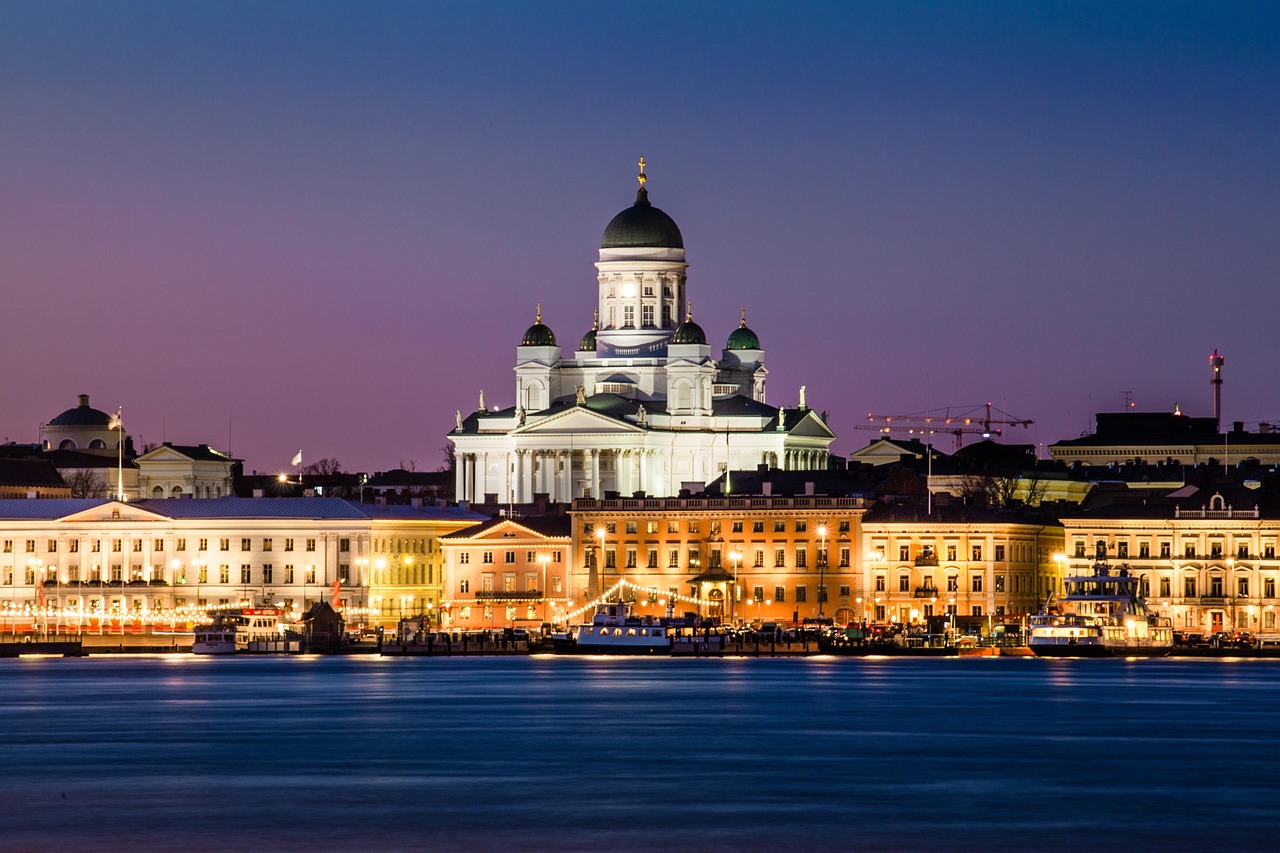
Finland’s capital is compact, green and surrounded by sea. Take the public ferry to the island fortress of Suomenlinna, a UNESCO World Heritage Site, climb the steps of the white Helsinki Cathedral on Senate Square, and step into the Temppeliaukio Church, cut into solid rock. Oodi Central Library, the Ateneum art museum and Kiasma’s contemporary art are all within a few minutes’ walk of the railway station. Then do as the locals do: a public sauna such as Löyly or Allas, with a dip in the Baltic. Helsinki is also the starting point for day trips to Porvoo, Nuuksio National Park and, by ferry, to Tallinn in Estonia.
Turku and the archipelago
Turku, Finland’s oldest city and its capital until 1812, lies on the Aura river on the south-west coast. Its medieval castle is the country’s largest surviving medieval building, and riverside cafés, restaurant boats and museums such as Forum Marinum line the water. The cathedral, the national shrine of the Finnish church, is closed for a major renovation until December 2028. Turku is the gateway to the Archipelago Trail, a loop of bridges and small ferries through thousands of islands, and to Naantali, a wooden seaside town with Moomin World, open in summer. Overnight ferries sail from here to Stockholm via the Åland Islands.
Tampere and Lakeland
Lakeland is the Finland of postcards: forests, granite shores, red wooden cottages and endless lakes. Tampere, an old industrial city built around rapids between two lakes, has red-brick mill buildings, the Moomin Museum and many public saunas. Further east, Savonlinna’s island castle of Olavinlinna hosts an opera festival every July, and Lake Saimaa is home to one of the world’s rarest seals. Kuopio has lake cruises and the Puijo tower; Koli’s hilltop view over Lake Pielinen is a national landscape. Rent a lakeside cottage (mökki) with a sauna, borrow a rowing boat and you have the classic Finnish summer holiday.
Rovaniemi and the Arctic Circle
Rovaniemi, the capital of Lapland, is the easiest place to reach in the Arctic: about 12 hours by night train from Helsinki or an hour and a half by plane. About 8 km north of the centre, the Arctic Circle runs through Santa Claus Village, where you can meet Santa every day of the year (entry to Santa Claus Office is free) and send a card from Santa’s main post office. In town, the Arktikum science centre and museum explains Arctic nature and Sámi life, and the Korundi house of culture shows Lapland’s art. Husky, reindeer and snowmobile safaris and aurora tours run from November to March, and in summer there is midnight sun and river paddling.
Levi, Ylläs and the fells
Finland’s biggest ski resort, Levi, rises above the village of Sirkka in Kittilä, about 170 km north of the Arctic Circle and a short drive from Kittilä airport. It has 44 slopes and 26 lifts, most of them floodlit, plus long cross-country trails, and a season from October to May. Nearby Ylläs and the fells of Pallas-Yllästunturi National Park offer quieter skiing, and in summer and autumn some of Finland’s best hiking, with the ruska colours of early September. Further north, Saariselkä, Inari and Lake Inari are the place for Sámi culture, wilderness and dark skies.
Inari and northern Lapland
Beyond Saariselkä and the Urho Kekkonen National Park, the road runs north to Inari, on the shore of Finland’s third-largest lake. The Siida museum and nature centre and the Sajos Sámi cultural centre tell the story of the Sámi, the EU’s only recognised indigenous people. This is the most reliable part of Finland for the Northern Lights, and the sun does not rise for several weeks around Christmas. Fly to Ivalo, then use a car or bus; distances are long and services thin.
The Åland Islands
Halfway between Finland and Sweden, Åland is a flat, sunny archipelago of more than 6,000 islands with its own flag, stamps and Swedish-speaking culture. It is perfect for cycling and island-hopping by small car ferry, and the Stockholm ferries call at Mariehamn or Långnäs. Åland is part of the EU but outside its tax area, which is why the Baltic ferries can sell duty-free goods.
Helsinki Travel Guide
Plan a trip to Helsinki: Suomenlinna sea fortress and the HSL ferry, Helsinki Cathedral and Temppeliaukio Church prices for 2026, Oodi library, Ateneum and…
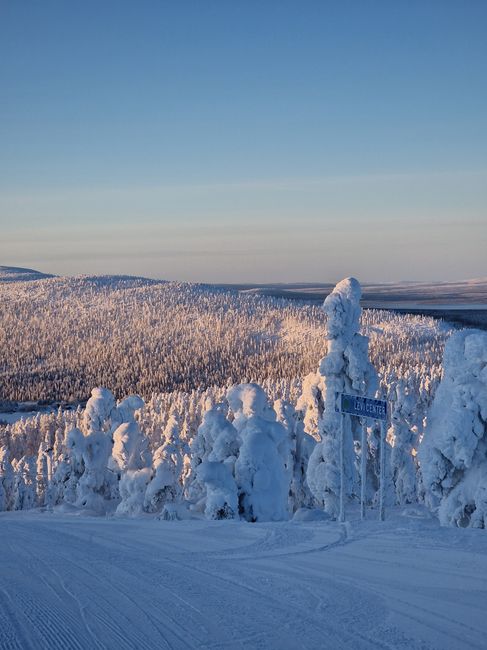
Levi Travel Guide
Plan a trip to Levi in Finnish Lapland: the 2026/27 ski season and lift pass prices, 44 slopes and 26 lifts, cross-country trails, the…
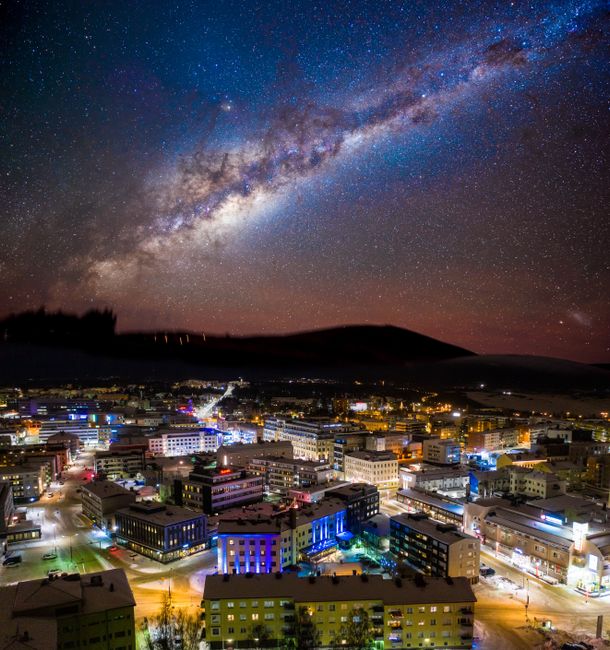
Rovaniemi Travel Guide
Plan a trip to Rovaniemi: Santa Claus Village and the Arctic Circle, Santa Claus Office (free) and the main post office opening hours for…
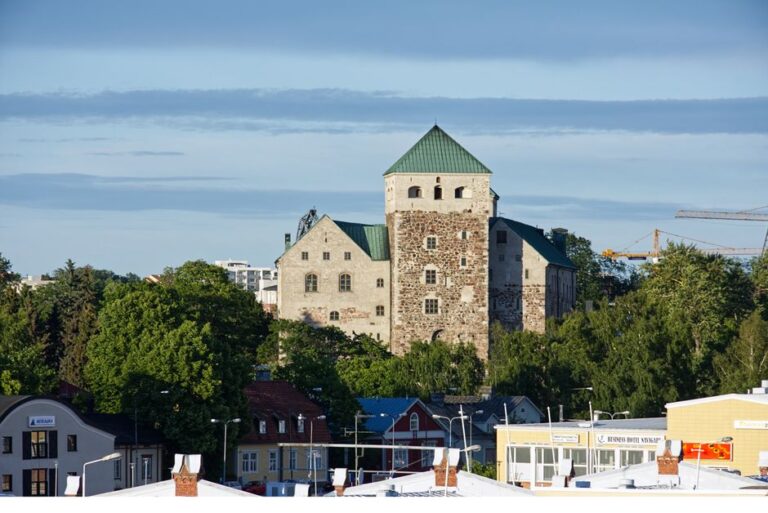
Turku Travel Guide
Plan a trip to Turku: Turku Castle prices and hours for 2026, the cathedral's renovation closure until 2028, the Aura riverside and the free…
Best time to visit Finland, region by region
Finland has four strong seasons, and the north and south feel like different countries. The south coast is mild for its latitude, with warm, light summers and cold, grey winters with snow that comes and goes. Lakeland has warmer summers and colder, snowier winters. Lapland has snow on the ground from about November to May, cold, dry winters and short, bright summers. The table shows rounded average daily highs at one weather station per region, from the official 1991–2020 climate normals that the Finnish Meteorological Institute (FMI) submitted to the World Meteorological Organization, plus the average precipitation a year and the number of days with at least 1 mm of rain or snow.
| Region (FMI station) | Spring highs (Mar–May) | Summer highs (Jun–Aug) | Autumn highs (Sep–Nov) | Winter highs (Dec–Feb) | Rain/snow a year (wet days) |
|---|---|---|---|---|---|
| Helsinki (Kaisaniemi) | 2–15 °C | 19–22 °C | 15 °C falling to 4 °C | −1 to 1 °C | about 650 mm (109) |
| Turku and the south-west (Turku airport; rain at Artukainen) | 3–16 °C | 20–23 °C | 16 °C falling to 4 °C | −1 to 1 °C | about 680 mm (112) |
| Åland (Mariehamn airport) | 3–13 °C | 18–21 °C | 16 °C falling to 5 °C | 0–3 °C | no figure in the WMO set |
| Lakeland (Savonlinna, Punkaharju) | 1–15 °C | 19–22 °C | 14 °C falling to 1 °C | −4 to −2 °C | about 620 mm (119) |
| Oulu and the north-west coast (Oulu airport) | 0–13 °C | 18–21 °C | 13 °C falling to 1 °C | −5 to −3 °C | no figure in the WMO set |
| Rovaniemi and southern Lapland (Rovaniemi airport) | −2 to 11 °C | 17–20 °C | 11 °C falling to −2 °C | −7 to −5 °C | about 630 mm (119) |
| Fell Lapland (Kittilä Pokka) | −3 to 9 °C | 16–19 °C | 10 °C falling to −4 °C | −9 to −7 °C | about 560 mm (111) |
| Northern Lapland (Ivalo airport) | −2 to 9 °C | 15–19 °C | 11 °C falling to −3 °C | −8 to −6 °C | no figure in the WMO set |
Winter nights are much colder than the highs suggest: the average January low is about −6 °C in Helsinki, −13 °C in Rovaniemi and −17 to −18 °C in Ivalo and Kittilä, and cold spells of −25 to −35 °C are normal in Lapland. Summer, by contrast, can bring spells of 25–30 °C even in the north, along with mosquitoes in July. Check the forecast on the FMI’s own service, ilmatieteenlaitos.fi, before hikes and long drives.
Northern Lights, midnight sun and polar night
- Northern Lights: Visit Finland gives the aurora season as late August to early April, when the nights are dark enough. Activity is often highest around the equinoxes, in September–October and February–March, while December and January give the longest dark hours. According to the Finnish Meteorological Institute, as quoted by Visit Finland, auroras appear on about every second clear night above Rovaniemi and on up to three clear nights in four in the far north. Head out of town to a frozen lake or open fell, and give it three or four nights, because cloud is the main problem.
- Midnight sun: above the Arctic Circle the sun stays up all night in early summer. Visit Rovaniemi gives Rovaniemi’s midnight sun as early June to early July, and Levi says the sun shines round the clock there from the end of May into July; in Utsjoki, at the northern tip, it lasts more than two months. Even Helsinki has only a short, light dusk around Midsummer.
- Polar night (kaamos): in northern Lapland the sun does not rise for weeks around the winter solstice; at Levi this is roughly mid- to late December, and much longer in Utsjoki. The middle of the day still has a few hours of blue and pink twilight. Rovaniemi, just south of the Arctic Circle line, still sees the sun briefly at midwinter. In Helsinki, the shortest days have about six hours of daylight.
- Ruska and first snow: the autumn colours of Lapland, called ruska, usually peak in early to mid September, a lovely time to hike. Snow usually arrives in Lapland in October or November and stays until April or May.
Crowds and prices through the year
- June to August: the main season in the south and Lakeland, with long, light days, open-air festivals, archipelago ferries and lake cruises. July is the Finnish holiday month: cities are relaxed but cottages, campsites and summer events are busy, and some city restaurants close for a few weeks.
- September and October: ruska in Lapland, the first Northern Lights, berry and mushroom season, and quiet, cheaper cities. Many summer-only boats and attractions close from late August or mid-September.
- Late November to early January: the busiest and most expensive time in Rovaniemi and Lapland, with Christmas visitors and charter flights. Book flights, night-train cabins, glass igloos and husky safaris months ahead. In the south, Christmas markets and lights brighten the darkest weeks.
- February to April: the best snow, brighter days and good aurora chances in Lapland; the Finnish school winter holidays in February and March and Easter (Good Friday to Easter Monday, 26–29 March 2027) fill the ski resorts.
- May: a quiet month of melting snow in Lapland and fresh green in the south; 1 May (Vappu) is a huge student and spring festival in every city.
Festivals and events through the year
- Winter: Lux Helsinki, the city’s free light-art festival, runs for eight days from 30 December 2026 to 6 January 2027, for the first time over New Year. Sámi National Day is on 6 February, with events in Inari and Rovaniemi. Ski races, reindeer races and ice-fishing competitions fill Lapland’s calendar in March and April.
- Spring: Vappu on 30 April and 1 May, when students in white caps take over the streets and parks with picnics and sparkling mead (sima).
- Summer: Midsummer (Juhannus), with bonfires by the lakes and the sea, is on 25–26 June 2027; Helsinki’s open-air museum on Seurasaari has a classic public celebration. Ruisrock, Finland’s oldest rock festival, takes over Ruissalo island in Turku on 9–11 July 2027, and the Savonlinna Opera Festival fills Olavinlinna castle in July. Flow Festival in Helsinki’s Suvilahti, a music and arts festival, is on 13–15 August 2027.
- Autumn: the Helsinki Festival in late August and early September, and the Baltic Herring Market on the Market Square in early October. Levi hosts the opening slalom races of the women’s and men’s Alpine Ski World Cup on 14–15 November 2026.
- Christmas: Independence Day on 6 December, with candles in every window; Christmas markets such as the St Thomas Market on Helsinki’s Senate Square; Santa’s busiest weeks in Rovaniemi; and the Declaration of Christmas Peace in Turku at noon on 24 December, a tradition since the Middle Ages.
Weather month by month
Averages from FMI normals 1991–2020, Helsinki Kaisaniemi · Last reviewed 4 Oct 2026
How long to stay: sample itineraries
Finland is big but easy to travel: trains are comfortable and punctual, the night train saves a day and a hotel night, and flights to Lapland take about an hour and a half. In summer, a hire car opens up Lakeland and the archipelago; in winter, leave the driving in Lapland to locals unless you are used to snow and ice.
5 days: Helsinki, Porvoo and Tallinn
Spend three days in Helsinki: Senate Square, the Market Square and the ferry to Suomenlinna; the Ateneum, Oodi and the Temppeliaukio Church; and an evening in a public sauna by the sea. Day four is a trip to the wooden old town of Porvoo, or a hike in Nuuksio National Park. On day five, take the ferry across the Gulf of Finland to Tallinn, Estonia’s medieval capital, about two hours away.
7 days in winter: Helsinki and Lapland
Two days in Helsinki, then the night train to Rovaniemi. Spend two days there for Santa Claus Village, the Arktikum and a husky or reindeer safari, and two or three nights in Levi or another fell resort for skiing, snowshoeing and aurora hunting away from the lights. Fly home from Kittilä or Rovaniemi via Helsinki. From November to March, this is Finland’s classic winter trip.
10 days in summer: Helsinki, Turku and Lakeland
Helsinki (three days), then the train to Turku for its castle, river and a day on the Archipelago Trail or in Naantali. Continue to Tampere, and from there into Lakeland: Savonlinna and Olavinlinna castle, a lake cruise on Saimaa, and two or three nights in a cottage with a sauna. Return to Helsinki by train.
14 days: from the Baltic to the Arctic
Combine the two: Helsinki, Turku and a few days in Lakeland, then the night train north to Rovaniemi and on to Levi, Ylläs or Inari. In summer, swap skiing for the midnight sun, fell hiking and canoeing; in September, time it for ruska. Finland combines easily with its neighbours: the overnight ferries from Helsinki and Turku reach Stockholm, and from Levi or Kilpisjärvi it is a short drive into Swedish Lapland or north to Tromsø in Norway.
Entry, money and costs
Entry: Schengen, EES and ETIAS (last reviewed October 2026)
Finland is part of the Schengen area, so the usual Schengen rules apply. EU, EEA and Swiss citizens only need a valid passport or national ID card. Many other nationalities, including UK, US, Canadian and Australian citizens, can visit without a visa for up to 90 days in any 180-day period, counted across all Schengen countries together.
- Entry/Exit System (EES): the EU’s digital border system has been fully running at all Schengen external borders, including Finland’s airports and ports, since 10 April 2026. The first time you enter, non-EU visitors register fingerprints and a facial photo instead of getting a passport stamp; children under 12 are not fingerprinted. Registration is free. Allow extra time at passport control, especially at Helsinki Airport when you arrive or leave on flights from outside Schengen, such as from the UK, the US or Asia.
- ETIAS: the EU’s planned online travel authorisation (fee €20) is not in operation as of October 2026, and no start date has been officially announced. You don’t need one yet. Ignore websites selling “ETIAS applications”.
- Passport validity: non-EU passports must have been issued within the last 10 years and be valid for at least three months after the day you plan to leave the Schengen area.
- The Russian border is closed: all crossing points on Finland’s land border with Russia, from Vaalimaa to Raja-Jooseppi, have been closed since late 2023, and in June 2026 the Finnish Government decided to keep them closed. There is no road or rail route to Russia from Finland, so don’t plan a trip to St Petersburg from here.
- Åland: although Åland is in Schengen and the EU, it is outside the EU’s tax area, so customs allowances apply on ferries and when you bring goods from Åland to mainland Finland.
Money: the euro, cards and cash
Finland uses the euro (€). On 2 October 2026, the European Central Bank’s reference rate was €1 = US$1.12, £0.85, SEK 11.29 and NOK 10.83. Visit Finland calls the country a “contactless wonderland”: Visa and Mastercard, Apple Pay and Google Pay are accepted almost everywhere, from taxis to market stalls and roadside berry stands. Cash still works, but many places show an Ei käteistä (no cash) sign, so carry a card and just a few coins or small notes as a backup. Cash totals are rounded to the nearest five cents, so you will rarely see 1- and 2-cent coins. Always choose to pay in euros, not your home currency, when a card machine asks.
Tipping
Tipping is not expected. Service is included in all prices, and VAT is always included in the price shown. In a restaurant you can round up or leave a couple of euros for really good service, but nobody will mind if you don’t.
Alcohol rules: shops, Alko and bars
Alcohol is taxed heavily and its sale is regulated. Supermarkets and kiosks may sell beer, cider, long drinks (the famous gin-and-grapefruit lonkero) and, since 2024, wine and other drinks made by fermentation, as long as they have no more than 8% alcohol, usually between 7:00 and 21:00. Anything stronger, including most wine, spirits and strong beer, is sold only in the state-owned Alko shops. After a change in the Alcohol Act in summer 2026, Alko has longer Saturday hours and some stores are now open on Sundays, but many are still closed then, so check the Alko store finder. You must be 18 to buy drinks up to 22% and 20 for stronger spirits, and staff check ID. A large beer in a bar typically costs €8–10 in Helsinki. Ferries to Tallinn and Stockholm sell cheaper, tax-free drinks on board.
Tax-free shopping
Finland’s standard VAT is 25.5%, one of the highest in the EU, with lower rates on food, transport and services. Visitors who live outside the EU can reclaim part of the VAT: according to Visit Finland, look for shops with a “Tax Free” sign and spend more than €40 in one store, keep the forms and receipts, and claim the refund when you leave the EU, allowing extra time at the airport.
Typical travel costs
Finland is expensive, though usually a little cheaper than Norway. Eating out and alcohol cost the most, while lunch buffets, supermarkets and free nature help keep costs down. Lapland is much more expensive at Christmas than in March or summer. These estimates per person per day are a planning guide as of October 2026:
| Style | Estimated cost per day | What that looks like |
|---|---|---|
| Budget | about €70–100 | Hostel bed, campsite cabin or wilderness hut, supermarket breakfasts and picnics, a weekday lunch buffet, public transport and early-booked train tickets |
| Mid-range | about €150–250 | Double room in a 3- or 4-star hotel shared by two (breakfast usually included), lunch and dinner out, a museum or public sauna, regular train fares |
| High-end | about €350+ | Design hotel or glass igloo in Lapland, tasting menus, private sauna, guided husky, snowmobile and aurora tours, car hire |
Sample prices as of October 2026: an HSL single ticket in central Helsinki (zones AB) costs €3.30 in the app or €3.50 with a contactless bank card, and to the airport (zones ABC) €4.50 or €4.80. Adult entry to the Ateneum or Kiasma costs €23 at the door or €21 online, a two-hour visit to Löyly’s public saunas costs €29, and a private two-person cabin on the night train to Lapland starts from €49. A one-day adult lift pass at Levi costs €60 in the 2026/27 season. The Finnish Museum Card (Museokortti), €86 for a year, gives free entry to hundreds of museums and can pay off within a week.
Getting there and getting around
Arrival by air and sea
- Helsinki Airport (HEL): Finland’s main international airport, in Vantaa, about 20 km north of the centre, and the hub of Finnair. HSL’s I and P commuter trains run from the station under the terminal to Helsinki Central Station in about 30 minutes, on an HSL ticket for zones ABC (€4.50 in the app as of October 2026).
- Lapland airports: Rovaniemi (RVN), Kittilä (KTT, for Levi), Ivalo (IVL, for Saariselkä and Inari) and Kuusamo (KAO) have domestic flights from Helsinki all year and many direct flights from around Europe in winter.
- Ferries from Estonia and Sweden: Viking Line, Tallink Silja and Eckerö Line sail many times a day between Tallinn and Helsinki, in about two hours. Viking Line and Tallink Silja run overnight cruise ferries from Stockholm to Helsinki and to Turku via the Åland Islands. Finnlines links Travemünde in Germany with Helsinki, and Kapellskär in Sweden with Naantali via Åland.
- Overland: roads cross from Sweden at Tornio–Haparanda and further north, and from Norway into Finnish Lapland. All crossings from Russia are closed.
Trains and the night train to Lapland
VR, Finland’s national railway, links Helsinki with Turku (about two hours), Tampere, the Lakeland cities and Oulu, with fast Pendolino and double-deck InterCity trains. Tickets are cheapest when bought early in the VR app or website, and Interrail and Eurail passes are valid.
Night trains run from Helsinki to Rovaniemi, Kolari (for Levi and Ylläs) and Kemijärvi, and from Tampere to Kolari, with your own private cabin. As of October 2026, VR sells night-train trips until December 2026, with two-person cabins from €49 and cabins with a shower from €74 for the whole cabin; you can take your car on the train from €39. Rovaniemi is about 12 hours from Helsinki overnight, and connecting buses run on to the ski resorts. VR markets the Helsinki–Rovaniemi night train as the Santa Claus Express. Cabins sell out for Christmas and the February ski weeks, so book as soon as sales open.
Buses and domestic flights
Long-distance coaches (Matkahuolto and OnniBus) fill the gaps between railway lines and reach small towns, national parks and Lapland villages, often more cheaply than trains. Finnair flies from Helsinki to Oulu, Kuopio, Rovaniemi, Kittilä, Ivalo, Kuusamo and Mariehamn; for Lapland, flying saves a day each way. Inside cities, local transport is excellent; in Helsinki, buy HSL tickets in the HSL app or tap a contactless card on board.
Driving: winter tyres, reindeer and long distances
Roads are good and quiet but long: Helsinki to Rovaniemi is more than 800 km. Dipped headlights are required at all times, the general limit is 80 km/h on main roads (lower in winter on many sections) and 50 km/h in towns, with up to 120 km/h on some motorways in summer. Winter tyres are compulsory in the winter months (from December to the end of February) and hire cars in Lapland come with studded tyres. Watch for reindeer on Lapland’s roads at any time of year, and for elk (moose) at dusk across the country; collisions are common. Fill up when you can in the north, and carry warm clothes in winter.
Outdoors: everyman’s rights and staying safe
Everyman’s rights (jokaisenoikeudet)
Finland’s everyman’s rights let anyone, visitors included, walk, ski and cycle in the countryside, pick wild berries and mushrooms, swim and paddle, fish with a rod and line, and camp for a short time, without asking permission and free of charge. Visit Finland and Metsähallitus, which runs the national parks, sum up the responsibilities:
- Camping: pitch a tent for a night or two away from houses and gardens, and never in someone’s yard. In national parks, use the marked campsites.
- Fires: campfires are not part of everyman’s rights. Light them only at designated fire sites, and never when a forest or grass fire warning is in force.
- Picking: blueberries, lingonberries, chanterelles and, in Lapland, cloudberries are free to pick, but don’t cut trees or branches, and don’t pick protected plants.
- Wilderness huts: many parks have open, unlocked huts for hikers. Leave them clean, replace the firewood you use, and give way to others.
- Leave no trace: take all your rubbish with you, keep the noise down, stay on paths where they exist, and don’t disturb wildlife or reindeer. Motor vehicles are not allowed off-road without the landowner’s permission, and snowmobiles must keep to marked routes.
Cold, ice and water safety
Lapland’s winter is safe with the right clothes and a guide, but frostbite and hypothermia are real risks at −25 °C. Dress in layers, cover your face and hands, and listen to your guide on safaris. Never walk on frozen lakes or the sea unless locals do and the ice is known to be safe, and keep off river ice. In summer, lake water is often warm enough to swim by July, but the sea and northern lakes stay cold, and boating accidents are common: wear a life jacket. Mosquitoes and other biting insects are at their worst in Lapland in July, so bring repellent and a head net for hikes. Ticks are common in the south and the archipelago.
Culture, sauna, food and everyday etiquette
Finns are polite, honest and comfortable with silence: small talk is short, personal space is wide, and people queue patiently and wait at red lights even on empty streets. A firm handshake and eye contact are normal greetings. Shoes come off when you enter a home.
Sauna is central to Finnish life, and Finnish sauna culture is on UNESCO’s list of intangible cultural heritage. There are about three million saunas in the country, in homes, cottages, hotels and even Parliament. Public saunas are usually mixed and require swimwear; at traditional single-sex saunas people bathe naked. Shower first, sit on a towel or seat cover, throw water on the stones to make löyly (steam), and cool off in the lake, the sea or a hole in the ice. Nobody minds if you leave early.
Finnish food is simple and seasonal: salmon, vendace (small lake fish), Baltic herring, reindeer sautéed with mashed potato and lingonberries, Karelian rye pastries (karjalanpiirakka) with egg butter, rye bread, berries and mushrooms, and cinnamon buns (korvapuusti) with coffee. Finns drink more coffee per person than almost anyone. Lunch is the main meal for many people, and weekday lunch buffets are the best-value way to eat out. Tap water is excellent and free.
Large supermarkets in cities often open long hours, including Sundays. The main public holidays coming up are Independence Day (6 December), Christmas Eve to Boxing Day (24–26 December), New Year’s Day, Epiphany (6 January), Good Friday to Easter Monday (26–29 March 2027), 1 May, Ascension Day (6 May 2027) and Midsummer Eve and Day (25–26 June 2027), when many shops and services close.
Safety, health and connectivity
Safety
Finland is one of the safest countries in the world, with very little crime against visitors. Take normal care with bags in busy places in Helsinki and on late-night streets at weekends. The real risks are natural: cold, darkness, ice on pavements in winter, cold water and getting lost in the forest. Tell someone your route before a hike, carry a charged phone, and in winter join a guided tour for anything off the beaten track.
Emergency number: 112 for police, ambulance, fire and sea rescue. The official 112 Suomi app sends your location to the emergency centre.
Health
Healthcare is excellent. EU and EEA citizens should carry their European Health Insurance Card (EHIC) for necessary treatment at local patient charges, and UK visitors can use a GHIC. Everyone should have travel insurance that covers winter activities such as husky and snowmobile safaris and, if needed, evacuation from remote areas. Pharmacies (apteekki) are easy to find in towns. For urgent but non-emergency medical advice, the national medical helpline is 116 117.
Connectivity and power
Mobile coverage and data speeds are excellent, even in much of Lapland, and free Wi-Fi is common in cafés, trains, libraries and on public transport. EU phone plans roam at home prices; others can buy a local SIM or eSIM. Sockets are type C and F at 230 V and 50 Hz, so bring a travel adapter from the UK, North America or Australia. Useful apps: VR (trains), HSL (Helsinki transport), Matkahuolto (buses), the FMI weather service, an aurora alert app, and 112 Suomi.
Things to do: hiking, boat trips, sightseeing, cycling and the Northern Lights
- Hiking: 41 national parks with marked trails, from Nuuksio near Helsinki to the Hetta–Pallas trail across the fells of Pallas-Yllästunturi, the Karhunkierros (Bear’s Ring) in Oulanka and the wilderness of Urho Kekkonen National Park. Open huts and lean-to shelters make multi-day hikes easy, and September’s ruska is the most beautiful time in Lapland.
- Boat trips: the public ferry to Suomenlinna, island cruises from Helsinki, the Archipelago Trail’s small ferries from Turku, lake steamers on Saimaa and Päijänne, and the big Baltic ferries to Tallinn and Stockholm.
- City sightseeing: Helsinki’s architecture, design and museums, Turku’s castle and riverside, Tampere’s red-brick mills, Porvoo’s and Rauma’s wooden old towns, and Alvar Aalto’s buildings in Jyväskylä.
- Cycling: the Archipelago Trail from Turku, the flat lanes of Åland, Helsinki’s city bikes and waterfront routes, and summer fat-biking and gravel trails around Levi and Ylläs.
- Beaches and lake swimming: sandy beaches at Hietaniemi in Helsinki, Hanko, Yyteri near Pori and Kalajoki on the west coast, and countless lakeside swimming spots; the water is usually warmest in late July.
- Northern Lights and winter activities: aurora tours, husky and reindeer safaris, snowmobiling, snowshoeing, ice fishing and cross-country skiing in Lapland from November to April, and public saunas with ice swimming across the country.
What to pack
In summer, bring layers, a light waterproof rain jacket, comfortable hiking shoes, swimwear for lakes and saunas, insect repellent for the north, sunglasses and an eye mask for the light nights. For Lapland in winter, pack thermal base layers (wool rather than cotton), a fleece or down mid-layer, a windproof outer layer, a warm hat, a neck gaiter, mittens over thin gloves, wool socks and warm, roomy winter boots; most safari companies lend thermal overalls, boots and mittens. In southern cities in winter, shoes with a good grip or slip-on ice grips help on icy pavements. Add a type C/F plug adapter, a refillable bottle and a contactless card.
Finland travel FAQ
When is the best time to visit Finland?
June to August for Helsinki, the archipelago, Lakeland and the midnight sun, with long, light days and highs of about 19–23 °C in the south. December to March for snow, Lapland and the Northern Lights, with Christmas in Rovaniemi the busiest time. September is lovely for autumn colours (ruska) and the first auroras.
When can I see the Northern Lights in Finland?
Visit Finland gives the season as late August to early April, when nights are dark enough. Activity is often highest around September–October and February–March. The further north you go, the better your chances: auroras appear on about every second clear night above Rovaniemi and more often in northern Lapland. Get away from town lights and allow several nights.
How do I get from Helsinki to Lapland?
Fly from Helsinki to Rovaniemi, Kittilä or Ivalo in about an hour and a half, or take VR’s night train to Rovaniemi (about 12 hours) or Kolari. As of October 2026, private night-train cabins start from €49, and they sell out early for Christmas.
How many days do you need in Finland?
Three days for Helsinki, five with Porvoo and a day in Tallinn. A week lets you combine Helsinki with Lapland in winter, or with Turku and the archipelago in summer. Ten days to two weeks covers Helsinki, Lakeland and Lapland.
Do I need a visa or ETIAS to visit Finland?
Finland is in the Schengen area. Many nationalities, including UK, US, Canadian and Australian citizens, can stay up to 90 days in any 180 days without a visa. Since April 2026 non-EU visitors register fingerprints and a photo in the EES border system on first entry. ETIAS is not yet running as of October 2026, so you don’t need it yet.
Can I travel from Finland to Russia?
Not overland. All crossing points on the Finnish–Russian land border have been closed since late 2023, and in June 2026 the Finnish Government decided they would stay closed. There are no trains or buses to St Petersburg. Check the Finnish Border Guard for the latest situation.
Do I need cash in Finland?
Hardly ever. Cards and mobile payments are accepted almost everywhere, including taxis, buses and market stalls, and some places don’t take cash at all. A few euros in coins can help at rural kiosks or for a locker.
Can you buy alcohol in Finnish supermarkets?
Yes, drinks with up to 8% alcohol, such as beer, cider, long drinks and fermented wines, usually between 7:00 and 21:00. Stronger drinks are sold only at the state-owned Alko shops, some of which now open on Sundays after a 2026 change in the law. You must be 18, or 20 for strong spirits.
How expensive is Finland?
Similar to Sweden and cheaper than Norway. As a rough guide for October 2026, budget travellers spend about €70–100 a day and mid-range travellers about €150–250. Save with weekday lunch buffets, supermarkets, early train fares, free national parks and the Museum Card.
Can I camp anywhere in Finland?
Under everyman’s rights you may pitch a tent for a short stay on uncultivated land away from homes, without asking. Campfires are not included: use official fire sites and never light a fire when a forest fire warning is in force. In national parks, camp at the marked sites.
What should I know about Finnish saunas?
Shower first, sit on a towel, and throw water on the stones for steam; cool off outside or in the water, and repeat. Public saunas are usually mixed and require swimwear, while single-sex saunas are often nude. In Helsinki, Löyly charges €29 for two hours as of October 2026, towel included.
Sources
- Natural Earth · Public domain · fetched 4 Oct 2026
- © OpenStreetMap contributors · ODbL · fetched 4 Oct 2026
- Wikidata · CC0 · fetched 4 Oct 2026
Sources and last review
Researched and last reviewed on 4 October 2026. Population from Statistics Finland (preliminary data for August 2026); climate from the Finnish Meteorological Institute’s official 1991–2020 station normals (WMO collection); Northern Lights, cards, tipping, tax-free and everyman’s rights from Visit Finland; midnight sun from Visit Rovaniemi and Levi; exchange rates from the European Central Bank; EES from the EU; the Russian border from the Finnish Border Guard and Government; night trains from VR; HSL fares from HSL; airport trains from Finavia; museum prices from the Ateneum and Kiasma; sauna prices from Löyly; Levi lift passes and the World Cup from Levi; Alko’s opening from Alko; festival dates from Lux Helsinki, Flow Festival and Ruisrock. The 8% shop rule and sales hours, the Sunday Alko change (also reported by Yle), winter tyre dates, ferry crossing times, Levi’s polar night dates, the St Thomas Christmas Market and the daily cost ranges come partly from secondary sources or general knowledge and are flagged for checking. Check the official links before you travel.
Plugs and power in Finland
Finland uses 230 V, 50 Hz and these plugs (left) and wall sockets (right):
All plug types and voltages by country → · Check what you need to pack →
Plan your trip
Partner links: TravelerCenter may earn a commission if you book, at no extra cost to you.
🇫🇮 Useful Finnish phrases for Finland
All 38 Finnish phrases: restaurant, hotel, emergencies, romance (printable) →