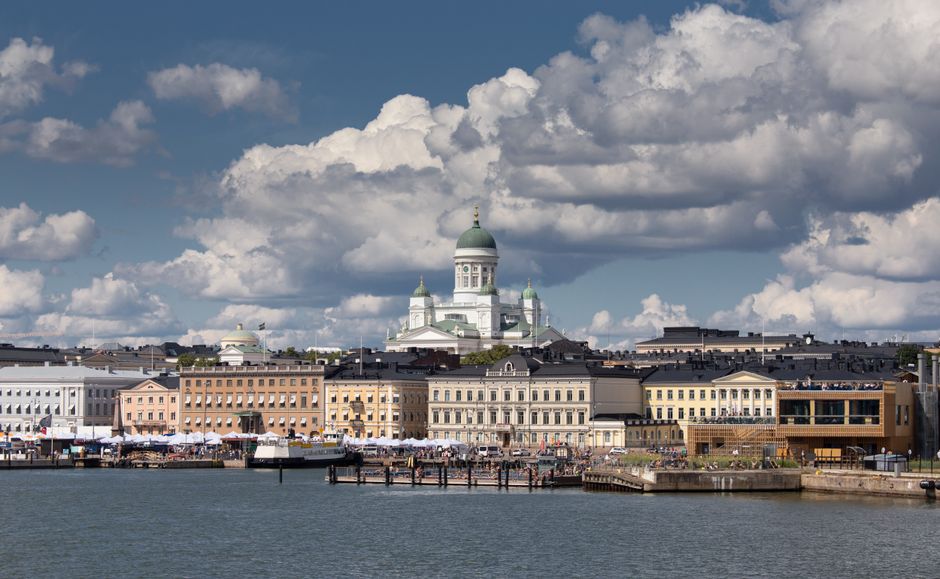
Helsinki, Finland’s capital, sits on a peninsula and a scatter of islands on the Gulf of Finland, and the sea is part of daily life: ferries leave from the Market Square, people swim in seawater pools and saunas all year, and in summer half the city seems to be out on the rocks and islands. Around the white Helsinki Cathedral and Senate Square stands one of Europe’s finest neoclassical centres, while Oodi library, the rock-cut Temppeliaukio Church and the design shops show off modern Finland. A 15-minute ferry ride takes you to Suomenlinna, an 18th-century sea fortress and UNESCO World Heritage Site. Come in summer for long, light evenings and island-hopping, or in winter for saunas, Christmas markets and the Lux Helsinki light festival. Give it three days for the city, four or five to add Porvoo, Nuuksio National Park or a ferry day trip to Tallinn.
Right now in Helsinki
- Wed 10–14°C 49–58°F Clear
- Thu 8–13°C 46–55°F 4 mm Cloudy
- Fri 7–13°C 45–55°F 13 mm Rain
Weather: MET Norway (CC BY 4.0) · Sea temperature: NOAA CoastWatch · Air quality: OpenAQ · Rates: ECB
Top tours in Helsinki
See all tours for Helsinki →
From local operators, with prices and reviews; you check availability and book on Viator, our partner. We may earn a commission at no extra cost to you. How we earn money
Helsinki at a glance
- Best for: a sea fortress and islands, architecture and design, art museums, public saunas by the sea, food markets, and easy day trips to Porvoo, Nuuksio and Tallinn.
- How long: 2–3 days for the centre, Suomenlinna and a sauna; 4–5 days to add Porvoo, Nuuksio National Park or Tallinn.
- Best time: late May to early September for long days, terraces and island ferries; late November to early January for Christmas markets, lights and Lux Helsinki (30 December 2026 to 6 January 2027).
- Getting in: Helsinki Airport is about 30 minutes from the Central Station by HSL commuter train (I or P line) on a zone ABC ticket; trains from Turku take about two hours, and ferries from Tallinn about two hours.
- Getting around: walk, and use HSL’s trams, metro, buses and ferries. As of October 2026, a single ticket for zones AB costs €3.30 in the HSL app or €3.50 with a contactless bank card.
- Budget: expensive, but Suomenlinna, Oodi, the churches’ outdoor squares, parks and beaches are free, and weekday lunch buffets are good value. Cards are accepted almost everywhere.
Helsinki, area by area
According to Statistics Finland, about 701,700 people lived in the city of Helsinki in August 2026, and around 1.3 million in the wider area with Espoo and Vantaa. The centre is compact, and these areas are all within a 30-minute walk or a short tram ride of each other.
Kruununhaka, Senate Square and the Market Square
The historic heart: Senate Square with the cathedral, the Government Palace and the University, all designed by Carl Ludvig Engel in the 19th century; the Market Square (Kauppatori) and the Old Market Hall on the harbour; and the red-brick Uspenski Cathedral on the Katajanokka headland. Best for: first visits, ferries and classic views.
Kluuvi and Kamppi (the city centre)
Around the Central Station and the Esplanadi park: department stores, the Ateneum, Kiasma, Oodi, the Music Centre and Parliament on Mannerheimintie, and the Kamppi shopping centre and Chapel of Silence. Best for: museums, shopping and transport links.
Punavuori, Ullanlinna and the Design District
South of the Esplanadi, Art Nouveau apartment blocks hide independent design shops, galleries, cafés and bars, the Design Museum, and the seafront park of Kaivopuisto with sea views and summer cafés. Best for: design, food and evening strolls by the sea.
Kallio and Sörnäinen
North across the Long Bridge, the old working-class district of Kallio is the city’s relaxed, bohemian side, with cheap bars, vintage shops, the Hakaniemi Market Hall and old neighbourhood saunas such as Kotiharjun Sauna. Further east, Suvilahti’s old power station hosts Flow Festival in August. Best for: nightlife, a local feel and better-value hotels.
Töölö and the waterfront west
Leafy Töölö has the Temppeliaukio Church, the Sibelius Monument, the National Museum and the Olympic Stadium, with seaside paths along Töölönlahti bay and to Hietaniemi beach. Löyly’s sauna is on the Hernesaari shore to the south-west. Best for: quieter stays and waterside walks.
Top things to see in Helsinki
Prices and hours below were checked on the official sites in October 2026. They change, especially around holidays, so check before you go. A Finnish Museum Card (€86 for a year) gives free entry to the Ateneum, Kiasma and many other museums.
Suomenlinna sea fortress
Built by the Swedes from 1748 on a group of islands guarding the harbour, Suomenlinna (Sveaborg in Swedish) is one of the world’s largest sea fortresses and a UNESCO World Heritage Site. Walk the ramparts, old dry docks and cannon emplacements on Kustaanmiekka at the southern tip, look into the Suomenlinna Museum by the visitor centre, the Ehrensvärd Museum, the Military Museum’s Manege and, in summer, the Vesikko submarine. About 800 people still live on the islands, and there are cafés, a brewery restaurant and picnic spots on the rocks.
Getting there. There is no entrance fee to the fortress itself. The HSL passenger ferry runs from the Market Square every day of the year, from early morning until late at night, several times an hour in summer and at least once an hour in winter; the crossing takes about 15 minutes and a normal HSL ticket for zones AB is valid. From early May to late September a private water bus also runs (about 30 minutes). The visitor centre is open daily 10:00–16:00; museum opening hours vary by season.
Helsinki Cathedral and Senate Square
The green-domed, white Lutheran cathedral, finished in 1852, towers over Senate Square at the top of a broad flight of steps, a favourite meeting place. The interior is plain and bright, with statues of the Reformers. Senate Square is the stage for big events, from New Year’s Eve to the Christmas market.
Tickets and hours. As of October 2026, the cathedral charges €8 for adults from 1 September to 31 October; under-18s go free, and the fee does not apply to people attending services. From 1 November to 31 May, the €8 fee is voluntary, paid at a self-service checkout, and the crypt is closed. In summer (June to August) it costs €10 (€8 concessions). Tickets are sold in the bell-tower pavilion; visiting hours change around church events, so check the weekly timetable on the cathedral’s website.
Temppeliaukio Church (the Rock Church)
Opened in 1969, this Lutheran church in Töölö was blasted into a granite outcrop and roofed with a shallow copper dome on a ring of skylights. The bare rock walls give it beautiful acoustics, and it is a popular concert venue. As of October 2026 it is open for visits every day of the year, and adults (18 and over) pay €8 during the standard visiting hours; under-18s go free. Hours change from week to week because of services, weddings and concerts, so check the church’s website for the coming week before you go.
Oodi Central Library
Opposite Parliament, Oodi is a wave of glass and spruce that opened in 2018 as a “living room” for the city. It is free, open to everyone, and much more than a library: a top-floor “book heaven” with a terrace, a café, recording studios, 3D printers, sewing machines and gaming rooms. As of October 2026, Oodi is open Monday to Friday 8:00–21:00 and Saturday and Sunday 10:00–20:00, with shorter hours on some holidays.
Ateneum Art Museum
Finland’s national gallery of older art fills a palace by the Central Station. The collection runs from the golden age of Finnish painting, with Akseli Gallen-Kallela’s scenes from the Kalevala, Helene Schjerfbeck and Albert Edelfelt, to Van Gogh and other European masters, alongside big temporary exhibitions.
Tickets and hours. As of October 2026, admission costs €23 at the ticket office or €21 online, €13 discounted, and under-18s go free. It is open Tuesday 10:00–18:00, Wednesday and Thursday 10:00–20:00, Friday 10:00–18:00 and weekends 10:00–17:00, and closed on Mondays, 6 December and 24–25 December. Free admission days left in 2026 are 6 November and 11 December.
Kiasma Museum of Contemporary Art
Steven Holl’s curving building next to Oodi and the Mannerheim statue shows contemporary art from Finland and around the world, with changing exhibitions on several floors. As of October 2026 it has the same prices as the Ateneum: €23 at the door, €21 online, €13 discounted and free for under-18s, and entry is free for everyone on the first Friday of the month. It opens Tuesday and Friday 10:00–20:00, Wednesday and Thursday 10:00–18:00, and weekends 10:00–17:00, and is closed on Mondays.
The Market Square, Old Market Hall and Uspenski Cathedral
The harbourside Market Square sells berries, peas and new potatoes in summer, crafts all year, and fried Baltic herring and salmon soup from orange-tented stalls. Next door, the Old Market Hall (1889) has delis, cafés and a smoked-fish counter. In early October the square fills with fishing boats for the Baltic Herring Market, a tradition since 1743. Across the bridge on Katajanokka, the red-brick Uspenski Cathedral, with its golden onion domes, is the largest Orthodox church in Western Europe and has a good view back over the harbour.
Public saunas: Löyly, Allas and the classics
A sauna is the best way to understand Helsinki. Löyly, a striking wooden building on the Hernesaari shore, has a traditional smoke sauna and a wood-burning sauna, with steps straight into the sea and a restaurant. As of October 2026, a two-hour visit costs €29, including a towel, seat cover and shower products; the saunas are mixed, so swimwear is required, and booking ahead is wise. Allas Sea Pool, beside the Market Square, has heated pools, a cold seawater pool and saunas with views of the cathedral and harbour. Locals also love the old public saunas such as Kotiharjun Sauna in Kallio, Helsinki’s last original wood-heated public sauna, and the newer seaside saunas at Sompasauna and Kulttuurisauna. See the Finland guide for basic sauna etiquette.
Museums
- Ateneum Art Museum
- Kiasma Museum of Contemporary Art
Other sights
- Oodi Central Library
Churches and cathedrals
- Helsinki Cathedral
- Temppeliaukio Church (Rock Church)
- Uspenski Cathedral
Monuments
- Suomenlinna
More museums and city experiences
- More museums: the National Museum of Finland in its castle-like building on Mannerheimintie; Amos Rex, an art museum under domed skylights in the Lasipalatsi square; the Design Museum and Museum of Finnish Architecture in Punavuori; and HAM, the Helsinki Art Museum, with a room of Tove Jansson’s frescoes.
- Seurasaari Open-Air Museum: old wooden farmhouses, manors and a church on a forested island linked by a bridge, with squirrels and a classic Midsummer bonfire; the buildings open only in summer, but the island is free to walk all year.
- Architecture and design: Alvar Aalto’s Finlandia Hall, the Central Station by Eliel Saarinen, the Kamppi Chapel of Silence, and the Design District’s shops for Marimekko, Iittala and young Finnish designers.
- Island hopping: in summer, small boats run from the Market Square and Hakaniemi to recreational islands such as Vallisaari, Lonna and Pihlajasaari, with beaches, nature trails and cafés; see our boat trips guide.
- Beaches and swimming: Hietaniemi beach in Töölö is the city’s main sandy beach, warmest in late July; see our beaches guide.
- By bike: Helsinki’s yellow city bikes run from April to October, and waterfront paths link Kaivopuisto, Hernesaari and Töölö; see our cycling guide.
Activities and best months
- Beaches and swimmingJunJulAugHietaranta (Hietaniemi) beach, next to the city centre, is one of Helsinki's most popular beaches, with lifeguards in the beach season, changing shelters, showers, toilets, a café, volleyball and basketball courts and an outdoor gym; water quality, temperature and blue-green algae are shown on the city's ulkoliikunta.fi map in summer. It is open all year, with winter swimming facilities. · source
- Boat tripsHelsinki is an archipelago of over 300 islands. The HSL public ferry runs all year from the Market Square to Suomenlinna, a UNESCO World Heritage sea fortress, in about 15 minutes, several times an hour in summer and at least hourly in winter; there is no entrance fee to the islands, only the ferry ticket. From early May to late September a water bus (about 30 minutes, HSL tickets not valid) also runs, and seasonal boats serve islands such as Pihlajasaari (beaches), Lonna (sauna) and Vallisaari (nature trails). · source
- City sightseeingMyHelsinki's top attractions: Senate Square, the heart of neoclassical Helsinki, with the white, green-domed Helsinki Cathedral at the top of its steps; the Temppeliaukio Rock Church, excavated out of solid granite under a copper dome; Oodi Central Library (2018), 'more like the city's living room'; the Market Square, where island ferries leave; Amos Rex, Finlandia Hall by Alvar Aalto, and Europe's largest collection of Art Nouveau architecture. · source
- CyclingAprMayJunJulAugSepOctHelsinki has over 1,200 km of cycle paths. The yellow city bikes (over 4,600 bikes at 460 stations in Helsinki and Espoo) run from 1 April to 31 October, with the first 60 minutes of each ride included and EUR 1 for each extra 30 minutes; popular rides follow the Baana, a former railway cutting, and the seaside paths towards Lauttasaari. Shops rent e-bikes for longer trips. · source
Festivals and seasons in Helsinki
Christmas and Lux Helsinki 2026/27
From late November, Aleksanterinkatu’s Christmas street lights are switched on and the St Thomas Christmas Market (Tuomaan markkinat) fills Senate Square with wooden huts, crafts, mulled glögi and a carousel; the 2026 market is expected to run from about 27 November to 22 December, so check the organiser’s page. Independence Day on 6 December is a quiet, candlelit national holiday, with a torchlight student procession. Then, from 30 December 2026 to 6 January 2027, the free Lux Helsinki light-art festival lights up the city centre over eight evenings, for the first time across New Year.
Vappu, Midsummer and summer festivals
On 30 April, students crown the statue of Havis Amanda at the Market Square with a white cap, and on 1 May (Vappu) the whole city picnics in Kaivopuisto. Midsummer (25–26 June 2027) empties the city as people head to their cottages, but Seurasaari holds a traditional celebration with bonfires. Flow Festival, a music and arts festival in the old Suvilahti power plant, returns on 13–15 August 2027, and the Helsinki Festival of arts runs from late August into September. In early October, the Baltic Herring Market brings fishermen from the archipelago to the Market Square.
Day trips from Helsinki
- Porvoo: Finland’s second-oldest town, about 50 km east, with red wooden riverside warehouses, cobbled lanes, a medieval cathedral and good cafés and chocolate shops. Buses take about an hour; in summer a historic steamship also sails along the coast. A relaxed half or full day.
- Nuuksio National Park: lakes, forest and rocky hills in Espoo, about 35 km from the centre, with marked trails from 2 to 10 km, campfire sites and the Haltia Nature Centre. Take the train to Espoo station and a local bus towards the park; see our hiking guide.
- Tallinn: Estonia’s capital and its UNESCO-listed medieval Old Town are about two hours away by ferry. Tallink, Viking Line and Eckerö Line sail many times a day from Helsinki’s West and South harbours and Katajanokka, so a day trip is easy; carry your passport or ID card.
- Fiskars and the west: the old ironworks village of Fiskars, now full of craft and design studios, about 90 minutes away, and the wooden town of Ekenäs (Raasepori) on the coast.
- Turku: the old capital, with its castle and riverside, is about two hours by train, so it works as a long day trip, though it is better with a night.
Nearby destinations
- Tallinn82 km
- Turku150 km
- Pärnu200 km
- Saint Petersburg299 km
Getting to Helsinki
By air. Helsinki Airport (HEL), in Vantaa about 20 km north of the centre, is Finnair’s hub, with flights across Europe and to Asia and North America. As of October 2026, the options into town are:
- Train: the HSL I and P commuter trains leave from the station beneath the terminal and reach the Central Station in about 30 minutes, running every 10 minutes or so for most of the day. You need a zone ABC ticket: €4.50 in the HSL app or from ticket machines, or €4.80 by tapping a contactless bank card on the reader.
- Bus: HSL bus 600 runs from the airport to the Central Station via the northern suburbs, on the same ABC ticket; it is slower but useful at night.
- Taxi: taxis and ride-hailing cars wait outside arrivals; ask for a fixed price before setting off.
By sea. Ferries from Tallinn arrive at the West Harbour (Länsisatama), the South Harbour (Eteläsatama) and Katajanokka, all close to the centre by tram. Overnight cruise ferries from Stockholm via the Åland Islands (Viking Line and Tallink Silja) dock at Katajanokka and the South Harbour, and Finnlines’ ferries from Travemünde in Germany arrive at Vuosaari in the east.
By train. VR’s trains link Helsinki Central Station with Turku (about two hours), Tampere, the Lakeland cities and Oulu, and the night train runs north to Rovaniemi and Kolari in Lapland. There are no trains from Russia: the border has been closed since late 2023.
Getting around Helsinki and HSL tickets
The centre is walkable, and HSL (Helsinki Regional Transport) runs the trams, metro, buses, commuter trains and the Suomenlinna ferry on one zone system. Zones A and B cover the city of Helsinki, including Suomenlinna; zone C adds Vantaa (and the airport) and the rest of Espoo. As of October 2026, according to HSL:
- Single tickets: zones AB cost €3.30 in the HSL app, on an HSL card or from machines, or €3.50 if you tap a contactless bank card or phone on the reader; zones ABC cost €4.50 or €4.80. Single tickets are valid for 80 to 110 minutes, depending on the zones, with free transfers.
- Day tickets: sold for 1 to 13 days. A one-day AB ticket costs €10.60 and a three-day AB ticket €21.20; with zone C, €12.80 and €25.60. They pay off if you take three or more trips a day or include the airport.
- On board: on trams and the metro, buy or activate your ticket before boarding and keep it ready for inspection; on buses, show it to the driver or tap your card. Inspectors carry out random checks, and fines are steep.
Tram 2 and tram 3 make a good figure-of-eight sightseeing loop past the main sights for the price of a normal ticket. See our city sightseeing guide for more ways to explore.
When to go and how long to stay
Helsinki’s sea climate keeps summers pleasantly warm rather than hot, and winters cold and often grey, with snow that comes and goes. The table uses the Finnish Meteorological Institute’s official 1991–2020 normals for Helsinki Kaisaniemi, in the city centre, as submitted to the World Meteorological Organization.
| Season | Average daily high | Average nightly low | Rain/snow per month | What it’s like |
|---|---|---|---|---|
| Winter (Dec–Feb) | −1 to 1 °C | −6 to −3 °C | 38–58 mm | Short, dark days, sleet or snow, sometimes a frozen sea; Christmas markets, Lux Helsinki, ice swimming |
| Spring (Mar–May) | 2 °C rising to 15 °C | −4 to 6 °C | 34–38 mm | The driest season; long, bright evenings by May; Vappu on 1 May |
| Summer (Jun–Aug) | 19–22 °C | 11–15 °C | 57–81 mm | Very long days, terraces, island ferries and swimming; Midsummer; August is the wettest month |
| Autumn (Sep–Nov) | 15 °C falling to 4 °C | 9 °C falling to 0 °C | 56–73 mm | Crisp September, then dark and damp; Baltic Herring Market in October |
Helsinki gets about 650 mm of rain and snow a year, with at least 1 mm on about 109 days. July is the warmest month, with highs of about 22 °C; February is the coldest, with nights around −6 °C. At Midsummer the sun sets after 22:30 and it never gets properly dark; in late December there are only about six hours of daylight. The city is quietest in July, when many locals are at their cottages and some restaurants close, and busiest with conferences in late spring and early autumn.
Helsinki in 3 days
Day 1: Senate Square and the cathedral, the Market Square and the Old Market Hall, Uspenski Cathedral, then the ferry to Suomenlinna for the afternoon. Day 2: the Ateneum or Kiasma, Oodi, the Temppeliaukio Church and the Sibelius Monument, with dinner in the Design District. Day 3: Kallio and the Hakaniemi Market Hall, the National Museum or Amos Rex, and an evening sauna and sea swim at Löyly or Allas.
Helsinki in 5 days
Add a ferry day trip to Tallinn’s medieval Old Town on day 4, and on day 5 either Porvoo’s wooden old town or a hike and campfire lunch in Nuuksio National Park. In summer, swap one city day for island-hopping to Vallisaari or Pihlajasaari.
Weather month by month
Averages from FMI normals 1991–2020, Helsinki Kaisaniemi · Last reviewed 4 Oct 2026
Where to stay in Helsinki
- City centre (Kluuvi and Kamppi): big hotels near the Central Station and the airport train; the most practical base for a short stay.
- Kruununhaka and Katajanokka: quiet streets near the Market Square, the Suomenlinna ferry and the Stockholm ferry terminals.
- Punavuori and Ullanlinna: boutique hotels in the Design District, close to restaurants and the seafront.
- Kallio: better-value hotels and apartments, with nightlife and saunas on the doorstep, a short tram or metro ride from the centre.
- Suomenlinna: a hostel and a few guest rooms on the fortress islands, for a peaceful night once the day visitors have left.
Hotel prices are often lower at weekends and in July, when business travel drops, and highest during big conferences and events. Most hotels include a generous breakfast buffet.
Practical tips for Helsinki
- Pay by card: cards and phones work everywhere, including the HSL readers on trams and buses; you can manage a whole stay without cash.
- Eat a lunch buffet: on weekdays, many restaurants serve a fixed-price lunch (lounas) with salad, bread and coffee, usually the best-value meal of the day.
- Book saunas ahead: Löyly and other popular saunas fill up on weekend evenings; book a time slot online.
- Buying alcohol: supermarkets sell drinks up to 8% alcohol, usually until 21:00; stronger drinks only at Alko shops, some of which now open on Sundays.
- Plan for the light: bring an eye mask in June, when it hardly gets dark; in December, start sightseeing early because it is dark by mid-afternoon.
- Check museum days: most museums close on Mondays, and the Ateneum and Kiasma have free days and evening openings.
What to pack for Helsinki
Layers and a light waterproof rain jacket in every season, comfortable shoes for cobbles and long walks, and a warm layer for ferries, which are breezy even in summer. Bring swimwear for saunas and sea pools, and sunglasses and an eye mask for the light summer nights. In winter, add a warm coat, hat, scarf and gloves, and shoes with a good grip or slip-on ice grips for icy pavements. A type C/F travel adapter and a contactless card complete the list.
What to pack
- City walking shoesLisbon and Porto are steep, with polished limestone cobbles that get slippery, so grippy soles matter.
- Day packs and anti-theft bagsCarries water, towel and sunscreen down the long stairways to Algarve coves.
- Dry bags and phone pouchesProtects phones and cameras from sand and spray on beaches reached by ferry or steep paths.
- Fleeces and warm layersIt is cooler at sea than on land, especially on morning whale-watching trips.
- Quick-dry beach towelsA sand-shedding quick-dry towel packs small for beach days and lido visits.
- Rain jacketsA windproof, waterproof shell keeps you warm on open boats, where wind and spray cool you quickly.
- Reef-friendly sunscreenSummer UV is strong on Portuguese beaches and there is little shade below the cliffs.
- Travel adapters and convertersPortugal uses Type C and F sockets at 230 V, so most visitors from outside Europe need an adapter.
- Water bottles and hydration packsRiding in the Algarve and Alentejo heat needs more water than you expect.
- Water shoesRocky coves, lava pools and weever fish in shallow sand make water shoes useful.
- WetsuitsOn the west and north coasts the sea stays around 16–18 °C even in summer, so a thin suit helps for long swims.
Helsinki travel FAQ
How do I get from Helsinki Airport to the city centre?
Take the HSL I or P commuter train from the station under the terminal to the Central Station, about 30 minutes. You need a zone ABC ticket: as of October 2026, €4.50 in the HSL app or €4.80 by tapping a contactless bank card. Bus 600 uses the same ticket.
How much is a public transport ticket in Helsinki?
As of October 2026, a single ticket for zones AB costs €3.30 in the HSL app or €3.50 by contactless card, valid for about 80 minutes. A one-day AB ticket costs €10.60 and a three-day ticket €21.20.
How do I get to Suomenlinna and is it free?
The fortress is free to visit. Take the HSL ferry from the Market Square, which runs all year and takes about 15 minutes on a normal HSL ticket; in summer a water bus also runs. Museums on the islands charge separately.
How much does it cost to visit Helsinki Cathedral?
As of October 2026, €8 for adults in September and October, and a voluntary €8 from November to May; under-18s go free. In summer the fee is €10 (€8 concessions). Hours change around church events.
How much is the Temppeliaukio Church?
Adults pay €8 during standard visiting hours as of October 2026, and under-18s go free. The church is open every day, but hours change weekly because of services and concerts.
Which public sauna should I try in Helsinki?
Löyly for design and a smoke sauna by the sea (€29 for two hours, towel included, as of October 2026), Allas Sea Pool for pools and saunas next to the Market Square, or Kotiharjun Sauna in Kallio for an old-style, wood-heated neighbourhood sauna.
Can you do a day trip from Helsinki to Tallinn?
Yes. Ferries by Tallink, Viking Line and Eckerö Line take about two hours each way and sail many times a day, so you get five or six hours in Tallinn’s Old Town. Carry your passport or ID card.
When is Lux Helsinki 2027?
The free light-art festival runs from 30 December 2026 to 6 January 2027, over eight evenings, starting the day before New Year’s Eve for the first time.
How many days do you need in Helsinki?
Two or three days for the centre, Suomenlinna, the main museums and a sauna; four or five to add Porvoo, Nuuksio National Park or a day in Tallinn.
When is the best time to visit Helsinki?
Late May to early September for warm, very long days, terraces and island ferries, with summer highs of about 19–22 °C; late November to early January for Christmas markets, lights and Lux Helsinki, if you don’t mind cold and short days.
Sources
- © OpenStreetMap contributors · ODbL · fetched 4 Oct 2026
- Wikidata · CC0 · fetched 4 Oct 2026
Sources and last review
Researched and last reviewed on 4 October 2026. Population: Statistics Finland; Suomenlinna ferry and visitor centre: the Governing Body of Suomenlinna (suomenlinna.fi); Helsinki Cathedral prices and hours: helsingintuomiokirkko.fi; Temppeliaukio Church: temppeliaukionkirkko.fi; Oodi hours: oodihelsinki.fi; Ateneum and Kiasma prices and hours: their own websites; Löyly sauna prices: loylyhelsinki.fi; airport trains: Finavia and HSL; Lux Helsinki and Flow Festival dates: the organisers; ferry routes: Viking Line and Eckerö Line; climate: the Finnish Meteorological Institute’s 1991–2020 normals for Helsinki Kaisaniemi (WMO collection). HSL fares were read from search results of hsl.fi because the site blocks automated reading, and are flagged for checking, as are the St Thomas Christmas Market dates, Porvoo and Nuuksio travel times and the Allas Sea Pool details. Prices, timetables and rules change, so check the official links before you go. For other Nordic capitals, see our Stockholm, Oslo and Copenhagen guides.
Plan your trip
Partner links: TravelerCenter may earn a commission if you book, at no extra cost to you.
🇫🇮 Useful Finnish phrases for Helsinki
All 38 Finnish phrases: restaurant, hotel, emergencies, romance (printable) →