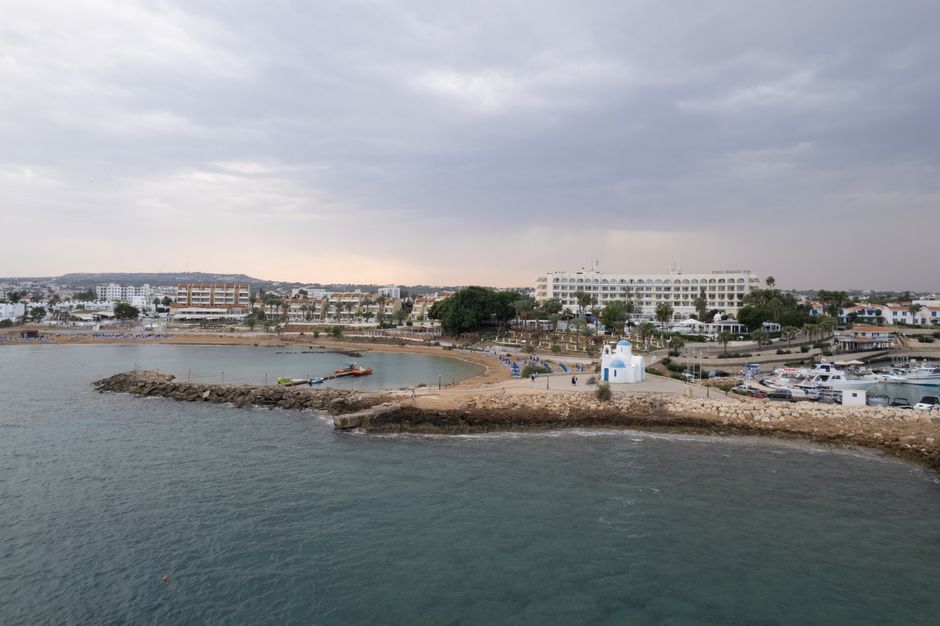
Ayia Napa (Agia Napa) sits at the sunny south-eastern tip of Cyprus, and it has the island’s best beaches: wide bays of soft golden sand, shallow turquoise water and some of the highest water-quality ratings in Europe. It is famous for its summer nightlife, with clubs and bars packed with young Europeans from June to September, but there is much more to it. A peaceful 16th-century monastery stands in the middle of town, the cliffs, sea caves and coves of Cape Greco are minutes away, and next-door Protaras is calm and family-friendly, with dozens of Blue Flag beaches of its own. Boat trips, diving, snorkelling, a marina, a water park and coastal walks keep everyone busy. Ayia Napa is very seasonal: lively from May to October and very quiet in winter, when many hotels close. Come in May, June, September or October; three or four days covers the beaches and Cape Greco, a week makes a relaxed beach holiday with day trips.
Right now in Ayia Napa
- Wed17–26°C62–78°FMostly clear
- Thu18–28°C64–82°FMostly clear
- Fri19–29°C67–84°FClear
Top tours in Ayia Napa
See all tours for Ayia Napa →
From local operators, with prices and reviews; you check availability and book on Viator, our partner. We may earn a commission at no extra cost to you. How we earn money
Ayia Napa at a glance
- Best months: May–June and September–October. Afternoon highs average 27 °C in May and 33 °C in August on this coast (Cyprus Department of Meteorology normals for Larnaca airport, the nearest official station). Many hotels close from November to March.
- Days needed: 2–3 for the beaches and Cape Greco; 5–7 for a beach holiday with trips to Larnaca, Nicosia or the Troodos.
- Getting there: Larnaca airport (LCA) is about 45 km west, 40–50 minutes by car or airport bus.
- Getting around: OSEA buses link Ayia Napa, Protaras and the villages; a car or scooter helps for Cape Greco and quieter coves.
- Budget level: mid-range, with high prices in July and August. See our Cyprus guide for entry rules, money and driving on the left.
Ayia Napa’s areas and who each one suits
- The town centre and the square: around the monastery and the main square, with the bars and clubs. Best for nightlife; noisy late into the night in summer.
- Nissi Avenue and Nissi beach: west of the centre, big beach hotels near Ayia Napa’s most famous bay; lively by day.
- Makronissos and Agia Thekla: further west, quieter resort hotels on sandy coves; good for couples and families.
- The harbour and the marina: south of the centre, with fishing boats, boat-trip departures and the new marina’s restaurants.
- Cape Greco and Konnos: the protected headland east of town, with a few hotels near Konnos Bay; quiet and scenic.
- Protaras and Pernera: about 10–15 km north-east, a calmer resort strip with Fig Tree Bay; ideal for families.
Top things to see in Ayia Napa
Ayia Napa’s highlights are mostly free: beaches, cliffs and coves. Details below are as of October 2026; check opening times locally, as many attractions run only from spring to autumn.
Nissi beach and the sandy bays
Nissi beach, a long curve of white sand facing a small island you can wade to across a sandbar, is the bay that made Ayia Napa famous. It is busy, with loungers, beach bars and water sports, and on summer afternoons it often has music and parties. For calmer sand, try Makronissos, three sheltered coves next to a group of ancient rock-cut tombs; Landa and Kapparis; or Agia Thekla, with a tiny chapel on the shore. Most organised beaches here hold the Blue Flag and have lifeguards in season.
Cape Greco National Forest Park
The headland of Cape Greco, about 5 km east of town, is a protected area of low cliffs, sea caves, juniper scrub and clear blue water, crossed by walking and cycling trails. Highlights include the natural rock arch known as the “Love Bridge”, the sea caves along the cliffs, the small Agioi Anargyroi chapel above the sea, and Konnos Bay, a sheltered sandy cove backed by pines. Walk the cliff paths early or late in the day, when it is cooler and the light is best, and carry water; there is little shade. The tip of the cape is a military and communications area and is closed to the public. An environmental awareness centre near the cape explains the area’s nature.
Safety: cliff jumping and diving into the sea caves cause serious injuries every year. Signs prohibit jumping at many spots, and access to some sea caves has been restricted because of erosion. Respect the signs and fences, check the depth and the swell, and never jump or swim into caves alone.
The Ayia Napa monastery
In the middle of the town, the Venetian-era monastery of Ayia Napa, built around a cave church in the 16th century, has a peaceful courtyard with an octagonal fountain and an ancient sycamore tree. It is a calm refuge from the bars around it. Entry is free; dress modestly.
Thalassa Museum and the sculpture park
The municipal Thalassa Museum of the Sea tells the story of the sea around Cyprus from prehistory, with a full-size replica of the Kyrenia ship, a merchant vessel of the 4th century BC. On the way to Cape Greco, the open-air sculpture park, with works by artists from many countries, sits next to a park of Mediterranean plants and cacti, overlooking the sea.
Protaras and Fig Tree Bay
Protaras, the neighbouring resort, is quieter and more family-oriented than Ayia Napa. Fig Tree Bay, named after an old fig tree on the shore, has a small island just offshore, fine sand and shallow water. The coast between Konnos and Protaras is a string of small Blue Flag beaches; in 2026 the Paralimni–Deryneia municipality, which includes Protaras, had the highest number of Blue Flags in Cyprus, according to the press. Above the resort, the chapel of Profitis Ilias has views along the coast.
Beaches and swimming
The sea around Ayia Napa and Protaras is among the clearest in the Mediterranean, and the sand is golden and fine, unlike the shingle of much of the island. The water is shallow near the shore at Nissi, Makronissos, Landa and Fig Tree Bay, which suits children. Beaches are organised in summer, with loungers, umbrellas, showers and lifeguards; loungers cost a few euros. Even here, some beaches can have currents on windy days: swim between the flags, and watch for boats and jet skis outside the swimming zones. Sea urchins live on the rocks, so wear water shoes for the coves. In some summers, large jellyfish appear; ask the lifeguards. See our beaches guide and water shoes.
Boat trips, diving and other things to do
- Boat trips: cruises from Ayia Napa harbour sail along the coast to Cape Greco’s sea caves, the Blue Lagoon below the cape, Konnos Bay and Protaras, usually with time to swim. See our boat trips guide.
- Diving and snorkelling: caves, canyons and reefs around Cape Greco, with very clear water; Larnaca’s Zenobia wreck is less than an hour away. See our diving guide and our snorkelling guide.
- Kayaking and paddleboarding: calm mornings are perfect for paddling into the sea caves with a guide.
- Walking and cycling: the coastal path from Ayia Napa past the sea caves to Cape Greco and Konnos, and the trails across the headland. See our hiking guide and our cycling guide.
- Water park: a large water park on the edge of town is popular with families from spring to autumn.
- Nightlife: the bar street and clubs around the square are busiest from June to September; there are also quieter bars at the marina and in Protaras.
- Potamos Liopetriou: a small fishing creek west of town, with fish tavernas and a chapel by the water.
Day trips from Ayia Napa
- Larnaca: about 40 minutes west, for St Lazarus, the salt lake and the Zenobia wreck.
- Nicosia: about an hour, for the Cyprus Museum and the old town inside the Venetian walls.
- The Troodos and Limassol: about 1.5–2 hours, for a long day of mountains, wine villages or Kourion.
- The north: the Deryneia crossing point, about 15 minutes north of Protaras, is the closest to the eastern part of the island not under the control of the Government of the Republic of Cyprus. Take your passport; hire-car insurance from the south is not valid there, and the limits on goods you bring back are strict. See our Cyprus guide for the crossing rules.
Getting there and getting around
Flights and airport buses
Ayia Napa has no airport of its own. Larnaca airport (LCA), run by Hermes Airports, is about 45 km west, 40–50 minutes by motorway. Airport buses run between Larnaca airport and Ayia Napa and Protaras; taxis and pre-booked transfers are faster but cost more. Paphos airport is about 2 hours away.
Buses, taxis and scooters
OSEA, the Famagusta District bus company, runs local buses between Ayia Napa, Protaras, Paralimni, Cape Greco and the villages, more often in summer. Intercity Buses link Ayia Napa with Larnaca and Nicosia. Check routes on the official cyprusbybus.com planner. Taxis are easy to find in the centre. Scooters, quad bikes and buggies are widely hired; wear a helmet, check the insurance (often third-party only), and never leave your passport as a deposit, which is illegal.
Driving
Cyprus drives on the left. The A3 motorway links Ayia Napa with Larnaca and on to Nicosia and Limassol. The route passes through the UK’s Dhekelia base area without checks; obey signs and don’t photograph military installations. Parking near Nissi beach and Cape Greco fills up in summer; go early.
When to go and how long to stay
Ayia Napa has a hot, dry climate with almost no rain from May to October and mild winters. The beach season runs from about May to October, and the sea stays warm into November. July and August are hot and crowded, with peak prices and the busiest nightlife; May, June, September and October are best for most people. From November to March, the resort is very quiet and many hotels, bars and restaurants close, though the beaches and Cape Greco are lovely for winter walks.
| Season | Average high | Average low | What it’s like |
|---|---|---|---|
| Spring (Mar–May) | 20–27 °C | 9–16 °C | Warm days and wildflowers on Cape Greco; the season opens; sea warm enough from May. |
| Summer (Jun–Aug) | 31–33 °C | 20–23 °C | Hot, dry and sunny; peak crowds, prices and nightlife. |
| Autumn (Sep–Nov) | 31 °C falling to 23 °C | 21 °C falling to 13 °C | Warm sea and calmer resorts; many places close in November. |
| Winter (Dec–Feb) | 17–19 °C | 8–10 °C | Mild and very quiet; good for walking; most hotels closed. |
There is no Ayia Napa station in the World Meteorological Organization’s 1991–2020 climate normals, so these are the official normals for Larnaca airport, about 45 km west, reported by the Cyprus Department of Meteorology; Ayia Napa’s climate is very similar. The area gets only about 350 mm of rain a year and well over 3,000 hours of sunshine.
2–3 days in Ayia Napa
Day 1: Nissi beach in the morning, the monastery and the Thalassa Museum in the heat of the afternoon, and dinner at the marina or the harbour. Day 2: a boat trip to the sea caves and the Blue Lagoon, or walk the cliff path to Cape Greco early, then swim at Konnos Bay. Day 3: Makronissos or Fig Tree Bay, and a sunset at Cape Greco.
5–7 days in Ayia Napa
Add a dive or snorkelling trip, a kayak tour of the caves, a day in Larnaca and a day in Nicosia, and lazy days on the Protaras beaches.
Where to stay in Ayia Napa
- Nightlife: the town centre, close to the square and the clubs.
- Beach first: hotels by Nissi beach, Makronissos or Landa.
- Families: Protaras and Pernera, or the quieter western resorts of Ayia Napa.
- Peace and nature: near Konnos Bay and Cape Greco.
As of October 2026, Cyprus has no national per-night tourist tax; check your booking for any local charges.
Practical tips for Ayia Napa
- Season: check that your hotel and the places you want to visit are open if you travel between November and March.
- Cliffs and caves: don’t jump from the cliffs; respect the signs at Cape Greco and the sea caves.
- Sun: the reflection off the white sand and shallow water is strong; use high-factor sunscreen and seek shade at midday.
- Nightlife: watch your drinks, stay with friends and use licensed taxis; drug laws in Cyprus are very strict.
- Fire: no fires or barbecues outside official picnic sites, including on Cape Greco.
- Emergencies: call 112.
What to pack for Ayia Napa
Pack light summer clothes, swimwear, a quick-dry towel, a wide-brimmed hat, sunglasses and high-factor, reef-friendly sunscreen. Bring water shoes for the rocky coves and a snorkel mask for Cape Greco’s clear water, plus trainers or walking sandals with grip for the cliff paths. Add something smart-casual for evenings, a scarf or shirt for the monastery, and a light layer for boat trips. In winter, a jacket and a rain layer. Cyprus uses British-style three-pin plugs at 240 V; see our travel adapters guide.
Ayia Napa travel FAQ
What is the best beach in Ayia Napa?
Nissi beach is the most famous, with white sand and a little island you can wade to. For quieter sand, try Makronissos, Landa or Konnos Bay below Cape Greco, or Fig Tree Bay in Protaras.
When is the best time to visit Ayia Napa?
May, June, September and October for warm sea and fewer crowds. July and August are hottest and busiest, with the most nightlife. Many hotels close from November to March.
How do I get from Larnaca airport to Ayia Napa?
By airport bus, taxi or transfer, about 40–50 minutes by motorway. The airport is about 45 km west.
Is Ayia Napa only for party-goers?
No. The nightlife is concentrated around the square in summer. Western Ayia Napa, Cape Greco and Protaras are calm and family-friendly.
Can you jump off the cliffs at Cape Greco?
Signs prohibit cliff jumping at many spots, and access to some sea caves has been restricted because of erosion. Serious injuries happen every year; respect the signs.
How do I visit the sea caves and the Blue Lagoon?
On a boat trip from Ayia Napa harbour or Protaras, which usually stops for a swim, or on foot along the cliff path from town towards Cape Greco.
Can I cross to the north from Ayia Napa?
Yes, at the Deryneia crossing point near Protaras, with your passport. Insurance from hire companies in the south is not valid in the north, and limits apply to goods you bring back.
Is Ayia Napa open in winter?
The town is very quiet from November to March, and many hotels, bars and restaurants close. Some hotels, the beaches and Cape Greco’s trails stay open.
Is there a tourist tax in Ayia Napa?
There is no national per-night tourist tax in Cyprus as of October 2026. Check your booking for any local charges.
Is Ayia Napa good for families?
Yes, especially the western beaches and Protaras, with shallow sandy bays, lifeguards and a big water park. Avoid the town centre if you want quiet nights.
Plan your trip
Partner links: TravelerCenter may earn a commission if you book, at no extra cost to you.
🇬🇷 Useful Greek phrases for Ayia Napa
All 38 Greek phrases: restaurant, hotel, emergencies, romance (printable) →
Sources · last reviewed 4 October 2026
Researched and last reviewed on 4 October 2026. Climate comes from the Cyprus Department of Meteorology’s 1991–2020 normals for Larnaca airport, published by the World Meteorological Organization; the Green Line crossing rules from the Cyprus Customs and Excise Department and the UK government; entry rules from the European Commission. The 2026 Blue Flag figures and the sea-cave and cliff-jumping restrictions come from press and local reports and are flagged for checking. Prices, timetables and rules change, so check the official sites before you travel.
Data: Weather: MET Norway (CC BY 4.0) · Sea temperature: NOAA CoastWatch · Rates: ECB · Costs: World Bank ICP and price levels · Wikidata (CC0)