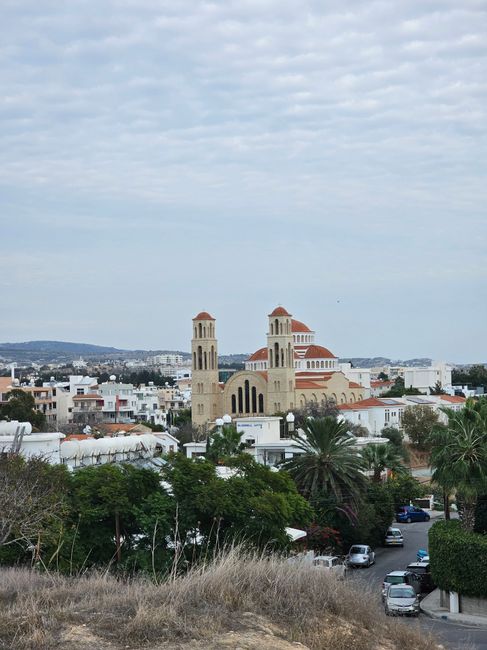
Paphos is the place where Cyprus’s ancient past meets the sea. In legend, Aphrodite rose from the waves just along this coast; in history, Nea Paphos was the Roman capital of the island, and its villas left some of the finest floor mosaics in the Mediterranean. Today the whole town is part of a UNESCO World Heritage Site: the Kato Paphos Archaeological Park by the harbour, the rock-cut Tombs of the Kings above the sea and the sanctuary of Aphrodite at Kouklia. Add a medieval fort on the harbour, a revived old town, Coral Bay’s sand, sunsets on the west coast and boat trips to the wild Akamas peninsula and the Blue Lagoon. Paphos has its own airport, a long season and gentler summer temperatures than the east of the island. Come from April to June or September to November; three days covers the town, five to seven lets you explore the Akamas and the Troodos foothills.
Right now in Paphos
- Wed 16–25°C 60–76°F 1 mm Light showers
- Thu 18–25°C 64–77°F Clear
- Fri 19–26°C 66–79°F Clear
Weather: MET Norway (CC BY 4.0) · Sea temperature: NOAA CoastWatch · Air quality: OpenAQ
Top tours in Paphos
See all tours for Paphos →
From local operators, with prices and reviews; you check availability and book on Viator, our partner. We may earn a commission at no extra cost to you. How we earn money
Paphos at a glance
- Best months: April–June and September–November. Average afternoon highs run from about 22 °C in April to 31 °C in August (Cyprus Department of Meteorology, Paphos airport, 1991–2020 normals). Winters are mild and fairly wet.
- Days needed: 2–3 for the archaeological park, the Tombs of the Kings and the old town; 5–7 with the Akamas, Aphrodite’s Rock, Kouklia and the villages.
- Getting there: Paphos airport (PFO) is about 15 km south-east of town; buses run to the harbour and the old town. Limassol is about 45–60 minutes away by motorway.
- Getting around: on foot along the seafront, by Pafos Buses to Coral Bay and the old town, and by car for the Akamas and the villages.
- Budget level: good value for Cyprus, cheaper than Limassol. See our Cyprus guide for entry rules, money and driving on the left.
Paphos’s areas and who each one suits
- Kato Paphos (Lower Paphos): the harbour, the seafront promenade and the archaeological park, with most of the hotels, restaurants and bars. Best for a first visit without a car.
- Ktima (the old town, Upper Paphos): on a ridge 2–3 km inland, with the restored market, Kennedy Square, the Ottoman baths, the museums and local cafés. Quieter and more Cypriot.
- Tombs of the Kings road and Kissonerga: the coast north of the harbour, lined with big resort hotels and rocky swimming spots.
- Coral Bay and Peyia: about 12 km north, around the best sandy beach near Paphos; good for families and longer stays.
- Geroskipou and Yeroskipou beach: east of the town towards the airport, with a famous five-domed Byzantine church and a big public beach.
- Latchi and Polis: about 50 minutes north on the far side of the peninsula, quiet bases for the Akamas.
Top things to see in Paphos
Prices and hours below are as of October 2026 and come from the Deputy Ministry of Tourism’s official Visit Cyprus pages and the Department of Antiquities’ opening-hours list. Ancient sites are open 08:30–19:30 from 16 April to 15 September and 08:30–17:00 from 16 September to 15 April; the Department of Antiquities sells one-, three- and seven-day passes (€8.50, €17 and €25) to all its sites and museums, which pays off if you plan four or five sites.
Kato Paphos Archaeological Park
This is the great sight of Paphos: the centre of Nea Paphos, the Roman capital of Cyprus, on the headland by the harbour. Its treasures are the mosaic floors of four wealthy villas, the Houses of Dionysos, Theseus, Aion and Orpheus, made between the 2nd and 5th centuries AD. They show Greek myths, hunting scenes, the god of wine and the birth of Achilles, many of them still in place under protective roofs. Walk on to the Odeon, a small restored theatre still used for performances, the agora, the ruins of the Byzantine castle of Saranta Kolones (Forty Columns) and the lighthouse. Allow at least 2–3 hours.
How to visit (as of October 2026): adult entry is €4.50, according to the Deputy Ministry of Tourism, with 20% off for groups of more than 10. Hours as above. The entrance is just behind the harbour car park. There is very little shade, so go at opening time or in the last two hours in summer, and bring water, a hat and sunscreen. The grounds are large and uneven; wear proper shoes.
Tombs of the Kings
About 2 km north of the harbour, this huge necropolis was carved into the coastal rock from the 4th century BC. Nobody royal was buried here: the name comes from the grandeur of the tombs, some cut like underground houses with Doric columns around open courtyards. Wealthy families of Hellenistic and Roman Paphos used them, and early Christians later hid in them. Climb down into the larger tombs and walk to the cliff edge for the sea views. Entry is €2.50 for adults, with the same hours as the main park; allow 1–2 hours, and avoid midday in summer.
Paphos castle and the harbour
The small fort at the end of the harbour pier was first a Byzantine fort, rebuilt by the Lusignans, dismantled by the Venetians and rebuilt by the Ottomans in 1592. Climb to the roof for the view over the harbour and the archaeological park, and come back at dusk when the fishing boats return and the seafront promenade fills up. Entry is €2.50; it sometimes closes for events and maintenance.
Ayia Kyriaki, St Paul’s Pillar and Agia Solomoni
In Kato Paphos, the 12th-century church of Ayia Kyriaki Chrysopolitissa stands among the columns of an earlier great basilica. One of them is known as St Paul’s Pillar, where, according to tradition, the apostle was flogged before converting the Roman governor. Nearby, Agia Solomoni is an underground Christian catacomb with a holy well, marked by a tree hung with pieces of cloth left as offerings. Both are free.
Ktima, the old town
The upper town, rebuilt in the years after Paphos was European Capital of Culture in 2017, has the restored covered market, pedestrian streets around Kennedy Square, the Ottoman baths, the Byzantine Museum and the Ethnographic Museum. The Archaeological Museum of the Paphos District, on the main road to the east, is free and open Tuesday to Sunday 09:00–16:30, and holds finds from Nea Paphos and Kouklia.
Kouklia and the sanctuary of Aphrodite
At Kouklia, 16 km east, are the ruins of Palaepaphos (Old Paphos), one of the ancient city-kingdoms of Cyprus, and the sanctuary of Aphrodite, a pilgrimage site for over a thousand years. A Lusignan manor house holds a small museum, and the site is part of the UNESCO listing. Entry is €4.50. The Department of Antiquities lists shorter hours here than at the Paphos sites, with closing on Mondays, while the tourism site lists daily opening, so check before you go.
Aphrodite’s Rock (Petra tou Romiou)
About 25 km east on the old road to Limassol, a group of sea stacks in a pebble bay marks the spot where, in legend, Aphrodite emerged from the sea. It is free and photogenic at sunset; reach the beach through the underpass from the car park on the inland side. Swimming is possible on calm days, but the sea here can be rough, and the pebbles are large; local legend says that swimming round the rock brings eternal youth. There is a viewpoint and café on the cliff above.
The Akamas peninsula and the Blue Lagoon
The Akamas, the hilly peninsula at the island’s north-western tip, is one of the last undeveloped coasts in Cyprus: a protected area of juniper and pine, gorges, white-sand bays and turtle beaches, with no towns and only dirt tracks. The easiest way in is by sea: boat trips from Latchi harbour, near Polis, run along the north coast to the Blue Lagoon, a sheltered bay of clear turquoise water, usually with time to swim and snorkel. Bigger day cruises also leave from Paphos harbour in summer. Boats run mainly from April to October.
- Avakas Gorge: a narrow limestone gorge on the west side of the peninsula, about 25 km north of Paphos, with a walk of about 3 km each way along the stream bed. Wear shoes with grip, carry water, and stay away after heavy rain or when the forest service closes it for safety.
- Lara Bay: a protected beach where green and loggerhead turtles nest in summer; the forest service runs a turtle hatchery here. Respect the signs and don’t visit nesting beaches at night.
- Baths of Aphrodite and the nature trails: from the car park west of Latchi, the Aphrodite and Adonis circular trails climb through the hills with wide views over Chrysochou Bay; best from October to May.
- Driving: the tracks into the Akamas need a real 4×4 and are closed in places; most hire contracts exclude off-road driving, so check yours. Forest tracks can be closed for works or in the fire season; check with the Department of Forests before you go.
Beaches and swimming
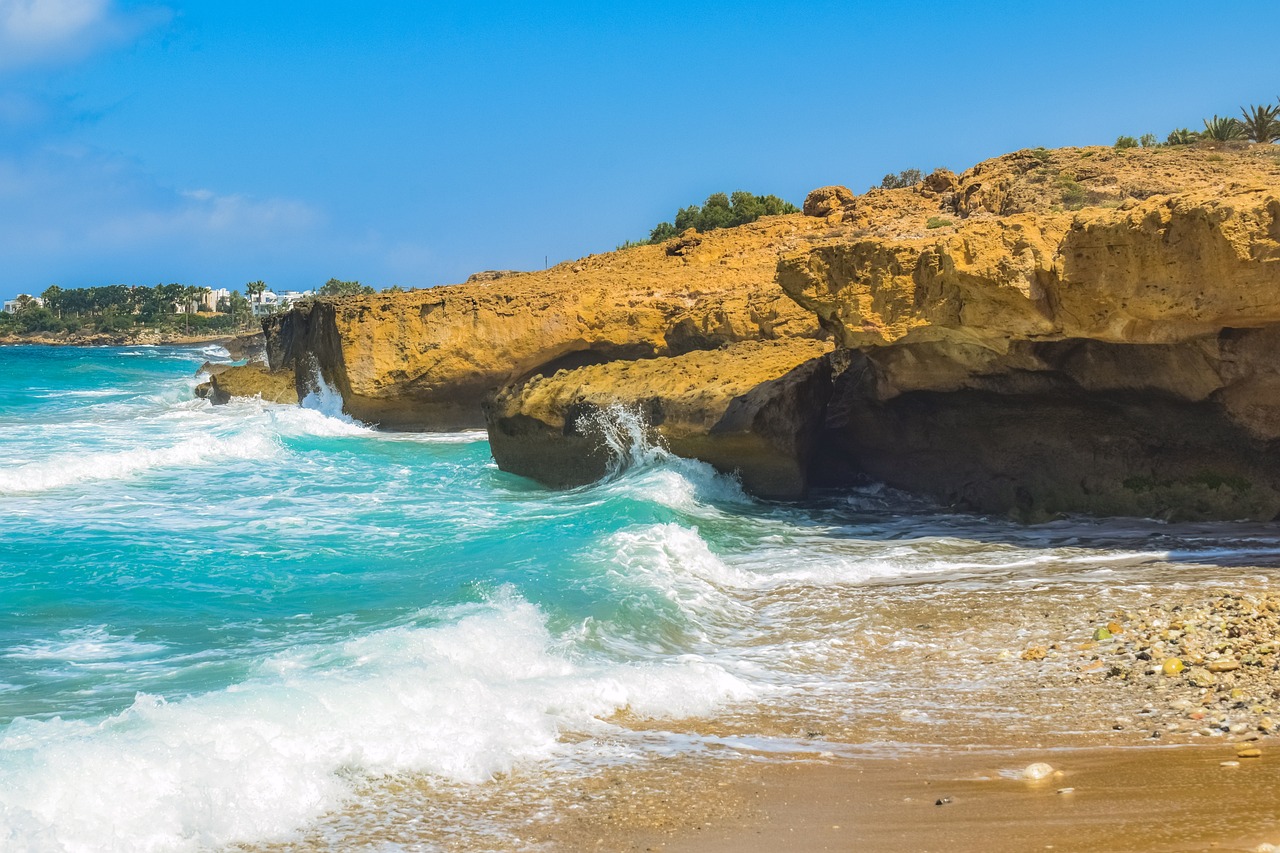
Paphos itself has a rocky shore with swimming platforms and a few sheltered bays rather than long beaches. The municipal beach by the promenade in Kato Paphos and Alykes nearby have sand and shallow water; Faros beach, past the lighthouse, is a long stretch of sand and pebbles. North of town, Coral Bay is a horseshoe of golden sand with lifeguards and water sports, and the smaller Corallia next door is calmer. Further on, Lara and the Akamas beaches are wild and undeveloped. East of town, Geroskipou beach is wide and organised. Water shoes help on the rocks and with sea urchins; west-coast beaches can have waves and currents when the wind blows, so swim where there are lifeguards.
Other things to do in Paphos
- Boat trips: glass-bottom boats from the harbour pass shipwrecks and reefs along the coast; sunset cruises sail along the coast; and day trips go to Coral Bay and the Akamas. See our boat trips guide.
- Diving and snorkelling: wrecks, reefs and caves along the coast from Paphos to the Akamas, with clear water from May to November. See our diving guide and our snorkelling guide.
- Agios Neophytos monastery: about 9 km north, with a 12th-century hermit’s cell painted with fine frescoes.
- Geroskipou: the five-domed church of Agia Paraskevi and the village’s loukoumi (Cyprus delight) workshops.
- Wine and villages: the hills inland are dotted with wineries and villages such as Kathikas, Tsada and Panagia; or head up to Omodos and the Troodos, about 1.5 hours away. See our wine tasting guide.
- Cycling and walking: the seafront path from the harbour north towards the Tombs of the Kings, and quiet roads in the hills. See our hiking guide.
Nearby destinations
Getting there and getting around
Flights
Paphos airport (PFO), run by Hermes Airports, has direct flights from the UK and much of Europe, with the most routes from spring to autumn. Pafos Buses run regular services from the airport to the harbour area and the old town in about 30–40 minutes; a taxi costs considerably more. Larnaca airport, with more flights year-round, is about 1.5 hours away by motorway, and airport and intercity buses link it with Paphos.
Buses and taxis
Pafos Buses (OSYPA) run city routes linking Kato Paphos, the old town, the Tombs of the Kings road, Coral Bay, Geroskipou and the villages; the main stations are at the harbour and at Karavella in the old town. As of October 2026, the Pafos Buses fare page lists a single cash fare of €2.00 (€3.00 at night after 21:00) and a day ticket of €6.50, bought on board. Intercity Buses link Paphos with Limassol, Nicosia and Larnaca several times a day. Taxis wait at the harbour and the airport; agree the fare or ask for the meter.
Driving
Cyprus drives on the left. The A6 motorway links Paphos with Limassol in about 45–60 minutes, and the old coast road past Aphrodite’s Rock is slower but beautiful. A car is the easiest way to see Kouklia, the Akamas, the villages and the wineries, but you don’t need one in Kato Paphos. Parking near the harbour is busy in summer; there are large paid car parks behind the seafront.
When to go and how long to stay
Paphos has hot, dry, sunny summers and short, mild winters. The west coast catches sea breezes and is usually a little cooler than Larnaca or Limassol, and much cooler than Nicosia. July and August are hot and busy; May, June, September and October are ideal, with warm sea and comfortable sightseeing weather. The sea is warmest, around 27 °C, in August and September. Winter is quiet and mild, with sunny days between showers, and a good time for the archaeological sites and the Akamas trails.
| Season | Average high | Average low | Rain a month | What it’s like |
|---|---|---|---|---|
| Spring (Mar–May) | 19–25 °C | 10–15 °C | 35 mm falling to 11 mm | Wildflowers and green hills; perfect for sightseeing and walking; sea cool until May. |
| Summer (Jun–Aug) | 28–31 °C | 19–22 °C | almost none | Hot, sunny and dry; warm sea; peak crowds and prices. |
| Autumn (Sep–Nov) | 29 °C falling to 23 °C | 20 °C falling to 13 °C | 4 mm rising to 58 mm | September and October are lovely, with the warmest sea; first rains in November. |
| Winter (Dec–Feb) | 17–19 °C | 9–10 °C | 60–98 mm | Mild and quiet, with showers; good for sites and hikes. |
Figures are the World Meteorological Organization’s 1991–2020 climate normals for the Paphos airport station, reported by the Cyprus Department of Meteorology. Paphos gets about 390 mm of rain a year, almost all from November to March, and about 3,300 hours of sunshine.
2–3 days in Paphos
Day 1: the Kato Paphos Archaeological Park at opening time, lunch by the harbour, the castle and Ayia Kyriaki in the afternoon, and sunset on the seafront. Day 2: the Tombs of the Kings in the morning, then the old town, the market and the district museum, and an afternoon at Coral Bay. Day 3: Kouklia and Aphrodite’s Rock, with a swim if the sea is calm.
5–7 days in Paphos
Add a boat trip from Latchi to the Blue Lagoon, Avakas Gorge or the Akamas trails, a day in the Troodos via Omodos, a wine-village afternoon, and a day in Limassol with Kourion and Kolossi on the way.
Where to stay in Paphos
- First visit, no car: Kato Paphos, near the harbour and the archaeological park, with everything within walking distance.
- Resort hotels and pools: along the Tombs of the Kings road and towards Kissonerga.
- Families and beach lovers: Coral Bay and Peyia, with the sandy beach on the doorstep.
- Local feel and value: the old town (Ktima), with cafés, the market and the museums.
- Quiet and nature: Latchi or Polis, for the Akamas and the north-west coast.
As of October 2026, Cyprus has no national per-night tourist tax; check your booking for any local charges.
Practical tips for Paphos
- Beat the heat: visit the archaeological park and the Tombs of the Kings at opening time or late afternoon; there is little shade.
- Save on tickets: a Department of Antiquities multi-day pass covers the park, the tombs, the castle and Kouklia.
- Drive on the left and expect roundabouts; take care on narrow village roads.
- Akamas: book boat trips from Latchi; don’t take an ordinary hire car on off-road tracks.
- Turtles: respect nesting beaches at Lara and Toxeftra in summer.
- Fire: no fires or barbecues outside official picnic sites; the wildfire risk is high from April to October.
- Emergencies: call 112.
What to pack for Paphos
For summer, pack light, breathable clothes, a sun hat, sunglasses, high-factor sunscreen and a refillable water bottle for the archaeological sites. Bring a swimsuit, a quick-dry towel, water shoes for the rocky shore and a snorkel mask for the Blue Lagoon. Comfortable shoes with grip are a must on the uneven ground of the ancient sites and in Avakas Gorge. Add a light scarf or shirt for churches, a light jacket for spring and autumn evenings, and a British-style three-pin plug adapter.
Paphos travel FAQ
How much is the Kato Paphos Archaeological Park?
As of October 2026, adult entry is €4.50, according to the Deputy Ministry of Tourism. The Tombs of the Kings cost €2.50 extra, and multi-day passes to all Department of Antiquities sites cost €8.50 for one day, €17 for three days and €25 for seven.
What are the opening hours of the Paphos mosaics?
The park opens daily 08:30–19:30 from 16 April to 15 September and 08:30–17:00 from 16 September to 15 April. Go early in summer; there is little shade.
Are the Tombs of the Kings worth visiting?
Yes. The rock-cut tombs with columned courtyards are unlike anything else in Cyprus. Allow 1–2 hours and visit early or late in the day.
How many days do you need in Paphos?
Two or three days for the ancient sites, the old town and a beach; five to seven with the Akamas, Kouklia, the wine villages and a day in the Troodos.
How do I get to the Blue Lagoon from Paphos?
Drive or take the bus to Latchi, about 50 minutes north, and join a boat trip; some day cruises also leave from Paphos harbour in summer. The land tracks need a real 4×4.
Is there a sandy beach in Paphos?
Yes. The municipal beach and Alykes in Kato Paphos have sand, but the best sandy beach is Coral Bay, about 12 km north. Lara in the Akamas is wild and undeveloped.
Where is Aphrodite’s Rock?
About 25 km east of Paphos on the old road to Limassol. Use the underpass from the car park, and only swim when the sea is calm.
How do I get from Paphos airport to the town?
Pafos Buses run from the airport to the harbour area and the old town in about 30–40 minutes. Taxis are faster but cost more.
Do I need a car in Paphos?
Not for Kato Paphos, the harbour and Coral Bay, which are on bus routes. A car is much easier for Kouklia, Aphrodite’s Rock, the villages and the Akamas.
Is there a tourist tax in Paphos?
There is no national per-night tourist tax in Cyprus as of October 2026. Check your booking for any local charges.
Can I swim at Aphrodite’s Rock?
On calm days, yes, but the bay is exposed, the pebbles are large and the waves and currents can be strong. There are no lifeguards; take care.
Sources and last review
Researched and last reviewed on 4 October 2026. Site prices and opening hours come from the Deputy Ministry of Tourism’s official Visit Cyprus pages and the Department of Antiquities; bus fares from Pafos Buses; climate from the Cyprus Department of Meteorology’s 1991–2020 normals published by the World Meteorological Organization. Akamas road closures and boat seasons come from published reports and are flagged for checking. Prices, timetables and rules change, so check the official sites before you travel.
Plan your trip
Partner links: TravelerCenter may earn a commission if you book, at no extra cost to you.
🇬🇷 Useful Greek phrases for Paphos
All 38 Greek phrases: restaurant, hotel, emergencies, romance (printable) →