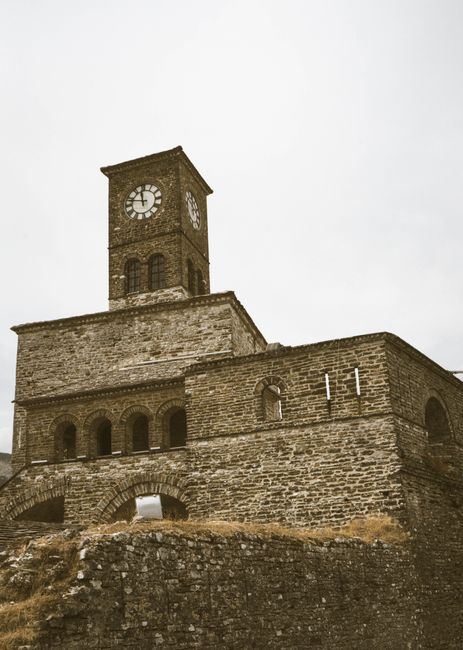
Albania is the Mediterranean country most travellers still haven’t seen: a small, mountainous land on the Adriatic and Ionian seas with turquoise beaches, Ottoman stone towns, Greek and Roman ruins, wild alpine valleys and a capital that has reinvented itself in colour. Start with the Albanian Riviera, where the road drops from the Llogara Pass to the coves of Dhërmi, Himarë and Ksamil; add the UNESCO-listed “towns of a thousand windows”, Berat and Gjirokastër, and the ancient city of Butrint; then spend a couple of days in lively Tirana and, if you have time, head north to the peaks around Theth and the Komani Lake ferry. Albania is outside the EU and the Schengen area, uses its own currency, the lek, and is still good value by European standards. June and September are the sweet spots on the coast. Give it 10 days for a first trip, two weeks to add the mountains.
Right now in Albania
- Wed 16–26°C 60–79°F Partly cloudy
- Thu 15–24°C 58–75°F 3 mm Showers
- Fri 18–21°C 65–70°F 35 mm Heavy rain
Weather: MET Norway (CC BY 4.0)
Multi-day tours of Albania
Multi-day tours from local operators. You check dates and book on Viator, our partner; we may earn a commission at no extra cost to you. How we earn money
Albania at a glance: overview and geography
Albania sits on the western side of the Balkan peninsula, with Montenegro to the north, Kosovo to the north-east, North Macedonia to the east and Greece to the south-east and south. Its coast runs for about 450 km, first along the shallow, sandy Adriatic from the Montenegrin border past Durrës to Vlorë, then along the steeper, clearer Ionian Sea from the Llogara Pass down to Sarandë and Butrint, opposite the Greek island of Corfu. Inland, about three-quarters of the country is hills and mountains, rising to the limestone Albanian Alps (the Accursed Mountains) in the north and to peaks above 2,000 m along the eastern borders, where Albania shares the great lakes of Ohrid and Prespa with North Macedonia and Greece. The 2023 census counted about 2.4 million people, roughly a third of them in and around Tirana, and many more Albanians live abroad, in Italy, Greece and beyond.
History here is layered and often dramatic: Illyrian tribes, Greek colonies such as Apollonia and Butrint, the Roman port of Dyrrachium (today’s Durrës) at the start of the Via Egnatia, Byzantine and Venetian forts, the 15th-century resistance of the national hero Skanderbeg, more than four centuries of Ottoman rule, independence in 1912, and then almost half a century of isolation under the communist dictatorship of Enver Hoxha, who left behind hundreds of thousands of concrete bunkers. Since the 1990s Albania has opened up fast. It is a candidate for EU membership and a NATO member, and tourism has grown quickly in the last decade. Albanians are famously hospitable: besa, a code of honour and keeping one’s word, still matters, and guests are treated generously.
Time zone: Albania runs on Central European Time (UTC+1, UTC+2 in summer), the same as Italy and Croatia and one hour behind Greece, which catches out many visitors on the Corfu ferry.
The regions
- The Albanian Riviera and the south: the Ionian coast from the Llogara Pass to Sarandë and Ksamil, with Butrint, the Blue Eye spring and the stone town of Gjirokastër inland.
- Vlorë and the Bay of Vlorë: the city where independence was declared in 1912, the Karaburun peninsula and Sazan island, Albania’s first marine national park, and the Zvërnec lagoon.
- Central Albania: Tirana, the hill town of Kruja, the port of Durrës and its long sandy beaches, and the museum town of Berat with its wine country and the Osumi canyon.
- The north: Shkodër and its lake, the Albanian Alps with Theth and Valbona, and the Komani Lake ferry through a fjord-like gorge.
- The south-east: Korçë with its cathedral, museums and beer, Voskopojë’s painted churches, and Pogradec on the shore of Lake Ohrid.
Where to go: the Riviera, the stone towns and the mountains
Albania is compact, but its roads are winding and slow, so plan on a simple loop. The classic first trip flies into Tirana, heads south through Berat and Gjirokastër to the Riviera, and comes back up the coast; many travellers also arrive by ferry from Corfu to Sarandë and start in the south.
The Albanian Riviera
The Ionian coast south of Vlorë is the reason most people come: white pebble coves and sandy bays under steep mountains, water that turns from turquoise to deep blue, and villages of olive groves and citrus. Dhërmi and Jale are the trendiest beaches, Himarë has an old castle village above a relaxed seafront, Borsh has one of the longest beaches on the coast, and Ksamil, near the Greek border, has tiny islands a short swim or boat ride offshore. Sarandë is the busy resort town and ferry port for Corfu, and Butrint, the Blue Eye spring and the Lëkurësi castle are all close by. Our Albanian Riviera guide covers it beach by beach.
Tirana
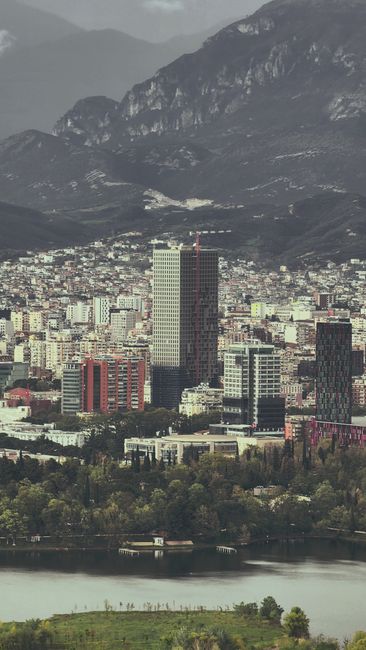
Albania’s capital is noisy, colourful and fun: a city of cafés, painted apartment blocks and a huge central square, with communist history told in two bunker museums, Bunk’Art 1 and Bunk’Art 2, and in the Pyramid and the House of Leaves. Ride the Dajti Ekspres cable car up the mountain behind the city, eat well for little money in the Blloku district, and use it as a base for Kruja and Durrës. Our Tirana guide has the details.
Berat and Gjirokastër
These two Ottoman-era towns share a UNESCO World Heritage listing. Berat, the “town of a thousand windows”, climbs a hillside above the Osum river to a castle that people still live in, with Byzantine churches and the Onufri icon museum inside its walls; it is also a base for rafting in the Osumi canyon and for local wineries. Gjirokastër, further south, is a town of grey stone-roofed tower houses below a vast fortress, the birthplace of the writer Ismail Kadare. Both are best with an overnight stay, when the day trippers have gone. See our Berat guide.
Durrës and the Adriatic coast
Durrës is Albania’s main port and one of its oldest cities, with a Roman amphitheatre in the middle of town, Byzantine and Venetian walls, a good archaeological museum and a long sandy beach lined with hotels. It is 40 minutes from Tirana’s airport and the arrival point for ferries from Bari and Ancona in Italy. North and south of it, the Adriatic beaches are wide, shallow and family-friendly, very different from the rocky Riviera. Our Durrës guide covers the city and its beaches.
Butrint
Butrint, about 20 km south of Sarandë, is Albania’s most important ancient site and a UNESCO World Heritage Site since 1992. A forest path around a lagoon-ringed headland leads past a Greek theatre, Roman baths, a Byzantine baptistery with a mosaic floor (usually covered to protect it), a great basilica and Venetian towers. As of October 2026 the adult ticket is reported at 1,000 lek, with children under 12 free. Go early or late in the day in summer; it is covered in our Albanian Riviera guide.
The Albanian Alps, Theth and Valbona
The north is wild and beautiful: jagged limestone peaks, stone guesthouses, waterfalls and the “Blue Eye” pool of Theth. The classic hike crosses the Valbona Pass between Valbona and Theth in about six to eight hours, and you can arrive or leave by the Komani Lake ferry, a two- to three-hour ride through a narrow, fjord-like gorge. The season is short, roughly June to September, and many guesthouses close in winter. Shkodër, with its lake and the Rozafa castle, is the gateway. See our hiking guide.
A few more worth your time
Kruja, Skanderbeg’s mountain stronghold, with a castle museum and an old bazaar an hour from Tirana; Apollonia, a Greek and Roman city among olive trees near Fier; Vlorë and its long seafront promenade, with boat trips to Sazan island and the sea caves of the Karaburun peninsula; Korçë, an elegant southern town of museums and cafés; Lake Ohrid at Pogradec; and the Osumi canyon near Berat.
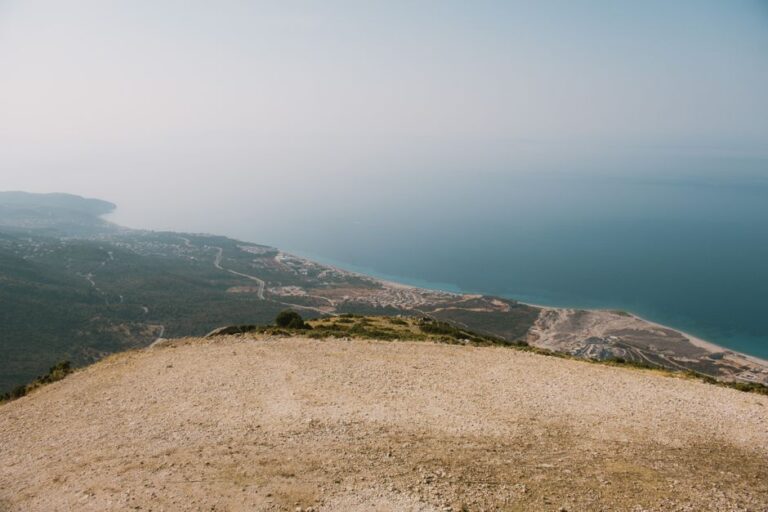
Albanian Riviera Travel Guide
Plan a trip to the Albanian Riviera: the villages and beaches from Dhërmi, Jale and Gjipe to Himarë, Porto Palermo, Borsh, Sarandë and Ksamil,…
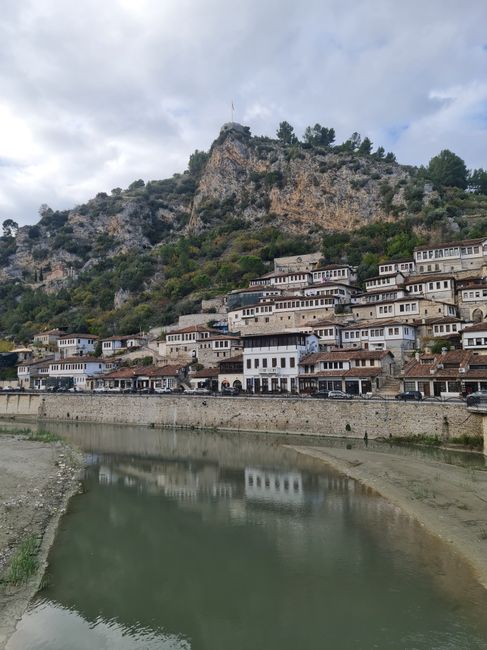
Berat Travel Guide
Plan a trip to Berat, Albania's UNESCO-listed town of a thousand windows: the lived-in castle and its churches with 2026 ticket notes, the Onufri…
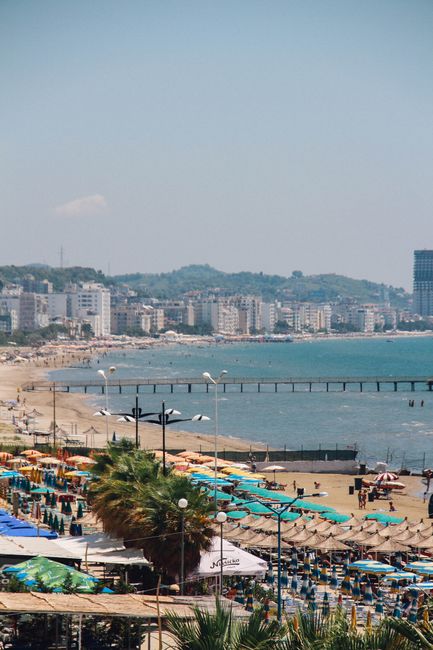
Durrës Travel Guide
Plan a trip to Durrës, Albania's ancient port: the Roman amphitheatre and its Byzantine chapel with 2026 ticket notes, the reopened Archaeological Museum, the…
Tirana Travel Guide
Plan a trip to Tirana: Skanderbeg Square and the Et'hem Bey Mosque, Bunk'Art 1 and 2 with 2026 hours and tickets, the House of…
Best time to visit Albania
The coast has a Mediterranean climate: long, hot, dry summers and mild, wet winters, with most rain from October to January. Inland, the valleys get very hot in summer, and the mountains are cooler, with heavy snow in winter. The table shows rounded long-term mean temperatures (averaged over day and night). Tirana’s figures are the 1961–1990 climate table of the German weather service (DWD) for Tirana airport; for the southern Riviera we use the Greek weather service’s station on Corfu, a few kilometres across the strait from Sarandë, because the Albanian Institute of Geosciences does not publish station normals online. Recent decades have been warmer: summer means at Tirana airport for 1991–2020 are about 1.5 °C higher, and afternoon highs inland now often top 35 °C in July and August.
| Area (station) | Spring (Mar–May) | Summer (Jun–Aug) | Autumn (Sep–Nov) | Winter (Dec–Feb) | Best months |
|---|---|---|---|---|---|
| Tirana and central Albania (Tirana airport, DWD) | 10–18 °C | 22–24 °C | 21 °C falling to 12 °C | 7–8 °C | May–June, September–October |
| Southern Riviera, Sarandë and Ksamil (Corfu, HNMS) | 12–19 °C | 23–25 °C | 22 °C falling to 14 °C | 10–11 °C | June, September |
| Vlorë and the northern Riviera (unofficial averages) | 12–19 °C | 22–25 °C | 22 °C falling to 15 °C | 10–12 °C | June, September |
| Albanian Alps (Theth, about 750 m) | cool, snow on the passes into May | mild days, cool nights | crisp, early snow from November | snowbound | mid-June–September |
Tirana gets about 1,270 mm of rain a year, but only about 40–45 mm in each of July and August, and around 11 hours of sunshine a day in July. The south coast is drier still in summer. The sea is warm enough for most swimmers from about mid-June to early October and warmest in August. The mountain row is a general guide, not station data.
Heat, rain and the shoulder seasons
July and August are hot everywhere below the mountains, and heatwaves above 38 °C are no longer rare in Tirana and Berat; plan sightseeing for the morning and evening and spend the afternoons in the sea or in the shade. Storms can arrive in September, and from late October to March heavy rain sometimes floods low-lying roads, especially in the north. Late May, June, September and early October give you warm sea, open guesthouses and fewer crowds. Spring is lovely for the stone towns and for hiking at lower levels, with wild flowers everywhere; the high mountain passes usually open from mid-June.
Crowds and prices through the year
Albania has become popular fast, and in July and August the Riviera, Ksamil in particular, is packed with Albanian, Kosovar and foreign holidaymakers. Prices double in some places and parking near beaches is hard to find, so book rooms and ferries ahead. June and September are better value and much calmer. From November to April, many Riviera hotels, beach bars and restaurants close; Tirana, Durrës, Berat, Gjirokastër and Shkodër stay open all year.
Festivals and public holidays
Albania is a mix of Muslim, Orthodox and Catholic traditions and celebrates all of them. Public holidays include New Year (1–2 January), Summer Day (14 March, a spring festival especially loved in Elbasan), Nevruz (22 March), both Catholic and Orthodox Easter, Labour Day (1 May), the two Bajram festivals at the end of Ramadan and of the Hajj (dates move each year), Mother Teresa Day (19 October), Independence Day (28 November), Liberation Day (29 November), National Youth Day (8 December) and Christmas (25 December). Look out for the Gjirokastër National Folklore Festival (held every few years), summer concerts and festivals on the Riviera, and Korçë’s beer festival in August.
How long to stay: sample itineraries
Distances look short on the map, but mountain roads are slow: Tirana to Sarandë is about 280 km and takes around five hours by car. Plan on one move every two or three days.
7 days: Tirana, Berat and the Riviera
Fly into Tirana: two nights there, with an afternoon in Kruja or Durrës. One night in Berat. Then drive over the Llogara Pass (or through the new tunnel) to the Riviera for three nights in Himarë or Dhërmi, with a day at Butrint and the Blue Eye, and drive back to Tirana for your flight, about five hours.
10 days: the southern loop
Two nights in Tirana; two in Berat, with a trip to Apollonia or the Osumi canyon; one in Gjirokastër; three on the Riviera, split between Ksamil or Sarandë and Himarë; and a last night in Vlorë or Durrës on the way back to the airport. Alternatively, start or end with the ferry to Corfu and continue in Greece.
14 days: from the Alps to the Ionian
Two nights in Shkodër, three in the Alps (Komani Lake ferry to Valbona, hike to Theth), two in Tirana, two in Berat, one in Gjirokastër and four on the Riviera. This route works from mid-June to September, when the mountain trails and guesthouses are open.
Entry, money, fees and costs
Entry and visas (last reviewed October 2026)
Albania is not in the EU or the Schengen area, and it does not use the EU’s Entry/Exit System; days you spend in Albania do not count towards your 90 days in Schengen. Its own rules are set by the 2021 Law on Foreigners and published by the Ministry for Europe and Foreign Affairs. In short, citizens of countries that can visit the Schengen area without a visa can also visit Albania without one, usually for up to 90 days in any 180-day period. The UK government confirms this for British visitors. Citizens of the United States are allowed to stay longer, up to one year without a residence permit, according to the US Embassy in Tirana and the Albanian foreign ministry. EU citizens can enter with a national ID card as well as a passport. Holders of a used, valid multiple-entry Schengen, UK or US visa or residence permit can also enter without an Albanian visa, even if their nationality would otherwise need one.
- Passports: your passport should be valid for at least three months after the day you plan to leave Albania; check any extra rules for your nationality.
- Crossing into Greece, Croatia or Italy: when you leave Albania for a Schengen country, for example by the Sarandë–Corfu ferry, at the Kakavia land border towards Ioannina or on a ferry to Italy, non-EU visitors are registered in the EU’s Entry/Exit System (EES), fully running since 10 April 2026: passport details, a photo and fingerprints on the first entry, instead of a passport stamp. Allow extra time at the border.
- ETIAS: the EU’s planned travel authorisation is not in operation as of October 2026 (the EU says the last quarter of 2026, with no date set; press reports point to 2027). It will never be needed for Albania itself, only for onward trips into Schengen countries.
- Kosovo, Montenegro and North Macedonia: popular add-ons from the north and east. Each has its own entry rules; carry your passport.
Rules can change, so check the Albanian Ministry for Europe and Foreign Affairs’ visa page, your own government’s travel information and, for onward travel, the European Commission’s EES and ETIAS pages before you go.
Albanian basics: language and a few useful words
Albanian (shqip) is a language of its own branch of the Indo-European family, unrelated to its neighbours. Many younger Albanians speak good English, and Italian is widely understood thanks to decades of Italian television; Greek is common in the far south. Useful words: përshëndetje (hello), mirëdita (good day), faleminderit (thank you), ju lutem (please), po (yes), jo (no), sa kushton? (how much?) and gëzuar (cheers). Watch out: Albanians traditionally shake their head for “yes” and nod for “no”, though many now use the Western gestures with foreigners. Place names change with grammar too, so Durrës also appears as Durrësi and Sarandë as Saranda.
The lek, euros, cash and tipping
Albania’s currency is the lek (plural lekë, code ALL). On 2 October 2026 the Bank of Albania’s official rate was about 92 lek to the euro and 82 lek to the US dollar, so 1,000 lek is roughly €11. You will sometimes hear prices “in old lek”, ten times the real figure; if a price sounds absurd, that is probably why. Euros are widely accepted in hotels, tourist restaurants and on the Riviera, but often at a poor rate and with change in lek, so it is better to pay in lek. Cards work in most hotels, supermarkets and city restaurants, but carry cash for small guesthouses, furgons, beach loungers, parking, village cafés and museum tickets at smaller sites. Bank cash machines are easy to find in towns; choose to be charged in lek when asked. Tipping is appreciated: round up or leave about 10% in restaurants.
Tourist tax
Albania has no national tourist tax of the kind charged in Croatia or Greece. Instead, municipalities charge a small local tax on hotel stays, usually a percentage of the room price (up to about 5%), which hotels collect and normally include in the price you are quoted. You will rarely notice it.
Typical travel costs
Albania is still one of the cheapest countries in Europe, although prices on the Riviera in July and August have risen fast. These estimates, per person per day, are a planning guide as of October 2026:
| Style | Estimated cost per day | What that looks like |
|---|---|---|
| Budget | about €35–60 | Hostel bed or simple guesthouse room, byrek and coffee breakfasts, grill-house dinners, furgons and buses, free beaches |
| Mid-range | about €80–140 | Good hotel or apartment shared by two, restaurant meals with wine, a hire car shared by two, beach loungers and museum tickets |
| High-end | about €220+ | Boutique hotel on the Riviera, seafood dinners, private boat trips and guided tours |
Museum and castle tickets are cheap: a few hundred lek in most places and 1,000 lek at Butrint. A pair of loungers and an umbrella on a Riviera beach is typically €10–20 a day in summer, more at smart beach clubs. The figures are our estimates, not official statistics.
Getting there and getting around
Arrival airports
Almost all flights use Tirana International Airport Nënë Tereza (TIA) at Rinas, 17 km north-west of the capital, which has grown fast with low-cost airlines and has direct flights to much of Europe. An airport bus runs to central Tirana every hour, around the clock, for 400 lek, and other buses run to the city’s bus terminal and to Durrës; an official airport taxi to the centre costs about 2,200 lek. A new Vlorë International Airport has been built near the Riviera, but as of October 2026 it has not opened to commercial flights: its planned 2026 opening was postponed and charter flights were moved to 2027, according to press reports. Kukës airport in the north-east has had only occasional scheduled flights. Many visitors to the south fly to Corfu instead and take the ferry to Sarandë.
Ferries from Italy and Greece
Ferries from Italy arrive in Durrës: Adria Ferries, GNV and Ventouris sail overnight from Bari (about 9–10 hours), and Adria Ferries also runs from Ancona and Trieste. In the south, boats cross from Corfu to Sarandë several times a day in summer. Finikas Lines publishes a summer timetable from 1 June to 15 October with frequent fast crossings of about half an hour, and Ionian Seaways also runs the route, with fewer boats in winter. Foot-passenger fares in 2026 are roughly €10–25 one way depending on season and boat. See our Corfu guide for the Greek side.
Buses and furgons
Public transport is by bus and by furgon, a shared minibus that leaves when it is full. They are cheap and go almost everywhere, but timetables are informal, departures thin out in the afternoon, and stops are often a street corner rather than a station. In Tirana, most intercity buses use the South and North Bus Terminal on the western edge of the city; buses to Durrës, Berat, Gjirokastër, Sarandë and Shkodër leave from there. Ask your host or at the terminal the day before, carry small notes, and pay the driver or conductor. Summer buses link the Riviera villages with Vlorë and Sarandë.
Trains
Albania’s old railway carries almost no passengers. The line from Tirana to Durrës, with a new branch to Tirana airport, is being rebuilt and electrified, but as of October 2026 no passenger trains run on it. Albanian Railways and press reports point to testing and the first services in 2027. Use buses for now.
Driving
A car is the easiest way to see the south, and the main roads have improved a lot, including the 6 km Llogara Tunnel, opened in 2024, which bypasses the hairpins of the Llogara Pass for a toll; the old pass road stays open and has the views. Drive on the right. Driving is still demanding: the UK government notes that Albania’s road death rate is among the highest in Europe, with potholes, unlit roads, livestock, unmarked roadworks and fast, impatient overtaking. Avoid driving at night outside towns. Bring your licence, plus an International Driving Permit if your licence is not from an EU country (British drivers need the 1968 version). If you bring your own car, you need a Green Card showing insurance valid in Albania; rental cars come insured, but check whether you are allowed to take one into Greece, Montenegro or Kosovo. Keep police and road rules in mind: seat belts, no phones, and no drinking at all before driving. In an accident, stay at the scene until the police arrive. Parking on the Riviera in August is scarce and usually paid in cash.
Beaches, the sea and safety in the water
Albania has two kinds of coast. The Adriatic north of Vlorë, around Durrës, Golem and Velipojë, has long sandy beaches with shallow water, good for children but busy and built-up in places. The Ionian Riviera south of Llogara has white pebble and sand coves with deep, very clear water, backed by mountains: Dhërmi, Jale, Gjipe (reached on foot or by boat), Himarë, Porto Palermo, Borsh, Lukovë and Ksamil. See our beaches guide, plus snorkeling, diving and boat trips.
- Free beaches and loungers: much of the busiest coast is rented to beach clubs, but national rules adopted in 2024 require a share of each stretch of shore to stay free and open to the public, and since January 2026 the Council of Ministers lets local authorities set maximum prices for loungers and umbrellas in each zone before the season. Look for the free zones, and expect to pay for a lounger anywhere else.
- Boats and jet skis: the UK government warns that rented jet skis and boats may lack safety equipment; use licensed operators and swim inside the buoyed zones.
- Water quality: most of the Riviera is very clean, but a few beaches near towns can be polluted after heavy rain, as sewage treatment is still incomplete.
- Sea urchins and pebbles: bring water shoes for rocky entries.
Safety, wildfires, health and connectivity
Safety
Albania is generally safe and very welcoming for visitors. Crime against tourists is rare; watch for pickpockets on busy buses, at the airport and in crowded areas of Tirana, Durrës and Sarandë, especially at night. The bigger risks are on the road and in the heat. Unexploded munitions remain in a few remote areas of the far north-east near the Kosovo border, so stay on marked paths there. Albania sits in an earthquake zone; small tremors are common. Emergency numbers: 112 for emergencies and the police, 127 for an ambulance and 128 for the fire service; the State Police also answer on 129.
Heat and wildfire rules
Wildfires are a serious risk from April to October, especially on the dry, scrubby hillsides of the south, and causing one is a criminal offence. Never light fires or barbecues in the open, never drop cigarettes, and follow the instructions of the police and fire services. On very hot days, avoid hiking or long walks at midday, carry plenty of water and wear a hat.
Health
Healthcare outside Tirana is basic, and the European Health Insurance Card does not apply, as Albania is not in the EU: everyone should have travel insurance that covers medical evacuation. Tap water is treated in the cities, but most visitors drink bottled or filtered water. Pharmacies (farmaci) are easy to find. Bring sun protection and insect repellent for summer evenings by the coast and lakes.
Accessibility
Albania is not easy with a wheelchair or a pushchair: pavements are often broken or blocked, the stone towns of Berat and Gjirokastër are steep and cobbled, and many beaches are reached by steps or rough paths. Central Tirana, its new squares and the seafront promenades of Durrës, Vlorë and Sarandë are flatter and easier. Ask hotels about lifts and step-free rooms before booking.
Connectivity and power
Mobile coverage and 4G are good in towns and along the main roads, patchy in the mountains. EU roaming rules do not apply, so check your plan or buy a local SIM or eSIM, which is cheap. Wi-Fi is standard in hotels and cafés. Plugs are the European two-pin type (C and F), at 230 V; bring a travel adapter if your devices use another type. Short power cuts happen, especially in storms.
Food, wine and culture
Albanian food is fresh, seasonal and generous, a meeting of Mediterranean, Balkan and Ottoman cooking. Try tavë kosi (lamb baked with yoghurt and egg), fërgesë (peppers, tomatoes and cottage cheese), byrek (filo pie with cheese, spinach or meat), qofte (grilled meatballs), stuffed peppers, grilled fish and octopus on the coast, qifqi (rice balls) in Gjirokastër, and the honey-soaked bakllava and milk puddings for dessert. Mountain lamb, goat’s cheese and wild herbs come from the hills, and salads are full of tomatoes and olives. Coffee culture is serious, and raki, a strong grape or mulberry spirit, is offered as a welcome. Albania also makes good wine from grapes such as Shesh i Bardhë, Shesh i Zi and Kallmet, around Berat, Përmet and the north; see our wine tasting guide. Religious tolerance is a point of national pride, and mosques, Orthodox and Catholic churches stand side by side; dress modestly when you visit them. In the evening, join the xhiro, the slow walk along the main street or seafront that every Albanian town still does.
Things to do: beaches, boats, hiking and history
- Beach hopping on the Riviera: from Dhërmi and Gjipe to Borsh and the islands of Ksamil, by car, bus or boat.
- Boat trips: from Vlorë and Orikum to Sazan island and the sea caves of the Karaburun peninsula, and from Sarandë and Ksamil along the southern coast.
- Hiking: Theth to Valbona in the Alps, the Llogara National Park above the Riviera, Mount Dajti above Tirana and Mount Tomorr above Berat. See our hiking guide.
- Ancient sites: Butrint, Apollonia, the amphitheatre of Durrës and the castles of Berat, Gjirokastër, Kruja, Rozafa and Porto Palermo.
- Rafting and canyons: the Osumi canyon near Berat in spring, and the Vjosa, one of Europe’s last wild rivers, now a national park.
- Communist history: Bunk’Art 1 and 2 and the House of Leaves in Tirana, and the bunkers that still dot the countryside.
- Snorkelling and diving: clear water along the Ionian coast and around Karaburun and Sazan.
What to pack
For summer, bring light clothes, a sun hat, sunglasses, high-factor sunscreen, a refillable water bottle, swimwear and a quick-dry towel, plus water shoes for pebble beaches and rocky entries and a snorkel mask for the clear Ionian water. Add comfortable shoes with grip for the cobbles of Berat and Gjirokastër, proper hiking shoes for the Alps or Llogara, a light layer for mountain evenings, and a scarf or shirt to cover shoulders in mosques and churches. In spring and autumn, pack a rain jacket and a warm layer. Carry cash in lek, a power adapter if needed, and your passport or EU ID card for the ferry to Corfu.
Albania travel FAQ
When is the best time to visit Albania?
June and September for the coast: hot sun, a warm sea and fewer crowds than in July and August. May and October are best for Tirana, Berat and Gjirokastër, and mid-June to September for hiking in the Alps.
How many days do you need in Albania?
A week for Tirana, Berat and the Riviera; 10 days to add Gjirokastër and Butrint at a gentler pace; two weeks to include the Albanian Alps.
Do I need a visa for Albania?
Not if you can visit the Schengen area without one: EU, UK, Canadian, Australian and many other citizens can stay up to 90 days in 180 without a visa, and US citizens up to one year. EU citizens can use a national ID card. Check the Albanian foreign ministry’s page for your nationality.
Is Albania in the EU or the Schengen area?
No. Albania is an EU candidate country but is outside both the EU and Schengen. The EU’s Entry/Exit System does not run at Albania’s borders, but you are registered in it when you cross into Greece or another Schengen country.
Can I pay in euros in Albania?
Often, yes, in tourist areas, but the currency is the lek and you usually get a better deal paying in lek. On 2 October 2026 one euro was worth about 92 lek. Carry cash for small places.
Is there a tourist tax in Albania?
There is no national per-night tourist tax. Municipalities charge a small local tax on hotel stays, usually a percentage of the room price, which is normally already included in the price.
Is the new Vlorë airport open?
Not for commercial flights as of October 2026. Its planned 2026 opening was postponed, and charter flights were moved to 2027. Fly into Tirana, or into Corfu and take the ferry to Sarandë.
How do I get from Corfu to Albania?
By ferry from Corfu Town to Sarandë, about half an hour by fast boat. Finikas Lines and Ionian Seaways run several crossings a day in summer and fewer in winter. Remember that Albania is one hour behind Greece.
Is there a train from Tirana to Durrës?
Not yet. The line is being rebuilt with a branch to the airport, and as of October 2026 no passenger trains run; services are expected in 2027. Take the bus, about an hour.
Is it safe to drive in Albania?
Yes, with care. Main roads are much better than they were, but expect potholes, livestock, sudden overtaking and unlit roads at night. Drive defensively, avoid night driving outside towns, and bring a Green Card if you drive your own car.
Are Albanian beaches free?
Every beach is public, but much of the busiest shore is rented to beach clubs that charge for loungers. National rules keep a share of each stretch free, and local authorities now set maximum lounger prices. Expect about €10–20 a day for two loungers and an umbrella in summer.
Is Albania expensive?
No, it is one of the best-value countries in Europe, though the Riviera in July and August has become much pricier. Tirana, Berat and the mountains are still cheap.
What are the emergency numbers in Albania?
112 for emergencies and the police, 127 for an ambulance and 128 for the fire service. The State Police also answer on 129.
Can I combine Albania with Greece, Italy or Croatia?
Yes. The ferry from Sarandë to Corfu links Albania with Greece, overnight ferries run from Durrës to Bari and Ancona in Italy, and Dubrovnik in Croatia is about four hours’ drive from Shkodër through Montenegro. Carry your passport for every border.
Sources and last review
Researched and last reviewed on 4 October 2026. Entry rules come from the Albanian Ministry for Europe and Foreign Affairs, the UK government’s travel information and, for onward travel, the European Commission; the exchange rate from the Bank of Albania; airport transport from Tirana International Airport; ferry details from Finikas Lines and Adria Ferries; climate from the German weather service (DWD) for Tirana and the Hellenic National Meteorological Service for Corfu; road safety and emergency numbers from the UK government; museum hours from the Bunk’Art and Gjirokastër heritage sites. The Vlorë airport delay, the Tirana–Durrës railway timetable, the beach rules, the local hotel tax, the Butrint ticket price and the Llogara Tunnel toll come from published reports and are flagged for checking. Daily costs are estimates. Prices, timetables and rules change, so check the official sites before you travel.
Plugs and power in Albania
Albania uses 230 V, 50 Hz and these plugs (left) and wall sockets (right):
All plug types and voltages by country → · Check what you need to pack →
Plan your trip
Partner links: TravelerCenter may earn a commission if you book, at no extra cost to you.
🇦🇱 Useful Albanian phrases for Albania
All 38 Albanian phrases: restaurant, hotel, emergencies, romance (printable) →