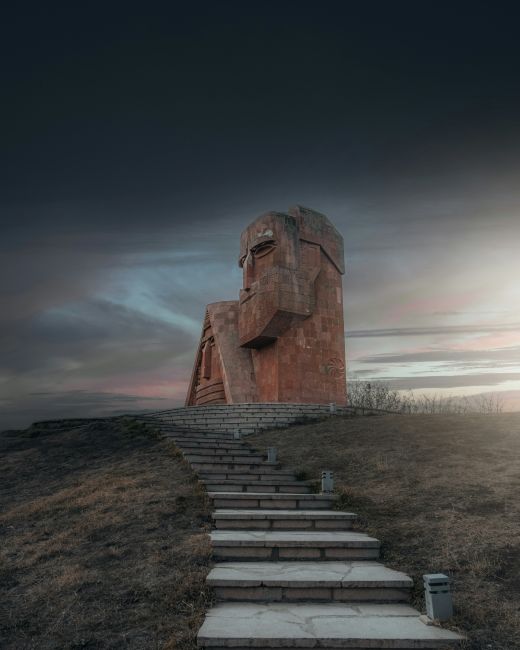
Armenia is a high, rugged country of stone churches, deep canyons and bright mountain light, with the snowy double peak of Mount Ararat, just across the border in Turkey, hanging over its capital. It was the first nation to adopt Christianity as a state religion, and its monasteries, perched on cliffs and tucked into gorges, are among the most beautiful in the world. Start in Yerevan, a warm, café-loving city of pink stone; visit the pagan temple of Garni and the rock-cut monastery of Geghard, the cathedral of Etchmiadzin and Khor Virap under Ararat; swim or walk by Lake Sevan; and head south for the wine country of Areni and the cliff-top monastery of Tatev. Most Western visitors can stay without a visa, though Canadians need one. First, read the safety section below: the borders with Azerbaijan and Turkey are closed, and the strip along the border with Azerbaijan is best avoided. May–June and September–October are the best months. Give it a week to ten days.
Right now in Armenia
- Wed 11–19°C 52–67°F 1 mm Mostly clear
- Thu 10–22°C 50–71°F Clear
- Fri 12–21°C 53–71°F Clear
Weather: MET Norway (CC BY 4.0) · Air quality: OpenAQ
Multi-day tours of Armenia
Multi-day tours from local operators. You check dates and book on Viator, our partner; we may earn a commission at no extra cost to you. How we earn money
Safety and current conditions
Most visits to Armenia are trouble-free, and Yerevan, Lake Sevan, Dilijan, Gyumri, Garni, Geghard and the other main sights lie well away from the border areas. Because of tensions between Armenia and Azerbaijan, and past military action along their border, the strip within about 5 km of the entire eastern border with Azerbaijan and the M16/H26 road between Ijevan and Noyemberyan in Tavush province are best avoided, and consular help there is severely limited. Points to know:
- The south (Syunik): the main road to Goris, Tatev, Kapan and the Iranian border runs close to Azerbaijan in places, and some stretches and towns, including around Kapan, lie within or very near the 5 km strip. Parts of roads may cross the border without warning, and checkpoints can close roads. Tatev Monastery itself is outside the strip, but check your exact route and current conditions, and travel in daylight.
- Tavush and the north-east: avoid the Ijevan–Noyemberyan road (M16/H26); use the route via Dilijan and Vanadzor to reach Georgia or the Debed canyon. Dilijan is well away from the border.
- Lake Sevan’s far east: the eastern shore and the villages beyond Vardenis lie close to the border; the monasteries and beaches of the western and northern shores are far from it.
- Everywhere else: crime is low. Watch for pickpockets and bag-snatching, use a reputable taxi app such as GG, avoid demonstrations in central Yerevan, never photograph military sites, and avoid driving outside towns after dark.
Borders and the peace process
- Azerbaijan: the border is closed. Armenia and Azerbaijan initialled a peace agreement at the White House on 8 August 2025, alongside plans for a US-backed transit route across southern Armenia (the “Trump Route for International Peace and Prosperity”, or TRIPP). As of October 2026, the agreement had not been signed: Azerbaijan says it wants changes to Armenia’s constitution first, and construction of the route had not started, with a groundbreaking talked of for early 2027, according to press reports.
- Nagorno-Karabakh: after a military offensive by Azerbaijan in September 2023, the region came under Azerbaijani control and almost all of its ethnic Armenian population left for Armenia. It cannot be visited from Armenia. Note that Azerbaijan may refuse entry to anyone who visited the region in the past without its permission.
- Turkey: the land border is closed, although there are direct flights between Yerevan and Istanbul. Armenia says its renovated Margara crossing is ready, but no opening date had been agreed by October 2026.
- Georgia: open. The main road and rail crossing is Bagratashen–Sadakhlo; Gogavan–Guguti and Bavra–Ninotsminda also link the two countries.
- Iran: the Agarak–Nordooz crossing is open to foreign nationals coming from Iran, subject to change at short notice.
Conditions change, so check the latest official information shortly before you travel.
Armenia at a glance: overview and geography
Armenia (Hayastan) is a landlocked country about the size of Belgium or Maryland, set on a high plateau in the South Caucasus between Georgia, Azerbaijan, Iran and Turkey. Almost all of it lies above 1,000 m, and Mount Aragats, its highest peak, reaches about 4,090 m. Lake Sevan, at about 1,900 m, covers roughly a twentieth of the country. The Statistical Committee of Armenia counted about 3.1 million people on 1 April 2026, more than a third of them in Yerevan.
Armenians have lived here for nearly three thousand years: Yerevan grew from the Urartian fortress of Erebuni, founded in 782 BC. In 301, according to tradition, King Tiridates III made Armenia the first Christian state, and in about 405 the monk Mesrop Mashtots created the Armenian alphabet, still used today. Armenia was later divided between Persian, Ottoman and Russian empires. The Armenian Genocide, which began in 1915 and in which, by most historians’ estimates, up to 1.5 million Armenians were killed under the Ottoman government, is remembered every 24 April. Armenia was briefly independent from 1918 to 1920, then a Soviet republic, and became independent again in 1991. A huge diaspora, in Russia, France, the United States, Lebanon and beyond, keeps close ties with the homeland. Armenia has three UNESCO World Heritage Sites: the Monasteries of Haghpat and Sanahin, the Monastery of Geghard and the Upper Azat Valley, and the Cathedral and Churches of Echmiatsin with the archaeological site of Zvartnots.
Time zone: Armenia uses UTC+4 all year, with no summer time, the same as Georgia and Azerbaijan.
The regions
- Yerevan and the Ararat plain: the capital, Etchmiadzin and Zvartnots to the west, and Khor Virap and the vineyards towards the Turkish border.
- Kotayk: just east of Yerevan, with the temple of Garni, Geghard monastery and the Azat gorge.
- Gegharkunik: Lake Sevan and its monasteries, beaches and khachkar fields.
- Tavush: forested hills around the spa town of Dilijan, with the monasteries of Haghartsin and Goshavank.
- Lori and Shirak: the Debed canyon with Haghpat and Sanahin, and Gyumri, Armenia’s second city, with its black-stone old town.
- Aragatsotn: Mount Aragats, the Amberd fortress and the Saghmosavank and Hovhannavank monasteries above the Kasagh gorge.
- Vayots Dzor and Syunik: the south, with Areni’s wine and caves, Noravank, the spa town of Jermuk, Goris and Tatev.
Regions
Where to go: Yerevan, monasteries, lake and mountains
Armenia is compact, and many sights are day trips from Yerevan. A simple first trip has a base in Yerevan, a night or two at Lake Sevan or in Dilijan, and, if you have time, two nights in the south.
Yerevan
The capital is a lively, walkable city of pink and orange volcanic tuff, with wide Soviet-era avenues, fountains, wine bars and a strong café culture. Climb the Cascade for views of Ararat, see ancient manuscripts at the Matenadaran, visit the Armenian Genocide Memorial at Tsitsernakaberd, and browse the Vernissage market at weekends. Our Yerevan guide (coming soon) has hours, prices and day trips.
Garni, Geghard, Etchmiadzin and Khor Virap
Four classic half-day trips from Yerevan. Garni is a 1st-century Greco-Roman temple on a cliff above the Azat gorge, rebuilt in the 1970s, with basalt columns in the gorge below. Just beyond it, Geghard is a monastery partly carved out of the mountain, a UNESCO site. Etchmiadzin, west of Yerevan, is the seat of the Armenian Apostolic Church, with a cathedral founded in the early 4th century, and the ruins of 7th-century Zvartnots cathedral nearby. Khor Virap, near the Turkish border, is the monastery where Saint Gregory the Illuminator was held in a pit, with the classic view of Ararat behind.
Lake Sevan and Dilijan
An hour north-east of Yerevan, Lake Sevan is a vast high-altitude lake of changing blues, with the Sevanavank monastery on its peninsula, beaches for a cool summer swim, and the field of carved stone crosses at Noratus. Beyond the Sevan pass, Dilijan is a green spa town of wooden balconies and forest trails, with Haghartsin and Goshavank monasteries nearby. Our Lake Sevan guide (coming soon) has the details.
The south: Areni, Noravank and Tatev
The road south crosses the Ararat plain into Vayots Dzor, where Areni produces Armenia’s best-known red wines and a nearby cave yielded the world’s oldest known winery and leather shoe. Noravank monastery glows in a red-rock canyon. Further south, in Syunik, the 9th-century monastery of Tatev sits on a promontory above the Vorotan gorge, reached by the Wings of Tatev cable car, one of the longest reversible cable cars in the world. Goris, with its cave dwellings, is the usual base. Read the safety section above before travelling in Syunik.
A few more worth your time
Gyumri, with its 19th-century black-tuff streets, museums and a moving story of recovery from the 1988 earthquake; the Debed canyon’s monasteries of Haghpat and Sanahin; Mount Aragats, with a summer road to Lake Kari at about 3,200 m; Saghmosavank and Hovhannavank above the Kasagh gorge; the Selim caravanserai on a high pass between Vayots Dzor and Sevan; and the spa town of Jermuk.
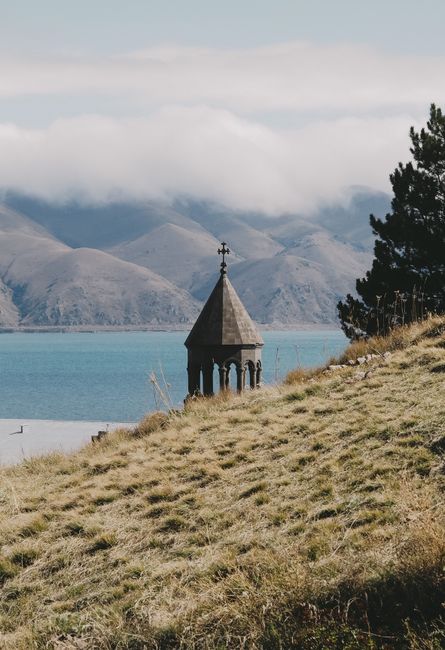
Lake Sevan Travel Guide
Plan a visit to Lake Sevan, Armenia's high-altitude lake at about 1,900 m: Sevanavank monastery on its peninsula, Hayravank, the khachkar field at Noratus,…
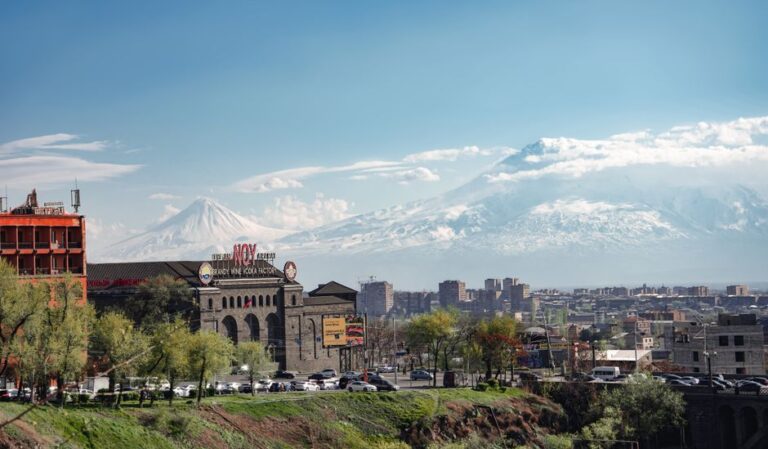
Yerevan Travel Guide
Plan a trip to Yerevan: the Cascade and Cafesjian Center (free), the Matenadaran's hours and tickets, the Armenian Genocide Memorial and Museum, the History…
Best time to visit Armenia
Armenia has a dry, sunny, continental highland climate: hot summers in the Ararat valley, cold winters everywhere, and spring and autumn that are often glorious. Altitude makes a big difference: Lake Sevan and Gyumri are much cooler than Yerevan. The table shows mean temperatures (the average of day and night) and rainfall from the official 1991–2020 climate normals that Armenia submitted to the World Meteorological Organization. Daytime highs are several degrees above these means; in Yerevan, summer afternoons often pass 35 °C.
| Area (weather station) | Spring (Mar–May) | Summer (Jun–Aug) | Autumn (Sep–Nov) | Winter (Dec–Feb) | Best months |
|---|---|---|---|---|---|
| Yerevan (Arabkir, about 1,100 m) | mean 7–17 °C | mean 22–26 °C | mean 21 °C falling to 7 °C | mean −2 to 1 °C | May–June, September–October |
| Lake Sevan (Sevan, 1,917 m) | mean −1 to 9 °C | mean 14–17 °C | mean 14 °C falling to 2 °C | mean −5 to −2 °C | June–September |
| Dilijan and the forests (Dilijan, 1,256 m) | mean 4–12 °C | mean 17–19 °C | mean 15 °C falling to 4 °C | mean −1 to 1 °C | May–October |
| Gyumri and the north-west (Gyumri, 1,513 m) | mean 1–12 °C | mean 17–21 °C | mean 16 °C falling to 2 °C | mean −8 to −5 °C | June–September |
Yerevan is dry, with only about 340 mm of rain a year, most of it in spring; August averages just two rainy days. Sevan and Dilijan get more, with May the wettest month. In winter, the mountains, Sevan and Gyumri are snowy and freezing, and the passes to the south can be icy.
Seasons, crowds and festivals
July and August are hot in Yerevan and busy at Lake Sevan, with many visitors from the Armenian diaspora. May, June, September and October bring mild weather, wildflowers or harvest colours, and the grape and wine season in the south. The summer festival of Vardavar, 14 weeks after Easter, turns streets into a giant water fight (4 July in 2027). Public holidays include New Year (1–2 January, with 31 December), Christmas (6 January), Army Day (28 January), Genocide Remembrance Day (24 April), Labour Day (1 May), Victory and Peace Day (9 May), Republic Day (28 May), Constitution Day (5 July) and Independence Day (21 September). Many museums close on holidays and remembrance days.
How long to stay: sample itineraries
Yerevan to Lake Sevan is about an hour by road, Yerevan to Gyumri about two hours by express train, and Yerevan to Tatev about five hours by road.
5 days: Yerevan and the classics
Four nights in Yerevan with day trips to Garni and Geghard, Etchmiadzin and Khor Virap, then a night at Lake Sevan on the way north, or back to Yerevan.
8–10 days: north and south
Three nights in Yerevan, one at Lake Sevan, two in Dilijan or the Debed canyon, then two or three nights in the south for Areni, Noravank and Tatev, travelling by day and checking your route through Syunik.
2 weeks: Armenia and Georgia
Combine a week in Armenia with a week in Georgia, crossing at Bagratashen–Sadakhlo by road or on the overnight Yerevan–Tbilisi train. To add Azerbaijan, fly, because the Armenia–Azerbaijan border is closed. For a longer Caucasus and Anatolia trip, fly on to Istanbul; see our Turkey guide.
Entry, money, fees and costs
Entry and visas (last reviewed October 2026)
- Visa-free for up to 180 days a year: citizens of all EU countries, the UK, the United States, Australia, New Zealand, Japan, South Korea, Switzerland, Norway and some others can enter without a visa and stay up to 180 days in a year, according to Armenia’s Ministry of Foreign Affairs.
- Canada and others: Canada is not on the ministry’s visa-free list, so Canadians and other nationalities need a visa. Apply online through the official e-visa portal (evisa.mfa.am). The ministry lists consular fees of 3,000 dram for a visitor visa of up to 21 days and 15,000 dram for up to 120 days.
- Residence permits: nationals of many countries who hold a valid US, EU/Schengen, UAE or certain Gulf residence permit can also enter without a visa; check the ministry’s list.
- Passports: must be valid for the whole stay.
- Medicines: cannabis, CBD and THC products are illegal, even with a prescription.
Armenia is not in the EU or Schengen area, so the EES and ETIAS do not apply. Check Armenia’s Ministry of Foreign Affairs before you go.
The dram, cash and tipping
The currency is the Armenian dram (AMD, ֏). On 2 October 2026, the Central Bank of Armenia’s official rate was 407 dram to the euro and 363 to the US dollar. Prices must be paid in dram; dollars, euros and roubles are easy to change at banks and exchange offices, which often give good rates. Cards work in most hotels, restaurants and supermarkets in Yerevan, but less outside the capital, so carry cash for villages, minibuses, markets and monastery stalls. Many restaurants add a 10% service charge; otherwise rounding up or leaving about 10% is normal.
Language and a few useful words
Armenian, written in its own 38-letter alphabet, is the official language. Russian is widely understood, and English is common among younger people and in Yerevan’s tourist businesses. Try barev dzez (hello), shnorhakalutyun or simply merci (thank you), ayo and voch (yes and no), khndrem (please, you’re welcome) and kenats (cheers).
Typical travel costs
Armenia is good value, although Yerevan’s prices have risen in recent years. These estimates, per person per day, are a planning guide as of October 2026:
| Style | Estimated cost per day | What that looks like |
|---|---|---|
| Budget | about €30–50 | Hostel or guesthouse, bakery breakfasts and lahmajo, one restaurant meal, metro and minibuses |
| Mid-range | about €70–130 | 3–4 star hotel or boutique guesthouse shared by two, restaurant meals with wine, a driver for day trips, museum tickets |
| High-end | about €220+ | Top Yerevan hotel, private driver-guides, wine estates in Areni and fine dining |
The figures are our estimates, not official statistics.
Getting there and getting around
Arrival airports
Almost everyone flies into Zvartnots International Airport (EVN), just west of Yerevan. According to the airport, municipal bus N100 runs to the city centre for 500 dram, every 30 minutes from 06:50 to 22:00 and hourly through the night, paid by bank card on board or a TelCell QR ticket; the N201 express costs 300 dram, cash only, every 30 minutes from 07:00 to 22:00. Taxi and car-hire desks are open 24 hours. Gyumri’s Shirak airport has a few flights, mostly to Russia.
Trains
South Caucasus Railway runs a small network. According to its timetable, three daily trains link Yerevan and Gyumri in about three hours, and an express does it in about 2 hours 10 minutes on Friday to Sunday. The overnight train to Tbilisi leaves Yerevan at 21:00 on even-numbered dates and arrives at 07:05, from 2 October 2026 to 13 June 2027; the return leaves Tbilisi at 20:00 on odd dates. In summer, trains also run to Batumi and to Lake Sevan, but both seasonal services had ended for 2026 by mid-September and the start of October. Buy tickets online or at stations; you need your passport.
Minibuses and taxis
Minibuses (marshrutkas) link Yerevan with most towns; those to Sevan, Dilijan and the north leave from the Northern Bus Station, and those to the south from the Central (Kilikia) station. They are cheap and frequent but cramped. Taxis are inexpensive; book through an app such as GG or Yandex Go rather than hailing in the street. Many visitors hire a driver for day trips, which lets you combine several monasteries.
Driving
You need your national licence and a 1968 International Driving Permit. Drive on the right. Roads range from good highways to badly potholed mountain routes, standards of driving are poor, livestock wander onto roads, and conditions are worst from November to February. Avoid driving outside towns after dark, and in the south, stay on routes that keep you out of the border strip.
Safety, health and connectivity
Everyday safety
Start with the safety section at the top of this page. Day to day, Armenia is safe and friendly. Keep valuables secure on crowded streets and on the cross-border train (lock your compartment), agree taxi fares or use an app, and stay away from protests. Photographing military sites is illegal. Armenia is earthquake country: the 1988 Spitak earthquake devastated the north. Emergency number: 911.
Health
Take travel insurance that covers medical treatment and evacuation. Yerevan has good private clinics; facilities are basic in rural areas. Yerevan’s tap water comes from mountain springs and is widely drunk, and public drinking fountains (pulpulaks) run on street corners. Summer heat in the Ararat valley is intense, so carry water and avoid the midday sun.
Connectivity and power
EU roaming rules do not apply. Local SIM cards and eSIMs from Team Telecom Armenia, Viva and Ucom are cheap, with good coverage in towns and along main roads. Plugs are the European two-pin type (C and F); see our travel adapters guide.
Food, wine and culture
Armenian food is generous and fresh: khorovats (barbecue), dolma in vine leaves, lavash flatbread baked in a clay tonir (UNESCO-listed as intangible heritage), khash on winter mornings, lahmajo flatbreads, herbs and cheeses on every table, and apricots, the national fruit, in summer. Armenian brandy is famous, and the wine scene, built on native grapes such as Areni, is thriving, with wine bars in Yerevan and wineries in Vayots Dzor. Churches are active places of worship: dress modestly, women often cover their hair, and candles are lit in sand trays by the door. The carved stone crosses called khachkars are everywhere, each one unique. See our wine tasting guide.
Things to do: monasteries, hiking and wine
- Hiking: the long-distance Transcaucasian Trail, Dilijan National Park’s forests, Mount Aragats and the Debed and Vorotan canyons. See our hiking guide.
- Wine tasting: Areni and Vayots Dzor, and Yerevan’s wine bars. See our wine tasting guide.
- City sightseeing: Yerevan’s museums and Gyumri’s old town. See our city sightseeing guide.
- Lake swimming: Lake Sevan’s beaches in July and August. See our beaches guide.
- Cycling: tough but rewarding mountain roads for experienced riders. See our cycling guide.
- Skiing: Tsaghkadzor, north of Yerevan, from about December to March.
What to pack
Pack for altitude and sun: a hat, sunglasses and high-factor sunscreen, light clothes for Yerevan in summer, and a warm layer for Sevan, Dilijan and the mountains, where evenings are cool. Bring comfortable shoes for uneven monastery paths, hiking shoes for trails, a rain jacket in spring, and a scarf or wrap for churches. Carry your passport, which you need for trains and hotels.
Armenia travel FAQ
Is Armenia safe to visit?
Yes, for the main tourist areas. Avoid the strip within about 5 km of the eastern border with Azerbaijan and the Ijevan–Noyemberyan road, where tensions between the two countries remain.
Do I need a visa for Armenia?
Not if you hold an EU, UK, US, Australian, New Zealand, Japanese or Swiss passport, among others: you can stay up to 180 days a year. Canadians and many others need a visa, available online at evisa.mfa.am.
Can I travel from Armenia to Azerbaijan?
Not directly. The border is closed and the peace agreement had not been signed as of October 2026. Fly via Tbilisi, Istanbul or another hub.
Is the Armenia–Turkey border open?
No. It remains closed, though there are direct flights between Yerevan and Istanbul. A partial opening for third-country nationals has been agreed in principle but had no date in October 2026.
Can I visit Nagorno-Karabakh from Armenia?
No. Since 2023 the region has been under Azerbaijani control and cannot be reached from Armenia. Past visits without Azerbaijan’s permission can lead to refusal of entry to Azerbaijan.
Is it safe to visit Tatev?
The monastery itself lies outside the 5 km border strip, and many visitors go. But parts of the roads in Syunik run close to the border, so check current conditions, plan your route and travel in daylight.
When is the best time to visit Armenia?
May–June and September–October, when it is warm but not scorching. July and August suit Lake Sevan and the mountains; winter is cold but good for skiing at Tsaghkadzor.
How many days do you need in Armenia?
Five days for Yerevan and the classic day trips; eight to ten to add Sevan, Dilijan and the south.
How do I get from Yerevan to Tbilisi?
By the overnight train (Yerevan 21:00 to Tbilisi 07:05 on even-numbered dates this winter), by minibus or shared taxi in about five to six hours, or by a short flight.
What currency does Armenia use?
The dram (AMD), about 407 to the euro in early October 2026. Cards work well in Yerevan, but carry cash outside the capital.
Can you see Mount Ararat from Armenia?
Yes, on clear days, from Yerevan’s Cascade and especially from Khor Virap. The mountain itself is in Turkey; mornings in autumn and winter give the clearest views.
What is the emergency number in Armenia?
911 for police, fire and ambulance.
Sources and last review
Researched and last reviewed on 4 October 2026. Safety information comes from GOV.UK foreign travel information (updated 1 March 2026) and the US State Department’s country information (4 September 2025); visa rules and fees from Armenia’s Ministry of Foreign Affairs; exchange rates from the Central Bank of Armenia; population from the Statistical Committee of Armenia; climate from the official 1991–2020 WMO normals; airport buses from Zvartnots Airport; trains from South Caucasus Railway; UNESCO sites from UNESCO. The status of the peace agreement, the TRIPP route, the Margara crossing, Nagorno-Karabakh, minibus details, tipping and the 5 km distances along Syunik roads (our own map calculation) come from press reports and secondary sources and are flagged for checking. Daily costs are estimates. Check the official sites before you travel.
Plugs and power in Armenia
Armenia uses 230 V, 50 Hz and these plugs (left) and wall sockets (right):
All plug types and voltages by country → · Check what you need to pack →
Plan your trip
Partner links: TravelerCenter may earn a commission if you book, at no extra cost to you.
🇦🇲 Useful Armenian phrases for Armenia
All 38 Armenian phrases: restaurant, hotel, emergencies, romance (printable) →