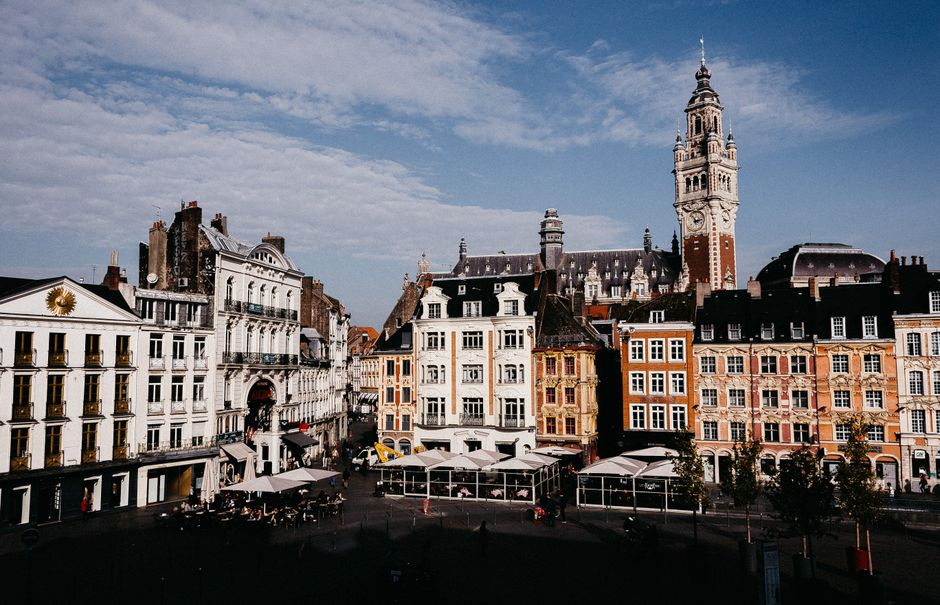
Lille is the capital of French Flanders: a big, friendly student city of red-brick and carved-stone façades, Flemish gables, cobbled lanes and grand squares, with one of France’s finest art museums and a food and beer culture that owes as much to Belgium as to France. It is only 1 h 22 by Eurostar from London and about an hour by TGV from Paris, so it makes an easy weekend break or a first stop in France, and the Belgian cities of Bruges, Ghent and Brussels are close by. On the first weekend of September the whole city turns into Europe’s largest flea market, the Braderie de Lille. Give Lille two days, and three or four with Roubaix, the Louvre-Lens or a hop into Belgium.
Right now in Lille
- Wed 10–18°C 51–65°F 9 mm Rain
- Thu 11–14°C 51–57°F 3 mm Showers
- Fri 8–15°C 46–58°F 6 mm Light rain
Weather: MET Norway (CC BY 4.0) · Rates: ECB
Top tours in Lille
See all tours for Lille →
From local operators, with prices and reviews; you check availability and book on Viator, our partner. We may earn a commission at no extra cost to you. How we earn money
Lille at a glance
- Best for: city breaks, Flemish architecture, art museums, beer and hearty food, Christmas markets, the Braderie, and day trips to Roubaix, Lens and Belgium.
- How long: 2 days for the city, 3–4 with La Piscine and the Villa Cavrois in Roubaix, the Louvre-Lens or a day in Bruges or Ghent.
- Best time: May to September for café terraces and long evenings; early September for the Braderie; late November and December for the Christmas village.
- Getting in: Eurostar from London St Pancras in about 1 h 22, TGV from Paris Gare du Nord in about an hour, and fast trains from Brussels, Charles de Gaulle airport and much of France.
- Getting around: the old town is best on foot; Ilévia’s two driverless metro lines, two tram lines and buses cover the whole metropolitan area, including Roubaix and Villeneuve-d’Ascq.
- Before you go: entry rules, money, trains and general safety are on our France travel guide, and for the quickest link from the capital see our Paris travel guide.
Lille’s neighbourhoods and who each one suits
Lille has two main stations side by side, Lille Flandres and Lille Europe, a few minutes’ walk from the Grand’Place. North of the squares lies Vieux-Lille, the old town; south and west are the shopping streets, the Palais des Beaux-Arts and the lively Wazemmes district. The wider Métropole Européenne de Lille takes in 95 towns, including Roubaix, Tourcoing and Villeneuve-d’Ascq, all linked by metro or tram.
Vieux-Lille
The old town of cobbled streets, 17th- and 18th-century Flemish houses with carved stone garlands, smart boutiques, wine bars and estaminets. Rue de la Monnaie leads to the Hospice Comtesse museum and the modern-fronted Notre-Dame-de-la-Treille cathedral. The most atmospheric place to stay and eat.
Grand’Place and the centre
The Grand’Place (officially Place du Général-de-Gaulle), the Vieille Bourse, the Opera and the belfry of the Chamber of Commerce, with Place Rihour and the tourist office next door. Busy, central and close to both stations; ideal for a short first visit.
Wazemmes and Gambetta
A working-class, multicultural district south-west of the centre, known for its big street market, cheap eats, bars and a more local feel. Good value and well connected by metro.
Euralille and the stations
The modern business district around Lille Europe station and the Euralille shopping centre. Not pretty, but practical for an early Eurostar or TGV, with many chain hotels.
Top things to see in Lille
Prices and hours below come from the official websites, as of October 2026. Many Lille museums close on Tuesdays and over the Braderie weekend, and several are free on the first Sunday of the month.
Grand’Place and the Vieille Bourse
Lille’s main square is ringed by gabled façades, with the column of the Goddess in the middle and the Voix du Nord newspaper building’s stepped gable on one side. Its finest building is the Vieille Bourse, the old stock exchange of 1652–1653: 24 Flemish Renaissance houses around an arcaded courtyard where second-hand booksellers set up their stalls most afternoons, and where people dance the tango on summer evenings. Next door, Place du Théâtre has the Opera and the tall belfry of the Chamber of Commerce. The squares are free to wander at any time.
Palais des Beaux-Arts
One of the largest art museums in France, in a grand 19th-century palace on Place de la République, with paintings by Rubens, Van Dyck, Goya, Raphael and the Impressionists, medieval and Renaissance sculpture, and 18th-century relief models of fortified towns in the basement. How to visit: open Monday 14:00–18:00 and Wednesday to Sunday 10:00–18:00; closed on Tuesdays, over the Braderie weekend and some public holidays. Tickets for the permanent collections cost €7, or €4 reduced (and €4 for everyone on weekdays from 16:30); under-18s go free, and entry is free for all on the first Sunday of the month. The first floor is closed for works until 8 October 2026, with a reduced €4 ticket for all meanwhile; a Sheila Hicks exhibition runs from 9 October 2026 to 8 March 2027.
Vieux-Lille and the Hospice Comtesse
Allow a slow half-day for the old town: Rue de la Monnaie and Rue de la Grande Chaussée, the Place aux Oignons, the Hospice Comtesse (a medieval hospital turned museum of Flemish life, included in the City Pass) and the Notre-Dame-de-la-Treille cathedral. Stop at Méert on Rue Esquermoise, a tea room and confectioner since 1761, for its famous thin waffles filled with vanilla cream.
The Citadelle and the Bois de Boulogne
Vauban’s star-shaped citadel, built for Louis XIV from 1667, is still an army base, so it can only be seen inside on occasional guided tours; ask the tourist office. Around it, the Bois de Boulogne park, the canal of the Deûle and the ramparts walk make Lille’s favourite green space for running, cycling and picnics, and the small Lille zoo sits on its edge.
Wazemmes market
The Marché de Wazemmes is one of the biggest markets in northern France: on Tuesday, Thursday and especially Sunday mornings, stalls of food, flowers, clothes and bric-à-brac spread around the covered market hall on Place de la Nouvelle Aventure. Sunday is the liveliest day; finish with a beer and mussels in a nearby café.
La Piscine in Roubaix
A spectacular art museum in a 1930s Art Deco swimming pool, with sculptures lined up along the old pool under a stained-glass sunburst, plus paintings, ceramics and textiles from Roubaix’s industrial past. It is about 25 minutes from central Lille by metro line 2. How to visit: open Tuesday to Thursday 11:00–18:00, Friday 11:00–20:00 (free from 18:00) and Saturday and Sunday 13:00–18:00; closed Mondays. Tickets cost €11 during exhibitions and €9 otherwise; under-18s go free, and the permanent collections are free on the first Sunday of the month. A twin ticket with the Villa Cavrois costs €19.50.
Villa Cavrois
A modernist mansion built by Robert Mallet-Stevens in 1929–1932 for a textile industrialist, rescued from ruin and restored by the Centre des monuments nationaux, with its long yellow-brick façades, mirror pool and original interiors. How to visit: open 10:00–18:00, closed Mondays, last entry 45 minutes before closing; a ticket costs €11 and under-18s go free (as of October 2026). Until 28 October 2026 road works make the access road difficult and parking is banned, so come on foot from the tram or bus.
LaM, the Lille modern art museum
In a park in Villeneuve-d’Ascq, the LaM holds modern art (Picasso, Braque, Modigliani, Miró), contemporary works and France’s largest collection of art brut, with a sculpture garden. How to visit: open Tuesday to Sunday 11:00–19:00; a single ticket for the collection and exhibitions costs €11, or €9 reduced; under-26s go free, and the collection is free on the first Sunday of the month.
The Hello Lille City Pass
The official City Pass, sold by the Lille tourist office, comes in 24-, 48- and 72-hour versions, from €25 (as of October 2026). It gives one entry to about twenty sites, including the Palais des Beaux-Arts, La Piscine, the Villa Cavrois, the LaM, the Hospice Comtesse and the town hall belfry, plus a choice of the panoramic bus tour or a guided walk of Vieux-Lille. For €4 more you get 24 hours of unlimited Ilévia metro, tram and bus travel; the 48-hour pass with transport costs €39. The pass starts at first use and also gives discounts at the Louvre-Lens. Buy it online or at the tourist office in the Palais Rihour.
The Braderie de Lille
On the first weekend of September, Lille holds the Braderie, Europe’s largest flea market and a tradition going back to the Middle Ages: about 100 km of pavements fill with stalls of antiques, books, records, clothes and junk, from Saturday morning until Sunday, day and night. Restaurants serve mountains of mussels and chips, and the empty shells piled outside are part of the fun. The 2026 edition took place on 5 and 6 September. As of October 2026 the 2027 dates had not been announced; expect the first weekend of September and book a room months ahead. Many museums close that weekend, and the centre is closed to cars.
Lille at Christmas
From mid-November, the Village de Noël fills Place Rihour with wooden chalets selling crafts, decorations and seasonal food and drink, and a big Ferris wheel and carousel go up on the Grand’Place. The organisers announce the 2026 village for 18 November to 30 December 2026, subject to change; entry is free. Combine it with Christmas markets in Bruges, Ghent or Brussels.
Food and drink in Lille
Lille eats like Flanders. Try the welsh, toast and ham soaked in melted cheddar and beer, often topped with an egg; carbonade flamande, beef stewed in beer with gingerbread; potjevleesch, a cold terrine of several meats in jelly; and anything with Maroilles, the region’s pungent cheese. The best places for them are the estaminets, cosy Flemish taverns with wooden tables and old games. For something sweet, queue at Méert for vanilla waffles or try a merveilleux meringue cake. Beer is king: look for local craft breweries and Belgian classics, and in November the Bière à Lille festival.
Other things to do in Lille
Climb a belfry
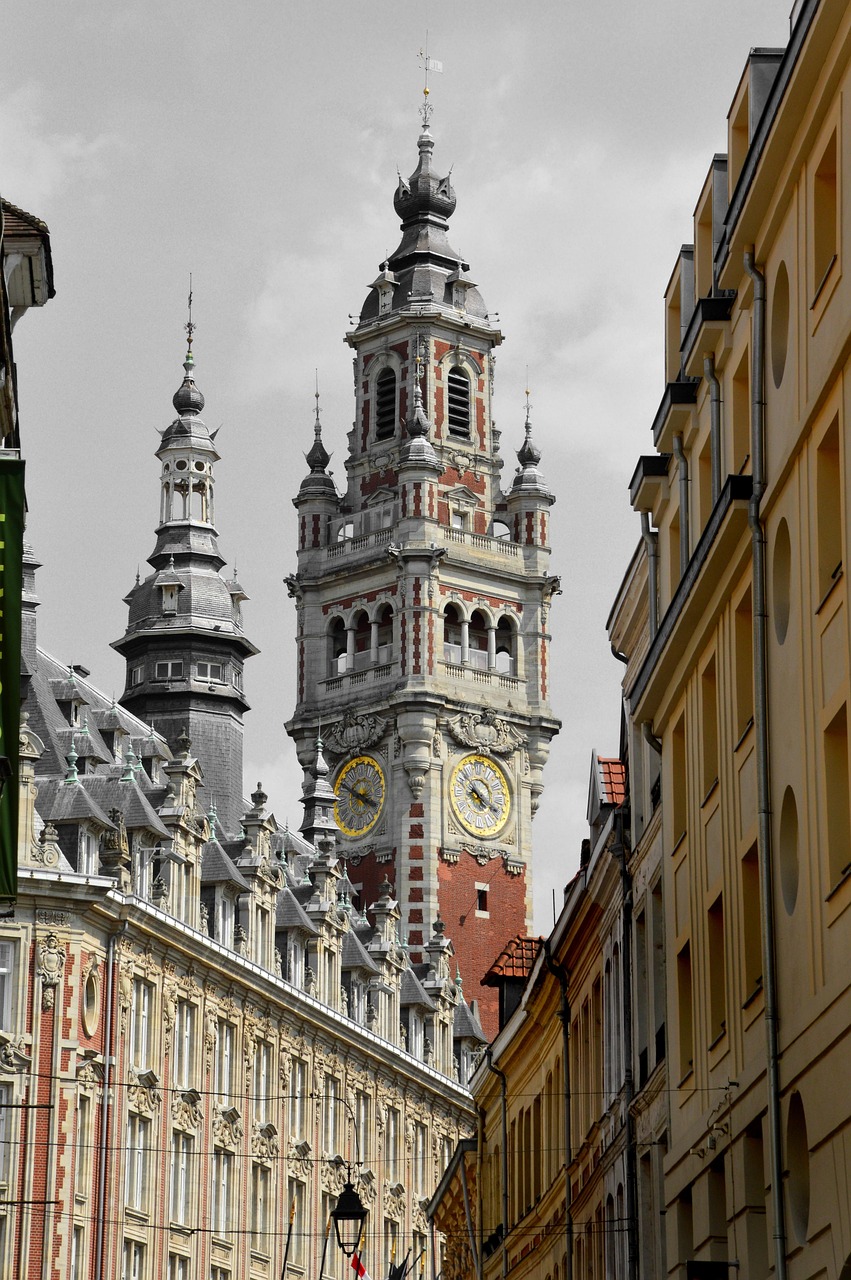
Lille’s town hall belfry, 104 m tall and part of the UNESCO-listed belfries of Belgium and France, has a lift and stairs to a viewpoint over the city; it is in the City Pass. Book ahead in busy periods.
Walk or cycle along the Deûle
The canal of the Deûle runs past the Citadelle and Vieux-Lille, with towpaths for walks and bike rides, summer open-air bars (guinguettes) and boat trips. V’Lille public bikes make it easy.
Day trips from Lille
Lille sits on the Belgian border, at the hub of fast trains, so many day trips take under an hour. Check SNCF Connect, Eurostar and the Belgian railways (SNCB) for times.
Louvre-Lens
A branch of the Louvre in a light, low glass-and-aluminium building on a former mine site, about 40 minutes from Lille by regional train. The Galerie du temps, a single 3,000 m² hall of masterpieces from 5,000 years of art, is free (as of October 2026); temporary exhibitions cost €12. It is open Wednesday to Monday, 10:00–18:00, and closed on Tuesdays. Lens’s local buses have been free since 1 January 2026.
Bruges, Ghent and Brussels
Ghent is about an hour away by train and Bruges about an hour and a half, usually with a change at Kortrijk; see our Ghent travel guide and Bruges travel guide. Brussels is about 35 minutes by high-speed train from Lille Europe; read our Brussels travel guide.
Arras and the First World War battlefields
The Flemish-Baroque squares of Arras are about 40 minutes by train, and from there or by car you can visit the Wellington Quarry, the Canadian memorial at Vimy and the cemeteries of the Somme and the Battle of Fromelles museum (in the City Pass).
Nearby destinations
Getting there and getting around
By train
Lille has two stations five minutes apart. Lille Europe handles Eurostar trains from London (about 1 h 22) and TGVs from Brussels, Charles de Gaulle airport, Lyon, Marseille, Bordeaux and Strasbourg. Lille Flandres is the terminus for most TGVs from Paris Gare du Nord (about an hour) and for regional trains to Arras, Lens, Roubaix and Belgium. Eurostar passengers to the UK go through French and UK border checks at Lille Europe before boarding, so arrive early.
By air
Lille-Lesquin airport, about 10 km south-east of the centre, has mainly domestic and Mediterranean flights, with a shuttle bus to the stations. Many international travellers fly to Paris Charles de Gaulle, about 50 minutes from Lille Europe by TGV, or to Brussels.
Metro, tram and buses
Ilévia runs two automatic metro lines (Lille’s VAL was the world’s first driverless metro), two tram lines to Roubaix and Tourcoing, and buses across the metropolitan area. Since 1 August 2026 a single ticket costs about €1.90 and a 24-hour pass about €5.70, according to local reporting of Ilévia’s new fares; check ilevia.fr, and remember that the City Pass can include 24 hours of travel. Validate every trip.
Driving and parking
Park and walk: central streets are narrow and car parks fill up. Since 1 January 2025 the whole Métropole Européenne de Lille, all 95 towns plus the main motorways around them, is a low-emission zone (ZFE). Every vehicle, including foreign-registered cars, must display a Crit’Air sticker at all times, and unclassified vehicles (cars first registered before 1997) are banned. Order the sticker in advance on the official certificat-air.gouv.fr website.
When to go and how long to stay
Lille has a mild, damp climate: cool, grey winters, pleasant springs and summers rarely hotter than the mid-20s, with rain spread through the year. The table uses Météo-France’s official 1991–2020 normals for Lille-Lesquin, the airport station just outside the city: average daily highs and lows, and days with at least 1 mm of rain.
| Season | Average high / low | Rainy days per month | What it’s like | Good for |
|---|---|---|---|---|
| Winter (Dec–Feb) | 7–8 °C / 2 °C | 11–12 | Cool, grey and damp; frost on about a third of nights | Christmas village, museums, estaminets |
| Spring (Mar–May) | 11–18 °C / 4–9 °C | 9–10 | Mild, changeable, lengthening days | Sightseeing, parks, day trips to Belgium |
| Summer (Jun–Aug) | 21–24 °C / 12–14 °C | about 10 | Warm, with showers; occasional heatwaves | Terraces, canal walks, guinguettes |
| Autumn (Sep–Nov) | 20 °C falling to 10 °C / 11 °C falling to 5 °C | 10–13 | Mild September, wetter and darker by November | The Braderie, beer festival, exhibitions |
Lille-Lesquin gets about 740 mm of rain a year on about 126 days, and around 1,630 hours of sunshine. July and August are the warmest months, with average highs of about 24 °C.
How long to stay: 2-, 3- and 4-day plans
2 days: Day 1, the Grand’Place, the Vieille Bourse and the belfry, then Vieux-Lille, the Hospice Comtesse and a waffle at Méert, with dinner in an estaminet. Day 2, the Palais des Beaux-Arts in the morning, Wazemmes market (on a Tuesday, Thursday or Sunday), and a walk round the Citadelle and the Deûle.
3 days: add Roubaix for La Piscine and the Villa Cavrois. 4 days: add the Louvre-Lens, or a day in Ghent or Bruges.
Where to stay in Lille
- Vieux-Lille: the most charming base, with boutique hotels and guesthouses in old houses, close to restaurants and bars.
- Grand’Place and Rihour: central and practical, a short walk from both stations and all the sights.
- Near Lille Flandres and Lille Europe: chain hotels at good prices, ideal for an early Eurostar or TGV.
- Wazemmes and République: good value, near the Palais des Beaux-Arts and the market, well served by the metro.
- Roubaix: cheaper rooms near La Piscine, 25 minutes by metro, for longer stays.
Lille’s tourist tax (taxe de séjour) is set by the Métropole Européenne de Lille and charged per person per night. According to the official government database of rates, the latest rates (in force since 2024) are €0.88 in 1-star hotels, B&Bs and hostels, €1.10 in 2-star, €1.76 in 3-star, €2.75 in 4-star, €3.63 in 5-star hotels and €5.06 in palaces; unclassified rentals pay 5.5% of the price per person per night, within a legal cap. These totals include the Nord department’s 10% surcharge. Under-18s are exempt. Check your booking, as rates can change each year.
Practical tips for Lille
- Mind Tuesdays: the Palais des Beaux-Arts and the Louvre-Lens close on Tuesdays, and La Piscine, the Villa Cavrois and the LaM on Mondays; plan museum days around them.
- First Sundays: the Palais des Beaux-Arts is free for everyone, and La Piscine and the LaM are free for their permanent collections; expect crowds.
- Braderie weekend: rooms sell out and prices rise, and many museums close.
- Belgium is close: carry your passport or ID card for trips over the border and for the Eurostar.
- Rain: carry a light waterproof whatever the season.
- Emergencies: call 112. Watch your bags at the stations and in crowds at the Braderie.
What to pack for Lille
Bring comfortable, waterproof shoes for cobbles and rain, a light rain jacket or umbrella in every season, and layers, since a sunny morning can turn cool and wet. From November to March pack a warm coat, hat and gloves, especially for evenings at the Christmas village. A tote bag is handy for market shopping and Braderie finds.
Lille travel FAQ
How many days do you need in Lille?
Two days covers the Grand’Place, Vieux-Lille, the Palais des Beaux-Arts and Wazemmes market. Three or four days lets you add La Piscine and the Villa Cavrois in Roubaix, the Louvre-Lens, or a day trip to Ghent, Bruges or Brussels.
How long is the Eurostar from London to Lille?
About 1 h 22 from London St Pancras to Lille Europe, as of October 2026. You go through French and UK border checks before boarding, so arrive early.
How long is the train from Paris to Lille?
About an hour by TGV from Paris Gare du Nord, usually to Lille Flandres. TGVs from Charles de Gaulle airport reach Lille Europe in about 50 minutes.
When is the Braderie de Lille in 2027?
The 2027 dates had not been announced as of October 2026. The Braderie is held on the first weekend of September; the 2026 edition took place on 5 and 6 September. Book accommodation early.
How much does the Palais des Beaux-Arts cost?
As of October 2026, the permanent collections cost €7, or €4 reduced, and under-18s go free. Entry is free for everyone on the first Sunday of the month. It is closed on Tuesdays and open Monday afternoons and Wednesday to Sunday, 10:00–18:00.
Is the Lille City Pass worth it?
The Hello Lille City Pass starts at €25 for 24 hours, and the 48-hour pass with a 24-hour transport ticket costs €39 (as of October 2026). It covers about twenty sites, including the Palais des Beaux-Arts, La Piscine and the Villa Cavrois, so it pays off if you visit three or four museums.
Is the Louvre-Lens free?
Yes, the main Galerie du temps is free as of October 2026; temporary exhibitions cost €12. It is open Wednesday to Monday, 10:00–18:00, about 40 minutes from Lille by train.
When is the Lille Christmas market?
The Village de Noël on Place Rihour is announced for 18 November to 30 December 2026, subject to change, with a Ferris wheel on the Grand’Place. Entry is free.
Do I need a Crit’Air sticker to drive in Lille?
Yes. Since 1 January 2025 the whole Métropole Européenne de Lille is a low-emission zone: every vehicle, including foreign cars, must display a Crit’Air sticker at all times, and unclassified vehicles registered before 1997 are banned.
How much is the tourist tax in Lille?
The latest official rates range from €0.88 per person per night in 1-star hotels, B&Bs and hostels to €2.75 in 4-star and €3.63 in 5-star hotels, including the Nord department’s surcharge. Unclassified rentals pay 5.5% of the price. Under-18s pay nothing.
What food should I try in Lille?
Try a welsh (bread and ham under melted cheddar and beer), carbonade flamande, potjevleesch, Maroilles cheese and Méert’s vanilla waffles, ideally in a traditional estaminet with a local beer.
Can you do Bruges or Brussels as a day trip from Lille?
Yes. Brussels is about 35 minutes by high-speed train from Lille Europe, Ghent about an hour and Bruges about an hour and a half by train, usually with a change in Belgium.
Sources and last review
Researched and last reviewed on 4 October 2026. Prices and hours come from the official websites of the Palais des Beaux-Arts, La Piscine, the Villa Cavrois, the LaM and the Louvre-Lens, the Lille tourist office (City Pass and events), the Village de Noël organisers, Eurostar and the Métropole Européenne de Lille (low-emission zone). Ilévia fares come from local reporting and should be checked on ilevia.fr. Tourist-tax rates come from the French tax authority’s open data on local rates; climate figures are Météo-France’s 1991–2020 normals for Lille-Lesquin. Train times are approximate. Prices, timetables and opening hours change, so check the official sites before you travel. For entry rules, money and general safety, see our France travel guide.
Plan your trip
Partner links: TravelerCenter may earn a commission if you book, at no extra cost to you.
🇫🇷 Useful French phrases for Lille
All 38 French phrases: restaurant, hotel, emergencies, romance (printable) →