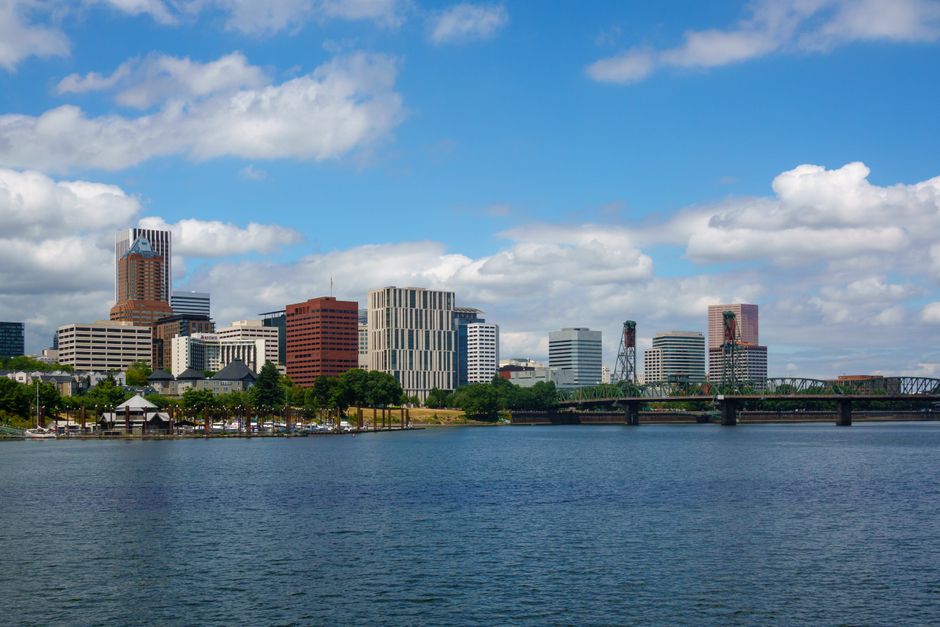
Portland is Oregon’s largest city: a relaxed, green river city on the Willamette, about an hour from the waterfalls of the Columbia River Gorge, with the snowy cone of Mount Hood on the eastern skyline. Visitors come for its gardens, especially the roses and the Japanese Garden in Washington Park, for Powell’s City of Books, food carts, coffee, craft beer and Willamette Valley wine, and for easy day trips to waterfalls, mountains and the Pacific coast. Shopping is tax-free, because Oregon has no general sales tax. Summers are warm and dry; from October to April it is mild, gray and rainy.
Right now in Portland (Oregon)
- Tue13–22°C56–71°FClear
- Wed12–25°C54–77°FClear
- Thu12–26°C54–79°FClear
- Mon 12 Oct Columbus Day
- Mon 12 Oct Indigenous Peoples' Day · regional holiday in Oregon
Top tours in Portland (Oregon)
See all tours for Portland (Oregon) →
From local operators, with prices and reviews; you check availability and book on Viator, our partner. We may earn a commission at no extra cost to you. How we earn money
Portland at a glance
- Best for: gardens and parks, food carts and restaurants, books and independent shops, coffee, beer and wine, and waterfall and mountain day trips.
- How long: 2–3 days for the city; 4–6 days to add the Columbia River Gorge, Mount Hood, the Oregon coast or wine country.
- Best time: June to September, warm and dry, with highs around 82 °F (28 °C) in July and August. October is about 64 °F (18 °C) with fall color and rain returning; November to January are the wettest months.
- Getting there: Portland International Airport (PDX), about 39 minutes from downtown on the MAX Red Line; Amtrak trains from Seattle, Vancouver and California.
- Costs (as of October 2026): TriMet fare $2.80 for 2½ hours, $5.60 a day; Japanese Garden $22.50; no sales tax, but hotel bills carry about 16% in lodging taxes and fees.
- Before you go: entry rules and ESTA, money, tipping and driving are in our United States travel guide.
Portland neighborhoods: where things are
The Willamette River divides Portland into a west side, with downtown, the Pearl District and the forested West Hills, and a larger east side of neighborhoods with their own main streets. Burnside Street splits the city north and south, so addresses begin with NW, SW, NE or SE. A dozen bridges cross the river, and the city center is compact and flat enough to walk.
Downtown and the waterfront
Downtown has Pioneer Courthouse Square, often called the city’s living room, the Portland Art Museum, the Park Blocks and Tom McCall Waterfront Park, a long riverside lawn and path that hosts festivals in summer. The Portland Saturday Market, a long-running arts and crafts market, sets up near the Burnside Bridge on weekends from spring to late December.
The Pearl District, Old Town and Chinatown
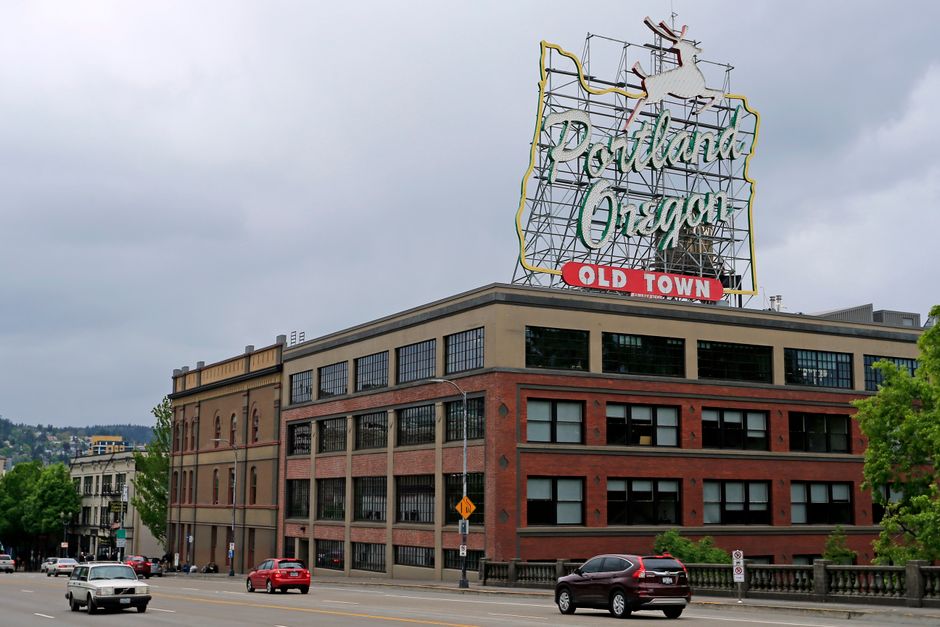
North of downtown, the Pearl District is a former warehouse and rail yard district turned into galleries, lofts, restaurants and shops, anchored by Powell’s City of Books. Old Town and Chinatown, next to it, have the Lan Su Chinese Garden and some of the city’s oldest buildings. The streetcar links the Pearl with downtown and the South Waterfront.
Northwest Portland and the West Hills
NW 23rd Avenue, in the Northwest district, is a tree-lined street of Victorian houses turned into shops and cafés. Above it rise the West Hills, home to Washington Park and its gardens and museums, and Forest Park, one of the largest forested parks inside an American city.
The east side: Hawthorne, Division, Alberta and Mississippi
Across the river, the inner east side has the food, bars and breweries many visitors remember most: Hawthorne Boulevard and Division Street in the southeast, Alberta Street and Mississippi Avenue in the northeast, each with food cart pods, vintage shops and coffee roasters. The Central Eastside, by the river, has distilleries and the Oregon Museum of Science and Industry.
Top things to see in Portland
Prices and hours below were checked on the official sites in October 2026, unless we say otherwise; check again before you go.
Washington Park
Washington Park, one of the city’s oldest parks, covers 410 acres (166 hectares) of the West Hills and holds several of Portland’s main sights: the International Rose Test Garden, the Portland Japanese Garden, the Oregon Zoo, the World Forestry Center and Hoyt Arboretum. Portland Parks & Recreation counts about 3.5 million visitors a year. Parking in the park is paid and very limited, especially on warm weekends, so the city recommends coming by MAX light rail: the Red and Blue lines stop at Washington Park station, by the zoo, about every 15 minutes. From there, a free seasonal shuttle runs around the park; check Explore Washington Park, the park’s transportation group, for its dates.
The International Rose Test Garden
Portland is nicknamed the City of Roses, and this is why: the free garden in Washington Park tests new rose varieties and displays thousands of rose bushes on terraces with views over the city and, on clear days, Mount Hood. The roses are at their best from late May through June, around the city’s Rose Festival, and keep blooming into October. Entry is free and the garden is open daily; the Rose Garden Children’s Park is next to it.
The Portland Japanese Garden
Uphill from the roses, the Portland Japanese Garden has several traditional garden styles, a tea garden, a moss-covered stroll garden, a raked sand and stone garden and a cultural village with exhibitions, plus a view toward Mount Hood. Fall color is spectacular from mid-October. As of October 2026 admission costs $22.50 for adults, $19.50 for seniors (65+), $18.50 for students and $16.50 for youth (6–17); children 5 and under are free. Public hours are 10 a.m.–5:30 p.m., with an hour after closing to finish your visit, and the garden was closed on Tuesdays on its schedule when we checked. Tickets are for timed entry, can be booked up to 10 days ahead and are non-refundable; book ahead on weekends and in the fall color season. Free public tours are offered.
Lan Su Chinese Garden
Filling a city block in Chinatown, Lan Su is a walled garden in the style of Suzhou, with a lake, covered walkways, pavilions, rocks and plants, and a teahouse serving tea and snacks. As of October 2026 it is open daily 10 a.m.–5:30 p.m., and admission costs $18 for adults (19–61), $17 for seniors (62+) and students, and $15 for youth (6–18); younger children are free. It makes a calm hour between downtown and the Pearl District.
Powell’s City of Books and the Pearl District
Powell’s City of Books, on West Burnside at the edge of the Pearl District, is one of the largest independent bookstores in the world, filling a whole city block with new and used books in color-coded rooms; pick up a map at the entrance. Allow an hour or more, then explore the Pearl’s galleries, design shops and restaurants. The district’s galleries hold open evenings on the first Thursday of the month.
Food carts
Portland is famous for its food carts: hundreds of small kitchens, often grouped in “pods” in parking lots with shared seating, serving everything from Thai and Georgian to barbecue, tacos and dumplings at modest prices. Pods come and go, so check what is current near you; the inner east side, around Division and Hawthorne, and downtown have many. Most take cards, and many close earlier in winter.
Forest Park
Stretching along the West Hills above the Willamette, Forest Park covers 5,200 acres (about 2,100 hectares) and, according to the city, has more than 80 miles (130 km) of trails and more than 40 access points. Its backbone, the Wildwood Trail, runs for about 30 miles (48 km) through fir, maple and fern; short sections from the Lower Macleay trailhead in Northwest Portland lead up to the Stone House ruin and on to Pittock Mansion, with a view over the city. Check the city’s trail closures page before you go. See our hiking guide.
The Columbia River Gorge and Multnomah Falls
Just east of Portland, the Columbia River has cut a deep gorge through the Cascade Range, protected as the Columbia River Gorge National Scenic Area and managed largely by the US Forest Service. On the Oregon side, the Historic Columbia River Highway (US 30), built from 1913 as one of the first scenic highways in the country, winds past Vista House at Crown Point and a string of waterfalls: Latourell, Bridal Veil, Wahkeena, Multnomah and Horsetail. This stretch is often called the waterfall corridor. Multnomah Falls, about 30 miles (48 km) east of downtown, is the tallest in Oregon at about 620 feet (189 m), with a stone lodge and a short paved path to the Benson Bridge between its two tiers.
Multnomah Falls permits in 2026 and 2027
Since 2022 the Forest Service has used timed use permits to manage crowds in summer. In 2026 a permit was required only for the Multnomah Falls parking lot at I-84 Exit 31, from 22 May to 7 September 2026, between 9 a.m. and 6 p.m. daily. Permits were released on Recreation.gov 14 days ahead and again 2 days ahead, at 7 a.m. Pacific time, with a small booking fee (it has been $2 per permit), and a limited number were free for same-day pickup at visitor centers in Troutdale and Cascade Locks. No permit was required on the Historic Columbia River Highway in 2026. The 2026 permit season has ended, so in October 2026 you can visit without one. As of October 2026 the Forest Service had not announced the dates for a 2027 permit season; Oregon’s transportation department describes the permits as an annual summer system, so expect them again from late May and check Recreation.gov in spring 2027.
Road conditions in the Gorge
The Oregon Department of Transportation (ODOT) repaired the two 1914 viaducts on either side of Multnomah Falls in 2025 and 2026; the east viaduct reopened on 15 May 2026, so the historic highway is again open through the falls area. Both viaducts are open only to vehicles shorter than 35 feet (10.7 m) and to bicycles, and are closed to pedestrians because the road is too narrow. Parking at the falls is limited to the I-84 lot and a small area on the historic highway; ODOT’s TripCheck website has cameras showing the Exit 31 lot. Expect occasional lane and ramp closures on I-84 between Portland and Hood River through fall 2026. In wet weather, check for rockfall and trail closures, and stay on the paths: the cliffs are steep and slippery.
Other things to do in Portland
Coffee, beer, wine and spirits
Portland has dozens of craft breweries and many independent coffee roasters, plus a cluster of small distilleries on the Central Eastside. The Willamette Valley, starting about 40 minutes southwest of the city, is Oregon’s main wine region, best known for pinot noir; book a tour or a designated driver. See our wine tasting guide.
Cycling and the river
Portland is one of the most bike-friendly cities in the United States, with signed neighborhood greenways and the Eastbank Esplanade, a riverside path that loops with Waterfront Park over the Steel and Hawthorne bridges. Rent a bike or use the city’s bike share. You can also kayak or paddleboard on the Willamette in summer. See our cycling guide.
Museums and markets
The Portland Art Museum has strong Native American and Northwest collections; the Oregon Museum of Science and Industry (OMSI) has hands-on exhibits and a submarine; and the Pittock Mansion, a 1914 house in the West Hills, has one of the best city views. On Saturdays, the Portland Farmers Market fills the South Park Blocks at Portland State University. See our city sightseeing guide for walking ideas.
Getting there and getting around
From Portland International Airport (PDX)
PDX is about 10 miles (16 km) northeast of downtown, beside the Columbia River. Its rebuilt main terminal, under a curving nine-acre wooden roof made from timber grown within 300 miles (480 km) of the airport, opened in August 2024, and the Port of Portland marked the completion of the whole terminal project on 30 June 2026. The MAX Red Line station is at the south end of the terminal, reached from the baggage claim and ticket lobby levels; trains leave about every 15 minutes, and the ride to downtown takes about 39 minutes. As of October 2026 an adult ride costs $2.80, valid for 2½ hours. Taxis and rideshare take about 20–30 minutes to downtown without traffic.
Traffic note: from 11 September 2026, all southbound lanes of I-5 closed through central Portland, between I-84 and I-405, for the I-5 Rose Quarter Improvement Project, for up to five weeks; the airport and ODOT advised extra time for road trips to and from PDX. Check TripCheck for the current situation.
MAX, buses, the streetcar and fares
TriMet runs the MAX light rail lines, buses and, with the city, the Portland Streetcar. The fare is the same on buses, MAX and the WES commuter train: as of October 2026, $2.80 for adults for 2½ hours of rides, and $5.60 for a day; reduced fares ($1.40, or $2.80 a day) apply to seniors 65 and over, youth and riders with disabilities. Pay with the Hop Fastpass card, or tap a contactless bank card or phone on the green Hop reader each time you board; the system caps your fares at the day-pass price. The MAX Red and Blue lines run downtown to Washington Park and the airport (Red Line). Downtown is compact, and walking or cycling is often easiest.
Trains and driving
Union Station, in Old Town, has Amtrak Cascades trains to Seattle and Vancouver, British Columbia, and the Coast Starlight to Sacramento, the San Francisco Bay Area and Los Angeles; see our San Francisco and Los Angeles guides. A car is not needed in the city but is the easiest way to the Gorge, Mount Hood and the coast. Driving tips are in our United States travel guide.
| Route | Distance | How and how long |
|---|---|---|
| PDX airport to downtown | about 10 miles (16 km) | MAX Red Line, about 39 minutes, $2.80; taxi 20–30 minutes |
| Portland to Multnomah Falls | about 30 miles (48 km) | Car via I-84 Exit 31, about 35–45 minutes; seasonal buses |
| Portland to Mount Hood (Timberline Lodge) | about 60 miles (97 km) | Car via US 26, about 1.5 hours; chains may be required in winter |
| Portland to Cannon Beach | about 80 miles (130 km) | Car via US 26, about 1.5–2 hours |
| Portland to Seattle | about 175 miles (280 km) | Car or Amtrak, about 3–3.5 hours |
| Portland airport to Mount Rainier (Nisqually Entrance) | about 131 miles (211 km) | Car, about 2.5–3 hours |
Day trips from Portland
- The Columbia River Gorge: Vista House, Multnomah Falls and the waterfall corridor on the historic highway, then on to Hood River for orchards and windsurfing views; see the section above for permits and roads.
- Mount Hood: Oregon’s highest peak, 11,249 feet (3,429 m), with the 1930s Timberline Lodge, Trillium Lake’s reflections, summer hiking and the longest ski season in North America on its upper slopes. Snow can close or slow mountain roads from November; carry chains.
- The Oregon coast: Cannon Beach and Haystack Rock, Ecola State Park and Seaside, about 1.5–2 hours west; the water is cold all year. See our beaches guide.
- Willamette Valley wine country: around Newberg, Dundee and McMinnville, 40–60 minutes southwest.
- Mount St. Helens National Volcanic Monument: in Washington, about 1.5–2.5 hours north depending on which side you visit; landslides have closed some roads to the viewpoints in recent years, so check the Forest Service before going.
- Seattle and Mount Rainier: about 3 hours north; our Seattle and Mount Rainier guides cover them.
Nearby destinations
- Mount Rainier National Park165 km
- Seattle234 km
- Olympic National Park256 km
When to go and how long to stay
Portland has a marine climate: mild, wet winters and warm, dry summers that are a little hotter than Seattle’s. The airport gets about 37 inches (938 mm) of rain a year, on roughly 93 days with at least 0.1 inch (2.5 mm), mostly from October to May. The table uses NOAA’s 1991–2020 climate normals for the Portland International Airport weather station.
| Season | Average high / low | Wet days per month | What it’s like | Good for |
|---|---|---|---|---|
| Winter (Dec–Feb) | 47–52 °F (8–11 °C) / 36–37 °F (2–3 °C) | 9–13 | Gray and rainy; occasional ice storms and snow; skiing on Mount Hood | Food, museums, Powell’s, skiing |
| Spring (Mar–May) | 57–69 °F (14–21 °C) / 40–49 °F (4–9 °C) | 7–11 | Showers and blossom; waterfalls at full flow | Gardens, the Gorge, wine country |
| Summer (Jun–Aug) | 74–82 °F (23–28 °C) / 54–59 °F (12–15 °C) | 1–5 | Dry and sunny; occasional heat waves above 100 °F (38 °C) and wildfire smoke | Roses, the river, hiking, festivals |
| Fall (Sep–Nov) | 77 °F falling to 54 °F (25–12 °C) / 54 °F falling to 41 °F (12–5 °C) | 4–12 | September warm; rain returns in October | Japanese Garden fall color, harvest in wine country |
In October the average high is about 64 °F (18 °C) and the low 47 °F (8 °C), with about 8 wet days. Daylight saving time ends on Sunday 1 November 2026. Late summer can bring smoke from wildfires in the Cascades or the Gorge; check air quality and closures before hiking.
2 to 3 days in Portland
Day one: downtown and Pioneer Courthouse Square, Lan Su Chinese Garden, Powell’s and the Pearl District, then dinner at a food cart pod. Day two: MAX to Washington Park for the Rose Test Garden and the Japanese Garden, a walk in Forest Park or up to Pittock Mansion, then the east side’s bars and restaurants. Day three: the Columbia River Gorge, with Vista House, Multnomah Falls and a short waterfall hike.
4 to 6 days in Portland
Add a day on Mount Hood (Timberline Lodge and Trillium Lake), a day on the coast at Cannon Beach, and a day in the Willamette Valley wineries. With six days, combine Portland with Seattle by train, or drive to Mount Rainier.
Where to stay in Portland and the hotel taxes
- Downtown: the most hotels and the best transit links, including MAX to the airport and Washington Park.
- The Pearl District: boutique hotels, restaurants and Powell’s on the doorstep.
- Northwest (Nob Hill): quieter streets near NW 23rd and Forest Park.
- The east side: smaller hotels near Lloyd, the Central Eastside and Hawthorne, close to the bars and food carts.
- Near the airport: handy for early flights and the Gorge, on the MAX Red Line.
Oregon has no sales tax, but hotel stays are taxed. According to the City of Portland’s Revenue Division, a hotel room in the city carries the City of Portland transient lodgings tax of 6% and the Multnomah County transient lodgings tax of 5.5%; hotels may also pass on the 3% Portland Tourism Improvement District fee, shown on the bill as “3% Portland Tourism Assessment.” The Oregon state lodging tax is 1.5% for stays ending on or before 31 December 2026, according to the Oregon Department of Revenue, so a typical bill carries about 16% in taxes and fees, as of October 2026. From 1 January 2027 the state lodging tax rises to 2.75% after a 2026 law; the higher rate applies to the whole stay for stays that begin in 2026 and end in 2027. Short-term rentals pay an extra $4-a-night city fee. Downtown hotels usually charge for parking, so compare the total price.
Practical tips for Portland
- No sales tax: the price on the tag is what you pay in shops and restaurants; only lodging and a few other items are taxed.
- Tipping: 18–22% is usual at sit-down restaurants; more in our United States travel guide.
- Washington Park: take MAX rather than driving, and book Japanese Garden tickets ahead.
- Multnomah Falls: go early in the morning or on weekdays; in summer, check whether the Exit 31 permit is in force.
- Safety: downtown and Old Town have visible homelessness and some street disorder; most visitors have no problems, but keep an eye on belongings, use well-lit streets at night, and never leave valuables in a parked car, including at trailheads in the Gorge.
- Rivers and the coast: the rivers and the Pacific are cold and fast-flowing; swim only at guarded or designated spots and watch for sneaker waves on the coast.
- Emergencies: call 911.
What to pack for Portland
Dress like a local: casual layers and a light waterproof jacket with a hood for most of the year, as showers come and go from October to May. In summer bring sunglasses, sunscreen and a light sweater for evenings. Pack comfortable shoes with good grip for wet sidewalks and waterfall trails, a fleece and rain pants for the Gorge or Mount Hood, and warm, windproof clothes for the coast, where it is often cool even in August. In winter, carry tire chains if you drive into the mountains.
Portland travel FAQ
How do I get from Portland airport to downtown?
Take the MAX Red Line from the station at the south end of the terminal: about 39 minutes to downtown, every 15 minutes, for $2.80, as of October 2026.
Is there sales tax in Portland?
No. Oregon has no general sales tax, so shop and restaurant prices are what you pay. Hotel stays are taxed.
What taxes are added to Portland hotel bills?
City tax 6%, Multnomah County tax 5.5% and the state lodging tax 1.5%, plus a 3% tourism assessment that hotels may pass on: about 16% in total, as of October 2026. The state tax rises to 2.75% on 1 January 2027.
Do I need a permit for Multnomah Falls?
Not in October 2026. In 2026 a timed use permit was needed only for the I-84 Exit 31 parking lot from 22 May to 7 September, 9 a.m.–6 p.m. Dates for 2027 had not been announced as of October 2026.
Is the Historic Columbia River Highway open?
Yes. The viaduct east of Multnomah Falls reopened on 15 May 2026 after repairs. Both viaducts by the falls are open to vehicles under 35 feet and bicycles, but not to pedestrians.
How much is the Portland Japanese Garden?
$22.50 for adults, $19.50 for seniors and $16.50 for youth as of October 2026, with timed tickets bookable up to 10 days ahead. It was closed on Tuesdays when we checked.
Is the International Rose Test Garden free?
Yes. Parking in Washington Park is paid and limited, so take MAX to Washington Park station. The roses peak in late May and June.
How much is a TriMet day pass?
$5.60 for adults, as of October 2026, valid on MAX, buses and the WES train. With a Hop card or a contactless card, you stop paying once you reach that amount in a day.
When is the best time to visit Portland?
June to September for dry, warm weather and the roses; October for fall color with fewer crowds. Winter is mild but rainy.
Plan your trip
Partner links: TravelerCenter may earn a commission if you book, at no extra cost to you.
Sources · last reviewed 4 October 2026
Researched and last reviewed on 4 October 2026. Washington Park and Forest Park: Portland Parks & Recreation (City of Portland); Japanese Garden and Lan Su Chinese Garden prices and hours: the gardens’ own sites; fares: TriMet; the airport and its new terminal: Port of Portland (PDX); Multnomah Falls permits: Recreation.gov (US Forest Service) and the Oregon Department of Transportation; Historic Columbia River Highway and I-5 closures: ODOT; city and county lodging taxes and the Tourism Improvement District fee: City of Portland Revenue Division; the state lodging tax: Oregon Department of Revenue; climate: NOAA’s 1991–2020 normals for Portland International Airport. The permit booking fee, Powell’s and food cart details, the Rose Garden’s description, Mount Hood and coast distances and day-trip times come from general or secondary sources and are flagged for checking. Check the official sites before you go. For entry rules, ESTA, tipping and driving, see our United States travel guide.
Data: Weather: MET Norway (CC BY 4.0) · Rates: ECB · Holidays: Nager.Date · Costs: World Bank ICP and price levels · Wikidata (CC0)